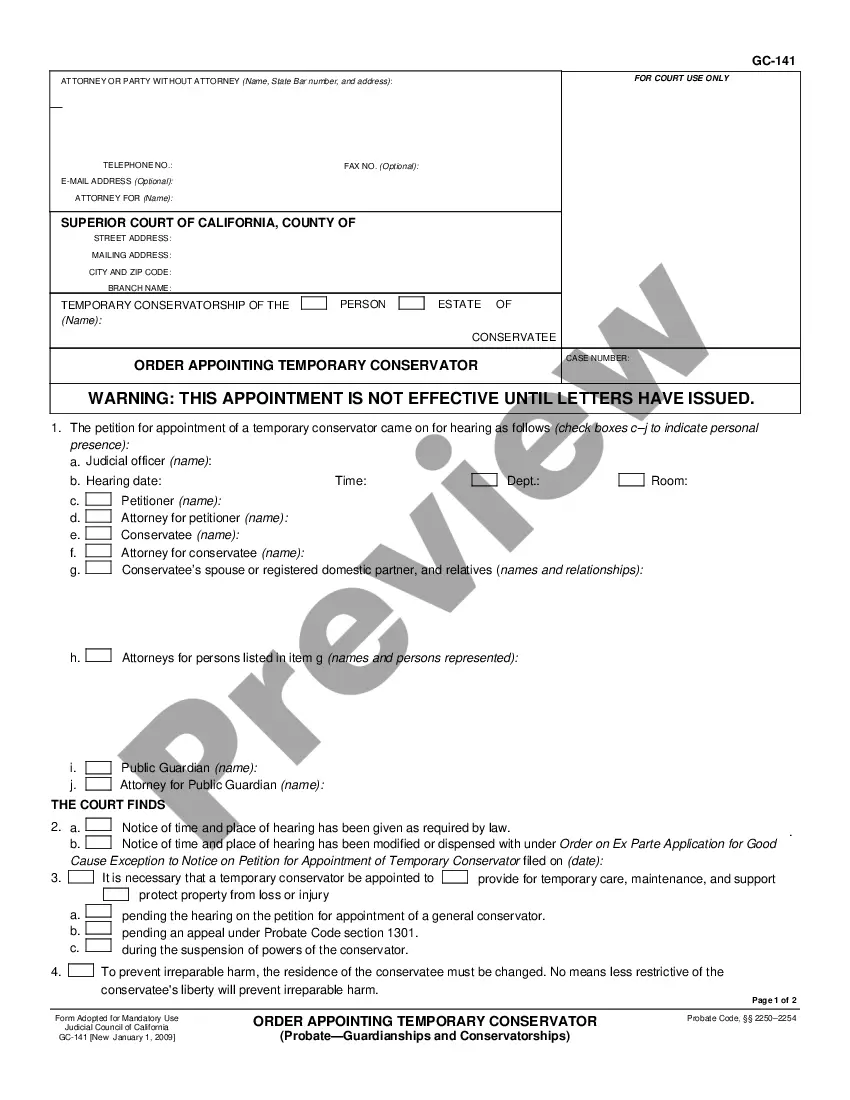
Mississippi Memorandum in Support of Motion for Summary Judgment
What this document covers
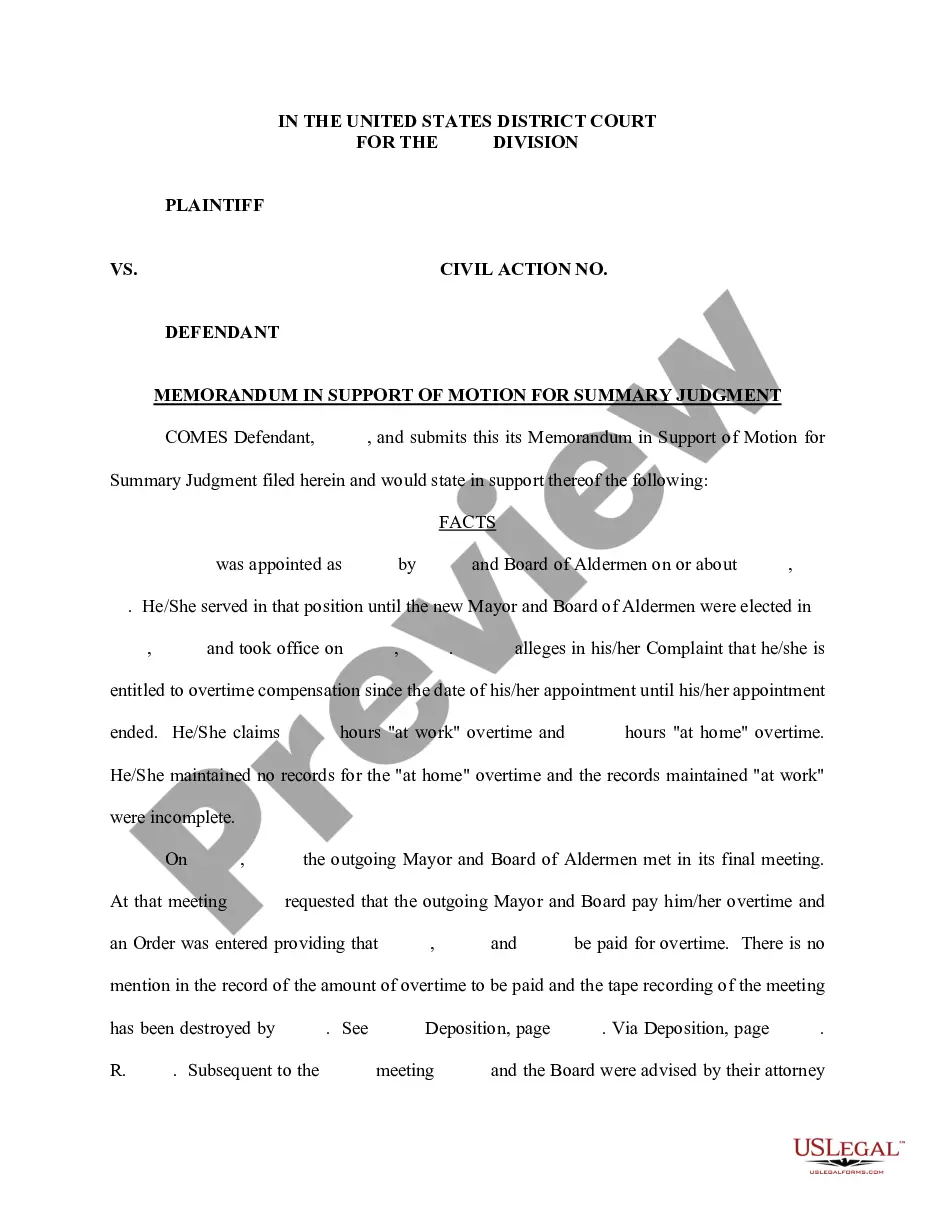
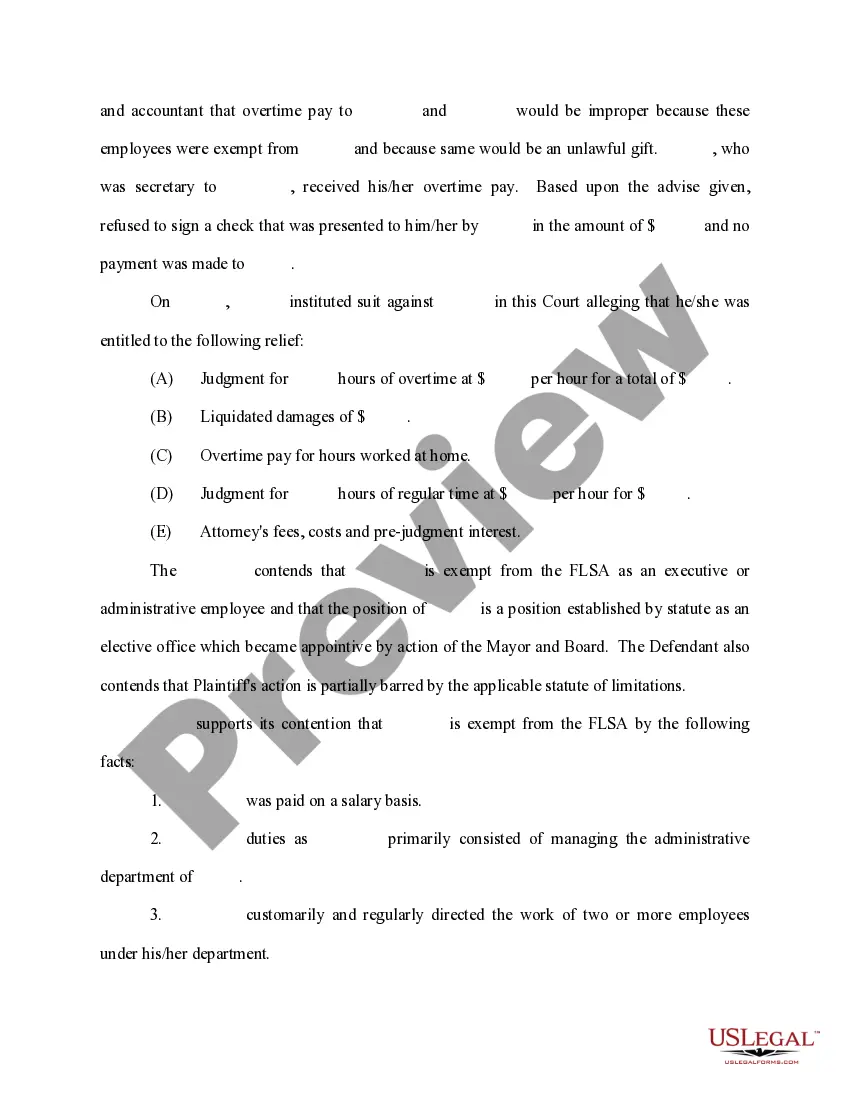
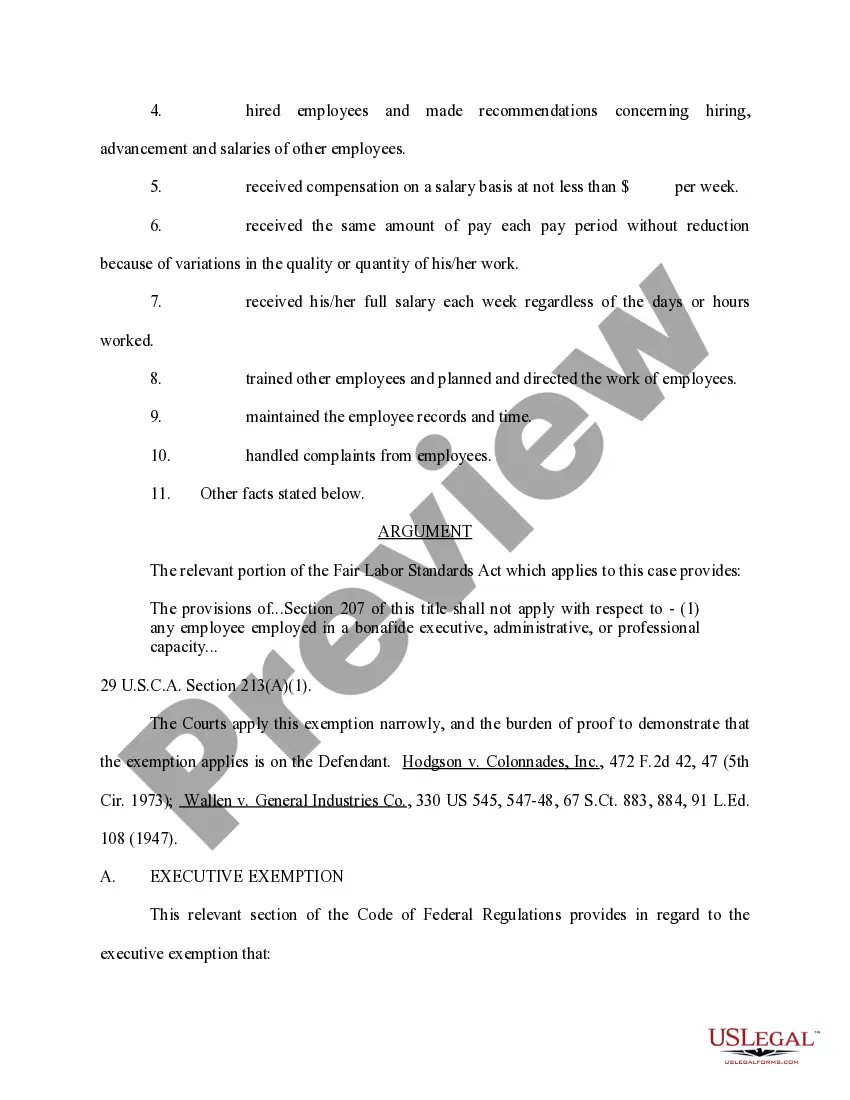
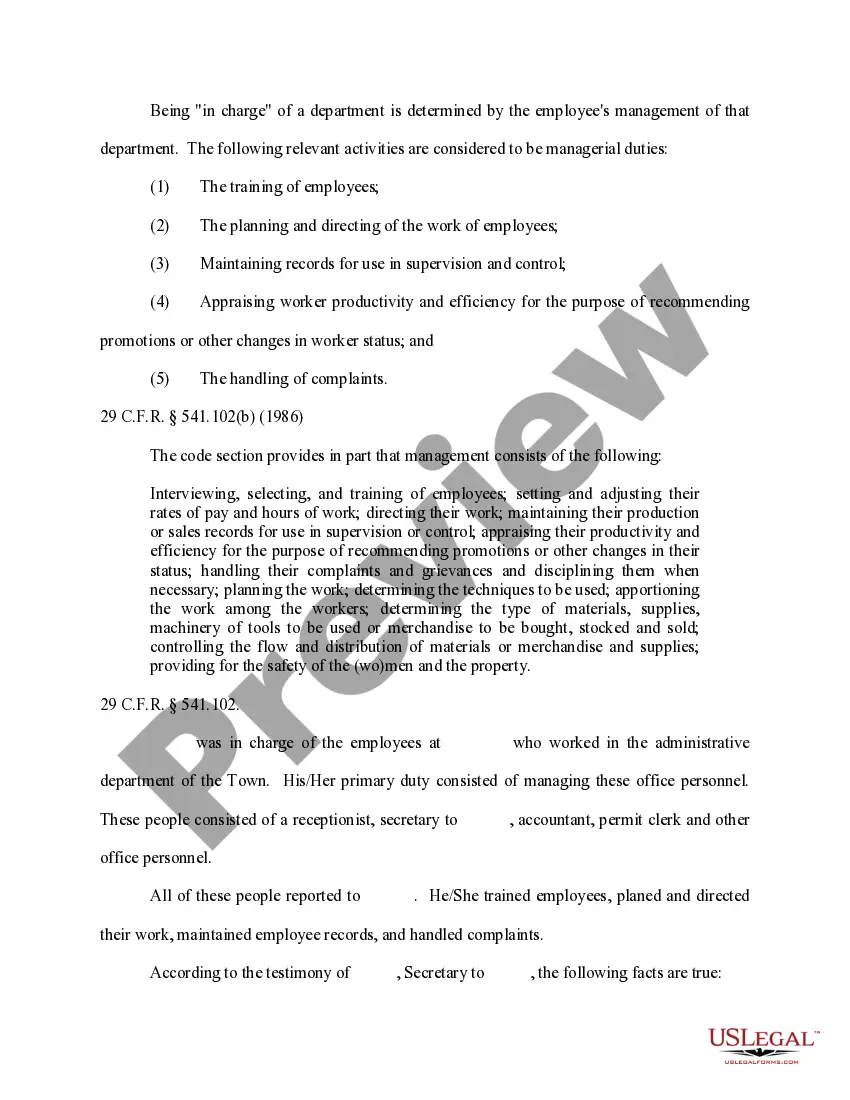
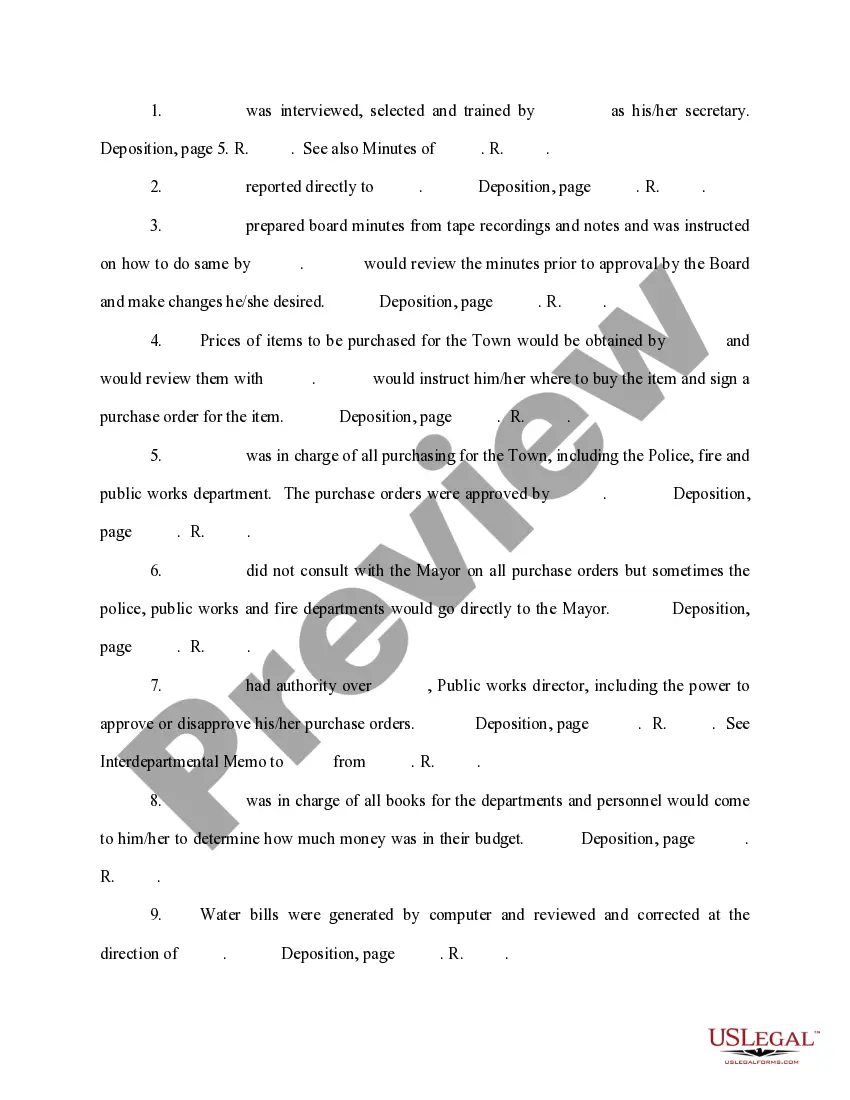
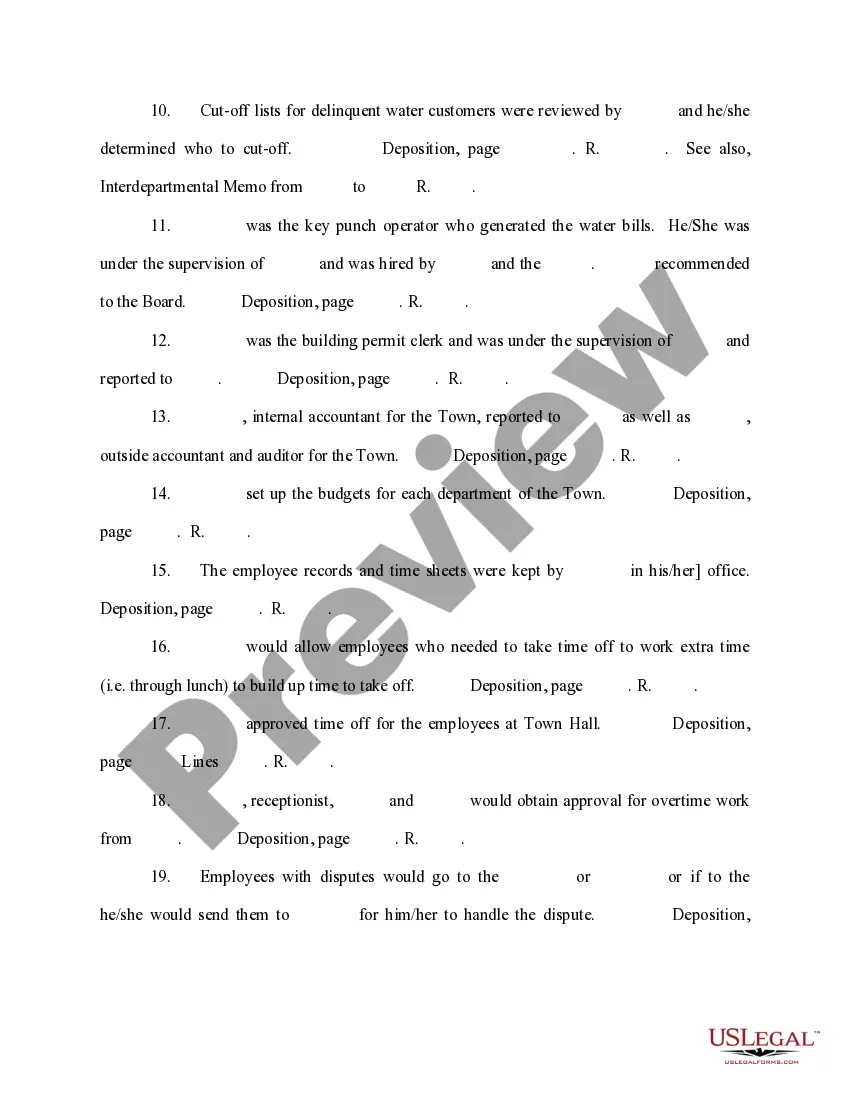
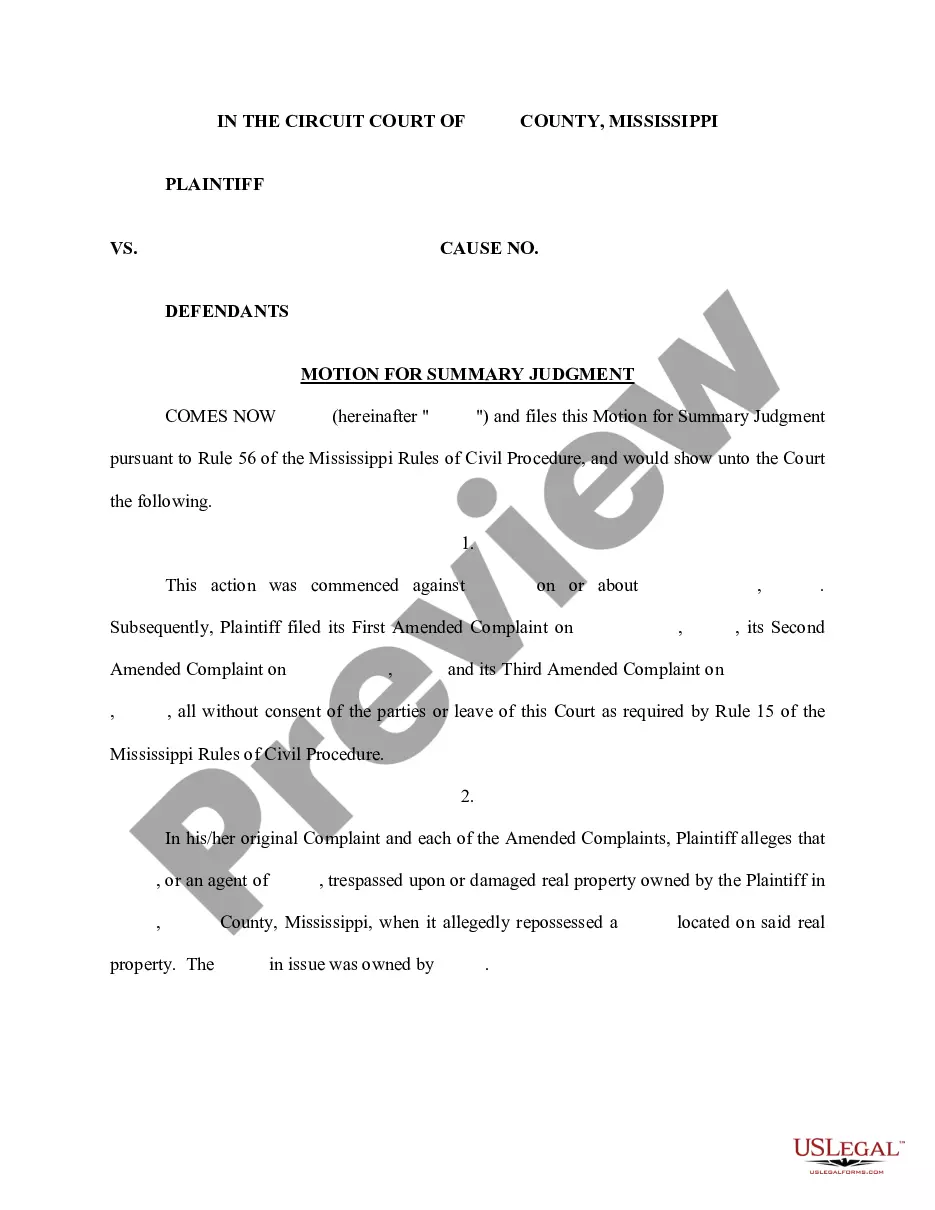
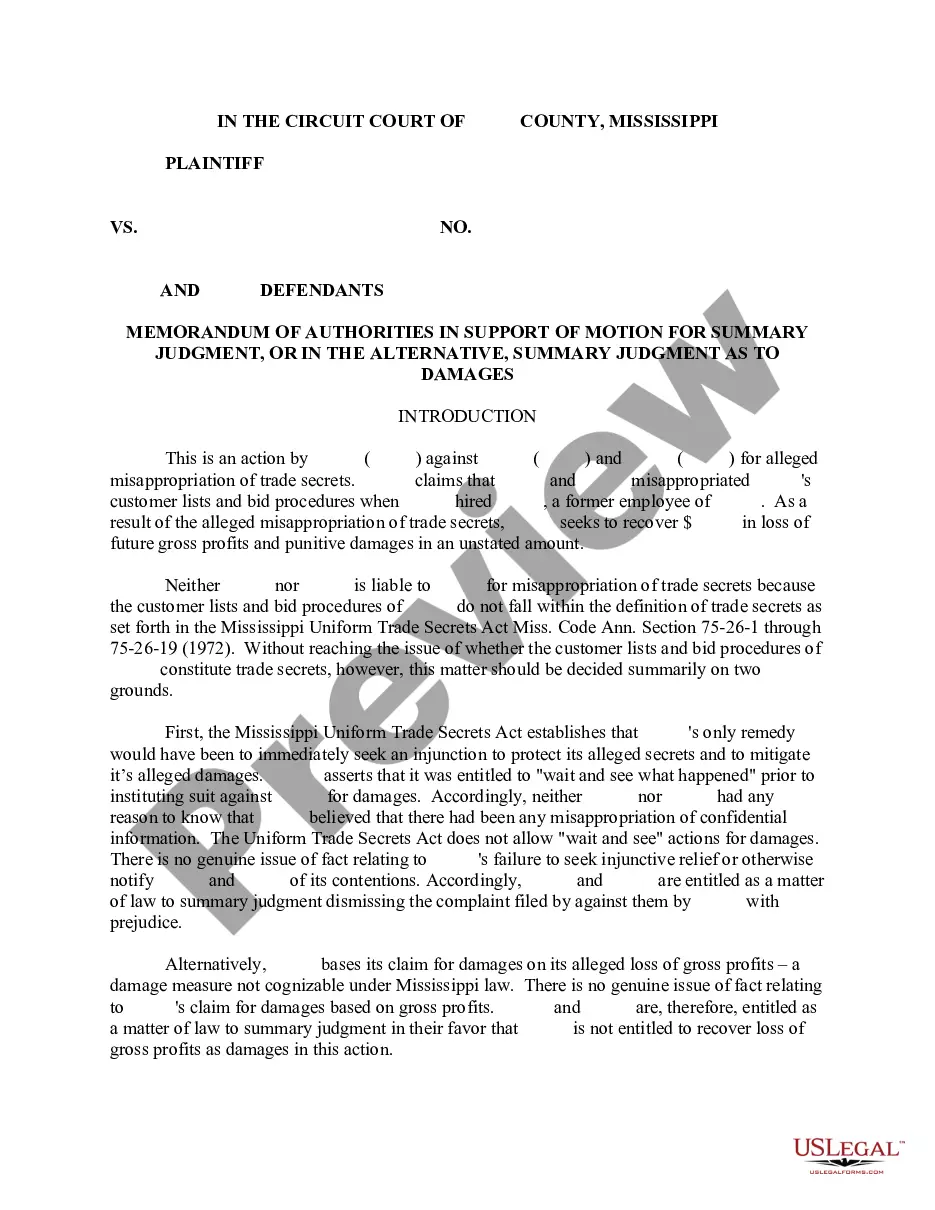
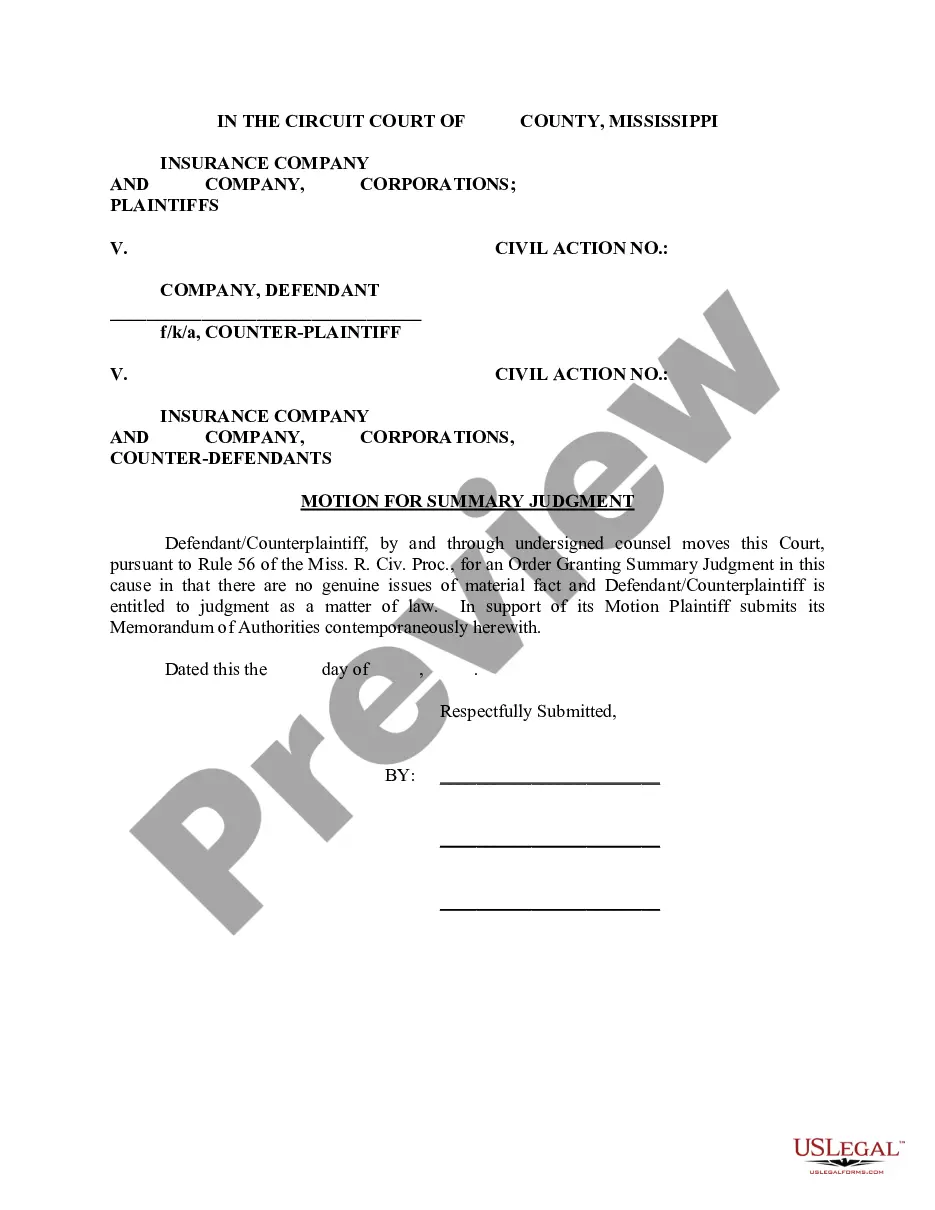
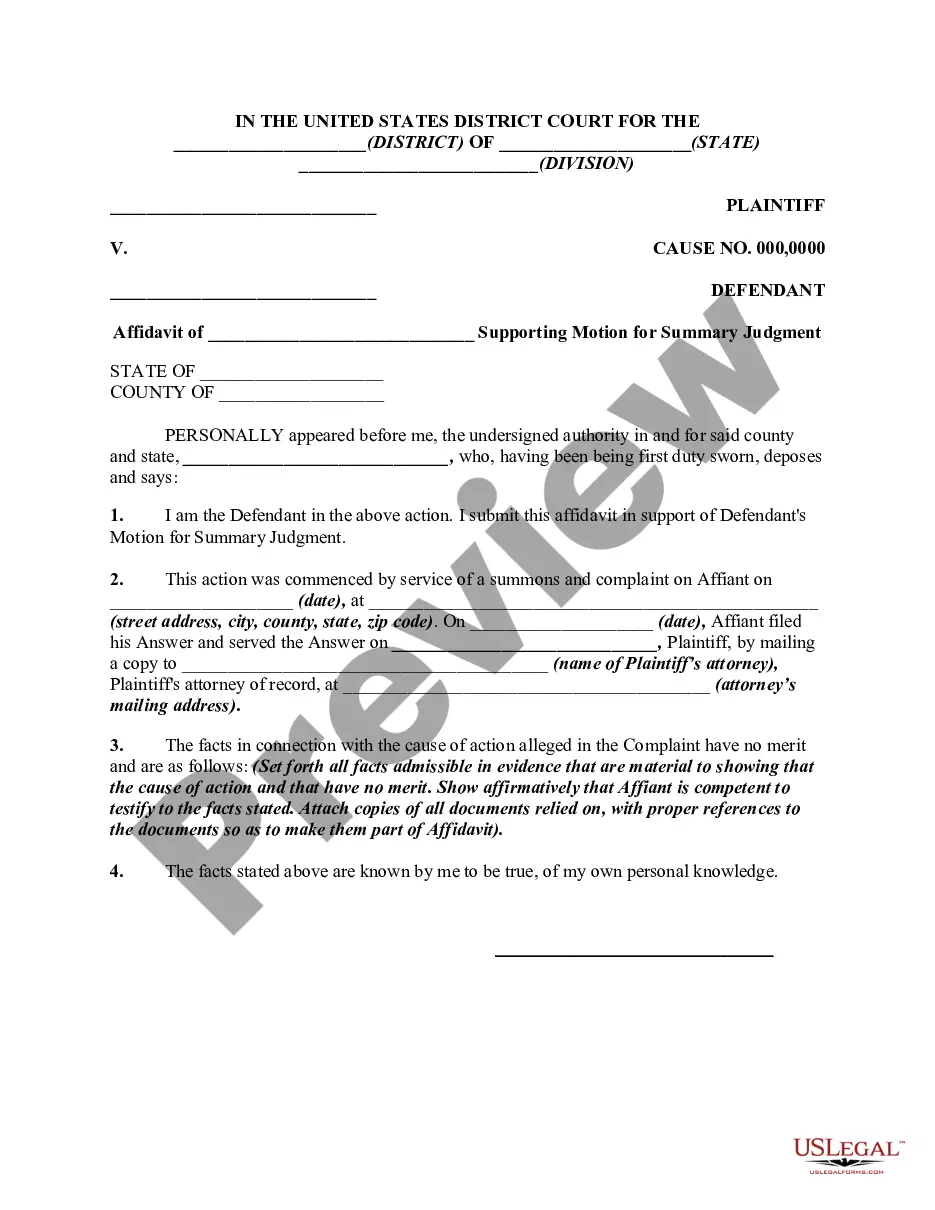
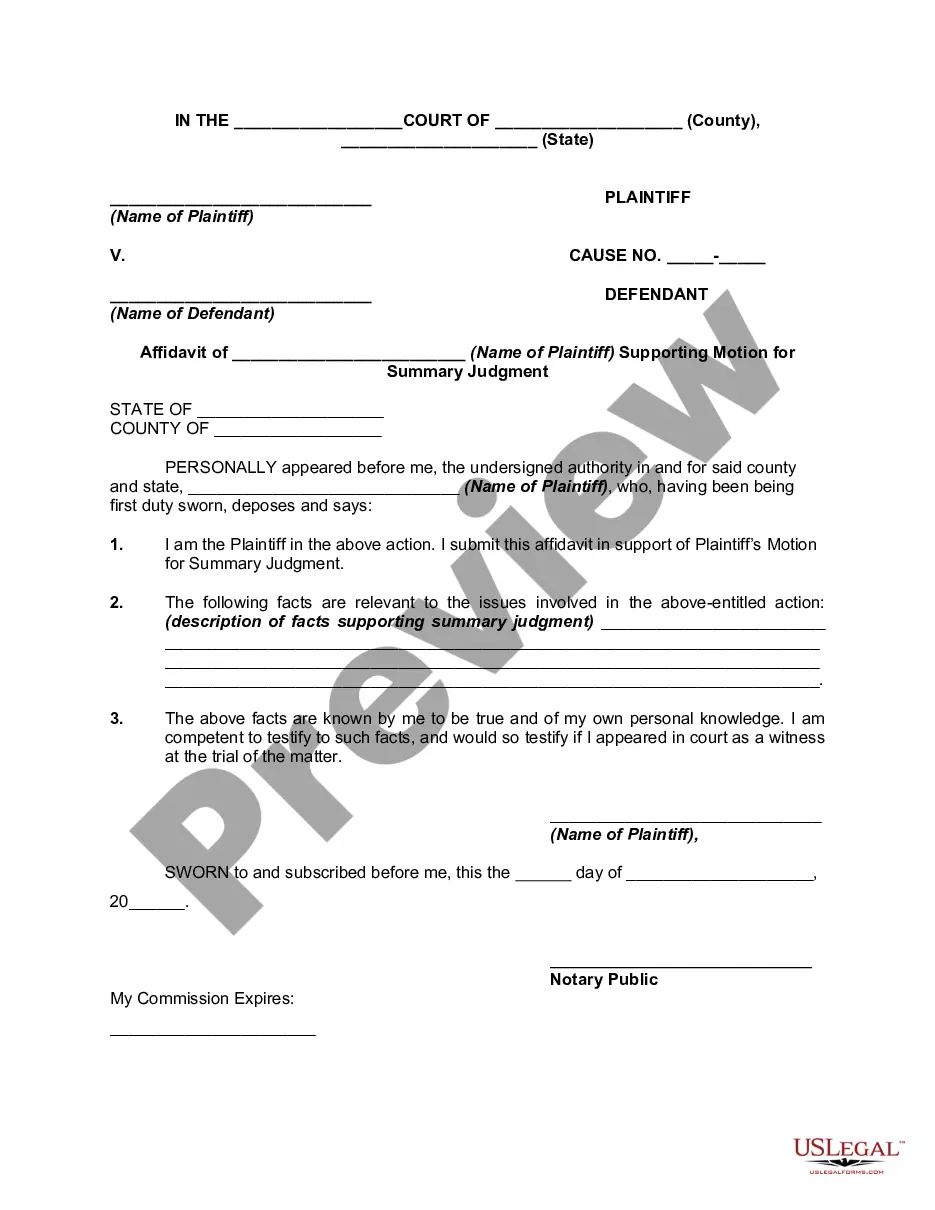
The Memorandum in Support of Motion for Summary Judgment is a formal request to the court that aids in seeking a summary judgment. This document supports a motion by detailing the reasons that justify ruling in favor of the moving party, helping the court to make a quick decision based on evidence presented, without going to trial. Unlike other legal motions, this memorandum is specifically focused on establishing that there are no material facts in dispute, making it a crucial part of the legal process for parties looking to expedite their cases.
Form components explained
- Introduction: States the purpose of the motion and relevant case information.
- Statement of Facts: Summarizes the key facts that support the motion.
- Legal Arguments: Provides legal reasoning and references to statutes or case law.
- Conclusion: Requests the court grant the motion for summary judgment.
- Signature Block: Includes the signature and details of the filing party.
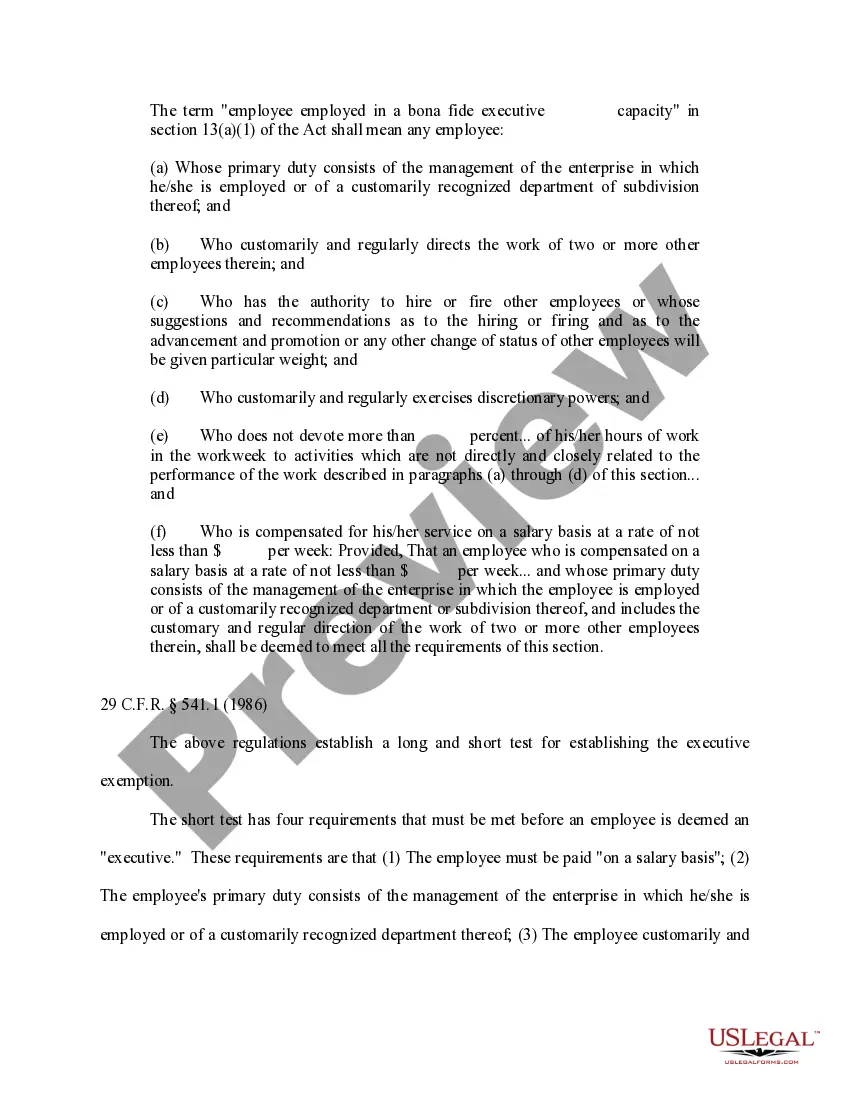
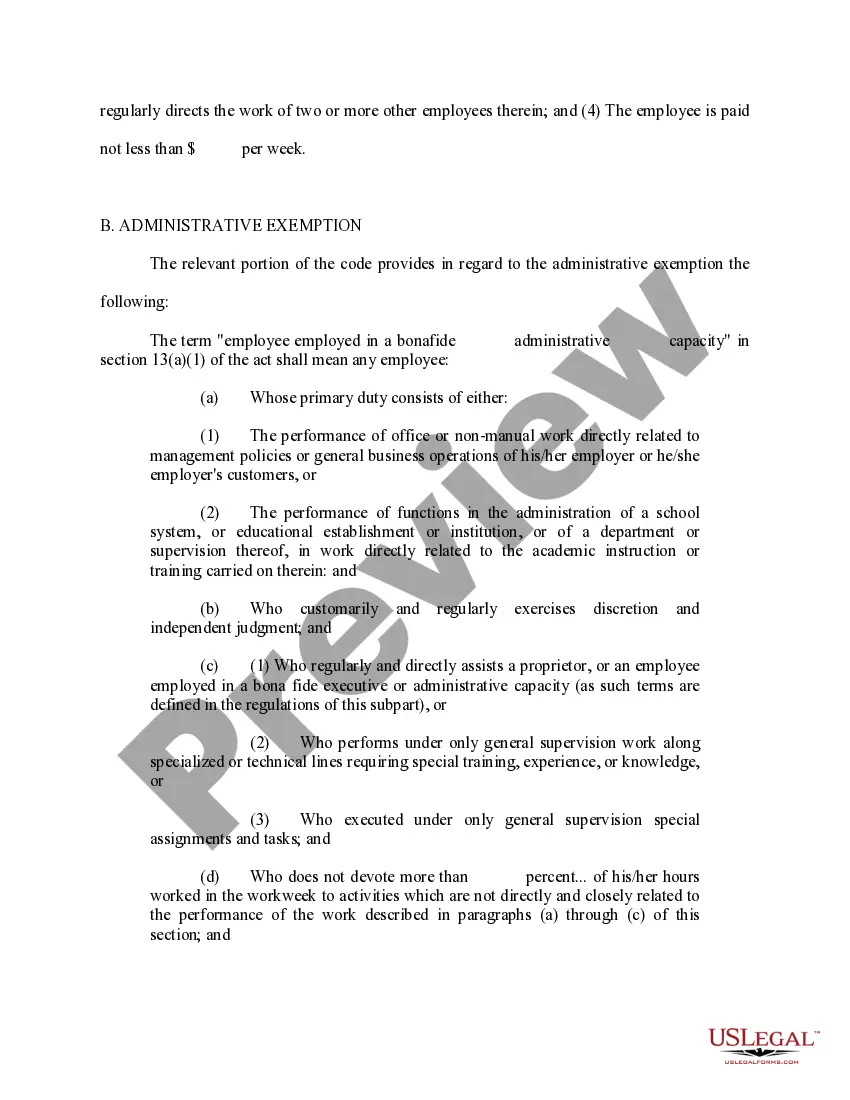
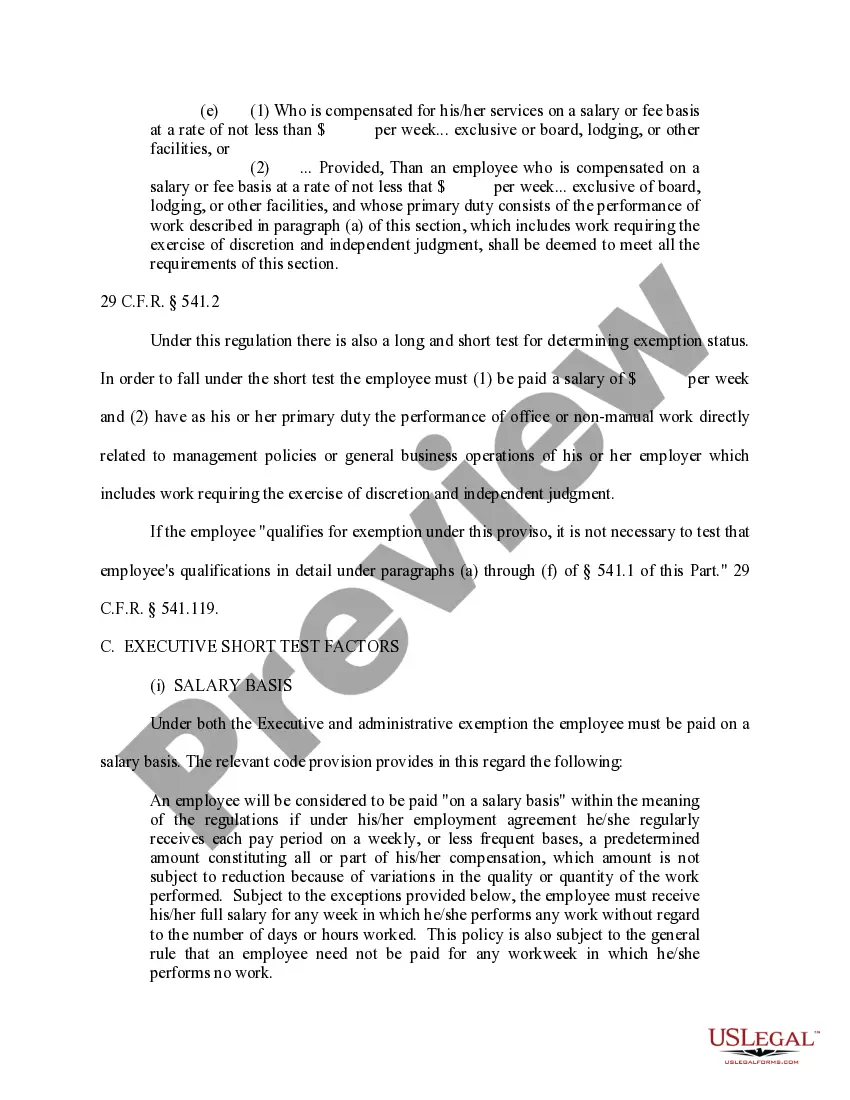
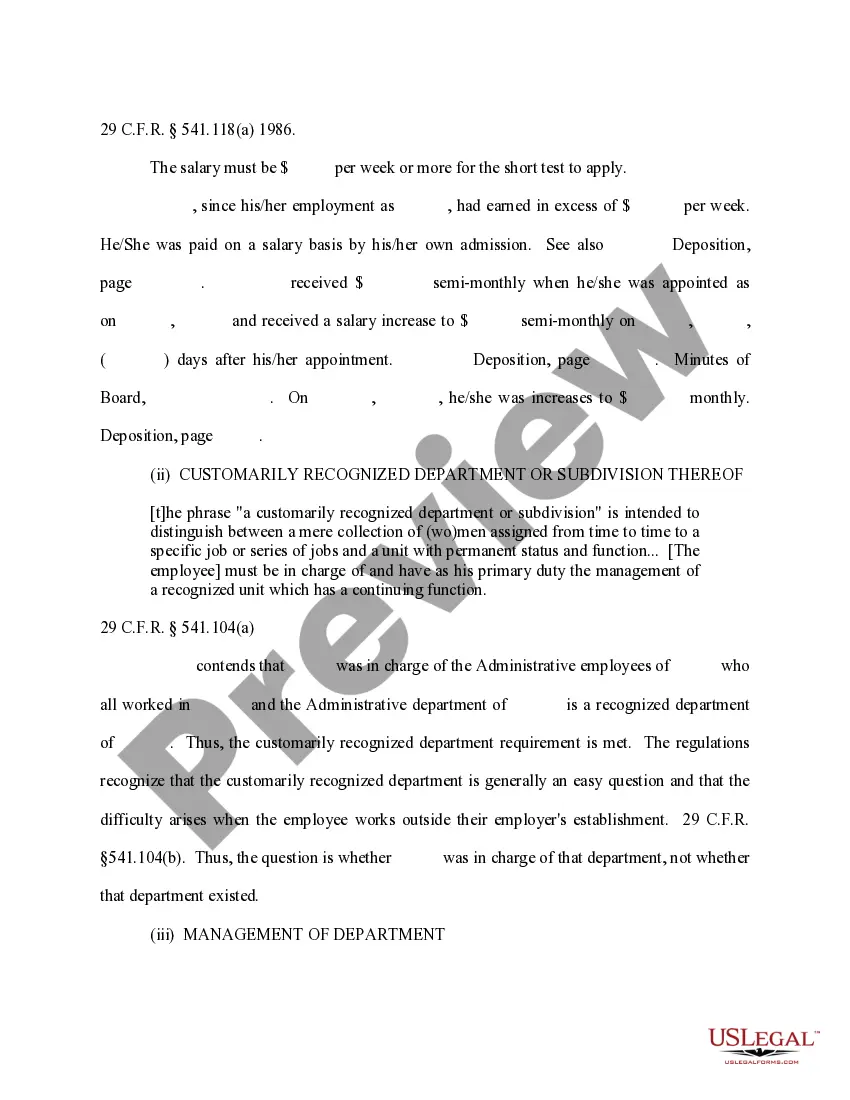

Common use cases
This form is used when a party believes that there are no genuine disputes regarding any material facts in a case and that they are entitled to judgment as a matter of law. Situations could include contract disputes, liability issues, or when a party wants to dismiss a case without a trial. It is typically used in civil litigation when the party seeks to resolve the matter swiftly.
Who should use this form
- Legal professionals representing clients in civil litigation.
- Individuals or businesses involved in lawsuits who are seeking summary judgment.
- Defendants wishing to dismiss claims against them without going to trial.
How to prepare this document
- Identify the parties involved in the case and include their contact information.
- Summarize the relevant facts of the case in a clear and concise manner.
- Reference applicable laws and precedents that support your argument for summary judgment.
- Clearly state your request for the court to grant the motion.
- Sign and date the document to finalize your submission.
Does this form need to be notarized?
Notarization is generally not required for this form. However, certain states or situations might demand it. You can complete notarization online through US Legal Forms, powered by Notarize, using a verified video call available anytime.
Get your form ready online
Our built-in tools help you complete, sign, share, and store your documents in one place.
Make edits, fill in missing information, and update formatting in US Legal Forms—just like you would in MS Word.
Download a copy, print it, send it by email, or mail it via USPS—whatever works best for your next step.
Sign and collect signatures with our SignNow integration. Send to multiple recipients, set reminders, and more. Go Premium to unlock E-Sign.
If this form requires notarization, complete it online through a secure video call—no need to meet a notary in person or wait for an appointment.
We protect your documents and personal data by following strict security and privacy standards.

Make edits, fill in missing information, and update formatting in US Legal Forms—just like you would in MS Word.

Download a copy, print it, send it by email, or mail it via USPS—whatever works best for your next step.

Sign and collect signatures with our SignNow integration. Send to multiple recipients, set reminders, and more. Go Premium to unlock E-Sign.

If this form requires notarization, complete it online through a secure video call—no need to meet a notary in person or wait for an appointment.

We protect your documents and personal data by following strict security and privacy standards.
Common mistakes to avoid
- Failing to include a clear statement of undisputed material facts.
- Neglecting to cite relevant statutory or case law correctly.
- Providing insufficient evidence to support claims made in the memorandum.
Why complete this form online
- Convenient access and instant download.
- Editable documents to customize according to specific case needs.
- Reliability of content reviewed by licensed attorneys.
Legal use & context
- This memorandum is primarily used in civil cases, particularly in the context of motions for summary judgment.
- It serves to streamline cases by eliminating the need for trials when there are no disputes on material facts.
- Ensure compliance with local court rules for formatting and submission to enhance its enforceability.
Key takeaways
- The Memorandum in Support of Motion for Summary Judgment is essential for expediting the legal process.
- Proper completion and adherence to legal standards are crucial for effectiveness.
- Consult local laws for specific requirements and ensure clarity in your presentation.
Looking for another form?

Form popularity
FAQ
Rule 56 of the Federal Rules of Civil Procedure governs summary judgment for federal courts. Under Rule 56, in order to succeed in a motion for summary judgment, a movant must show 1) that there is no genuine dispute as to any material fact, and 2) that the movant is entitled to judgment as a matter of law.
The motion must include a separate "Notice of Motion" which includes a brief summary of the nature of the motion, the deadline for filing a response, and if there is a hearing, the date, time, and location of the hearing.
A summary judgement occurs when, in a civil case, one party wants to move to a court decision without a trial.When a motion for summary judgement is granted, it indicates there is sufficient evidence to declare one party the clear winner.
A motion for summary judgment filed by an opposing party claims that you cannot prevail in the case because there is no legal dispute or your claim is without merit or a defense. Failure to respond to a motion for summary judgment can result in your case being dismissed or a judgment being rendered against you.
Motions filed, the percent of cases with motions granted in whole or in part, and the percent of cases terminated by summary judgment. The percentage of cases with summary judgment motions, averaged across the six courts in the study, has increased from approximately 12% in 1975, to 17% in 1985, to 19% in 1988.
What happens during a motion for summary judgment hearing? Once the motion and response has been filed, the judge will read both and then preside over a hearing. At the hearing, each party will be given a certain amount of time to reiterate their argument in front of the judge.
Completely resolve a case (e.g., entry of judgment for plaintiff or defendants) Completely resolve a claim. Completely determine the status of a particular party. Resolve a particular claim's application to a particular party. Establish a fact or ruling applicable to the case as it is further adjudicated.
A motion asking the court to issue summary judgment on at least one claim.Typically, the motion must show that no genuine issue of material fact exists, and that the opposing party loses on that claim even if all its allegations are accepted as true.
A summary judgement occurs when, in a civil case, one party wants to move to a court decision without a trial. That only happens however, when the two parties agree to the critical facts of the issue, and the law allows summary judgement based on the undisputed facts at hand.