Mississippi Memo in Support of Motion for Summary Judgment
Understanding this form
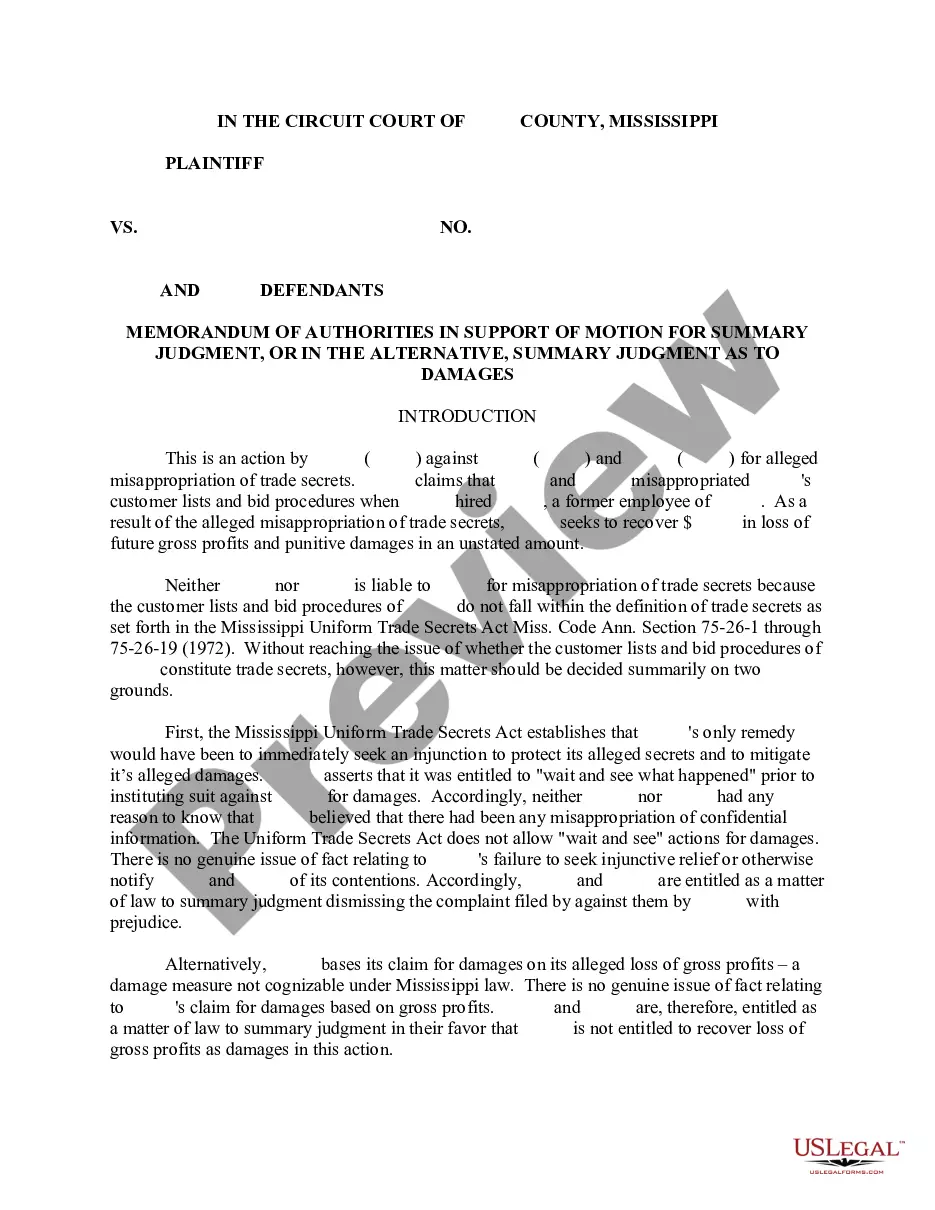
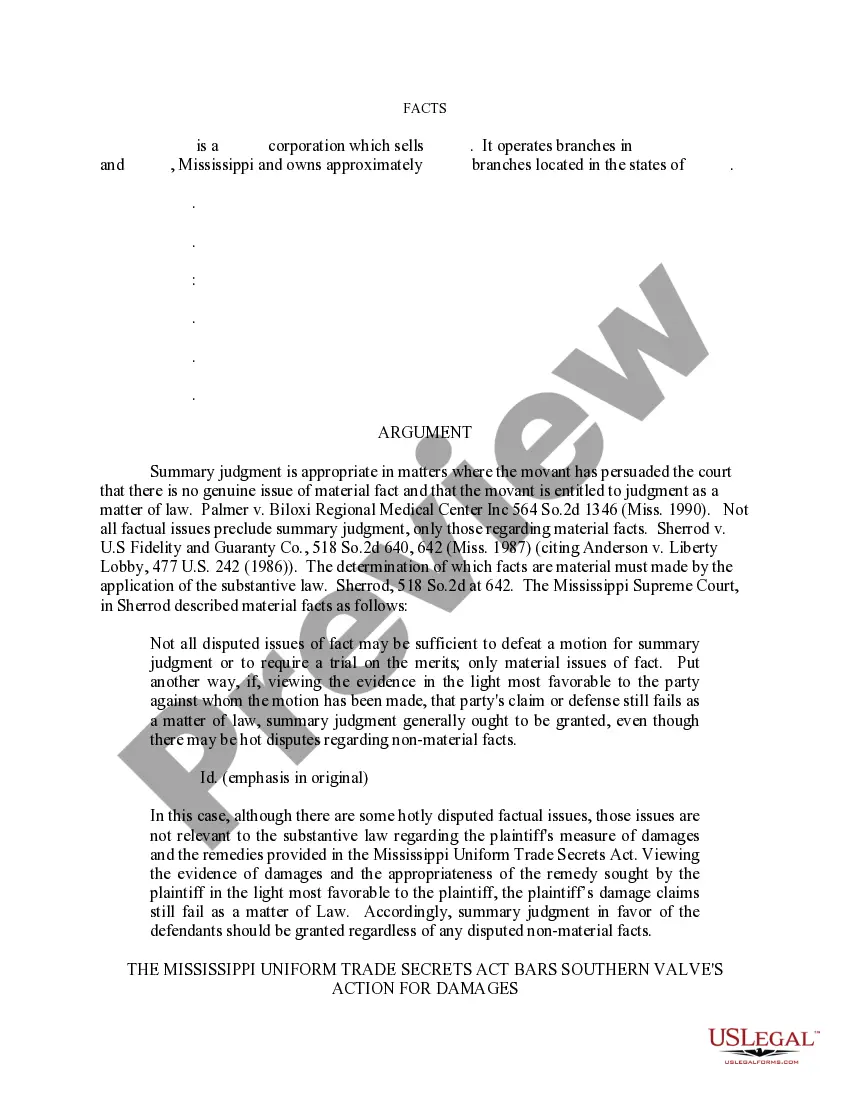
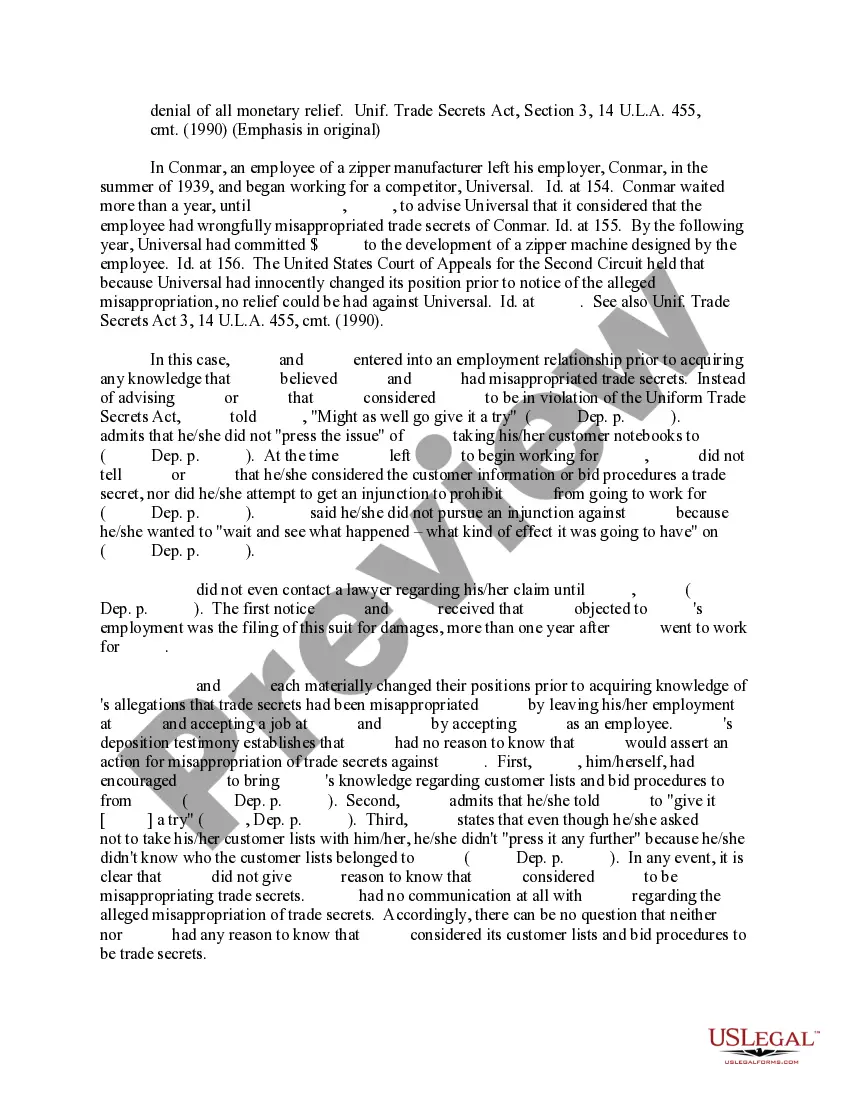
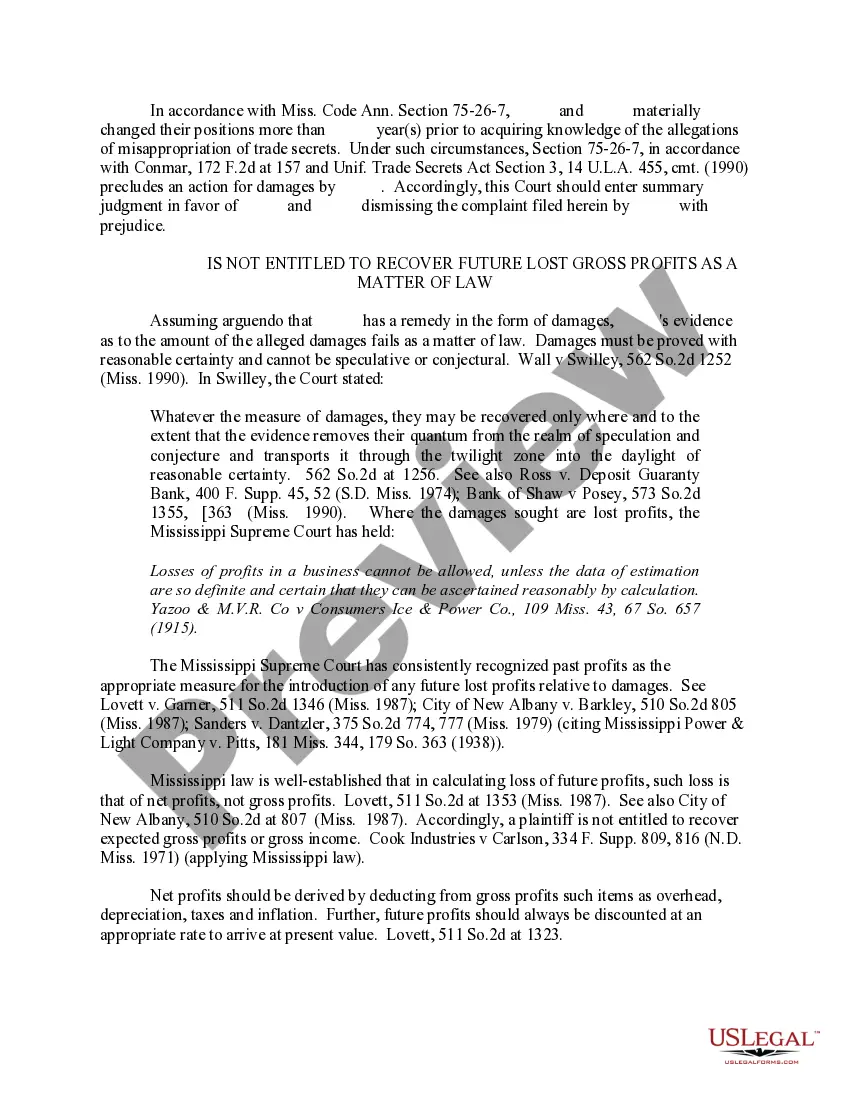
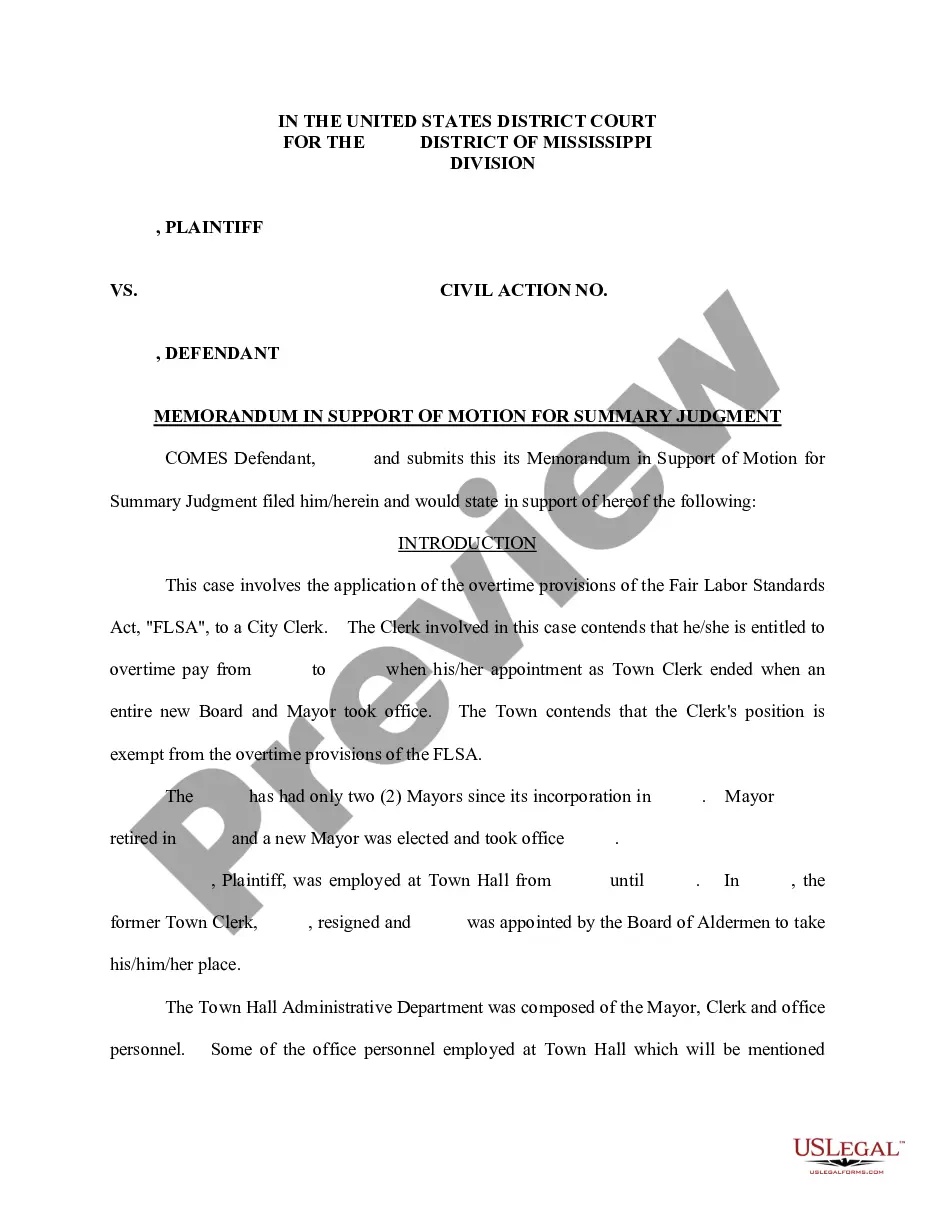
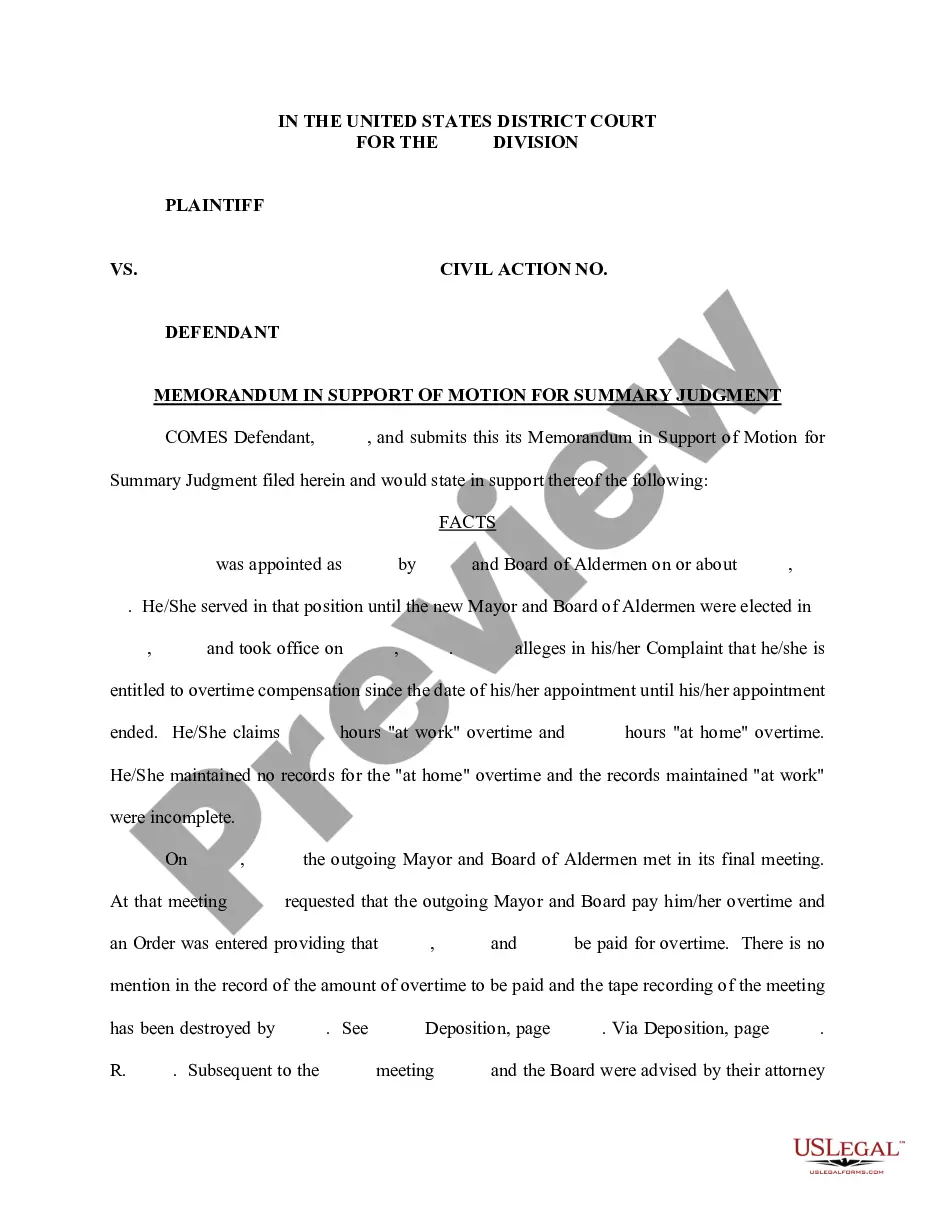
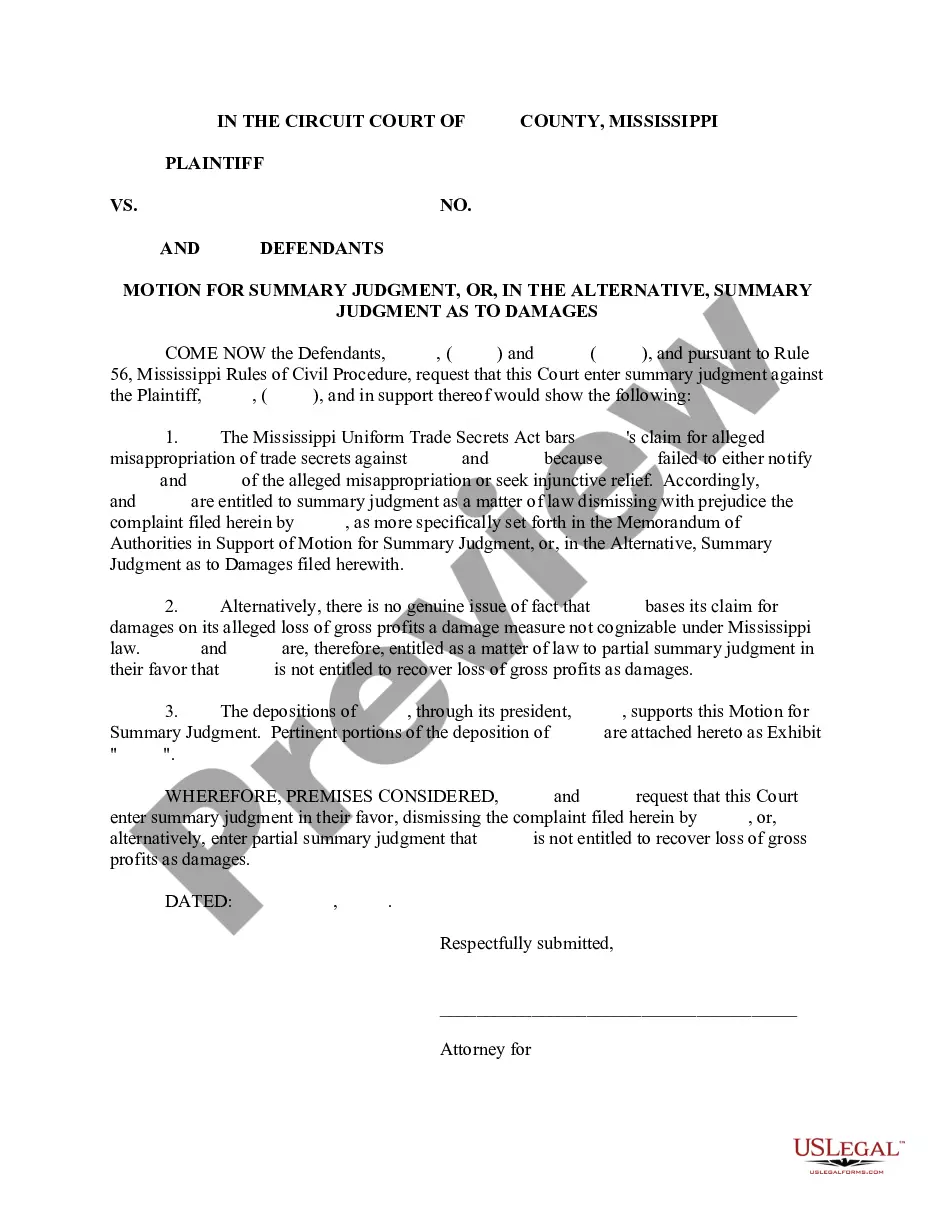
The Memo in Support of Motion for Summary Judgment is a legal document filed with the court to support a request for summary judgment. This form differs from other motions in that it specifically outlines the legal arguments and factual basis for why the court should grant summary judgment, a decision that prevents a case from going to trial when there are no significant disputes over material facts. When effectively utilized, this form can expedite legal proceedings by resolving issues before trial.
Main sections of this form
- Title and introduction identifying the motion and parties involved
- Statement of facts relevant to the case, explaining the context
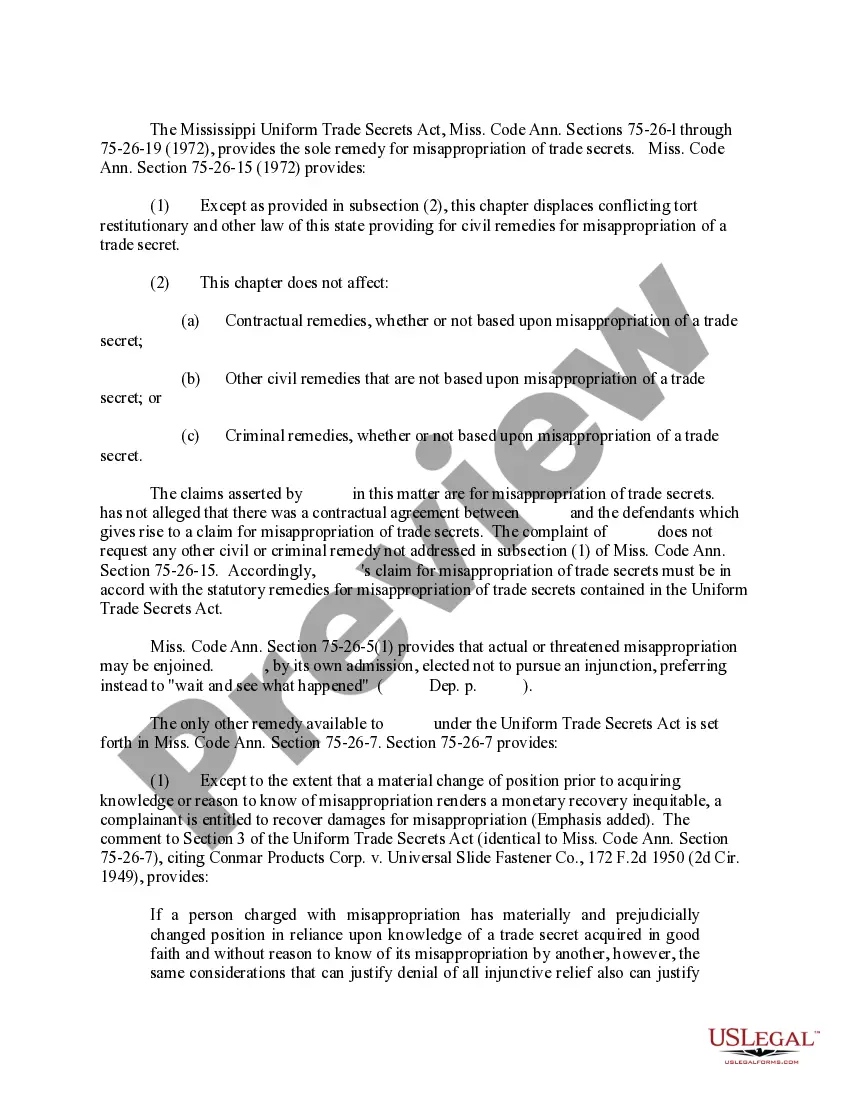
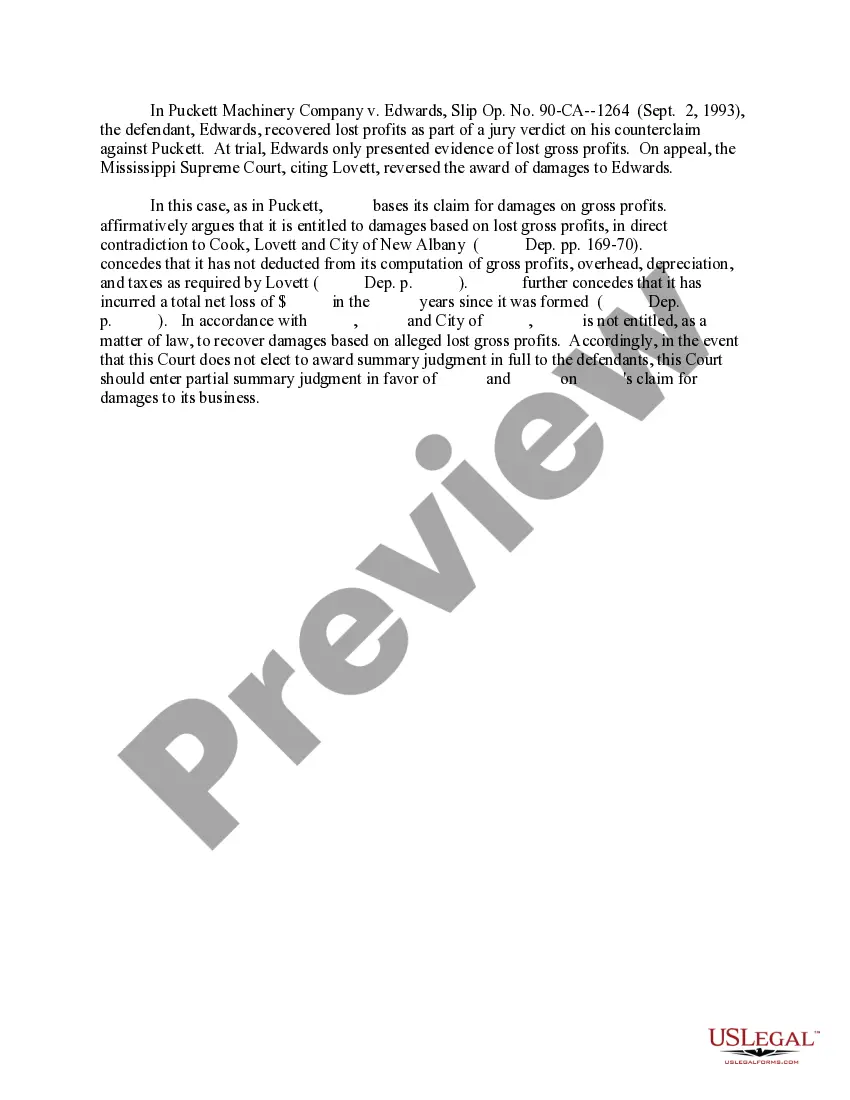
- Legal arguments supporting the motion for summary judgment
- References to applicable laws or statutory provisions
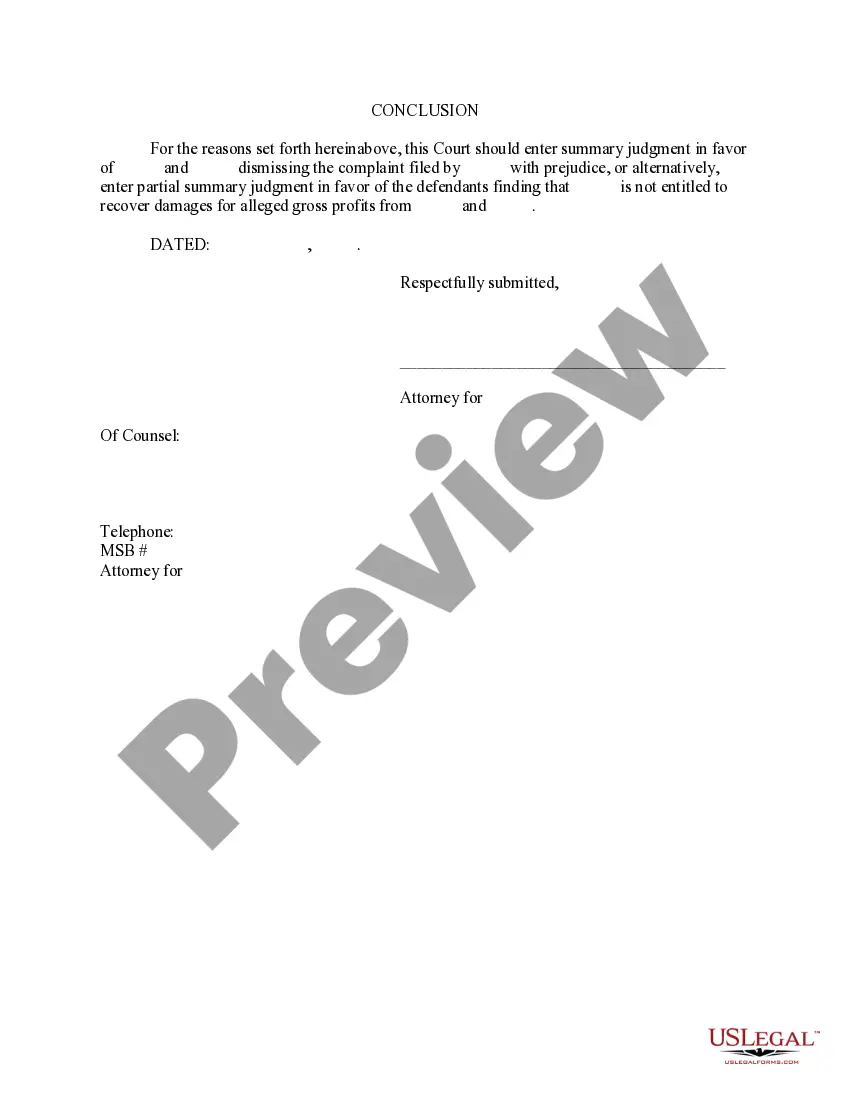
- Conclusion summarizing the requested action from the court
When to use this form
This form is used when a party in a legal proceeding believes that there are no genuine disputes regarding the material facts of the case, allowing the court to decide the case without a full trial. It is commonly applied in civil litigation, particularly in cases involving breach of contract, negligence, or trade secrets, where the facts are largely undisputed but legal interpretations are needed.
Who should use this form
- Parties involved in civil litigation who are seeking to resolve a case without proceeding to trial.
- Legal professionals preparing motions for summary judgment on behalf of clients.
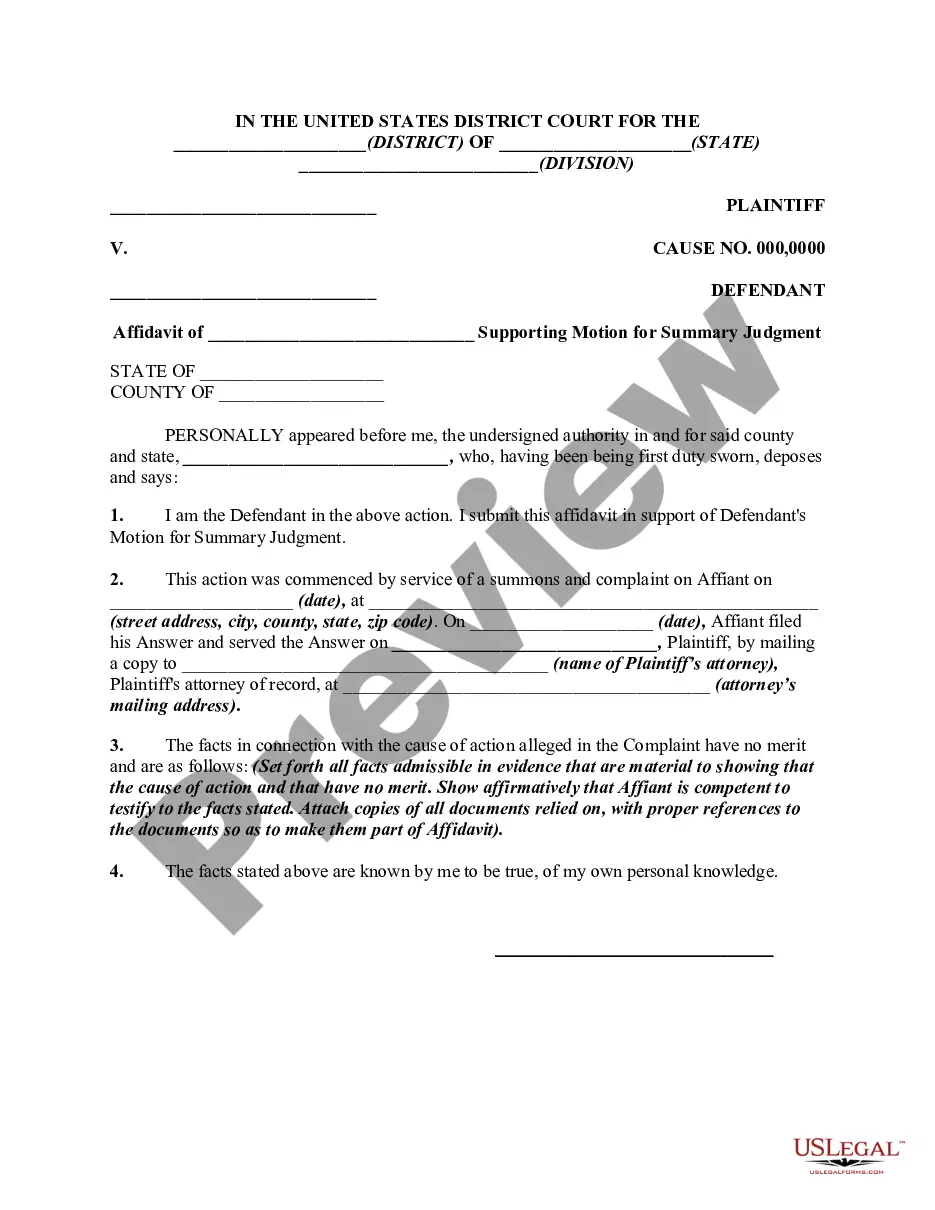
- Individuals or businesses needing to assert claims or defenses under applicable statutes.
Steps to complete this form
- Identify and state the parties involved in the case.
- Clearly outline the relevant facts of the case that support the motion.
- Provide legal arguments and cite relevant statutes or case law.
- Conclude with a clear statement of the relief being requested from the court.
- Review and ensure all necessary signatures are included before filing.
Notarization requirements for this form
This form does not typically require notarization unless specified by local law. However, users should check their jurisdiction's requirements to ensure compliance.
Get your form ready online
Our built-in tools help you complete, sign, share, and store your documents in one place.
Make edits, fill in missing information, and update formatting in US Legal Forms—just like you would in MS Word.
Download a copy, print it, send it by email, or mail it via USPS—whatever works best for your next step.
Sign and collect signatures with our SignNow integration. Send to multiple recipients, set reminders, and more. Go Premium to unlock E-Sign.
If this form requires notarization, complete it online through a secure video call—no need to meet a notary in person or wait for an appointment.
We protect your documents and personal data by following strict security and privacy standards.

Make edits, fill in missing information, and update formatting in US Legal Forms—just like you would in MS Word.

Download a copy, print it, send it by email, or mail it via USPS—whatever works best for your next step.

Sign and collect signatures with our SignNow integration. Send to multiple recipients, set reminders, and more. Go Premium to unlock E-Sign.

If this form requires notarization, complete it online through a secure video call—no need to meet a notary in person or wait for an appointment.

We protect your documents and personal data by following strict security and privacy standards.
Typical mistakes to avoid
- Failing to include all relevant facts that support the motion.
- Not properly citing applicable laws or case precedents.
- Overlooking necessary signatures or filing deadlines.
Benefits of completing this form online
- Convenient access to legal templates drafted by licensed attorneys.
- Editable fields allow for tailoring the document to specific circumstances.
- Time-efficient downloads enable quick preparation of legal motions.
Looking for another form?

Form popularity
FAQ
Rule 56 of the Federal Rules of Civil Procedure governs summary judgment for federal courts. Under Rule 56, in order to succeed in a motion for summary judgment, a movant must show 1) that there is no genuine dispute as to any material fact, and 2) that the movant is entitled to judgment as a matter of law.
Completely resolve a case (e.g., entry of judgment for plaintiff or defendants) Completely resolve a claim. Completely determine the status of a particular party. Resolve a particular claim's application to a particular party. Establish a fact or ruling applicable to the case as it is further adjudicated.
A document that cites (refers to) legal authorities such as statutes and court cases, and explains how those authorities support the position advocated by the party who wrote the memorandum. Often written to support a motion.
An informal record, in the form of a brief written note or outline, of a particular legal transaction or document for the purpose of aiding the parties in remembering particular points or for future reference. A memorandum may be used in court to prove that a particular contract was made.
A memorandum of law is also often called a brief. It is essentially a written legal argument.A memoranum of law in opposition to defendant's motion to strike would usually be plaintiff's legal argument about why the court should not do that.
A motion for summary judgment filed by an opposing party claims that you cannot prevail in the case because there is no legal dispute or your claim is without merit or a defense. Failure to respond to a motion for summary judgment can result in your case being dismissed or a judgment being rendered against you.
A summary judgement occurs when, in a civil case, one party wants to move to a court decision without a trial.When a motion for summary judgement is granted, it indicates there is sufficient evidence to declare one party the clear winner.
A "memorandum of law" or a "memorandum of points and authorities" "briefs" the court, i.e., explains to the court the legal authority, consisting of both decisional and statutory law, which supports the moving party's request.
Introduction/Issue. Facts. Rule (e.g. standard for summary judgment) Analysis/Argument. Issue #1 Heading. Issue #1 (summary statement or paragraph) Rule (law that applies to your issue) Conclusion of Memo (summarize why the court should grant your motion)