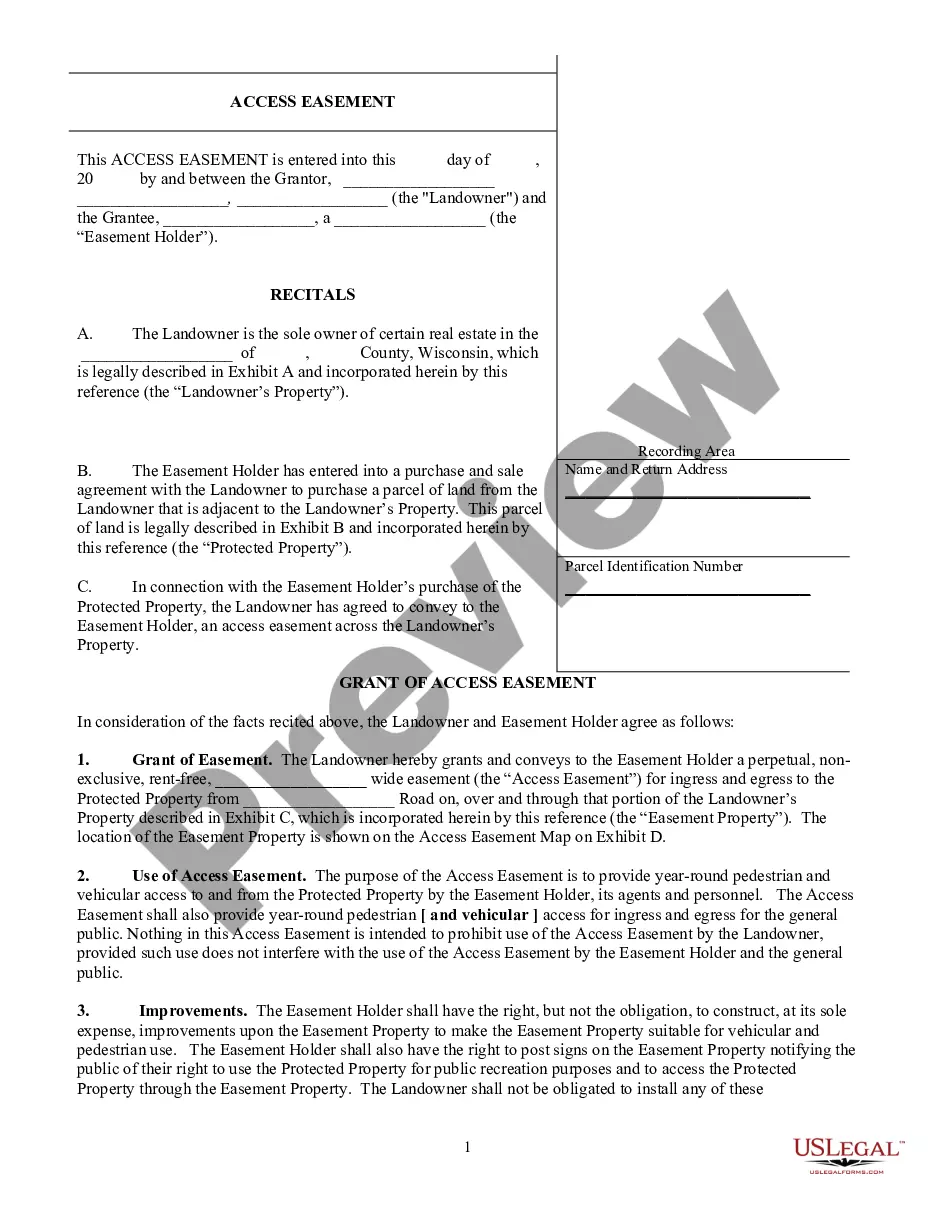
Access Easement
What this document covers
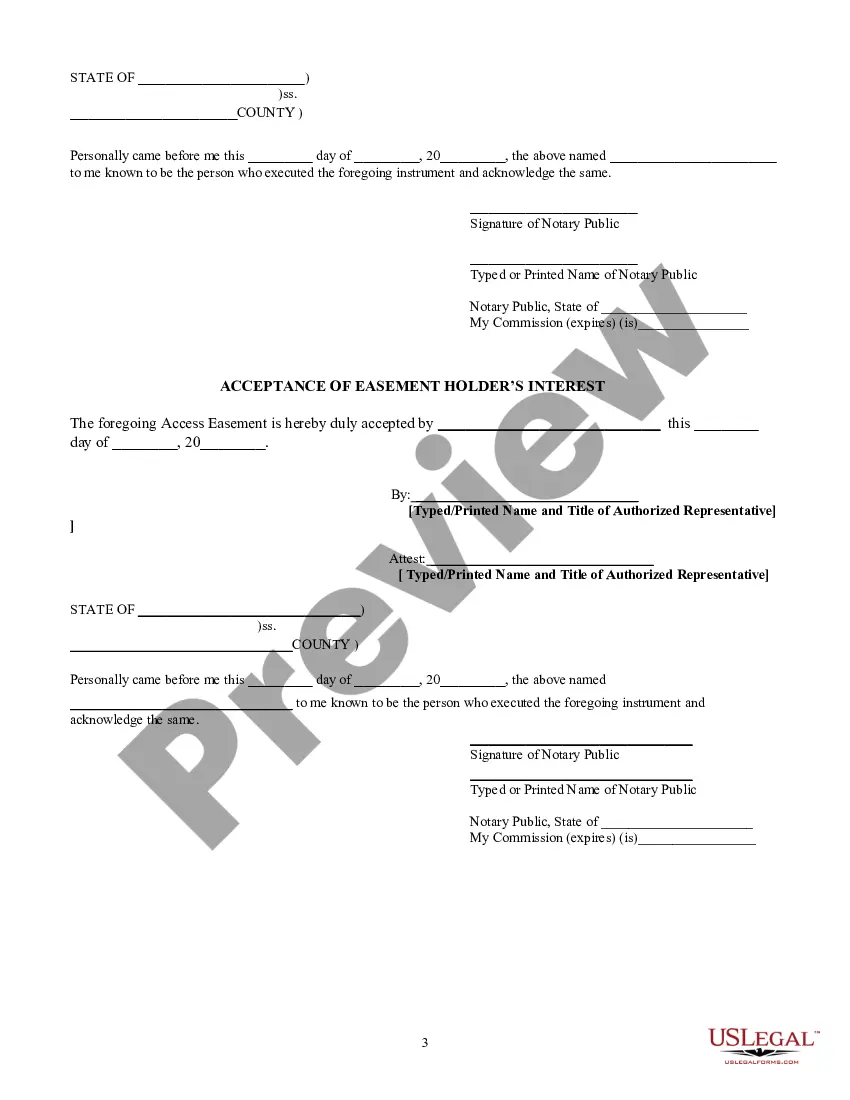
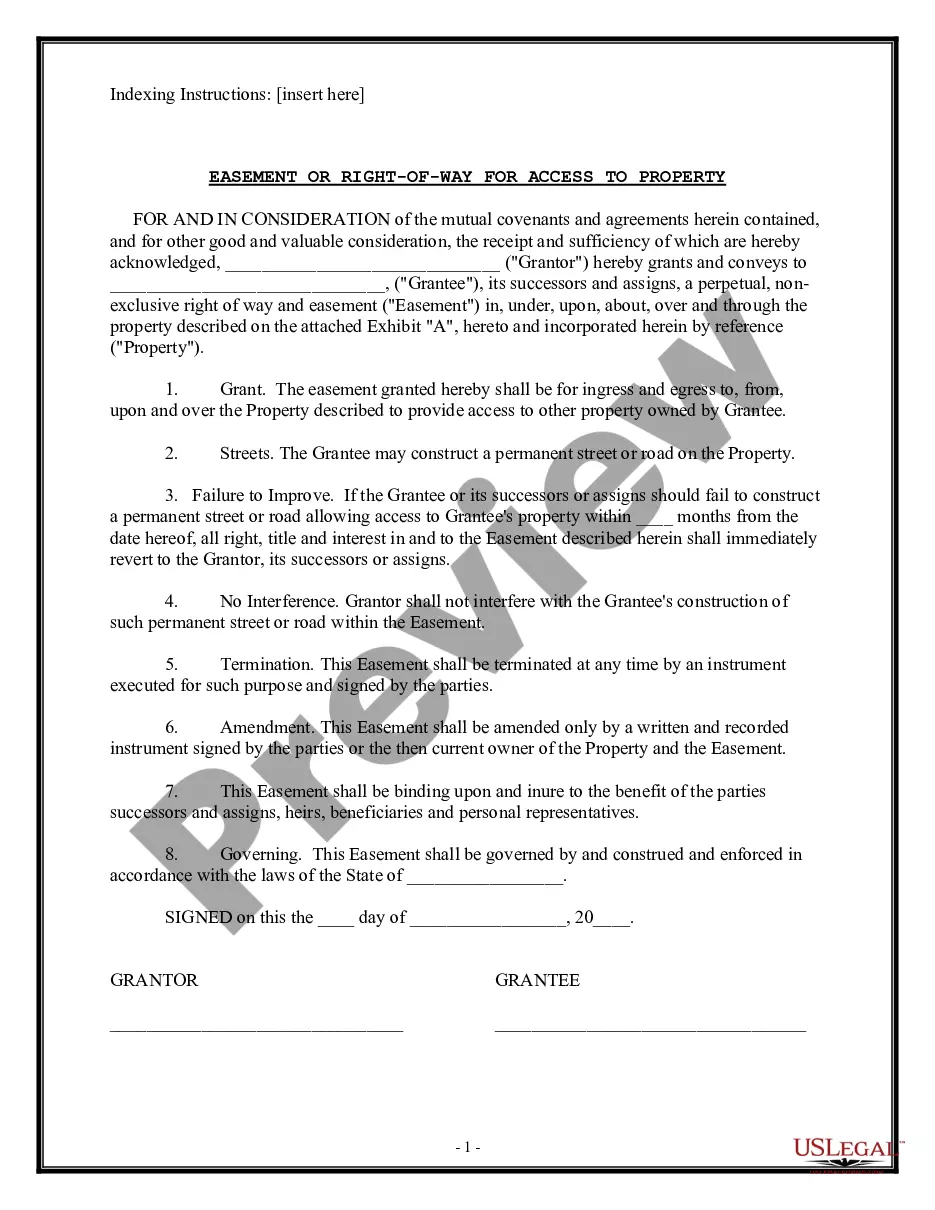
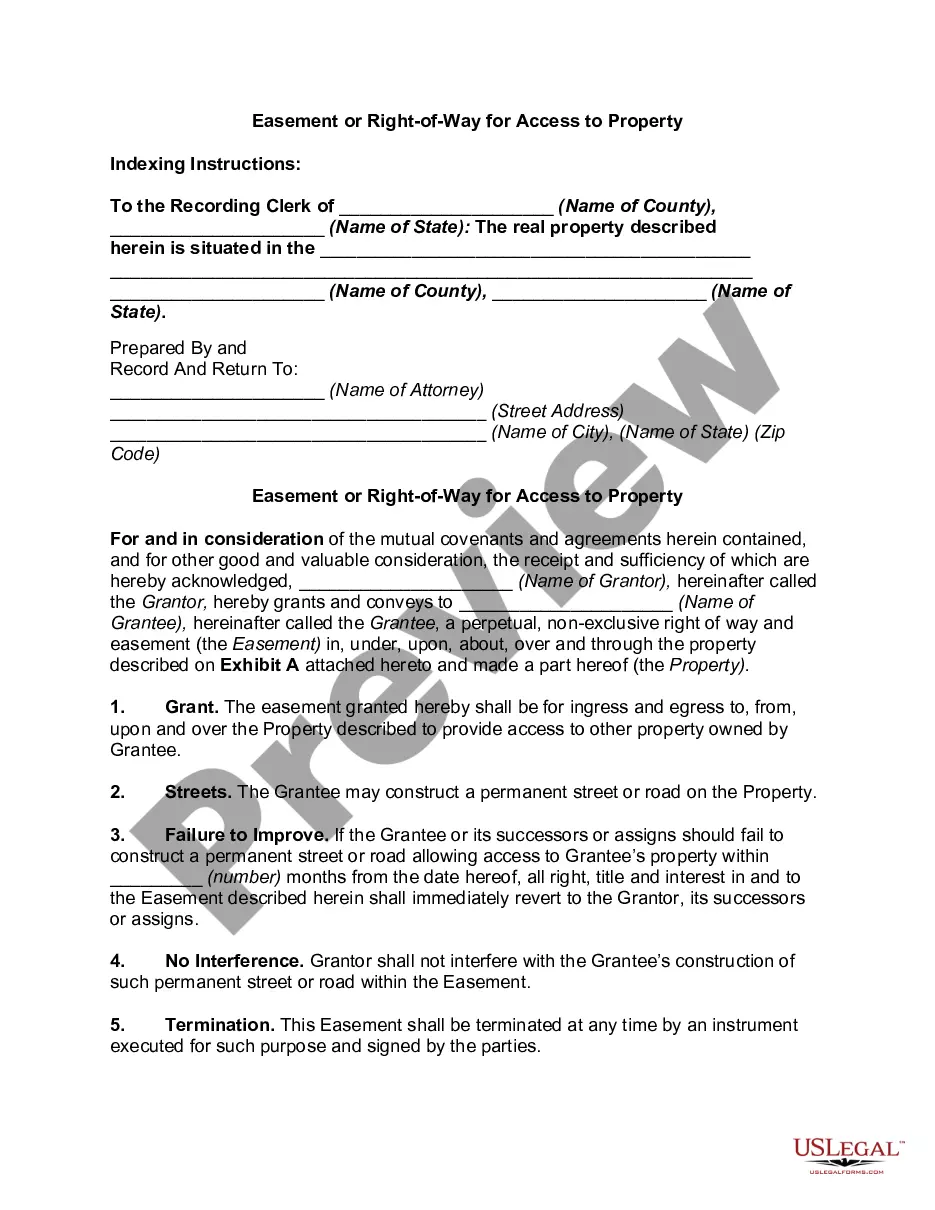
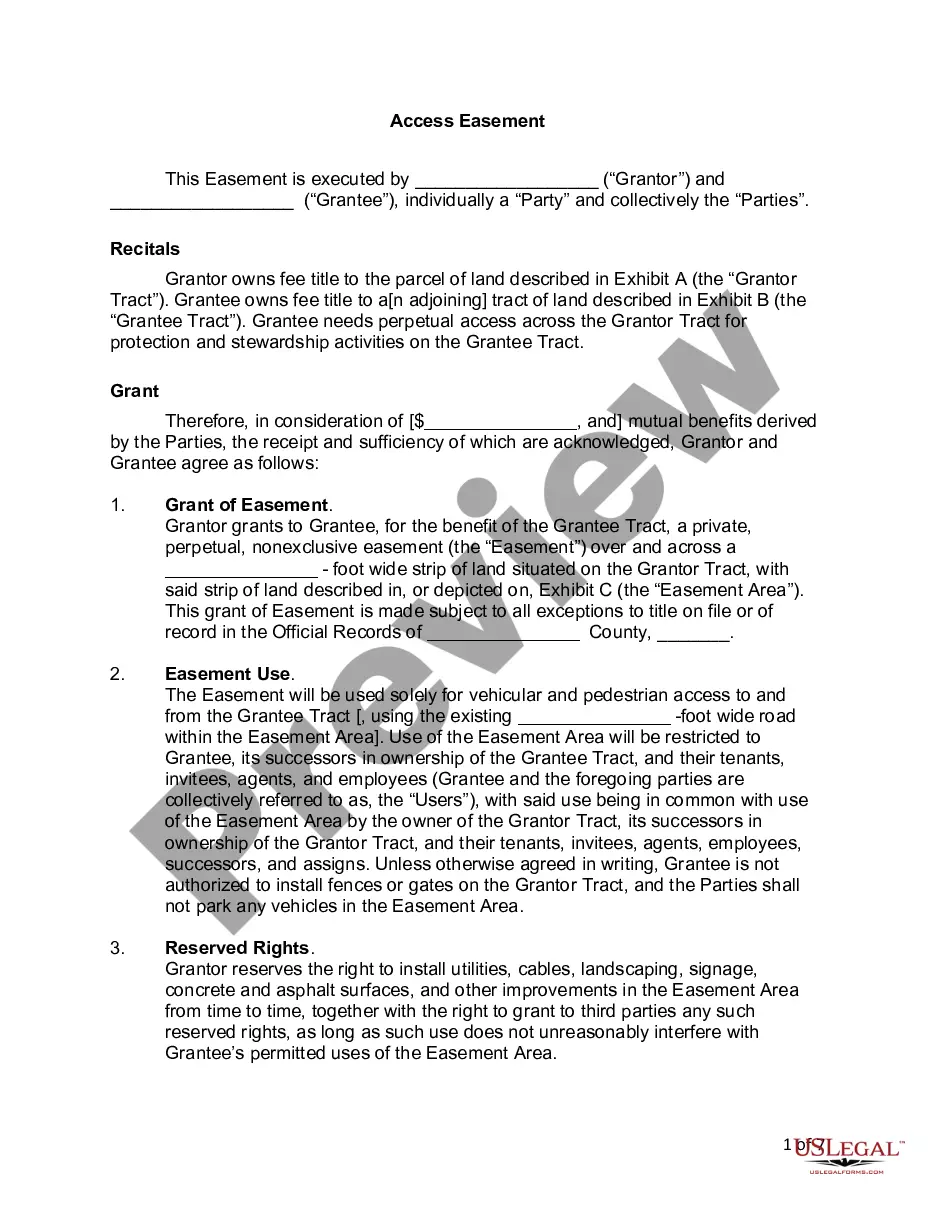
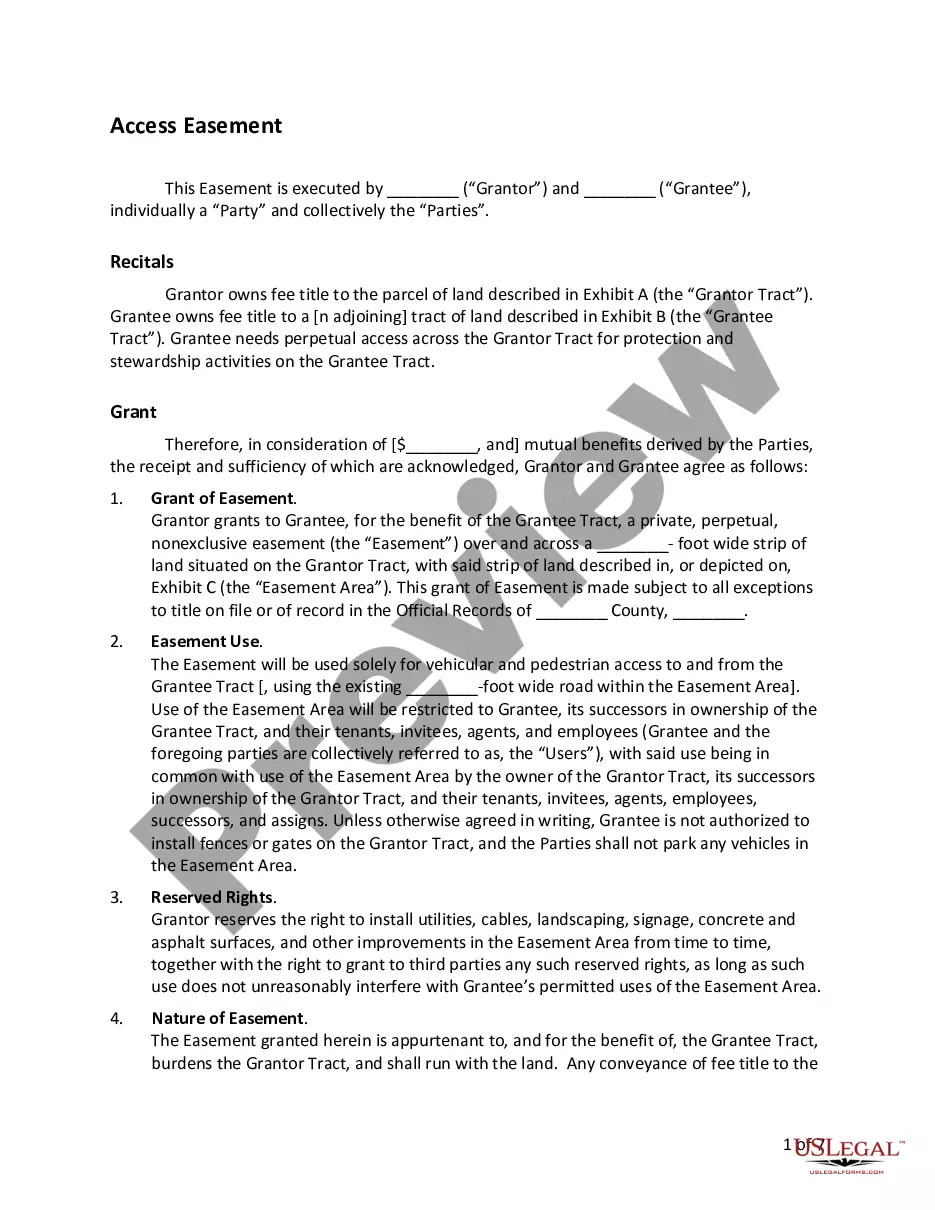
The Access Easement form is a legal document that allows one party to use a portion of another party's land for specific access purposes, without granting the right to possess or sell the land. This form is essential for establishing clear terms for access to a property, particularly in cases where the easement is needed for pedestrian or vehicular access to a protected property. Unlike a lease, this agreement focuses solely on the right to use land rather than possession or ownership.
Main sections of this form
- Grant of Easement: Details the specific rights granted to the Easement Holder, including the width and purpose of the easement.
- Use of Access Easement: Specifies the allowed uses of the easement by both the Easement Holder and the general public.
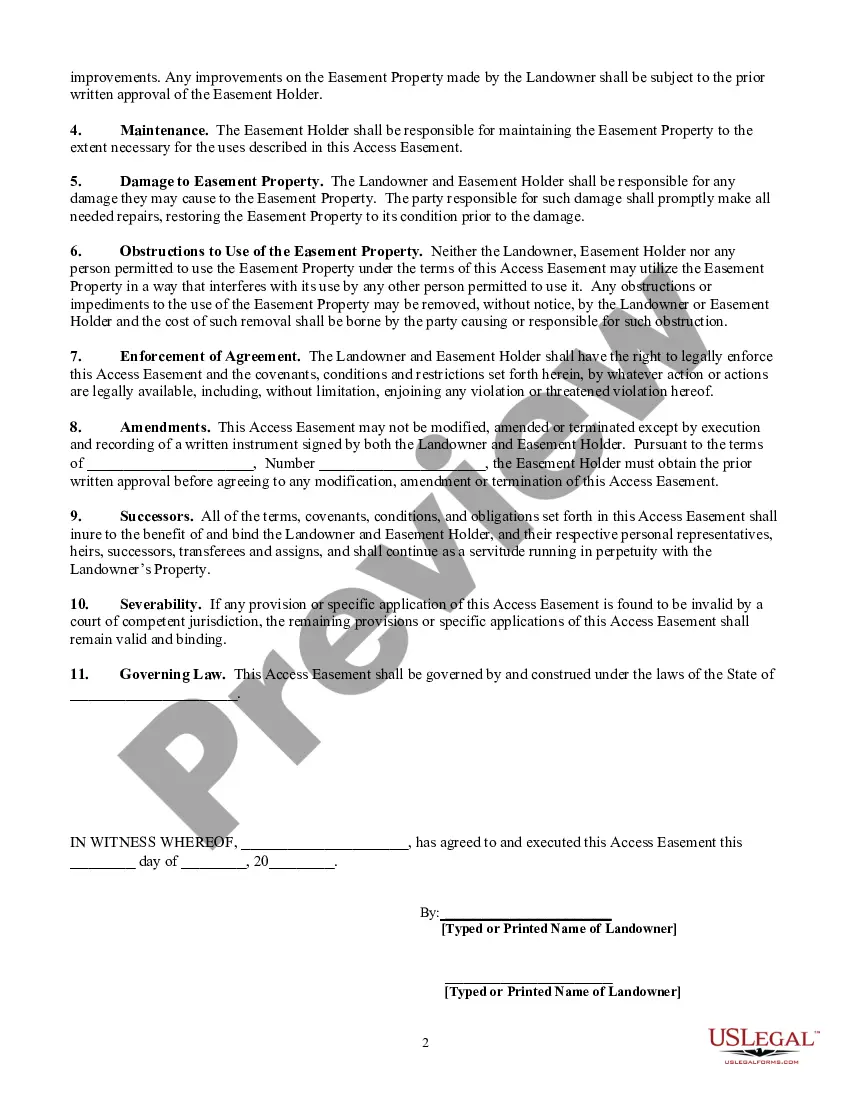
- Improvements: Outlines the Easement Holder's rights to make improvements on the easement property.
- Maintenance: Defines responsibilities for maintaining the easement property.
- Enforcement of Agreement: Provides legal avenues for both parties to enforce the terms of the easement.
- Governing Law: States that the agreement will be interpreted according to the laws of the jurisdiction specified.

When to use this document
This form is typically used when a landowner (the Grantor) agrees to grant another party (the Easement Holder) the right to access a property for purposes such as construction, land development, or public recreation. It is particularly important in situations where the easement is necessary for accessing a lot that does not have its own direct route to public roads.
Who needs this form
- Landowners wishing to grant access to their property without relinquishing ownership.
- Individuals or entities seeking legal access to adjacent properties for development or recreational use.
- Attorneys assisting clients in formalizing easement agreements.
Steps to complete this form
- Identify the parties: Enter the names of the Landowner and Easement Holder.
- Specify the property: Provide the legal descriptions for both the Landowner's and Protected Properties.
- Outline easement details: Indicate the width and location of the access easement, referring to the attached maps.
- Enter dates and signatures: Complete the agreement by adding the date and signatures of both parties.
- Notarization: Ensure the form is notarized if required, to validate the agreement.
Does this form need to be notarized?
Yes, this form must be notarized to be legally valid. Notarization helps ensure the authenticity of the signatures and the agreement itself. US Legal Forms offers integrated online notarization, providing a secure and convenient way to get your document notarized via video call.
Get your form ready online
Our built-in tools help you complete, sign, share, and store your documents in one place.
Make edits, fill in missing information, and update formatting in US Legal Forms—just like you would in MS Word.
Download a copy, print it, send it by email, or mail it via USPS—whatever works best for your next step.
Sign and collect signatures with our SignNow integration. Send to multiple recipients, set reminders, and more. Go Premium to unlock E-Sign.
If this form requires notarization, complete it online through a secure video call—no need to meet a notary in person or wait for an appointment.
We protect your documents and personal data by following strict security and privacy standards.

Make edits, fill in missing information, and update formatting in US Legal Forms—just like you would in MS Word.

Download a copy, print it, send it by email, or mail it via USPS—whatever works best for your next step.

Sign and collect signatures with our SignNow integration. Send to multiple recipients, set reminders, and more. Go Premium to unlock E-Sign.

If this form requires notarization, complete it online through a secure video call—no need to meet a notary in person or wait for an appointment.

We protect your documents and personal data by following strict security and privacy standards.
Common mistakes to avoid
- Failing to accurately describe the easement's location and dimensions.
- Not obtaining signatures from all necessary parties, including notarization if required.
- Neglecting to specify maintenance responsibilities, leading to disputes later.
Why use this form online
- Convenience: Easily download and print the form at your convenience.
- Editability: Customize the form to meet your specific needs before finalizing.
- Reliability: Access forms drafted by licensed attorneys, ensuring legal compliance.
Legal use & context
- An Access Easement is enforceable against future owners of the property, ensuring ongoing access rights.
- It is advisable to clearly outline the terms to avoid future conflicts or misunderstandings regarding the easement.
- This form should be recorded with the local land registry to provide public notice of the easement rights.
Key takeaways
- The Access Easement allows specified access to land without ownership transfer.
- Clear specifications in the agreement prevent disputes between parties.
- Proper execution and notarization are crucial for legal enforceability.
Looking for another form?
Form popularity
FAQ
Yes, in most cases, you can build a fence on an easement. Fences are regularly built along or across easements.
Easements are divided into two classifications: 1) affirmative easements and 2) negative easements. An affirmative easement gives a grantee the right to use the grantor's property for a specific purpose. It gives the easement holder a non-possessory interest in the grantor's land.
The most common types of easements are utility easements, which benefit utility companies, enabling them to maintain and access their lines or pipes over or under your property. Almost all properties are burdened by utility easements.
The short answer is ? the owner of the easement is responsible for maintaining the easement.