Access Easement
About this form
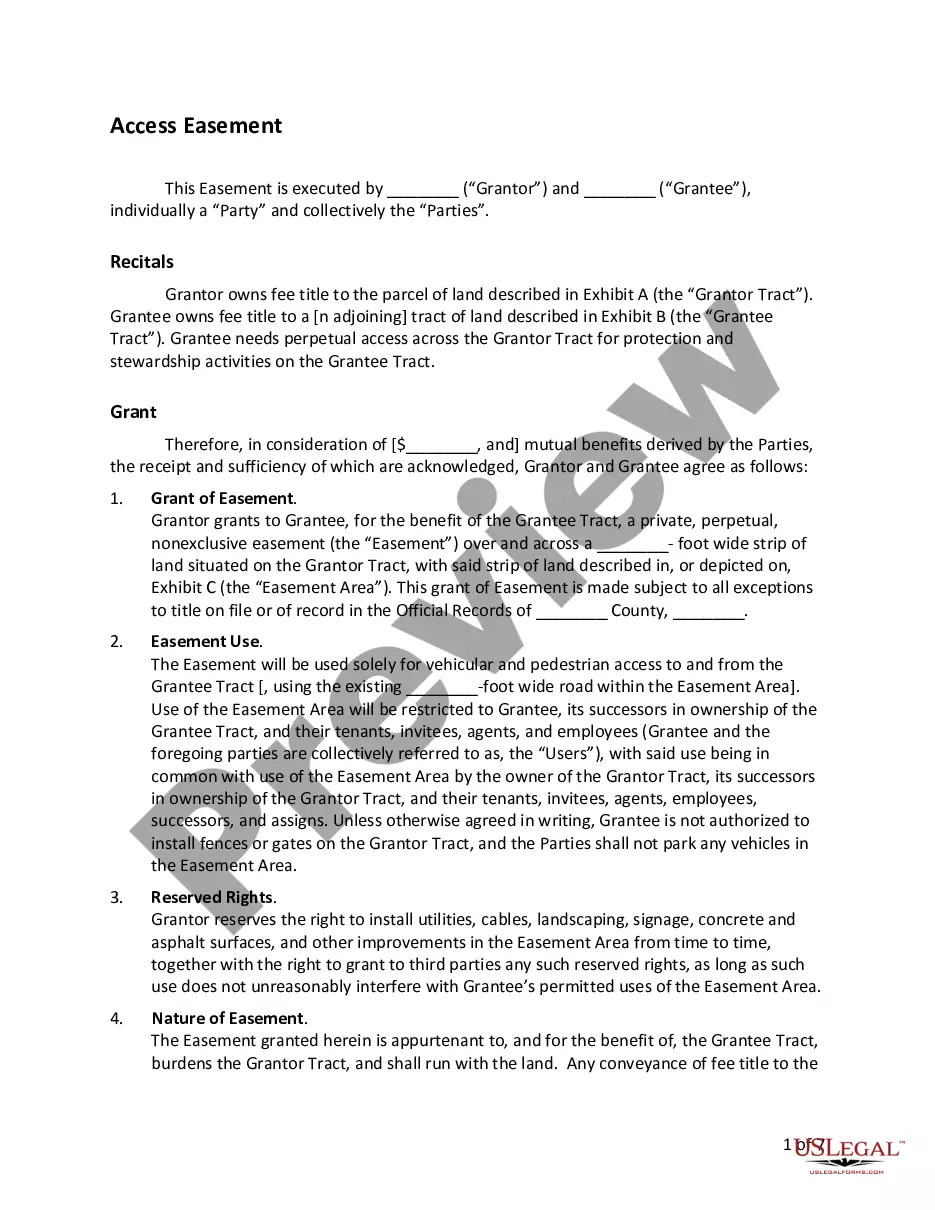
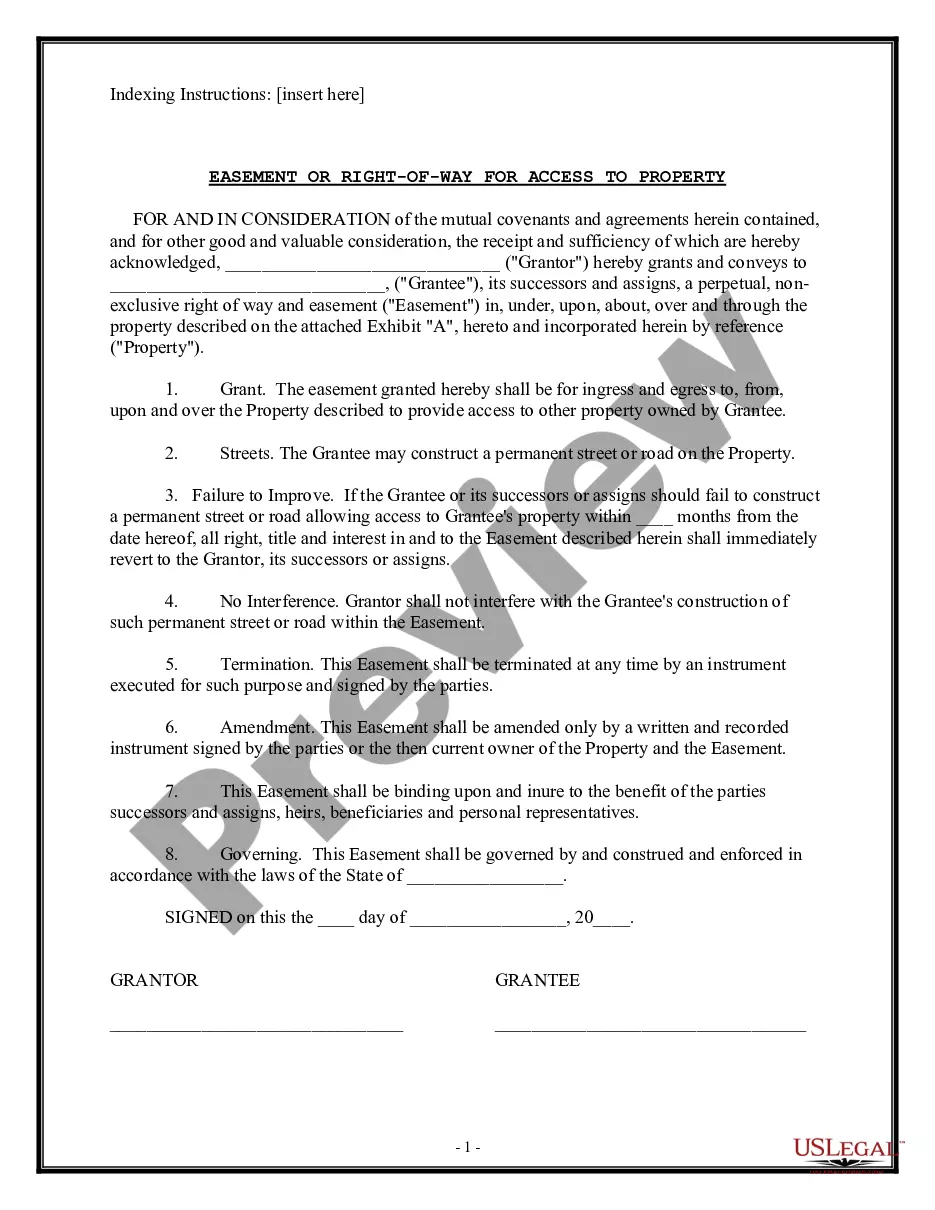
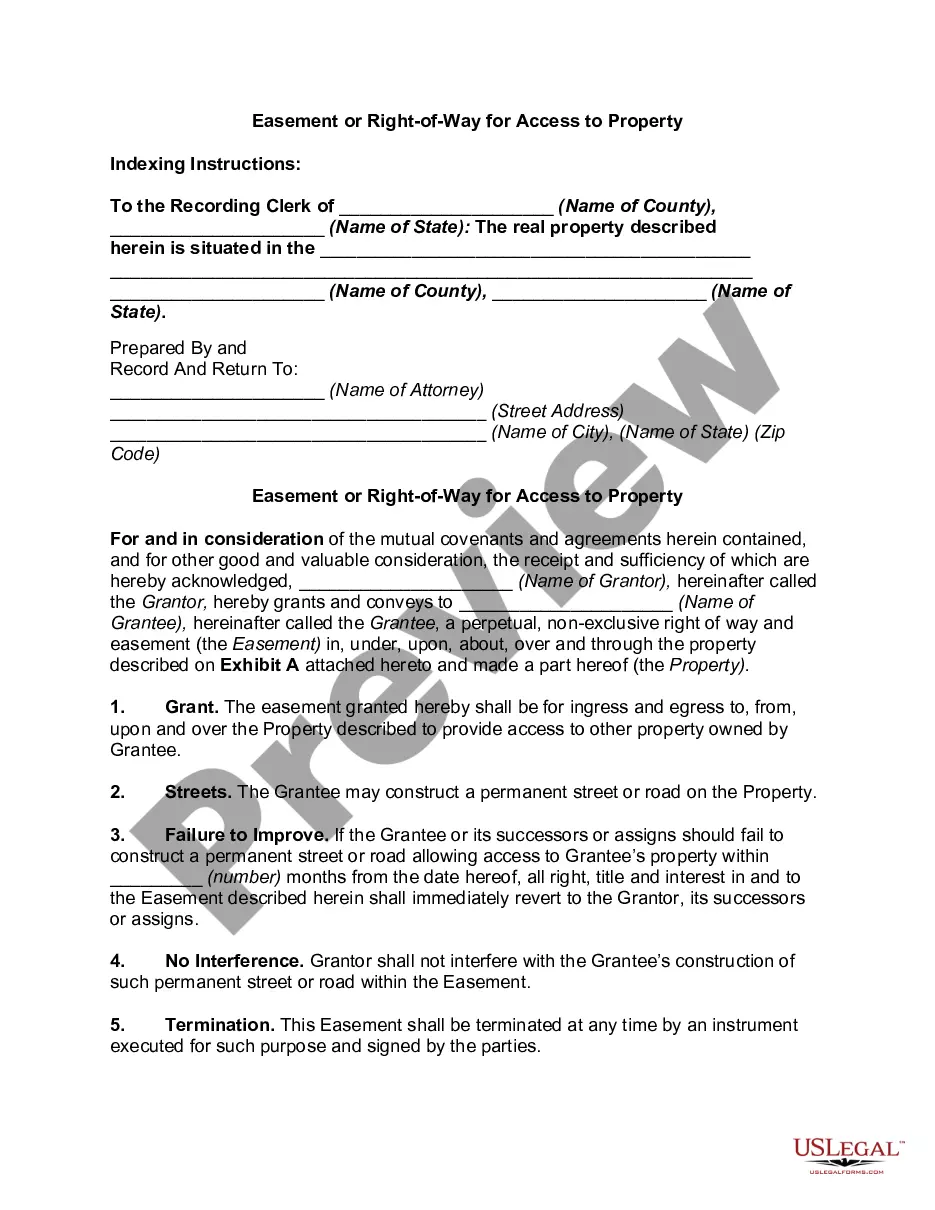
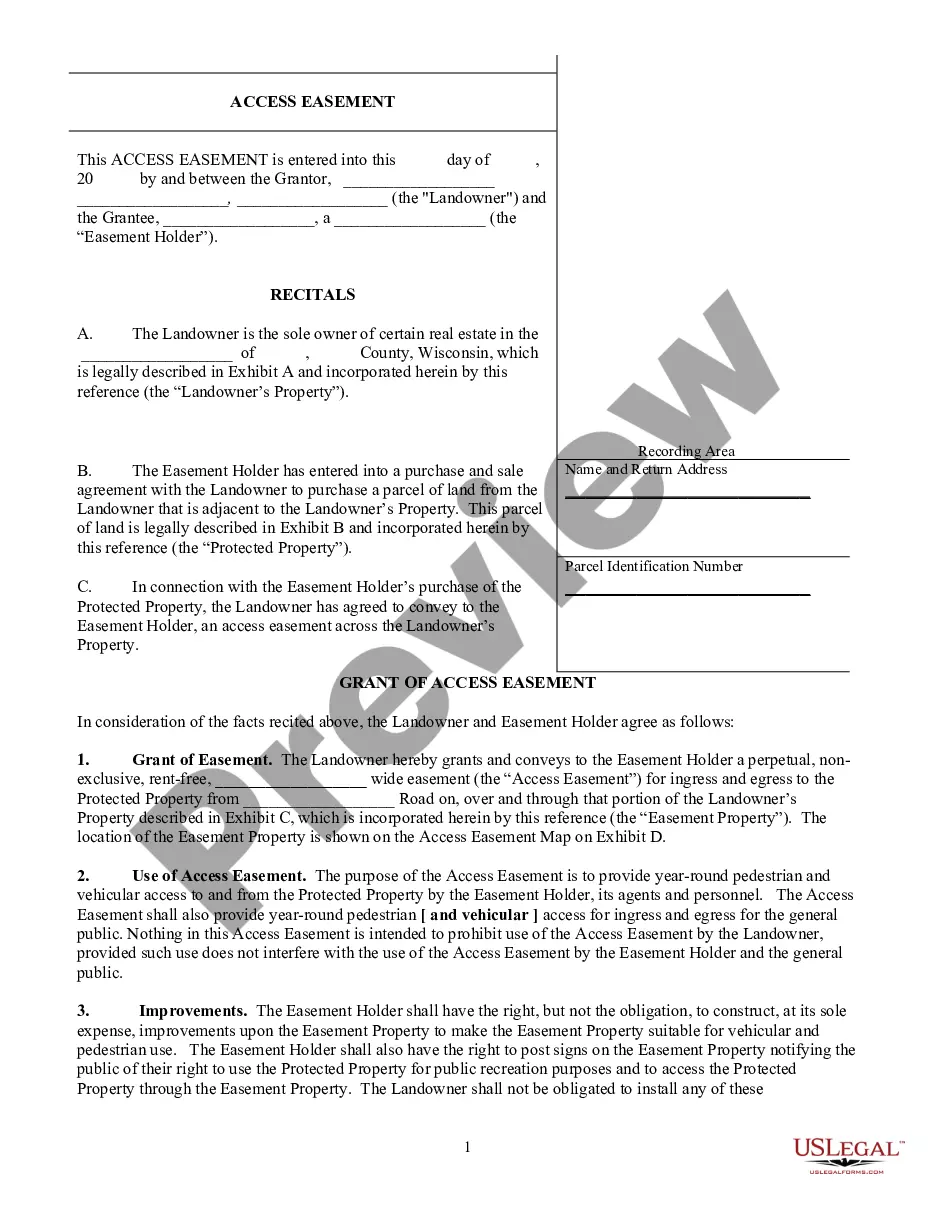
The Access Easement is a legal document that grants permission for one party (the Grantee) to use a specific portion of another party's (the Grantor) land for a designated purpose. Unlike other land use agreements, this form allows for access without transferring ownership or possession of the land. It is particularly useful for ensuring that landowners can access adjoining properties for essential activities while clearly defining the boundaries of access and usage rights.
Form components explained
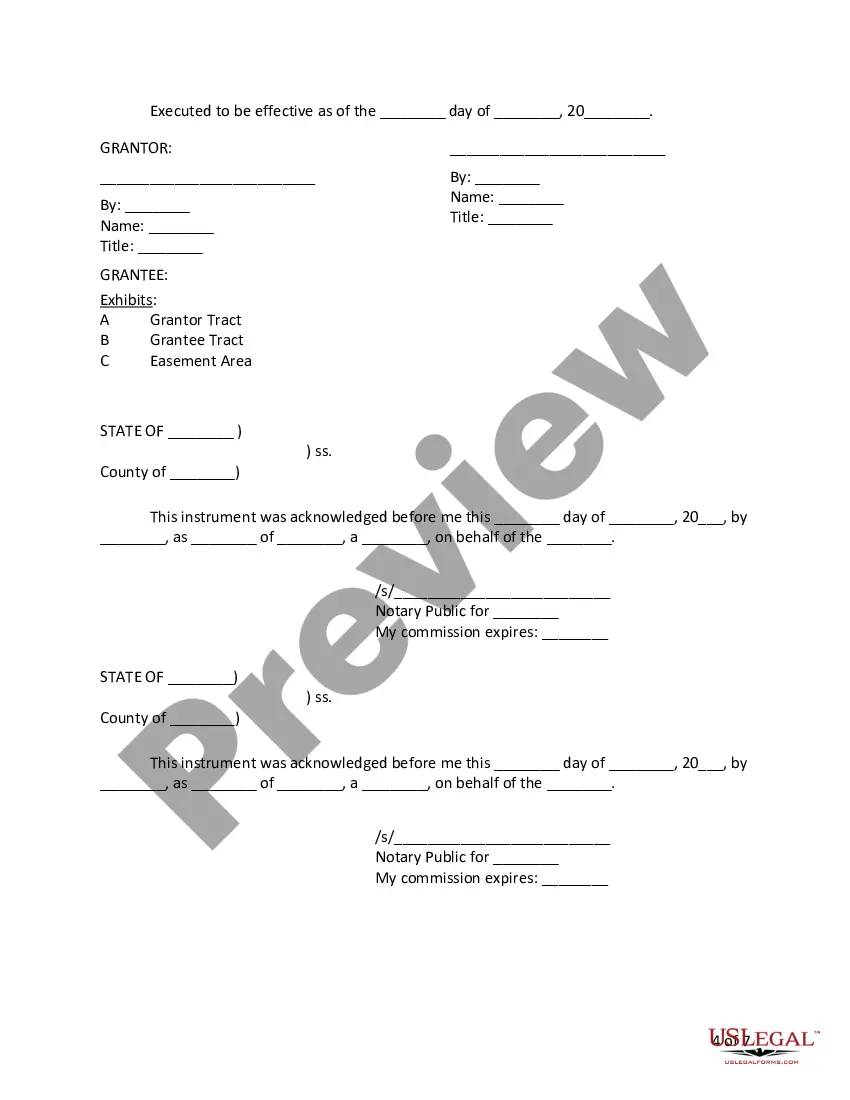
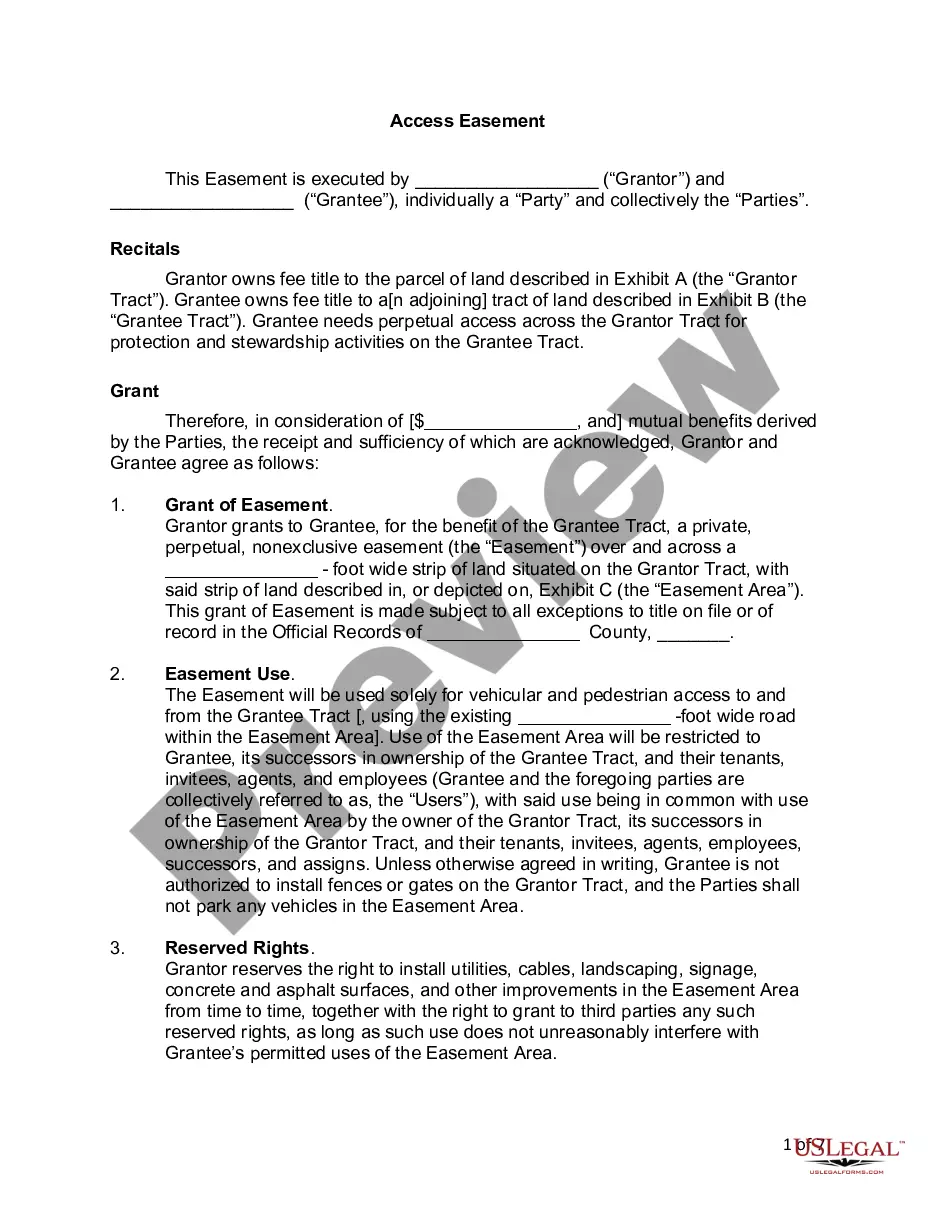
- Parties Involved: Identifies the Grantor and Grantee who are entering the easement agreement.
- Grant of Easement: Specifies the nonexclusive easement rights granted, including the description of the easement area.
- Easement Use: Outlines how the easement may be used, including restrictions to ensure the rights of both parties are respected.
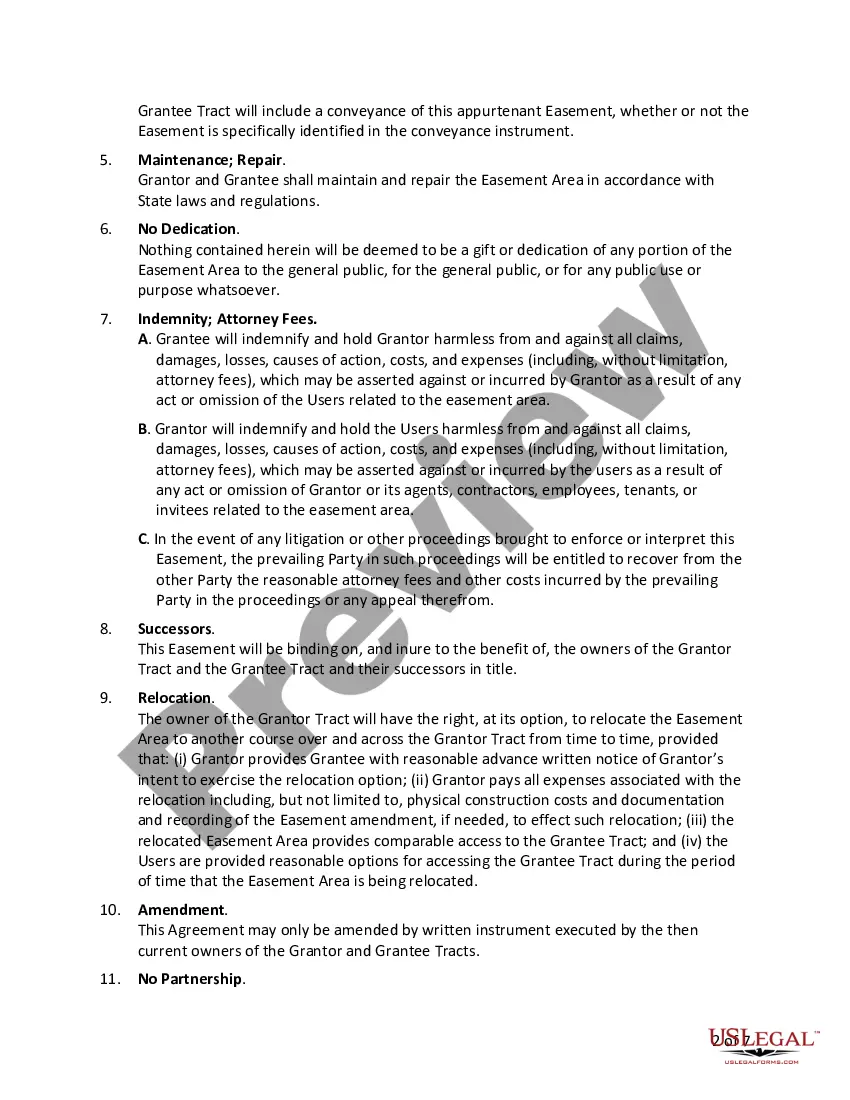
- Maintenance Responsibilities: Details the obligations of both parties for maintaining the easement area.
- Indemnification Clauses: Provides for protection against claims and liabilities incurred by either party associated with the easement area.




When this form is needed
This Access Easement form should be utilized when a property owner (Grantor) needs to allow another party (Grantee) to access their land for specific activities, such as maintaining a neighboring property or accessing a natural resource. It is particularly relevant in agricultural, residential, or commercial real estate sectors where access routes need to be clearly defined and agreed upon to prevent future disputes.
Who needs this form
- Property owners (Grantors) who want to allow another party to access their land without transferring ownership.
- Individuals or businesses (Grantees) needing consistent access to an adjoining property for maintenance or stewardship purposes.
- Real estate professionals managing property transfers that involve access agreements.
Instructions for completing this form
- Identify the parties: Fill in the names of the Grantor and Grantee at the beginning of the form.
- Describe the properties: Provide detailed descriptions of the Grantor Tract and Grantee Tract as indicated in the exhibits.
- Define the easement area: Specify the dimensions and location of the easement area to clarify access rights.
- Include any consideration: If applicable, note any fees or mutual benefits exchanged between the parties.
- Obtain signatures: Ensure all parties sign the document and have it notarized if required by local law.
Notarization requirements for this form
This form does not typically require notarization unless specified by local law. However, having the document notarized may offer additional legal protection and ensure authenticity, depending on jurisdictional practices.
Get your form ready online
Our built-in tools help you complete, sign, share, and store your documents in one place.
Make edits, fill in missing information, and update formatting in US Legal Forms—just like you would in MS Word.
Download a copy, print it, send it by email, or mail it via USPS—whatever works best for your next step.
Sign and collect signatures with our SignNow integration. Send to multiple recipients, set reminders, and more. Go Premium to unlock E-Sign.
If this form requires notarization, complete it online through a secure video call—no need to meet a notary in person or wait for an appointment.
We protect your documents and personal data by following strict security and privacy standards.

Make edits, fill in missing information, and update formatting in US Legal Forms—just like you would in MS Word.

Download a copy, print it, send it by email, or mail it via USPS—whatever works best for your next step.

Sign and collect signatures with our SignNow integration. Send to multiple recipients, set reminders, and more. Go Premium to unlock E-Sign.

If this form requires notarization, complete it online through a secure video call—no need to meet a notary in person or wait for an appointment.

We protect your documents and personal data by following strict security and privacy standards.
Avoid these common issues
- Failing to accurately describe the easement area, leading to potential disputes.
- Not specifying the permitted uses of the easement, which can result in unauthorized activities.
- Neglecting to include indemnification clauses that protect against liability from unforeseen issues.
Benefits of using this form online
- Convenience: Downloadable forms can be completed at your own pace.
- Editability: Easily make changes to tailor the document to your specific needs.
- Reliability: Forms are drafted by licensed attorneys, ensuring legal compliance.
Looking for another form?
Form popularity
FAQ
Easements are divided into two classifications: 1) affirmative easements and 2) negative easements. An affirmative easement gives a grantee the right to use the grantor's property for a specific purpose. It gives the easement holder a non-possessory interest in the grantor's land.
The most common types of easements are utility easements, which benefit utility companies, enabling them to maintain and access their lines or pipes over or under your property. Almost all properties are burdened by utility easements.
Yes, in most cases, you can build a fence on an easement. Fences are regularly built along or across easements.
Affirmative easements are the most common. They allow privileged use of land owned by others. Negative easements are more restrictive. They limit how land is used.
In New Jersey, easements can be created by prescription or extended use over a long time period. For example, if your neighbor can show that they have been using your roadway to access their landlocked piece of real estate for years, they may acquire an easement.
These types of easements include utility, aerial utility, drainage, and slope easements. While you still own the property, you are no longer allowed to use it in any way that would interfere with the easements.
The short answer is ? the owner of the easement is responsible for maintaining the easement.