Easement for Access to Property
About this form
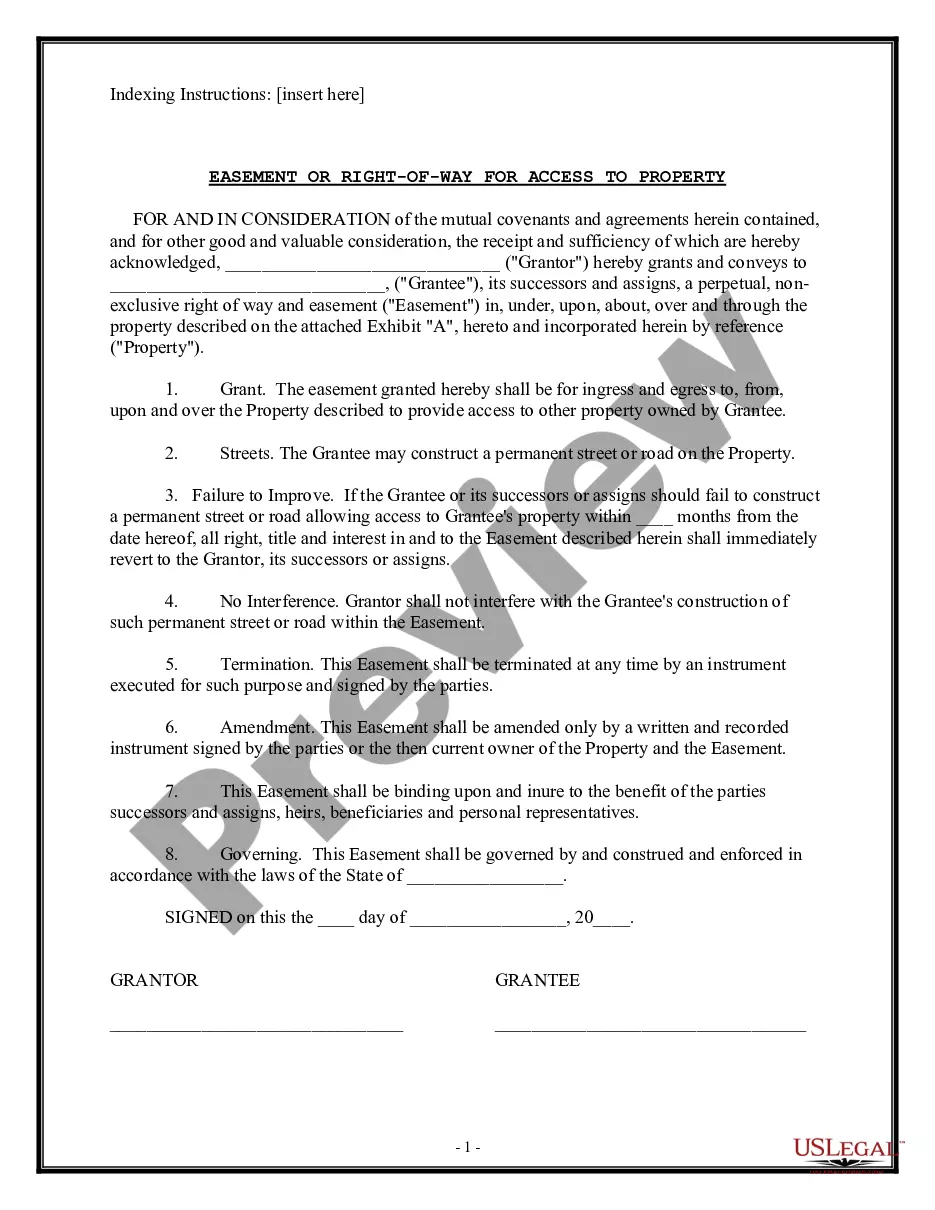
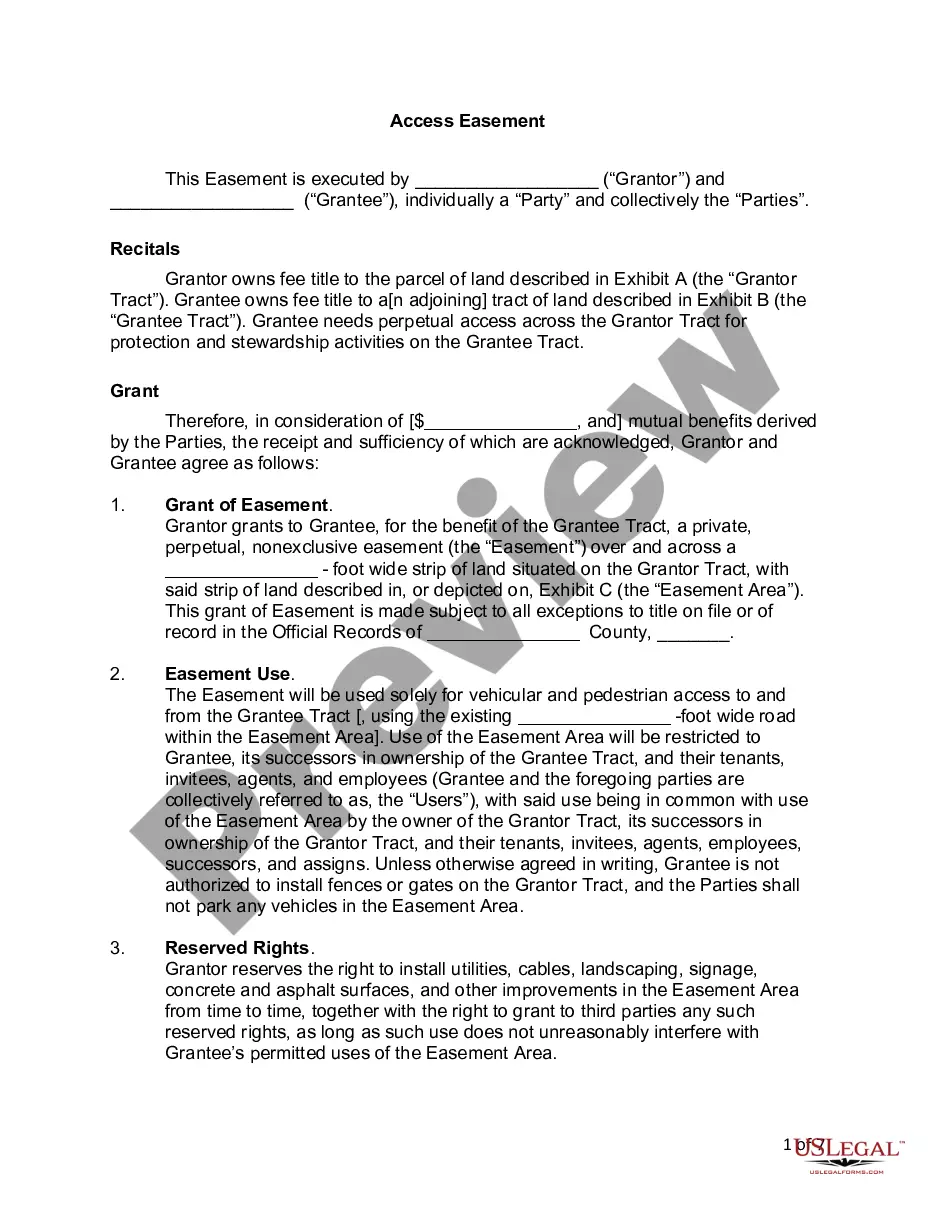
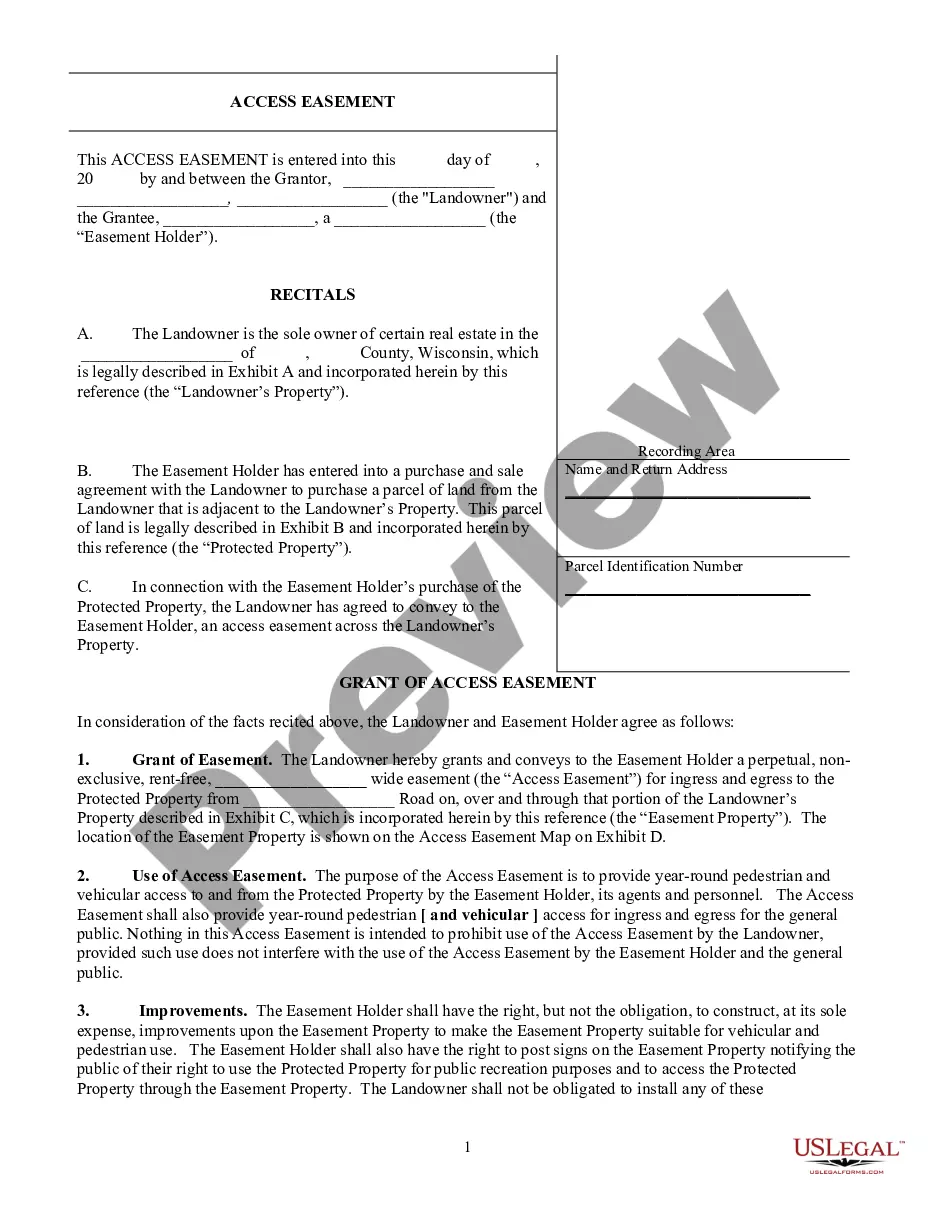
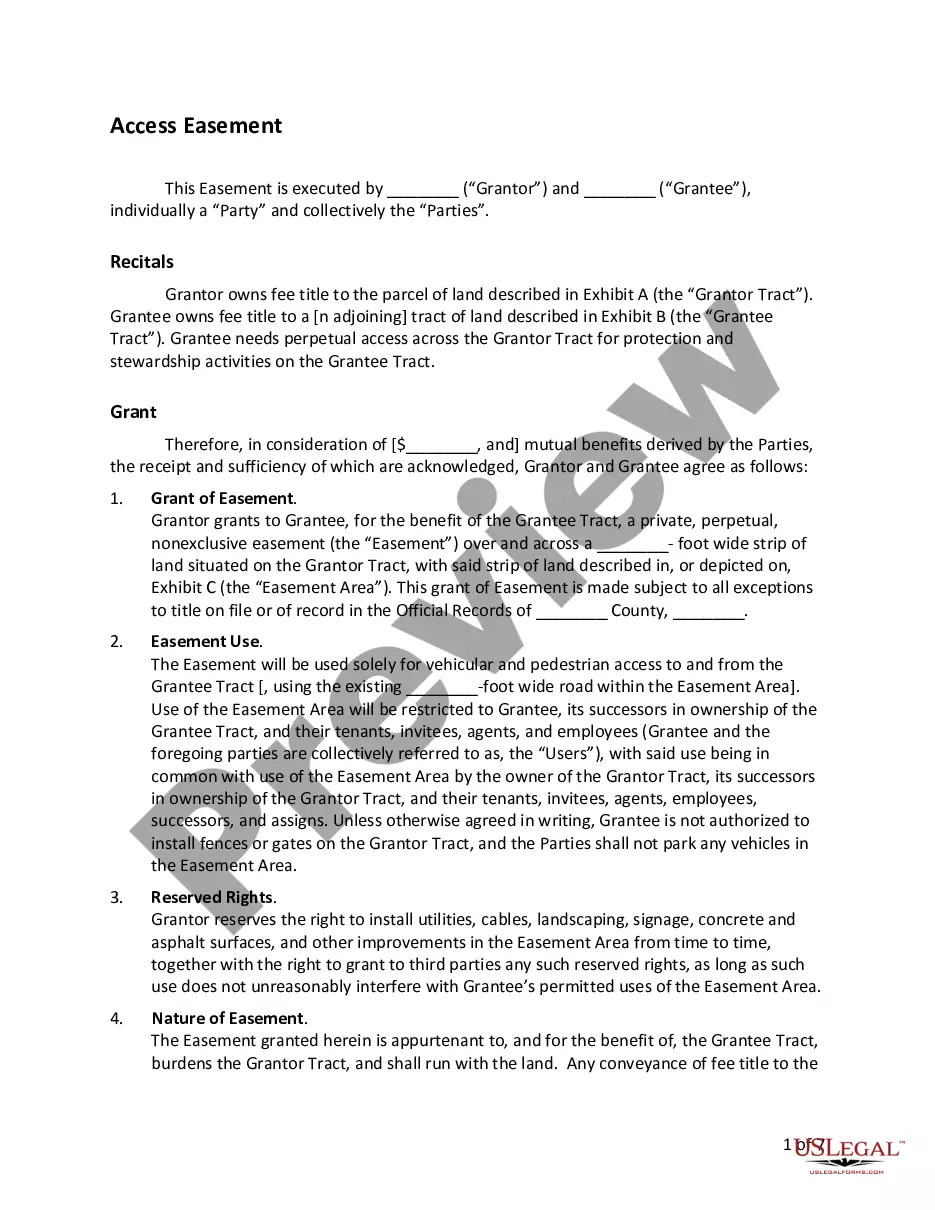
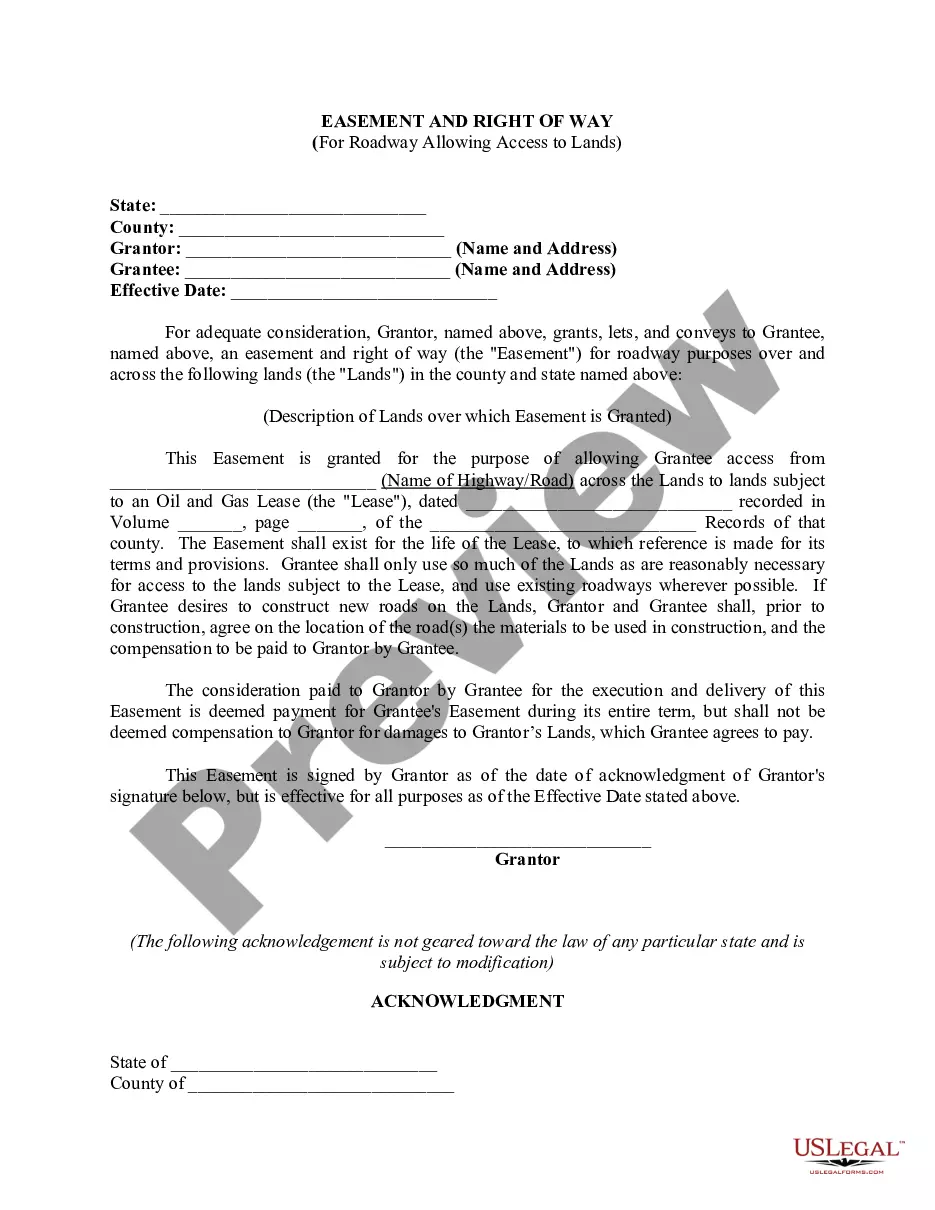
The Easement for Access to Property is a legal document that grants one party the right to use another party's land for access purposes. It primarily addresses ingress and egress, allowing someone to move in and out of a property. This easement is particularly useful when land access is restricted, ensuring that essential routes are established, such as roads or pathways, distinct from the actual ownership of the land. Unlike other property agreements, this form focuses specifically on the rights of access rather than ownership transfer.
Key parts of this document
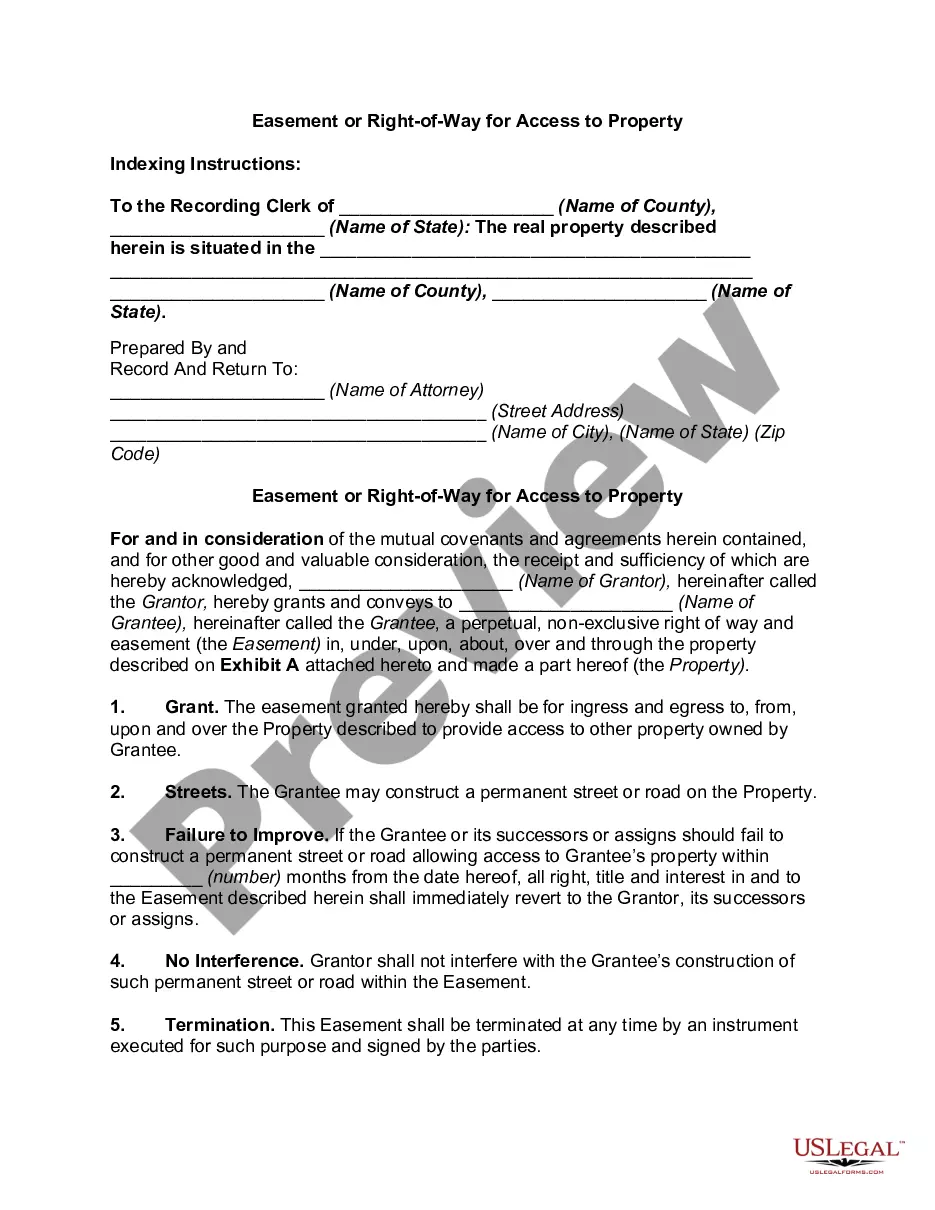
- Grant of easement for ingress and egress to the specified property.
- Allows the grantee to construct a permanent street or road.
- Conditions for improvement and rights reversion to the grantor if not completed in a specified time frame.
- Non-interference clause ensuring the grantor does not obstruct construction.
- Amendment and termination procedures for the easement.
- Governing law specifying which state's laws will apply.
When to use this form
This form is necessary when one party requires consistent access to another's property for various purposes, such as constructing a road or pathway to facilitate travel to a different piece of land. It is often used in situations where access is limited, whether due to geographical barriers or legal restrictions. This form can also be relevant for utilities needing to establish rights for service lines through private properties.
Who should use this form
This form is suitable for:
- Property owners who need to grant access rights to another individual or entity.
- Individuals or businesses looking to secure easement rights on adjacent properties.
- Developers needing to establish routes for construction projects.
- Utility companies that require access for lines and equipment maintenance.
How to prepare this document
- Identify and enter the names of the Grantor and Grantee in the designated fields.
- Provide a detailed description of the property included in the easement agreement.
- Specify the conditions for improvement and the timelines for construction of the road or street.
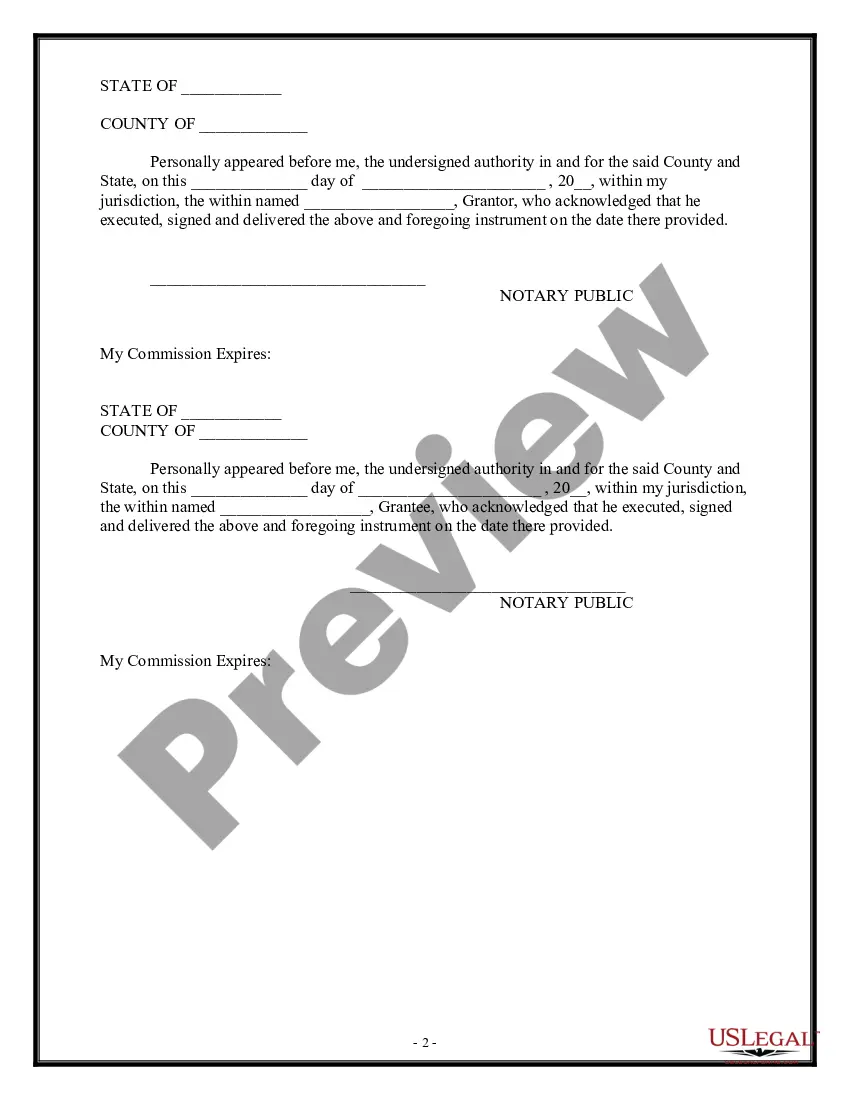
- Ensure all relevant parties sign the document and obtain necessary notarizations.
- Record the completed form with the appropriate local government office to secure the easement.
Notarization requirements for this form
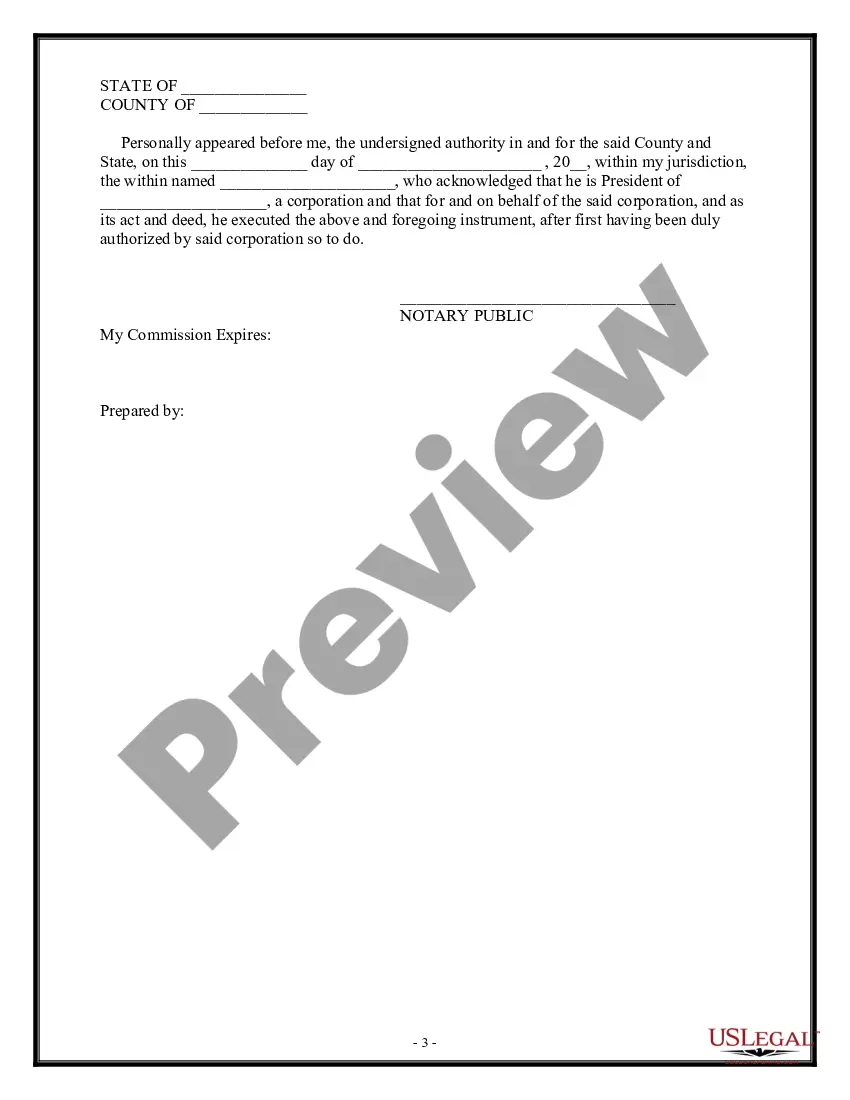
This document requires notarization to meet legal standards. US Legal Forms provides secure online notarization powered by Notarize, allowing you to complete the process through a verified video call, available 24/7.
Get your form ready online
Our built-in tools help you complete, sign, share, and store your documents in one place.
Make edits, fill in missing information, and update formatting in US Legal Forms—just like you would in MS Word.
Download a copy, print it, send it by email, or mail it via USPS—whatever works best for your next step.
Sign and collect signatures with our SignNow integration. Send to multiple recipients, set reminders, and more. Go Premium to unlock E-Sign.
If this form requires notarization, complete it online through a secure video call—no need to meet a notary in person or wait for an appointment.
We protect your documents and personal data by following strict security and privacy standards.

Make edits, fill in missing information, and update formatting in US Legal Forms—just like you would in MS Word.

Download a copy, print it, send it by email, or mail it via USPS—whatever works best for your next step.

Sign and collect signatures with our SignNow integration. Send to multiple recipients, set reminders, and more. Go Premium to unlock E-Sign.

If this form requires notarization, complete it online through a secure video call—no need to meet a notary in person or wait for an appointment.

We protect your documents and personal data by following strict security and privacy standards.
Avoid these common issues
- Failing to include a clear description of the property involved.
- Not specifying the timeline for construction under the easement.
- Leaving the signatures or notarizations incomplete.
- Neglecting to record the easement, which could lead to disputes later.
Why use this form online
- Convenience of downloading and completing the form at your own pace.
- Editability allows customization based on specific property and parties involved.
- Access to templates drafted by licensed attorneys, ensuring accuracy and legal compliance.
Legal use & context
- Establishes a legally recognized right for access that is enforceable in court.
- Often necessary for development projects to ensure access routes are legally secured.
- Provides clear terms for use of the easement, helping prevent potential disputes.
Quick recap
- This form grants access rights for one party over another's property.
- Proper execution, including notarization and recording, is crucial for enforceability.
- Clear terms about construction and use are essential to minimize disputes.
Looking for another form?
Form popularity
FAQ
In short, it allows another to use and/or enter into the property of another without possessing it, e.g. a landowner may enjoy the right of way over the land of another to access their property.
Easements generally survive conveyances and can only be terminated by completion, destruction, or expiration. So, having an easement on a property may have a permanent outcome on the property with rights of the home owner. But not all easements are bad.
A private right of way is an easement, which is the right to use part of another's property in a particular way even though they do not own it.
An easement is a limited right to use another person's land for a stated purpose. Examples of easements include the use of private roads and paths, or the use of a landowner's property to lay railroad tracks or electrical wires.
An easement is a right to make certain types of use of property. The most common is the right to build a road across someone else's land (or use a road) in order to get access to your own land.Thus, California has imposed on many owners of property a public easement to get access to beaches or other public areas.
What are Easements and Rights-of-Way? Easements are nonpossessory interests in real property. More simply, an easement is the right to use another's property for a specific purpose. Rights-of-way are easements that specifically grant the holder the right to travel over another's property.
An easement gives a person or organization a legal right to use someone else's landbut only for a needed purpose. A utility company may have an easement on your property to access an electrical pole.
An easement is a "nonpossessory" property interest that allows the holder of the easement to have a right of way or use property that they do not own or possess. An easement doesn't allow the easement holder to occupy the land or to exclude others from the land unless they interfere with the easement holder's use.
What are Easements and Rights-of-Way? Easements are nonpossessory interests in real property. More simply, an easement is the right to use another's property for a specific purpose. Rights-of-way are easements that specifically grant the holder the right to travel over another's property.