Separation Agreement and Specific Release
About this form
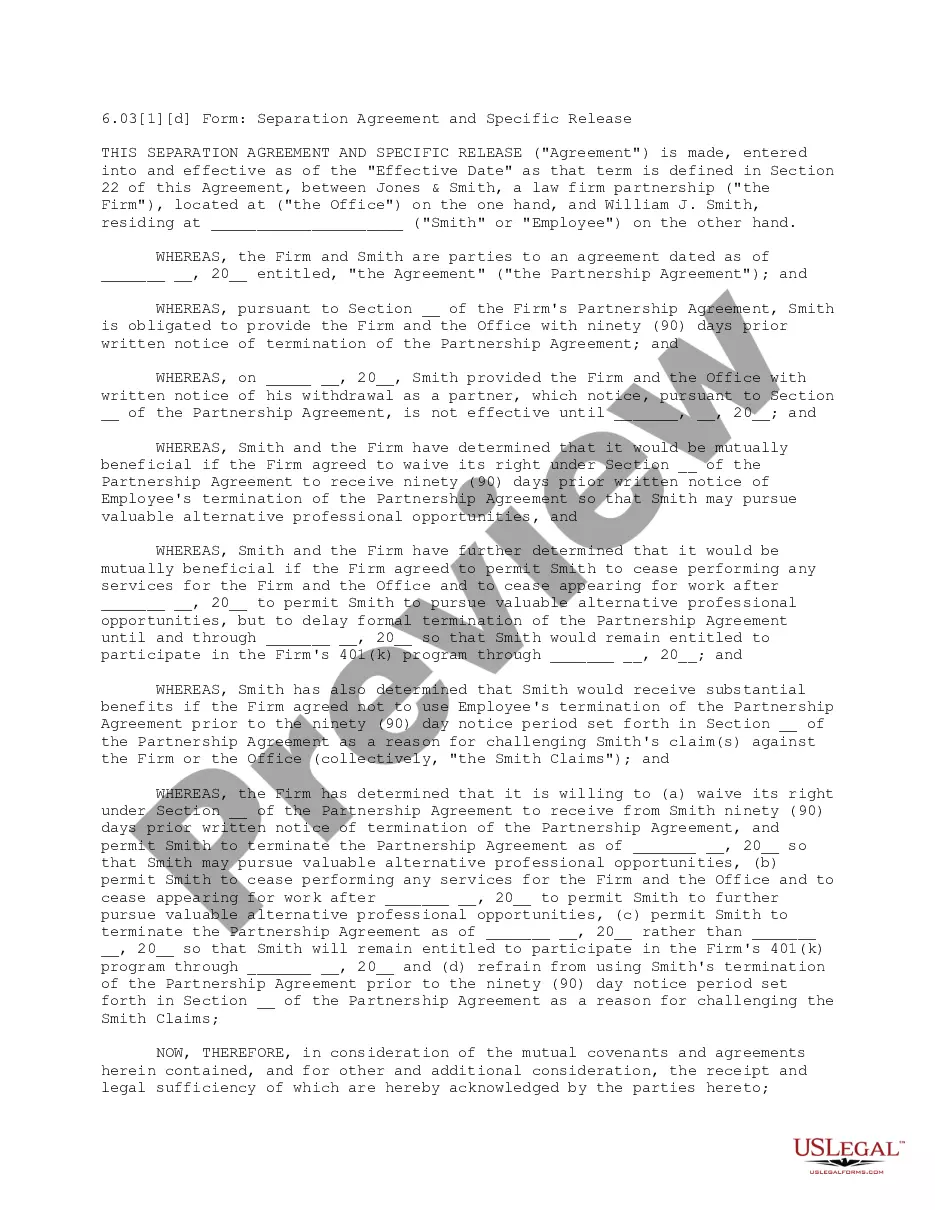
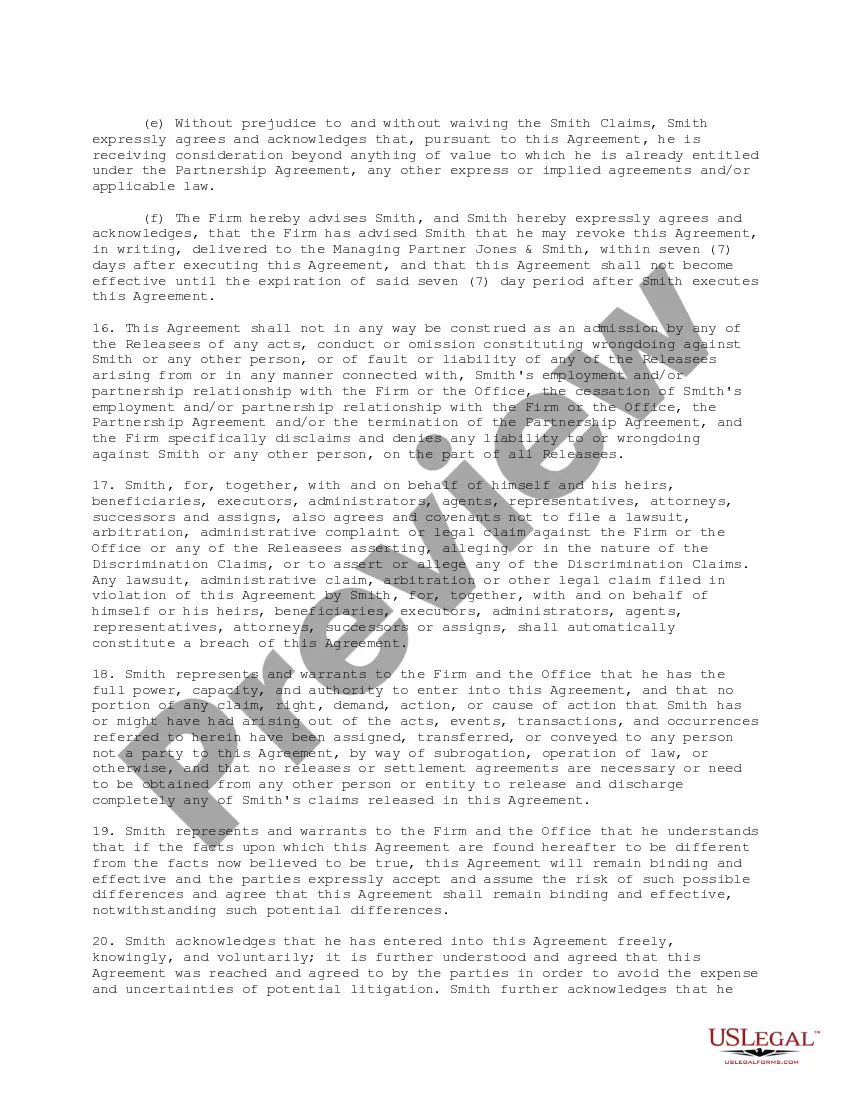
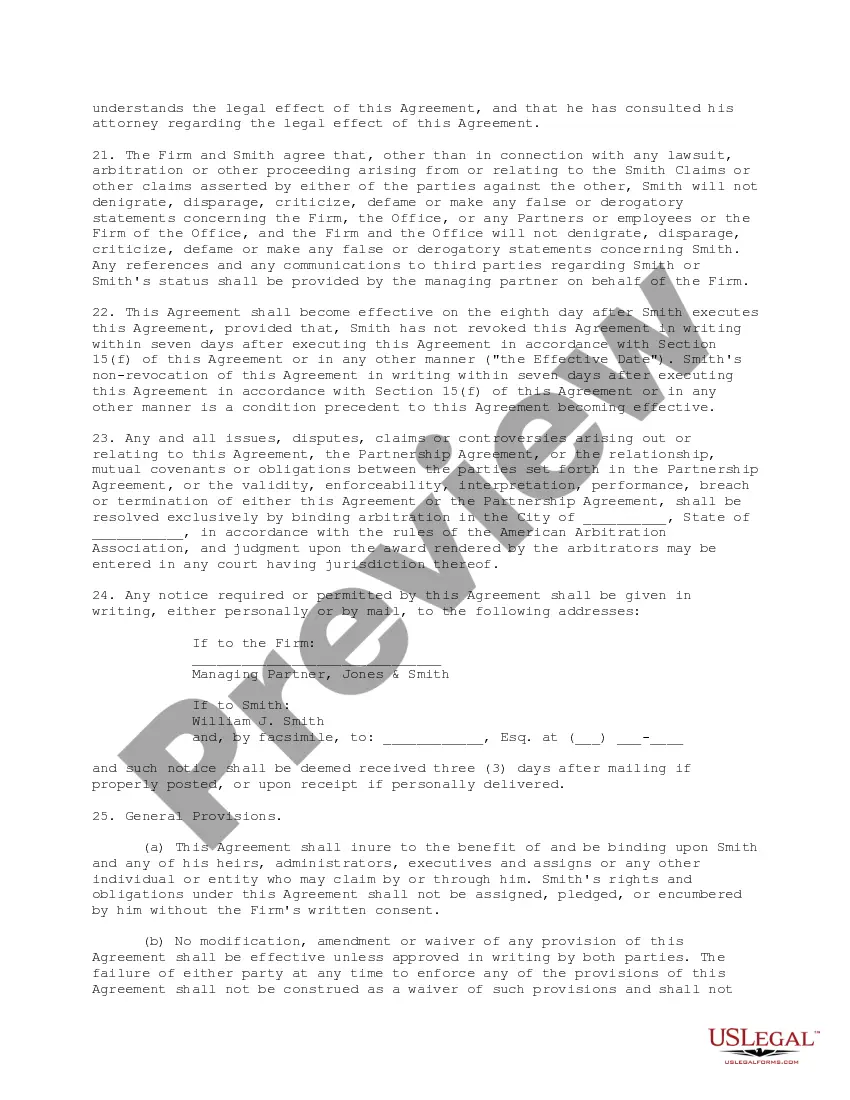
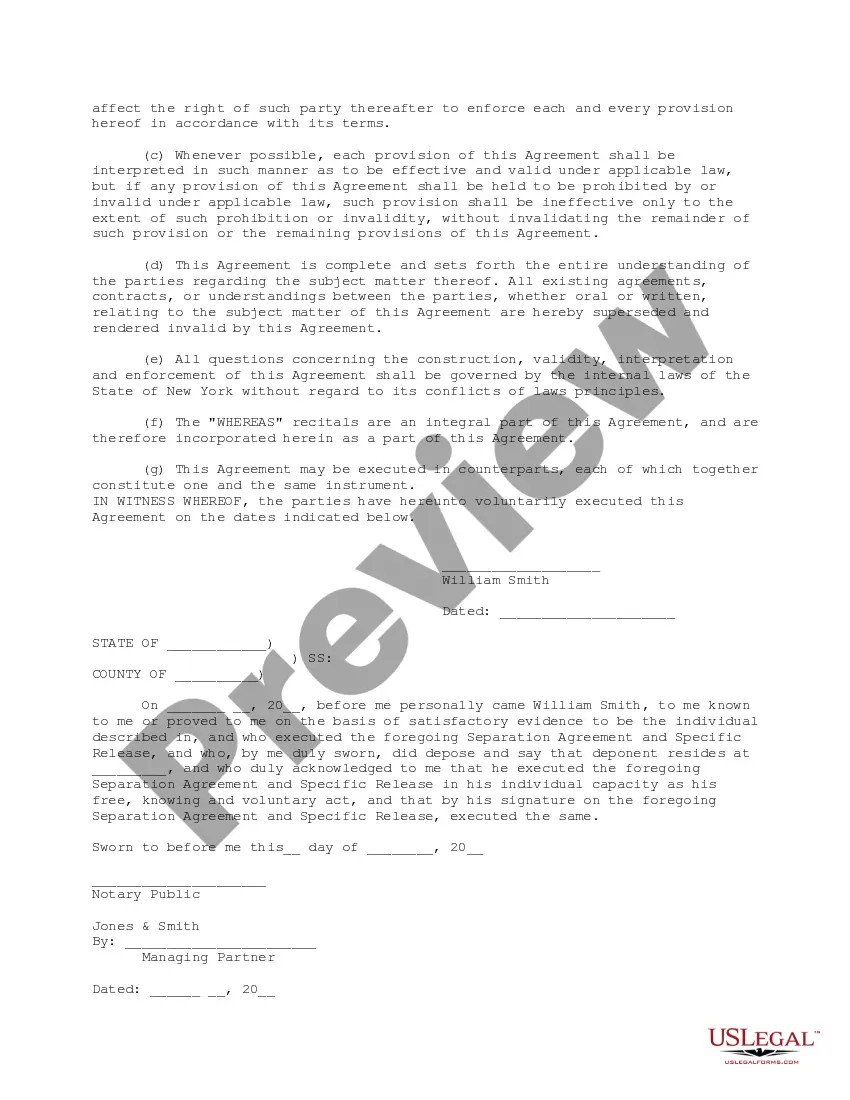
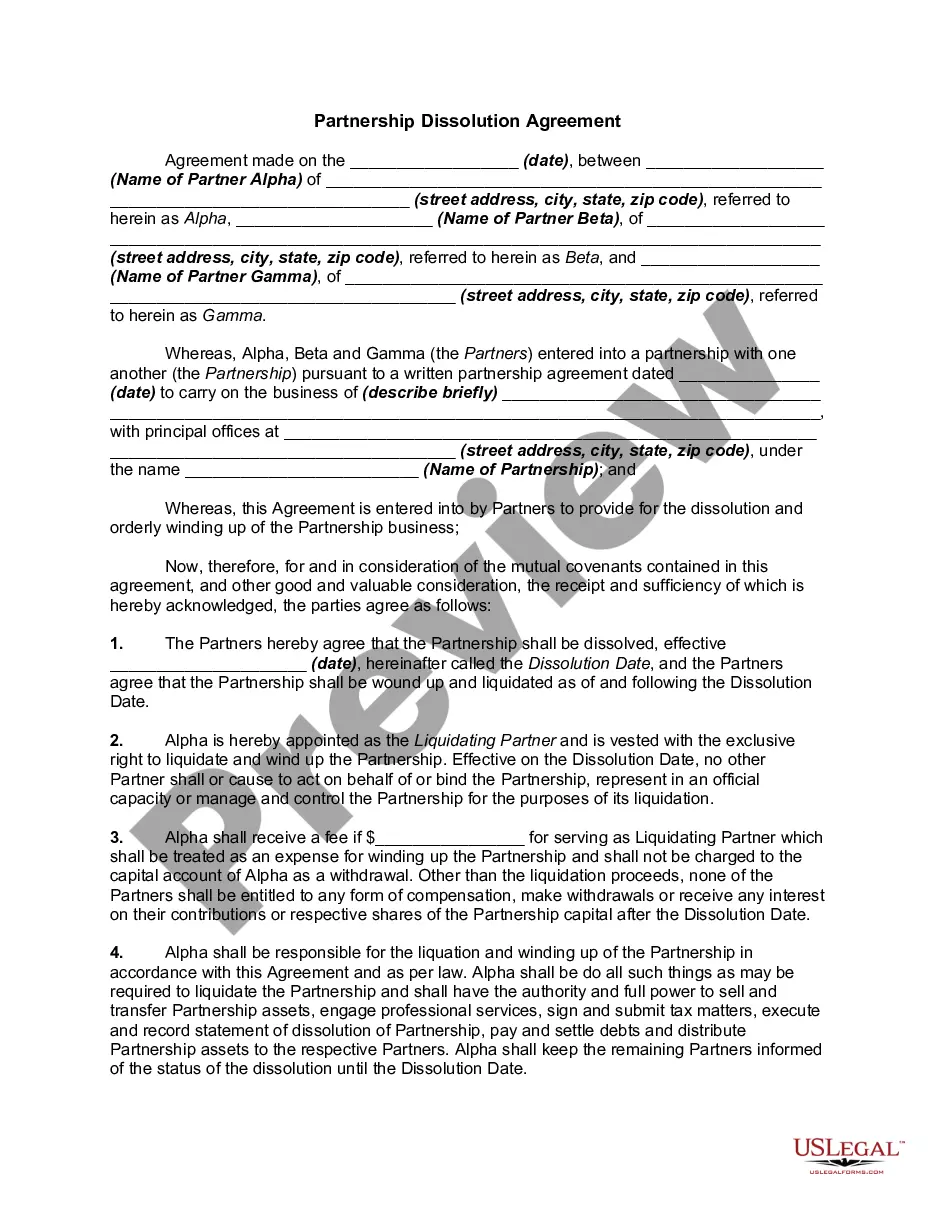
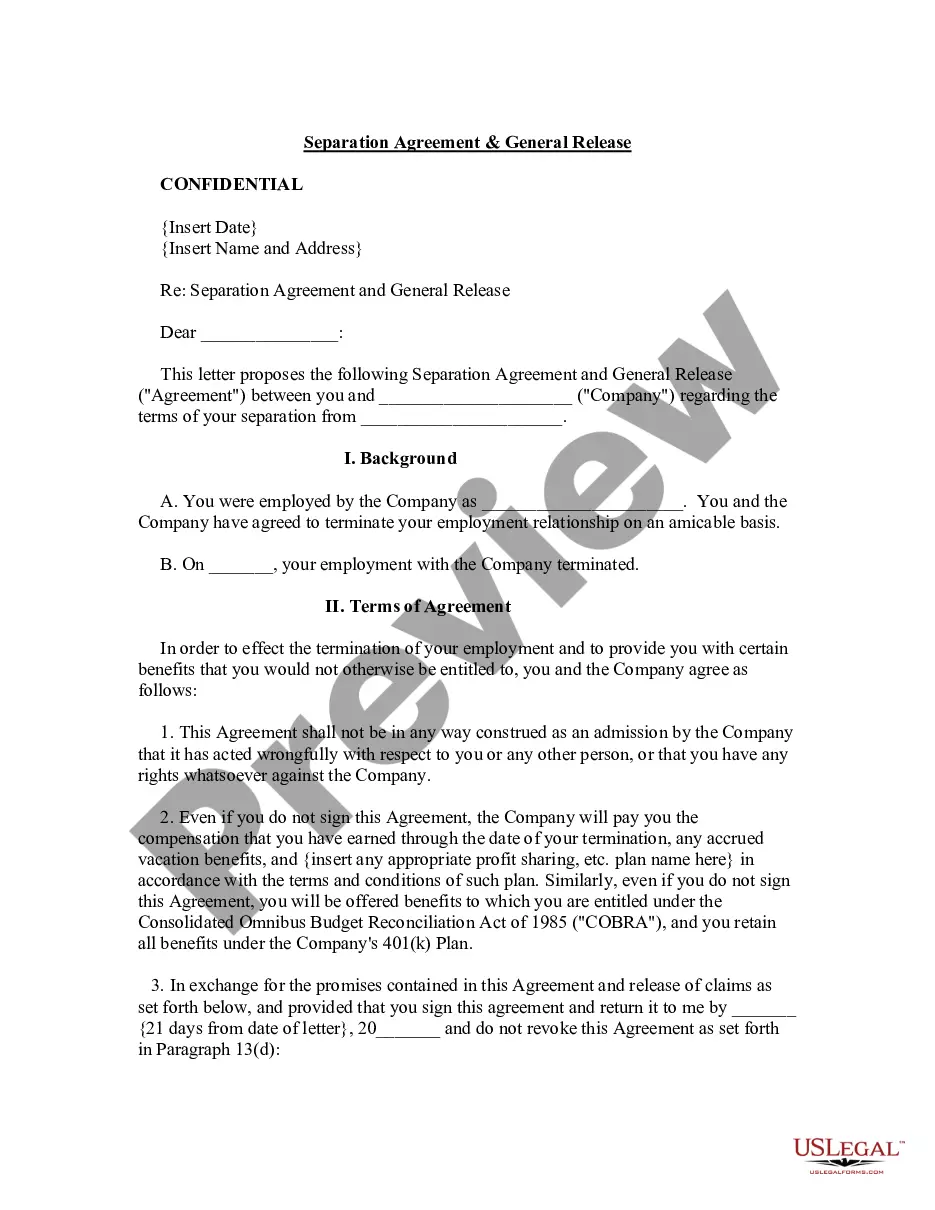
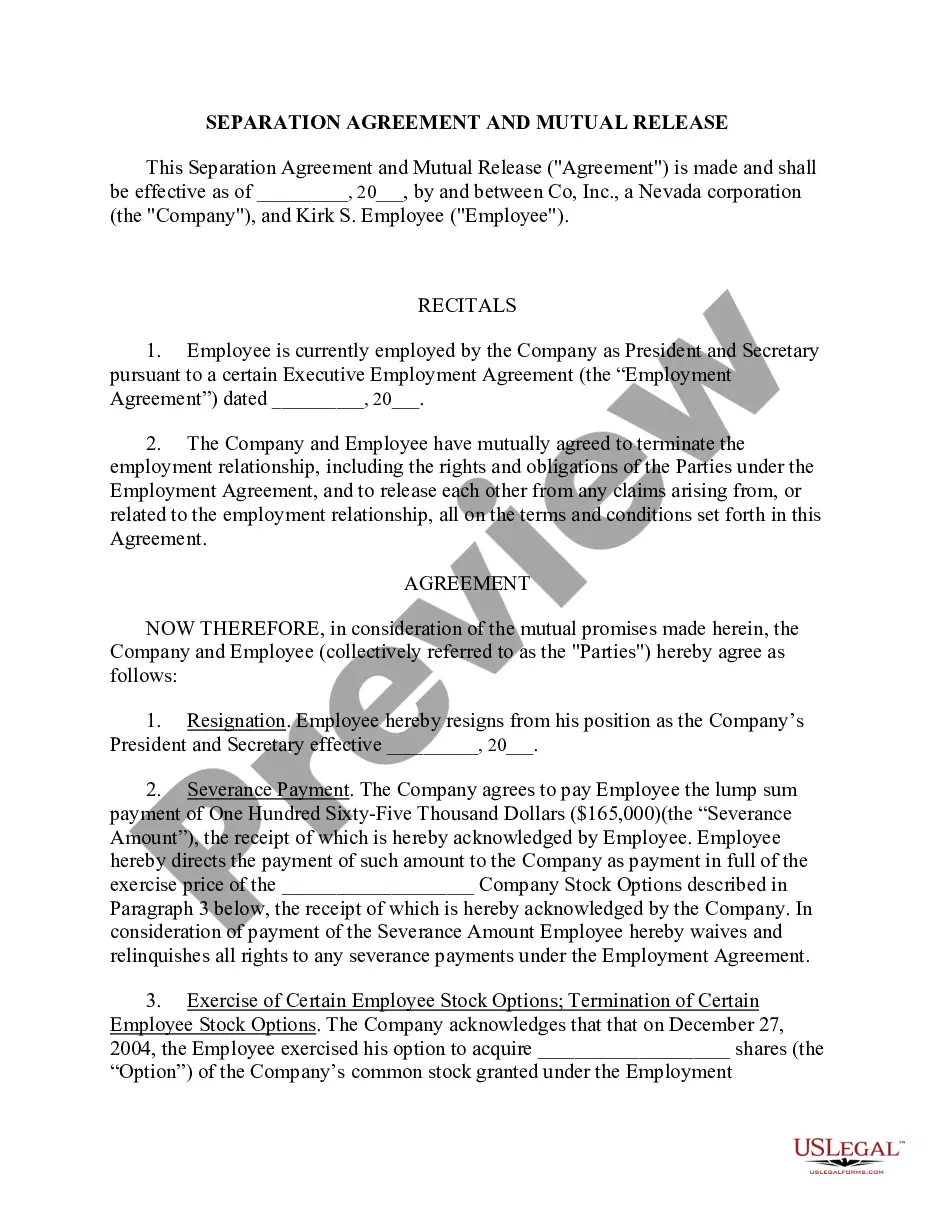
This Separation Agreement and Specific Release is a legal document that formalizes the resignation of a partner from a firm. It outlines the terms under which the partner resigns, waiving the requirement for 90 days' notice and addressing key financial matters such as salary settlements and retirement contributions. This agreement also includes provisions to protect the firm's proprietary information.
Form components explained
- Mutual waiver of the 90-day notice period for partner resignation
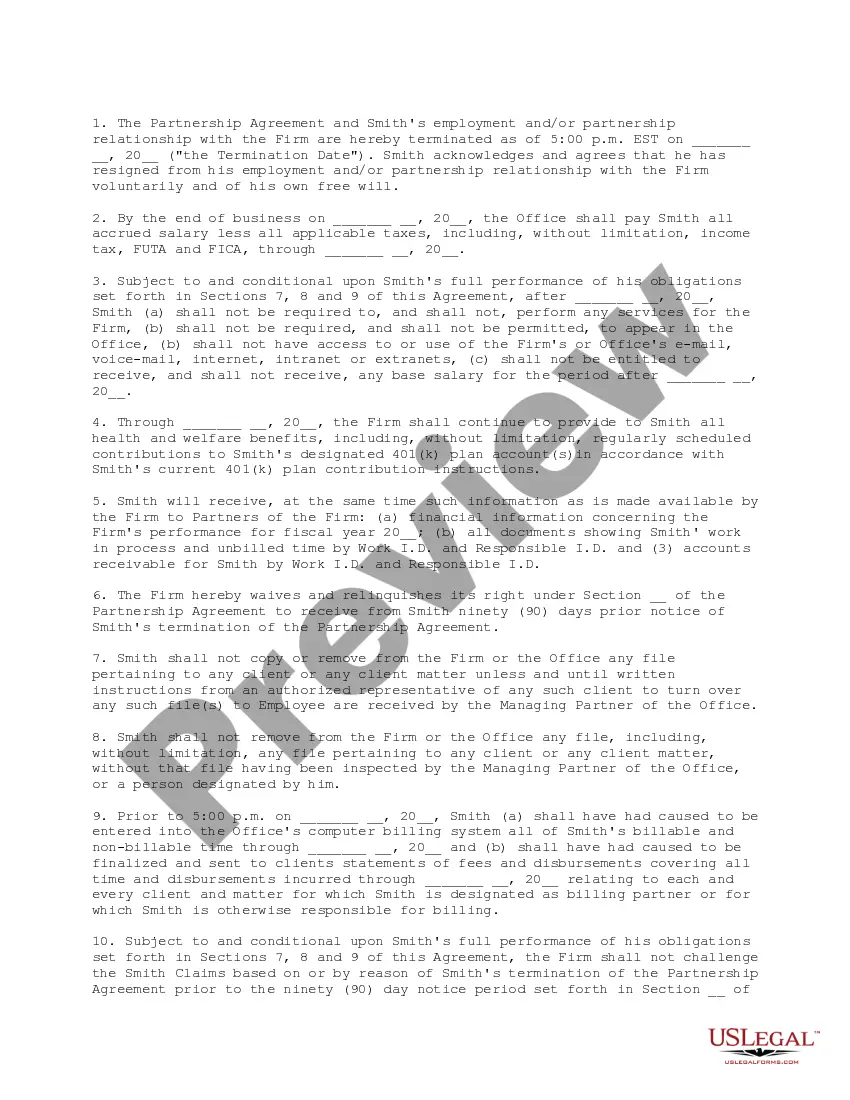
- Settlement of salary and benefits up to the termination date
- Conditions for accessing client files and information
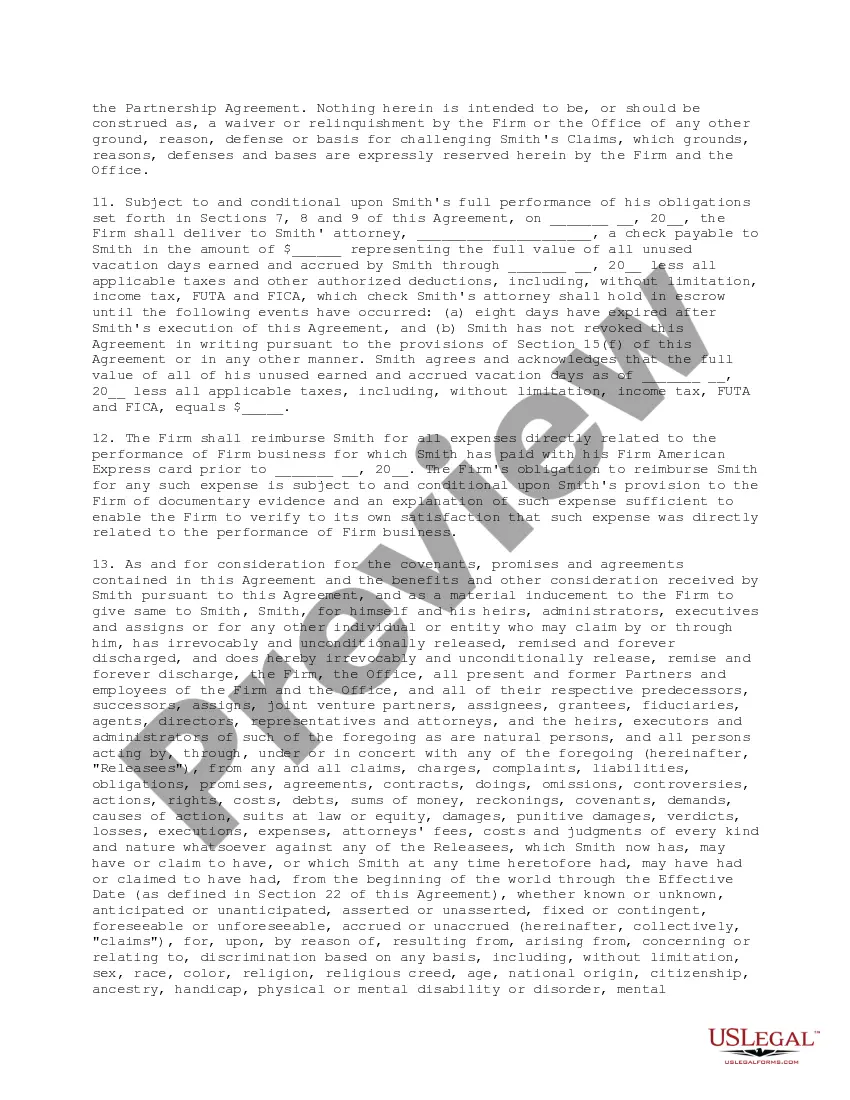
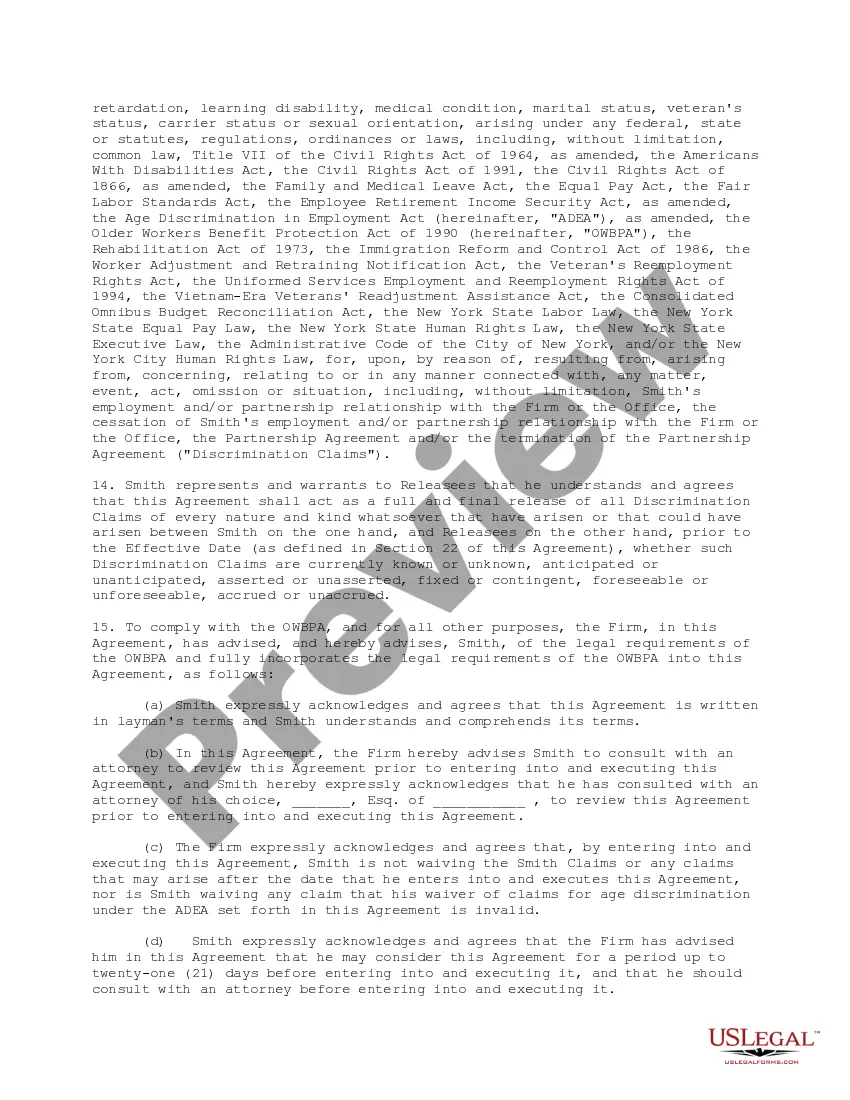
- Release of any claims against the firm by the resigning partner
- Prohibition on disparaging remarks by either party
When this form is needed
This form is essential when a partner in a law firm decides to resign and intends to leave before the end of the standard notice period. It is used to clarify the terms of the resignation, ensure compliance with firm policies, and protect both the partner's and firm's legal interests.
Intended users of this form
- Partners in a law firm planning to resign
- Law firms that require a formalized separation agreement with their partners
- Legal professionals seeking to protect their rights and obligations during the resignation process
How to prepare this document
- Identify the parties involved: the law firm and the resigning partner.
- Specify the effective date of the agreement and the termination date.
- Outline the terms regarding final salary, benefits, and the handling of client files.
- Include mutual release clauses to prevent future claims.
- Review the information and ensure signatures are obtained from all parties.
Notarization requirements for this form
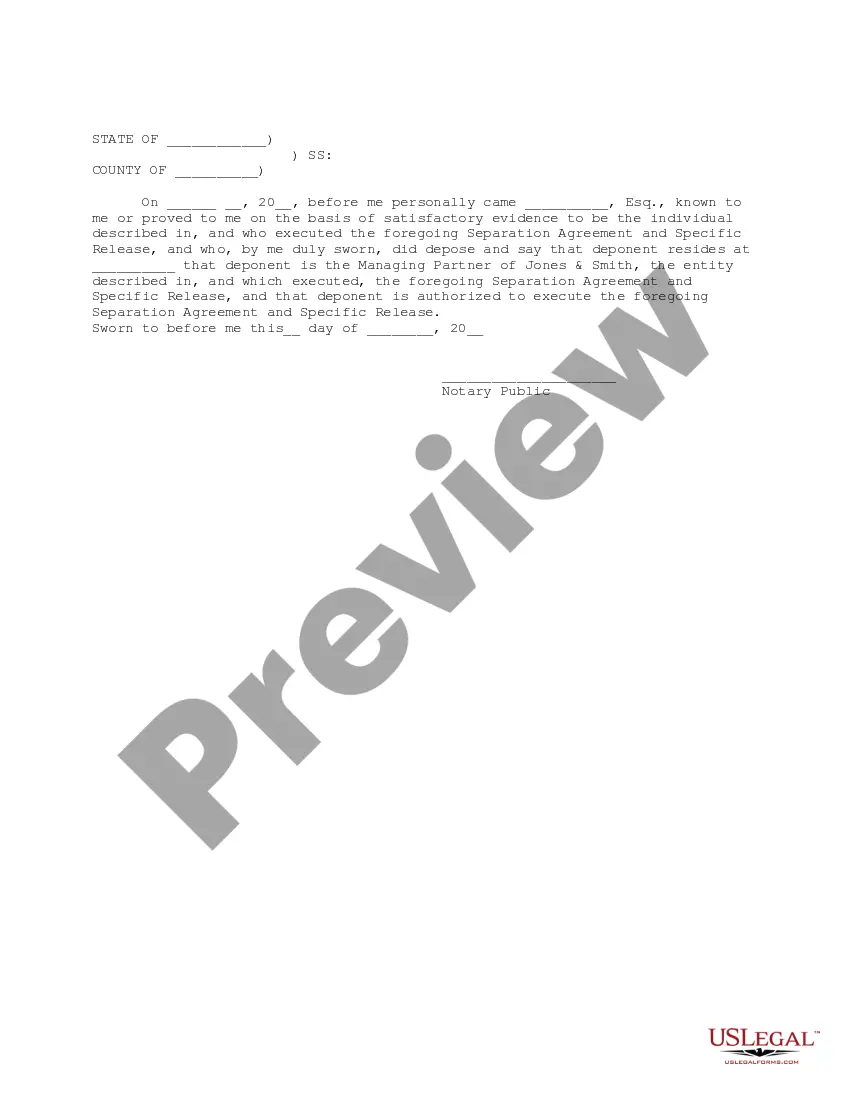
Notarization is required for this form to take effect. Our online notarization service, powered by Notarize, lets you verify and sign documents remotely through an encrypted video session, available 24/7.
Get your form ready online
Our built-in tools help you complete, sign, share, and store your documents in one place.
Make edits, fill in missing information, and update formatting in US Legal Forms—just like you would in MS Word.
Download a copy, print it, send it by email, or mail it via USPS—whatever works best for your next step.
Sign and collect signatures with our SignNow integration. Send to multiple recipients, set reminders, and more. Go Premium to unlock E-Sign.
If this form requires notarization, complete it online through a secure video call—no need to meet a notary in person or wait for an appointment.
We protect your documents and personal data by following strict security and privacy standards.

Make edits, fill in missing information, and update formatting in US Legal Forms—just like you would in MS Word.

Download a copy, print it, send it by email, or mail it via USPS—whatever works best for your next step.

Sign and collect signatures with our SignNow integration. Send to multiple recipients, set reminders, and more. Go Premium to unlock E-Sign.

If this form requires notarization, complete it online through a secure video call—no need to meet a notary in person or wait for an appointment.

We protect your documents and personal data by following strict security and privacy standards.
Common mistakes to avoid
- Failing to properly date the agreement.
- Not specifying the financial obligations related to benefits or salary.
- Omitting to include confidentiality provisions regarding client information.
Benefits of using this form online
- Convenience of filling out the form from anywhere at any time.
- Easy editability allows for quick adjustments.
- Access to templates created by licensed attorneys ensures legal accuracy.
Legal use & context
- This agreement serves to legally bind both parties to its terms and conditions.
- It helps avoid litigation by clearly outlining the resignation terms and mutual releases.
Key takeaways
- The Separation Agreement and Specific Release is crucial for formalizing the resignation of a partner.
- It protects both the partner and the firm from potential disputes after the departure.
- Ensure all relevant terms are clearly articulated and agreed upon by both parties.
Looking for another form?

Form popularity
FAQ
The short answer is no. You don't have to accept what your employer offers, nor do you have to sign a release. A release is valid only if it's voluntary: If your employer requires or coerces you sign, it won't be upheld in court. This doesn't mean, however, that you are entitled to severance.
An employee separation agreement is a legal document that lays out an understanding between a company and a terminated employee. After both parties sign, the terminated employee gives up their right to take legal action against the company in the future (i.e. suing for wrongful termination or severance pay).
The spouses' right to live separately. Custody of the children. A visitation schedule, or a provision for reasonable visitation. Child support. Alimony or spousal support. The children's expenses, including medical, dental, educational and recreational. Property and debt division. Insurance, including medical, dental and life.
1 attorney answer Legally, it doesn't really matter. Technically, your former employer is making you an offer, so you would sign it first showing that you accept the offer, and the employer would then sign to acknowledge that you accepted, and that the...
Severance agreements are offered and signed as part of a hiring process. It becomes part of an attractive benefits package. It may include monetary stipends that are earned over time, and are paid out at the time of termination.On the other hand, a separation agreement is offered and signed at the time of termination.
Consider Hiring An Attorney. Depending on how much money you earned, you may need to seek legal advice. Spend Time Understanding All Your Rights. Get Ahead Of The Curve. Analyze Your Severance Agreement. Make One Last Ask. Clarify The Timing Of The Severance Payout. Understand All Terms And Conditions.
No matter what your employer tells you, you are not required to sign a severance agreement, and you are not required to do so immediately. You always have the right to consult with a lawyer, even if you are sure you understand the terms.
At least 21 days to review an offer if you were terminated individually, or. at least 45 days to review an offer if you were terminated as part of a larger layoff.