Confidentiality Agreement
Understanding this form
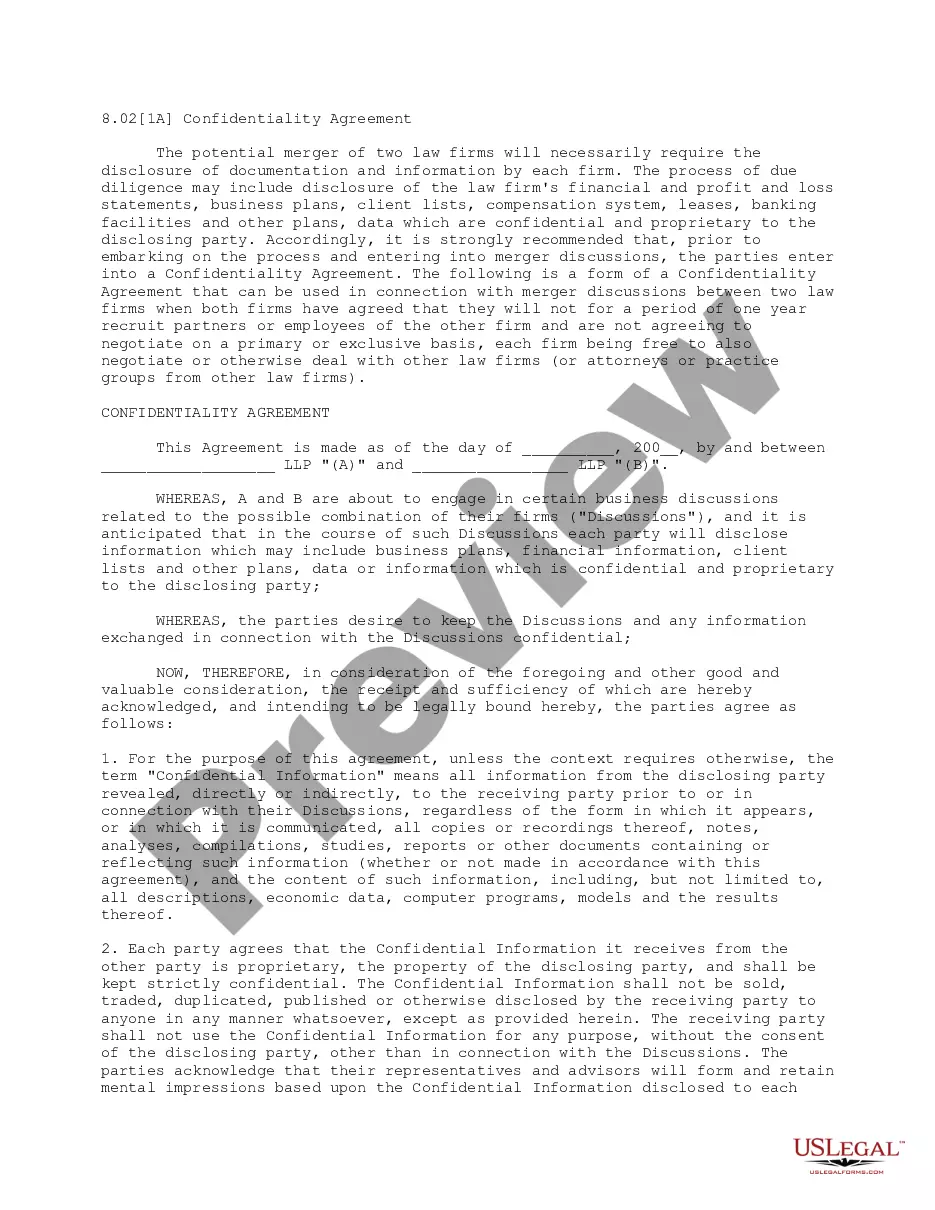
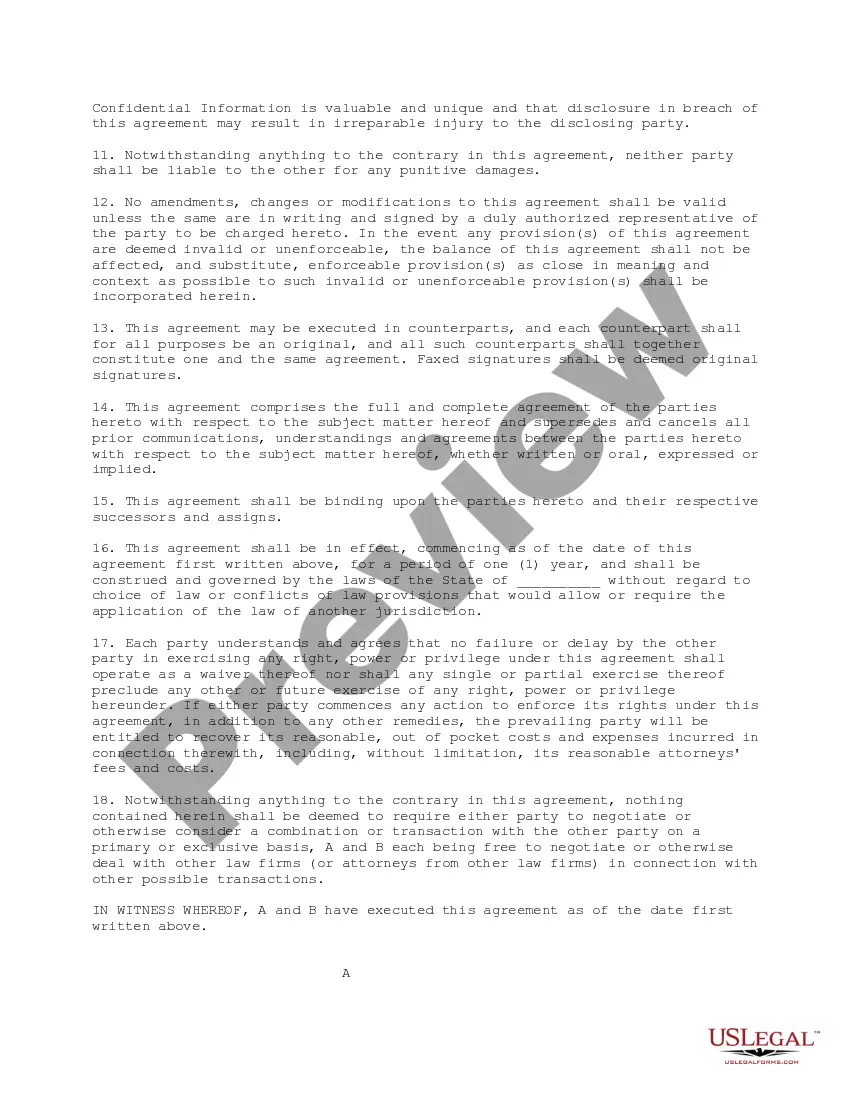
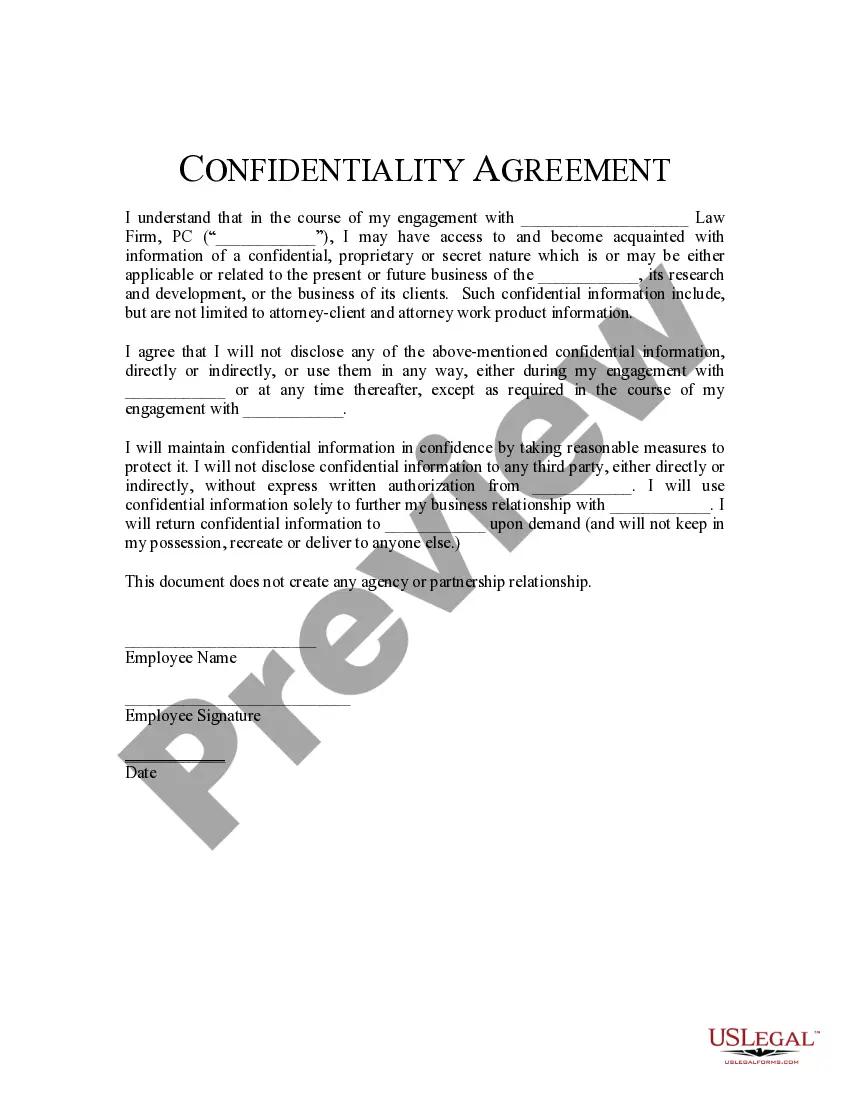
The Confidentiality Agreement is a legal document that protects sensitive information shared during discussions between two law firms considering a merger. This agreement ensures that confidential data, such as financial statements and client lists, remains private while allowing both firms to negotiate freely without exclusive commitments to one another. It is essential for maintaining trust and safeguarding proprietary information in merger discussions, distinguishing it from less formal agreements used in other contexts.
Key components of this form
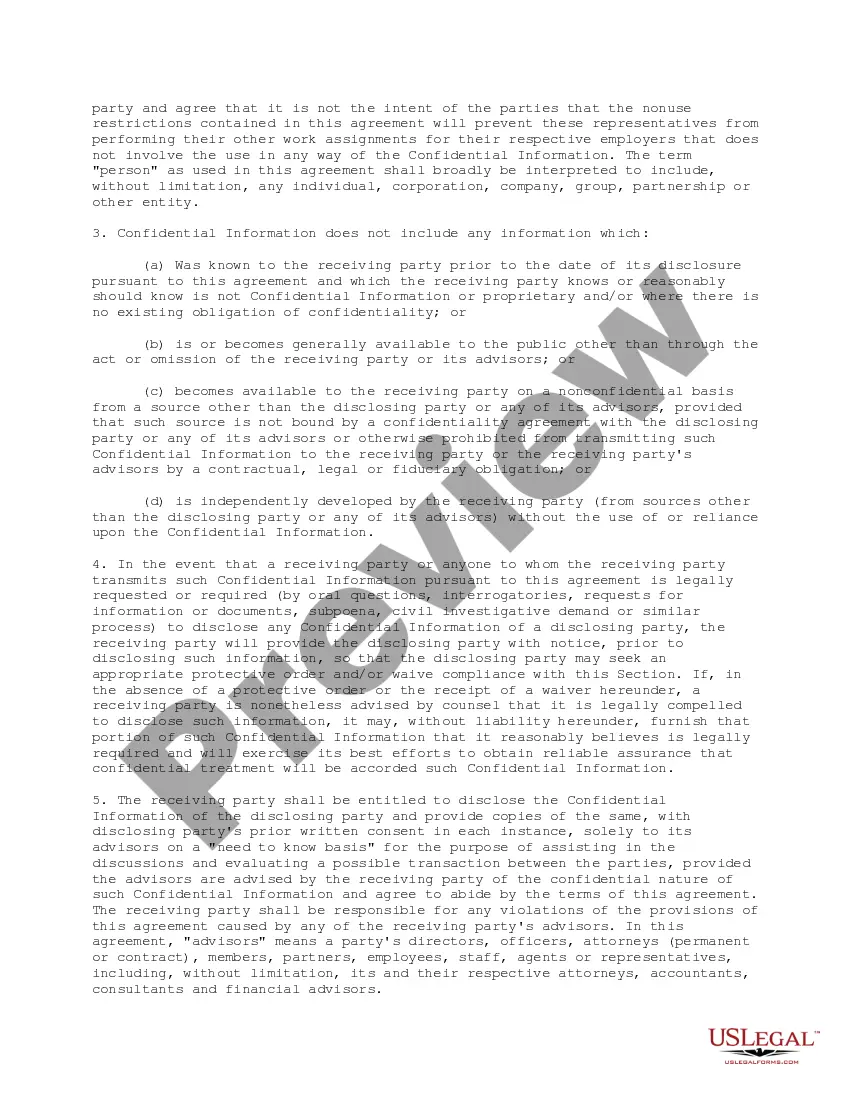
- Definition of Confidential Information and its scope.
- Obligations of both parties to maintain confidentiality.
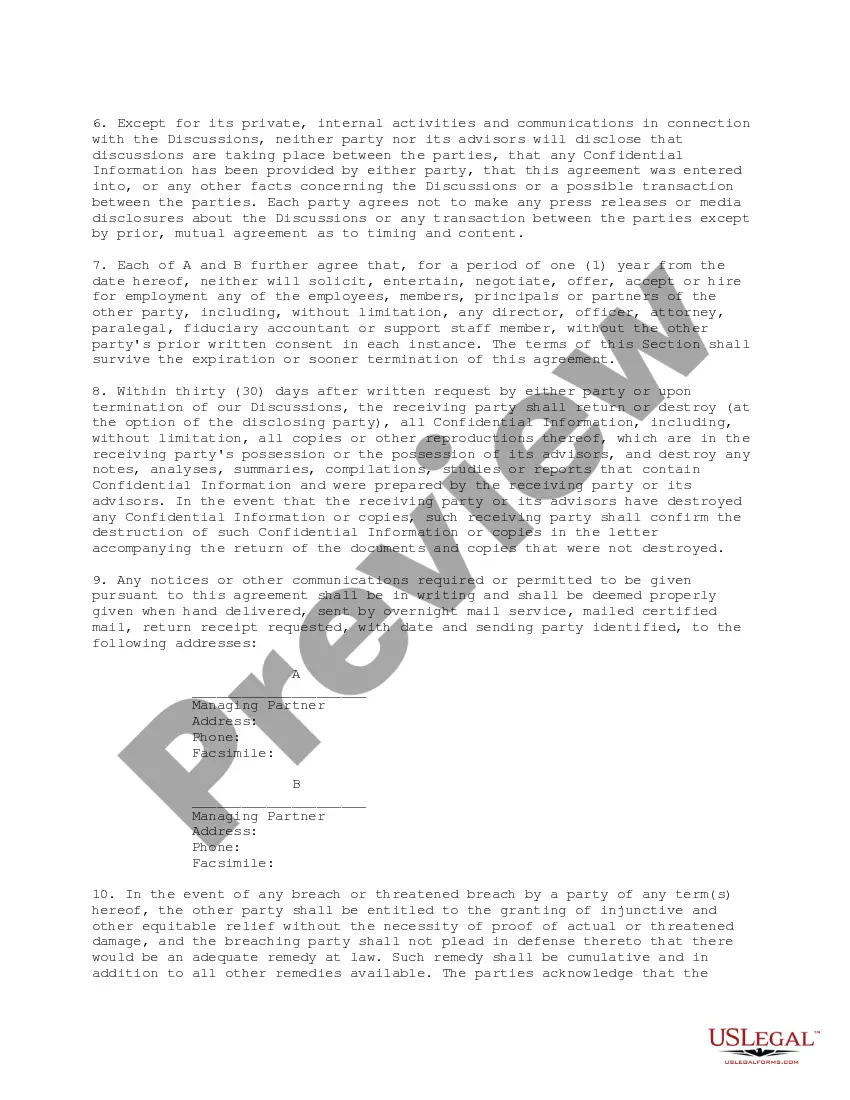
- Clauses outlining the limitations on recruiting employees during negotiations.
- Legal obligations regarding information disclosure during lawful requests.
- Guidance on returning or destroying confidential information after negotiations.
When to use this form
This form should be utilized when two law firms are in negotiations to merge and need to exchange sensitive information. It helps to facilitate open discussions while ensuring that both parties' proprietary information is protected. Use this agreement at the outset of any merger discussions to set clear expectations about confidentiality and the handling of shared information.
Who should use this form
The following individuals or parties should consider using this Confidentiality Agreement:
- Law firms planning to merge or collaborate.
- Managing partners overseeing merger discussions.
- Legal counsel representing law firms in negotiation processes.
- Business advisors involved in the merger strategy.
How to complete this form
- Identify and enter the names of the law firms involved in the merger.
- Specify the date the agreement is made.
- Clearly define what constitutes confidential information within the agreement.
- Include the terms that prohibit the solicitation of employees during negotiations.
- Have both managing partners sign the agreement to validate it.
Notarization requirements for this form
Notarization is not commonly needed for this form. However, certain documents or local rules may make it necessary. Our notarization service, powered by Notarize, allows you to finalize it securely online anytime, day or night.
Get your form ready online
Our built-in tools help you complete, sign, share, and store your documents in one place.
Make edits, fill in missing information, and update formatting in US Legal Forms—just like you would in MS Word.
Download a copy, print it, send it by email, or mail it via USPS—whatever works best for your next step.
Sign and collect signatures with our SignNow integration. Send to multiple recipients, set reminders, and more. Go Premium to unlock E-Sign.
If this form requires notarization, complete it online through a secure video call—no need to meet a notary in person or wait for an appointment.
We protect your documents and personal data by following strict security and privacy standards.

Make edits, fill in missing information, and update formatting in US Legal Forms—just like you would in MS Word.

Download a copy, print it, send it by email, or mail it via USPS—whatever works best for your next step.

Sign and collect signatures with our SignNow integration. Send to multiple recipients, set reminders, and more. Go Premium to unlock E-Sign.

If this form requires notarization, complete it online through a secure video call—no need to meet a notary in person or wait for an appointment.

We protect your documents and personal data by following strict security and privacy standards.
Typical mistakes to avoid
- Failing to define what constitutes confidential information adequately.
- Not including specific terms about employee solicitation restrictions.
- Neglecting to have the document signed by both parties.
- Overlooking state-specific legal requirements that could affect enforceability.
Why use this form online
- Easy access to a professionally drafted form tailored for merger negotiations.
- Convenient editing to customize the agreement as needed.
- Immediate availability for timely discussions between firms.
- Secure storage and retrieval of important legal documents.
Legal use & context
- Confidentiality Agreements like this one are integral in protecting proprietary information during negotiations.
- They serve to establish a legal groundwork for the handling of sensitive information.
- Violations can lead to legal repercussions, including financial damages and injunctions.
Main things to remember
- A Confidentiality Agreement protects sensitive information during merger discussions between law firms.
- It includes clauses on confidentiality obligations, exclusions, and hiring restrictions.
- Using this form ensures that both parties can negotiate confidently, understanding their proprietary data is protected.
Looking for another form?

Form popularity
FAQ
Set the date of the agreement. Describe the two parties, sometimes called the Disclosing Party and the Receiving Party.7feff Include names and identification, so there can be no misunderstanding about who signed the agreement.
A confidentiality agreement (also called a nondisclosure agreement or NDA) is a legally binding contract in which a person or business promises to treat specific information as a trade secret and promises not to disclose the secret to others without proper authorization.
A definition of confidential information. Who is involved. Why the recipient knows the information. Exclusions or limits on confidential information. Receiving party's obligations. Time frame or term. Discloser to the recipient.
Look for broad and vague language: When analyzing an NDA, make sure the definitions of proprietary and confidential information are thoroughly defined. Be skeptical of broad and vague language that opts to unreasonably limit your ability to discuss and divulge information.
It is a contract through which the parties agree not to disclose information covered by the agreement. An NDA creates a confidential relationship between the parties, typically to protect any type of confidential and proprietary information or trade secrets. As such, an NDA protects non-public business information.
Depending on the complexity of what you need protected and the number of parties involved, the cost of having an NDA drafted can vary significantly. When you hire a lawyer in the Priori network, drafting an NDA typically costs anywhere from $175-$1,500.
Obligations under the NDA must be reviewed: It is important to review an NDA if a party is making another party sign one. Scope of the confidential information must be taken into consideration: In every NDA, what constitutes confidential information is always defined.
No, it is not necessary for the nondisclosure agreement to be "notarized", nor is it necessary under California law for the signatures on such an agreement to be "witnessed".