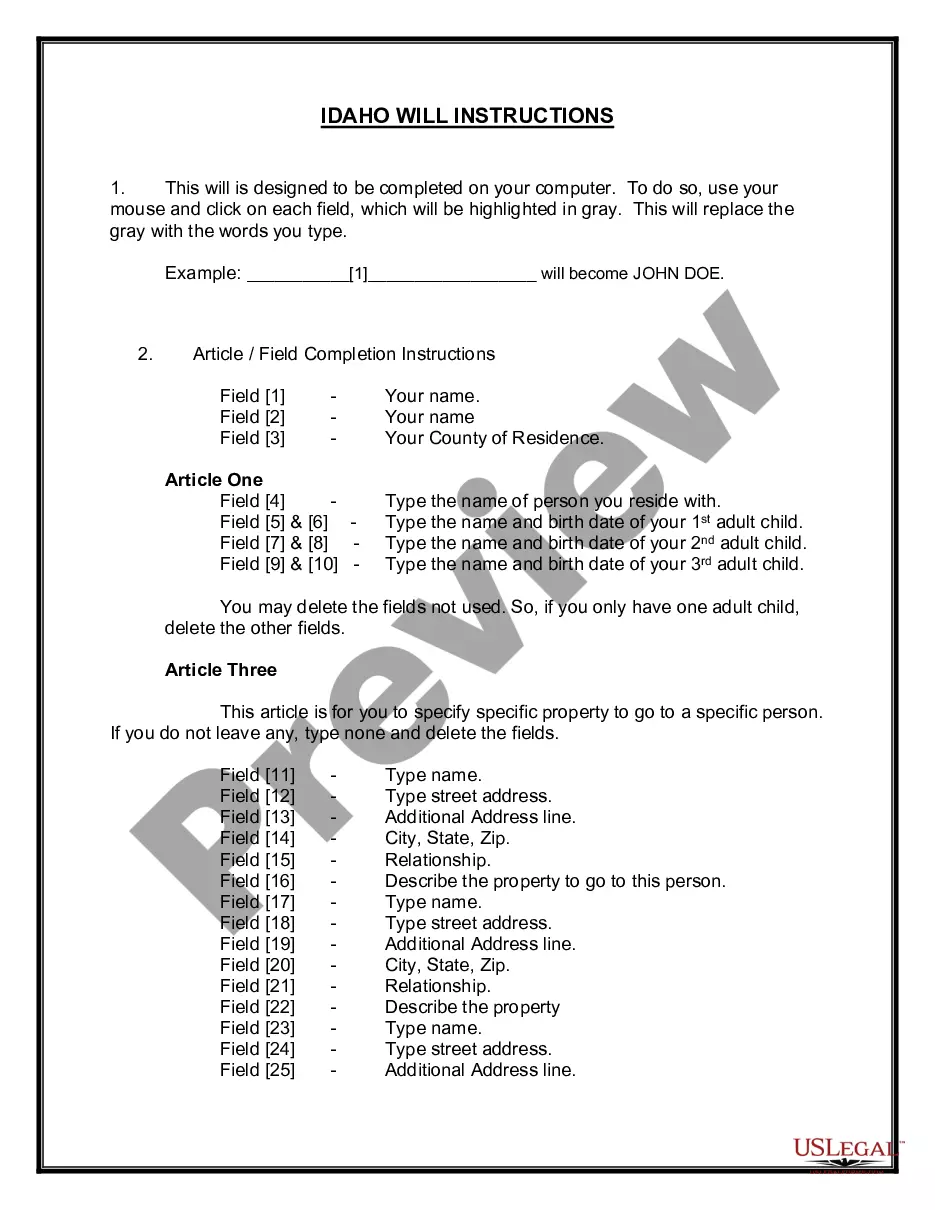
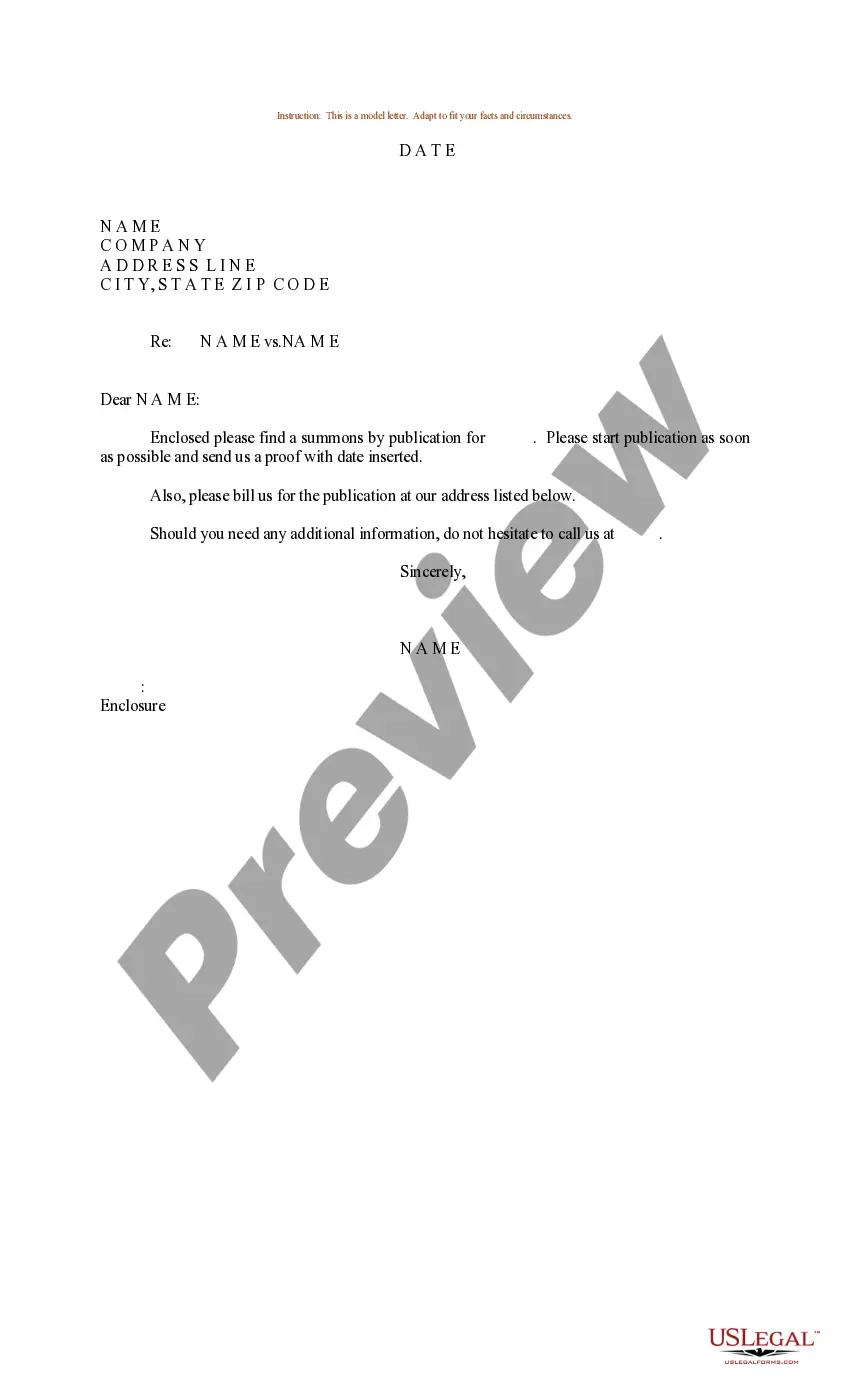
Sample Letter for Request for Bill Associated with Summons by Publication
What is this form?
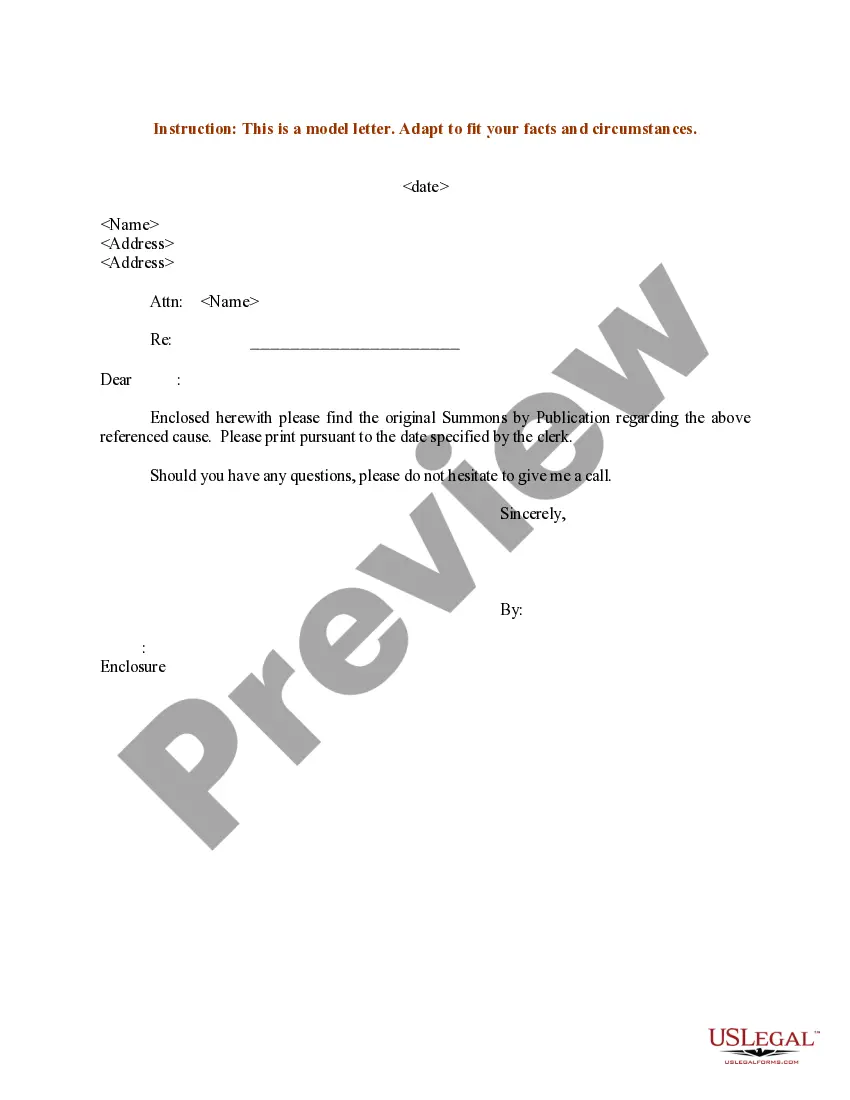
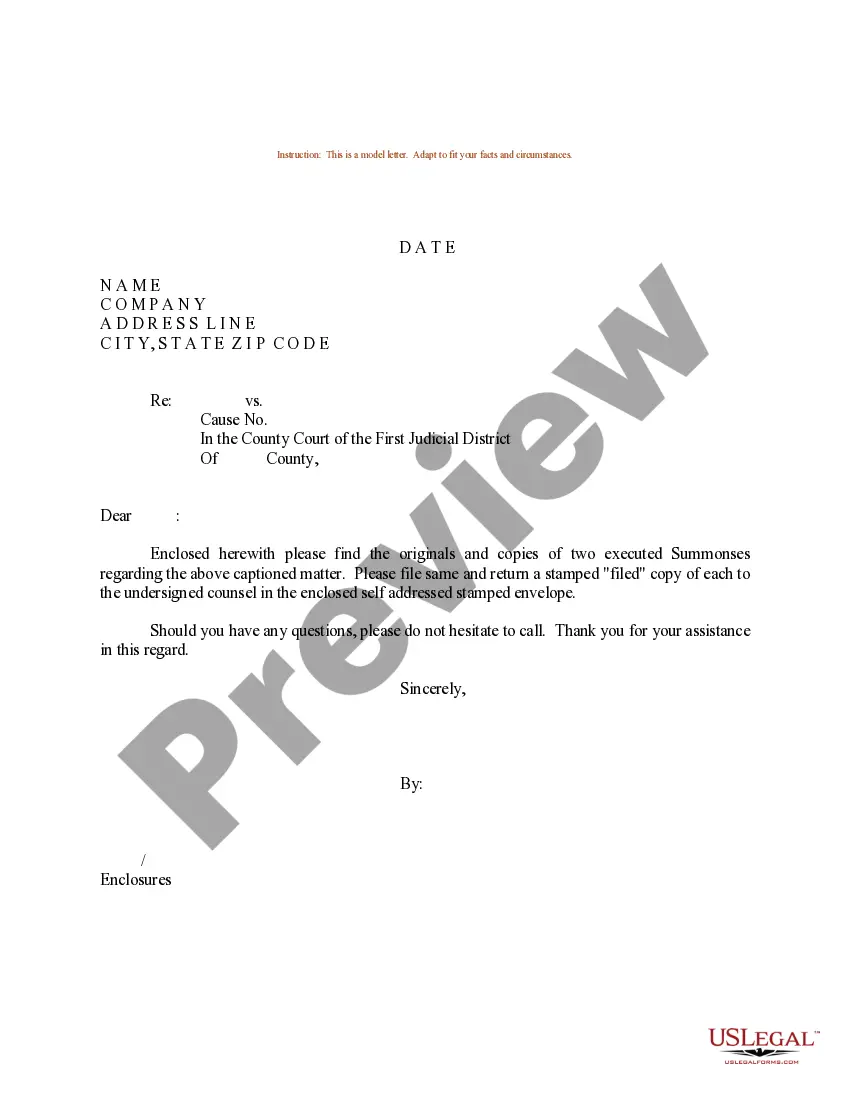
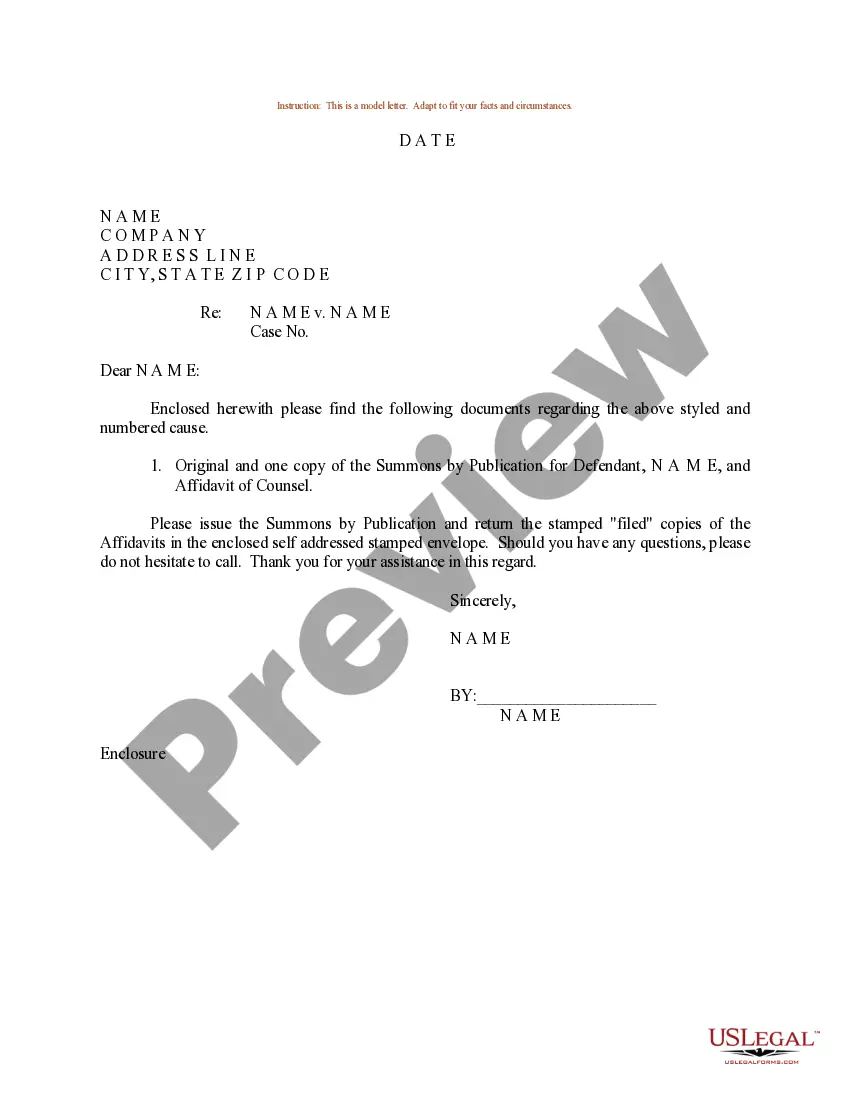
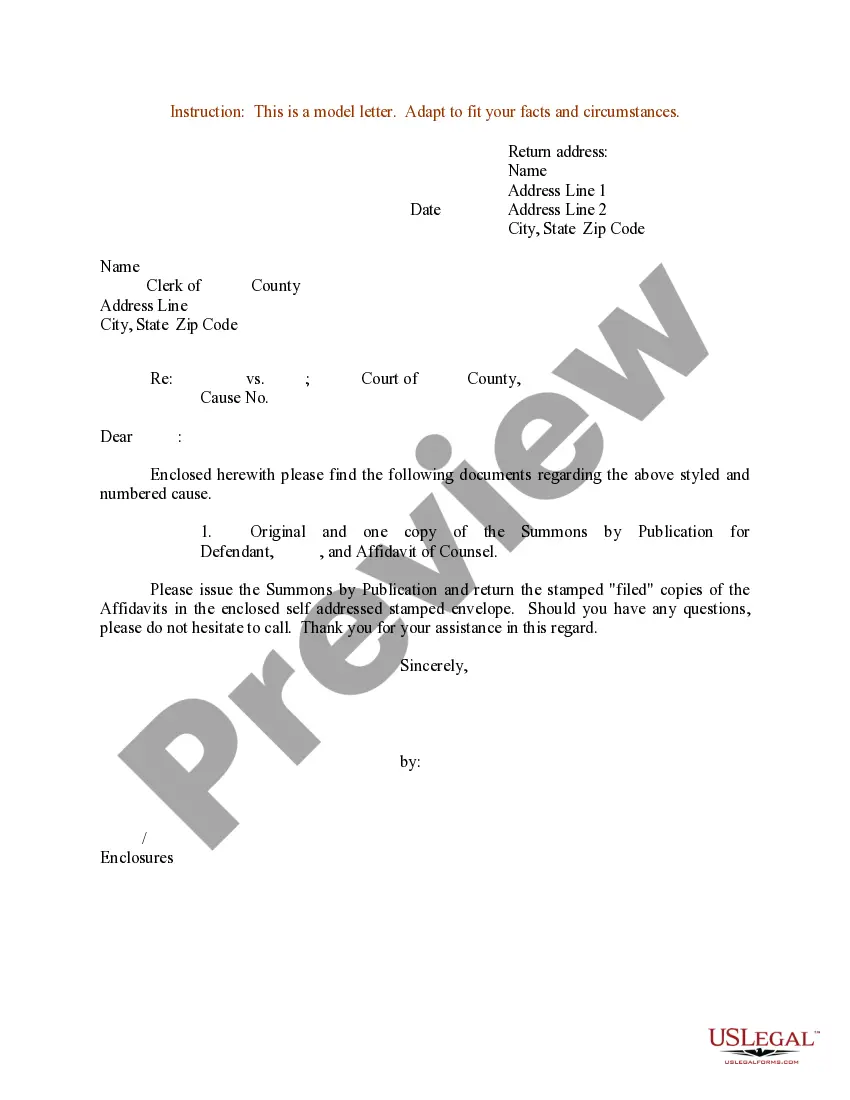
This Sample Letter for Request for Bill Associated with Summons by Publication is a template designed to assist individuals in formally requesting billing information related to a legal summons published in a newspaper. This letter serves to communicate specific billing inquiries to the identified party and is distinct from other legal forms in that it focuses solely on addressing financial aspects connected to a particular legal matter.
Form components explained
- Date: Enter the specific date of the letter.
- Recipient details: Include the name and address of the company or individual to whom the request is directed.
- Case reference: Clearly state the case title, including the names involved in the matter.
- Body: Outline the purpose of the letter and any specific details regarding the billing request.
- Closing: Include space for the sender's name and signature.
When this form is needed
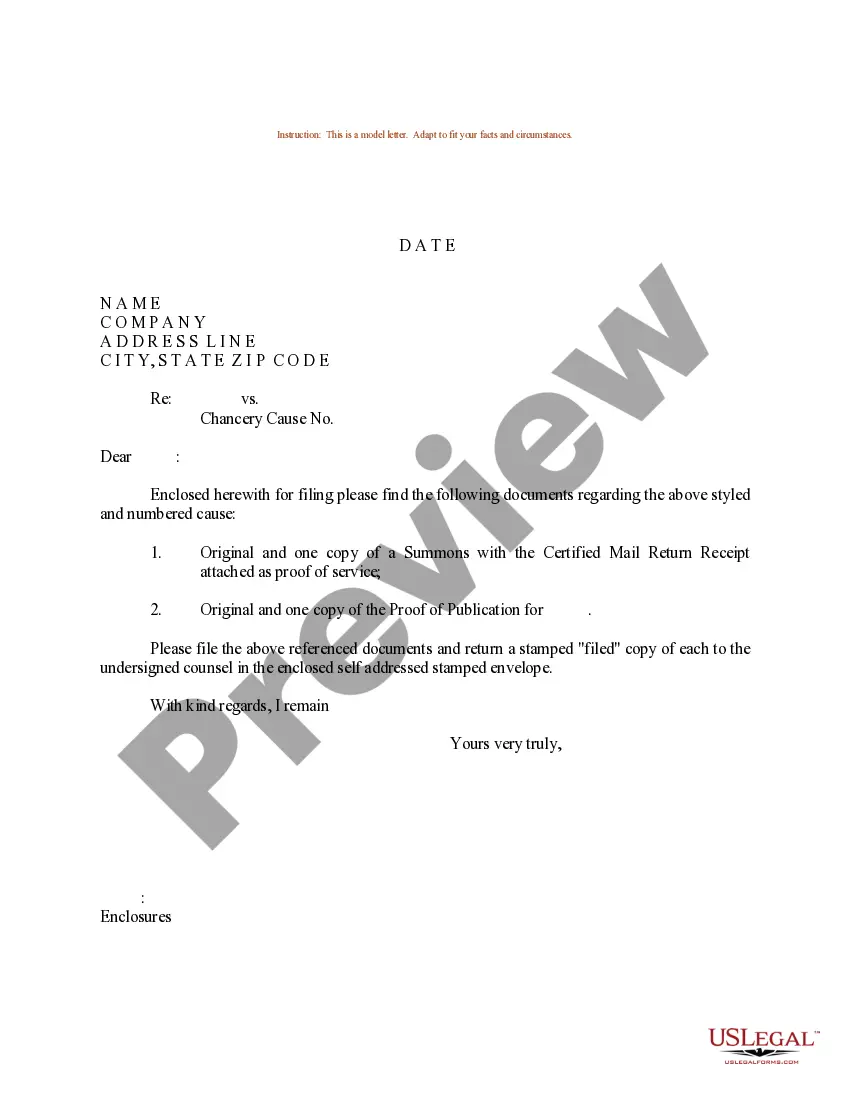
This form is used when you need to formally request billing details related to a summons that has been publicly published. You might find this necessary if you are involved in a legal dispute and require clarity about costs incurred, or if you need to challenge or resolve billing discrepancies associated with the case.
Who this form is for
- Individual litigants involved in a case requiring a summons by publication.
- Attorneys representing clients who need to inquire about related billing information.
- Parties interested in clarifying or disputing charges associated with their legal proceedings.
Steps to complete this form
- Identify the date on which you are drafting the letter.
- Fill in the full name and address of the recipient, which can be a company or an individual.
- Specify the case reference at the beginning of the letter to clarify the subject matter.
- Detail your request in the body of the letter, stating clearly what information you are seeking regarding the bill.
- Sign your name and include any necessary contact information at the end of the letter.
Notarization guidance
This form does not typically require notarization unless specified by local law. It is advisable to review local regulations to ensure compliance.
Get your form ready online
Our built-in tools help you complete, sign, share, and store your documents in one place.
Make edits, fill in missing information, and update formatting in US Legal Forms—just like you would in MS Word.
Download a copy, print it, send it by email, or mail it via USPS—whatever works best for your next step.
Sign and collect signatures with our SignNow integration. Send to multiple recipients, set reminders, and more. Go Premium to unlock E-Sign.
If this form requires notarization, complete it online through a secure video call—no need to meet a notary in person or wait for an appointment.
We protect your documents and personal data by following strict security and privacy standards.

Make edits, fill in missing information, and update formatting in US Legal Forms—just like you would in MS Word.

Download a copy, print it, send it by email, or mail it via USPS—whatever works best for your next step.

Sign and collect signatures with our SignNow integration. Send to multiple recipients, set reminders, and more. Go Premium to unlock E-Sign.

If this form requires notarization, complete it online through a secure video call—no need to meet a notary in person or wait for an appointment.

We protect your documents and personal data by following strict security and privacy standards.
Typical mistakes to avoid
- Failing to include the date, which can lead to processing delays.
- Not specifying the full names involved in the case, making it difficult for the recipient to identify the issue.
- Omitting contact information, which might prevent follow-up communication.
Why use this form online
- Convenient access allows you to fill out and download the form anytime.
- Editability enables you to customize the letter to suit your specific requirements.
- Reliable templates drafted by licensed attorneys provide assurance that you are using a legally sound document.
Key takeaways
- The sample letter serves as a formal request for billing information related to a summons by publication.
- It's important to complete the letter accurately to ensure clear communication.
- This form is suitable for individuals involved in legal disputes needing clarity on financial obligations.
Looking for another form?


Form popularity
FAQ
Gather information. Every summons includes the following: the names of the plaintiff(s) and defendant(s), the case number, the place where the lawsuit has been filed, the name and address of the plaintiff's lawyer or the plaintiff, and the date by which the defendant has to respond to the lawsuit.
Fill in: the case name and number; the name and address of the person being subpoenaed; and the date, time, and location of the court hearing where they're supposed to testify. Unlike a summons, which must be served by a Sheriff , or an authorized process server , a subpoena can be served by almost anyone.
A summons is the first court document in litigation, a court case, to be served by the sheriff. It is usually preceded by a letter of demand through the post, which people often refer to as 'a lawyer's letter'.The summons will also set out what the case against you is.
Provide the name of the court at the top of the Answer. You can find the information on the summons. List the name of the plaintiff on the left side. Write the case number on the right side of the Answer. Address the Judge and discuss your side of the case. Ask the judge to dismiss the case.
Contact the clerk's office of the court where the lawsuit was filed. You'll find a phone number and address for the clerk's office on your summons. The clerk will be able to tell you exactly what documents you should file with your answer and whether any filing fee is required.