Sample Letter for Summons by Publication
What this document covers
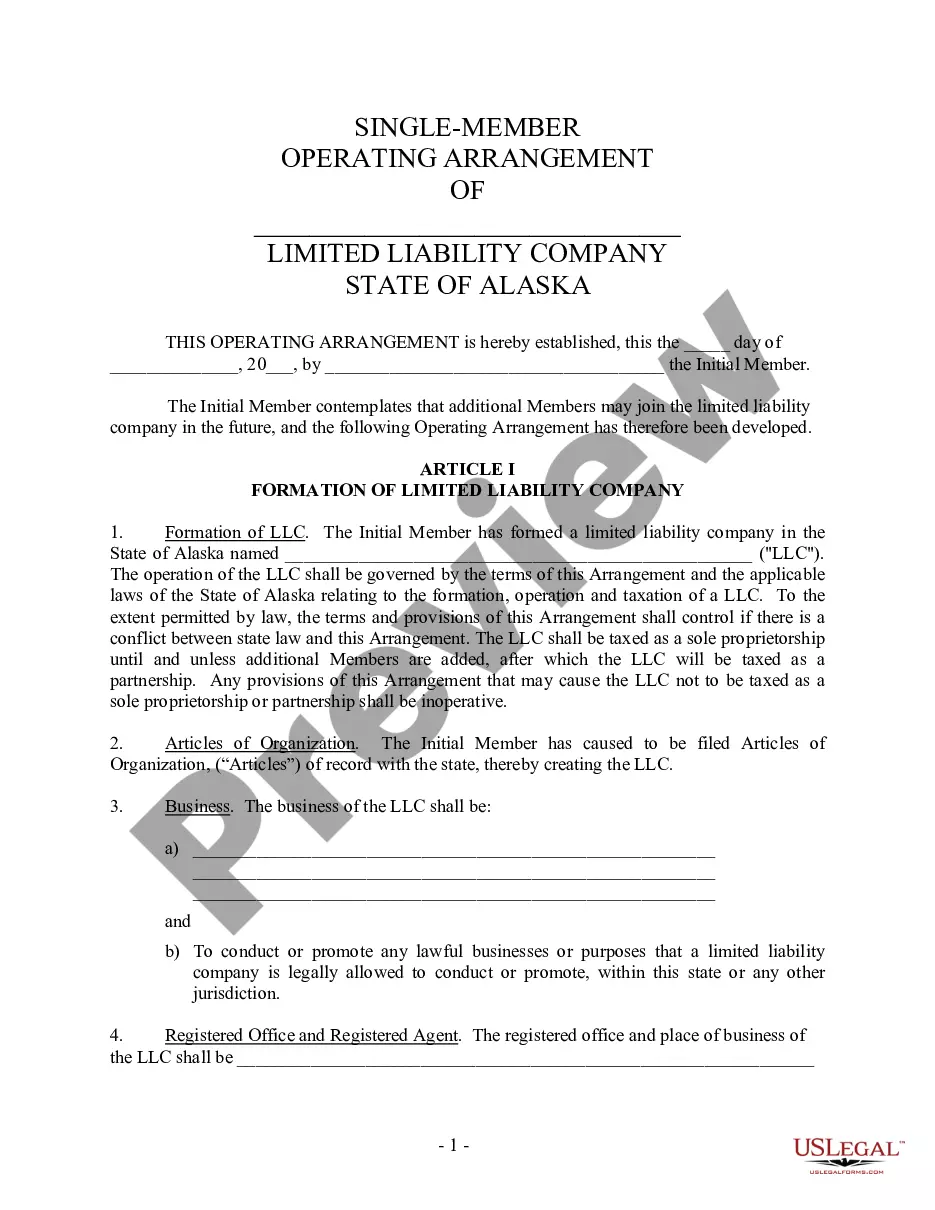
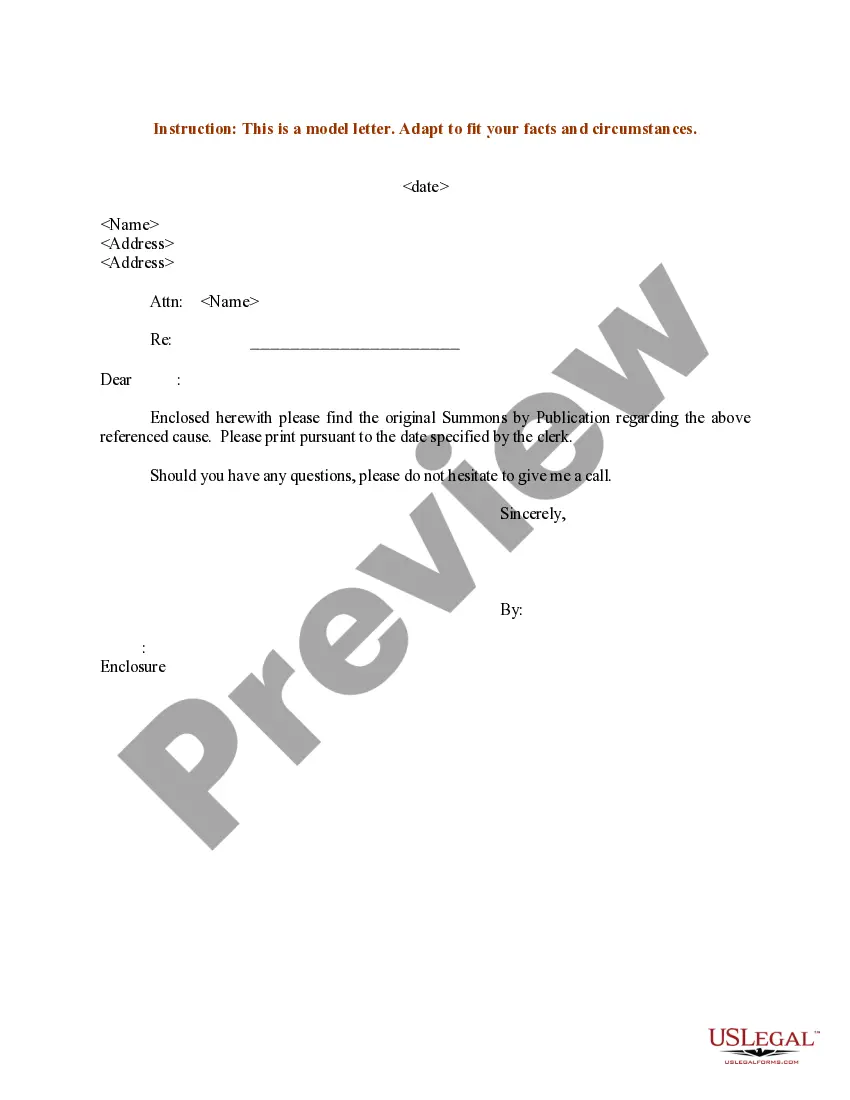
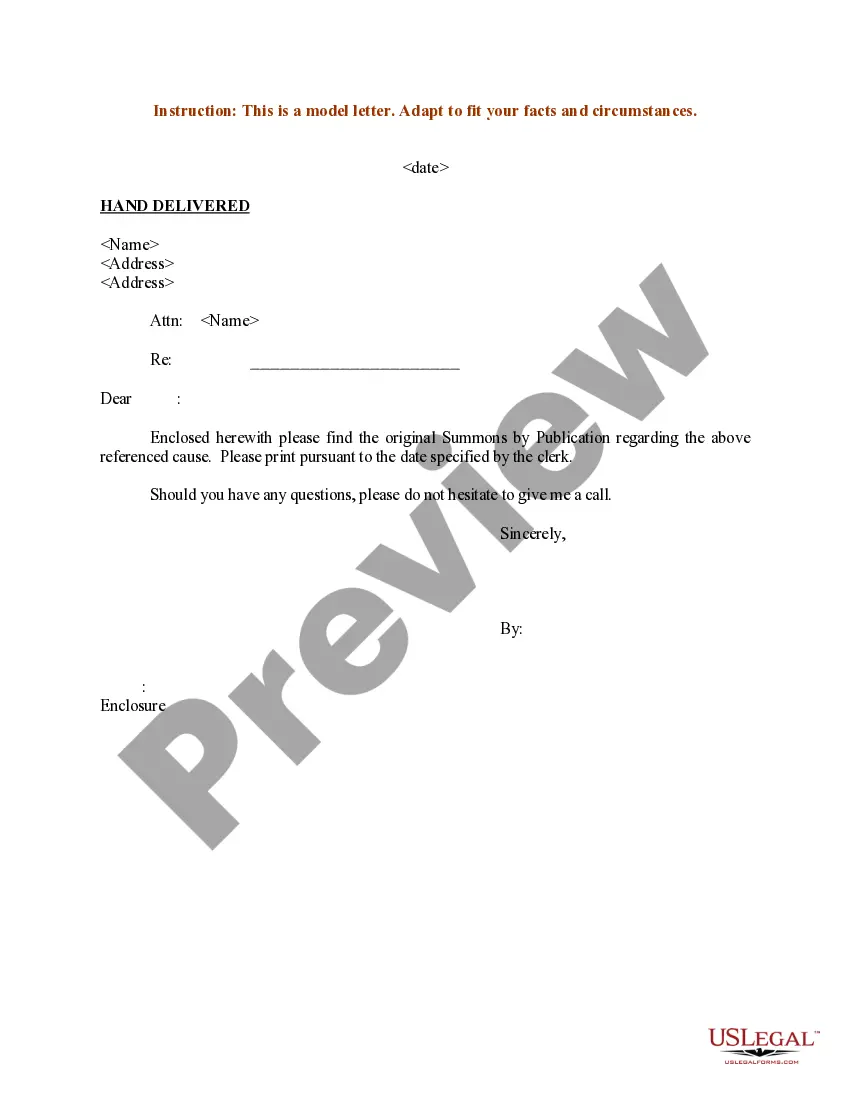
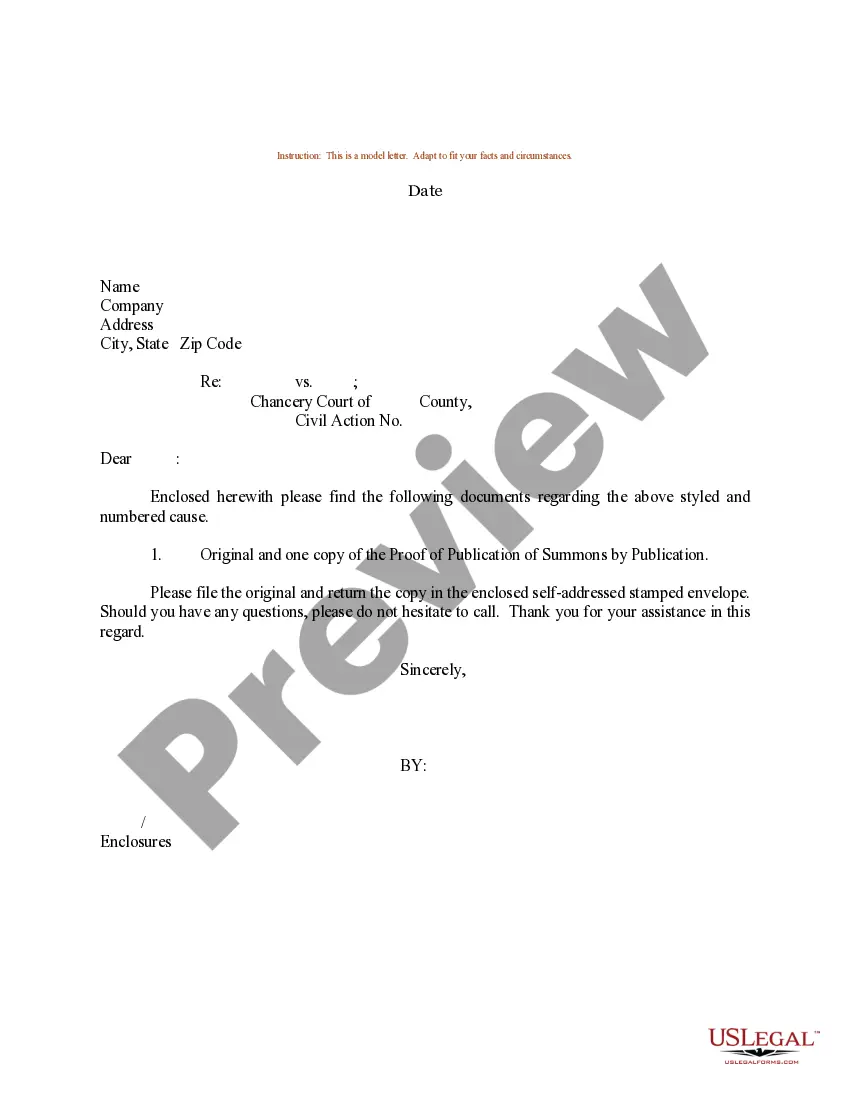
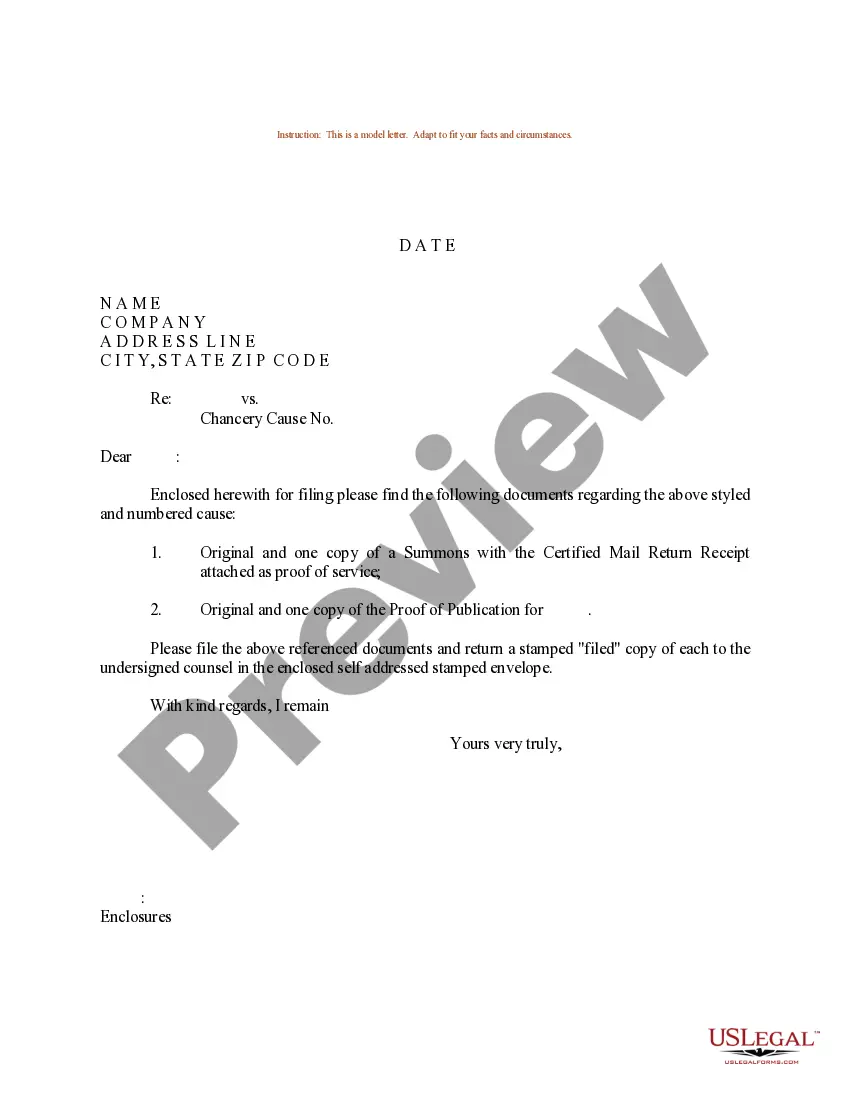
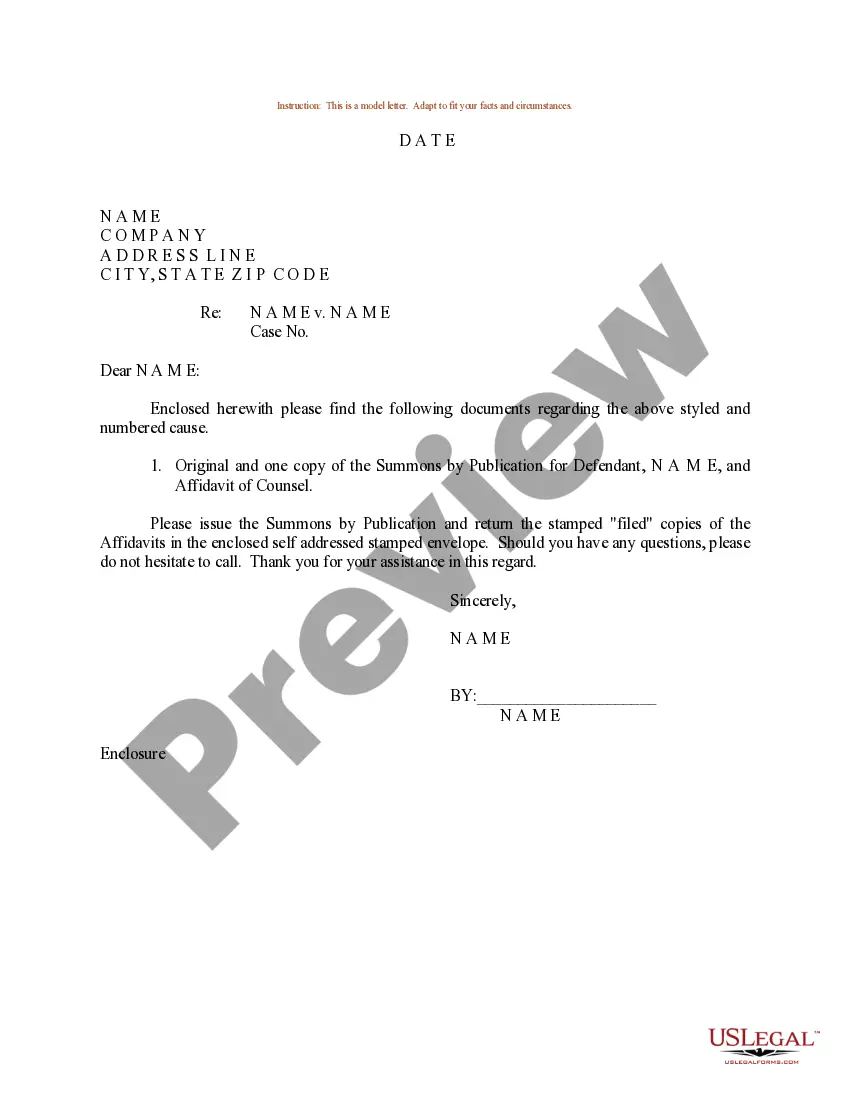
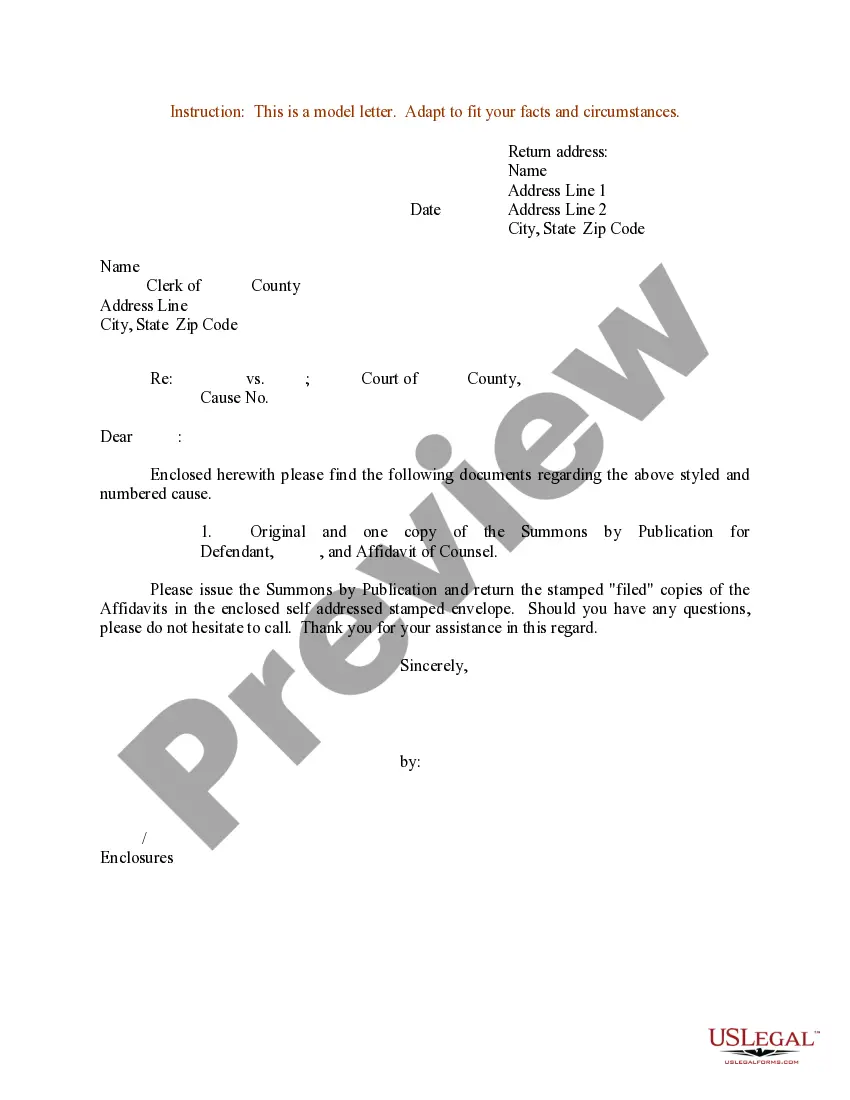
The Sample Letter for Summons by Publication is a legal document that provides a template for notifying parties about a court summons when personal service is not possible. This form differs from typical summons forms by focusing specifically on the method of publication instead of direct delivery. It is designed to comply with legal requirements for cases requiring notice through public channels.
Main sections of this form
- Date of the letter.
- Sender's name and address.
- Recipient's name and address.
- Subject line indicating the nature of the correspondence.
- Content specifying the details of the summons by publication.
When this form is needed
This form should be used when a party involved in a legal matter cannot be located to receive a summons in person. It is common in cases where the respondent is avoiding service, or their whereabouts are unknown. The publication serves as a formal notice that allows the legal process to continue in a timely manner.
Who can use this document
- Individuals or organizations involved in a legal proceeding where the other party cannot be served directly.
- Legal professionals seeking a template to comply with publication requirements for summons.
- Anyone needing a formal method of notifying parties in a public format as mandated by law.
Completing this form step by step
- Enter the date at the top of the letter.
- Fill in your name and address as the sender.
- Provide the recipient's name and address in the designated section.
- Write a clear subject that indicates the purpose of the letter.
- Adapt the body of the letter to include specific details about the summons being published.
Does this document require notarization?
Notarization is not commonly needed for this form. However, certain documents or local rules may make it necessary. Our notarization service, powered by Notarize, allows you to finalize it securely online anytime, day or night.
Get your form ready online
Our built-in tools help you complete, sign, share, and store your documents in one place.
Make edits, fill in missing information, and update formatting in US Legal Forms—just like you would in MS Word.
Download a copy, print it, send it by email, or mail it via USPS—whatever works best for your next step.
Sign and collect signatures with our SignNow integration. Send to multiple recipients, set reminders, and more. Go Premium to unlock E-Sign.
If this form requires notarization, complete it online through a secure video call—no need to meet a notary in person or wait for an appointment.
We protect your documents and personal data by following strict security and privacy standards.

Make edits, fill in missing information, and update formatting in US Legal Forms—just like you would in MS Word.

Download a copy, print it, send it by email, or mail it via USPS—whatever works best for your next step.

Sign and collect signatures with our SignNow integration. Send to multiple recipients, set reminders, and more. Go Premium to unlock E-Sign.

If this form requires notarization, complete it online through a secure video call—no need to meet a notary in person or wait for an appointment.

We protect your documents and personal data by following strict security and privacy standards.
Common mistakes to avoid
- Failing to include all pertinent recipient details.
- Using incorrect legal language or tone.
- Not checking state-specific publication requirements.
- Neglecting to sign the letter before submission.
Benefits of completing this form online
- Easy access to a customizable template that meets legal standards.
- Convenient editing options to tailor the content for specific cases.
- Quick downloading and printing for immediate use.
- Access to legal advice from licensed attorneys when needed.
Looking for another form?

Form popularity
FAQ
In Colorado, service of the summons and complaint (lawsuit) may be made by personal service, substituted service or, in certain circumstances, by mail or publication in a newspaper. Service by mail or publication generally needs to be approved by a court before it is permitted, and is not available in every case.
The cost depends upon the publication you use for notice. It's usually under $200.
The cost of a routine serve (a serve that is first attempted within 5-7 days of receiving the papers) can be as low as $20 and can go up to $100, but the national average is somewhere between $45 and $75. At ServeNow.com, we recommend you contact multiple process servers that cover a particular area.
A summons may be served on a person outside this state in any manner provided in this article or by sending a copy of the summons and complaint to the person to be served by first class mail, postage prepaid, requiring a return receipt.
Talking to their family members and friends. contacting former employers. contacting sport or hobby groups. searching Canada 411.
"Service by publication" means that you publish the Summons or other document in a newspaper of general circulation in the area where your spouse or partner is likely to be. For service by publication, you will have to pay the newspaper a fee to publish the document.
On average, a dedicated server can be rented out for $50 to $300 per month. The server rental cost is largely dependant on the amount of CPU, memory, and disk space required. Cloud servers, on the other hand, have a lower price point and can be rented for as little as $5 per month.
But because process servers are usually paid by the job, those who take fewer jobs earn less. The fee for a standard service ranges from about $20 to $80, depending on geographic location and other factors. The rate is often higher for difficult or expedited service.