Sample Letter for Summons by Publication - Hand Delivered
What this document covers
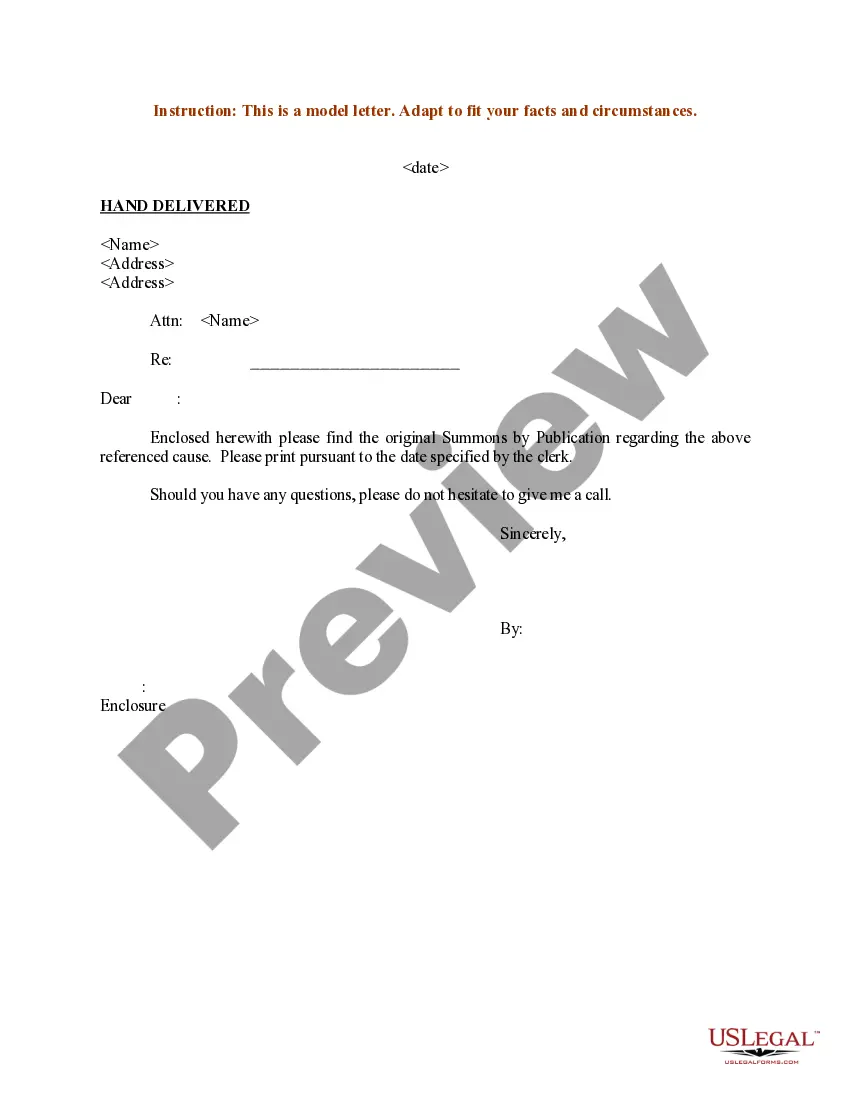
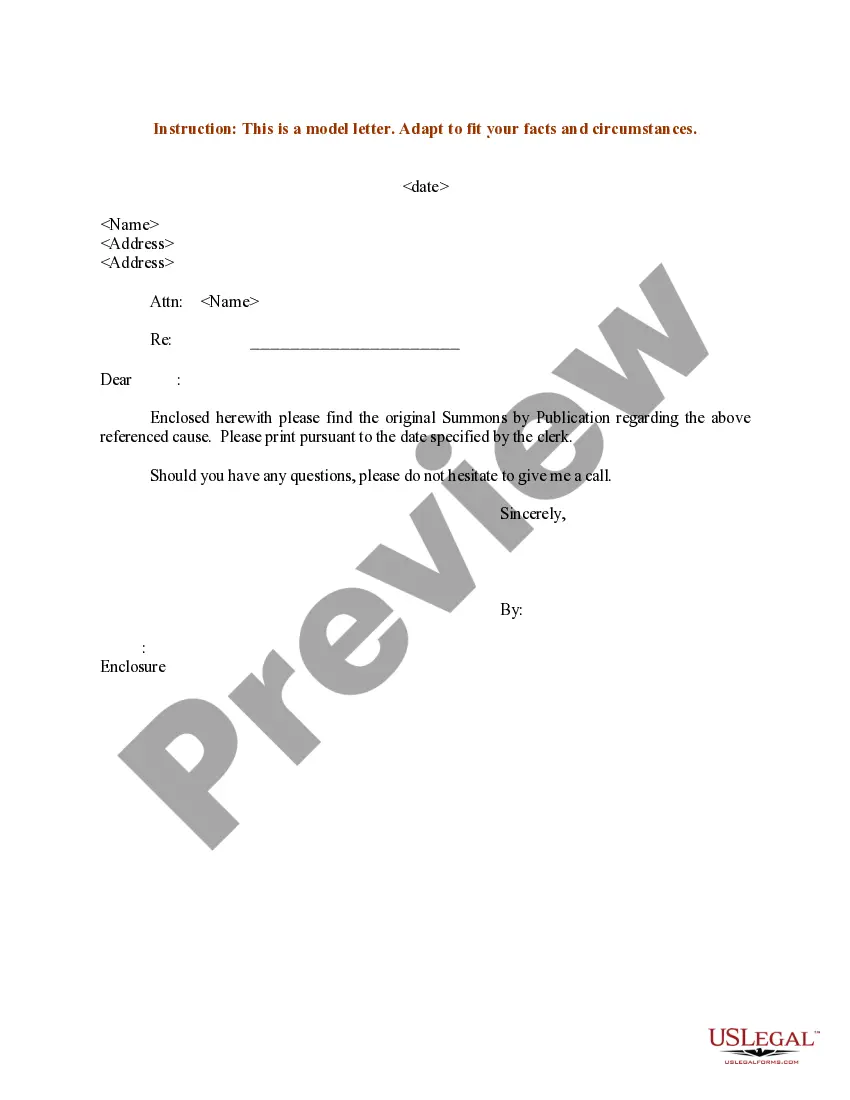
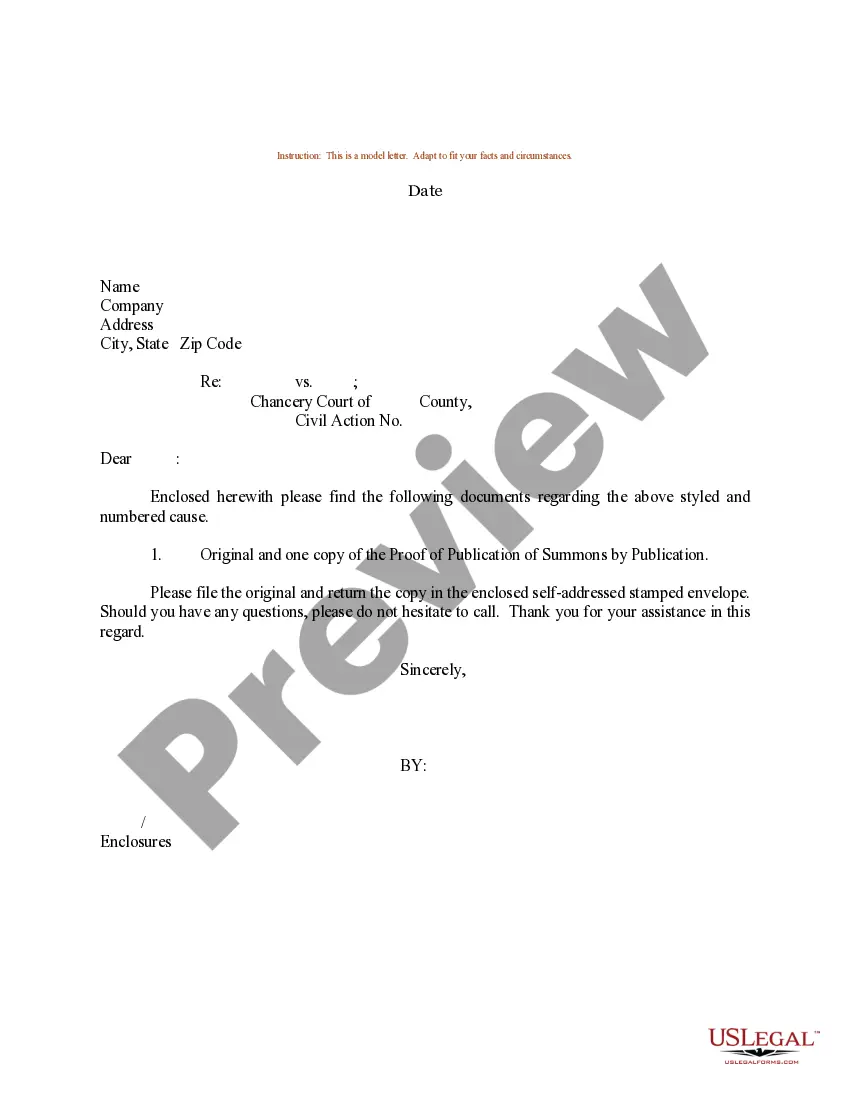
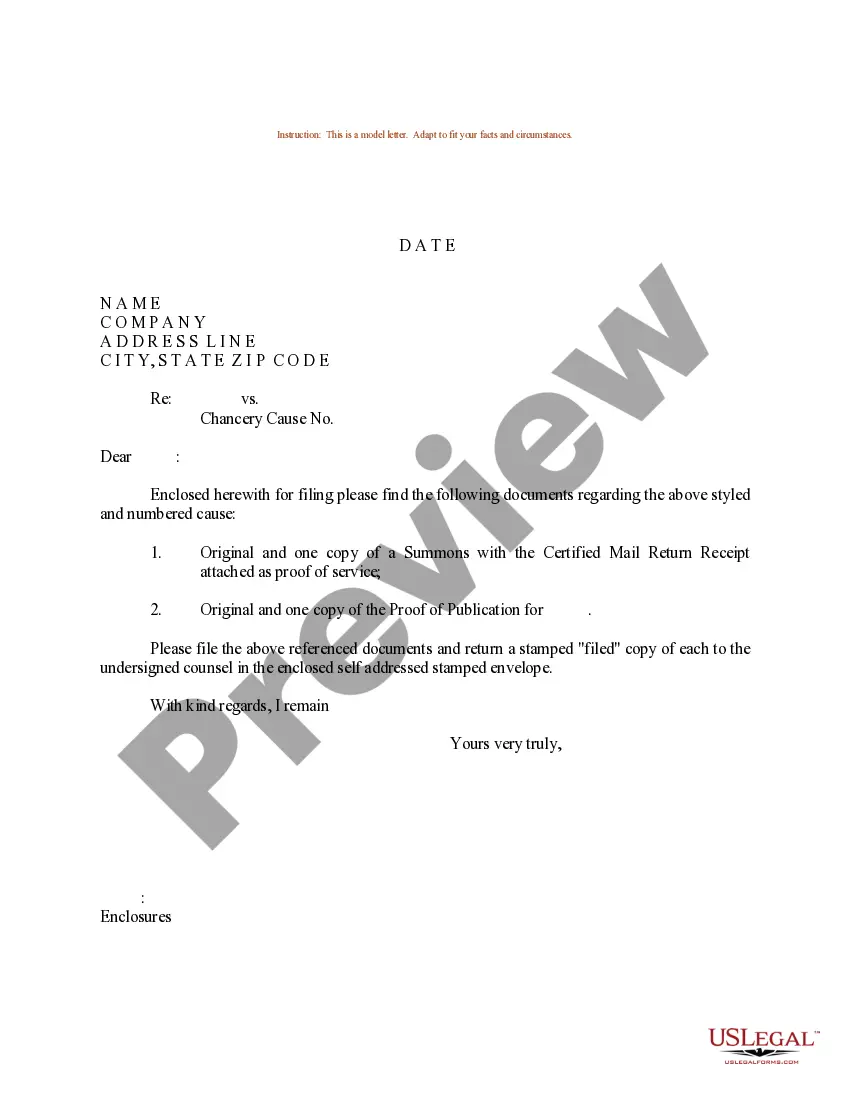
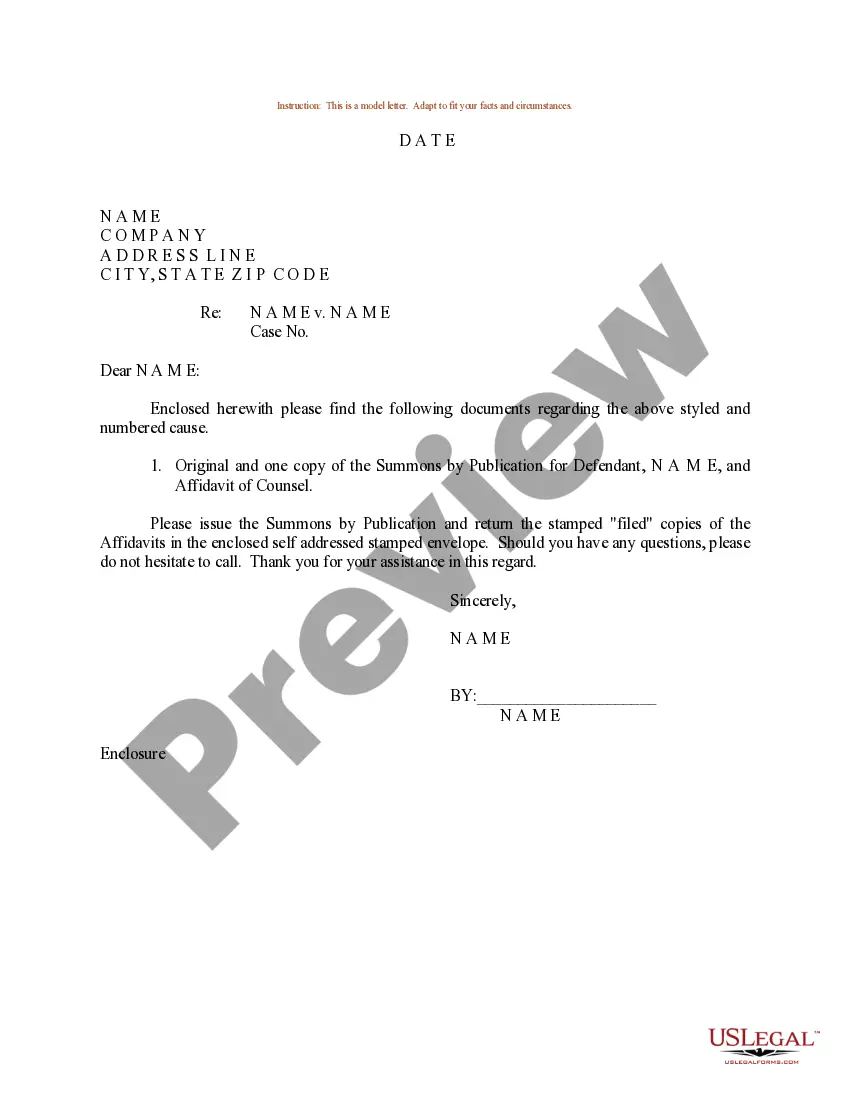
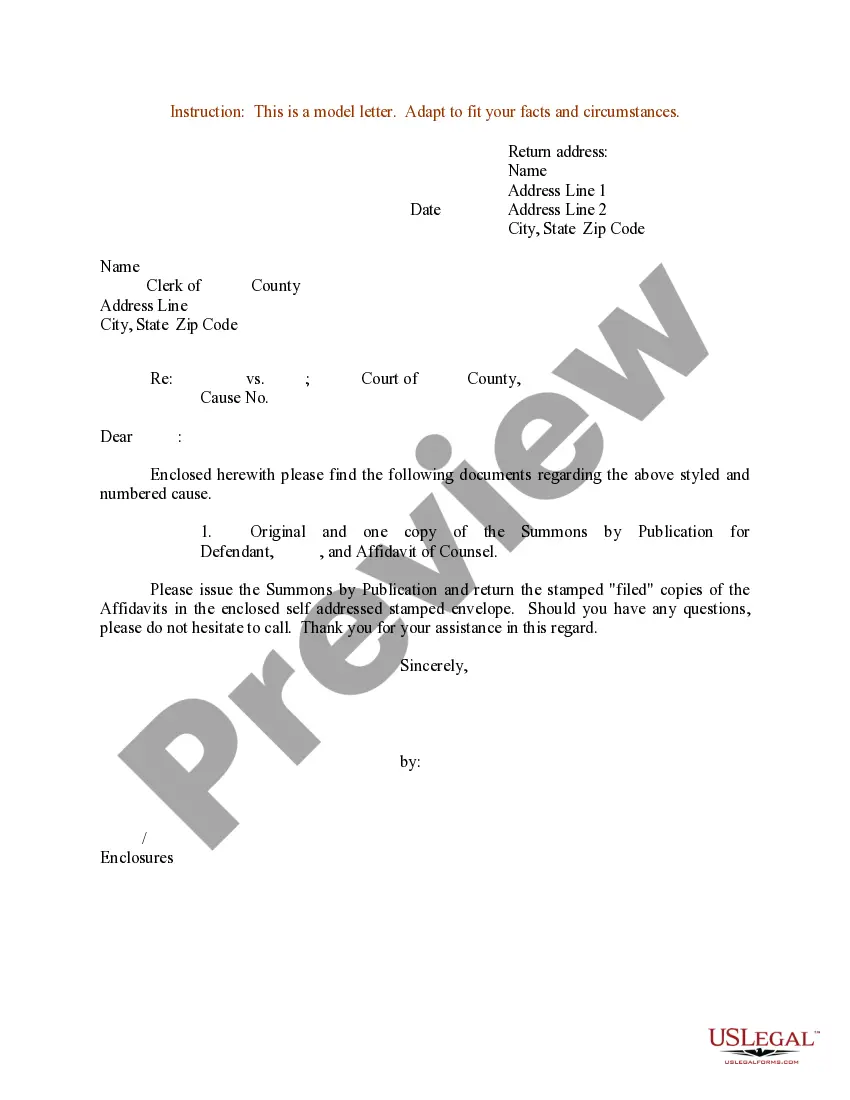
The Sample Letter for Summons by Publication - Hand Delivered is a template used to serve legal documents to a party when traditional methods fail. This form specifically allows for the hand delivery of a summons in situations where the recipient is unable to be reached by standard mailing or publication. It is distinct from other service methods because it directly establishes contact with the involved party, ensuring they are informed of the legal proceedings against them.
Main sections of this form
- Date of delivery.
- Names and addresses of both the sender and recipient.
- Attention line for directing the letter.
- Subject line for clarity on the content of the letter.
Situations where this form applies
This form is useful in situations where a party cannot be located through traditional postal service or publication. Legal professionals or individuals may opt to use this hand-delivered summons when immediate notification is required in legal cases, such as divorce proceedings, eviction notices, or lawsuits where prompt service is essential to meet court deadlines.
Who needs this form
- Individuals filing a legal notice who need to serve a summons.
- Attorneys representing clients in civil or family law cases.
- Landlords seeking to notify tenants in eviction processes.
- Anyone needing to ensure legal documents are received directly by the intended recipient.
Steps to complete this form
- Fill in the date the letter is being delivered.
- Clearly print the names and addresses of both the sender and the recipient.
- Include an Attention line to specify the individual to whom the letter should be directed.
- Prepare a subject line to convey the purpose of the letter more clearly.
- Sign and date where necessary to validate the delivery.
Does this document require notarization?
This form usually doesn’t need to be notarized. However, local laws or specific transactions may require it. Our online notarization service, powered by Notarize, lets you complete it remotely through a secure video session, available 24/7.
Get your form ready online
Our built-in tools help you complete, sign, share, and store your documents in one place.
Make edits, fill in missing information, and update formatting in US Legal Forms—just like you would in MS Word.
Download a copy, print it, send it by email, or mail it via USPS—whatever works best for your next step.
Sign and collect signatures with our SignNow integration. Send to multiple recipients, set reminders, and more. Go Premium to unlock E-Sign.
If this form requires notarization, complete it online through a secure video call—no need to meet a notary in person or wait for an appointment.
We protect your documents and personal data by following strict security and privacy standards.

Make edits, fill in missing information, and update formatting in US Legal Forms—just like you would in MS Word.

Download a copy, print it, send it by email, or mail it via USPS—whatever works best for your next step.

Sign and collect signatures with our SignNow integration. Send to multiple recipients, set reminders, and more. Go Premium to unlock E-Sign.

If this form requires notarization, complete it online through a secure video call—no need to meet a notary in person or wait for an appointment.

We protect your documents and personal data by following strict security and privacy standards.
Mistakes to watch out for
- Failing to include the date of delivery.
- Omitting or incorrectly writing the recipient's information.
- Not providing a clear subject line that states the purpose of the letter.
- Forgetting to sign the letter, which can render it invalid.
Why complete this form online
- Convenient download and edit options to tailor to your specific needs.
- Reliable templates drafted by licensed attorneys to ensure legality.
- Accessible anytime, allowing for immediate preparation and use.
- Streamlined process to serve documents without the need for specialized legal knowledge.
Looking for another form?


Form popularity
FAQ
If you haven't already, go down to the court house and get a copy of the proof of service from the records department. Identify the details of the service (where the services allegedly took place, the description of the person served etc.)
A subpoena may be served on an individual either through personal delivery, email, certified mail or even by reading it out aloud. It is also called a writ or administrative summons. A subpoena cannot be ignored as it is a court order and a failure to respond to it may be punishable as contempt of court.
You do not need to know where someone lives or works in order to serve him or her with legal papers.
"Service by publication" means that you publish the Summons or other document in a newspaper of general circulation in the area where your spouse or partner is likely to be. For service by publication, you will have to pay the newspaper a fee to publish the document.
Service by Email Part 6, Rule 23 of the Civil Procedure Rules says:the fax number, e-mail address or other electronic identification to which it must be sent; That means that delivery or sending court documents by email is not service, unless the other party expressly consents to it.
In some cases the court may attempt service of process via first class post, which they will use to send the paperwork to the last known address of the person being served. If you are not able to locate the person's address, you may still be able to have the individual served with the necessary documents.
Can a legal notice be served by email?If you and the person have agreed that notification by email will be proof of notice, then you will need to have the agreement in writing. There is no law that states certified mail will serve as proof of notice in receiving legal documents.
Personal Service. Send a Letter. Search for a Phone Number or Address. Use Social Media. Pay for a Person Search. Consider Contacting Others. Search Property Records. Use Another Address.
If you don't have the Defendant's address, but know where they are you can still sue and serve them. What you ideally can do is hire a process server and give them as much informatoin on the Defendant as possible. If they can find the defendant and serve them with your filed lawsuit then service is satisifed.