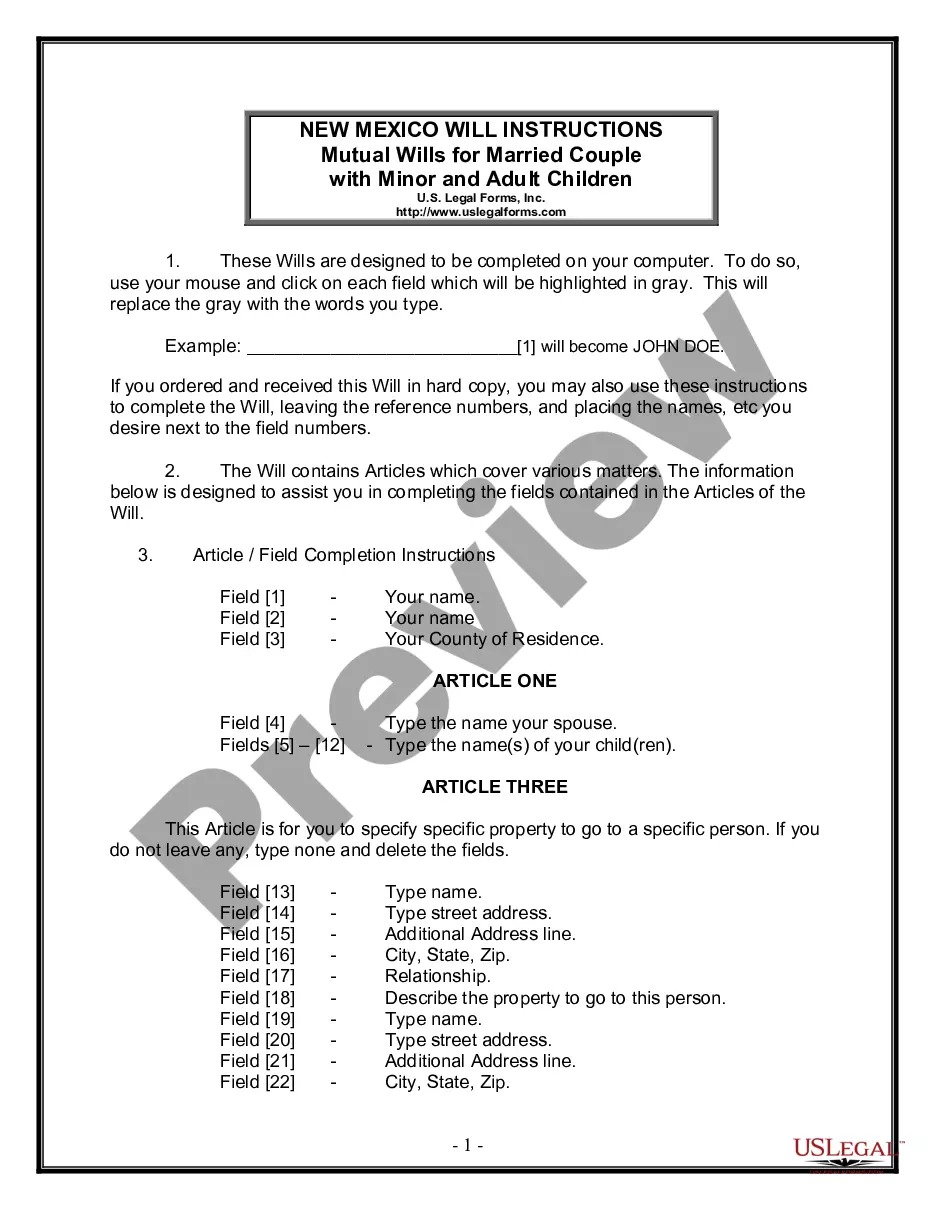
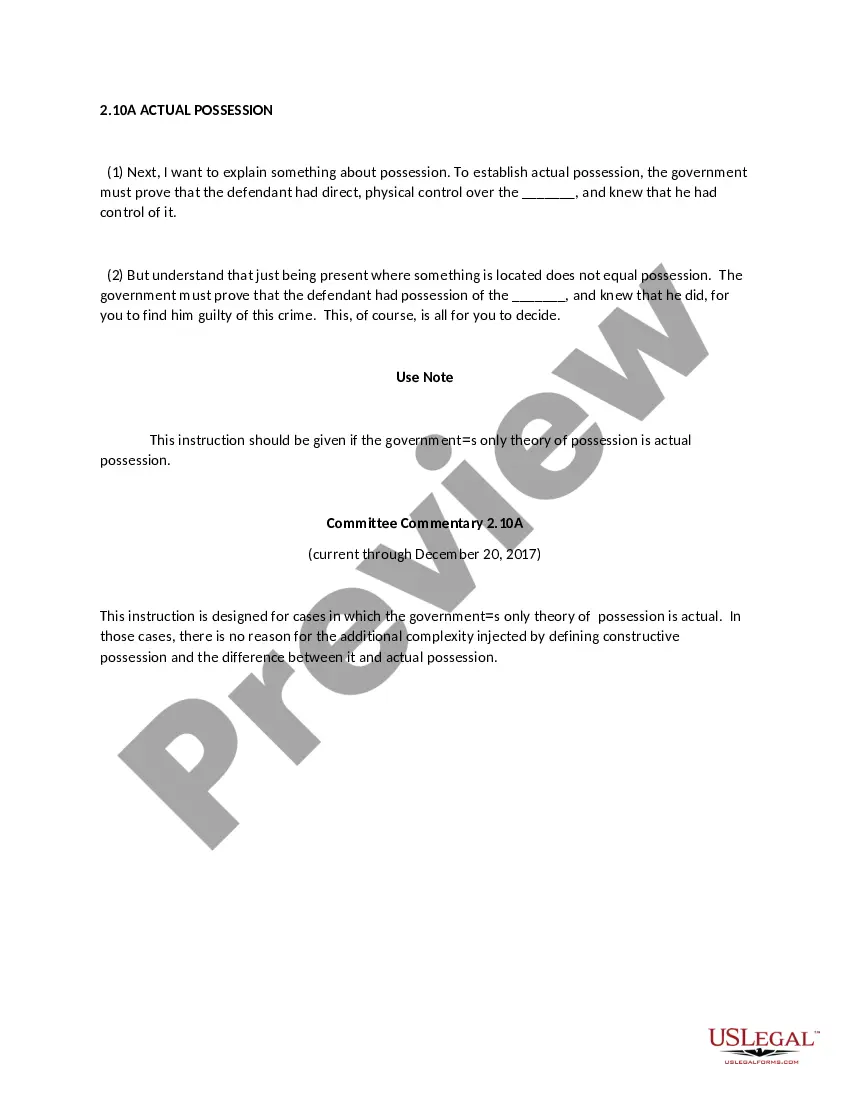
ACTUAL POSSESSION
What this document covers
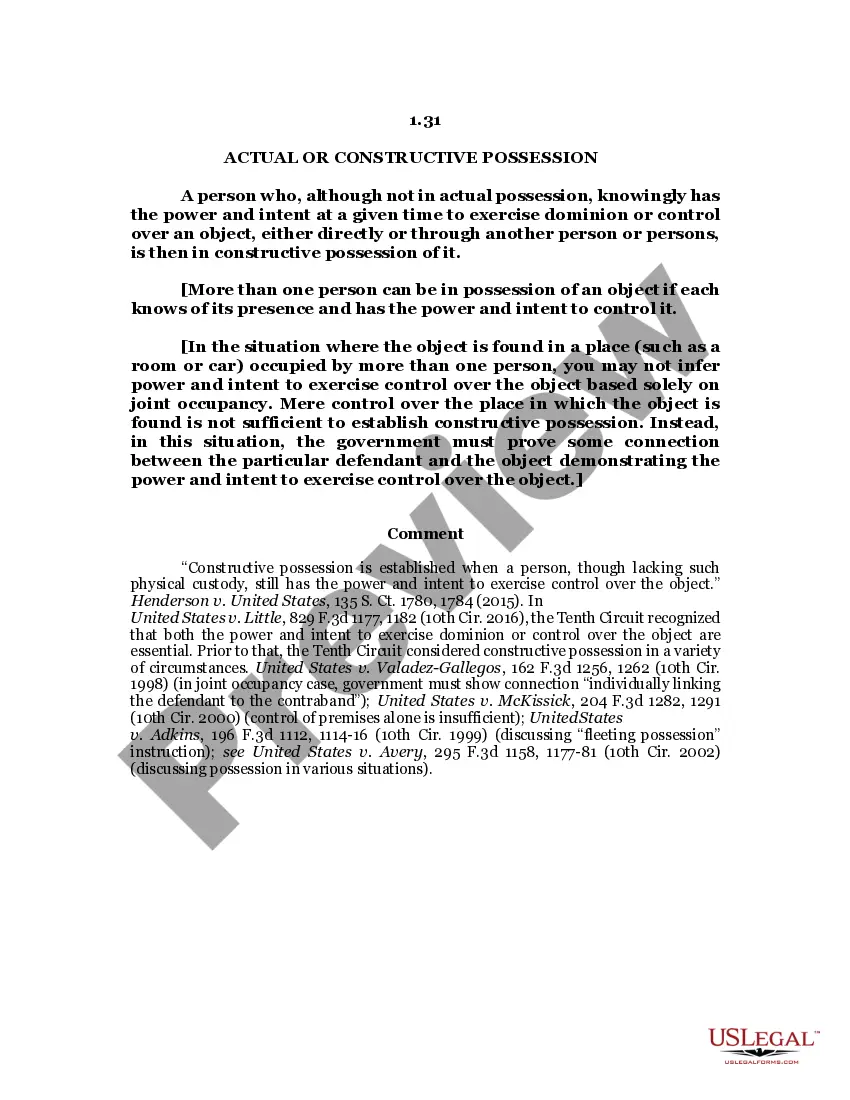
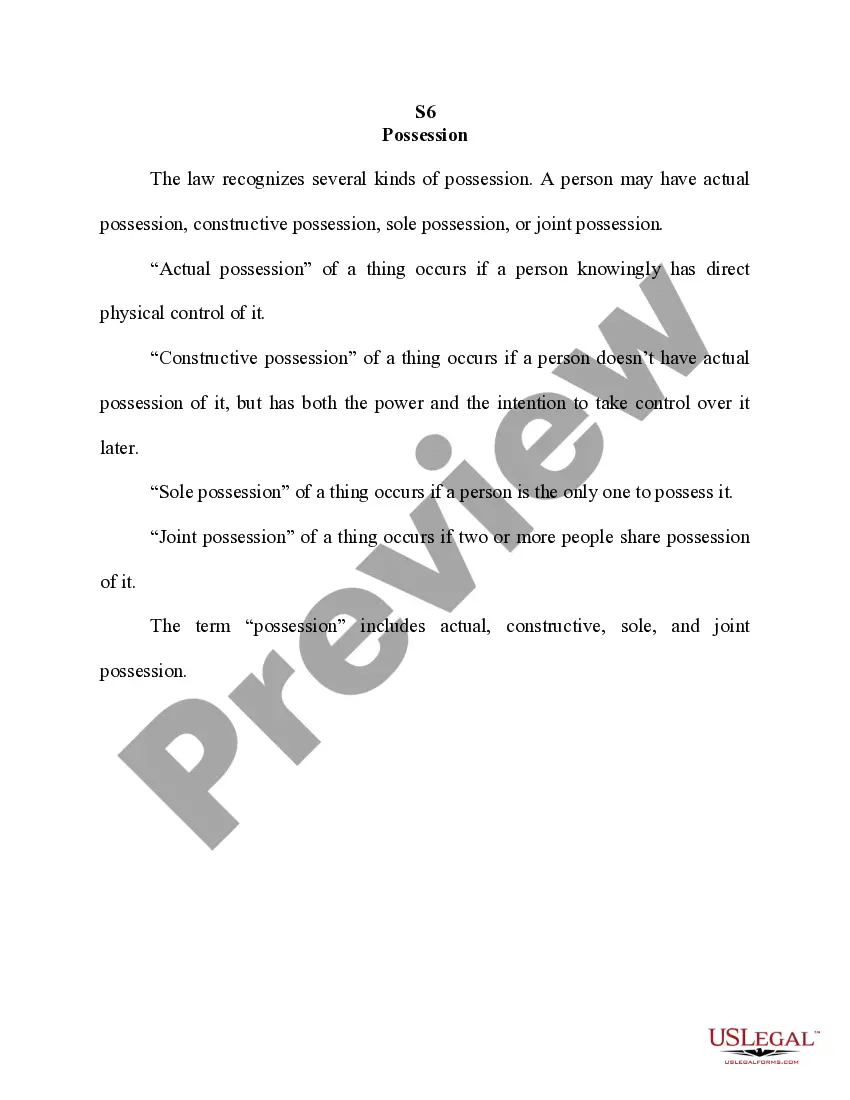
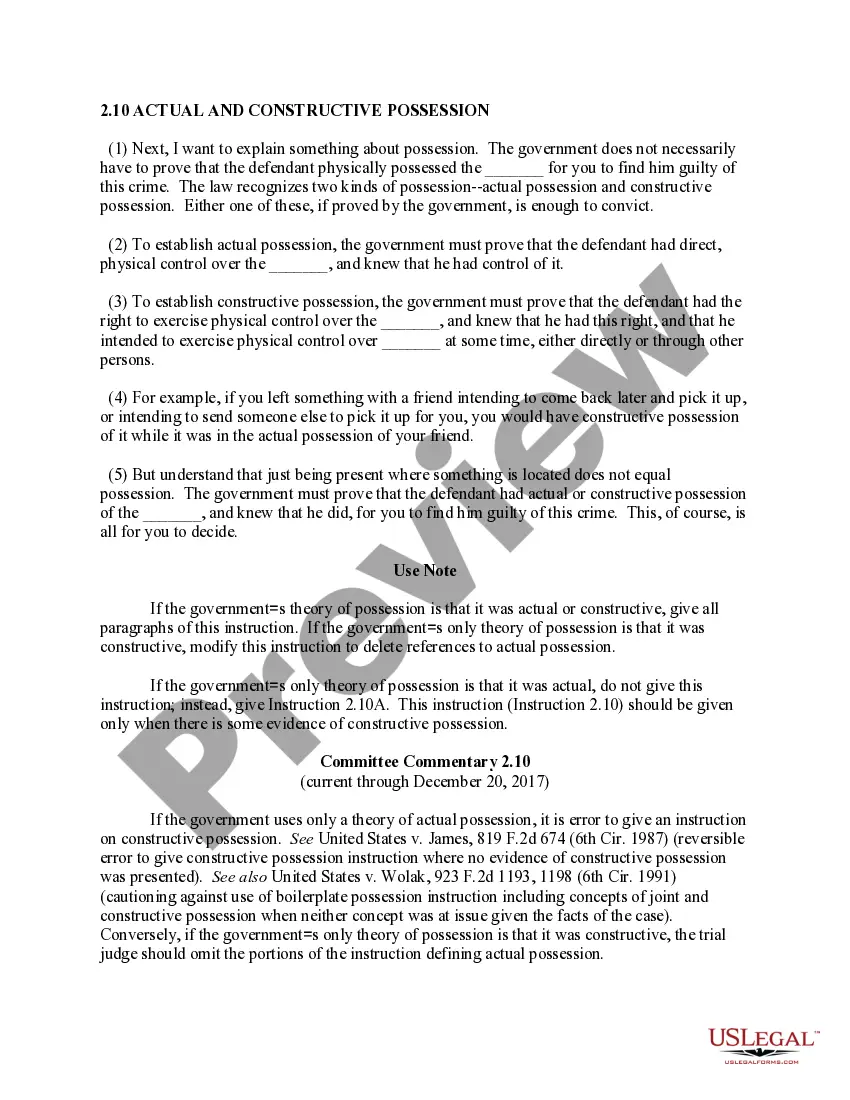
The Actual Possession form is a legal document used in cases where the government must prove a defendant had direct and physical control over an item, along with knowledge of that control. This form helps clarify the criteria for establishing actual possession, distinguishing it from constructive possession. It serves as a key instruction in legal proceedings focused solely on the theory of actual possession.
Key components of this form
- Definition of actual possession, including direct physical control and knowledge.
- Clarification that mere presence at the location does not equate to possession.
- Instruction for juries in cases focusing exclusively on actual possession.
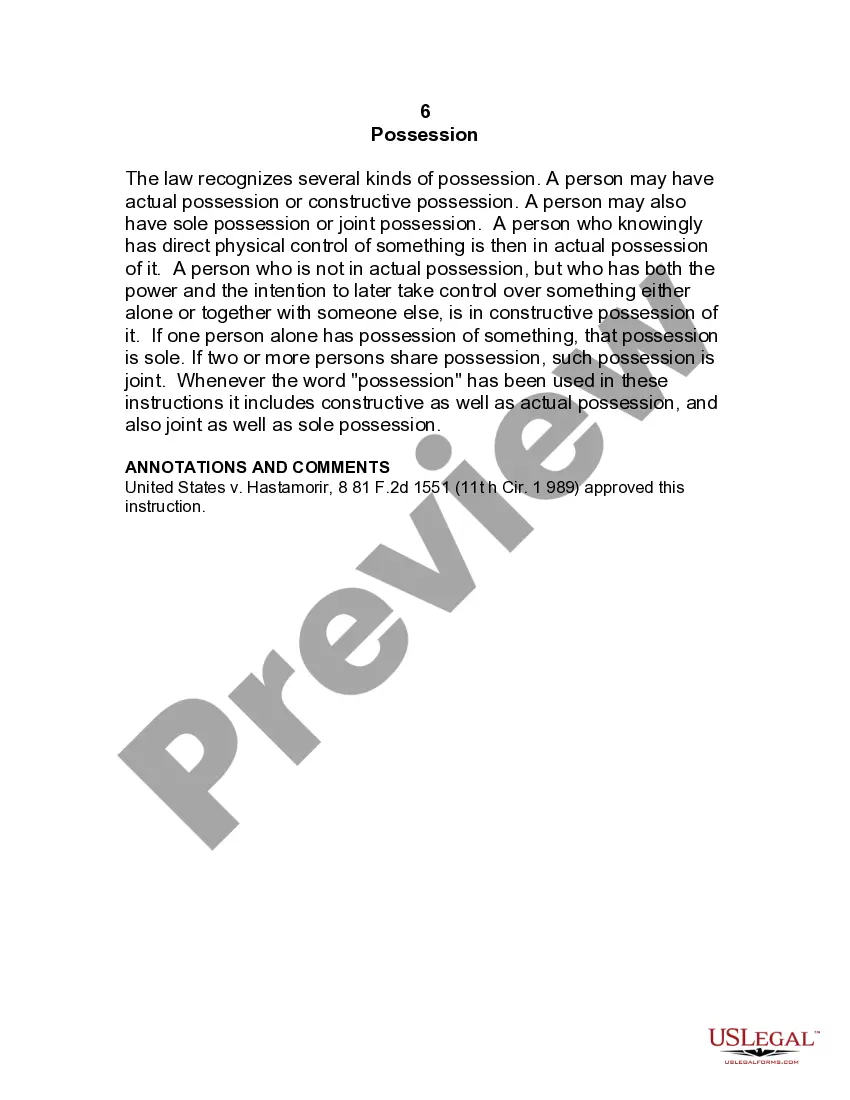
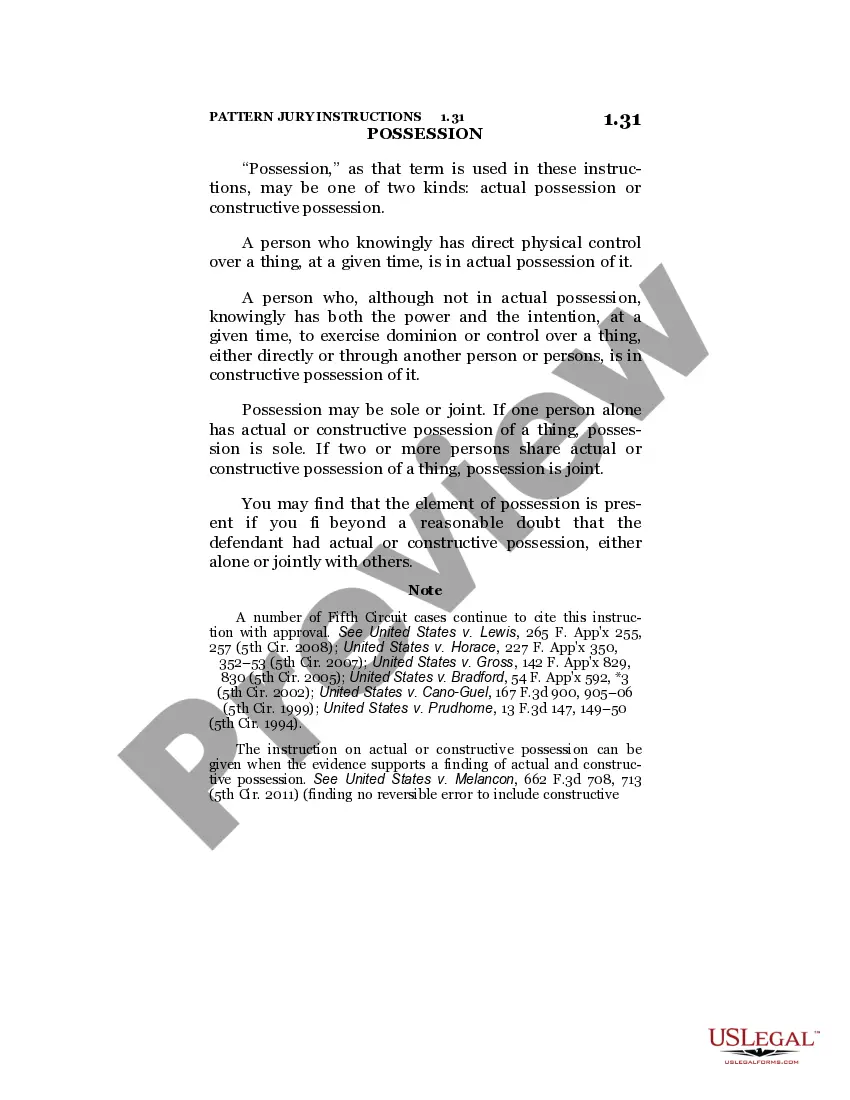
When to use this document
This form is applicable in criminal cases where the prosecution must prove that a defendant had actual possession of an item, such as illegal substances or stolen goods. It is especially relevant in court hearings or trials where possession is a central issue in establishing guilt.
Who this form is for
- Attorneys representing clients in criminal cases involving possession charges.
- Judges presiding over trials that are examining the definition of actual possession.
- Legal educators and students studying criminal law and possession theories.
How to complete this form
- Identify the specific item or property the case pertains to.
- Gather evidence to prove direct control and knowledge of the item.
- Complete the necessary sections, ensuring clarity on possession definitions.
- Review legal requirements applicable in the jurisdiction.
- Submit the form as instructed within the legal proceedings.
Is notarization required?
Notarization is not commonly needed for this form. However, certain documents or local rules may make it necessary. Our notarization service, powered by Notarize, allows you to finalize it securely online anytime, day or night.
Get your form ready online
Our built-in tools help you complete, sign, share, and store your documents in one place.
Make edits, fill in missing information, and update formatting in US Legal Forms—just like you would in MS Word.
Download a copy, print it, send it by email, or mail it via USPS—whatever works best for your next step.
Sign and collect signatures with our SignNow integration. Send to multiple recipients, set reminders, and more. Go Premium to unlock E-Sign.
If this form requires notarization, complete it online through a secure video call—no need to meet a notary in person or wait for an appointment.
We protect your documents and personal data by following strict security and privacy standards.

Make edits, fill in missing information, and update formatting in US Legal Forms—just like you would in MS Word.

Download a copy, print it, send it by email, or mail it via USPS—whatever works best for your next step.

Sign and collect signatures with our SignNow integration. Send to multiple recipients, set reminders, and more. Go Premium to unlock E-Sign.

If this form requires notarization, complete it online through a secure video call—no need to meet a notary in person or wait for an appointment.

We protect your documents and personal data by following strict security and privacy standards.
Avoid these common issues
- Assuming presence at an item's location constitutes possession.
- Failing to provide clear evidence of control and knowledge.
- Neglecting jurisdiction-specific laws regarding possession definitions.
Why complete this form online
- Convenient access to legal forms from anywhere at any time.
- Editable templates that allow for customization based on specific cases.
- Reliable resources drafted by licensed attorneys, ensuring legal accuracy.
Looking for another form?
Form popularity
FAQ
Actual possession, also called possession in fact, is used to describe immediate physical contact. This case from New York, explains that ?actual possession is what most of us think of as possession?that is, having physical custody or control of an object.?
In other words, actual possession is the term that is commonly used to refer to being in immediate physical contact with the object in question. Somebody that is carrying a cellphone in their pocket, for example, is considered to have actual possession of that cellphone.
Types of Possession Actual Possession. You have actual possession when you have physical control over something.Constructive Possession. You have constructive possession when something is not immediately accessible to you, but you have control or the right to control over a thing 3.Joint Possession.
Actual possession means having physical custody of the contraband, typically on your body or on something directly attached to your body. Constructive possession applies where a person has the power and intent to exercise dominion and control over an object. See Black's Law Dictionary 1047.
Actual possession means having physical custody of the contraband, typically on your body or on something directly attached to your body. Constructive possession applies where a person has the power and intent to exercise dominion and control over an object. See Black's Law Dictionary 1047.
Actual possession consists of two elements: the intention to posses the land and the exercise of control over it to the exclusion of other persons. Actual possession occurs when a person has direct physical control over the item.