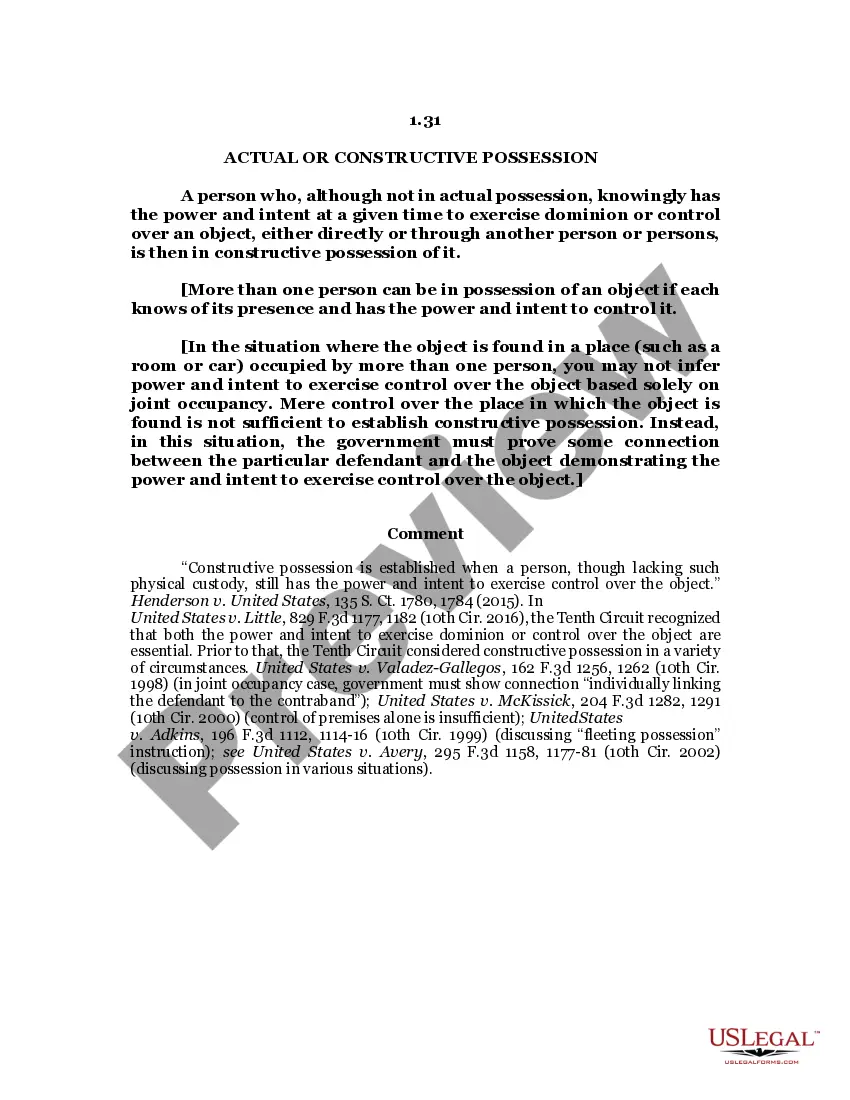
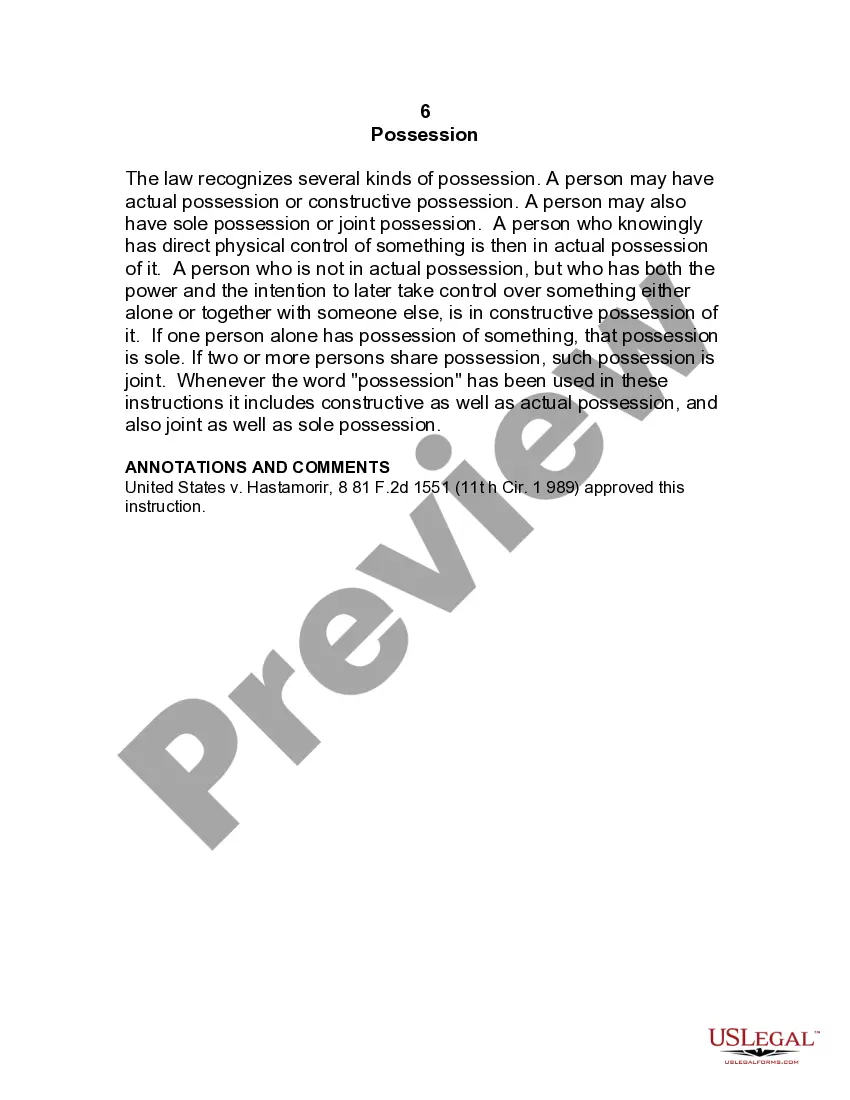
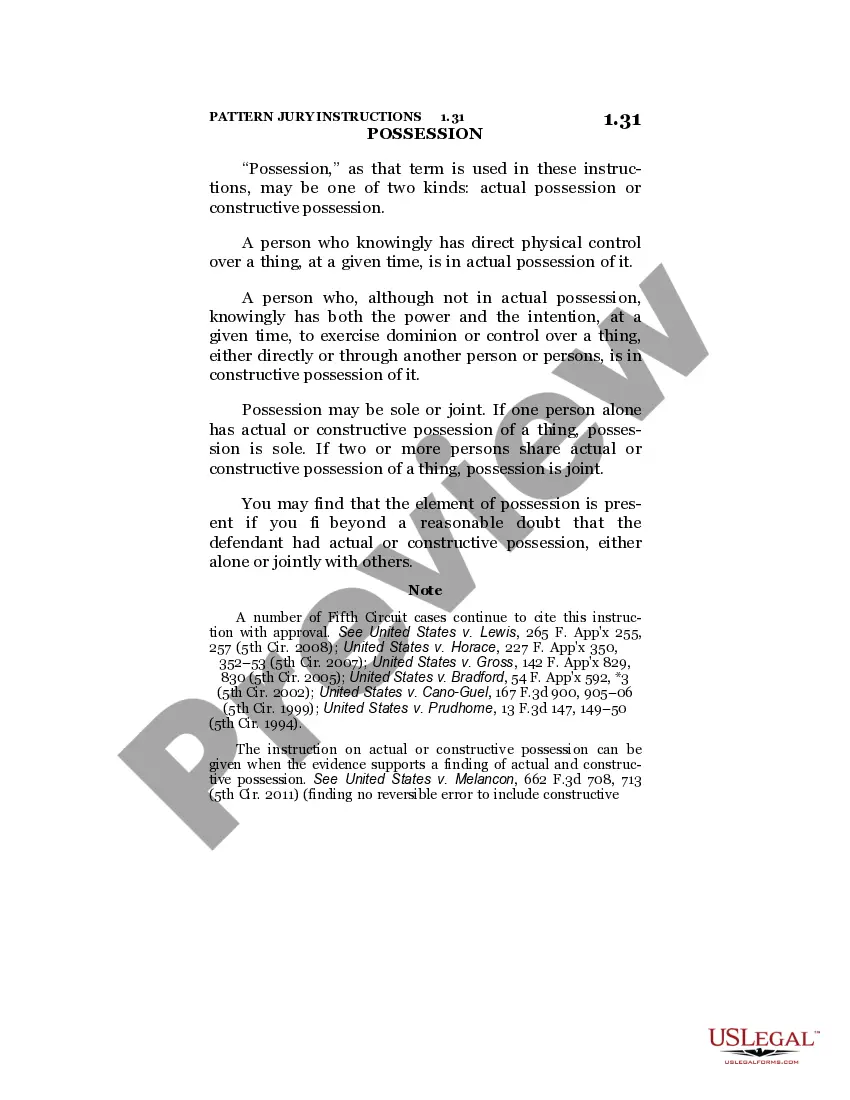
ACTUAL OR CONSTRUCTIVE POSSESSION
What is this form?
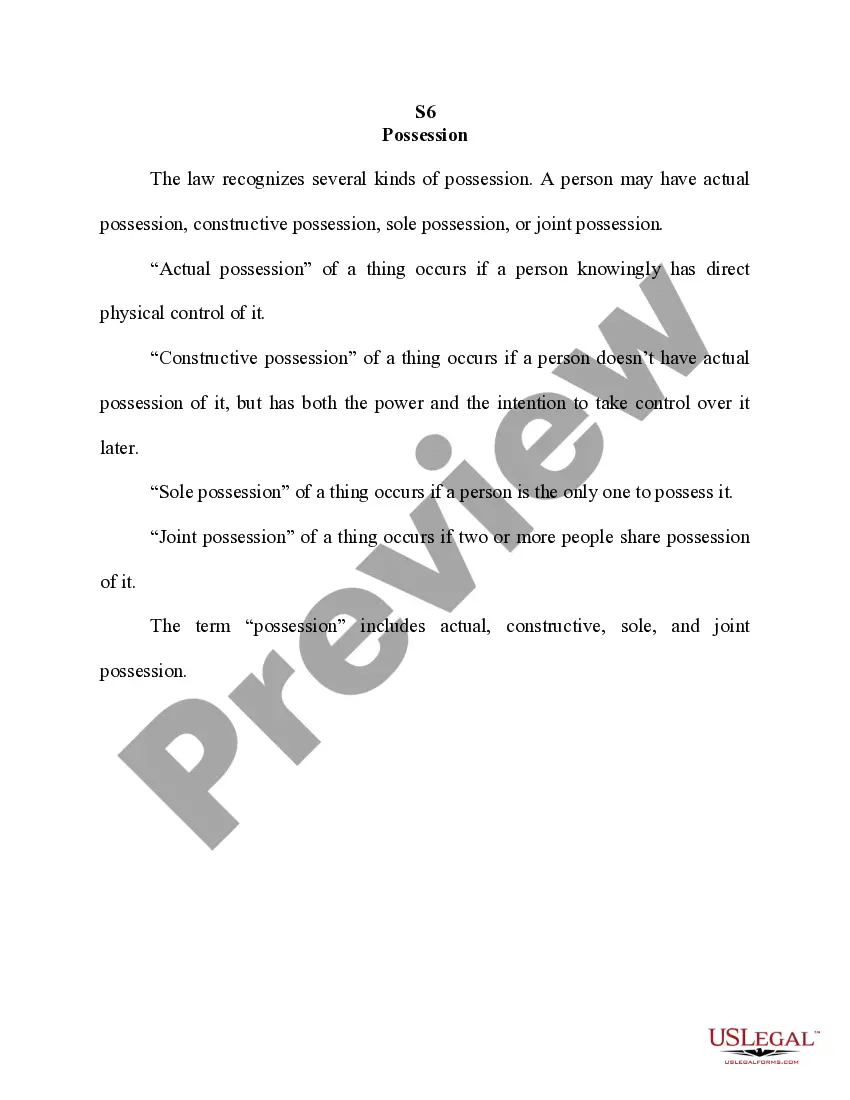
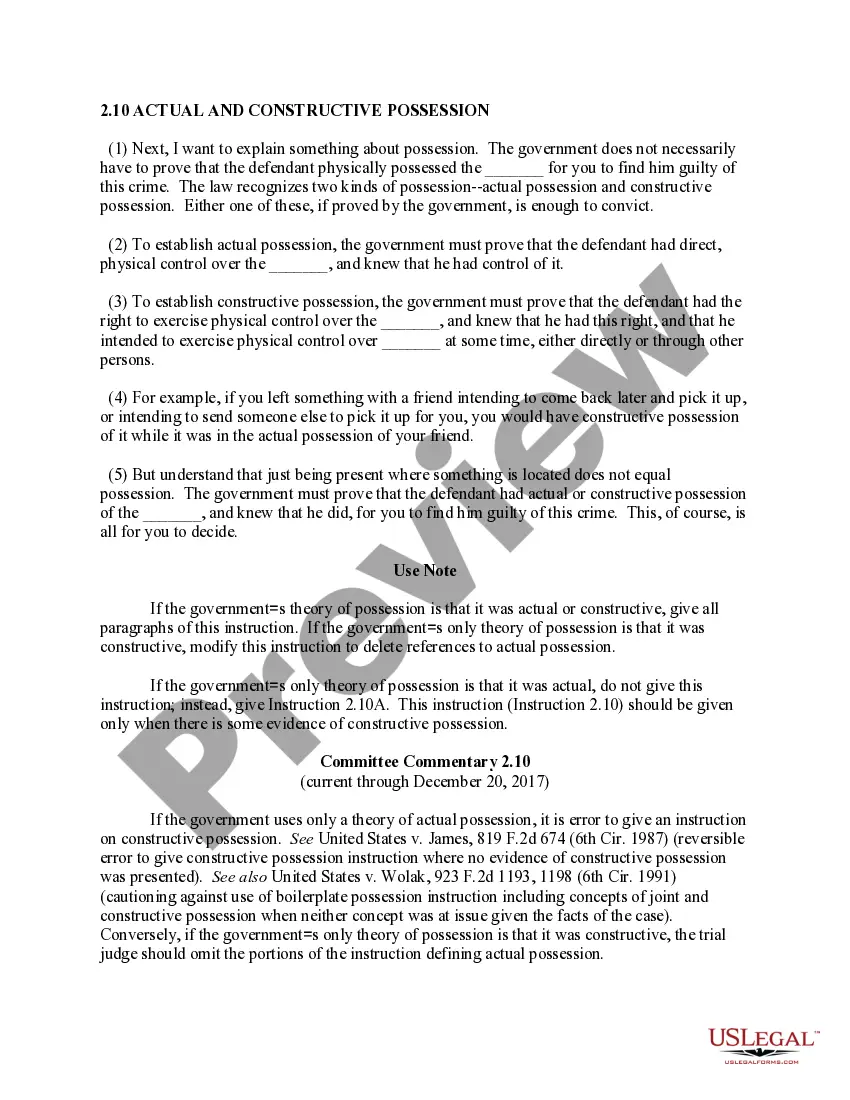
The Actual or Constructive Possession form is a legal document that clarifies the concept of possession of an object, whether physical (actual) or through intent and power (constructive). This form is vital in legal contexts, especially criminal cases, where possession may influence the outcome of a trial. Understanding the distinction between actual and constructive possession can help ensure individuals are accurately represented in legal proceedings involving ownership or control of property or contraband.
Key components of this form
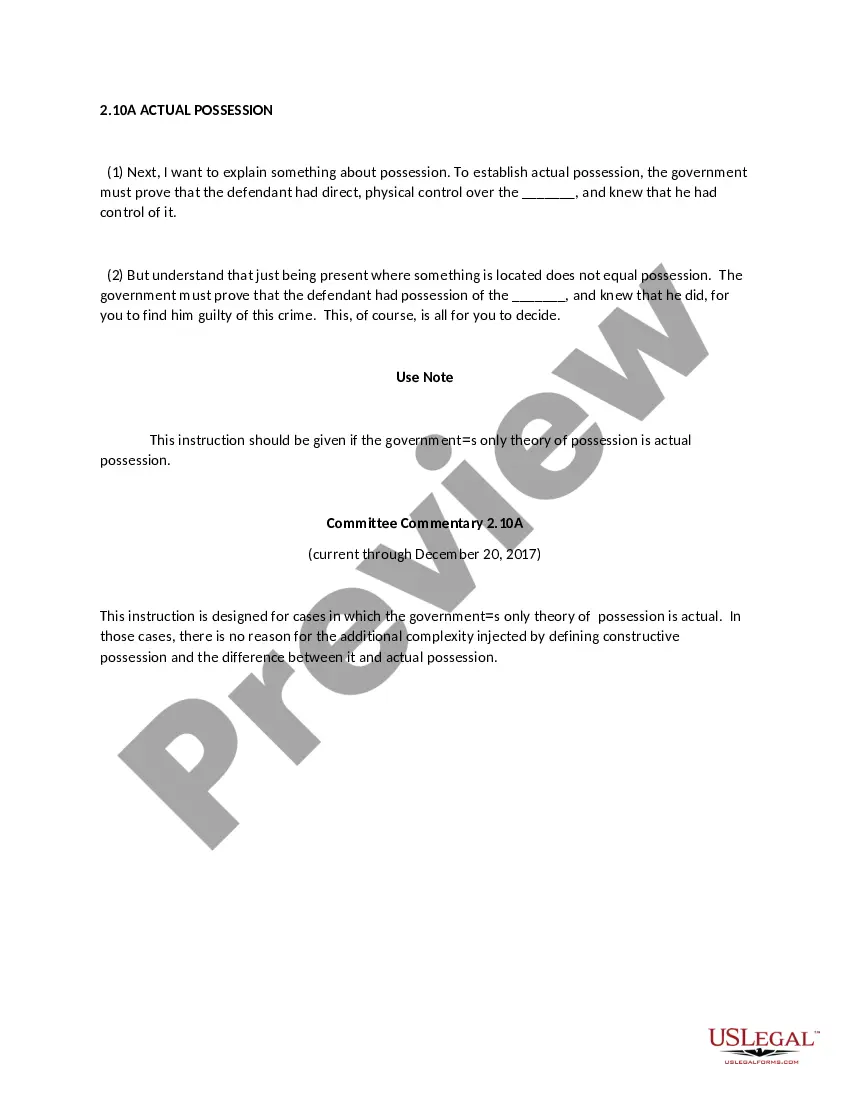
- Definition of actual possession versus constructive possession.
- Criteria for demonstrating constructive possession.
- Explanation of joint occupancy and its implications for possession claims.
- Legal precedents and case law relevant to possession.
When to use this document
This form should be used in scenarios where there is a need to establish who has legal control over an object. It is particularly important in criminal cases, such as drug possession or theft, where proving constructive possession can affect the verdict or sentencing. Additionally, it may be relevant in civil disputes over property ownership or control.
Who can use this document
- Individuals involved in legal disputes concerning possession of property or items.
- Defendants in criminal cases where possession is a pivotal issue.
- Attorneys representing clients in possession-related cases.
- Law students seeking to understand possession in the legal context.
How to prepare this document
- Identify the object in question and its location.
- Determine whether there is actual or constructive possession.
- Gather evidence or testimony supporting claims of possession.
- Complete the relevant sections of the form, stating the basis for possession.
- Attach any supporting documents or legal references as needed.
Is notarization required?
This form does not typically require notarization unless specified by local law. Ensure to check your jurisdiction for any specific requirements regarding the legal validity of possession claims.
Get your form ready online
Our built-in tools help you complete, sign, share, and store your documents in one place.
Make edits, fill in missing information, and update formatting in US Legal Forms—just like you would in MS Word.
Download a copy, print it, send it by email, or mail it via USPS—whatever works best for your next step.
Sign and collect signatures with our SignNow integration. Send to multiple recipients, set reminders, and more. Go Premium to unlock E-Sign.
If this form requires notarization, complete it online through a secure video call—no need to meet a notary in person or wait for an appointment.
We protect your documents and personal data by following strict security and privacy standards.

Make edits, fill in missing information, and update formatting in US Legal Forms—just like you would in MS Word.

Download a copy, print it, send it by email, or mail it via USPS—whatever works best for your next step.

Sign and collect signatures with our SignNow integration. Send to multiple recipients, set reminders, and more. Go Premium to unlock E-Sign.

If this form requires notarization, complete it online through a secure video call—no need to meet a notary in person or wait for an appointment.

We protect your documents and personal data by following strict security and privacy standards.
Avoid these common issues
- Assuming possession without clear evidence or intent.
- Failing to distinguish between actual and constructive possession.
- Not providing sufficient details about the object in question.
- Overlooking the requirement to connect the defendant to the object in cases of joint occupancy.
Why complete this form online
- Convenience of accessing and downloading the form anytime.
- Editability allows users to tailor the form to specific cases.
- Reliability of attorney-drafted templates increases confidence in legal documentation.
Legal use & context
- This form serves as a key resource in cases where possession is disputed, clarifying legal definitions.
- Recognized court rulings help define the scope of both actual and constructive possession.
- Understanding these terms is vital for legal practitioners and defendants involved in possession-related charges.
Summary of main points
- Actual possession involves physical control, while constructive possession relates to the intent to control.
- Legal definitions and requirements for possession vary by jurisdiction.
- This form aids in understanding and demonstrating the nuances of possession in a legal context.
Looking for another form?

Form popularity
FAQ
Actual possession, also called possession in fact, is used to describe immediate physical contact. This case from New York, explains that ?actual possession is what most of us think of as possession?that is, having physical custody or control of an object.?
Constructive possession occurs when law enforcement finds drugs in your general area, but not on you. Multiple other people would also have access to the drugs. Take, for example, a person who is in their friend's living room when police come in with a search warrant and find drugs.
To show constructive possession, the State must demonstrate that the defendant exercised dominion and control over the contraband, had knowledge of the presence of the contraband, and had knowledge of the illicit nature of the substance.
Following are the important types of possession: Corporeal possession. Incorporeal Possession. Mediate possession.
Types of Possession Actual Possession. You have actual possession when you have physical control over something.Constructive Possession. You have constructive possession when something is not immediately accessible to you, but you have control or the right to control over a thing 3.Joint Possession.
Definition of Actual Possession In other words, actual possession is the term that is commonly used to refer to being in immediate physical contact with the object in question. Somebody that is carrying a cellphone in their pocket, for example, is considered to have actual possession of that cellphone.
Generally, for a court to find that a person had constructive possession of an object, the person must have had knowledge of the object, and as well as the ability to control it. For example, someone with keys to a safe deposit box may have constructive possession to the contents of that box.
The law provides for two different charges: Actual possession of drugs is when the police find the drugs on you, in your hand, and no one else had equal access to the drugs found. Constructive possession of drugs occurs when law enforcement believes there are multiple people with knowledge and access to drugs.