Possession
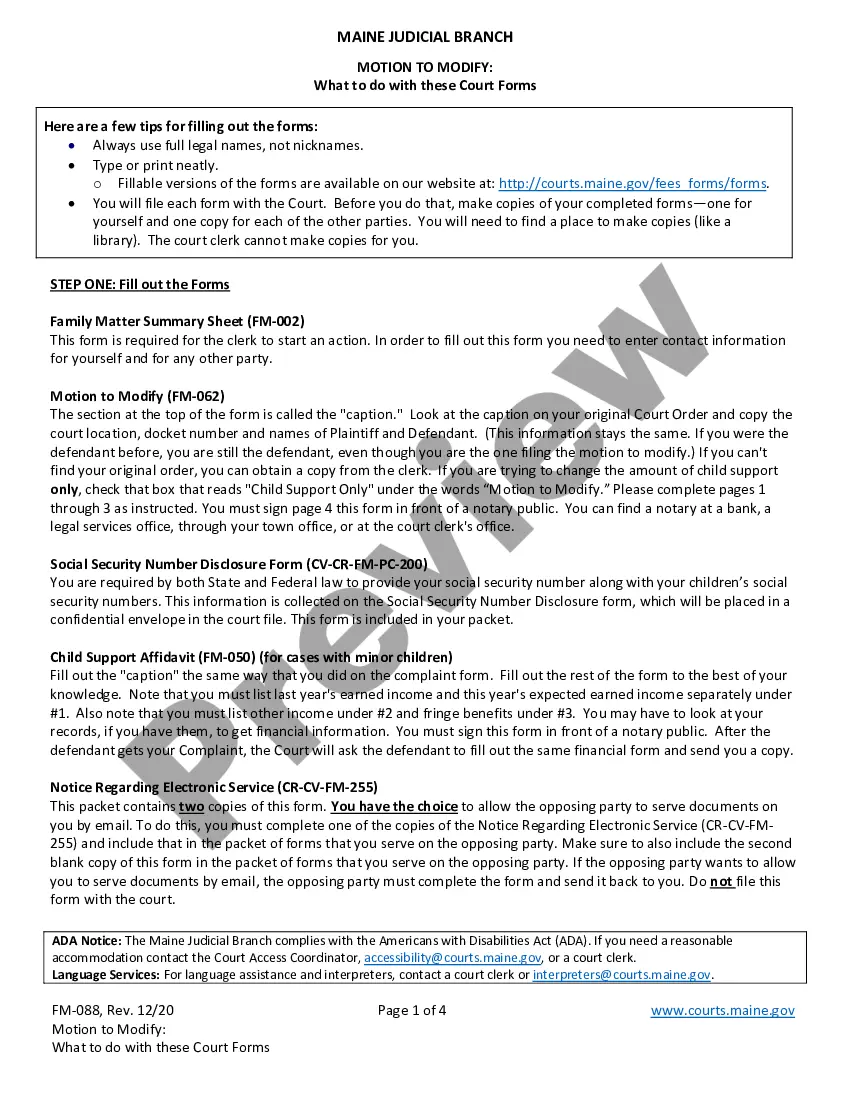
Overview of this form
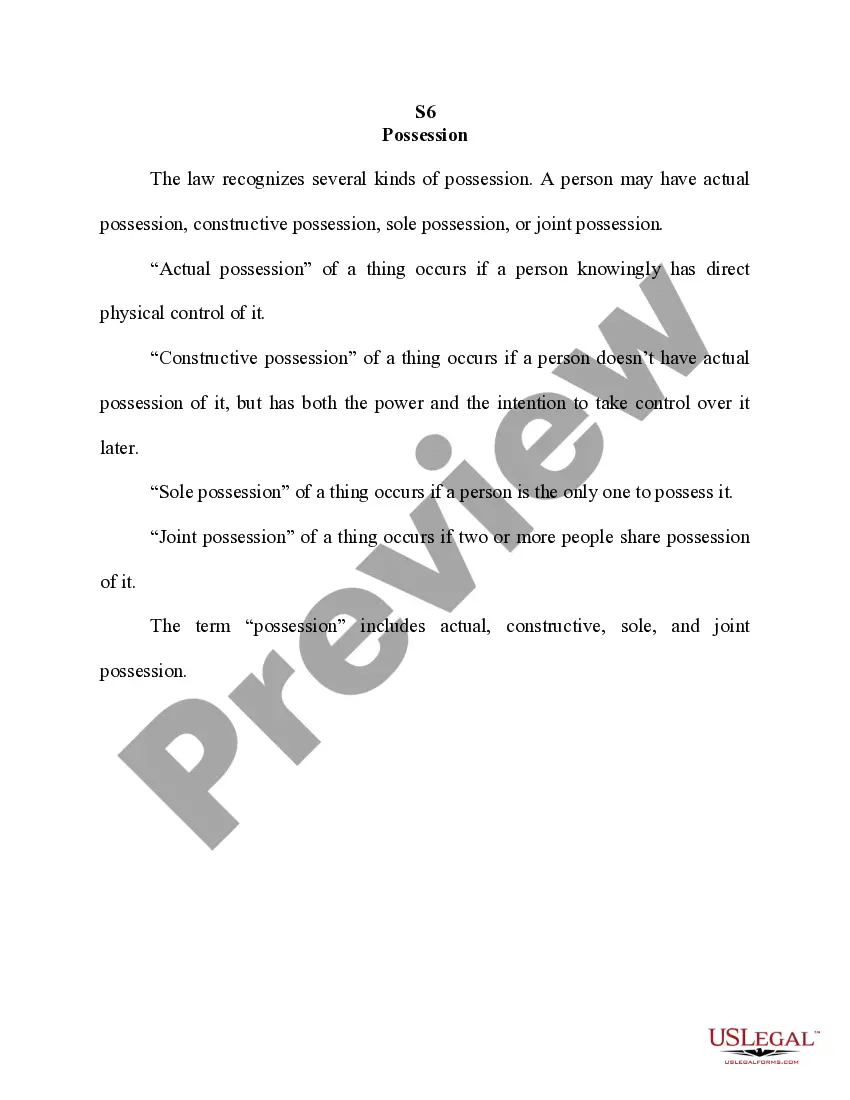
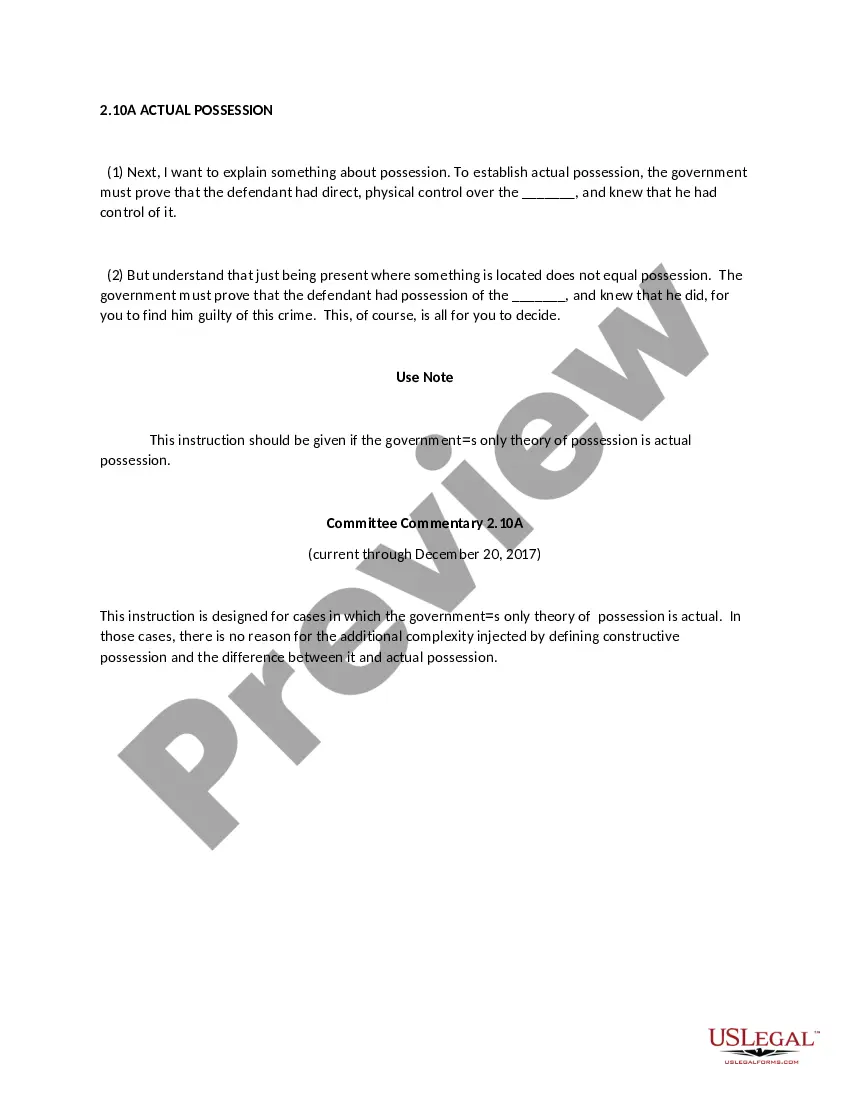
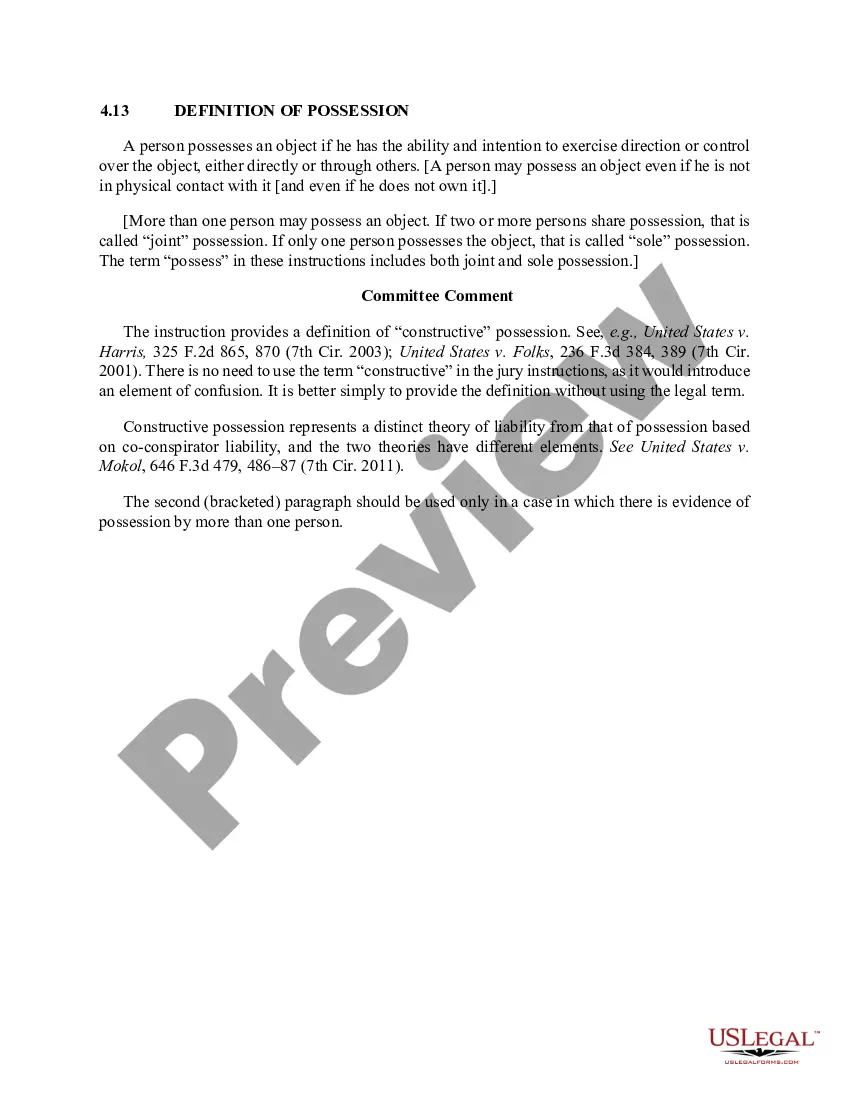
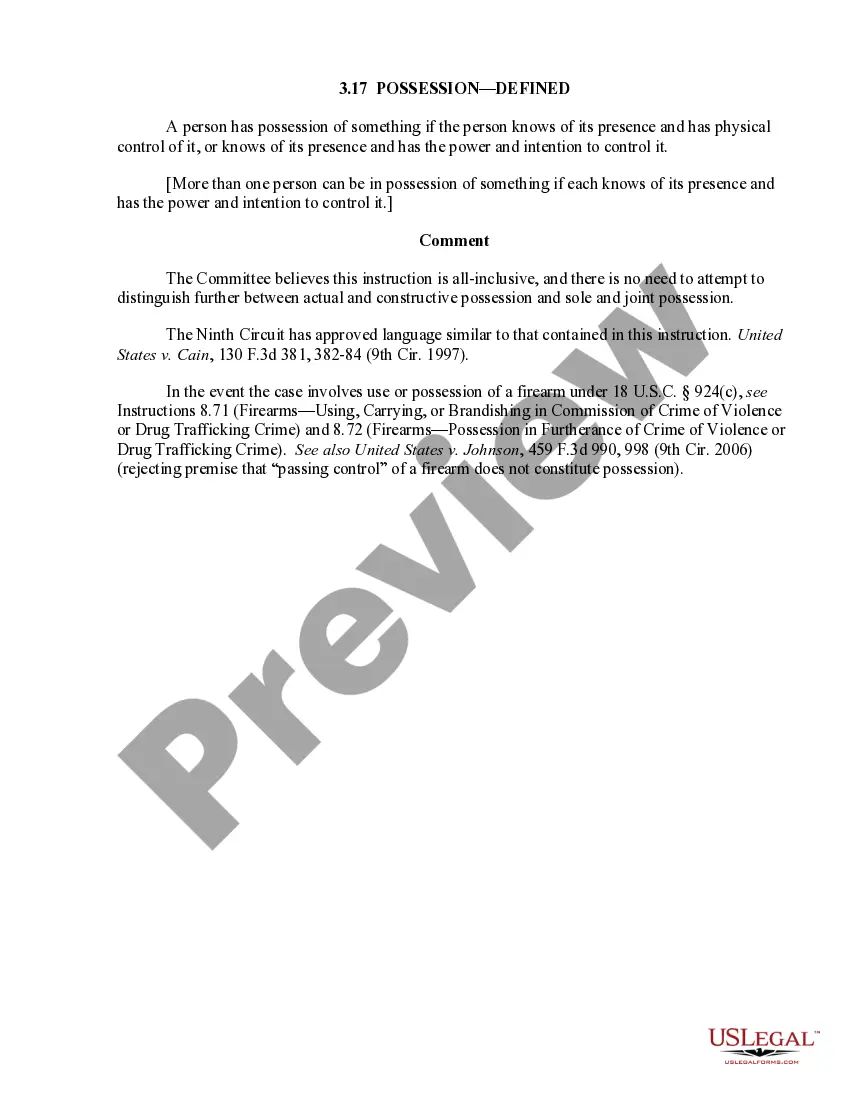
The Possession form outlines legal definitions of possession, explaining the differences between actual and constructive possession. This form is critical for situations that require clarity on ownership and control over property, whether individually or jointly held, distinguishing it from other legal forms related to property or rental agreements.
What’s included in this form
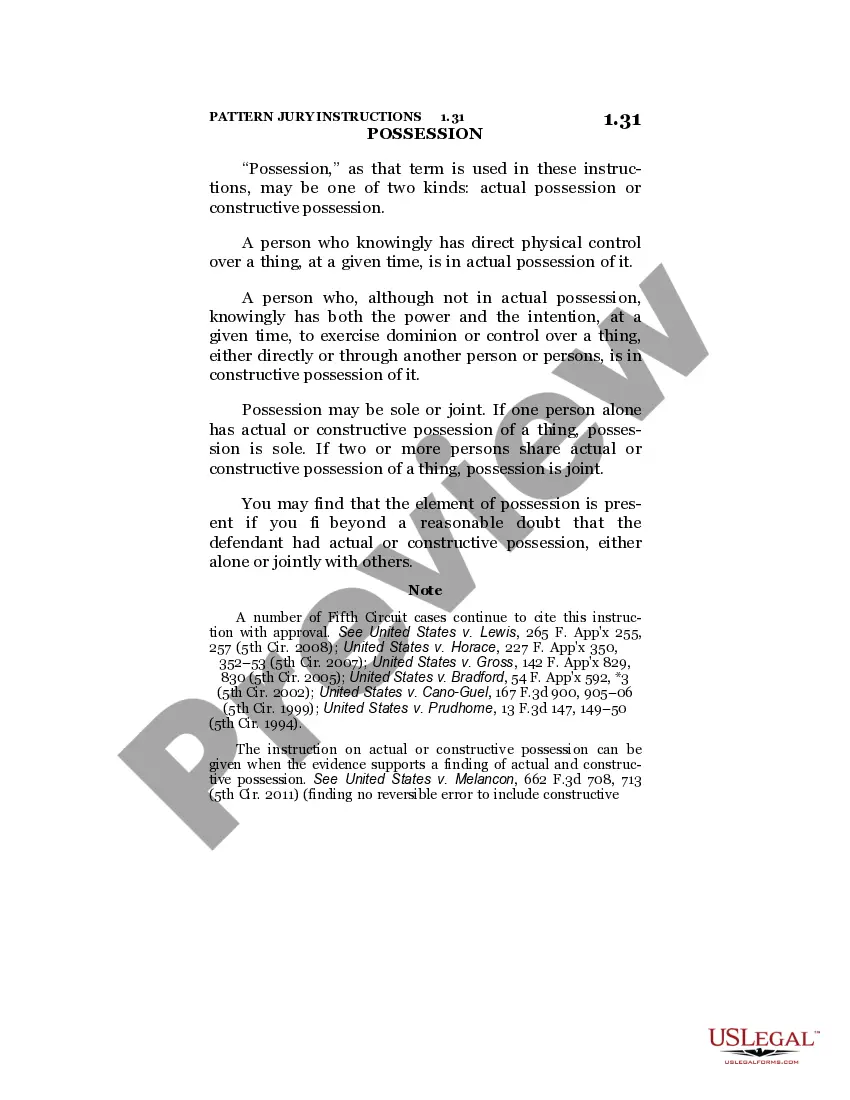
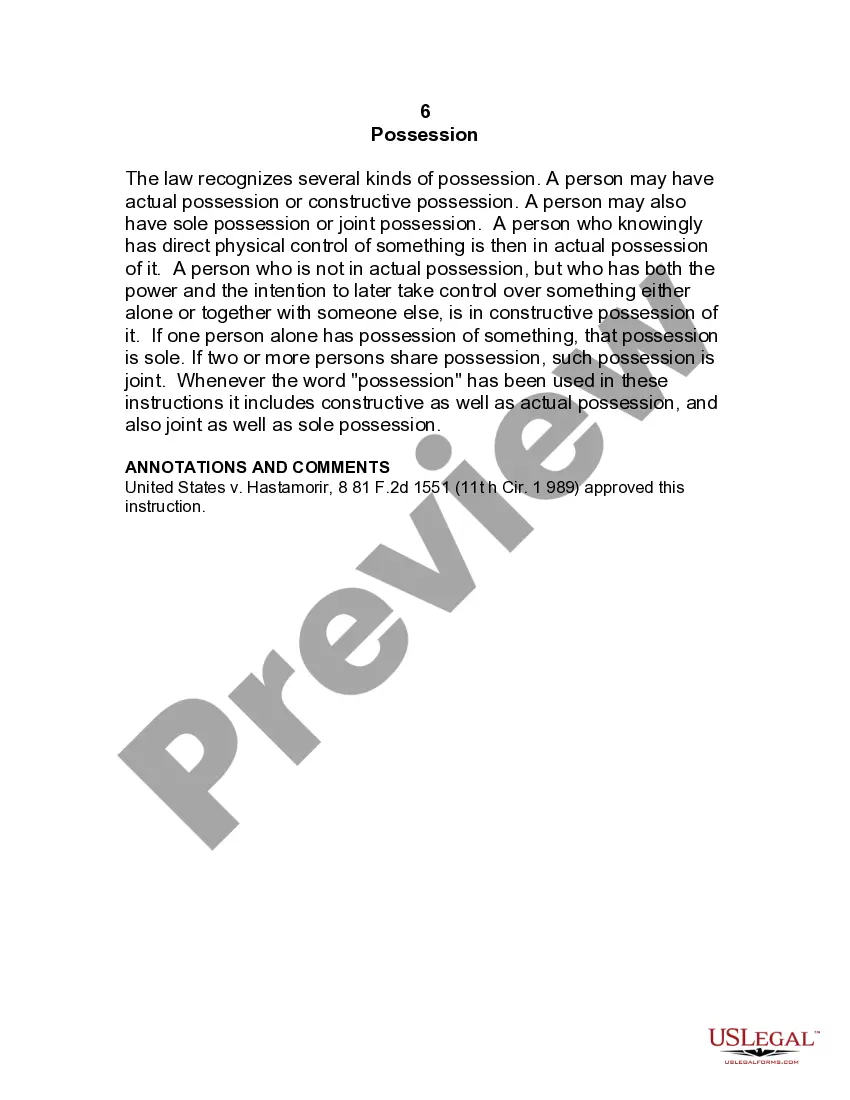
- Definition of actual possession, which refers to having direct physical control over an item.
- Definition of constructive possession, which involves having the power and intention to control an item, even without direct possession.
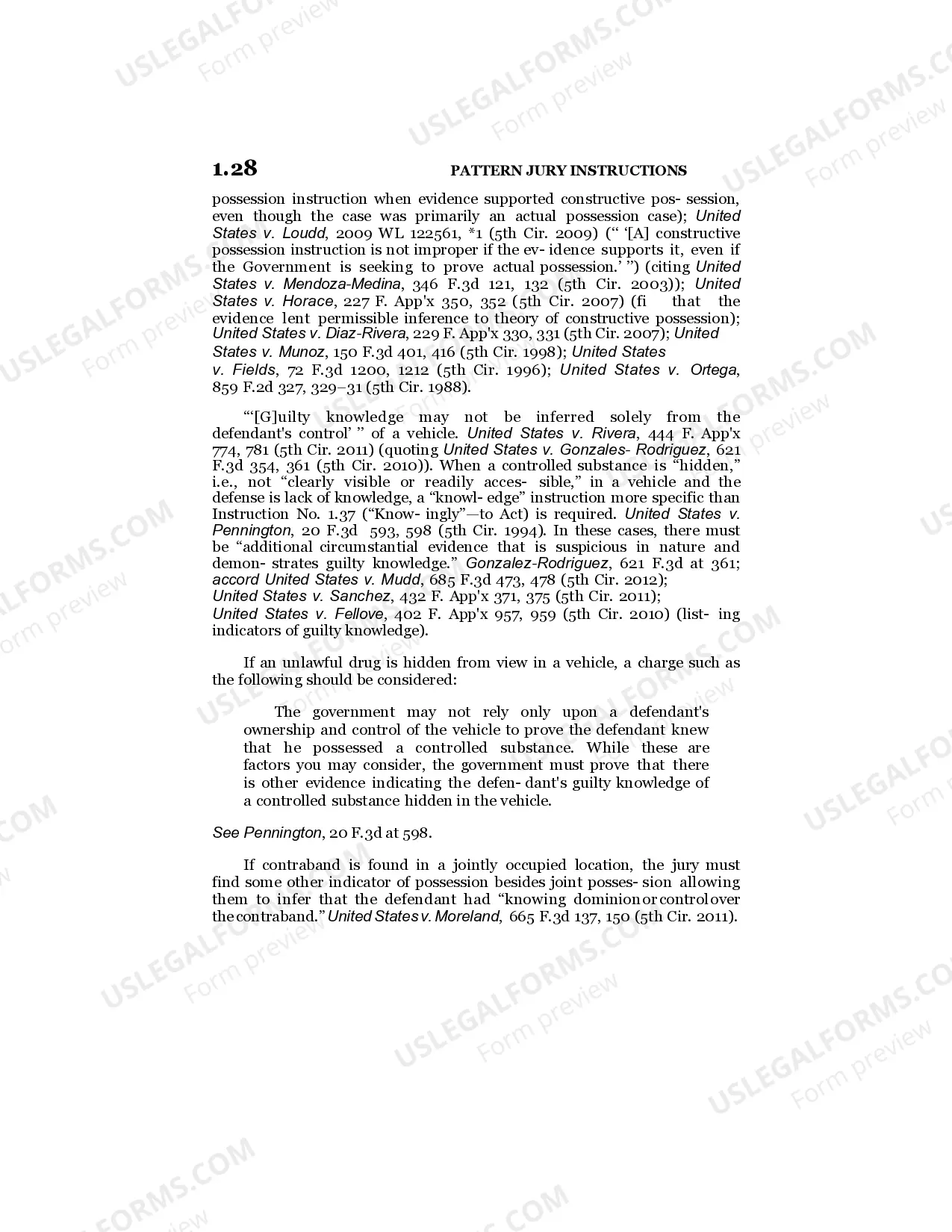
- Explanation of sole vs. joint possession, clarifying when possession is held by one individual or shared among multiple parties.
- Legal references to case law supporting the definitions and implications of possession.
Situations where this form applies
This form is utilized in scenarios where legal clarification is needed regarding ownership, control, or the rights associated with possession of an item or property. Common situations include legal disputes over property, criminal cases involving possession of controlled substances, and family matters concerning shared assets.
Who this form is for
- Individuals involved in legal disputes over ownership or possession of property.
- Attorneys representing clients needing to establish possession legally.
- Law enforcement agencies investigating cases involving possession of controlled substances.
- Anyone requiring a formal acknowledgment of possession to protect their rights.
How to prepare this document
- Identify the type of possession (actual or constructive) relevant to your situation.
- Specify whether the possession is sole or joint based on the parties involved.
- Gather supporting documentation or evidence that clarifies the nature of possession.
- Fill in personal information for all parties involved in the possession claim.
- Review the form for completeness and accuracy before submission.
Notarization guidance
Notarization is not commonly needed for this form. However, certain documents or local rules may make it necessary. Our notarization service, powered by Notarize, allows you to finalize it securely online anytime, day or night.
Get your form ready online
Our built-in tools help you complete, sign, share, and store your documents in one place.
Make edits, fill in missing information, and update formatting in US Legal Forms—just like you would in MS Word.
Download a copy, print it, send it by email, or mail it via USPS—whatever works best for your next step.
Sign and collect signatures with our SignNow integration. Send to multiple recipients, set reminders, and more. Go Premium to unlock E-Sign.
If this form requires notarization, complete it online through a secure video call—no need to meet a notary in person or wait for an appointment.
We protect your documents and personal data by following strict security and privacy standards.

Make edits, fill in missing information, and update formatting in US Legal Forms—just like you would in MS Word.

Download a copy, print it, send it by email, or mail it via USPS—whatever works best for your next step.

Sign and collect signatures with our SignNow integration. Send to multiple recipients, set reminders, and more. Go Premium to unlock E-Sign.

If this form requires notarization, complete it online through a secure video call—no need to meet a notary in person or wait for an appointment.

We protect your documents and personal data by following strict security and privacy standards.
Common mistakes to avoid
- Failing to specify whether possession is actual or constructive, which can lead to legal misunderstandings.
- Not providing sufficient evidence or documentation to support the claim of possession.
- Neglecting to clarify whether possession is held solely or jointly, which can affect legal outcomes.
Why use this form online
- Convenience: Download and complete the form at your own pace from anywhere.
- Editability: Make changes easily without the need for physical paperwork.
- Reliability: Use templates drafted by licensed attorneys to ensure legal compliance.
Looking for another form?

Form popularity
FAQ
Most notable is the addition of the piano theme during the subway miscarriage scene, and the removal of music during a pivotal scene. A handful of releases, including POSSESSION's first U.S. DVD release (ironically billed as the ?Director's Cut?) were issued only with this audio track.
Ing to Far Out Magazine, the original cut of the film found itself ?banned in the UK and the US? due to being labeled as one of the many video nasties. It did get a release in the US, though only after cutting out more than a third of its runtime.
Why Was Possession So Hard to Find? First shown at Cannes in 1981, the film was quickly banned in the UK as a part of their ?video nasties? campaign by the National Viewers and Listeners Association, in which distribution of movies deemed obscene could lead to criminal prosecution.
Frightening & Intense Scenes (7) "Possession" is a very disturbing and obsessive movie. It starts like a drama and ends like a bloody nightmare. The scariest thing isn't the violence, but the frightening atmosphere. There's an intensely disturbing miscarriage scene.
'Possession' Was Classified as a Video Nasty In the 80s, the DPP made public a list of 72 films that were video nasties, which also included films like The Evil Dead, I Spit On Your Grave and Cannibal Holocaust.
The fact that you have or own something: The possession of large amounts of money does not ensure happiness. formal I have in my possession a letter which may be of interest to you. formal He was found in possession of explosives.
The film is supposed to be an allegory of a divorce and was heavily inspired by Andrzej ?u?awski's divorce. The film is filled with metaphors, symbols, and controversial themes (like self-harm, suicide, extreme jealousy, etc.).
Why Was Possession So Hard to Find? First shown at Cannes in 1981, the film was quickly banned in the UK as a part of their ?video nasties? campaign by the National Viewers and Listeners Association, in which distribution of movies deemed obscene could lead to criminal prosecution.