Possession
About this form
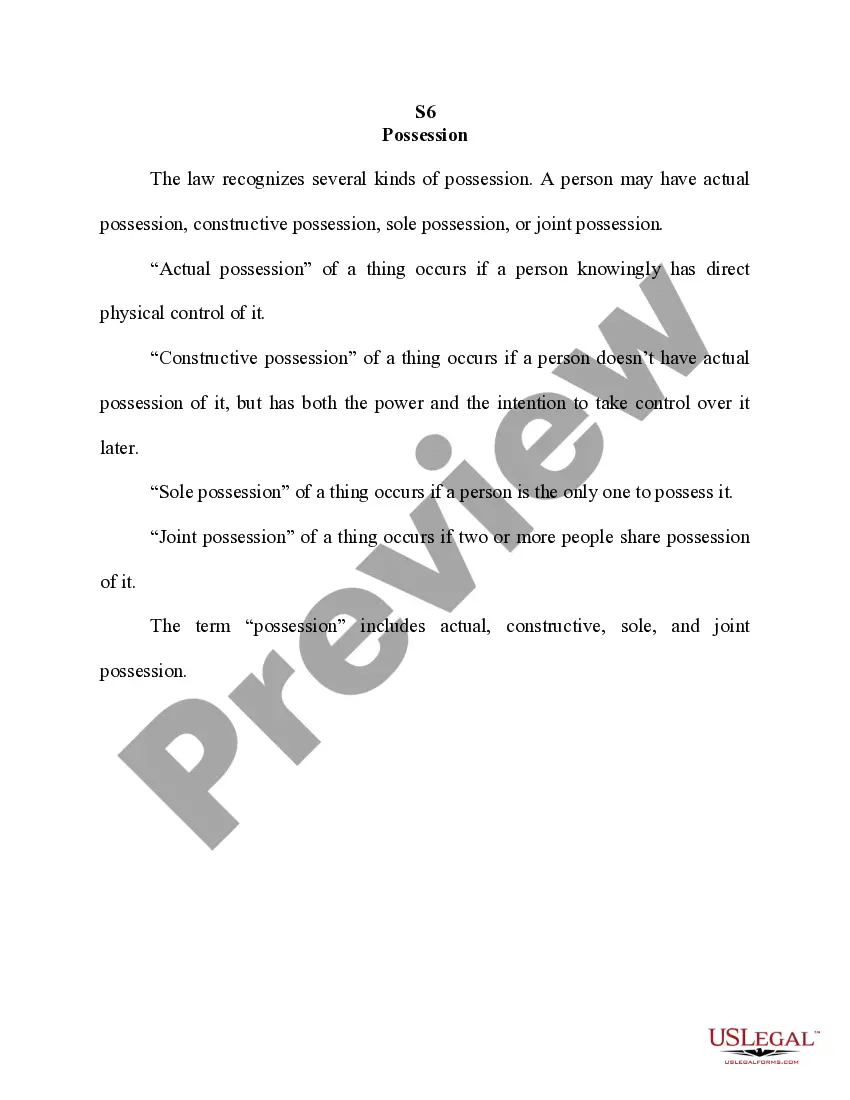
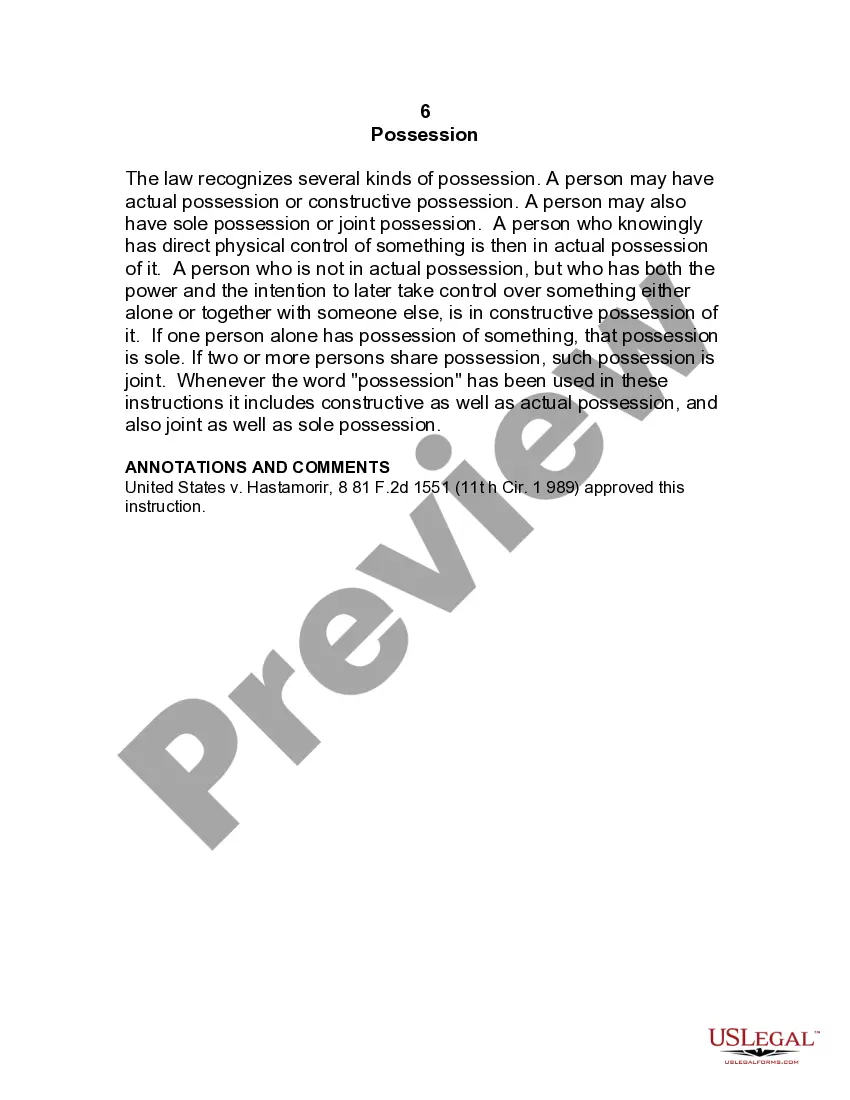
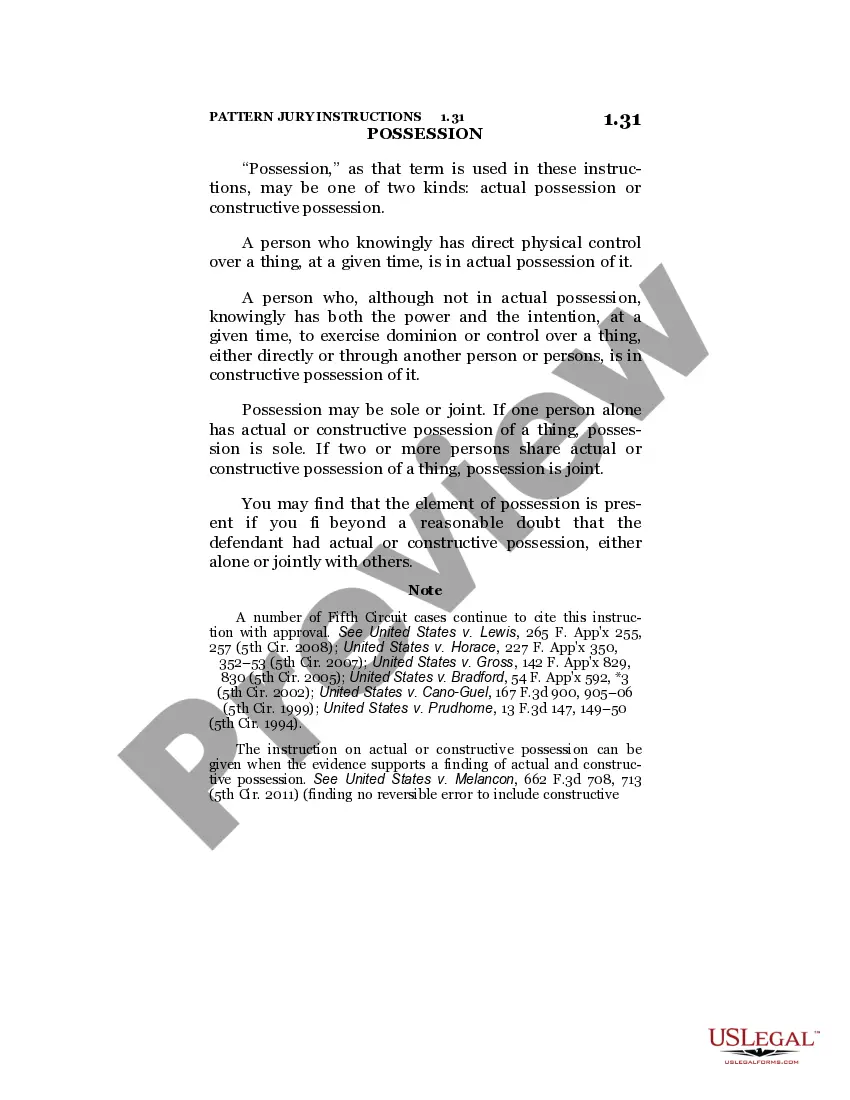
The Possession form provides a framework for understanding the various types of possession recognized by law, including actual, constructive, sole, and joint possession. This form is essential for clarifying ownership and control over property or items and is distinct from other forms that may only address contractual or liability issues. By defining different possession types, this form assists individuals in legally asserting their rights or defending against possession claims.
What’s included in this form
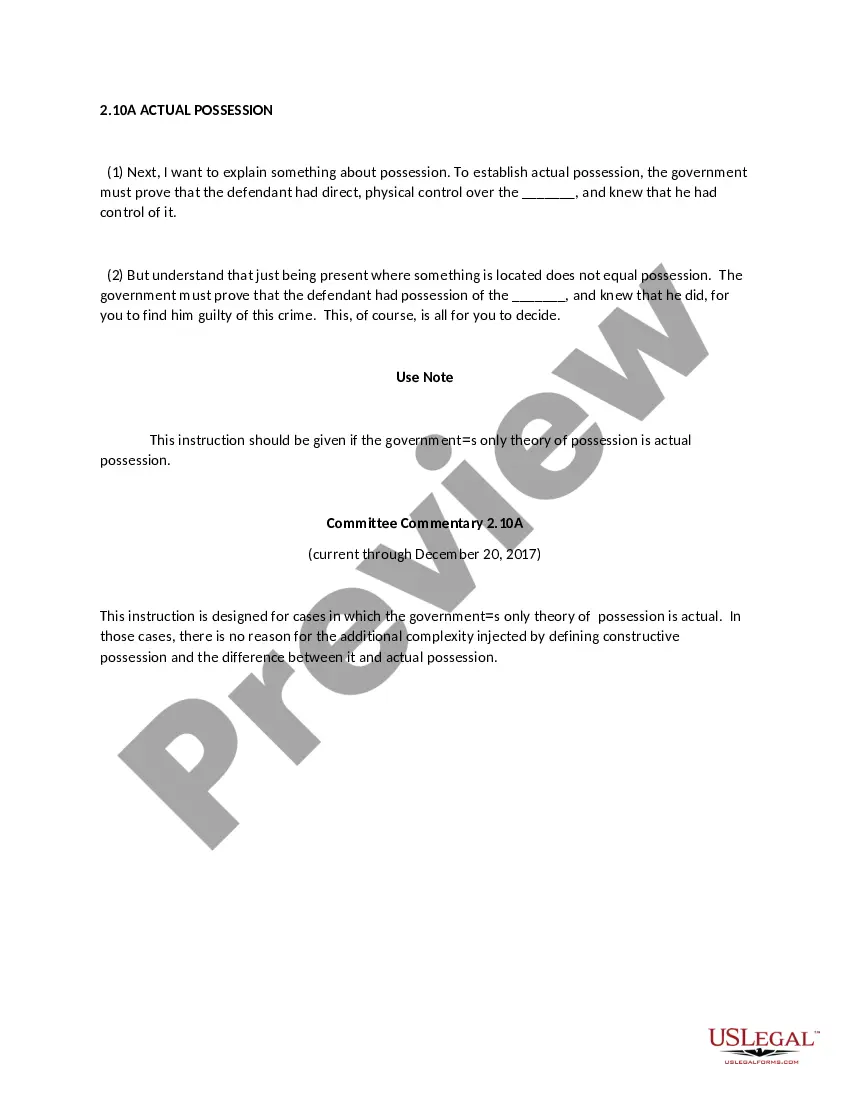
- Definition of actual possession, describing direct physical control.
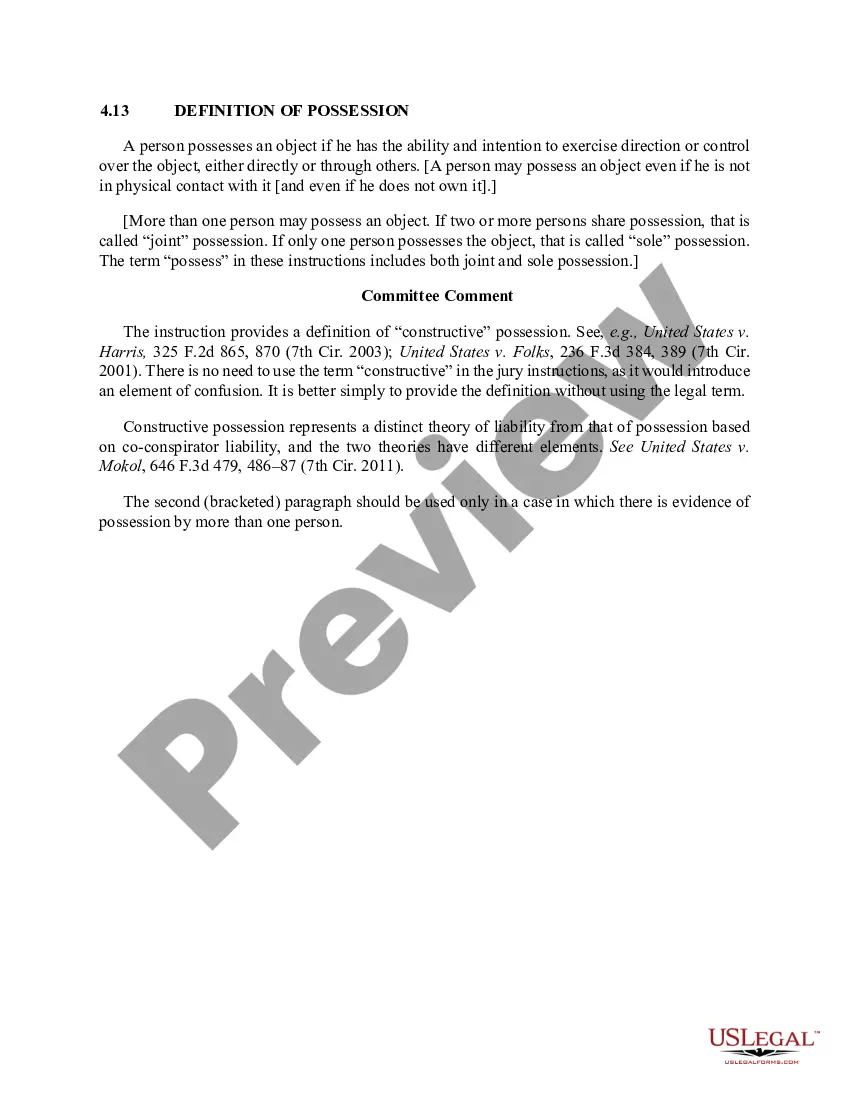
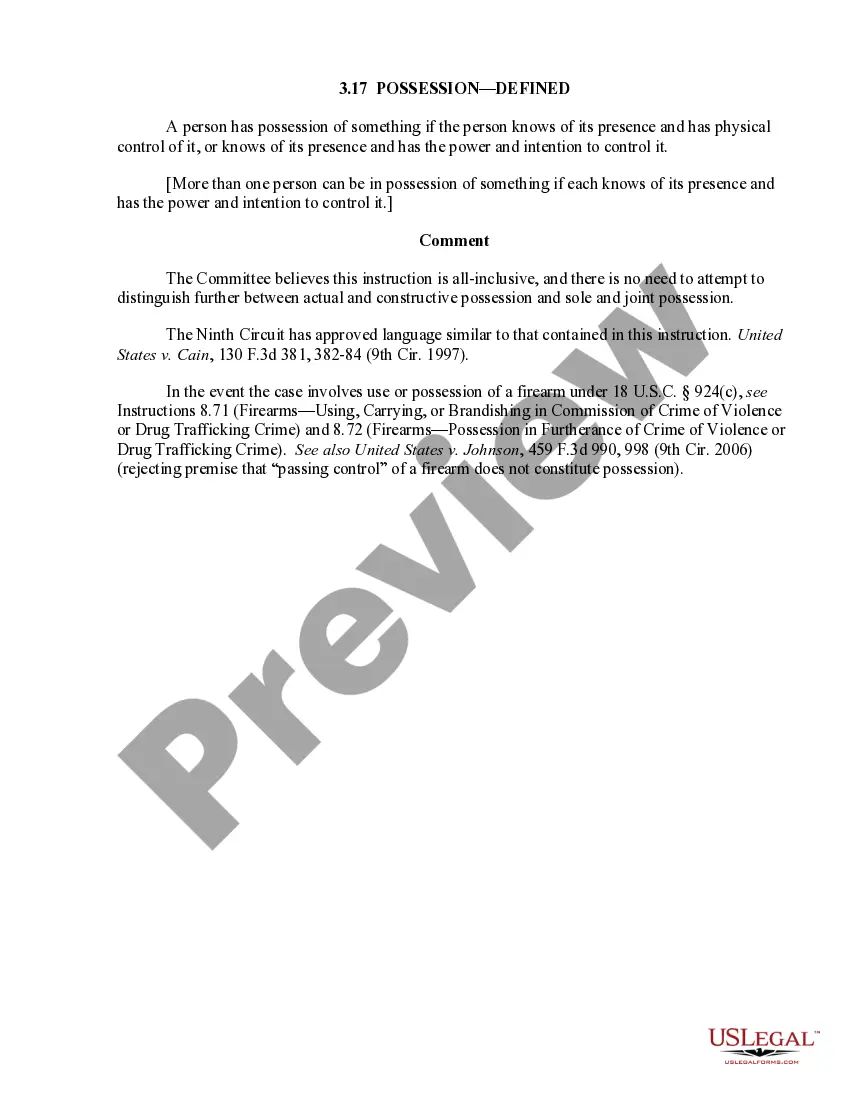
- Explanation of constructive possession and conditions for asserting it.
- Clarification of sole possession and its implications for individual rights.
- Description of joint possession and the shared rights among multiple parties.
Common use cases
This form is typically used in situations where an individual needs to clarify their legal rights concerning possession. Scenarios may include disputes over shared property, clarifying ownership during estate settlements, or establishing claims in property damage or theft cases. It is also useful when asserting rights to property that has been temporarily displaced or when planning legal responsibilities regarding jointly held assets.
Intended users of this form
- Individuals involved in property disputes or claims.
- Landlords or tenants needing to establish possession rights.
- Estate executors managing inherited properties.
- Individuals planning to outline possession in joint ownership arrangements.
How to prepare this document
- Identify the type of possession relevant to your situation (actual, constructive, sole, joint).
- Clearly state the property or item in question.
- Document any co-owners or possessors if applicable.
- Indicate the date of possession or disputes.
- Sign and date the form, ensuring all parties involved are aware of its contents.
Notarization requirements for this form
This form does not typically require notarization to be legally valid. However, some jurisdictions or document types may still require it. US Legal Forms provides secure online notarization powered by Notarize, available 24/7 for added convenience.
Get your form ready online
Our built-in tools help you complete, sign, share, and store your documents in one place.
Make edits, fill in missing information, and update formatting in US Legal Forms—just like you would in MS Word.
Download a copy, print it, send it by email, or mail it via USPS—whatever works best for your next step.
Sign and collect signatures with our SignNow integration. Send to multiple recipients, set reminders, and more. Go Premium to unlock E-Sign.
If this form requires notarization, complete it online through a secure video call—no need to meet a notary in person or wait for an appointment.
We protect your documents and personal data by following strict security and privacy standards.

Make edits, fill in missing information, and update formatting in US Legal Forms—just like you would in MS Word.

Download a copy, print it, send it by email, or mail it via USPS—whatever works best for your next step.

Sign and collect signatures with our SignNow integration. Send to multiple recipients, set reminders, and more. Go Premium to unlock E-Sign.

If this form requires notarization, complete it online through a secure video call—no need to meet a notary in person or wait for an appointment.

We protect your documents and personal data by following strict security and privacy standards.
Avoid these common issues
- Failing to define the type of possession accurately.
- Omitting necessary details about the property involved.
- Not including all parties who may claim possession.
- Neglecting to sign the form, which may invalidate it.
Why complete this form online
- Convenient access to professionally drafted legal templates.
- Editable forms that allow for personalized details based on your situation.
- Secure storage and retrieval of your completed documents.
- No need for physical visits to legal offices or courthouses.
Legal use & context
- The form aids in establishing legal rights regarding possession in various situations.
- Understanding possession types can prevent future disputes.
- In some cases, possession can affect liability claims in legal proceedings.
What to keep in mind
- The Possession form clarifies different types of possession recognized by law.
- It is crucial for individuals involved in property disputes or ownership claims.
- Completing the form correctly can help establish and protect legal rights.
Looking for another form?

Form popularity
FAQ
Examples of tangible personal property include vehicles, furniture, boats, and collectibles. Stocks, bonds, and bank accounts fall under intangible personal property. Just as some loans?mortgages, for example?are secured by real property like a house, some loans are secured by personal property.
Frightening & Intense Scenes (7) "Possession" is a very disturbing and obsessive movie. It starts like a drama and ends like a bloody nightmare. The scariest thing isn't the violence, but the frightening atmosphere. There's an intensely disturbing miscarriage scene.
The fact that you have or own something: The possession of large amounts of money does not ensure happiness. formal I have in my possession a letter which may be of interest to you. formal He was found in possession of explosives.
Why Was Possession So Hard to Find? First shown at Cannes in 1981, the film was quickly banned in the UK as a part of their ?video nasties? campaign by the National Viewers and Listeners Association, in which distribution of movies deemed obscene could lead to criminal prosecution.
Ing to Far Out Magazine, the original cut of the film found itself ?banned in the UK and the US? due to being labeled as one of the many video nasties. It did get a release in the US, though only after cutting out more than a third of its runtime.
The fact that you have or own something: The possession of large amounts of money does not ensure happiness. formal I have in my possession a letter which may be of interest to you. formal He was found in possession of explosives.
Possession means the ownership, control, or occupancy of any object, asset, or property, by a person.
Example: Martin keeps a switchblade in the pocket of his jacket. While Martin is wearing the jacket, he has ?actual? possession of the knife. You have ?constructive? possession of something when you don't have immediate access to it ? but you have control of it, or the right to control it.