Sample Letter for Payment from Estate
What is this form?
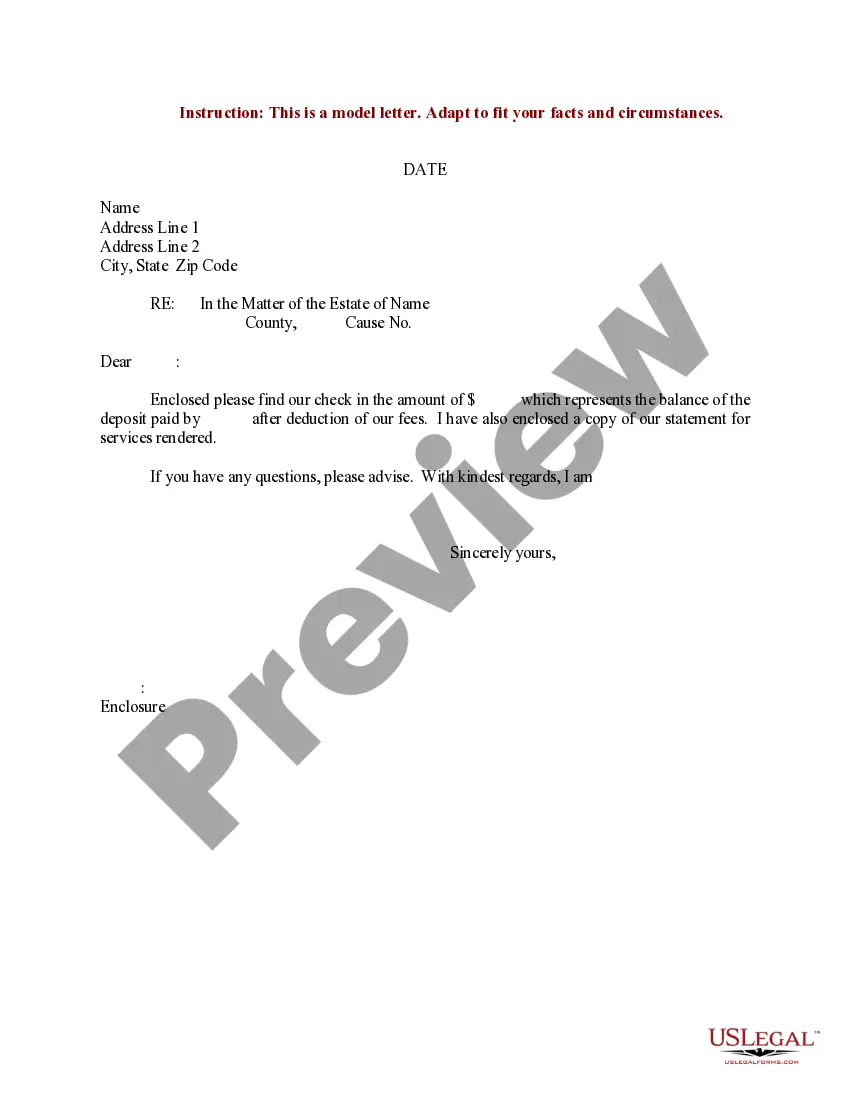
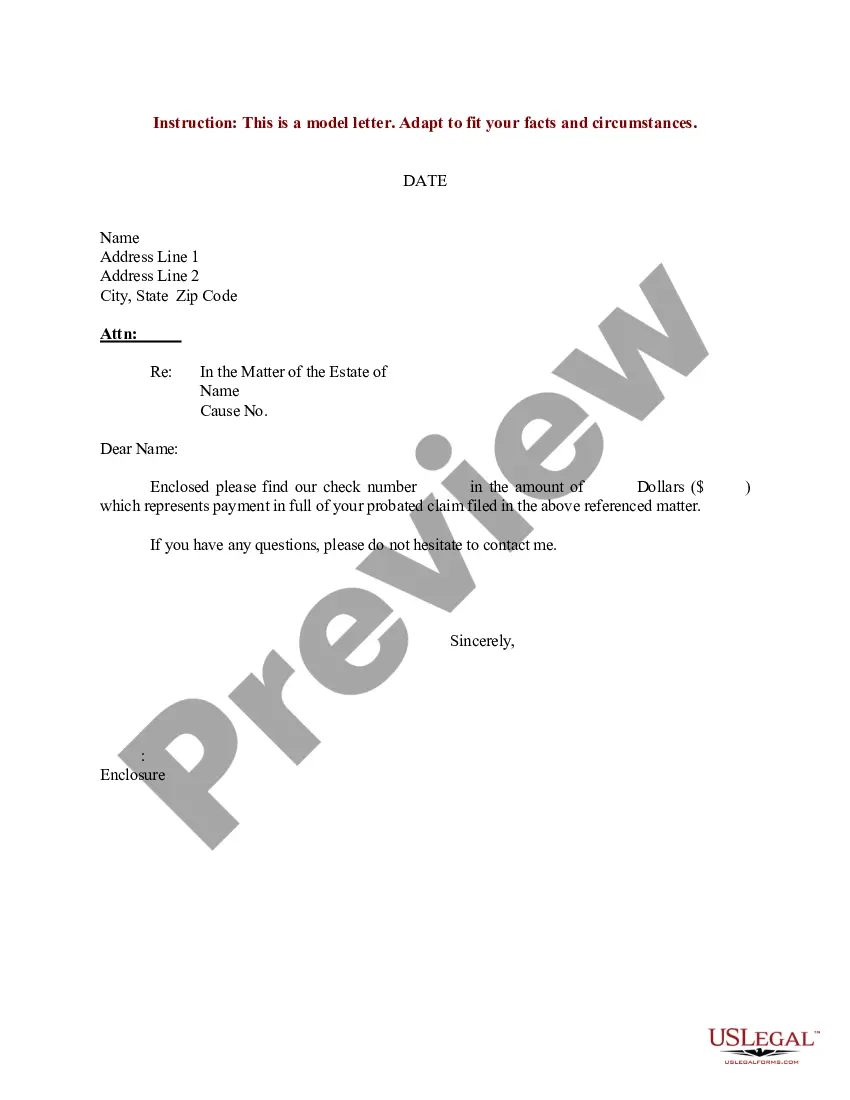
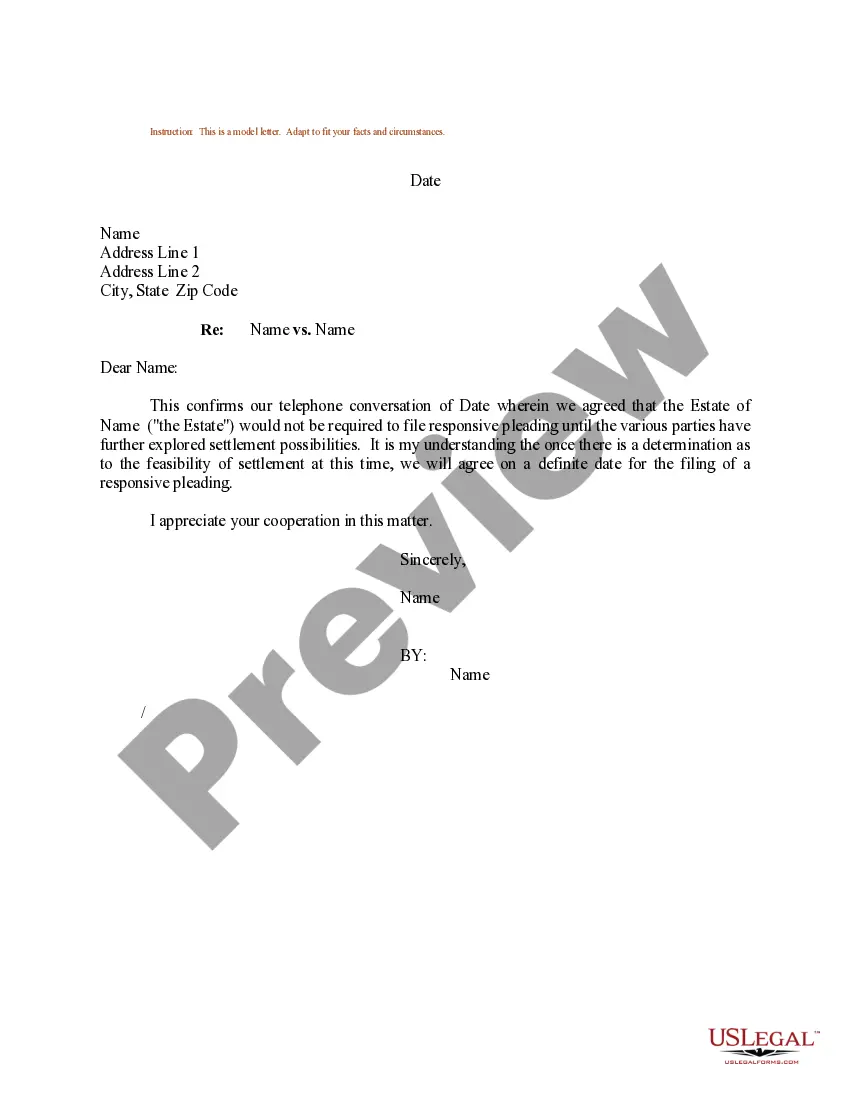
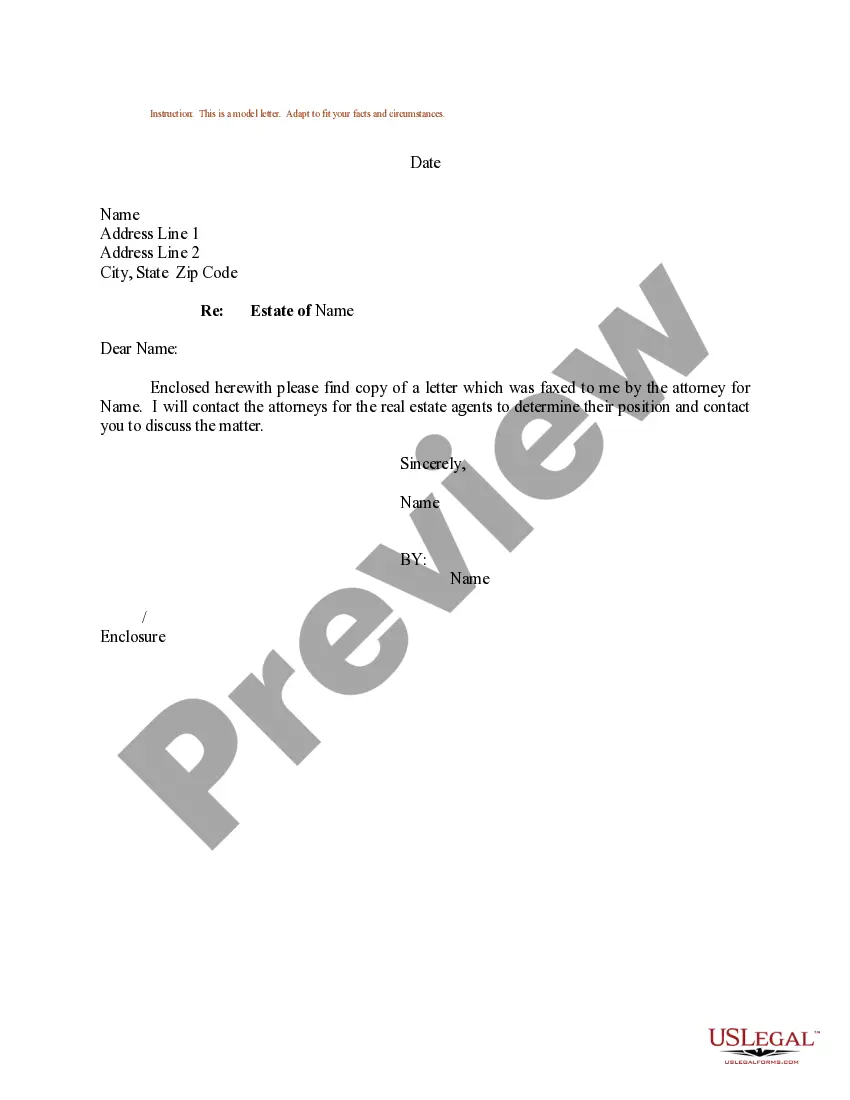
This Sample Letter for Payment from Estate is a template letter designed to address debts owed by an estate. It serves as a formal request for payment to the estateâs representatives or beneficiaries, outlining the necessary details. Unlike other estate-related forms, this letter specifically focuses on payment demands, making it a critical tool in estate administration and financial management.
Form components explained
- Date section for recording when the letter is sent.
- Senders' contact information including name and address.
- Subject line indicating the purpose related to the estate.
- Recipientâs name and address for proper delivery.
- Reference to the specific estate involved.

Common use cases
This letter should be used when there is a need to request payment from an estate. Common scenarios include when a deceased person's debts need to be settled, and beneficiaries or executors are being formally notified of amounts due. It is especially useful in situations where amicable communication about debts is necessary before escalating matters legally.
Who should use this form
This form is intended for:
- Executors or administrators of an estate responsible for settling debts.
- Beneficiaries who wish to formally request payment from an estate.
- Individuals seeking a structured approach to handling estate debts.
Completing this form step by step
- Enter the date on which you are sending the letter.
- Fill in your personal information, including name and address.
- Specify the estate's name in the subject line.
- Provide the recipient's information, ensuring accuracy for proper delivery.
- Detail the payment request, including any relevant dates and amounts owed.
- Sign and date the letter to finalize it before sending.
Does this document require notarization?
This form does not typically require notarization unless specified by local law. If notarization is needed in certain circumstances, it is important to check the regulations applicable to your situation.
Get your form ready online
Our built-in tools help you complete, sign, share, and store your documents in one place.
Make edits, fill in missing information, and update formatting in US Legal Forms—just like you would in MS Word.
Download a copy, print it, send it by email, or mail it via USPS—whatever works best for your next step.
Sign and collect signatures with our SignNow integration. Send to multiple recipients, set reminders, and more. Go Premium to unlock E-Sign.
If this form requires notarization, complete it online through a secure video call—no need to meet a notary in person or wait for an appointment.
We protect your documents and personal data by following strict security and privacy standards.

Make edits, fill in missing information, and update formatting in US Legal Forms—just like you would in MS Word.

Download a copy, print it, send it by email, or mail it via USPS—whatever works best for your next step.

Sign and collect signatures with our SignNow integration. Send to multiple recipients, set reminders, and more. Go Premium to unlock E-Sign.

If this form requires notarization, complete it online through a secure video call—no need to meet a notary in person or wait for an appointment.

We protect your documents and personal data by following strict security and privacy standards.
Avoid these common issues
- Forgetting to update the date before sending the letter.
- Incorrectly addressing the recipient, leading to delivery issues.
- Not including specific details about the debts owed.
- Failing to sign the letter, making it informal.
Benefits of completing this form online
- Convenient access to a professionally crafted template.
- Editable document allows for customization to fit specific needs.
- Downloadable format provides ease of storage and sharing.
Main things to remember
- This Sample Letter for Payment from Estate is essential for formally requesting payment from an estate.
- Complete each section accurately to avoid delays in communication.
- Check local laws for any specific requirements regarding estate payments.
Looking for another form?
Form popularity
FAQ
The executor will need to wait until the 2 month time limit is up, before distributing the estate. Six month limit to bring a claim in other cases, it can be sensible for the executors not to pay any beneficiaries until at least 6 months after receiving the grant of probate.
Generally speaking, inheritance is not subject to tax in California. If you are a beneficiary, you will not have to pay tax on your inheritance.
How to Notify Creditors of Death. Once your debts have been established, your surviving family members or the executor of your estate will need to notify your creditors of your death. They can do this by sending a copy of your death certificate to each creditor.
An estate bank account is opened up by the executor, who also obtains a tax ID number. The various accounts of the deceased person are then transferred to the account. The executor must pay creditors, file tax returns and pay any taxes due. Then, he must collect any money or benefits owed to the decedent.
An estate bank account is opened up by the executor, who also obtains a tax ID number.The executor must pay creditors, file tax returns and pay any taxes due. Then, he must collect any money or benefits owed to the decedent. Finally, he or she distributes the remainder in accordance with the will.
Typically, fees such as fiduciary, attorney, executor and estate taxes are paid first, followed by burial and funeral costs. If the deceased member's family was dependent on him or her for living expenses, they will receive a family allowance to cover expenses. The next priority is federal taxes.
Type your letter. Concisely review the main facts. Be polite. Write with your goal in mind. Ask for exactly what you want. Set a deadline. End the letter by stating you will promptly pursue legal remedies if the other party does not meet your demand. Make and keep copies.
When the executor has paid off the debts, filed the taxes and sold any property needed to pay bills, he can submit a final estate accounting to the probate court. Once the probate court approves the accounting, he can distribute assets to you and other beneficiaries according to the terms of the will.
Inform the creditor that the deceased passed away; reference the prior call you made. Ask the creditor to place a formal death notice on the deceased credit file and to close the account. Provide information about the decedent, such as his full name, address, Social Security number, birth date and account number.