Illinois Declaration of Restrictive Covenants
What is this form?
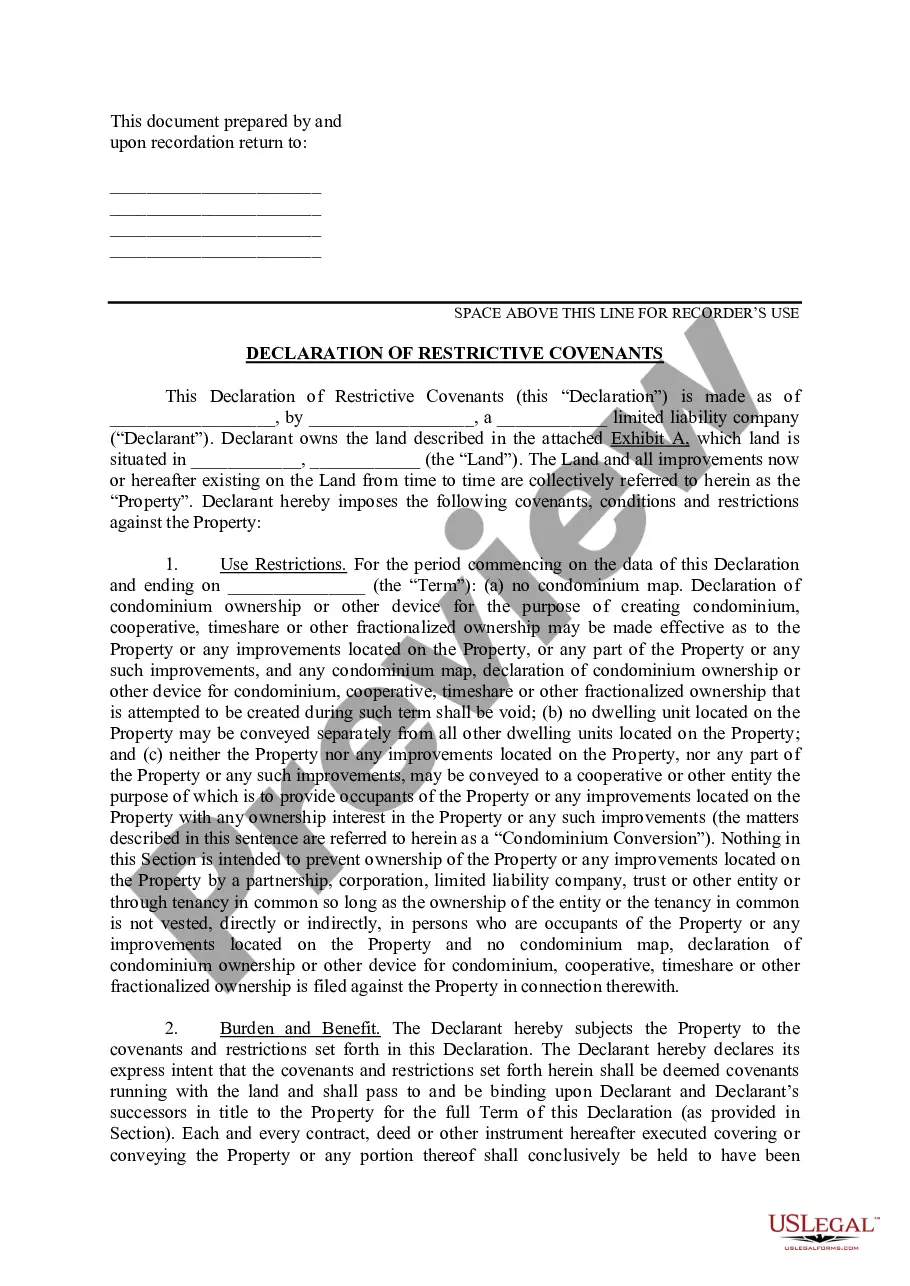
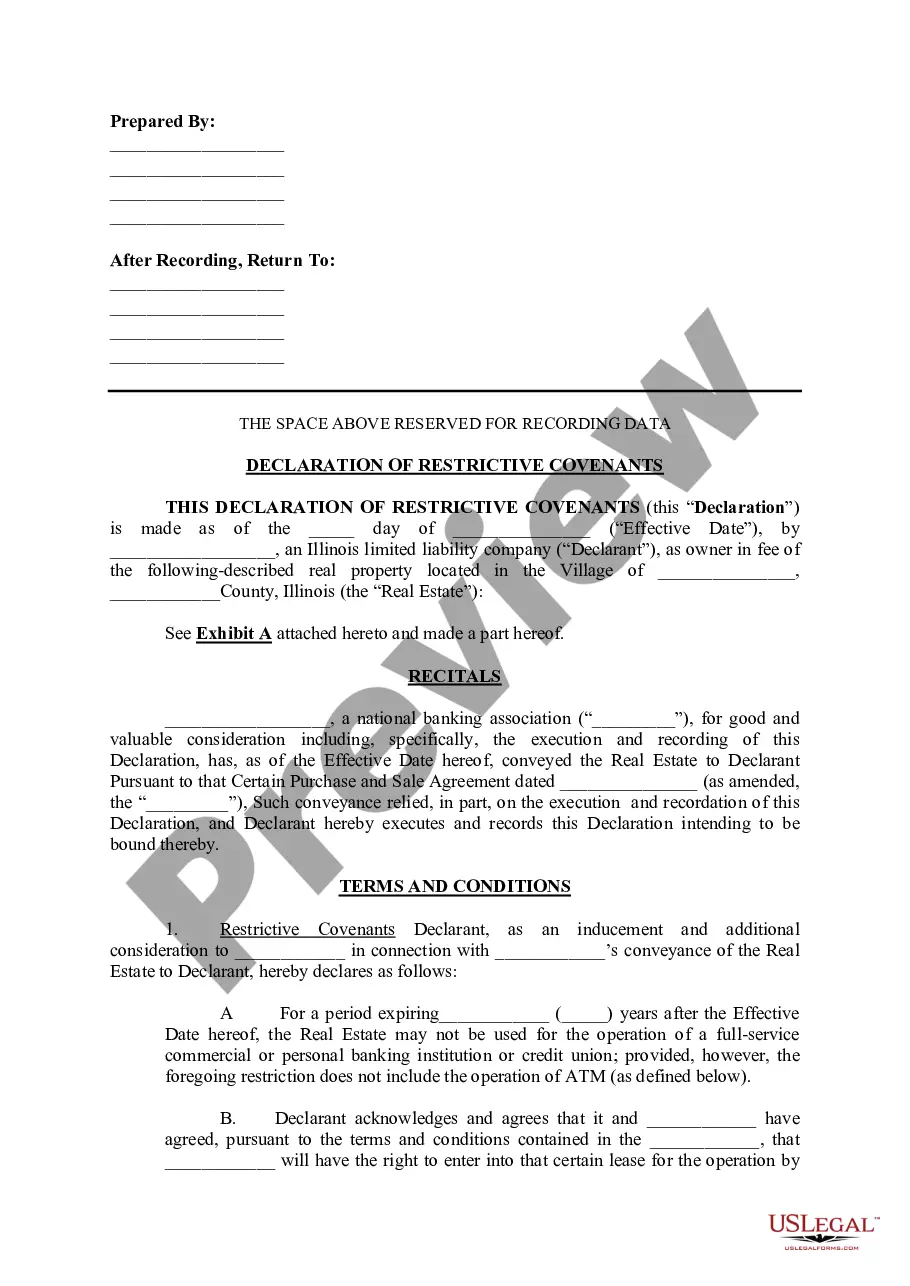
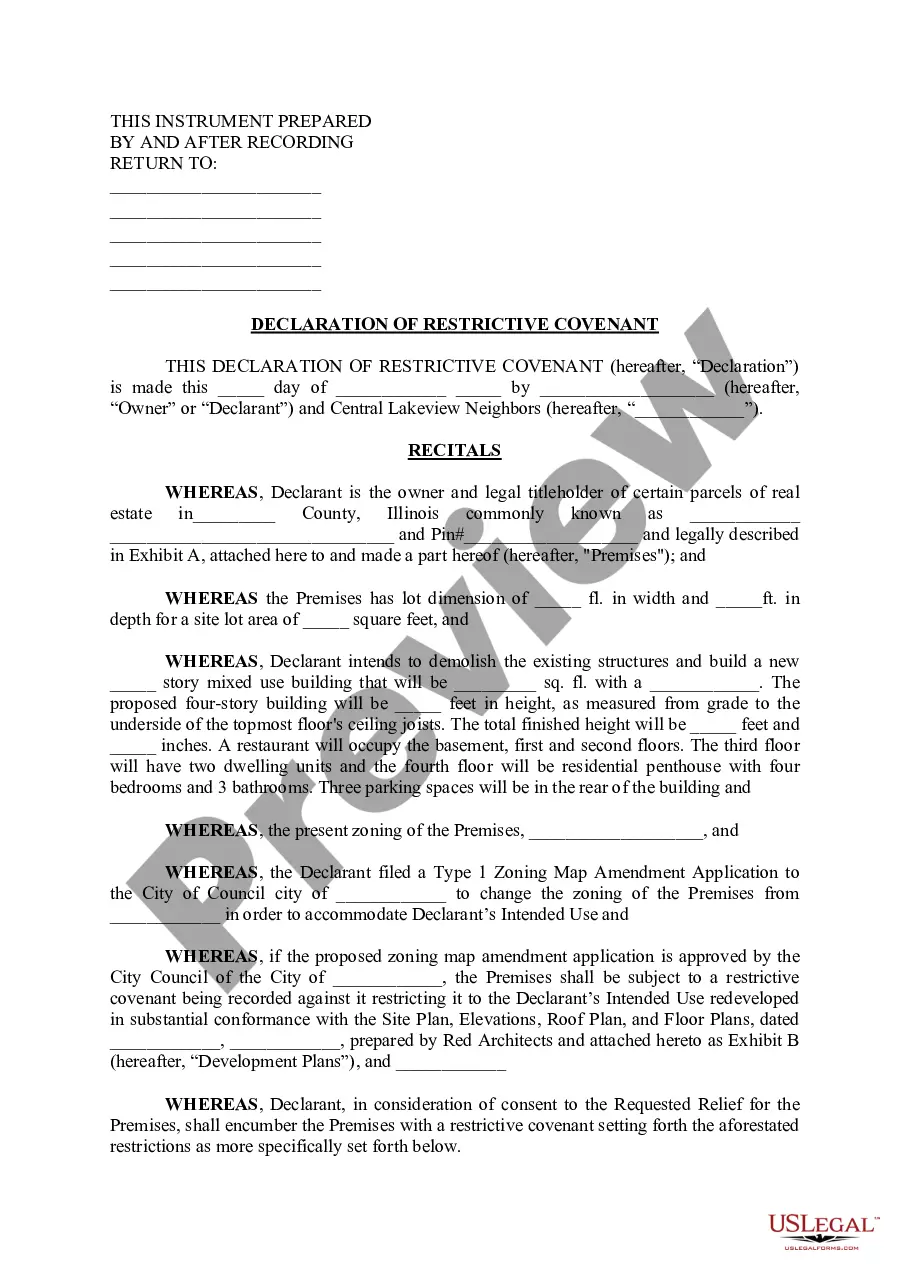
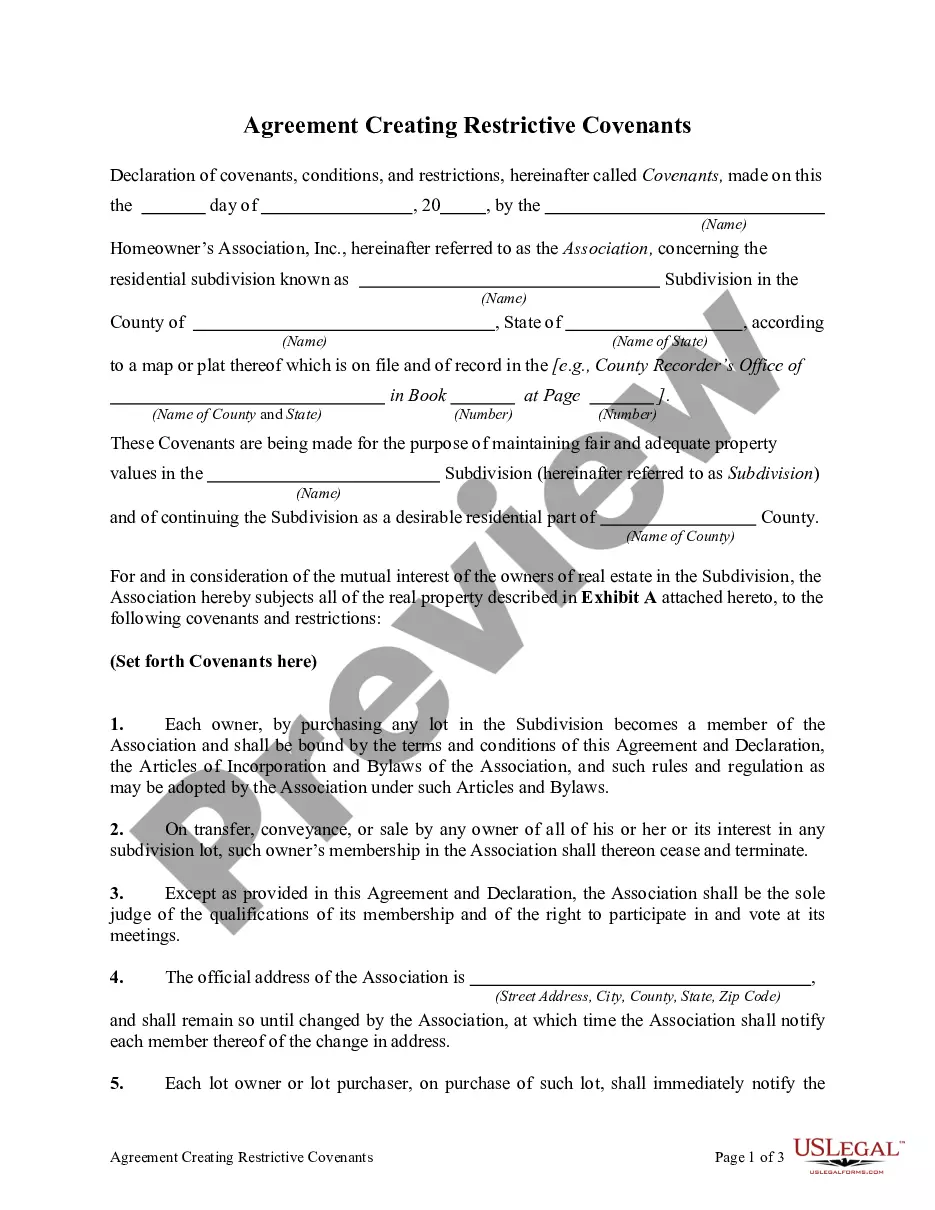
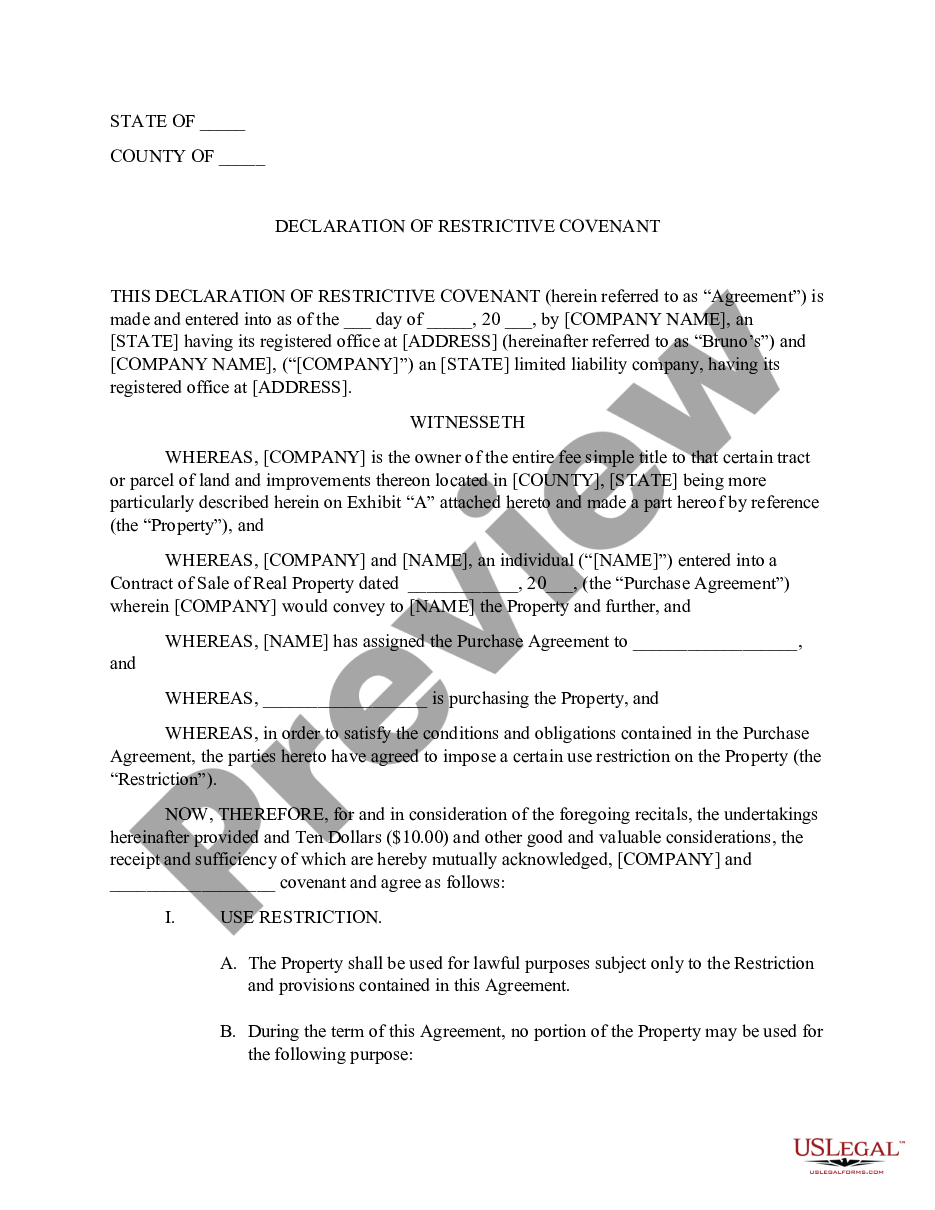
The Declaration of Restrictive Covenants is a legal document that establishes specific limitations on how a property can be used, particularly concerning the creation of condominiums. Unlike typical property deeds, this declaration imposes restrictions that control the use and ownership structures of the property, ensuring that it remains free from conversion into condominium or fractional ownership during the term specified in the document.
Key components of this form
- Use Restrictions: Specifies that the property cannot be converted into condominiums or related ownership structures for the defined term.
- Burden and Benefit: Clarifies that the covenants run with the land and bind future owners.
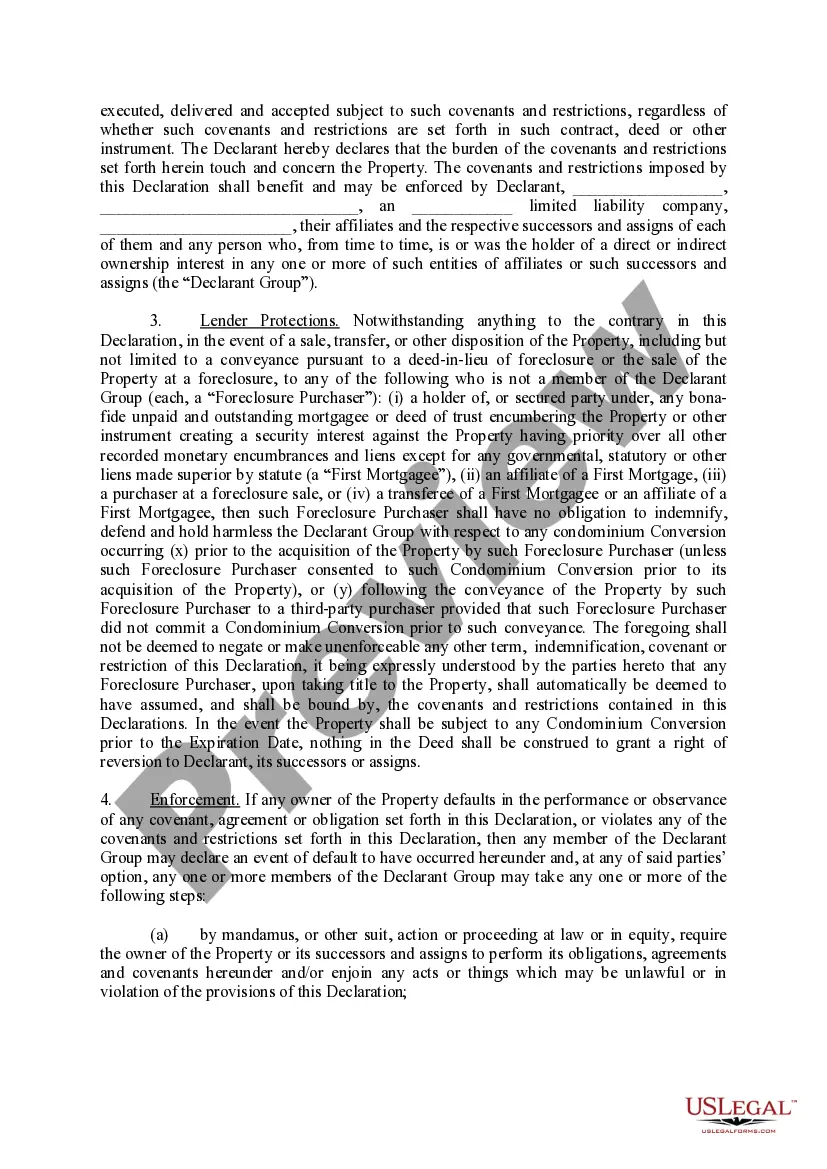
- Lender Protections: Outlines protections for lenders regarding condominium conversions after foreclosure.
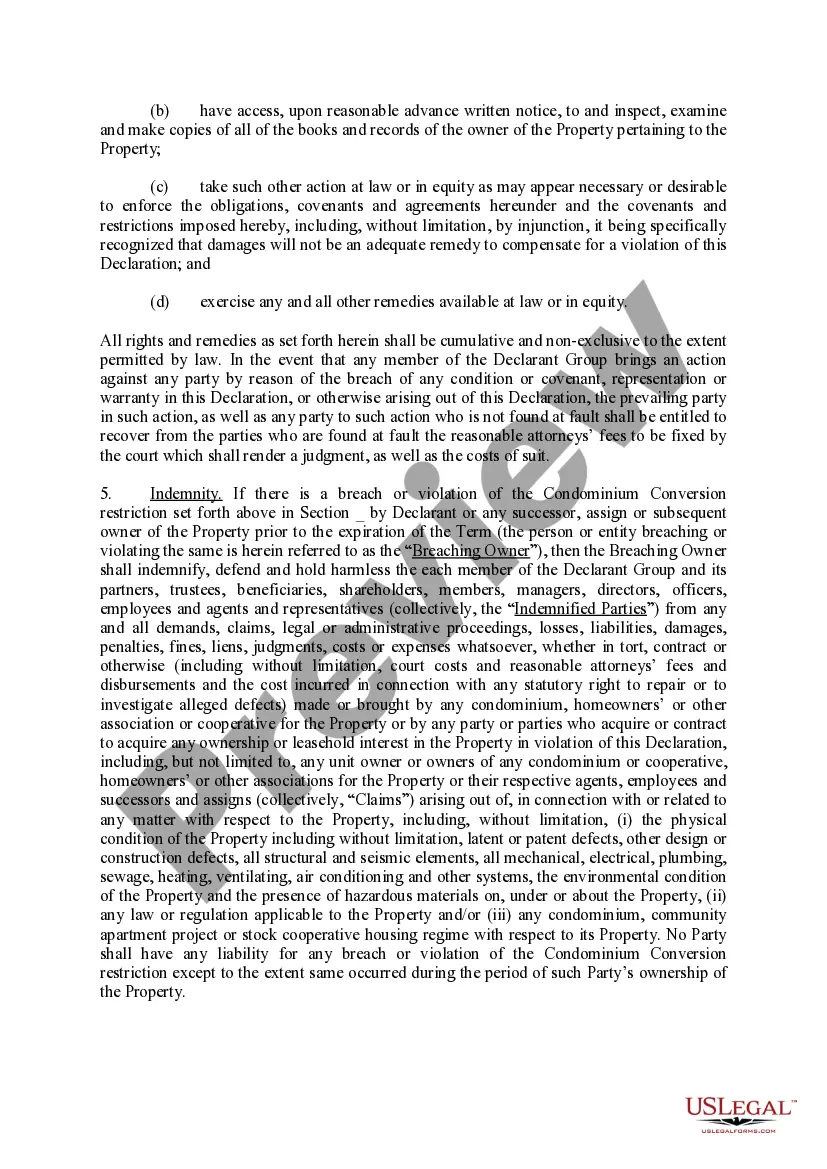
- Enforcement: Describes the actions available to the Declarant Group if violations occur.
- Indemnity Clause: Addresses the responsibilities of the Breaching Owner for violations of the restrictions.

Situations where this form applies
This form is typically used when a property owner wishes to impose specific restrictions on the use of their property to prevent its conversion into a condominium or similar ownership entity. It is important for developers or landowners involved in residential development who want to maintain control over their propertyâs future use.
Who should use this form
- Property owners who wish to prevent condominium conversion.
- Developers planning condominium projects who need to establish restrictions on the property.
- Real estate attorneys advising clients on property usage restrictions.
- Investors involved in residential property management.
Steps to complete this form
- Identify the declarant and provide their business structure (e.g., limited liability company).
- Specify the property description in the attached Exhibit A.
- Outline the duration of the use restrictions by entering the start and end dates.
- Detail any specific covenants or restrictions that are intended to be enforced.
- Ensure both the Declarant and a notary public sign the document as required.
Notarization guidance
Yes, this form must be notarized to be legally valid. US Legal Forms offers integrated online notarization services, allowing for secure video calls with licensed notaries, available 24/7, ensuring compliance without the need for travel.
Get your form ready online
Our built-in tools help you complete, sign, share, and store your documents in one place.
Make edits, fill in missing information, and update formatting in US Legal Forms—just like you would in MS Word.
Download a copy, print it, send it by email, or mail it via USPS—whatever works best for your next step.
Sign and collect signatures with our SignNow integration. Send to multiple recipients, set reminders, and more. Go Premium to unlock E-Sign.
If this form requires notarization, complete it online through a secure video call—no need to meet a notary in person or wait for an appointment.
We protect your documents and personal data by following strict security and privacy standards.

Make edits, fill in missing information, and update formatting in US Legal Forms—just like you would in MS Word.

Download a copy, print it, send it by email, or mail it via USPS—whatever works best for your next step.

Sign and collect signatures with our SignNow integration. Send to multiple recipients, set reminders, and more. Go Premium to unlock E-Sign.

If this form requires notarization, complete it online through a secure video call—no need to meet a notary in person or wait for an appointment.

We protect your documents and personal data by following strict security and privacy standards.
Mistakes to watch out for
- Failing to provide accurate property descriptions in Exhibit A.
- Neglecting to specify the term or duration of the restrictions.
- Not having the form properly notarized or witnessing signatures as required.
- Inadvertently allowing conditions that contradict the restrictive covenants.
- Overlooking the need for acceptance of the terms by all affected parties.
Benefits of using this form online
- Convenient access to customizable legal forms without needing an attorney.
- Editable down to your specific property details, ensuring accuracy and relevance.
- Instant download allows for immediate use, expediting the legal process.
- Reliability from professionally drafted templates ensures compliance with local regulations.
Legal use & context
- This form is legally binding and enforceable against future owners of the property.
- The restrictions will remain in effect for the duration specified, regardless of changes in ownership.
- Violations can lead to potential legal actions against the Breaching Owner.
Looking for another form?
Form popularity
FAQ
Limitations On Home Color. Rent And Lease Restrictions. Restrictions On Business Usage. Limitations On Permissible Pets. Requirements For Exterior Maintenance. Restrictions On Exterior Constructions.
A restrictive covenant is a clause in a deed or lease to real property that limits what the owner of the land or lease can do with the property. Restrictive covenants allow surrounding property owners, who have similar covenants in their deeds, to enforce the terms of the covenants in a court of law.
Enforcing Restrictive Covenants An injunction is a discretionary remedy which a court is more likely to grant if it is applied for promptly. However before taking legal action it is important to establish that you do have the right to enforce the covenant.
Can I get a restrictive covenant removed? If there is a covenant on your property which is obsolete, you can make an application to the Upper Tribunal (Lands Chamber) (which use to be known as the Lands Tribunal) asking for the covenant to be discharged or modified.