Amendment to Prior Affidavit
What is this form?
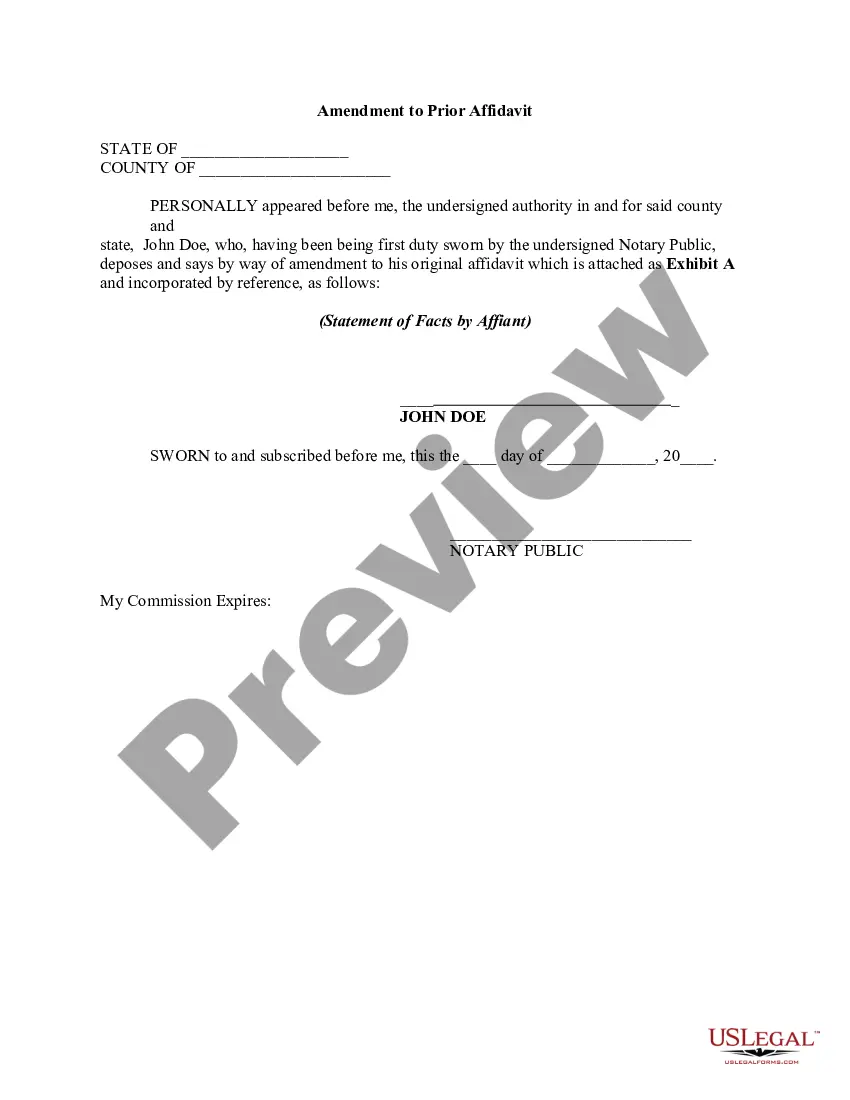
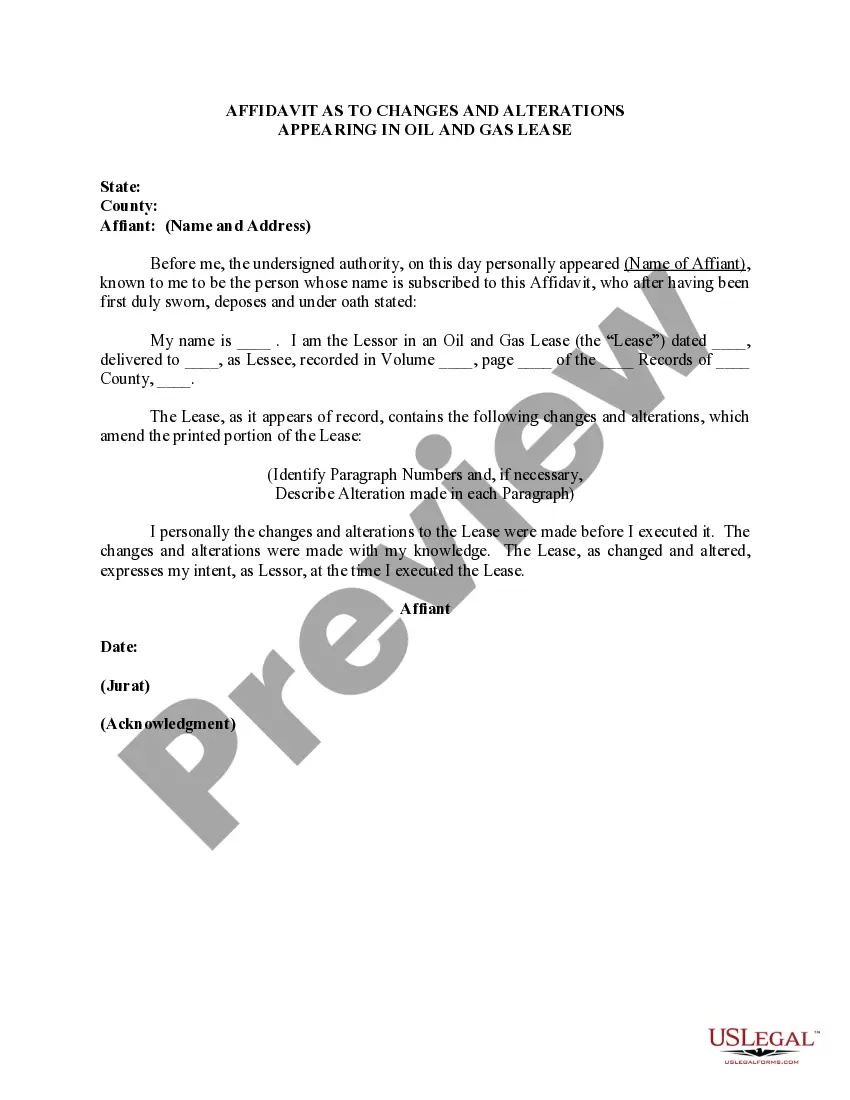
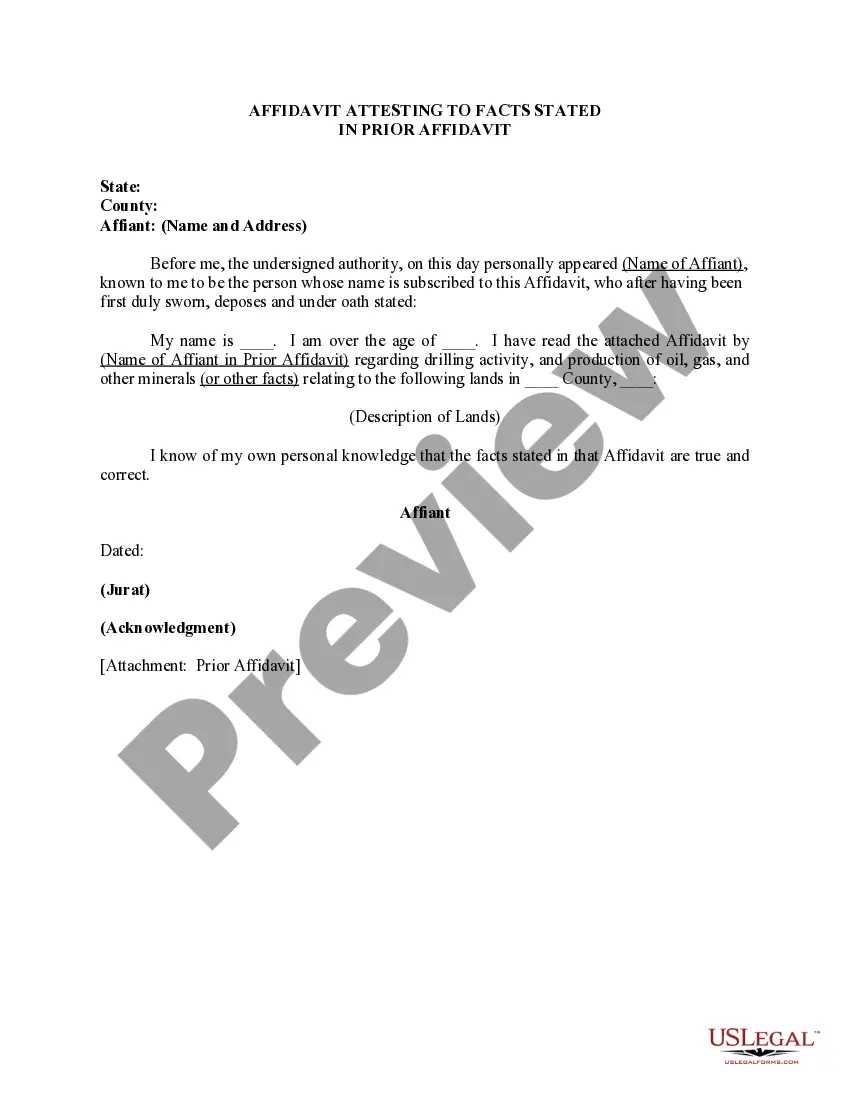
The Amendment to Prior Affidavit is a legal document that allows an individual to amend or modify details in a previously sworn affidavit. This form is essential when changes need to be officially documented, ensuring that the amended information holds legal weight. Unlike a new affidavit, this form connects to and modifies the earlier affidavit, providing continuity and clarity in legal proceedings.
Key parts of this document
- Identification of the affiant, including their name and location.
- Statement of facts outlining the amendments to the original affidavit.
- Reference to the original affidavit as Exhibit A.
- Signature of the affiant, affirming the truth of the amended statements.
- Notary public's verification and signature to affirm the affidavit.
When to use this document
This form should be used when there are factual changes or updates to be made to an existing affidavit. For example, if new evidence or information has come to light that alters the original statements, or if there were errors in the prior affidavit that need correction, this amendment is necessary to maintain accurate records.
Who this form is for
- Individuals who have previously submitted an affidavit and need to make changes.
- Attorneys representing clients in cases that require amendments to prior affidavits.
- Any party in a legal transaction or proceeding that necessitates modifications to sworn statements.
Completing this form step by step
- Identify the state and county where the affidavit is being sworn.
- Enter the name of the affiant (the person making the statement).
- Attach the original affidavit as Exhibit A.
- Clearly outline the specific facts that are being amended.
- Sign the document in the presence of a notary public, who will then notarize it.
Is notarization required?
Yes, this form must be notarized to be legally valid. US Legal Forms offers integrated online notarization services, enabling you to complete the notarization process through a secure video call at any time, saving you time and effort.
Get your form ready online
Our built-in tools help you complete, sign, share, and store your documents in one place.
Make edits, fill in missing information, and update formatting in US Legal Forms—just like you would in MS Word.
Download a copy, print it, send it by email, or mail it via USPS—whatever works best for your next step.
Sign and collect signatures with our SignNow integration. Send to multiple recipients, set reminders, and more. Go Premium to unlock E-Sign.
If this form requires notarization, complete it online through a secure video call—no need to meet a notary in person or wait for an appointment.
We protect your documents and personal data by following strict security and privacy standards.

Make edits, fill in missing information, and update formatting in US Legal Forms—just like you would in MS Word.

Download a copy, print it, send it by email, or mail it via USPS—whatever works best for your next step.

Sign and collect signatures with our SignNow integration. Send to multiple recipients, set reminders, and more. Go Premium to unlock E-Sign.

If this form requires notarization, complete it online through a secure video call—no need to meet a notary in person or wait for an appointment.

We protect your documents and personal data by following strict security and privacy standards.
Avoid these common issues
- Failing to attach the original affidavit as Exhibit A.
- Not providing a clear statement of the amended facts.
- Omitting the date or signature of the notary public.
- Using incorrect legal terminology, which may impact validity.
Advantages of online completion
- Access to professionally drafted templates that ensure legal compliance.
- The ability to download and edit forms easily according to personal needs.
- Convenience of completing documents at any time without needing to visit a legal office.
- Secure and reliable preparation of legal documents.
Legal use & context
- Amendments to affidavits are legally recognized and can affect the outcome of legal proceedings.
- Correctly filed amendments can strengthen your case by providing accurate information.
- Failure to properly amend an affidavit can lead to legal repercussions or dismissal of claims.
Summary of main points
- The Amendment to Prior Affidavit is essential for updating previously sworn statements.
- Users must ensure the form is completed accurately to avoid legal issues.
- Notarization is required for the amendment to hold legal validity.
Looking for another form?


Form popularity
FAQ
A Preliminary Amendment is a submission filed prior to the issuance of an Office Action in a patent application. The purpose of the Preliminary Amendment is to revise any of the following: specification, abstract, drawings and/or claims.
Rule 312 Amendment is an amendment submitted to the U.S. Patent and Trademark Office after the Patent Trademark Office has mailed notice of a patent application's approval.No amendment may be made as a matter of right in an application after the mailing of the notice of allowance.
(i) An instruction to replace the specification; and. (ii) A substitute specification in compliance with ? 1.125(b) and (c).
Examiner (the quoted language is from 37 CFR 1.142(b). Canceled claims are no longer pending.Do not cancel the non elected claims.
Once a provisional patent application has been filed, it cannot be amended (other than fixing procedural formalities). Therefore, to amend the subject matter one would need to refile the provisional patent application.
Take the sworn affidavit to a lawyer or notary public, preferably the lawyer or notary who executed the affidavit. When you're in front of the lawyer or notary, correct the mistakes on the affidavit in pen (cross out the incorrect information and write the correct information).
Amendments to Names You can alter the names of the patent owners by sending a Recordation Cover Sheet to the Assignment Recordation Branch of the U.S. Patent and Trademark Office. The process is the same regardless of whether the patent is under examination or already has been granted.
If there is a mistake or omission in the affidavit, the proper way is to file an affidavit expla...the affidavit filed by him in lieu of examination in chief. The said application was dismissed by the learned Magistrate, against which the petitioner preferred revision before the Court of Session...