Affidavit Attesting to Facts Stated in Prior Affidavit
What this document covers
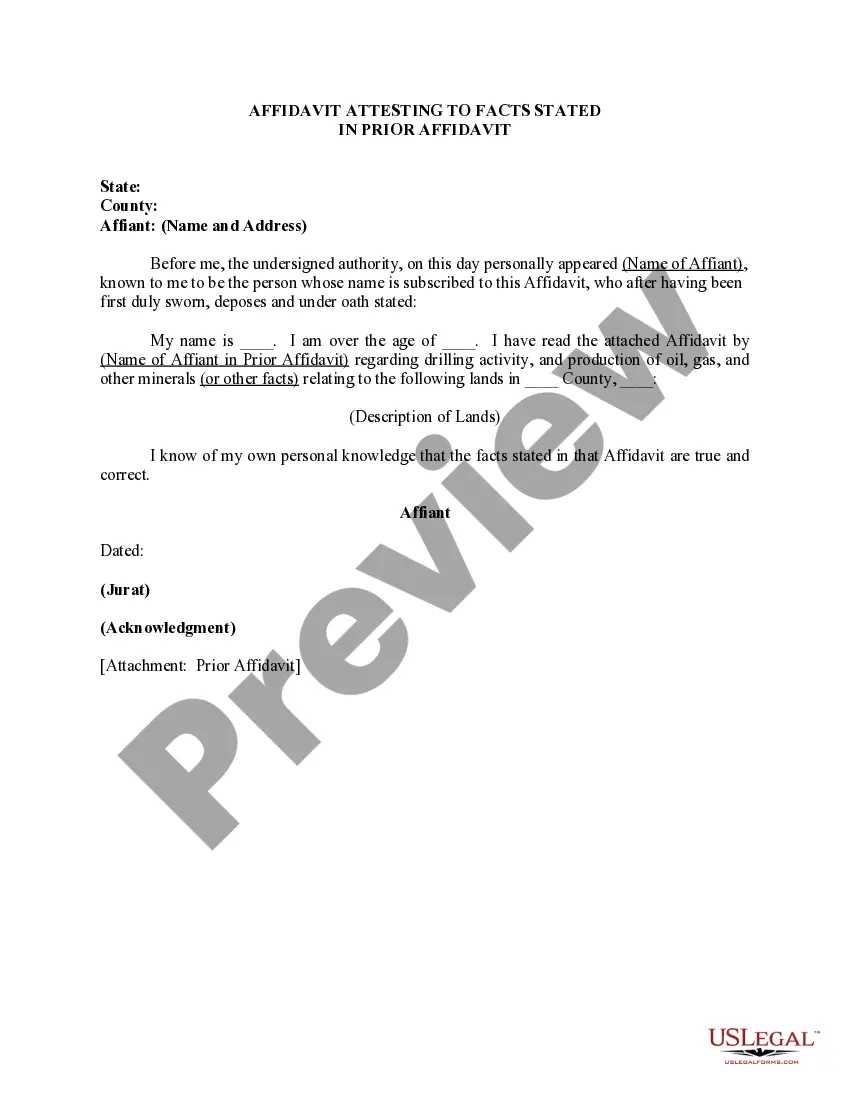
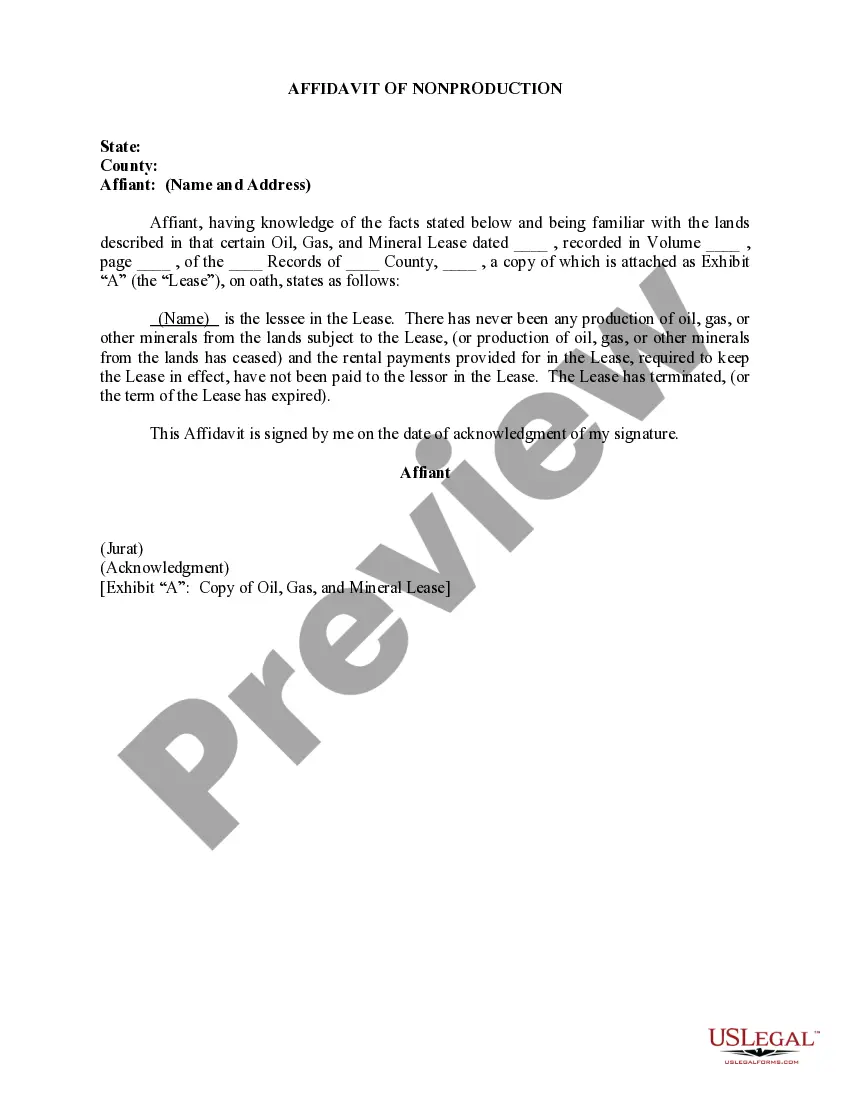
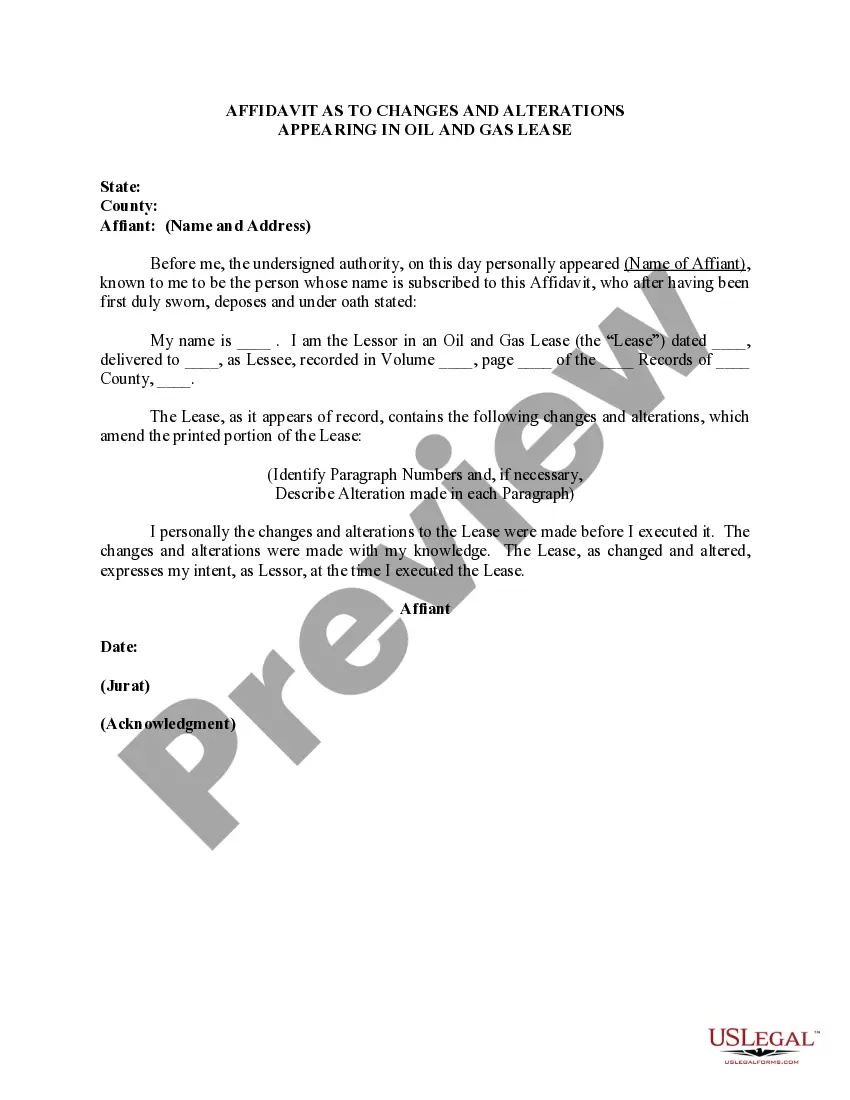
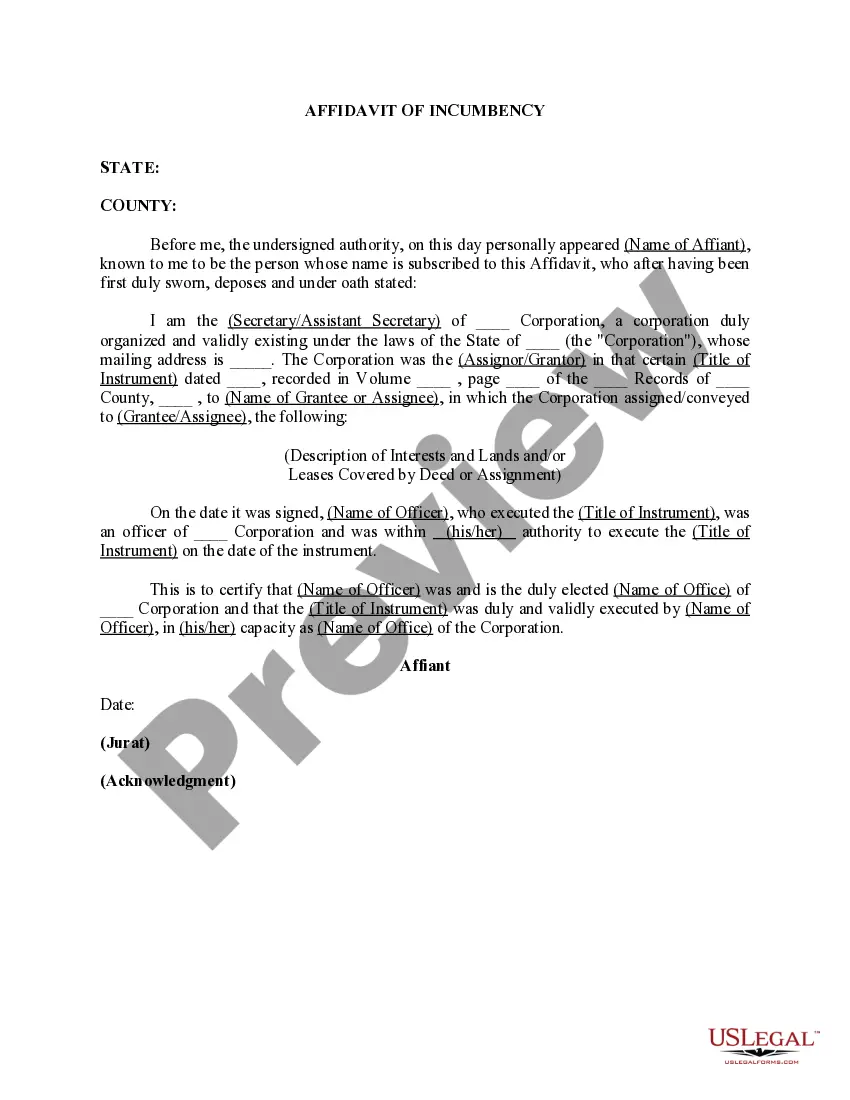
The Affidavit Attesting to Facts Stated in Prior Affidavit is a legal document that confirms the truthfulness of statements made in a previous affidavit. This form is essential for providing additional validation or support to the initial affidavit's contents and differentiates itself from other affidavits by focusing specifically on affirming facts stated earlier, rather than presenting new information.
Key parts of this document
- Identification of the affiant, including name and address.
- Statement of personal knowledge regarding the previous affidavit's contents.
- Details of the prior affidavit being attested to, including relevant facts or claims.
- Signature and date from the affiant.
- Notary acknowledgment to confirm the signing process.
When this form is needed
This form is used when an individual needs to provide sworn confirmation of facts described in an earlier affidavit. Situations may arise, such as when verifying drilling activities or mineral production on specific lands, and where the truthfulness of previous claims is in question or needs reinforcement.
Who this form is for
This form is suitable for:
- Individuals who have already created an affidavit and need to affirm its contents.
- Legal professionals seeking to bolster the validity of prior statements made by their clients.
- Entities involved in legal matters related to property, such as landowners or mineral rights holders.
Completing this form step by step
- Enter the name and address of the affiant at the top of the form.
- Provide a clear statement of personal knowledge regarding the facts in the previous affidavit.
- Specify the relevant details of the prior affidavit, including its title and the specific facts being attested to.
- Sign and date the affidavit in the designated area.
- Arrange for a notary public to verify your identity and witness your signature.
Notarization guidance
This form must be notarized to be legally valid. The notarization process requires the affiant to sign the document in front of a notary public, ensuring the integrity of the declaration. US Legal Forms offers integrated online notarization services that provide secure video calls with licensed notaries, available 24/7.
Get your form ready online
Our built-in tools help you complete, sign, share, and store your documents in one place.
Make edits, fill in missing information, and update formatting in US Legal Forms—just like you would in MS Word.
Download a copy, print it, send it by email, or mail it via USPS—whatever works best for your next step.
Sign and collect signatures with our SignNow integration. Send to multiple recipients, set reminders, and more. Go Premium to unlock E-Sign.
If this form requires notarization, complete it online through a secure video call—no need to meet a notary in person or wait for an appointment.
We protect your documents and personal data by following strict security and privacy standards.

Make edits, fill in missing information, and update formatting in US Legal Forms—just like you would in MS Word.

Download a copy, print it, send it by email, or mail it via USPS—whatever works best for your next step.

Sign and collect signatures with our SignNow integration. Send to multiple recipients, set reminders, and more. Go Premium to unlock E-Sign.

If this form requires notarization, complete it online through a secure video call—no need to meet a notary in person or wait for an appointment.

We protect your documents and personal data by following strict security and privacy standards.
Mistakes to watch out for
- Failing to fully disclose personal knowledge about the statements in the prior affidavit.
- Omitting necessary identifying information about the affiant.
- Not having the affidavit notarized, if required by state law.
Why use this form online
- Instant access to the form allows for quick preparation.
- Editable templates ensure that the form can be customized to individual needs.
- Reliable support from licensed attorneys helps ensure accuracy and compliance.
Legal use & context
- This form is legally enforceable once executed and notarized.
- Affidavits are often used in court proceedings as supporting evidence.
- The accuracy of the statements is critical for legal outcomes, so careful attention is necessary when completing this form.
Main things to remember
- The Affidavit Attesting to Facts Stated in Prior Affidavit is a key legal document for confirming previous statements.
- Proper execution and notarization are essential for legal validity.
- Use this form when you need to affirm the facts stated in a prior affidavit for legal proceedings.
Looking for another form?

Form popularity
FAQ
Step 3: Write the name of the parties in case of an affidavit being filled in Court or Write the name of the Deponent in case of other affidavits. Step 4: Write the complete address of the deponent. Step 5: Write the statements in point wise and state only the true facts.
6 steps to writing an affidavit. Because this is a legal document, there is a right way to write an affidavit. Most affidavits can be completed by any person but they must be notarized before they are considered valid. Below is the basic six-step process you'll need to take to complete your affidavit.
In the sentence, the person writing the statement must state that he or she is stating that the information is accurate. (Example: I, Jane Doe, solemnly swear that the contents of this document are true and correct, and that I agree to abide by the terms in this affidavit.)
Full name and address of affiant. Date and place of birth. Relationship to I-751 applicant and spouse. An account of your relationship explaining: How you met the couple. Details explaining how the person acquired this knowledge (i.e. friends) Date and signature.
Using an Affidavit as Admissible Evidence An affidavit is admissible evidence, although some courts may require you to testify to the affidavit or they may consider it hearsay. Since hearsay is not admissible as evidence, your affidavit may not be used for evidence if someone objects to it unless you testify.
Step 1: Name Your Document. Step 2: Identify the Deponent / Affiant. Step 3: Write a Statement of Truth. Step 4: State the Facts. Step 5: Sample Notary Public Statements for an Affidavit.
Full name of the deponent and their signature. Statement indicating whether the affidavit has been sworn or not. Date and place where the affidavit is being signed. Designation and full name of the Notary or Magistrate (person attesting the affidavit)
In a nutshell, an affidavit is a sworn statement that is in writing. Affidavits are usually used in a court or in negotiations. They are common in family law cases and bankruptcy cases. They are also used in civil and criminal cases, though not as often as family or bankruptcy law cases.
I am _____ and my name _______, appearing on the enclosed ID proof, is single name.Both names denote one and the same person. I solemnly state that the contents of this affidavit are true to the best of my knowledge and belief and that it conceals nothing and that no part of it is false.