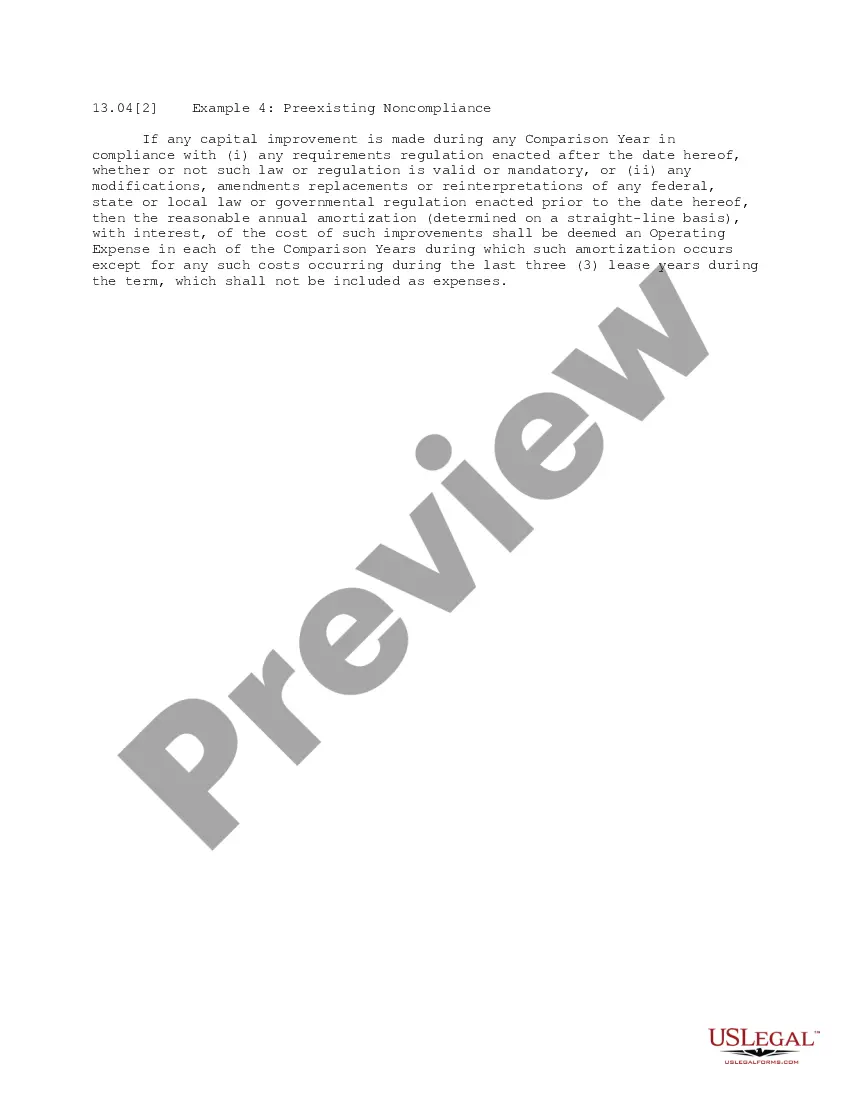
Preexisting Noncompliance
What is this form?
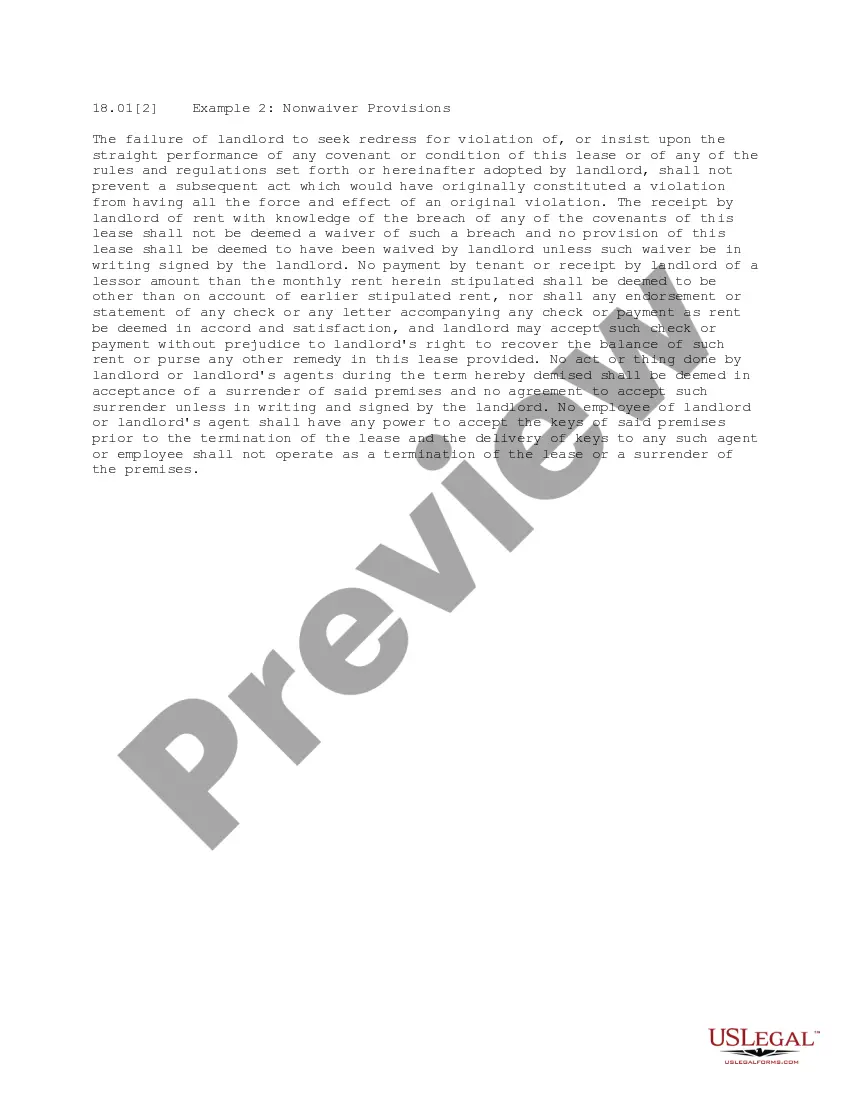
The Preexisting Noncompliance form is an office lease agreement that addresses expenses related to capital improvements made during specified comparison years. It helps define which expenses are allowable under new regulations or modifications to existing laws, providing clarity on what can be included in operating expenses. This form is essential for landlords and tenants to ensure compliance with evolving legal requirements regarding property improvements.
Main sections of this form
- Definition of capital improvements: Clarifies what constitutes a capital improvement for expense purposes.
- Operating expenses: Specifies which costs related to improvements can be included as operating expenses.
- Exemptions: Outlines expenses that are not included during the last three lease years of the term.
- Amortization details: Provides a method for calculating reasonable annual amortization of improvement costs.
- Compliance with regulations: Addresses compliance with federal, state, and local laws enacted after the lease date.

Common use cases
This form should be used when making capital improvements to leased office space that may affect operating expenses. It's particularly relevant when regulations have changed since the lease was signed, impacting how expenses should be calculated. Landlords and tenants should reference this form during lease negotiations and when evaluating potential improvements to ensure all parties adhere to current legal standards.
Who should use this form
- Landlords seeking to clarify the terms of expense reimbursement for capital improvements.
- Tenants who need a clear understanding of which improvement costs can be passed on to them.
- Property managers involved in negotiating lease agreements and improving compliance.
- Attorneys drafting or reviewing office lease agreements for clients.
Completing this form step by step
- Identify the parties: Clearly state the names and details of the landlord and tenant.
- Specify the property: Provide the address of the leased office space.
- Detail the capital improvements: Describe the nature of the improvements being made.
- Calculate amortization: Determine the annual amortization of the improvement costs based on a straight-line basis.
- Review compliance: Ensure all applicable laws and regulations are considered.
Is notarization required?
Notarization is generally not required for this form. However, certain states or situations might demand it. You can complete notarization online through US Legal Forms, powered by Notarize, using a verified video call available anytime.
Get your form ready online
Our built-in tools help you complete, sign, share, and store your documents in one place.
Make edits, fill in missing information, and update formatting in US Legal Forms—just like you would in MS Word.
Download a copy, print it, send it by email, or mail it via USPS—whatever works best for your next step.
Sign and collect signatures with our SignNow integration. Send to multiple recipients, set reminders, and more. Go Premium to unlock E-Sign.
If this form requires notarization, complete it online through a secure video call—no need to meet a notary in person or wait for an appointment.
We protect your documents and personal data by following strict security and privacy standards.

Make edits, fill in missing information, and update formatting in US Legal Forms—just like you would in MS Word.

Download a copy, print it, send it by email, or mail it via USPS—whatever works best for your next step.

Sign and collect signatures with our SignNow integration. Send to multiple recipients, set reminders, and more. Go Premium to unlock E-Sign.

If this form requires notarization, complete it online through a secure video call—no need to meet a notary in person or wait for an appointment.

We protect your documents and personal data by following strict security and privacy standards.
Common mistakes
- Failing to clearly define capital improvements in the lease.
- Not considering recent regulatory changes that may affect expenses.
- Neglecting to calculate amortization correctly for operating costs.
- Overlooking limitations on what can be included in operating expenses.
Why use this form online
- Convenience: Downloadable form that can be accessed anytime without the need for physical copies.
- Editability: Easy to customize to fit specific leasing situations and requirements.
- Reliability: Prepared by licensed attorneys to ensure legal validity.
Legal use & context
- Defines the legal rights and obligations of both landlords and tenants.
- Helps prevent disputes related to capital improvements and compliance.
- Ensures proper documentation of operating expenses related to improvements.
What to keep in mind
- The Preexisting Noncompliance form is essential for office leases involving capital improvements.
- It helps clarify which expenses are included as operating costs.
- Proper completion of this form aids in compliance with existing regulatory changes.
Looking for another form?
Form popularity
FAQ
Examples of pre-existing conditions include cancer, asthma, diabetes or even being pregnant. Under the Affordable Care Act (Obamacare), health insurance companies cannot refuse to cover you because of any pre-existing conditions nor can they charge you for more money for the coverage or subject you to a waiting period.
Insurers then use your permission to snoop through old records to look for anything that they might be able to use against you. If you have a pre-existing condition, they'll try to deny your claim on the grounds that you were already injured and their insured had nothing to do with it.
Under current law, health insurance companies can't refuse to cover you or charge you more just because you have a pre-existing condition that is, a health problem you had before the date that new health coverage starts. These rules went into effect for plan years beginning on or after January 1, 2014.
When someone is compliant, they go along with what others especially people in authority want them to do. When someone is noncompliant, they resist authority. A child refusing to do homework or chores is being noncompliant. A citizen ignoring a police officer's request is being noncompliant.
Health insurers can no longer charge more or deny coverage to you or your child because of a pre-existing health condition like asthma, diabetes, or cancer. They cannot limit benefits for that condition either. Once you have insurance, they can't refuse to cover treatment for your pre-existing condition.
The pre-existing condition exclusion period is a health insurance benefit provision that places limits on benefits or excludes benefits for a period of time due to a medical condition that the policyholder had prior to enrolling in a health plan.
What are pre-existing conditions and who has them? As defined most simply, a pre-existing condition is any health condition that a person has prior to enrolling in health coverage.Or it could be more serious or require more costly treatment such as diabetes, heart disease, or cancer.
Yes. Under the Affordable Care Act, health insurance companies can't refuse to cover you or charge you more just because you have a pre-existing condition that is, a health problem you had before the date that new health coverage starts.
The pre-existing condition exclusion period is a health insurance benefit provision that places limits on benefits or excludes benefits for a period of time due to a medical condition that the policyholder had prior to enrolling in a health plan.