Access Easement
Understanding this form
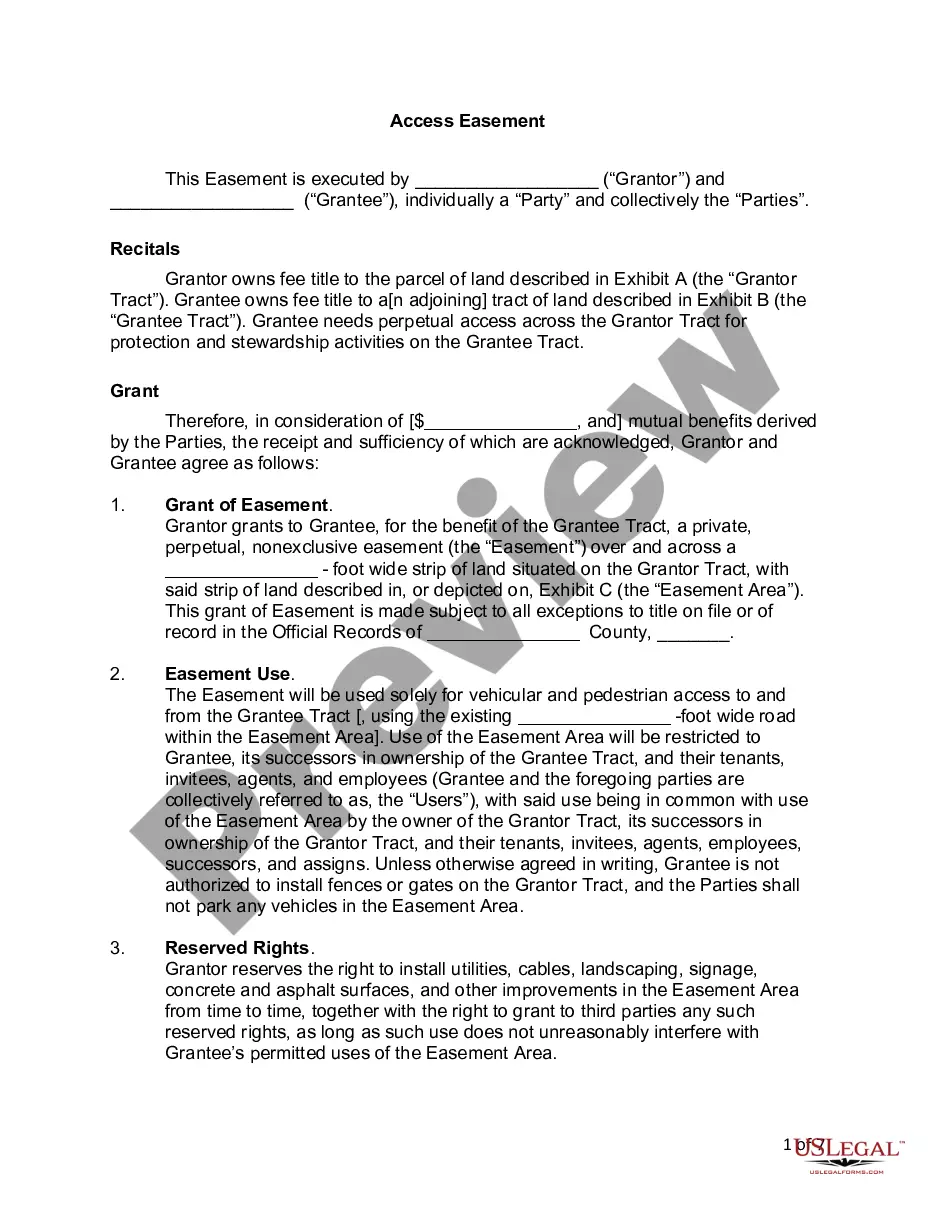
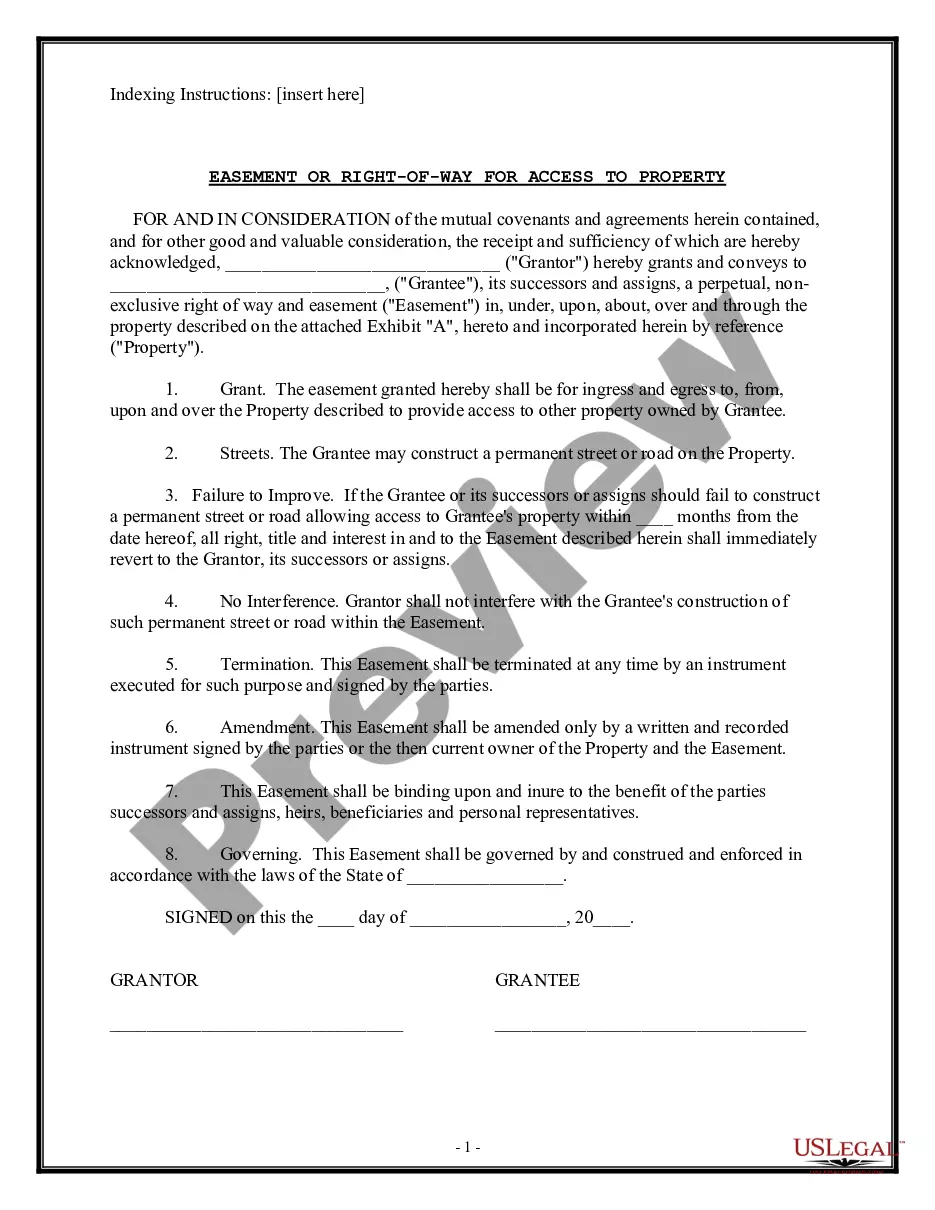
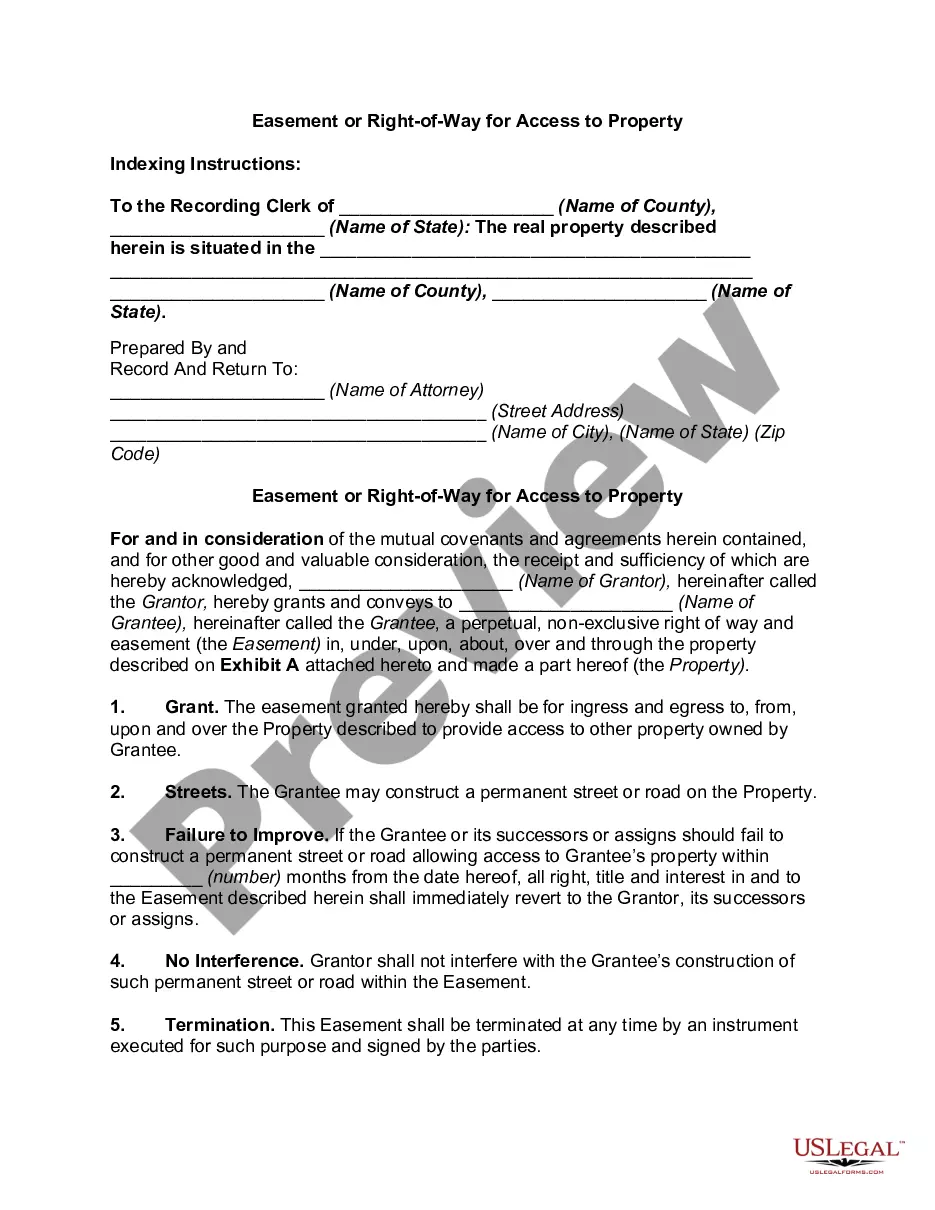
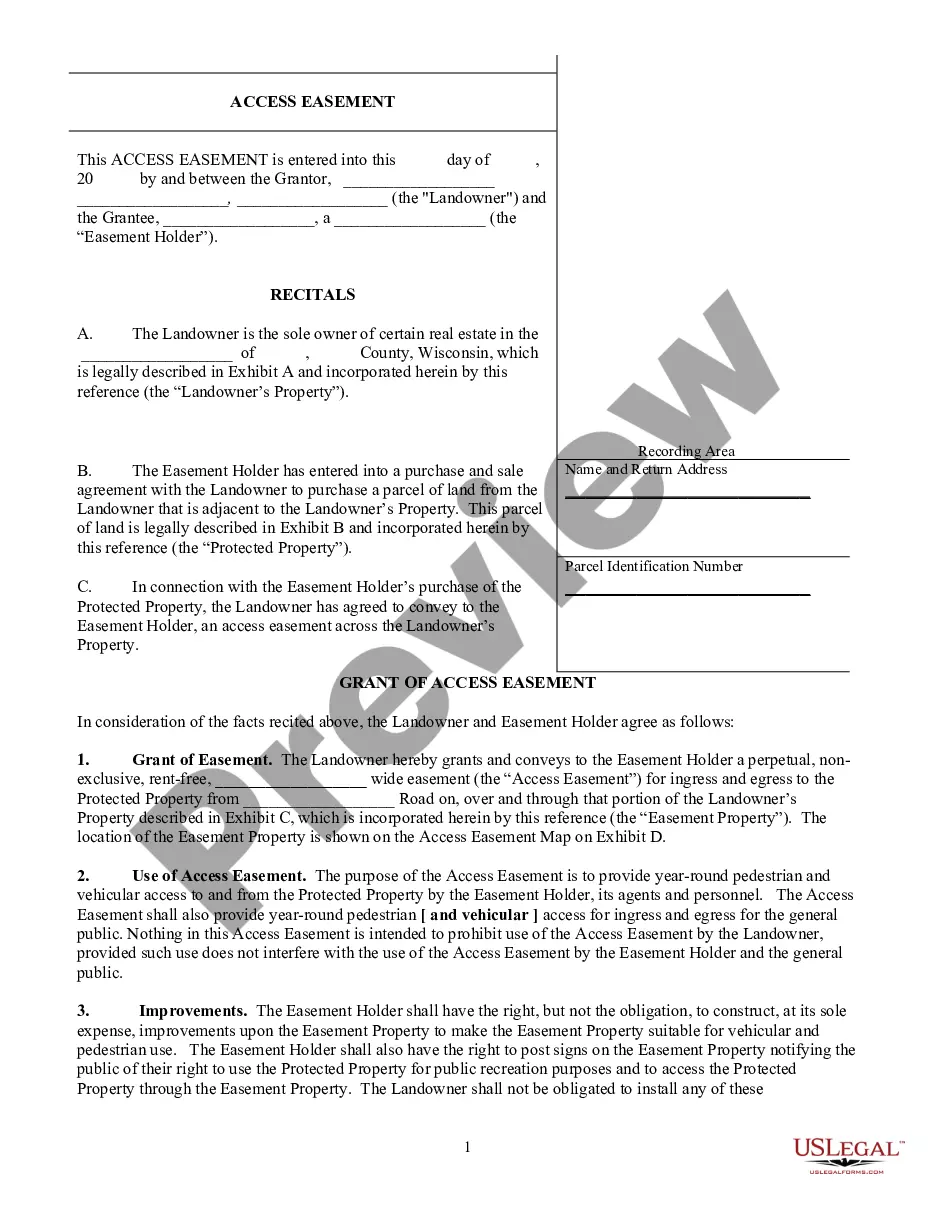
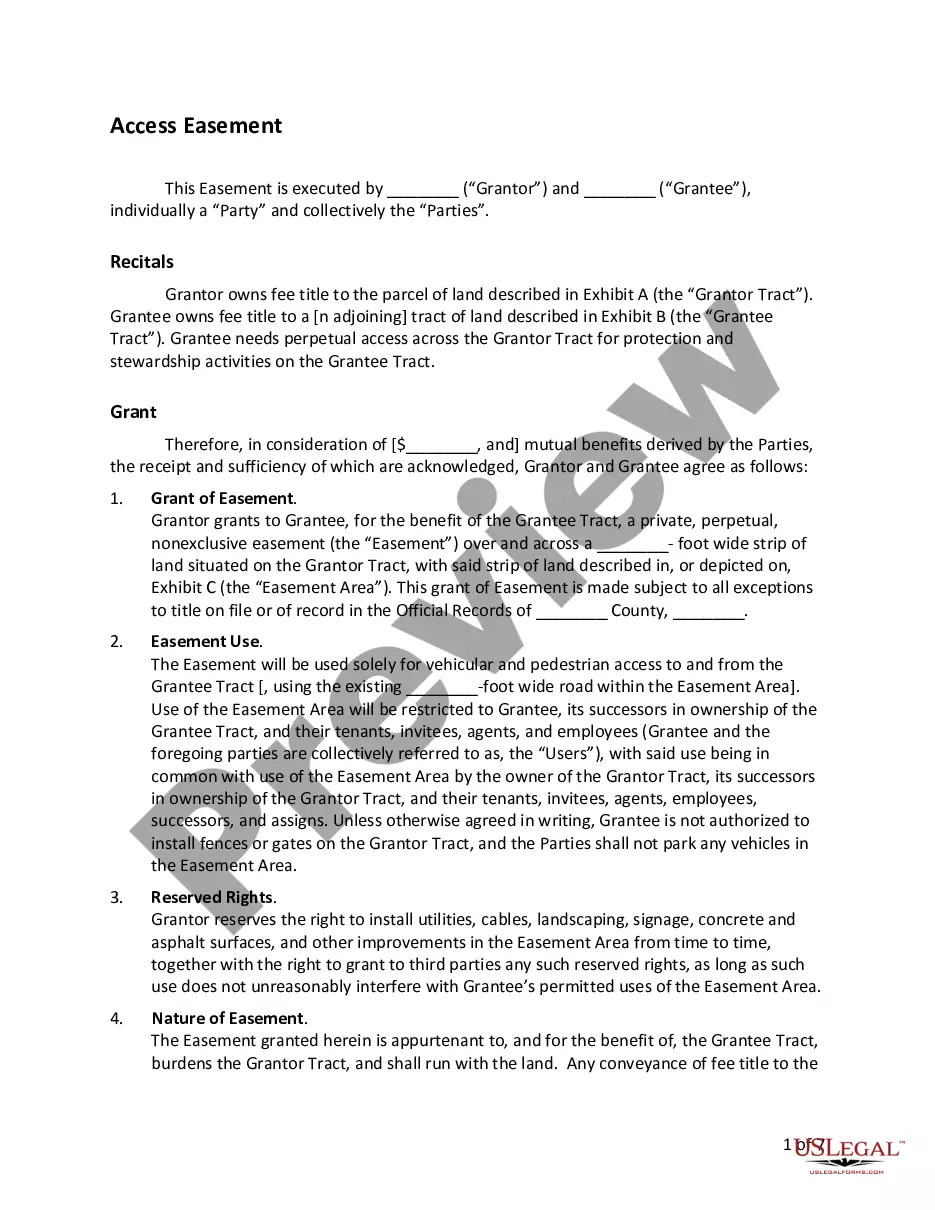
The Access Easement is a legal document that allows one party to use a specific tract of land owned by another party for a limited purpose, such as vehicular and pedestrian access. Unlike a lease, this easement does not grant the right to take possession or sell the property. It is essential for property owners who need specific access rights across neighboring land without transferring ownership or significant control over the land being accessed.
What’s included in this form
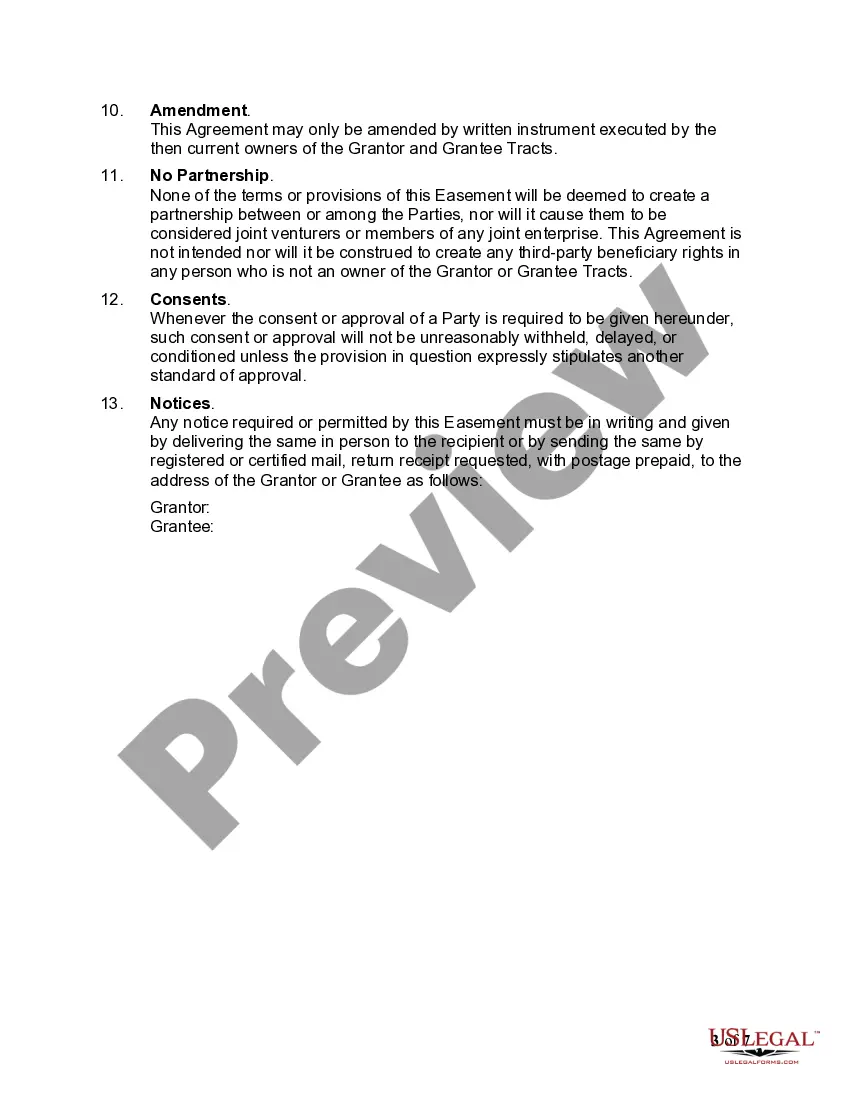
- Identification of parties: names and addresses of both the grantor (landowner) and grantee (user of the easement).
- Description of the property: detailed information about the Grantor Tract and Grantee Tract.
- Grant of easement: outlines the specific rights granted, including the width of the access path.
- Use restrictions: defines how the easement can be utilized, including limitations on modifications and improvement.
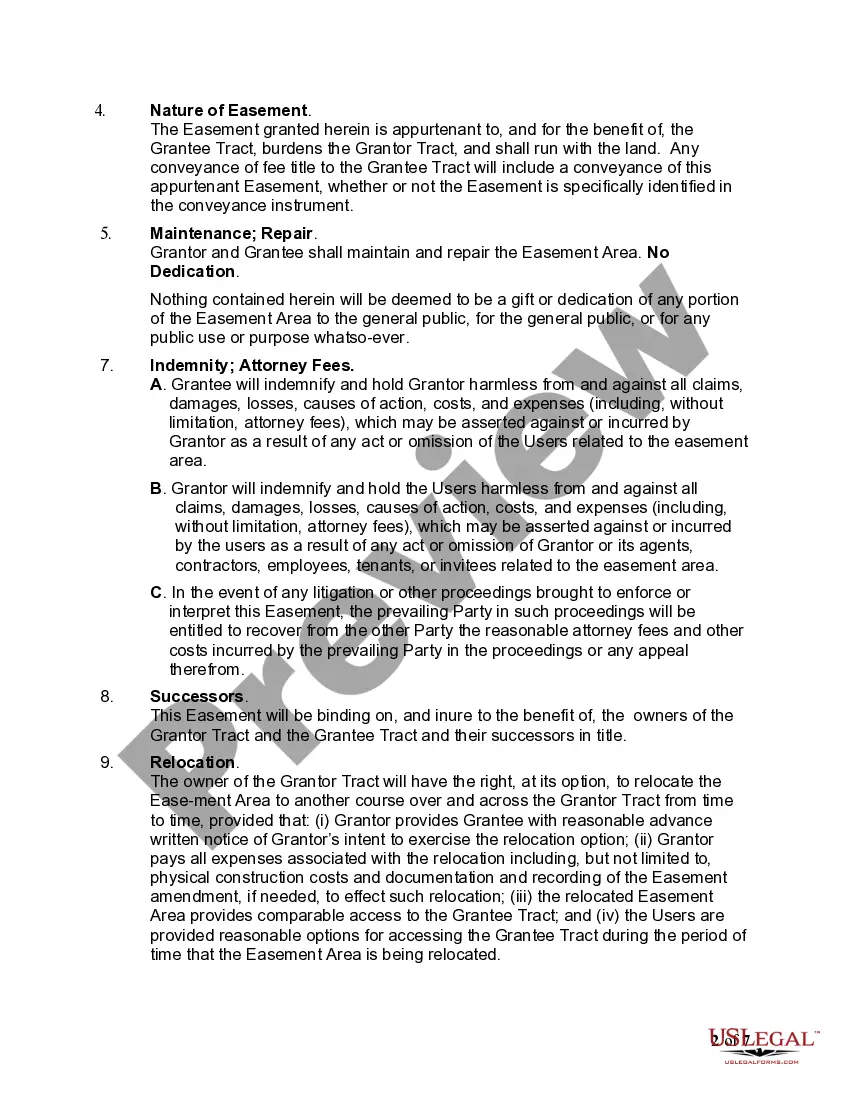
- Maintenance obligations: responsibilities of both parties for maintaining the easement area.
- Indemnity clause: establishes liability and holds parties harmless for claims arising from easement use.



When this form is needed
This form should be used in situations where a property owner (grantor) needs to provide access rights to an adjoining landowner (grantee) for specific activities such as stewardship, maintenance, or conservation access. It is relevant for property owners looking to formalize access across their land without transferring ownership, particularly in rural or developed areas where access is essential but sporadic.
Intended users of this form
This form is ideal for:
- Property owners needing to grant access to their land while retaining ownership.
- Landowners seeking legal documentation to protect their rights and clarify usage methods.
- Developers or conservationists looking to ensure access for specific projects or land care activities.
Instructions for completing this form
- Identify the parties: Fill in the names and addresses of the Grantor and Grantee.
- Specify the property: Describe the Grantor and Grantee Tracts clearly, referencing any exhibited maps.
- Enter the details of the easement: Specify the dimensions and location of the access area.
- Outline the intended use: Clearly state how the easement will be utilized and any restrictions on its use.
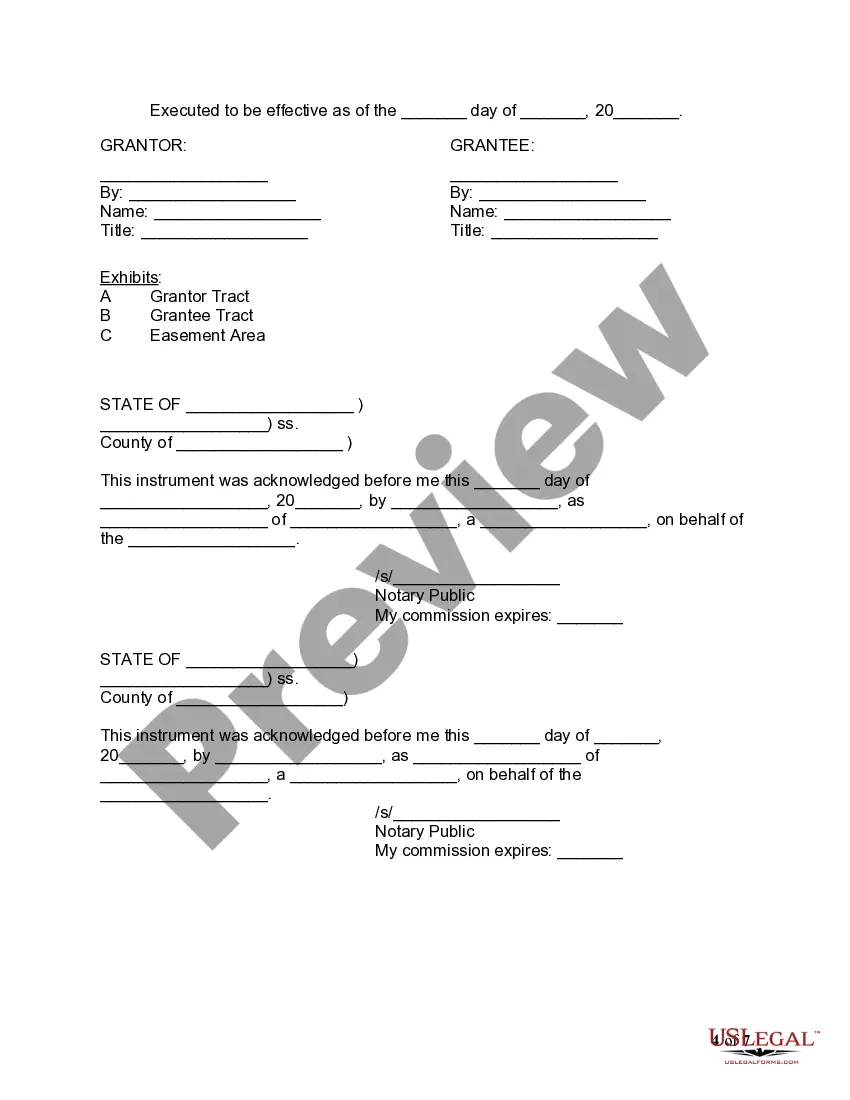
- Include signatures: Ensure both parties sign and date the form to validate the agreement.
Is notarization required?
This form does not typically require notarization unless specified by local law. However, notarizing this document can enhance its legal validity and may be advisable for formal agreements.
Get your form ready online
Our built-in tools help you complete, sign, share, and store your documents in one place.
Make edits, fill in missing information, and update formatting in US Legal Forms—just like you would in MS Word.
Download a copy, print it, send it by email, or mail it via USPS—whatever works best for your next step.
Sign and collect signatures with our SignNow integration. Send to multiple recipients, set reminders, and more. Go Premium to unlock E-Sign.
If this form requires notarization, complete it online through a secure video call—no need to meet a notary in person or wait for an appointment.
We protect your documents and personal data by following strict security and privacy standards.

Make edits, fill in missing information, and update formatting in US Legal Forms—just like you would in MS Word.

Download a copy, print it, send it by email, or mail it via USPS—whatever works best for your next step.

Sign and collect signatures with our SignNow integration. Send to multiple recipients, set reminders, and more. Go Premium to unlock E-Sign.

If this form requires notarization, complete it online through a secure video call—no need to meet a notary in person or wait for an appointment.

We protect your documents and personal data by following strict security and privacy standards.
Typical mistakes to avoid
- Failing to accurately describe the easement area, which may lead to disputes.
- Omitting signatures or dates, rendering the form invalid.
- Not specifying the limitations and restrictions of use, resulting in misuse of the easement.
Why use this form online
- Convenience: Easily access and download the form from anywhere, any time.
- Editable: Customize the form to meet your specific needs before printing.
- Reliable: Ensure the document is drafted based on the latest legal standards.
Legal use & context
- The Access Easement is binding on successors to the property, ensuring long-term rights are protected.
- Non-compliance with terms may lead to legal disputes, so clarity in the agreement is crucial.
- This document may not be suitable for public access or use, as it is a private agreement.
Summary of main points
- The Access Easement is a vital legal tool for granting limited land access without ownership transfer.
- Clearly outline rights and obligations to prevent future disputes.
- Consider legal advice for complex situations or multi-party agreements.
Looking for another form?

Form popularity
FAQ
The most common types of easements are utility easements, which benefit utility companies, enabling them to maintain and access their lines or pipes over or under your property. Almost all properties are burdened by utility easements.
Yes, in most cases, you can build a fence on an easement. Fences are regularly built along or across easements.
These types of easements include utility, aerial utility, drainage, and slope easements. While you still own the property, you are no longer allowed to use it in any way that would interfere with the easements.
The short answer is ? the owner of the easement is responsible for maintaining the easement.
In New Jersey, easements can be created by prescription or extended use over a long time period. For example, if your neighbor can show that they have been using your roadway to access their landlocked piece of real estate for years, they may acquire an easement.
Easements are divided into two classifications: 1) affirmative easements and 2) negative easements. An affirmative easement gives a grantee the right to use the grantor's property for a specific purpose. It gives the easement holder a non-possessory interest in the grantor's land.
Affirmative easements are the most common. They allow privileged use of land owned by others. Negative easements are more restrictive. They limit how land is used.