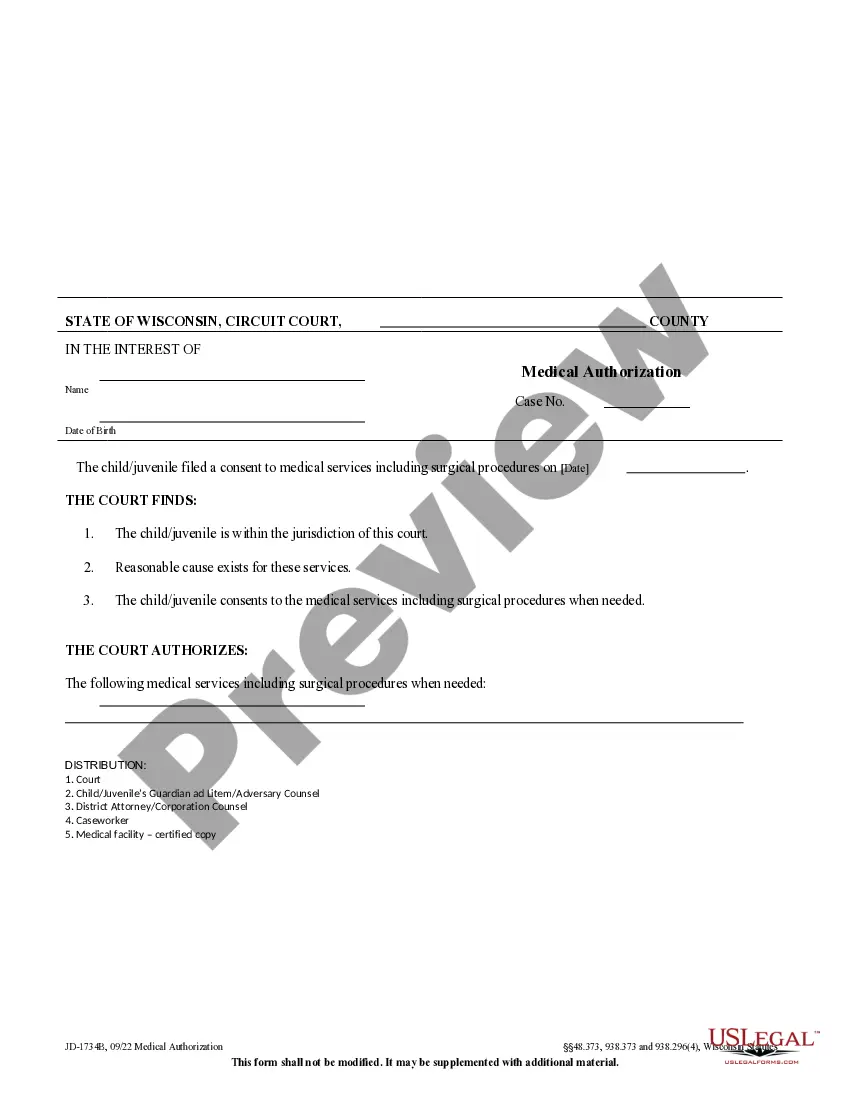
Gas Storage Lease
What this document covers
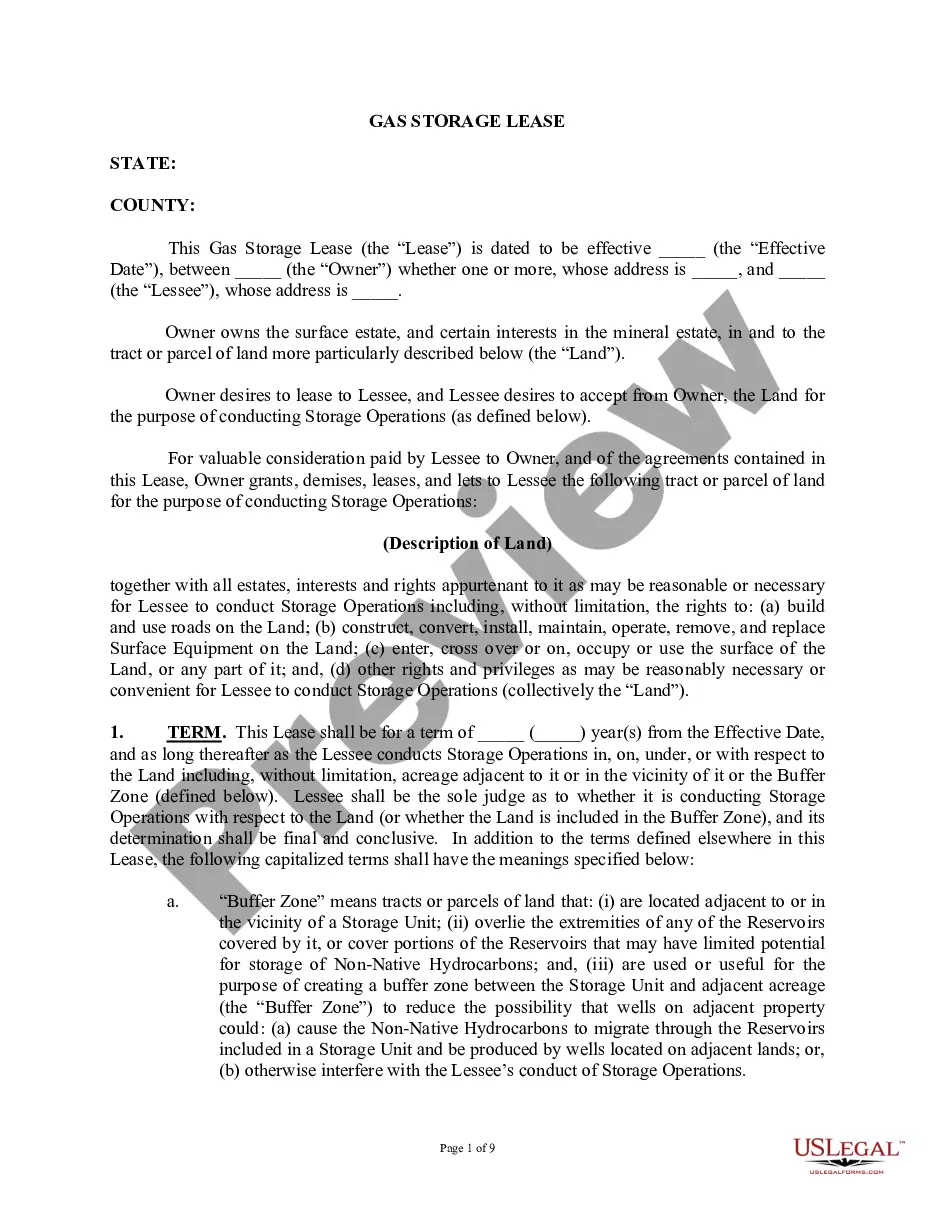
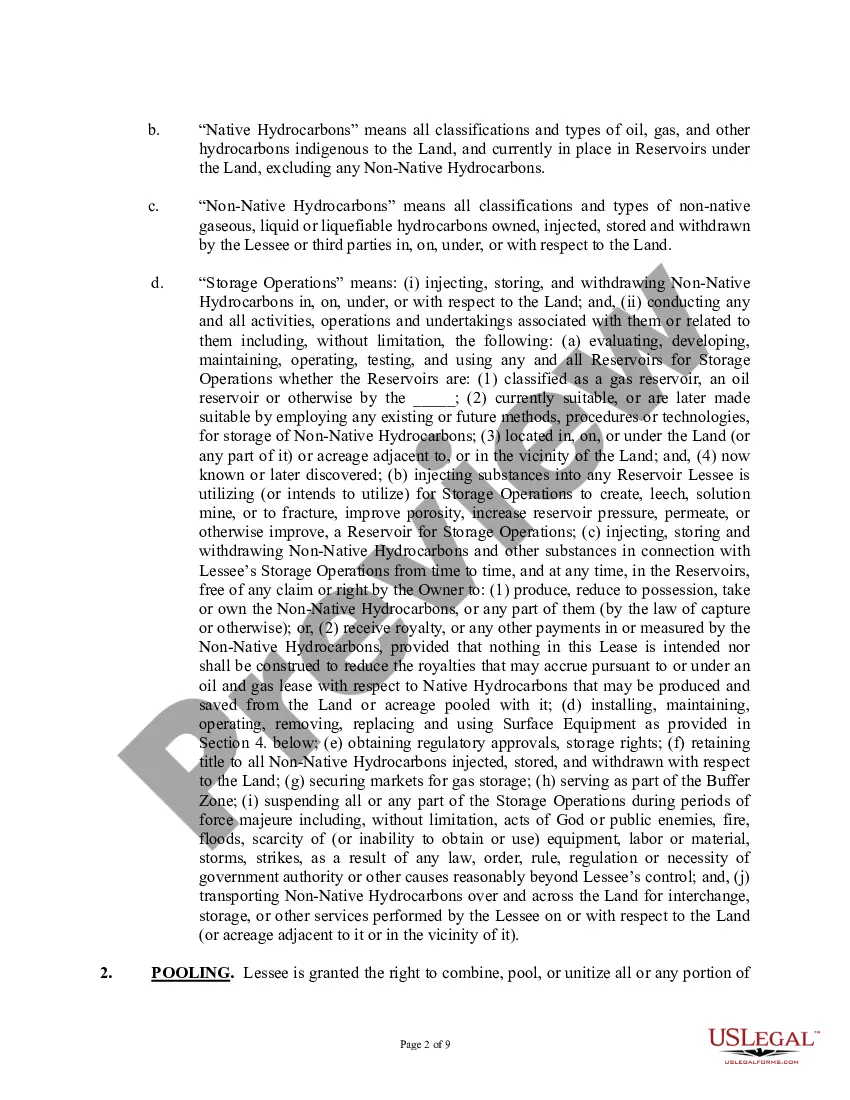
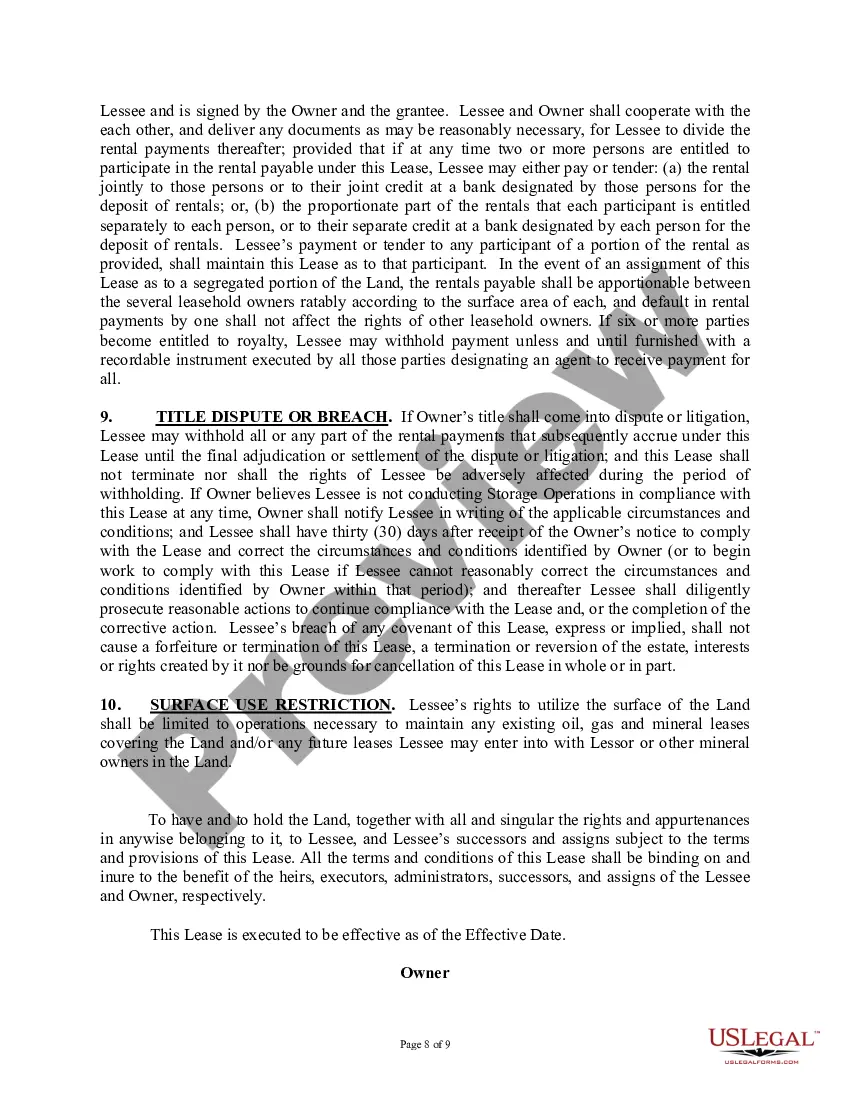
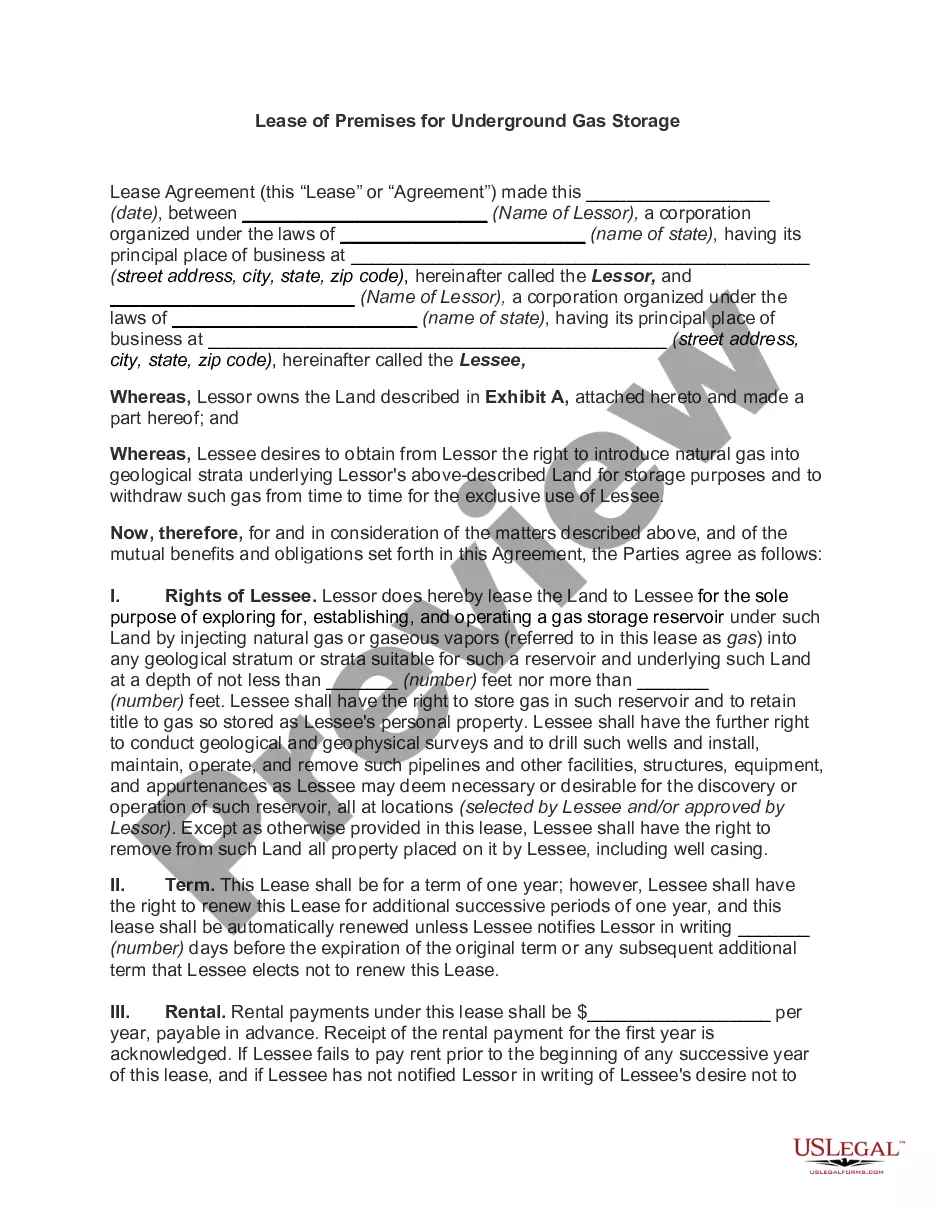
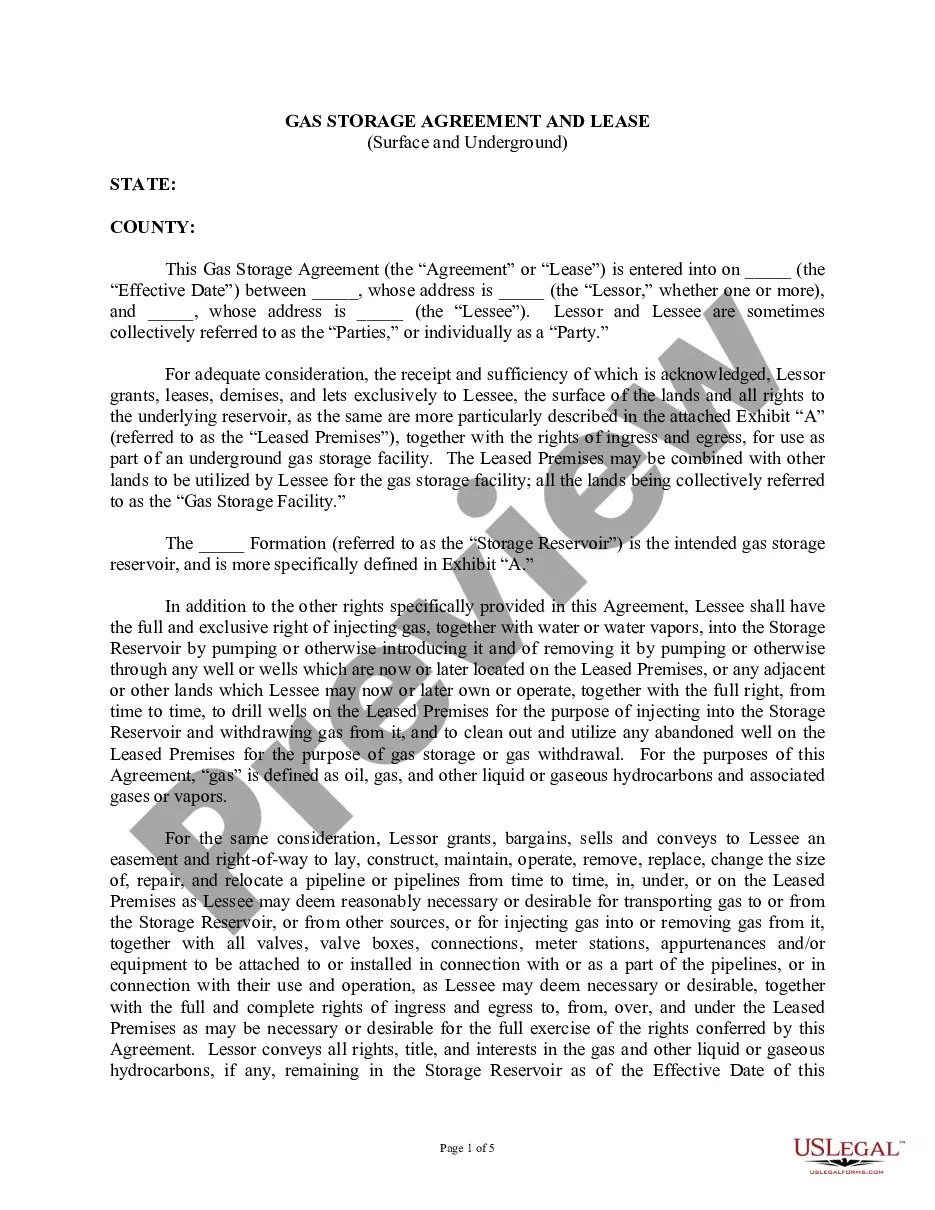
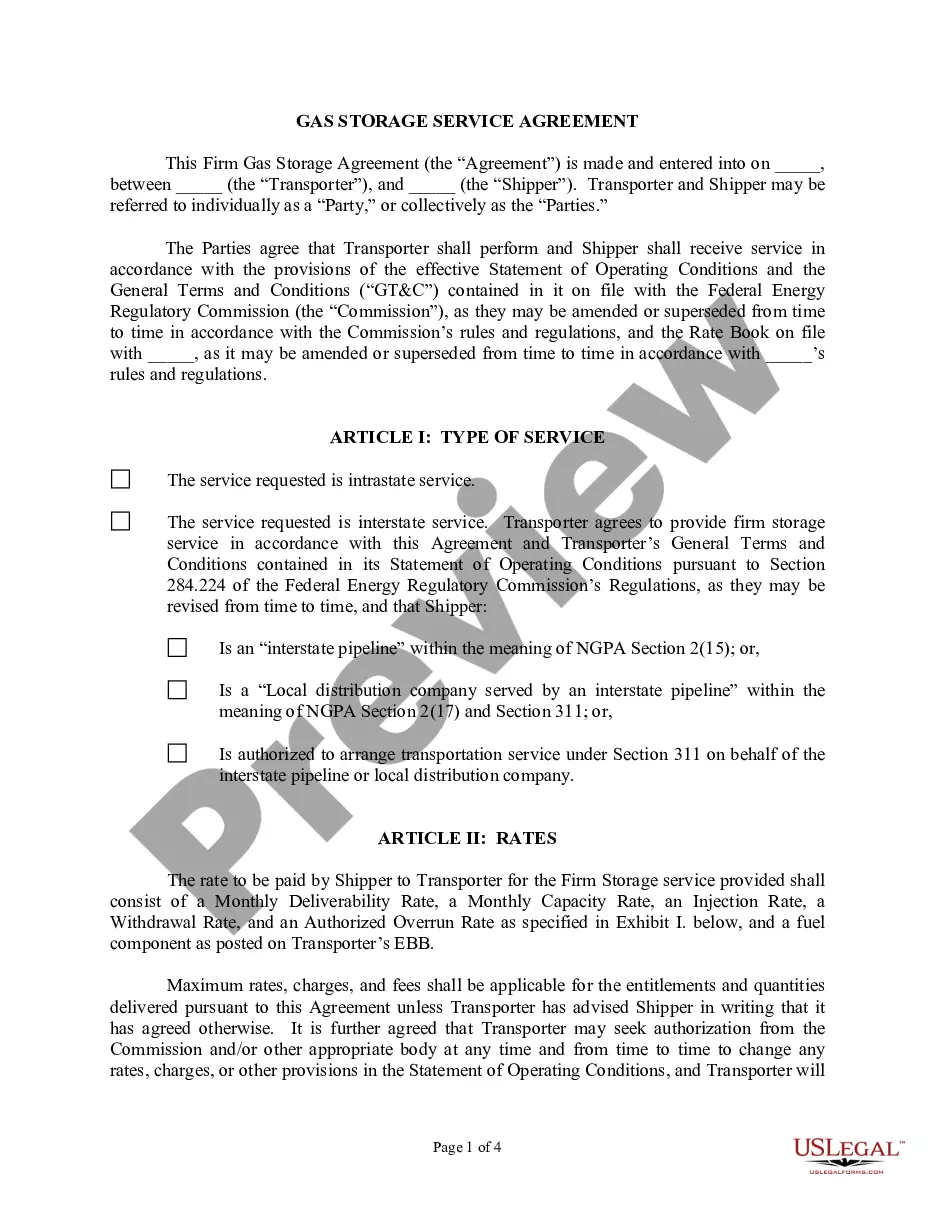
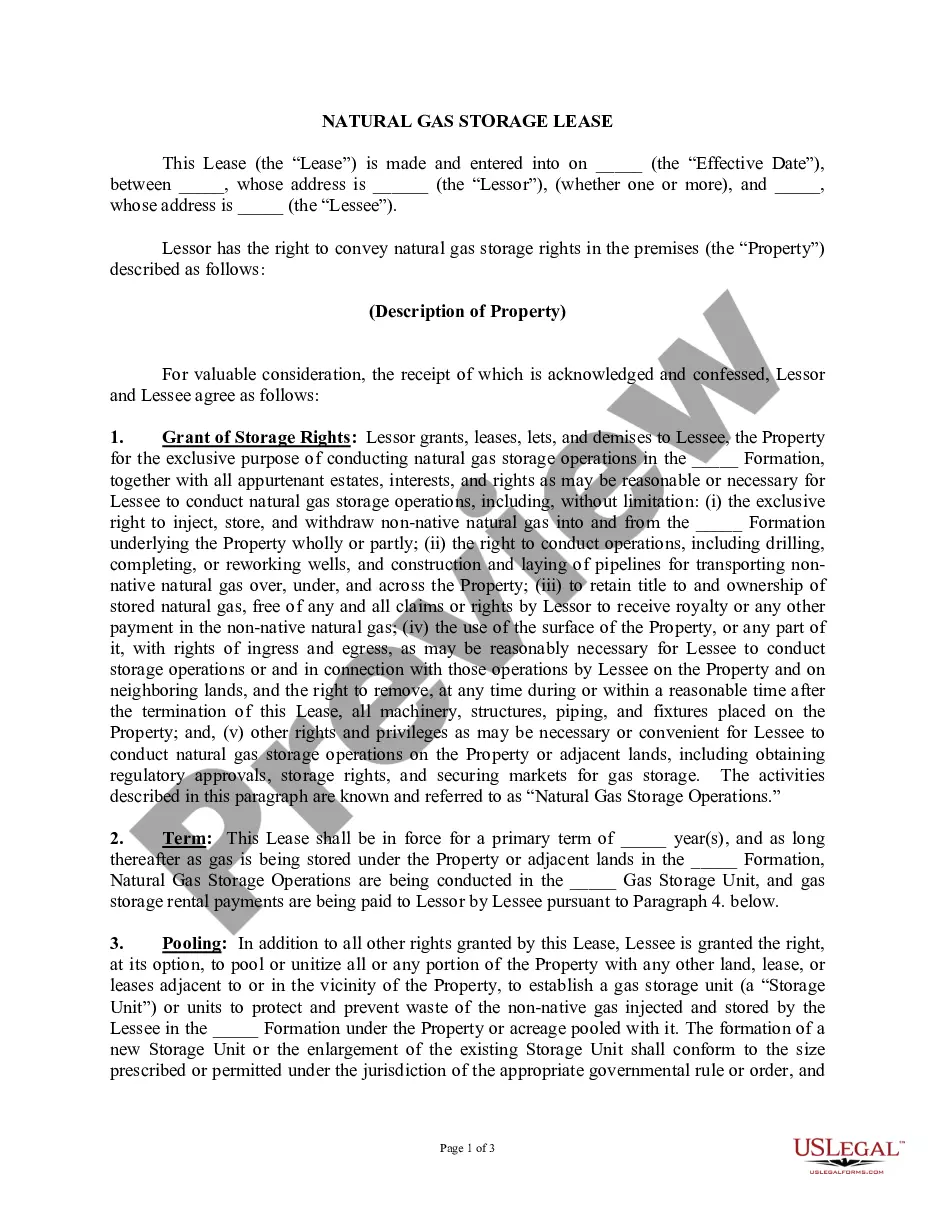
The Gas Storage Lease is a legal document that facilitates the leasing of land for the purpose of storing non-native hydrocarbons, such as natural gas. This form is distinct from traditional property leases as it focuses specifically on the storage and related operations of non-native hydrocarbons beneath the surface of the leased land. By using this form, both the owner and lessee outline their rights and responsibilities concerning storage operations, ensuring compliance with applicable laws and regulations.
Main sections of this form
- Parties involved: Identifies the Owner and Lessee, including their addresses.
- Term of the lease: Specifies the duration and conditions for continuation of the lease.
- Definition of Storage Operations: Outlines what constitutes storage operations, including rights to build infrastructure.
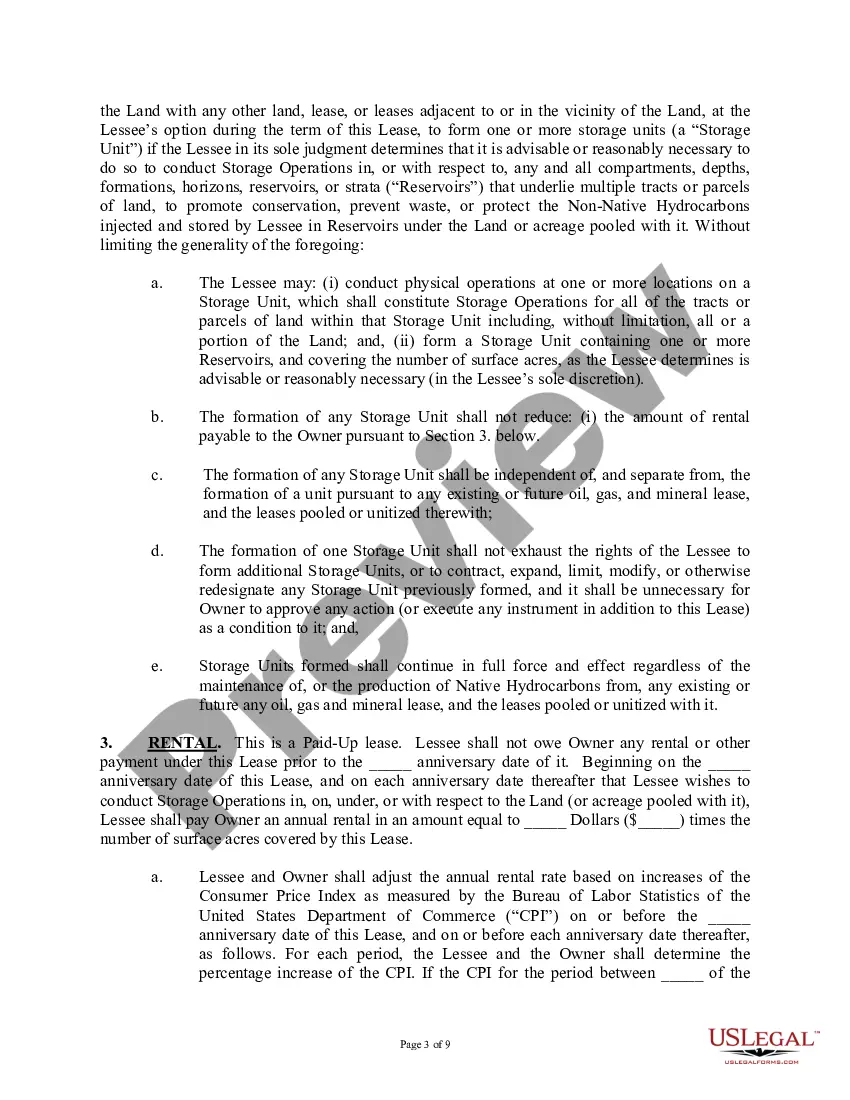
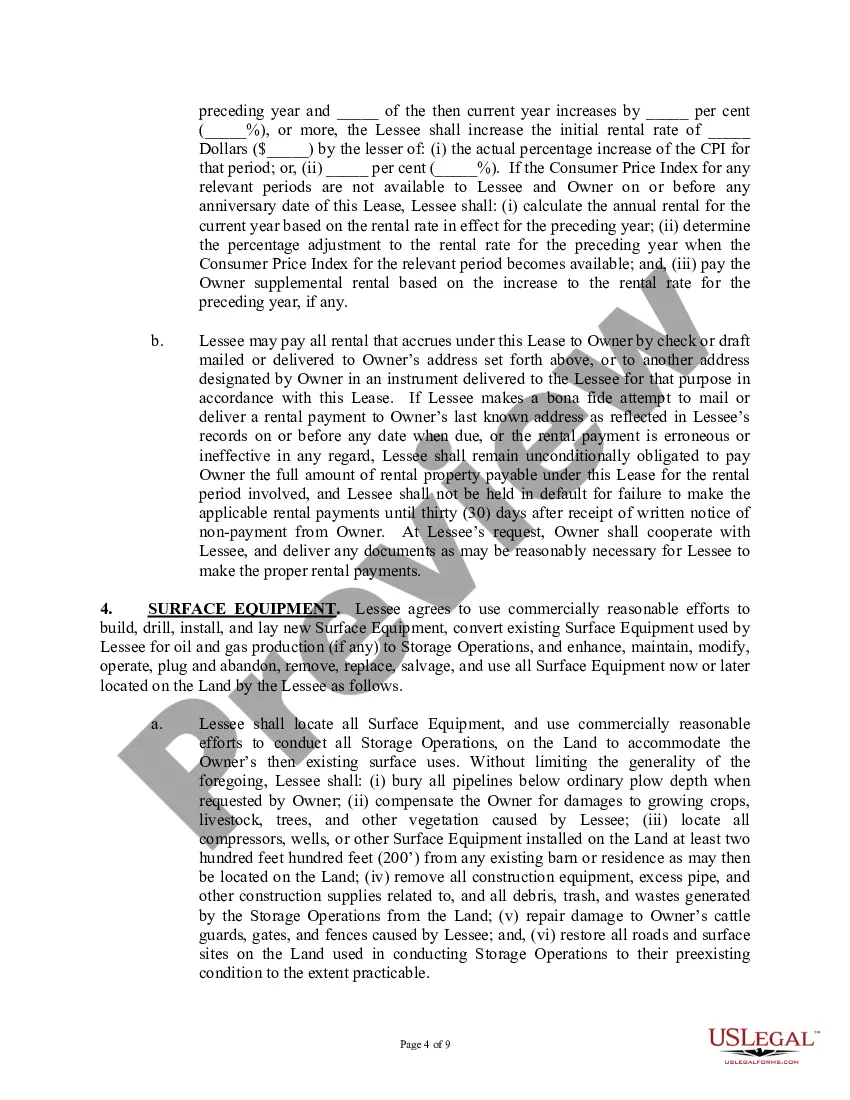
- Payment terms: Details the structure of rental payments and adjustments based on the Consumer Price Index.
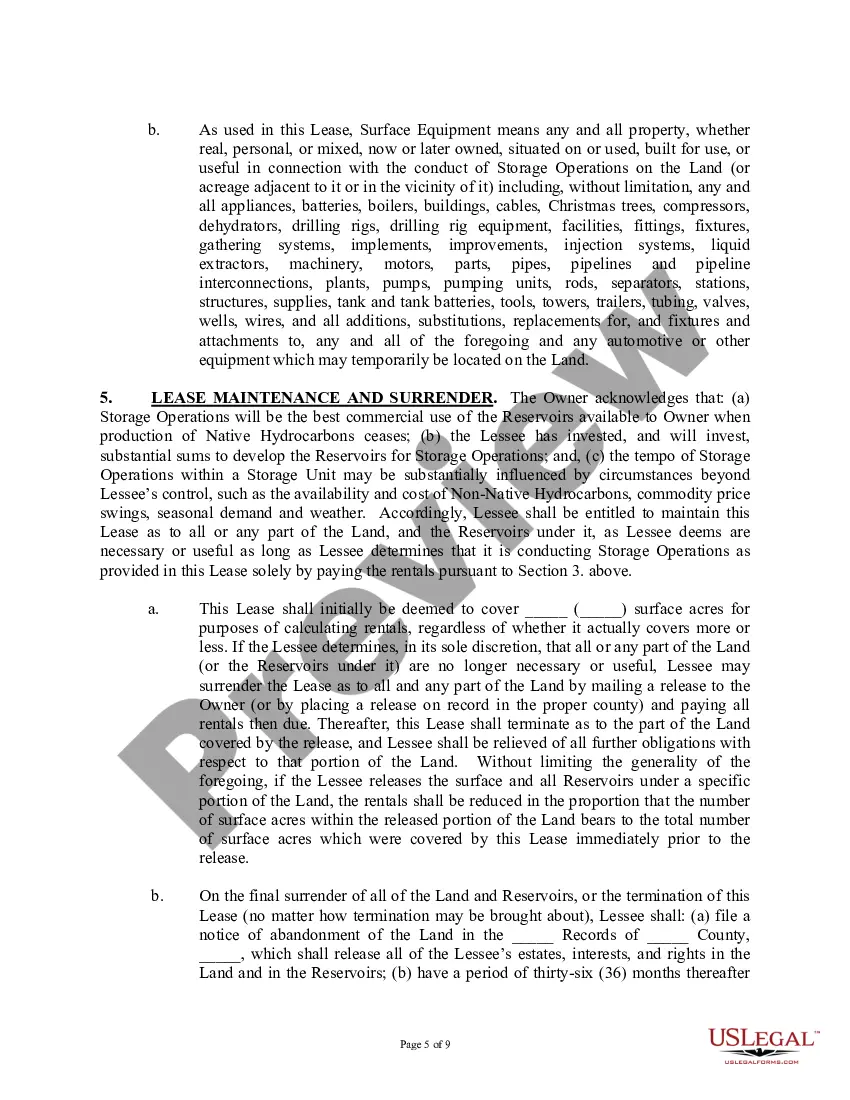
- Surface Equipment: Covers provisions regarding the installation and maintenance of the equipment necessary for storage operations.
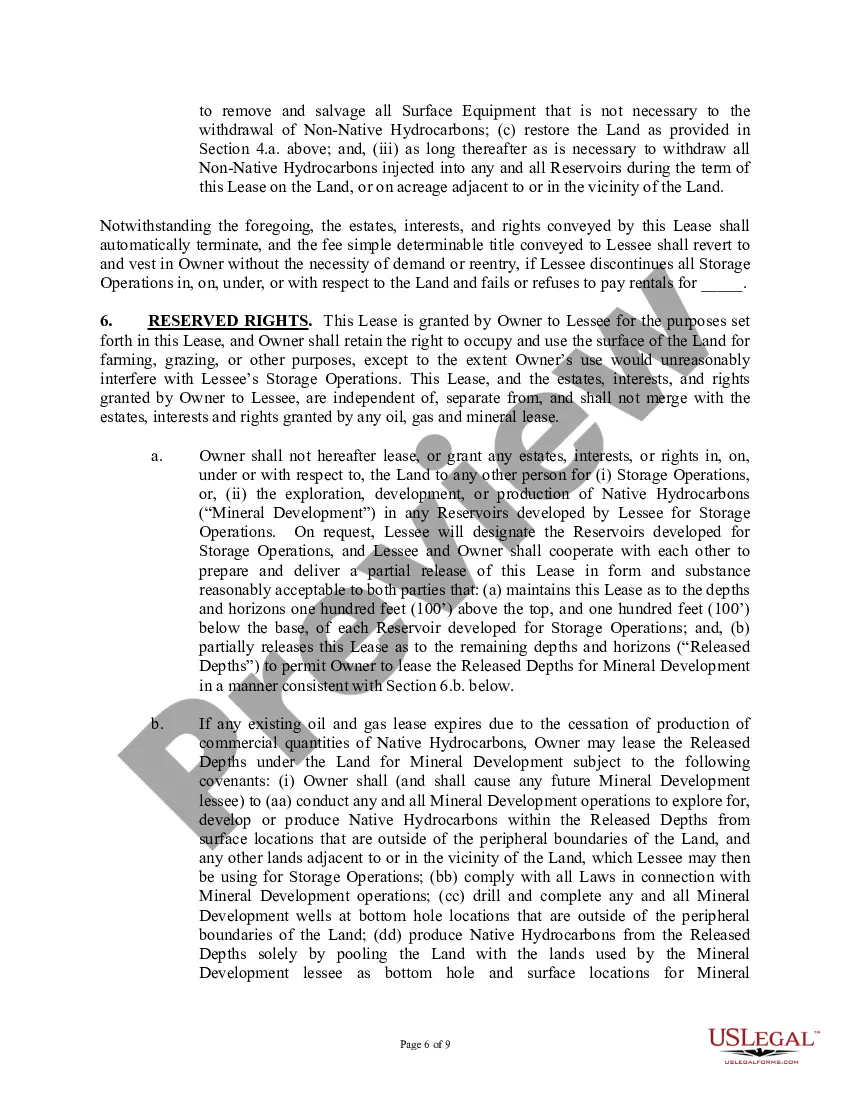
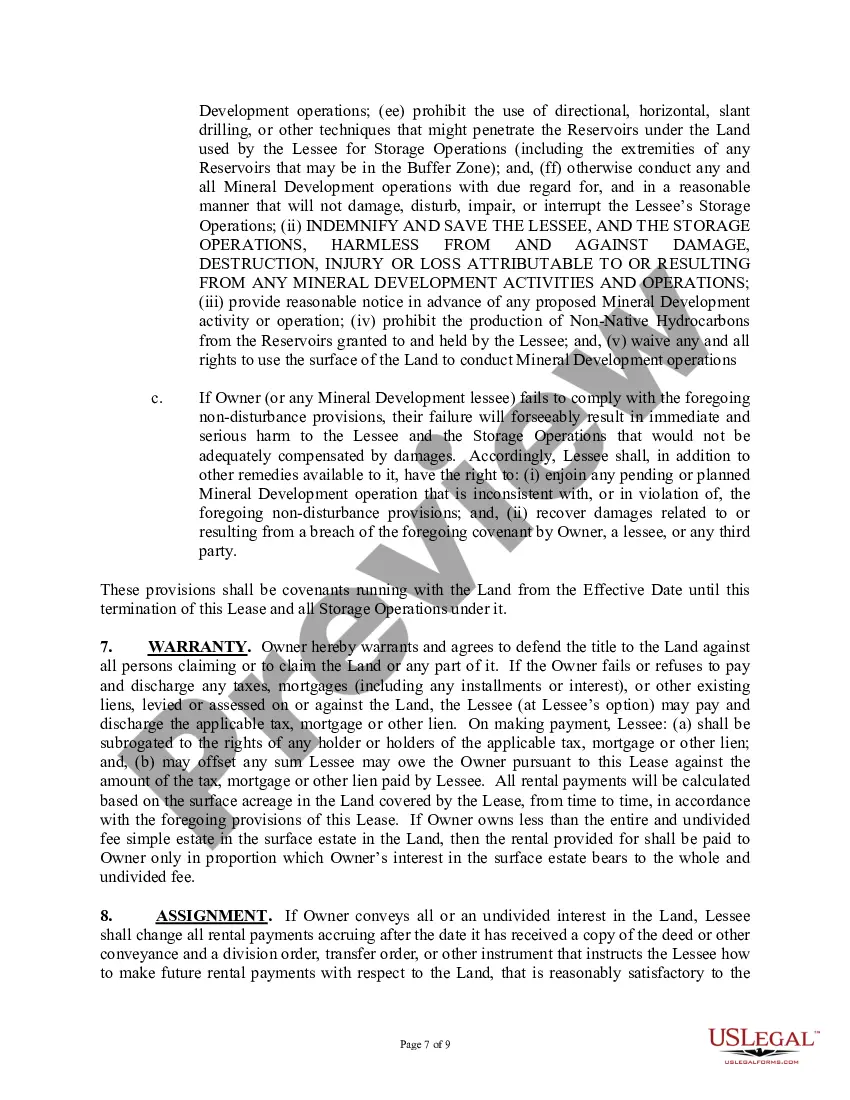
- Reserved Rights: Highlights the owner's rights to use the land for farming or grazing, while outlining limitations to prevent interference with storage operations.

When to use this document
This Gas Storage Lease form should be used when landowners wish to lease their property specifically for gas storage purposes. It is applicable in situations where the lessee requires access to the subsurface for eco-friendly energy storage, ensuring that both parties have a clear understanding of their obligations and rights throughout the lease term. Scenarios may include landowners who are approached by energy companies looking to secure land for gas storage operations or existing lessees looking to formalize their relationship regarding gas storage activities.
Who can use this document
- Landowners seeking to lease their land for gas storage purposes.
- Energy companies or lessees looking for formal agreements to conduct storage operations on leased land.
- Legal professionals assisting clients with gas storage-related agreements.
Completing this form step by step
- Identify the parties: Clearly indicate the names and addresses of the Owner and Lessee.
- Specify the property: Provide a detailed description of the land being leased.
- Enter the effective date: Fill in the date when the lease becomes effective.
- Outline the lease term: State the duration of the lease and any conditions for its renewal.
- Define rental terms: Include payment amount and any clauses related to percentage adjustments.
- Sign and date: Ensure that both parties sign and date the document to validate the lease.
Notarization requirements for this form
This form does not typically require notarization unless specified by local law. However, it is advisable to confirm local requirements to ensure the lease is fully enforceable.
Get your form ready online
Our built-in tools help you complete, sign, share, and store your documents in one place.
Make edits, fill in missing information, and update formatting in US Legal Forms—just like you would in MS Word.
Download a copy, print it, send it by email, or mail it via USPS—whatever works best for your next step.
Sign and collect signatures with our SignNow integration. Send to multiple recipients, set reminders, and more. Go Premium to unlock E-Sign.
If this form requires notarization, complete it online through a secure video call—no need to meet a notary in person or wait for an appointment.
We protect your documents and personal data by following strict security and privacy standards.

Make edits, fill in missing information, and update formatting in US Legal Forms—just like you would in MS Word.

Download a copy, print it, send it by email, or mail it via USPS—whatever works best for your next step.

Sign and collect signatures with our SignNow integration. Send to multiple recipients, set reminders, and more. Go Premium to unlock E-Sign.

If this form requires notarization, complete it online through a secure video call—no need to meet a notary in person or wait for an appointment.

We protect your documents and personal data by following strict security and privacy standards.
Avoid these common issues
- Failing to clearly define the boundaries of the leased land.
- Ineffectively outlining the rights to use the surface of the land.
- Neglecting to specify the rental payment amounts or adjustment methods.
- Not having both parties sign the lease or incorrect dating.
Why use this form online
- Convenient and quick access to legal forms without the need for in-person visits.
- Editability allows users to customize the lease terms as needed.
- Reliable access to forms drafted by licensed attorneys ensures compliance with legal standards.
What to keep in mind
- The Gas Storage Lease is essential for legally formalizing agreements regarding gas storage on leased land.
- Both parties should clearly understand their rights and responsibilities outlined in the lease.
- Completing the form correctly ensures compliance and protects both parties' interests.
Looking for another form?
Form popularity
FAQ
Natural gas is usually stored underground, in large storage reservoirs. There are three main types of underground storage: depleted gas reservoirs, aquifers, and salt caverns. In addition to underground storage, however, natural gas can be stored as liquefied natural gas (LNG).
In this case, natural gas is stored in fabricated tanks above ground. These tanks allow for easy access and complete control of extraction. However, while the costs for above-ground storage options are typically less than underground, tanks can store only a fraction of the natural gas that underground caverns can.
Natural gas can be transported on land via pipeline or on water via ship. Most of the world's natural gas is delivered by pipeline. Large networks of pipelines quickly deliver natural gas on land to major processing facilities and end consumers 2.
It is most commonly held in inventory underground under pressure in three types of facilities. These underground facilities are depleted reservoirs in oil and/or natural gas fields, aquifers, and salt cavern formations. Natural gas is also stored in liquid or gaseous form in aboveground tanks.
The Natural Gas Storage Indicator is an estimate of working gas in storage at both the national and regional levels, as reported by the U.S. Energy Information Administration (EIA). The EIA Weekly Natural Gas Storage Report is released at a.m. EST on Thursday every week.
: a deed by which a landowner authorizes exploration for and production of oil and gas on his land usually in consideration of a royalty.
Oil and gas leases in one document, although in Alberta, the Crown has; or will have, a form of gas lease that grants rights to natural gas in specified gas producing zones. The lease granting both oil and gas has been a characteristic of the industry for fifty years.
To keep natural gas a liquid, it requires a room temperature and maintains a pressure of about 32,000 kPa. Household metal tanks cannot resist this pressure.
Natural gas can be stored as an uncompressed gas, as compressed natural gas or CNG, or as liquefied natural gas or LNG. It's usually compressed before it's stored or transported, and CNG is sometimes stored in tanks instead of pipes.