Mississippi Motion for Summary Judgment
About this form
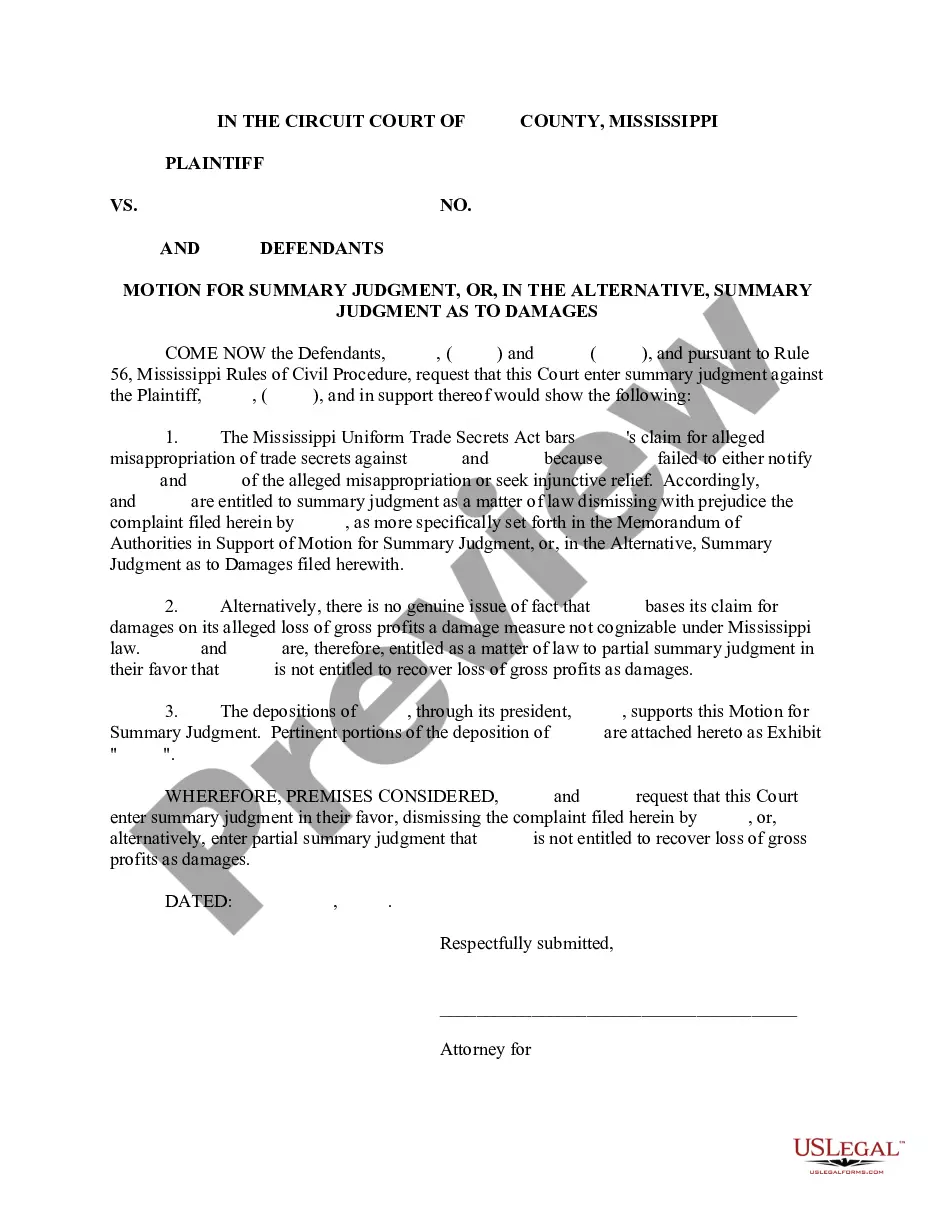
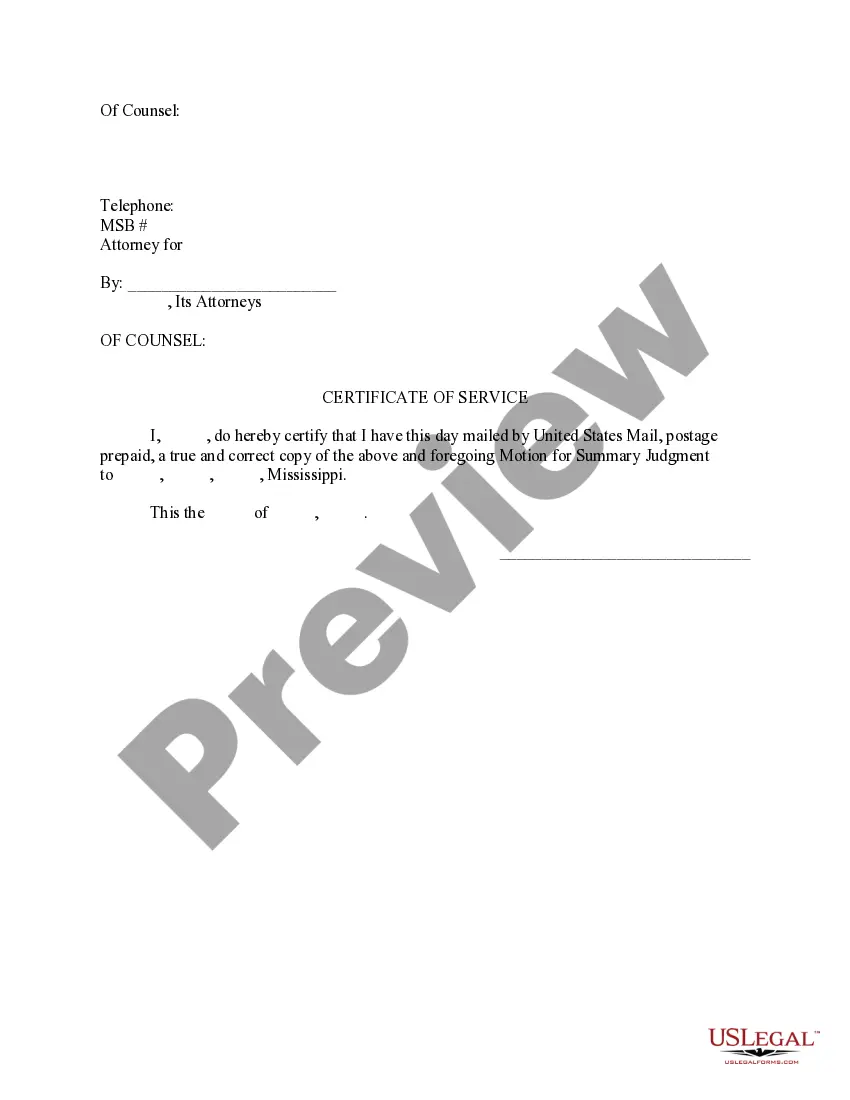
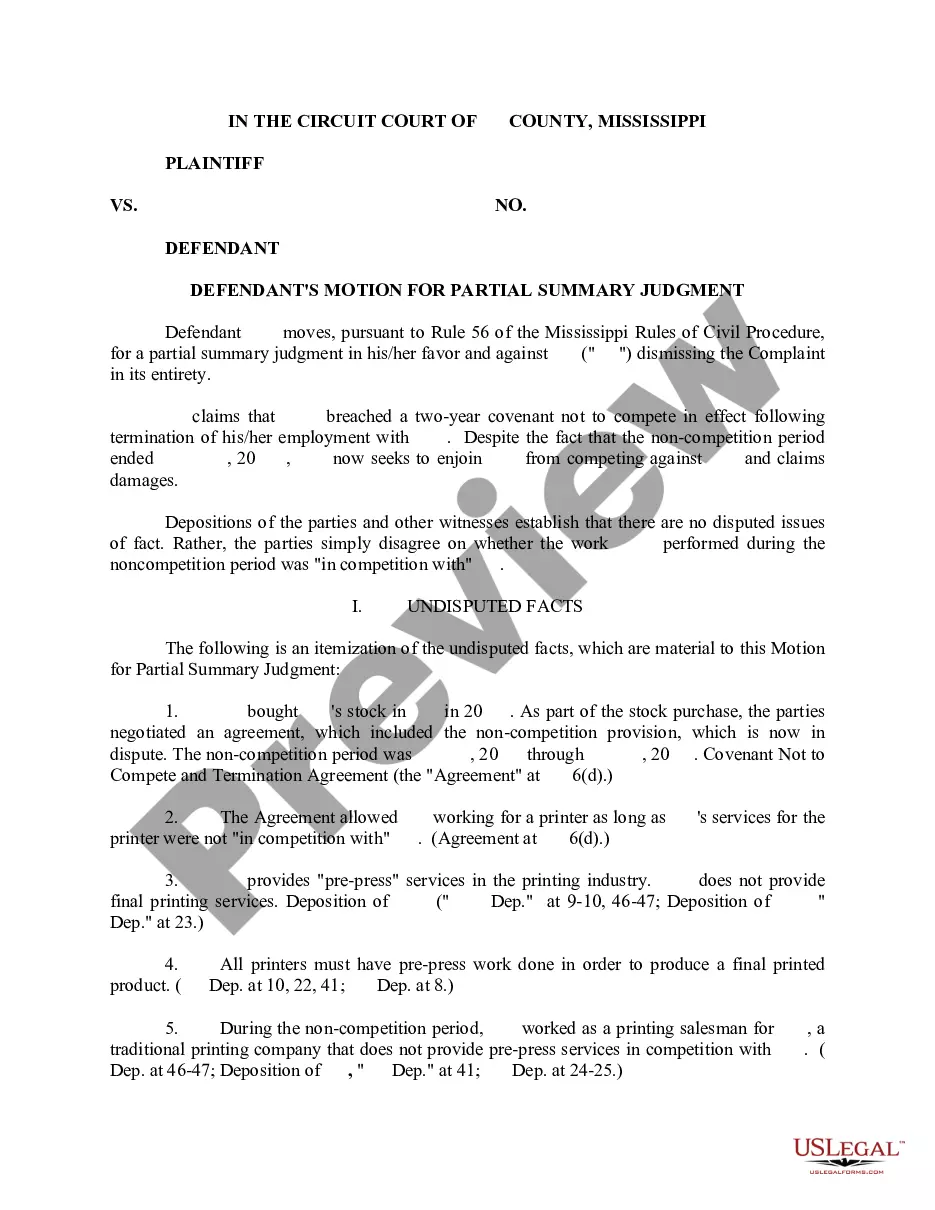
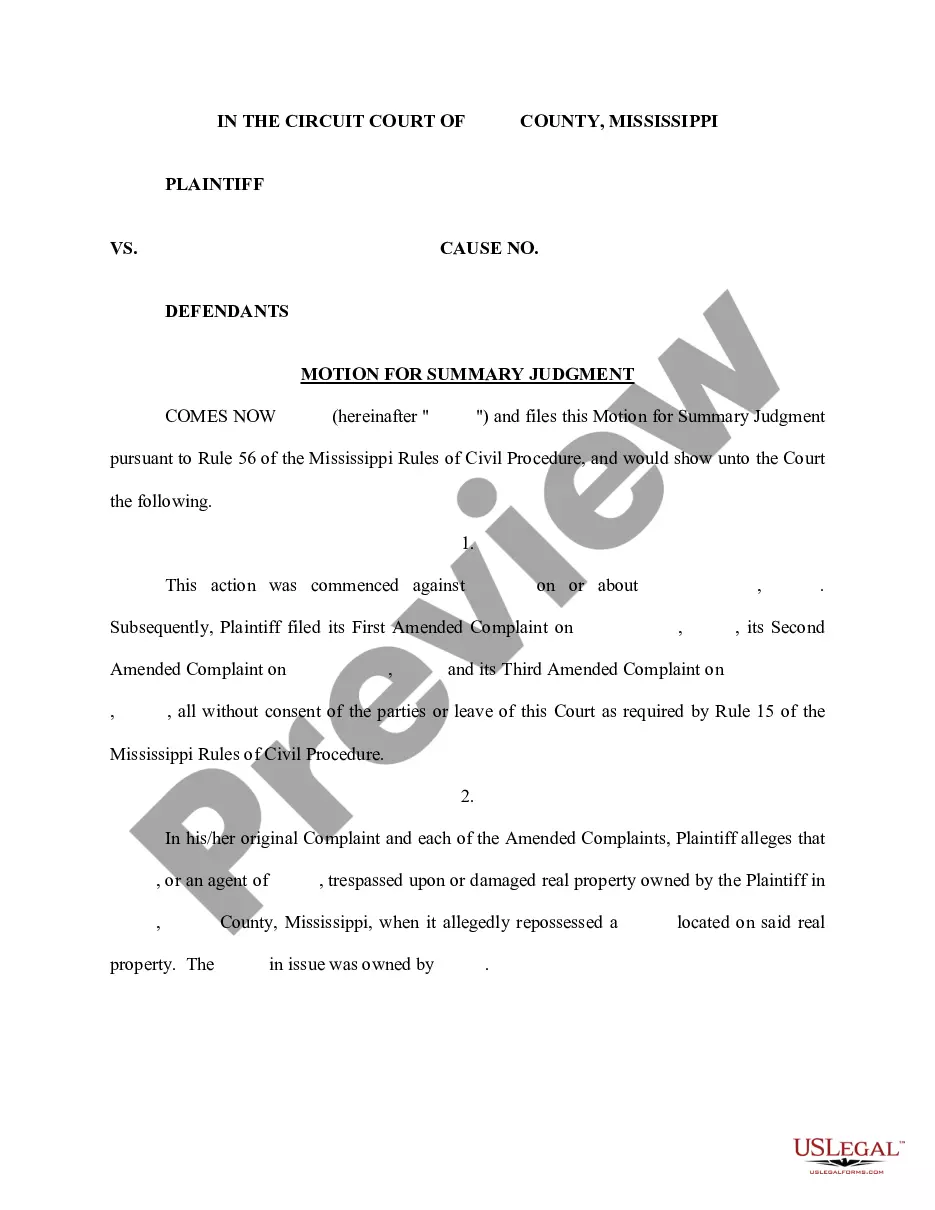
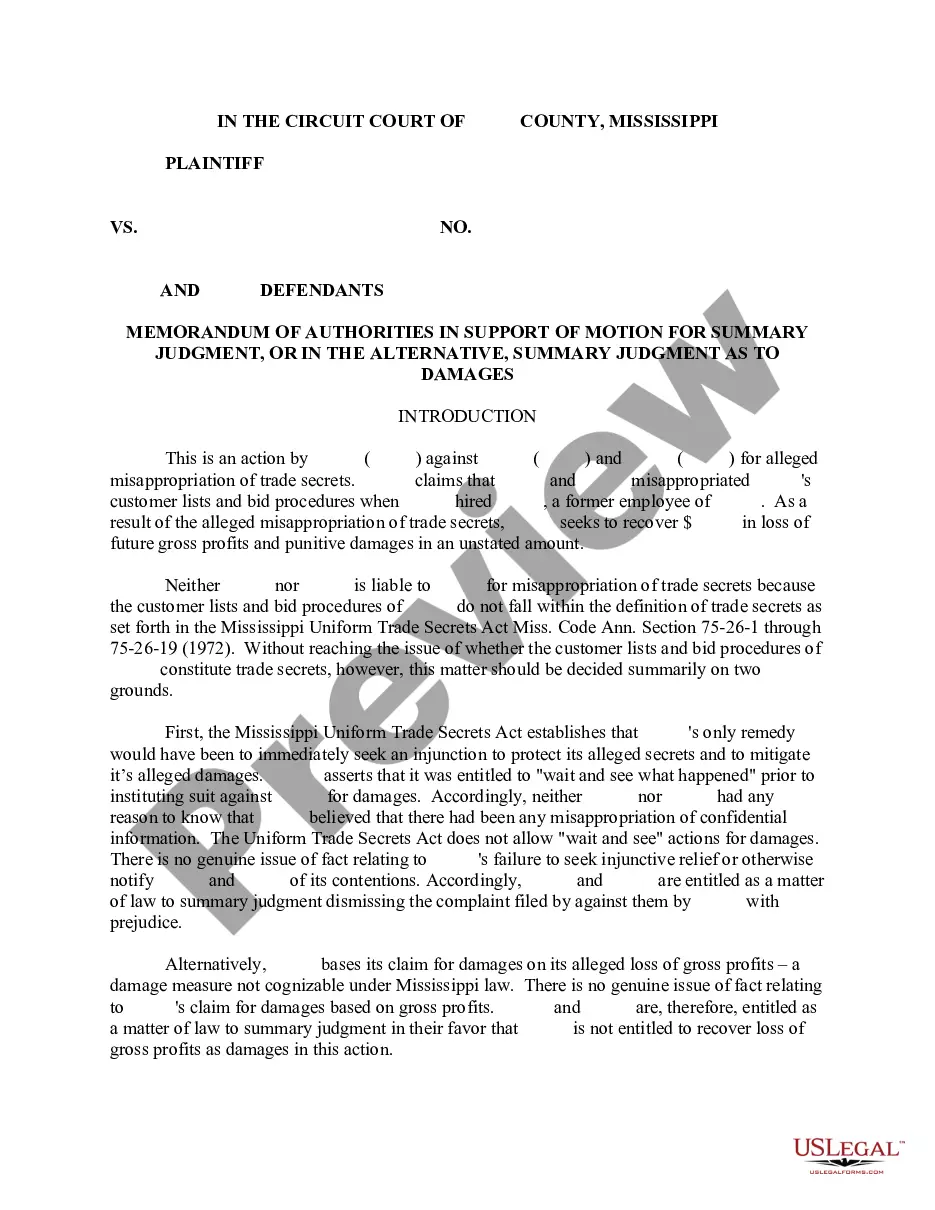
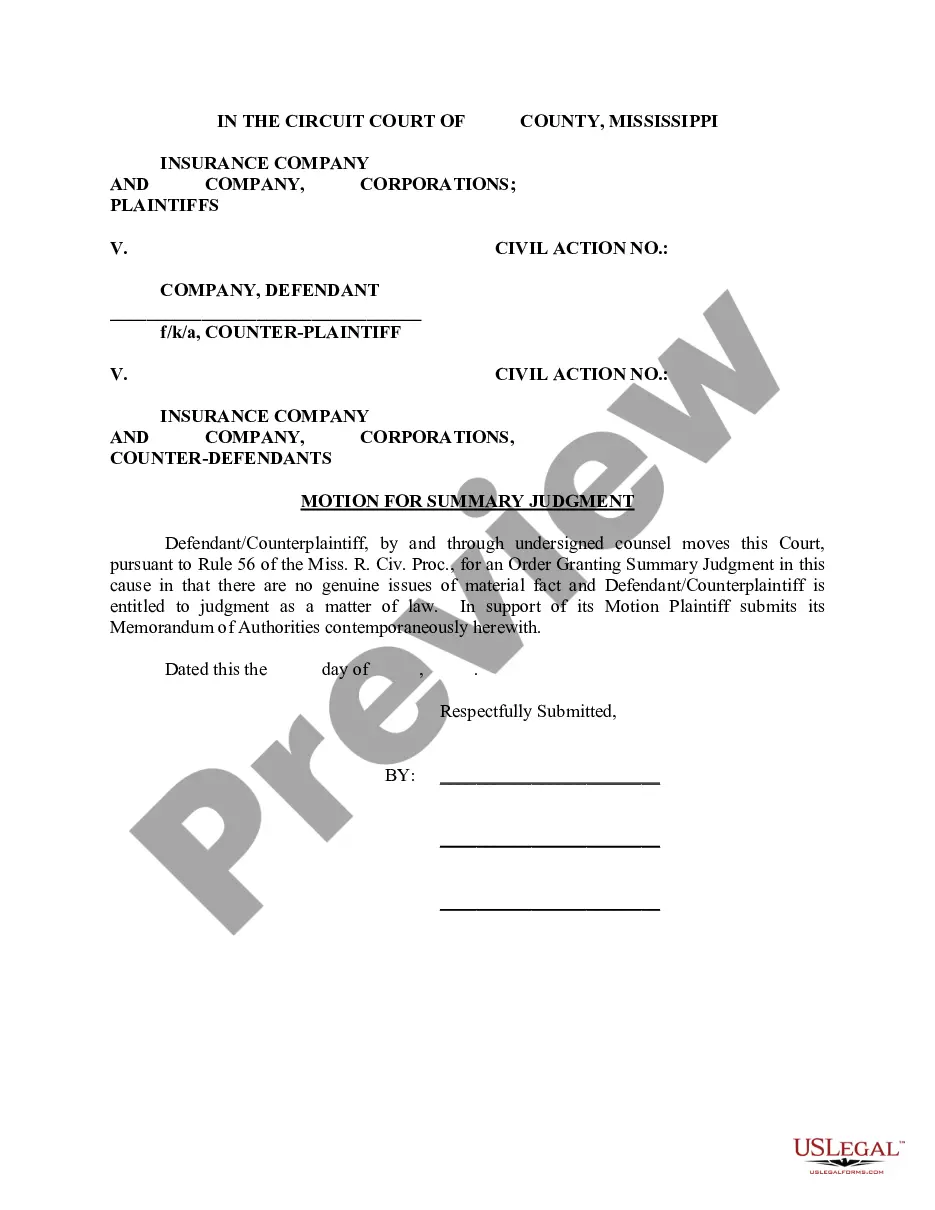
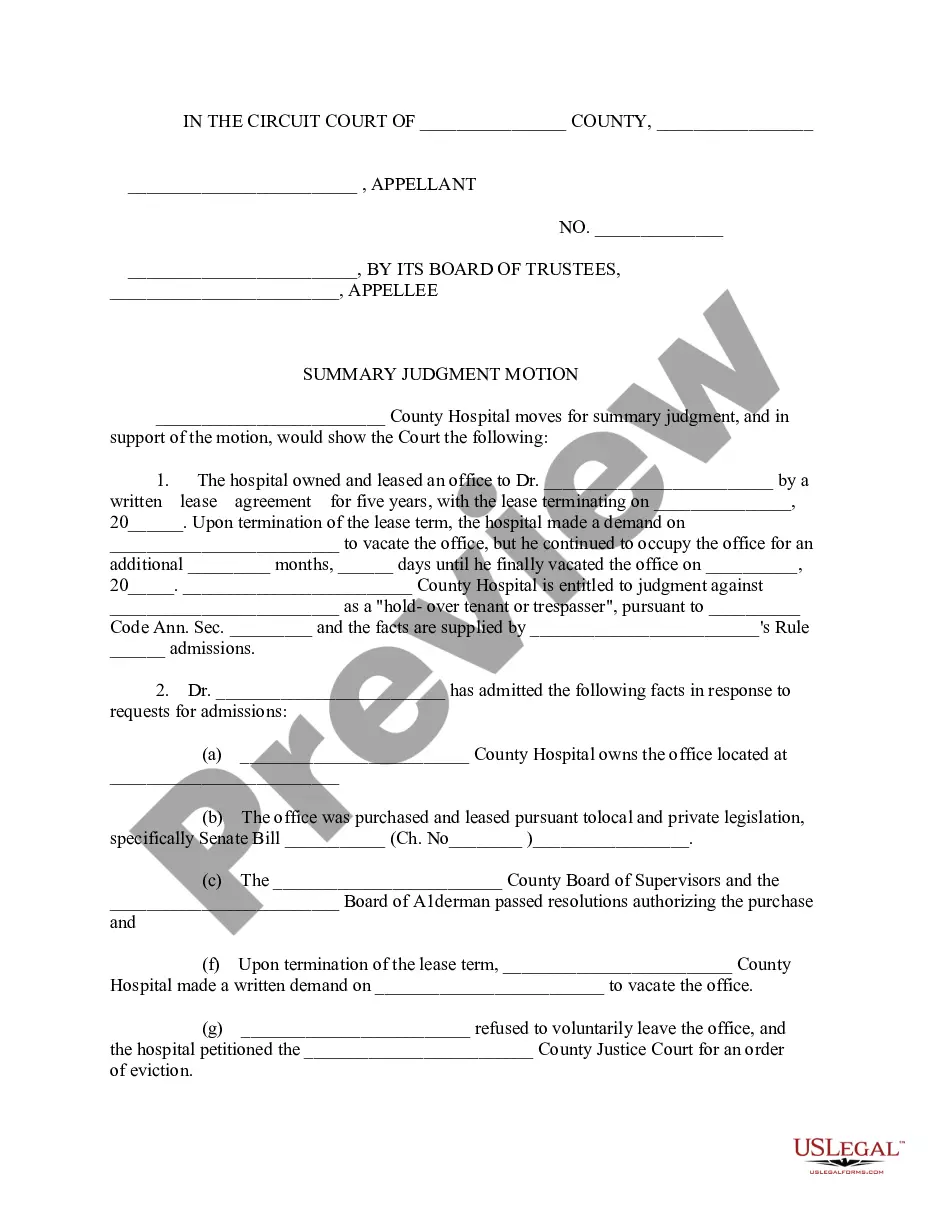
The Motion for Summary Judgment is a legal document that requests the court to rule in favor of one party without a full trial. This form is essential for parties seeking a quicker resolution where there are no genuine disputes of material fact. Unlike other motions, this request relies heavily on supporting evidence and documentation to prove that the requesting party is entitled to judgment as a matter of law.
Key components of this form
- Caption: Identifies the court and parties involved in the case.
- Statement of Facts: Summarizes the relevant facts undisputed by both parties.
- Legal Standards: Outlines the legal basis for granting the motion.
- Argument: Provides detailed reasoning and evidence supporting the claim for summary judgment.
- Conclusion: Requests the court to grant the motion as specified.
When this form is needed
This motion is typically used when a party believes there is no real disagreement on the key facts of the case. For example, it is appropriate to file a Motion for Summary Judgment in cases involving contract disputes where the terms are clear, or in personal injury cases where liability is uncontested.
Who this form is for
- Individuals or businesses involved in legal disputes where facts are undisputed.
- Attorneys seeking to expedite the resolution of a case for their clients.
- Parties aiming to avoid the time and expense of a trial.
How to prepare this document
- Identify the parties involved and their roles in the case.
- State the facts that are not in dispute clearly and concisely.
- List the legal standards that support your request for summary judgment.
- Present your arguments backed by evidence such as affidavits and documents.
- Conclude with a clear statement articulating what you want the court to do.
Does this document require notarization?
This form does not typically require notarization unless specified by local law. However, be sure to check jurisdiction-specific regulations to ensure compliance.
Get your form ready online
Our built-in tools help you complete, sign, share, and store your documents in one place.
Make edits, fill in missing information, and update formatting in US Legal Forms—just like you would in MS Word.
Download a copy, print it, send it by email, or mail it via USPS—whatever works best for your next step.
Sign and collect signatures with our SignNow integration. Send to multiple recipients, set reminders, and more. Go Premium to unlock E-Sign.
If this form requires notarization, complete it online through a secure video call—no need to meet a notary in person or wait for an appointment.
We protect your documents and personal data by following strict security and privacy standards.

Make edits, fill in missing information, and update formatting in US Legal Forms—just like you would in MS Word.

Download a copy, print it, send it by email, or mail it via USPS—whatever works best for your next step.

Sign and collect signatures with our SignNow integration. Send to multiple recipients, set reminders, and more. Go Premium to unlock E-Sign.

If this form requires notarization, complete it online through a secure video call—no need to meet a notary in person or wait for an appointment.

We protect your documents and personal data by following strict security and privacy standards.
Mistakes to watch out for
- Failing to provide sufficient evidence to support the motion.
- Misstating the facts or legal standards applicable to the case.
- Neglecting to follow specific formatting rules required by the court.
Why complete this form online
- Immediate access to a professional, attorney-drafted template.
- Editable format allows for customization to fit your specific situation.
- Efficient process with easy download and printing options.
Legal use & context
- The Motion for Summary Judgment is recognized and enforceable under U.S. law.
- It is commonly applied in civil litigation to expedite legal processes.
- This motion can be contested by the opposing party, requiring careful preparation.
Summary of main points
- The Motion for Summary Judgment expedites court proceedings when facts are clear.
- Accurate evidence and legal standards are critical to success.
- Ensure compliance with state-specific requirements for best results.
Looking for another form?

Form popularity
FAQ
Motions filed, the percent of cases with motions granted in whole or in part, and the percent of cases terminated by summary judgment. The percentage of cases with summary judgment motions, averaged across the six courts in the study, has increased from approximately 12% in 1975, to 17% in 1985, to 19% in 1988.
A motion for summary judgment filed by an opposing party claims that you cannot prevail in the case because there is no legal dispute or your claim is without merit or a defense. Failure to respond to a motion for summary judgment can result in your case being dismissed or a judgment being rendered against you.
Decision on motions for summary judgment: About 15 months after beginning of representation. The judge will make a decision on summary judgment about three months after s/he hears arguments from both sides.
If the motion is granted, the judgment on the issue or case is deemed to be a final judgment from which a party may seek an appeal. The court of appeal can reverse the grant of summary judgment and reinstate the claim in the lower court. However, this is rarely done and most summary judgments are upheld on appeal.