Mississippi Motion for Summary Judgment
Understanding this form
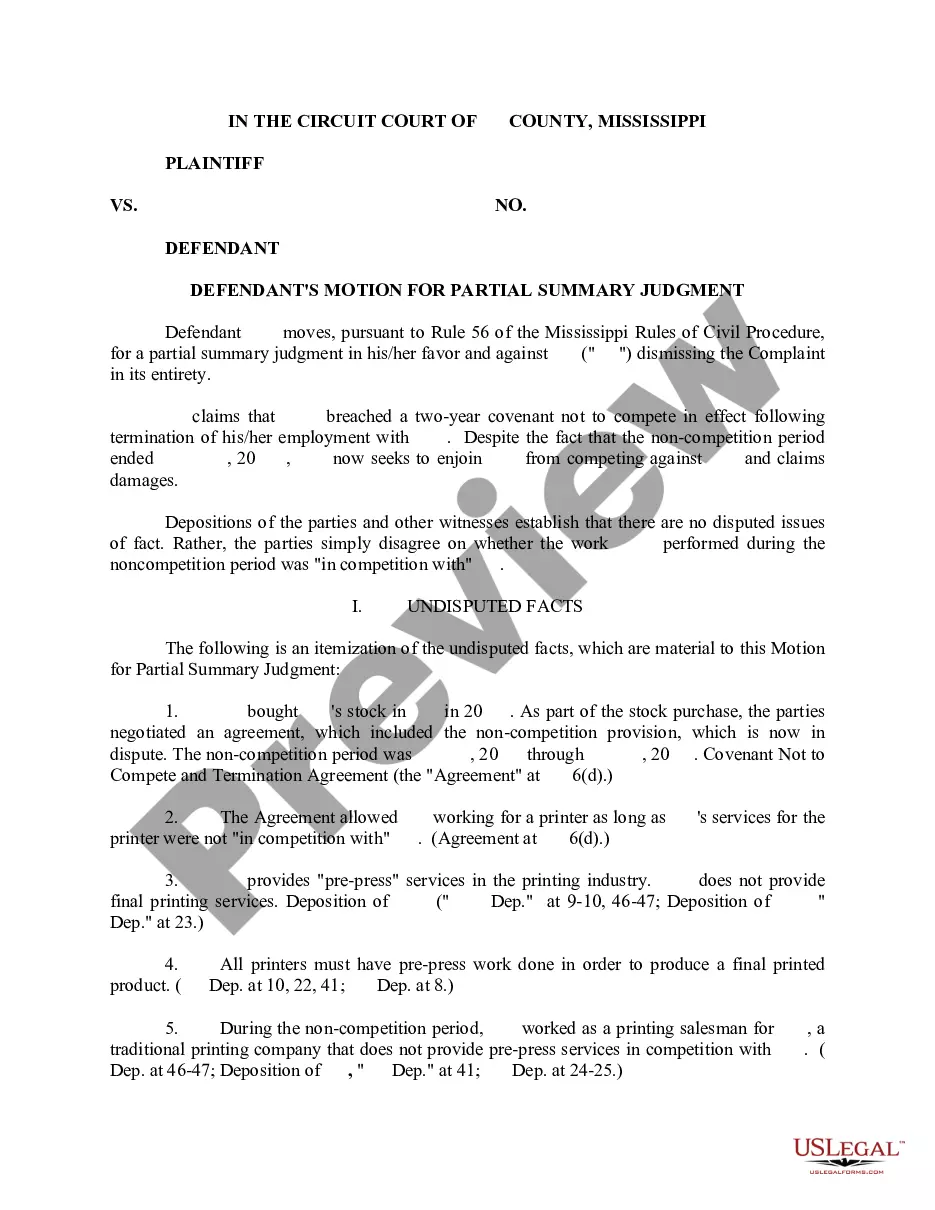
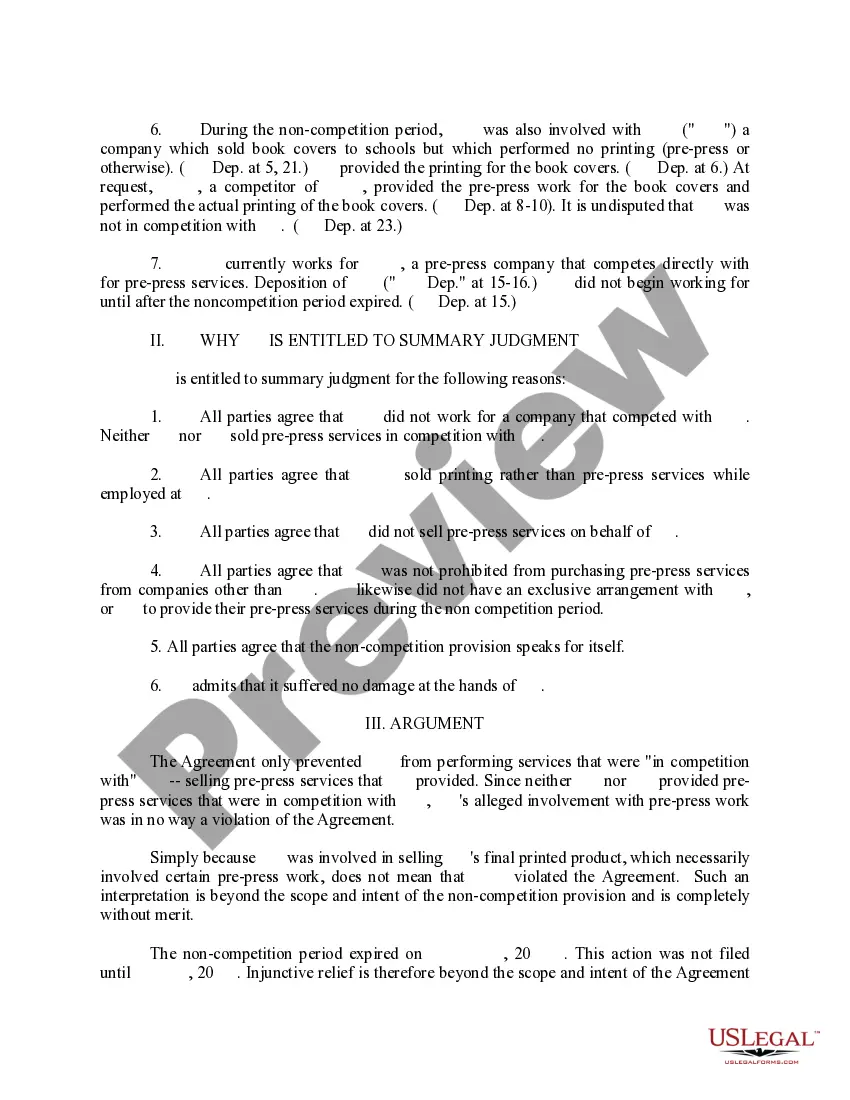
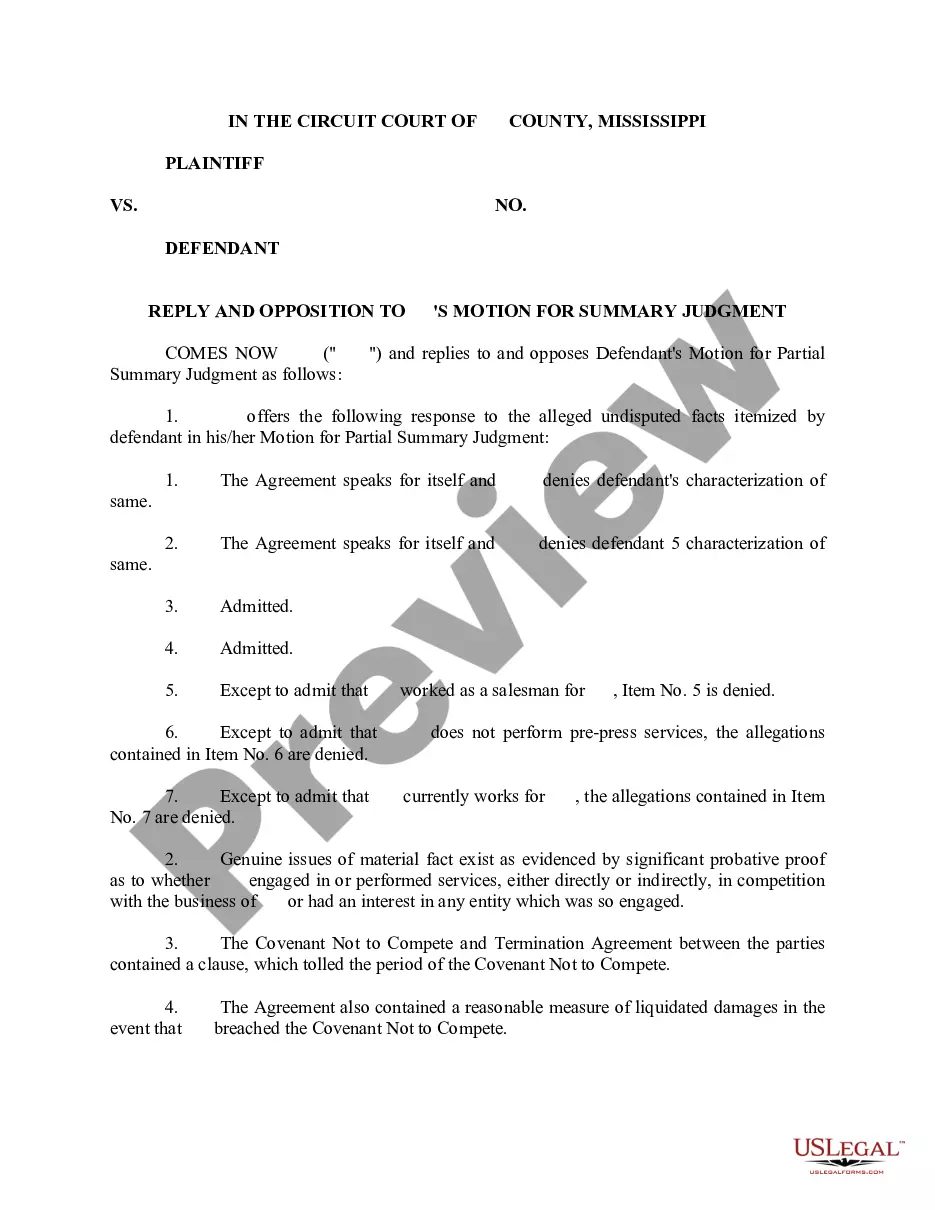
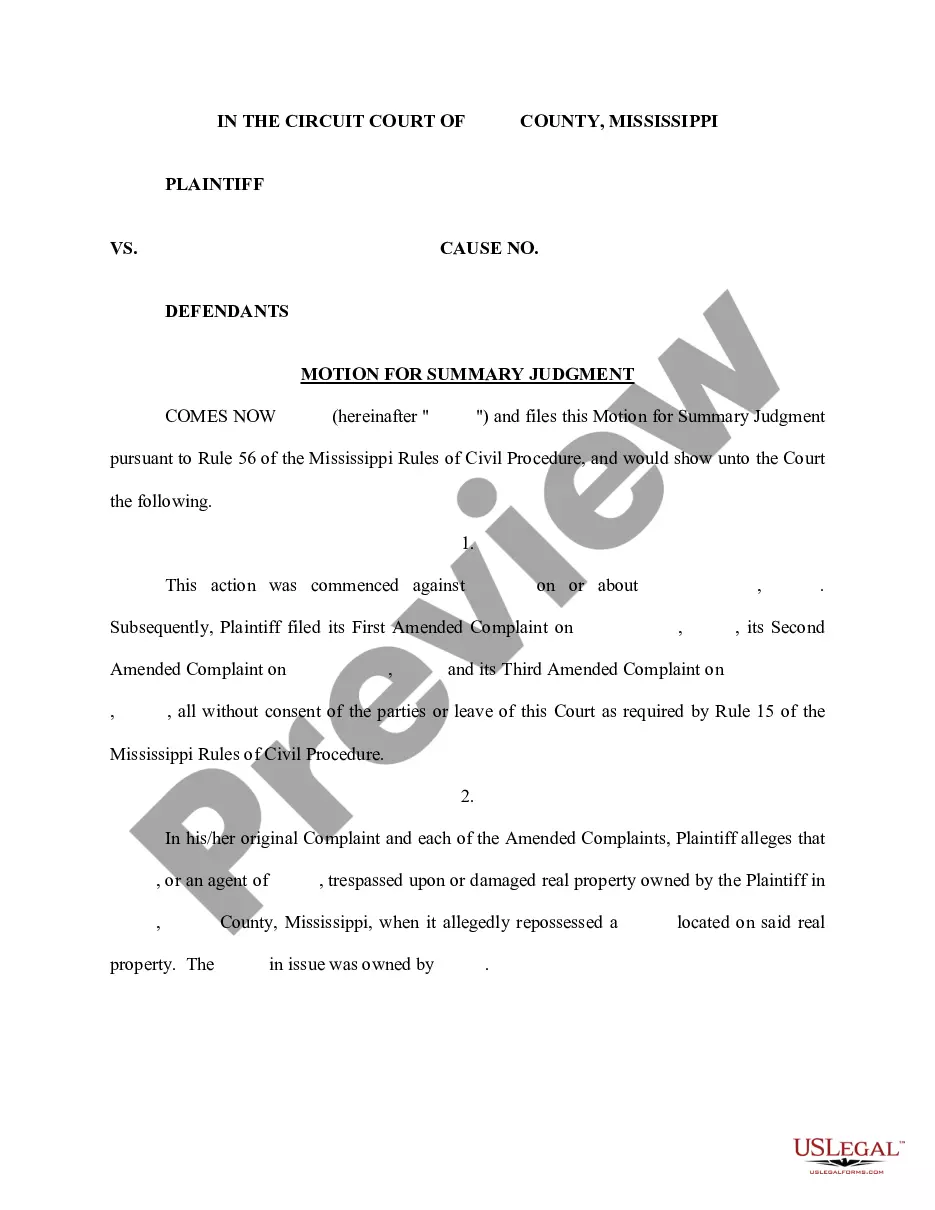
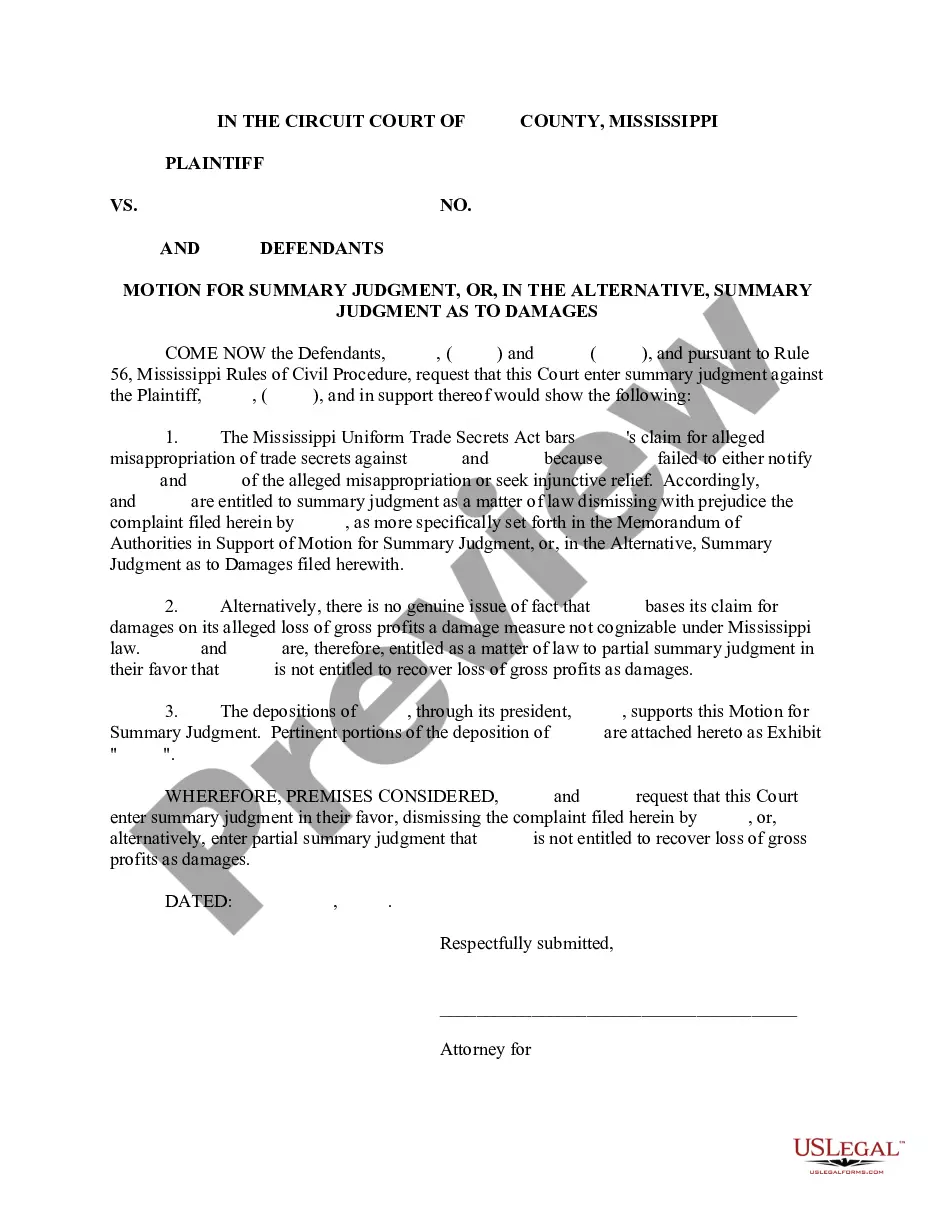
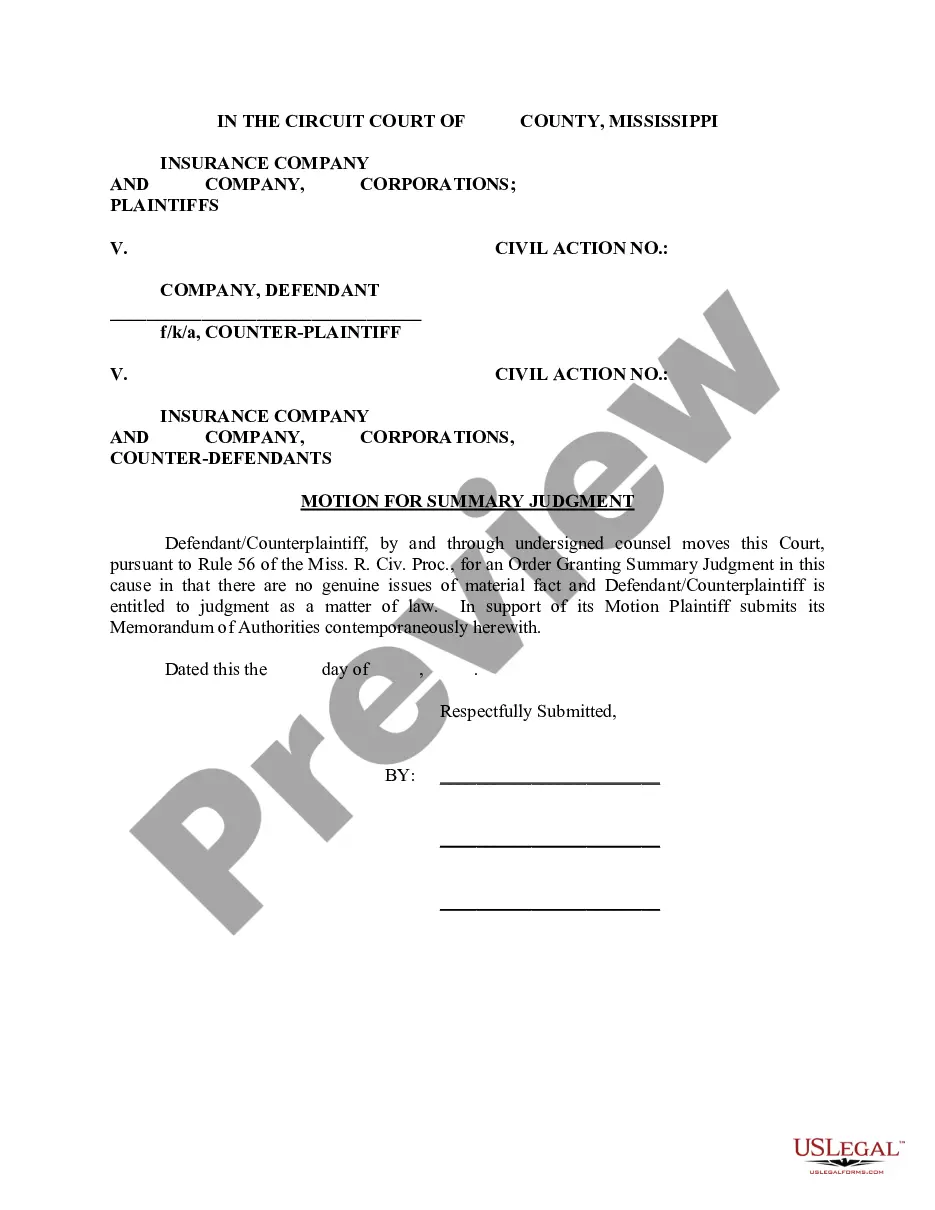
A Motion for Summary Judgment is a legal document submitted to a court requesting a decision on a case without a full trial. This form allows a party to argue that there are no material facts in dispute and that they are entitled to judgment based on the law. It differs from other motions because it seeks a judgment on the merits of the case, effectively advancing the litigation process while minimizing court resources.
Key parts of this document
- Case caption: Identifies the parties involved and the case number.
- Undisputed facts: Lists facts that all parties agree on, critical to the motion.
- Arguments: Legal reasoning explaining why the court should grant the motion.
- Signatures: Space for signatures of the party and their legal representative, if applicable.
- Request for relief: Specifies the exact judgment or action being requested from the court.

When to use this form
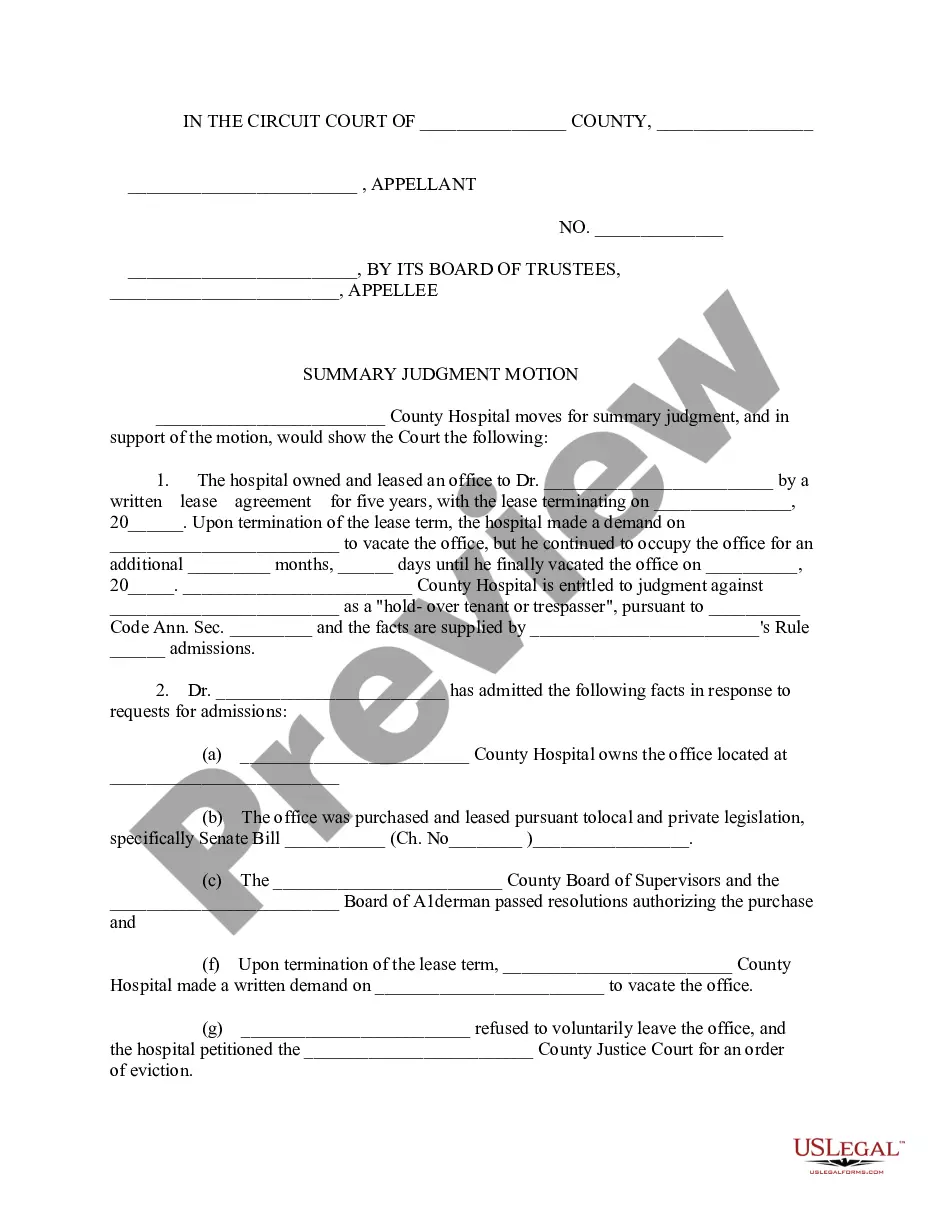
This form should be used when a party believes that there is no genuine dispute over the material facts of the case and that the law is on their side. Common scenarios include cases involving breach of contract, employment disputes, or claims related to non-competition agreements where the essential facts are acknowledged by both parties.
Who can use this document
This form is intended for individuals or entities involved in civil litigation who wish to expedite the legal process by obtaining a summary judgment. It is suitable for defendants seeking dismissal of claims against them or plaintiffs who want a ruling in their favor without going to trial.
How to prepare this document
- Fill in the case caption with the names of the plaintiff and defendant along with the case number.
- Clearly list the undisputed facts that support your motion for summary judgment.
- Articulate your legal arguments for why the motion should be granted.
- Sign the document and have it dated appropriately.
- File the motion with the court and serve copies to the opposing parties as per the local rules.
Does this document require notarization?
Notarization is generally not required for this form. However, certain states or situations might demand it. You can complete notarization online through US Legal Forms, powered by Notarize, using a verified video call available anytime.
Get your form ready online
Our built-in tools help you complete, sign, share, and store your documents in one place.
Make edits, fill in missing information, and update formatting in US Legal Forms—just like you would in MS Word.
Download a copy, print it, send it by email, or mail it via USPS—whatever works best for your next step.
Sign and collect signatures with our SignNow integration. Send to multiple recipients, set reminders, and more. Go Premium to unlock E-Sign.
If this form requires notarization, complete it online through a secure video call—no need to meet a notary in person or wait for an appointment.
We protect your documents and personal data by following strict security and privacy standards.

Make edits, fill in missing information, and update formatting in US Legal Forms—just like you would in MS Word.

Download a copy, print it, send it by email, or mail it via USPS—whatever works best for your next step.

Sign and collect signatures with our SignNow integration. Send to multiple recipients, set reminders, and more. Go Premium to unlock E-Sign.

If this form requires notarization, complete it online through a secure video call—no need to meet a notary in person or wait for an appointment.

We protect your documents and personal data by following strict security and privacy standards.
Common mistakes
- Failing to include all material undisputed facts crucial for the court's consideration.
- Not citing the relevant laws or legal standards applicable to the motion.
- Submitting the motion without proper service to the opposing party.
- Missing signatures or dates, which can render the motion invalid.
- Neglecting to follow local rules regarding format and filing procedures.
Benefits of using this form online
- Convenience: Downloadable forms that can be completed at your convenience.
- Editability: Easily modify the template to suit your specific circumstances.
- Reliability: Forms drafted by licensed attorneys ensure compliance with legal standards.
Legal use & context
- This motion is a formal request that requires adherence to specific procedural rules.
- It is essential for parties to understand the implications of a summary judgment and the potential effects on their case.
- The granting of a summary judgment can significantly expedite the resolution of legal disputes.
Looking for another form?

Form popularity
FAQ
Motions filed, the percent of cases with motions granted in whole or in part, and the percent of cases terminated by summary judgment. The percentage of cases with summary judgment motions, averaged across the six courts in the study, has increased from approximately 12% in 1975, to 17% in 1985, to 19% in 1988.
A motion for summary judgment filed by an opposing party claims that you cannot prevail in the case because there is no legal dispute or your claim is without merit or a defense. Failure to respond to a motion for summary judgment can result in your case being dismissed or a judgment being rendered against you.
Decision on motions for summary judgment: About 15 months after beginning of representation. The judge will make a decision on summary judgment about three months after s/he hears arguments from both sides.
If the motion is granted, the judgment on the issue or case is deemed to be a final judgment from which a party may seek an appeal. The court of appeal can reverse the grant of summary judgment and reinstate the claim in the lower court. However, this is rarely done and most summary judgments are upheld on appeal.