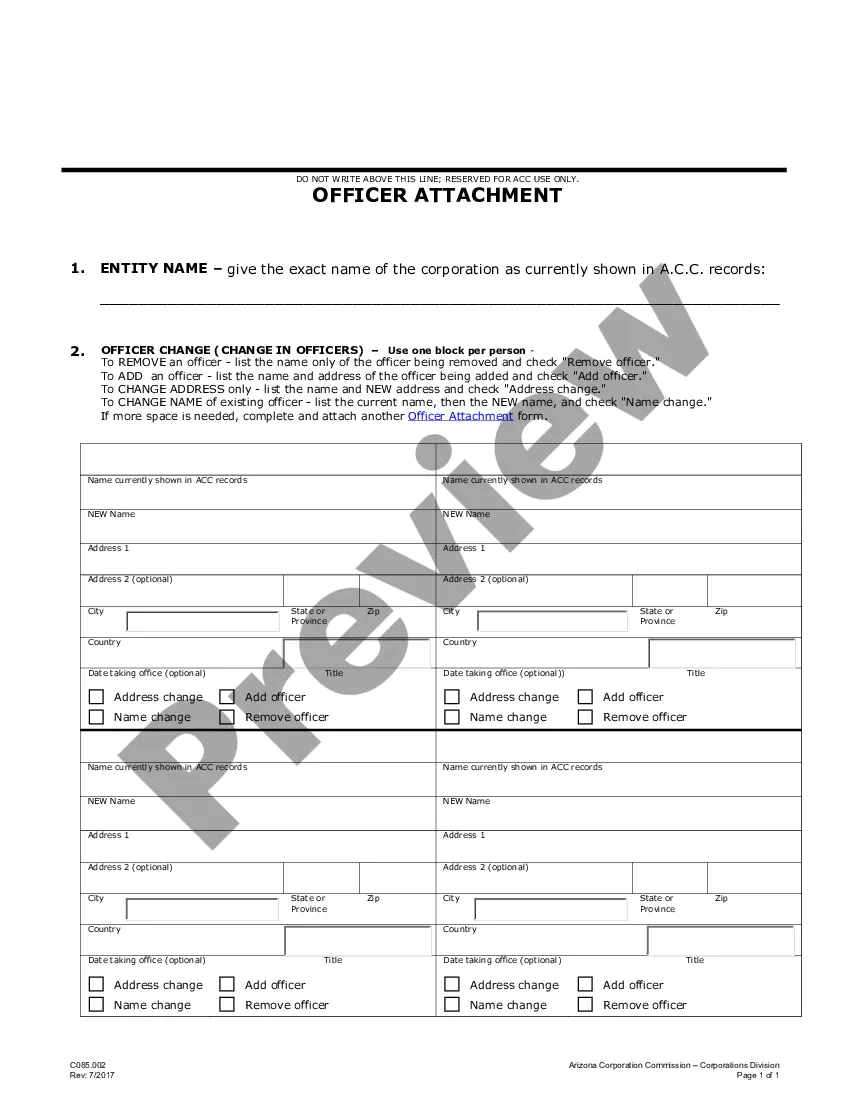
Mississippi Response to Motion for Summary Judgment
What this document covers
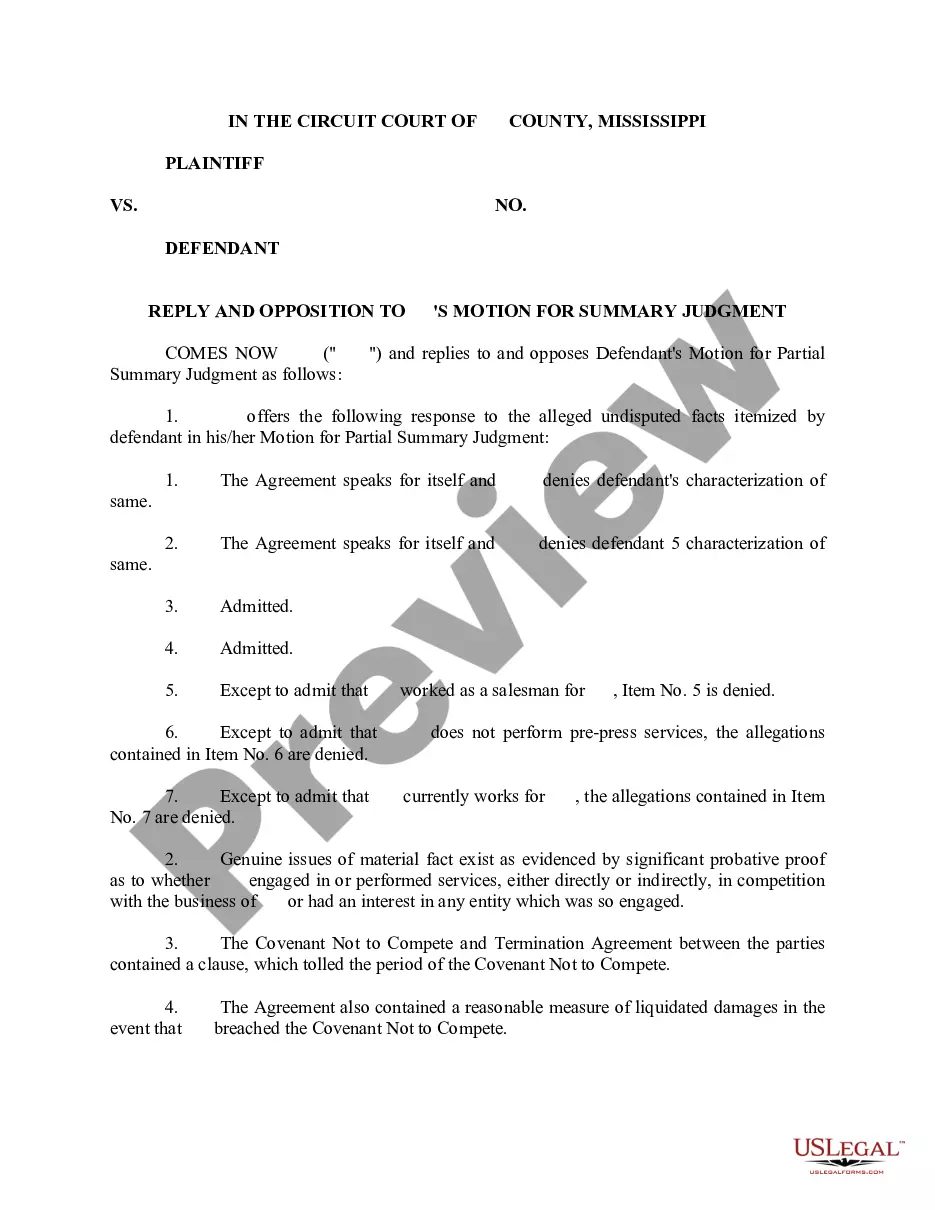
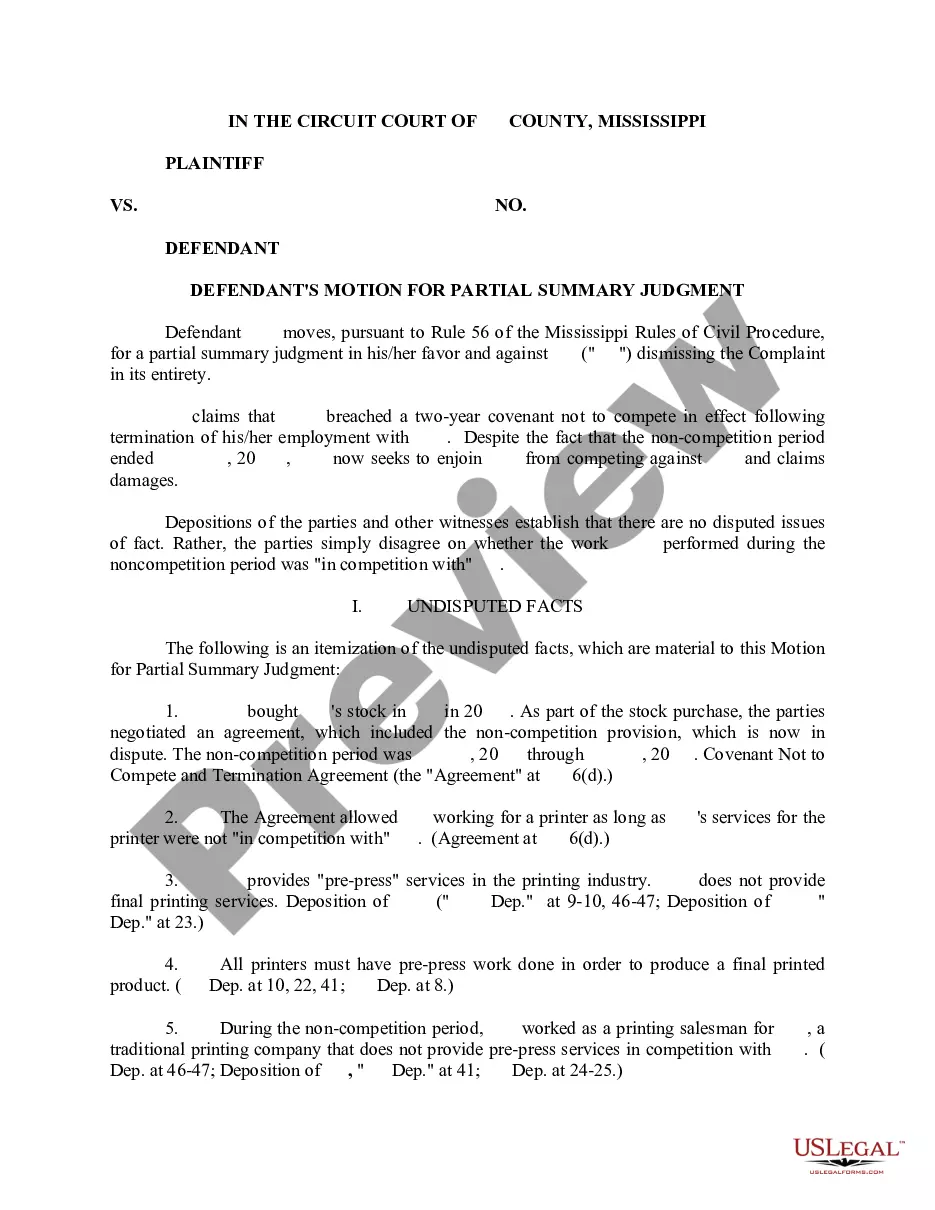
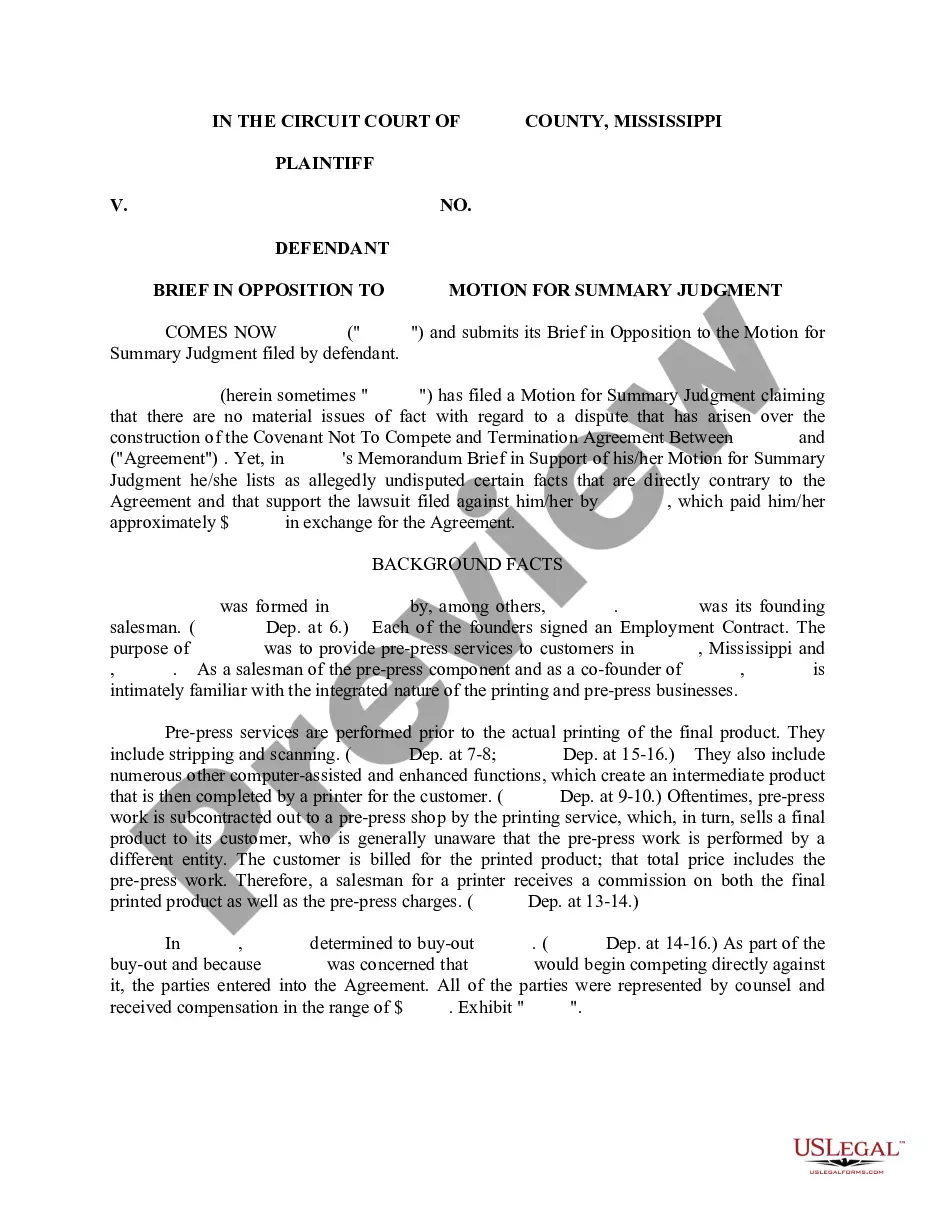
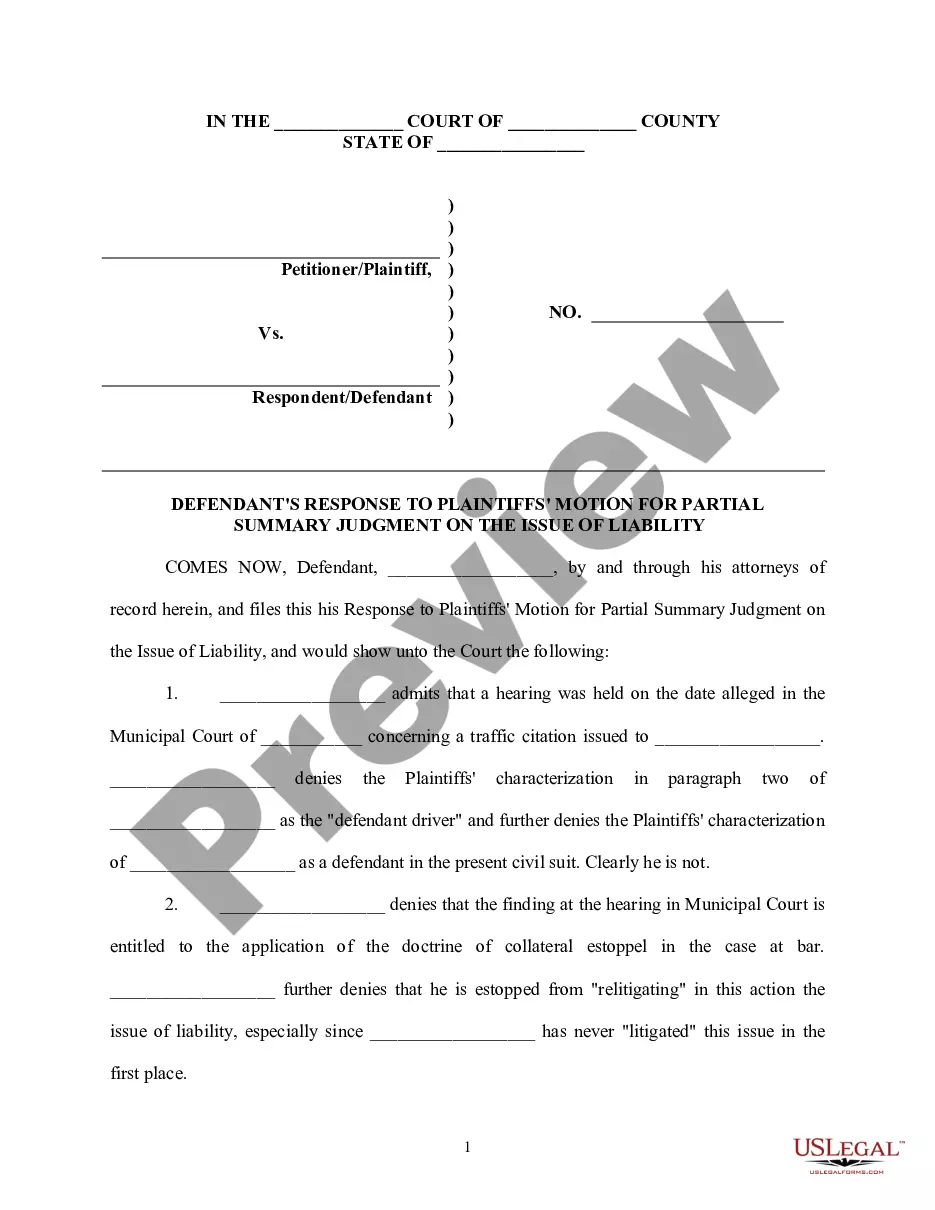
The Response to Motion for Summary Judgment is a legal document used to reply to and oppose a defendant's motion for summary judgment in a court case. This form is designed to help individuals or parties articulate their stance against the claims made in the motion and provide evidence supporting their position. Unlike other legal responses, this form specifically addresses summary judgment motions by highlighting specific facts and issues relevant to the case.
Main sections of this form
- Case caption including plaintiff and defendant names and case number.
- Introduction stating the purpose of the response and opposition.
- Numbered paragraphs responding to undisputed facts from the defendant's motion.
- List of genuine issues of material fact that dispute the defendant's claims.
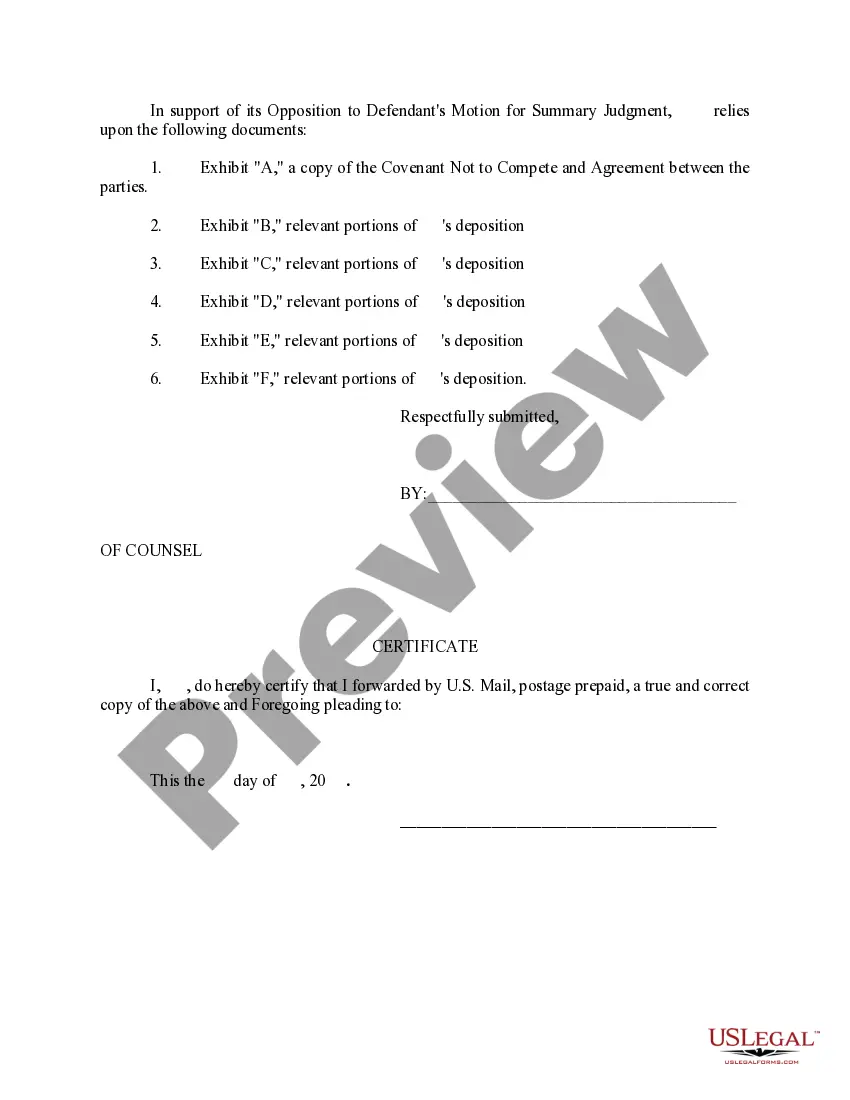
- References to supporting documents and exhibits that validate the opposition.
- Certification section confirming the mailing of the document to other parties.
When to use this document
This form should be used when a party in a legal proceeding receives a motion for summary judgment from the opposing party. It is appropriate to use it to formally oppose the motion by presenting alternative facts, legal arguments, and evidence that counter the claims made in the motion. This is crucial in cases where material facts are in dispute and where a party seeks to avoid a judgment being made without a full examination of the evidence.
Who can use this document
This form is intended for:
- Individuals or entities involved in a legal dispute where a motion for summary judgment has been filed against them.
- Legal representatives or attorneys who need to prepare a formal response on behalf of a client.
- Parties seeking to protect their rights and challenge claims made by the opposing party in court.
Instructions for completing this form
- Identify the parties involved in the legal case and fill in their names in the case caption.
- Clearly state your rejection of the defendant's claims in the introduction section.
- Number your responses to the alleged undisputed facts, either admitting or denying each point as appropriate.
- List genuine issues of material fact that contradict the defendant's motion.
- Attach supporting documents or exhibits that strengthen your case and refer to them correctly in your response.
- Sign and certify the document, indicating that you have sent a copy to the opposing party.
Is notarization required?
This form does not typically require notarization unless specified by local law. Always verify the specific requirements in your jurisdiction to ensure compliance.
Get your form ready online
Our built-in tools help you complete, sign, share, and store your documents in one place.
Make edits, fill in missing information, and update formatting in US Legal Forms—just like you would in MS Word.
Download a copy, print it, send it by email, or mail it via USPS—whatever works best for your next step.
Sign and collect signatures with our SignNow integration. Send to multiple recipients, set reminders, and more. Go Premium to unlock E-Sign.
If this form requires notarization, complete it online through a secure video call—no need to meet a notary in person or wait for an appointment.
We protect your documents and personal data by following strict security and privacy standards.

Make edits, fill in missing information, and update formatting in US Legal Forms—just like you would in MS Word.

Download a copy, print it, send it by email, or mail it via USPS—whatever works best for your next step.

Sign and collect signatures with our SignNow integration. Send to multiple recipients, set reminders, and more. Go Premium to unlock E-Sign.

If this form requires notarization, complete it online through a secure video call—no need to meet a notary in person or wait for an appointment.

We protect your documents and personal data by following strict security and privacy standards.
Common mistakes
- Failing to respond to all points raised in the motion for summary judgment.
- Not including sufficient evidence or documentation to support your claims.
- Neglecting to properly format the document according to court rules.
- Missing the deadline for filing the response.
Why use this form online
- Convenience of downloading the form from any location at any time.
- Editability allows users to customize the form for their specific case.
- Access to forms drafted by licensed attorneys ensures reliability and accuracy.
Looking for another form?
Form popularity
FAQ
A response must be in writing and include the same supporting documents as a motion for summary judgment. The opposition to the motion for summary judgment should also include a statement of facts showing the dispute and supporting documents.
If the motion is granted, the judgment on the issue or case is deemed to be a final judgment from which a party may seek an appeal. The court of appeal can reverse the grant of summary judgment and reinstate the claim in the lower court. However, this is rarely done and most summary judgments are upheld on appeal.
If a defendant refuses to produce documents or witnesses for depositions, you can oppose the summary-judgment motion by submitting your declaration and showing that facts essential to justify your opposition may exist but cannot for reasons stated be presented to the court.
19, 2008) (motions to dismiss or for summary judgment are not responsive pleadings, and therefore do not cut off a plaintiff's right to amend his pleadings once at any time).