Mississippi Response to Motion in Limine
About this form
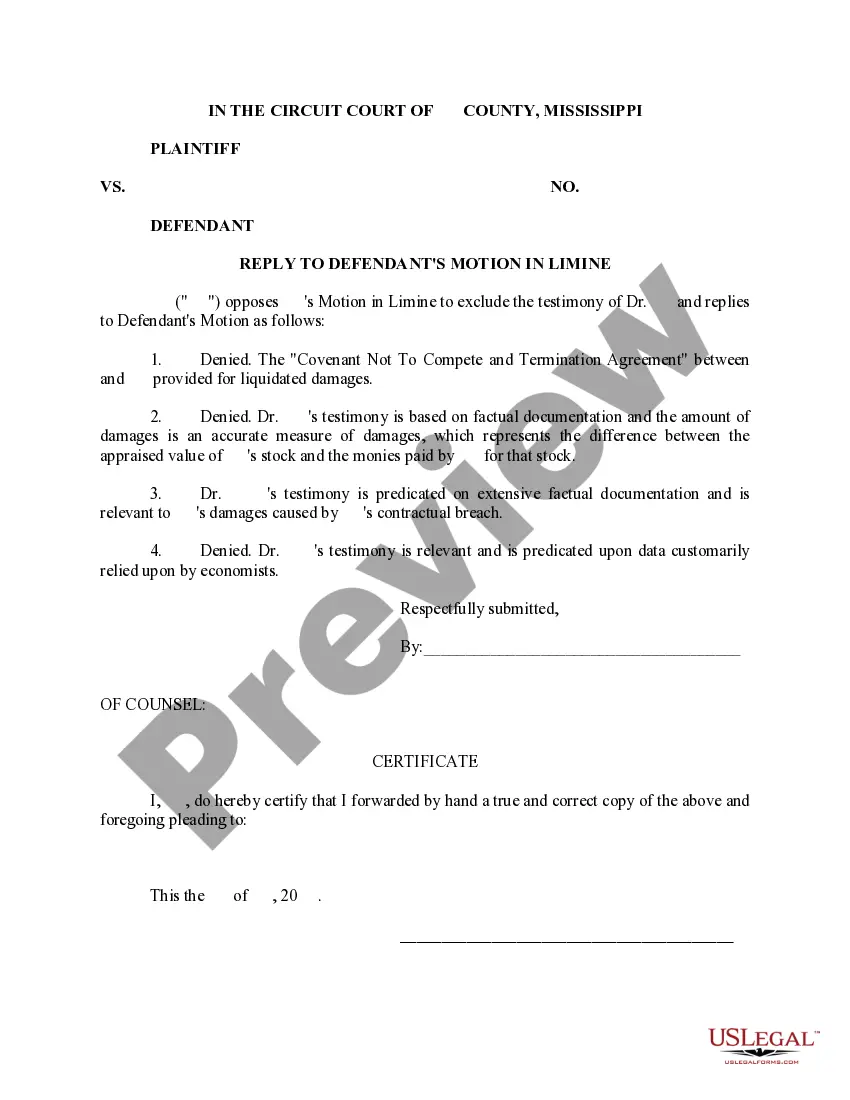
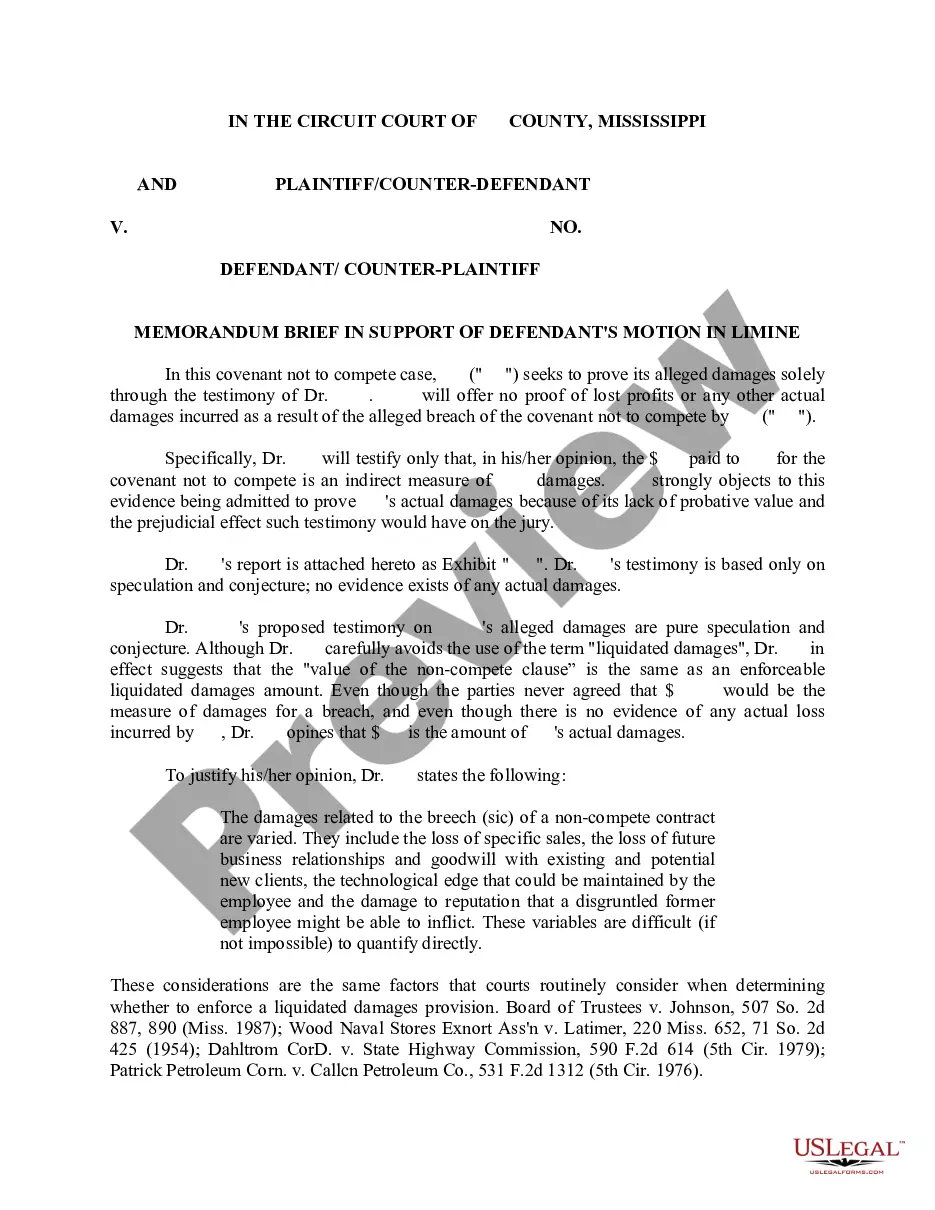
The Response to Motion in Limine is a legal document used in court to respond to a motion filed by the opposing party seeking to exclude certain evidence or testimony from trial. This form allows you to present your arguments as to why the requested exclusion should not occur. It specifically addresses the relevance and admissibility of expert testimony and is essential in ensuring the judge has all necessary information to make an informed decision regarding evidence presented in your case. The Response to Motion in Limine stands apart from other legal documents as it directly counters motions aimed at limiting evidence rather than introducing it.
Main sections of this form
- Case title, which identifies the parties involved in the lawsuit
- Sections for responding to each specific denial of the opposing party's motion
- Arguments supporting the admissibility of expert testimony and its relevance
- Signature block for legal counsel submitting the response
- Certification that a true and correct copy has been shared with all parties
When to use this document
You should use this form when you have received a motion in limine from the opposing party seeking to exclude testimony or evidence from being presented at trial. This situation often occurs in civil litigation where expert testimony is crucial for establishing damages or other pertinent matters. By using this response form, you can effectively challenge the motion and explain why the evidence in question should be considered by the court.
Who should use this form
- Litigants involved in a civil lawsuit where a motion in limine has been filed
- Attorneys representing clients seeking to maintain the admissibility of certain evidence
- Individuals with legal representation who need to respond to procedural motions in court
Instructions for completing this form
- Identify the parties involved in the case by filling in the case title.
- Enter the specific statements you are denying as outlined in the opposing party's motion.
- Provide supporting arguments and evidence as to why the testimony or evidence should not be excluded.
- Sign the document as the attorney of record, indicating your representation.
- Complete the certification section to confirm you have delivered a copy to all other involved parties.
Is notarization required?
Notarization is not commonly needed for this form. However, certain documents or local rules may make it necessary. Our notarization service, powered by Notarize, allows you to finalize it securely online anytime, day or night.
Get your form ready online
Our built-in tools help you complete, sign, share, and store your documents in one place.
Make edits, fill in missing information, and update formatting in US Legal Forms—just like you would in MS Word.
Download a copy, print it, send it by email, or mail it via USPS—whatever works best for your next step.
Sign and collect signatures with our SignNow integration. Send to multiple recipients, set reminders, and more. Go Premium to unlock E-Sign.
If this form requires notarization, complete it online through a secure video call—no need to meet a notary in person or wait for an appointment.
We protect your documents and personal data by following strict security and privacy standards.

Make edits, fill in missing information, and update formatting in US Legal Forms—just like you would in MS Word.

Download a copy, print it, send it by email, or mail it via USPS—whatever works best for your next step.

Sign and collect signatures with our SignNow integration. Send to multiple recipients, set reminders, and more. Go Premium to unlock E-Sign.

If this form requires notarization, complete it online through a secure video call—no need to meet a notary in person or wait for an appointment.

We protect your documents and personal data by following strict security and privacy standards.
Typical mistakes to avoid
- Failing to adequately respond to each point raised in the motion.
- Not including supporting documentation for expert testimony.
- Missing signature or certification of service to other parties.
Advantages of online completion
- Convenient access to legally crafted responses tailored to specific legal contexts.
- Editable formats allow for customization to suit individual case needs.
- Secure downloading ensures you can print and file documents quickly.
Looking for another form?

Form popularity
FAQ
Overview. If one party to a case has filed a motion with the court, the other side can file an opposition. An opposition is a written statement explaining to the judge why the other side is not entitled to whatever he is asking for in his motion. It is your opportunity to oppose the other side's request.
Whereas the motion in limine is based on the trial court's inherent discretion to exclude prejudicial evidence, the motion to suppress is based on the court's duty to exclude evidence which has been im- properly Qbtained.
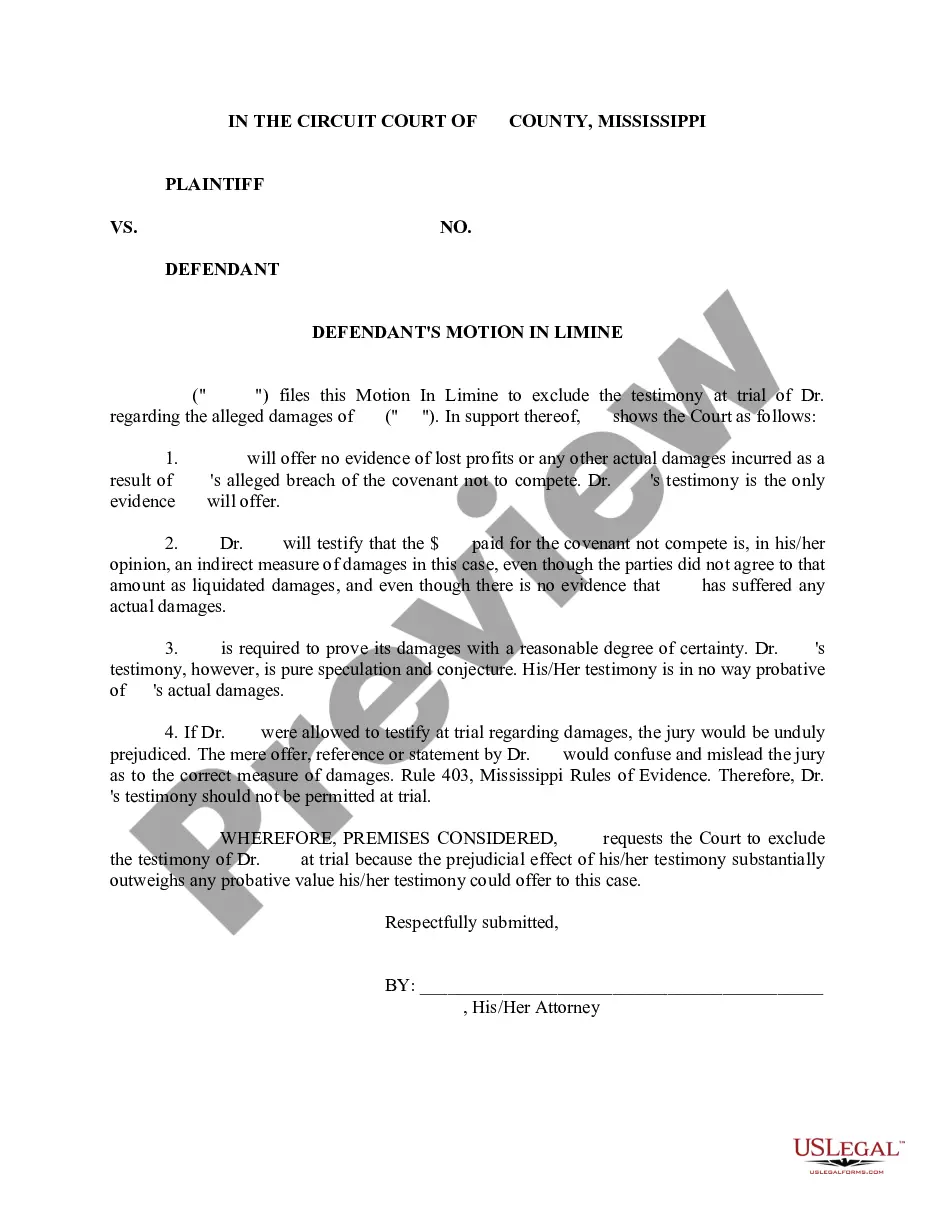
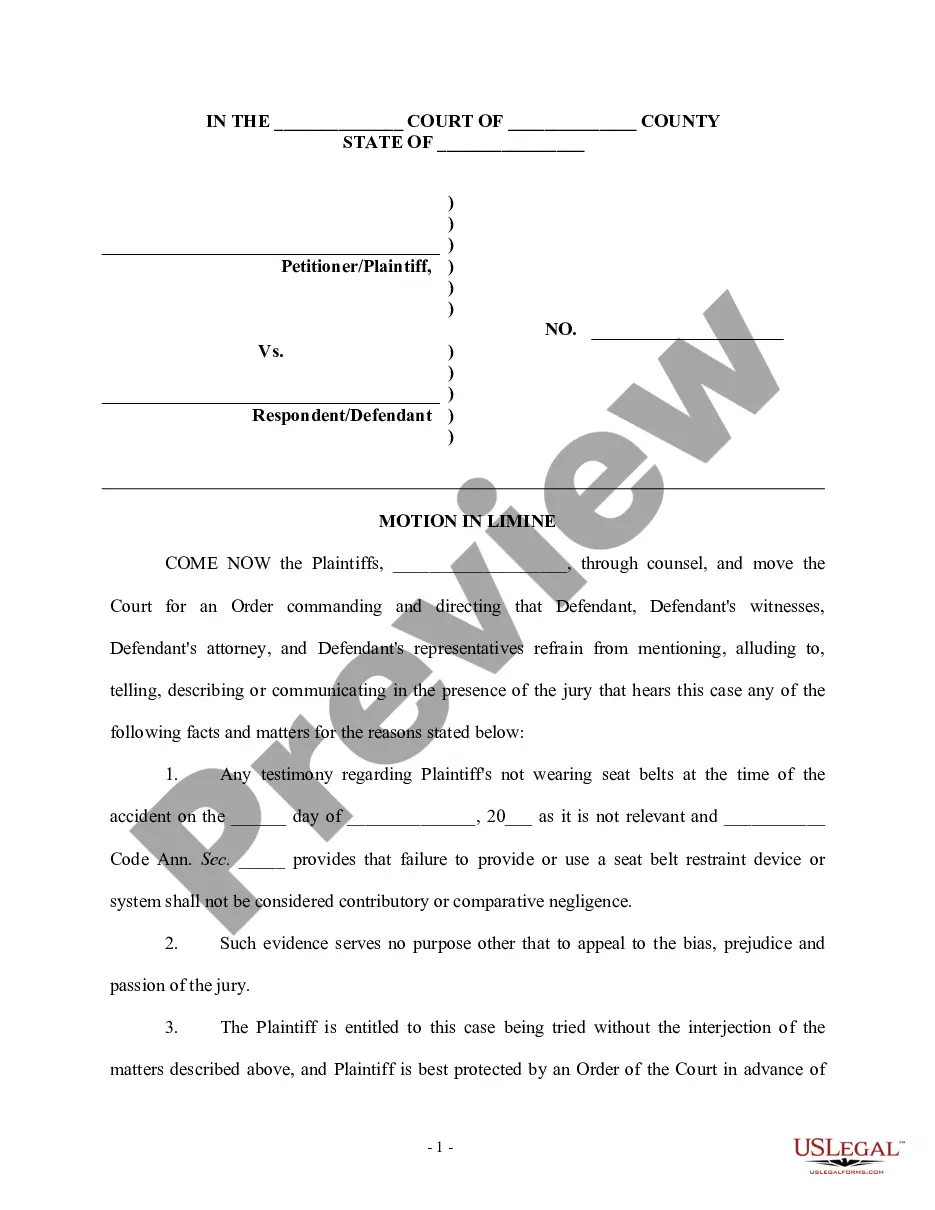
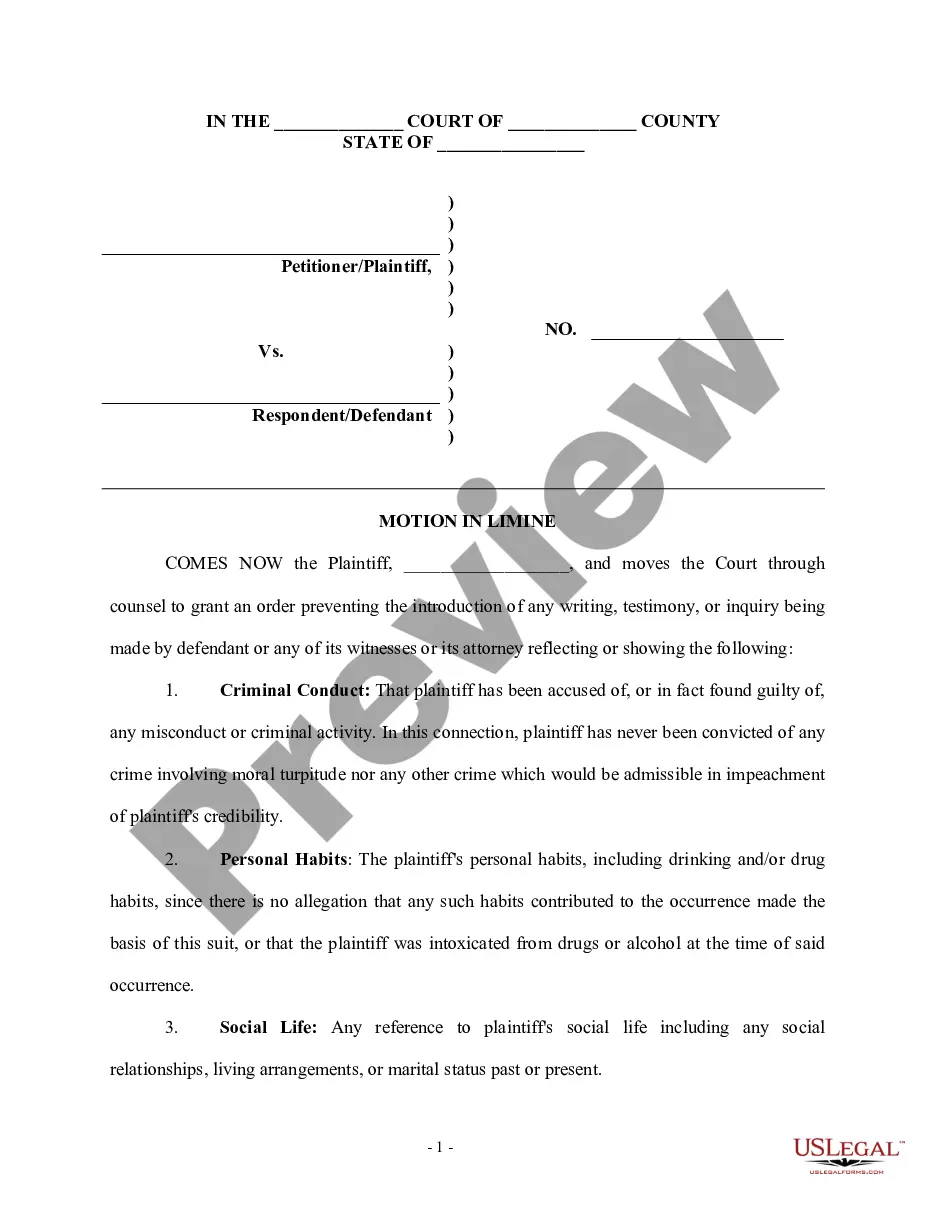
A motion in limine is a motion filed by a party to a lawsuit which asks the court for an order or ruling limiting or preventing certain evidence from being presented by the other side at the trial of the case.
There is also authority for the proposition that if a motion in limine is denied, the party opposing the evidence can be the first to offer the objectionable evidence without waiving the merits of the evidentiary objection on appeal.
Motions in limine should be used only for their original purpose to challenge evidence that is so inadmissible and prejudicial that its mere mention in the presence of the jury would lead to an unfair trial.On appeal this ruling of the trial court was affirmed.
Stated in the most general terms, a proper motion in limine is an evidentiary motion that seeks a determination as to whether to exclude (or admit) evidence before it is offered at trial.
Generally, a party in a lawsuit files a motion in limine to exclude evidence from a trial because the evidence isn't relevant or because its prejudicial effect substantially outweighs its probative value. You can oppose the motion in limine by drafting and filing your own motion in opposition.
A motion in limine is a motion filed by a party to a lawsuit which asks the court for an order or ruling limiting or preventing certain evidence from being presented by the other side at the trial of the case.