Mississippi Brief in Opposition to Motion for Summary Judgment
About this form
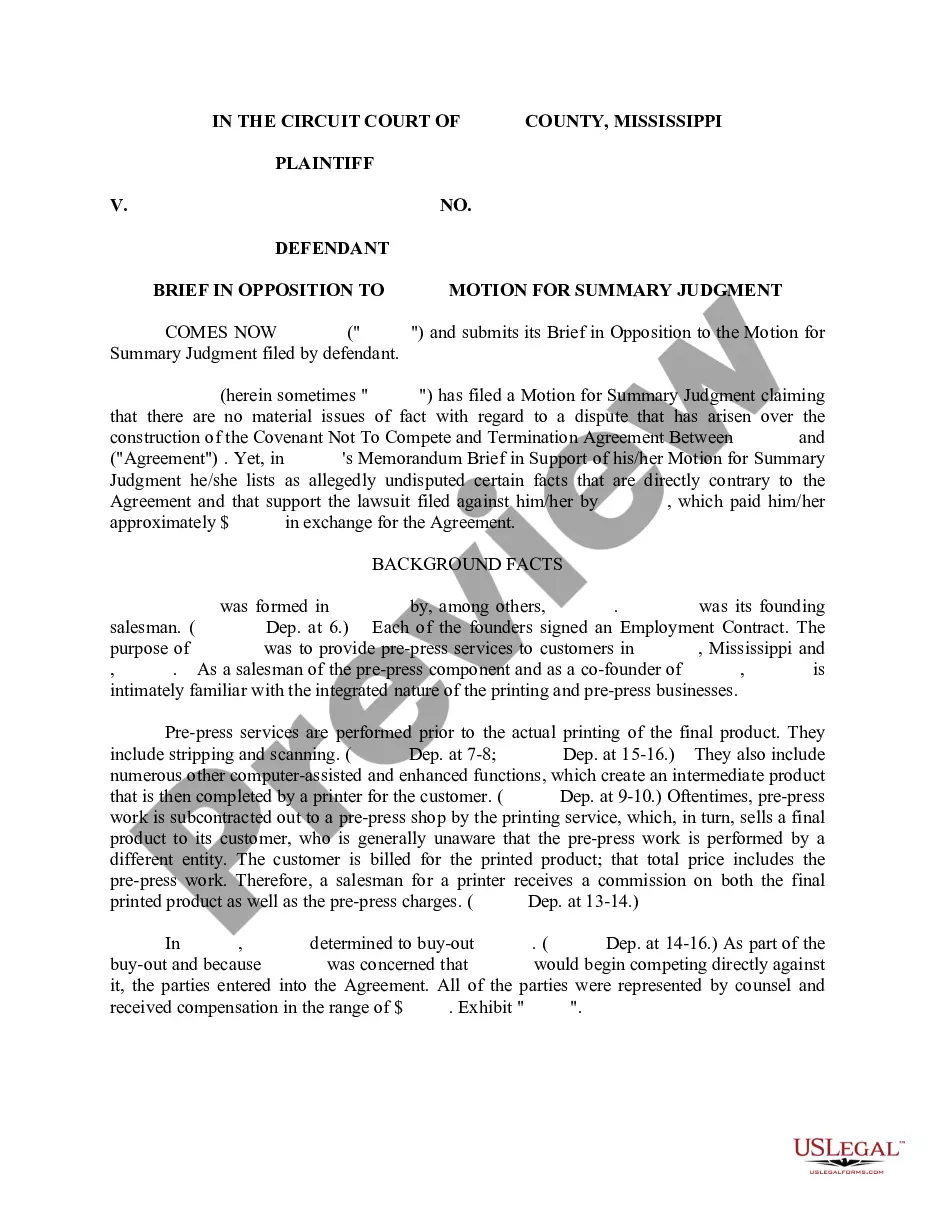
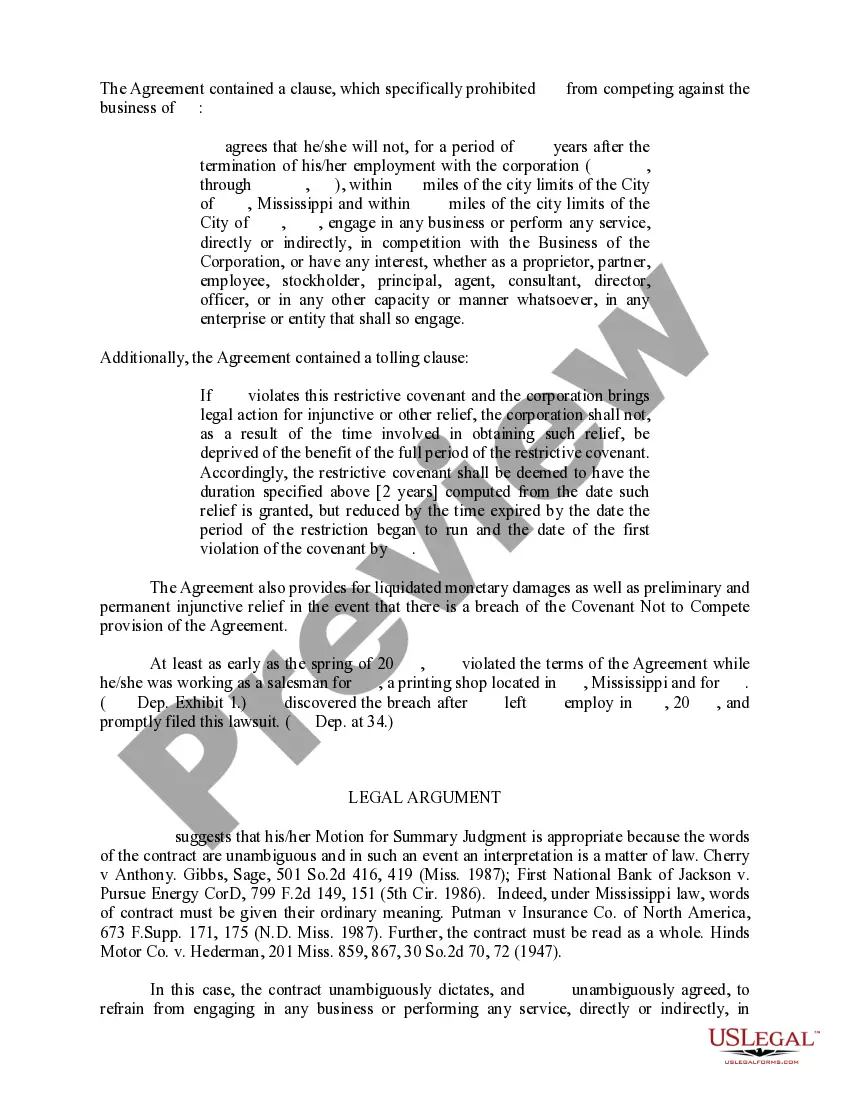
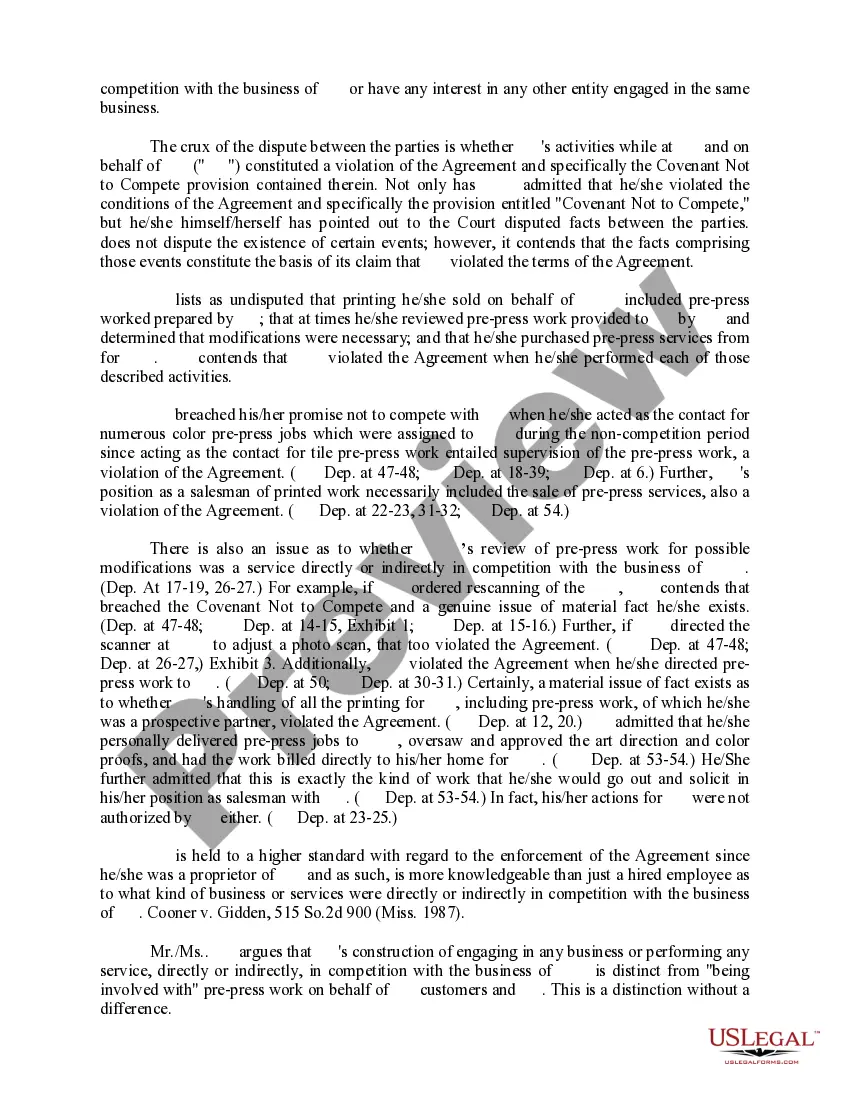
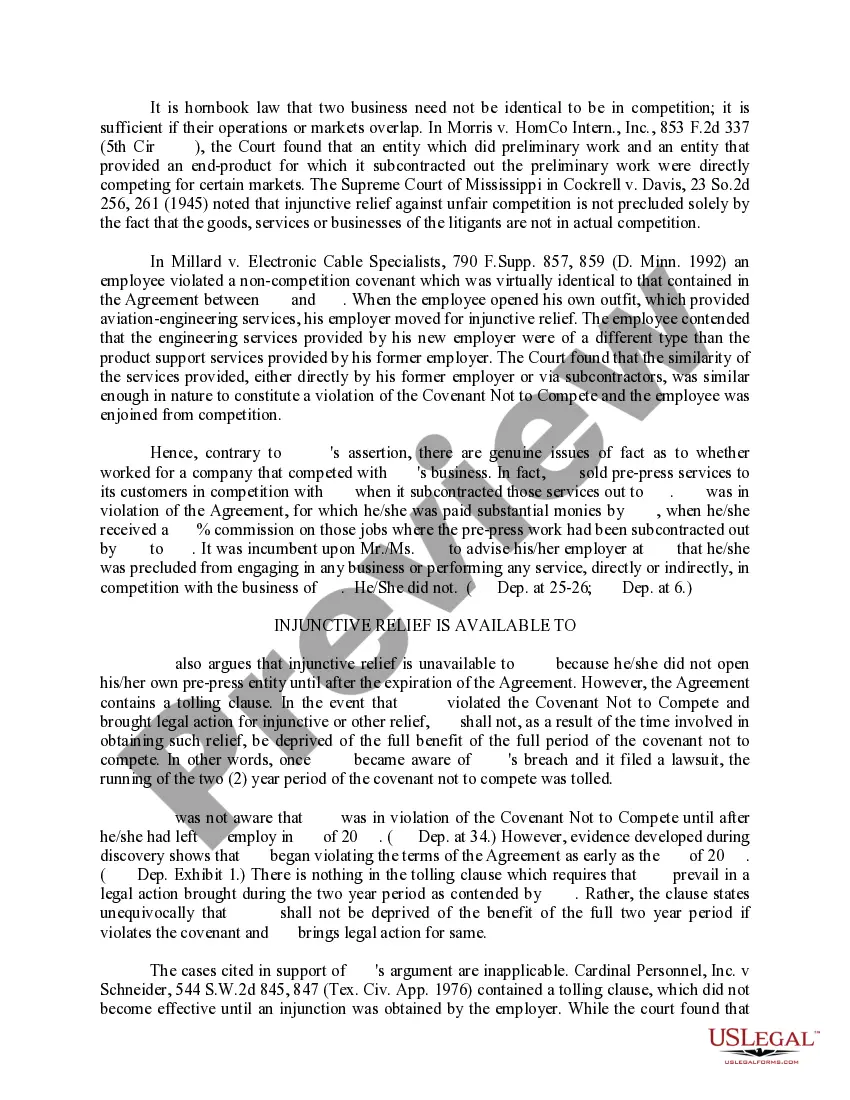
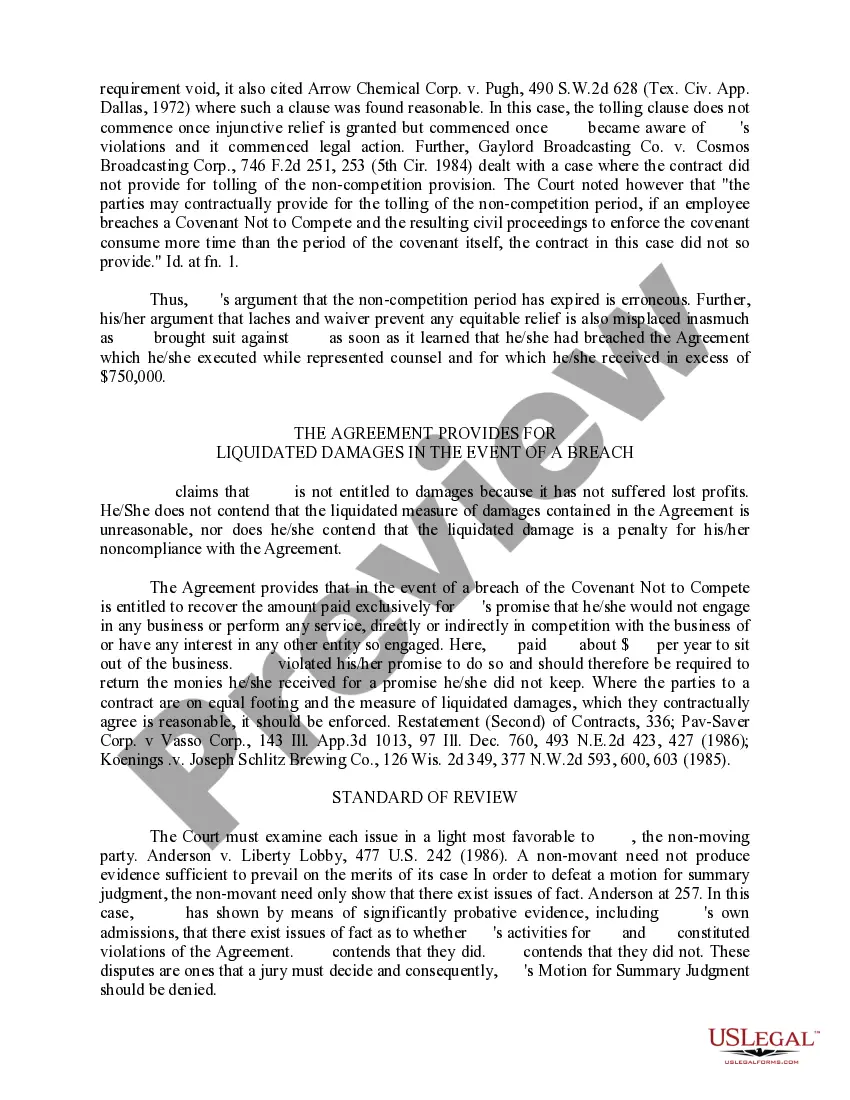
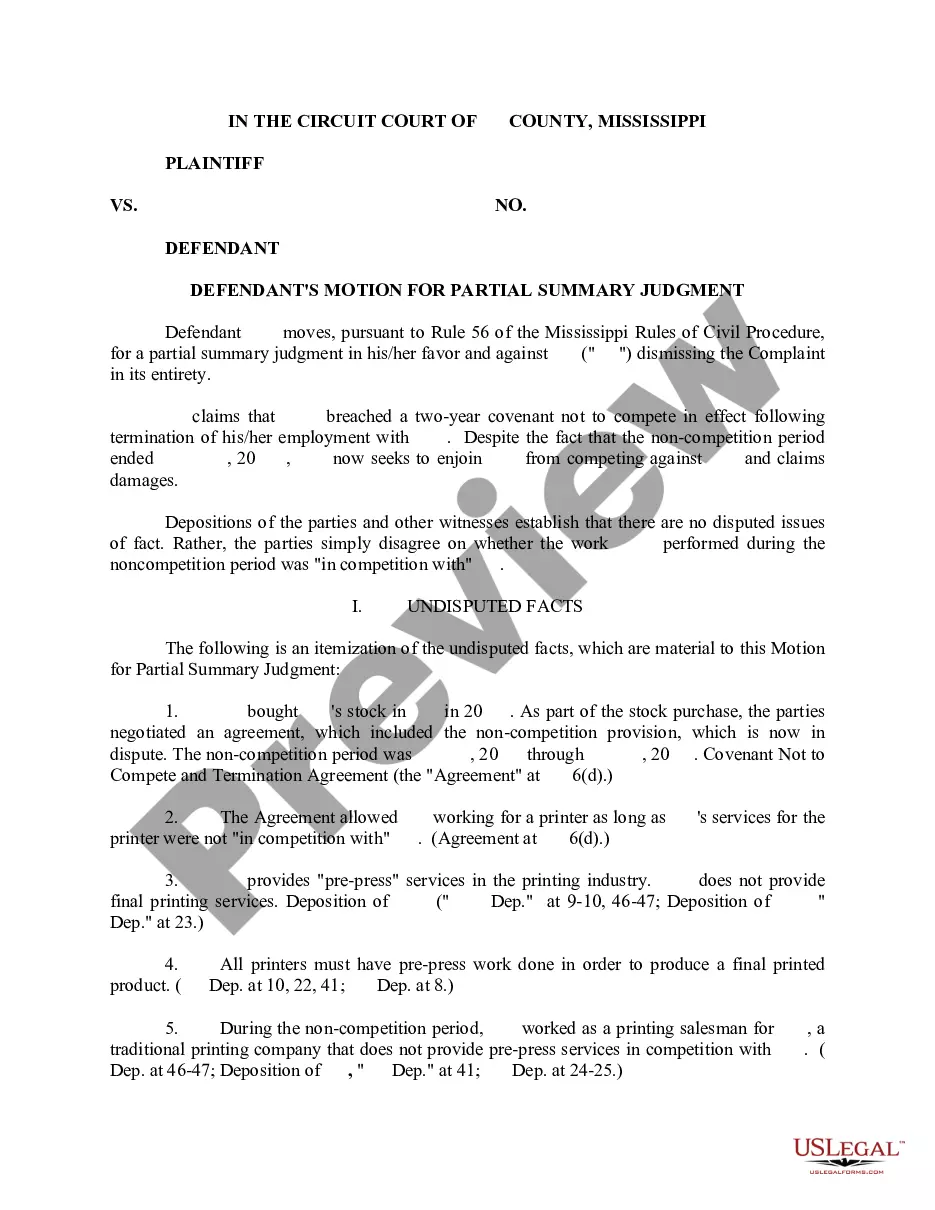
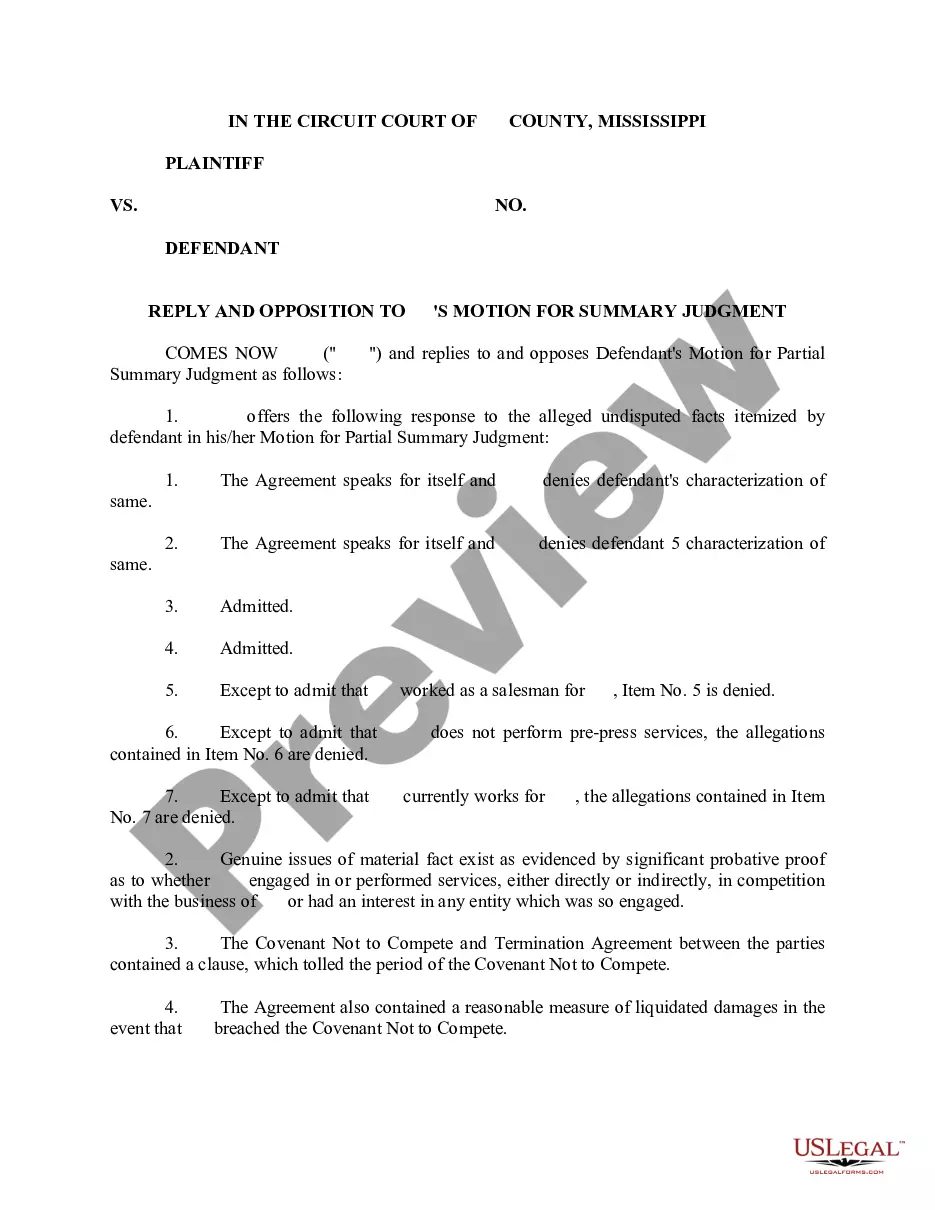
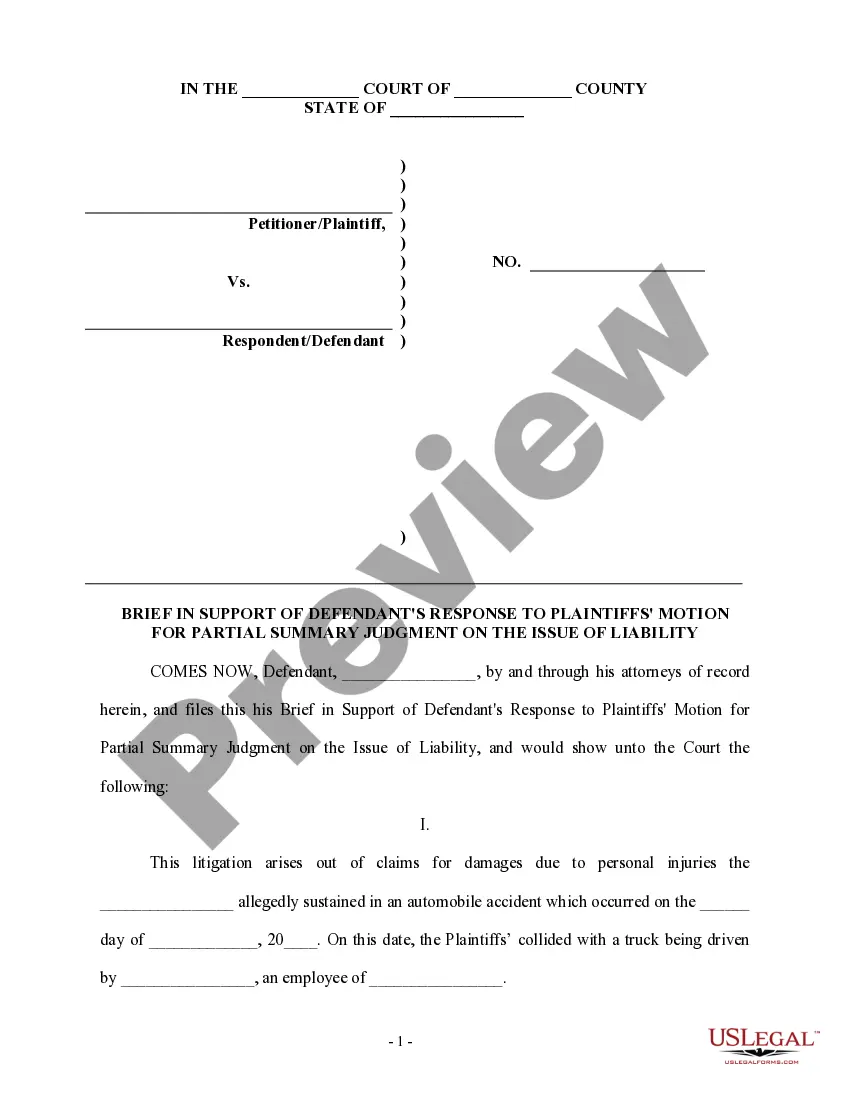
A Brief in Opposition to Motion for Summary Judgment is a legal document used to challenge a defendant's request for summary judgment in a court case. This form allows the opposing party to present arguments and evidence demonstrating that material facts remain disputed, thus preventing the court from granting a judgment without a trial. It is essential for those involved in legal disputes where one party alleges there are no genuine issues of material fact.
Key parts of this document
- The title and case number to identify the parties involved
- A statement outlining the opposition to the motion for summary judgment
- Specific factual background and context relevant to the case
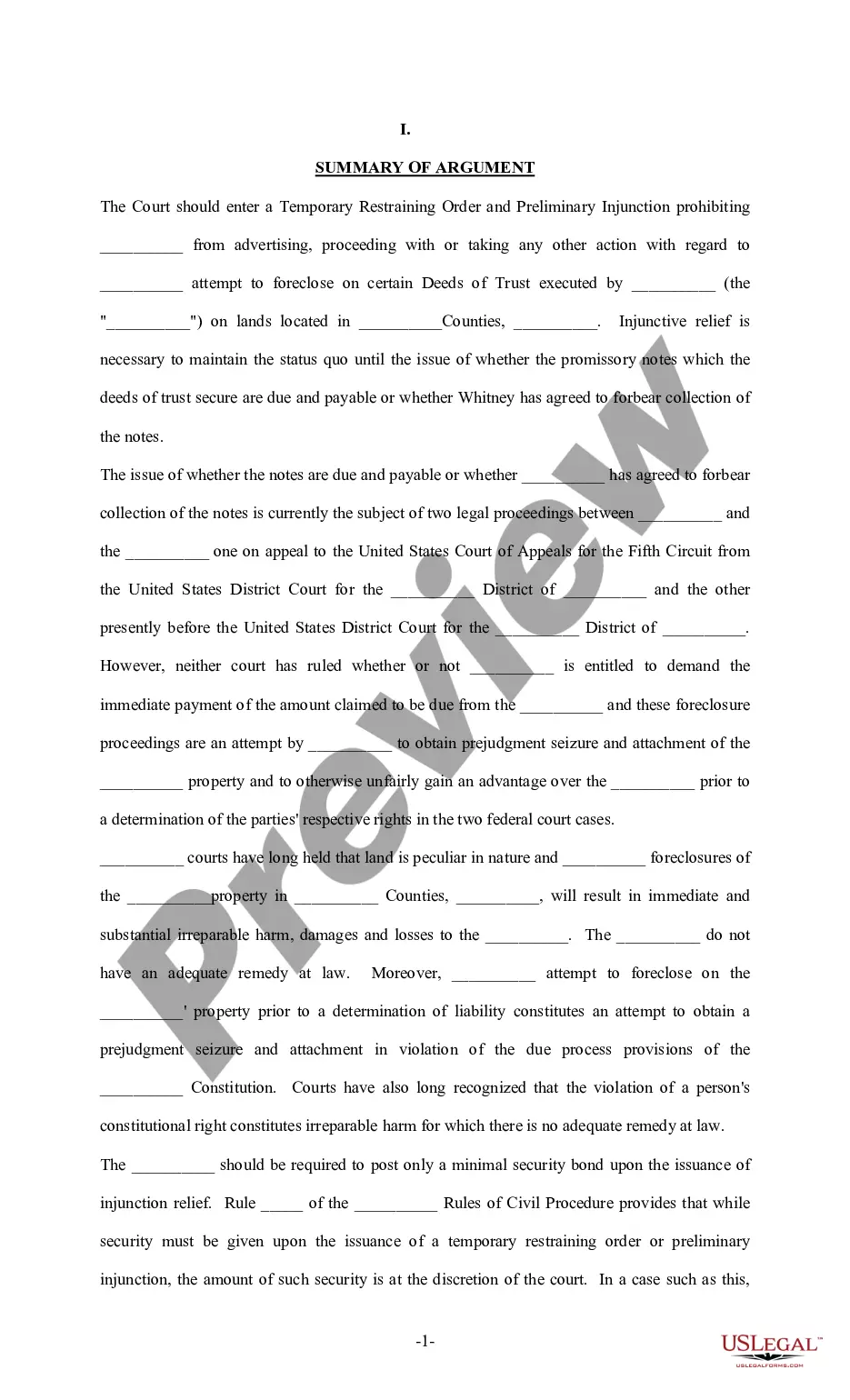
- Arguments detailing why the motion should be denied, including citations of legal precedents
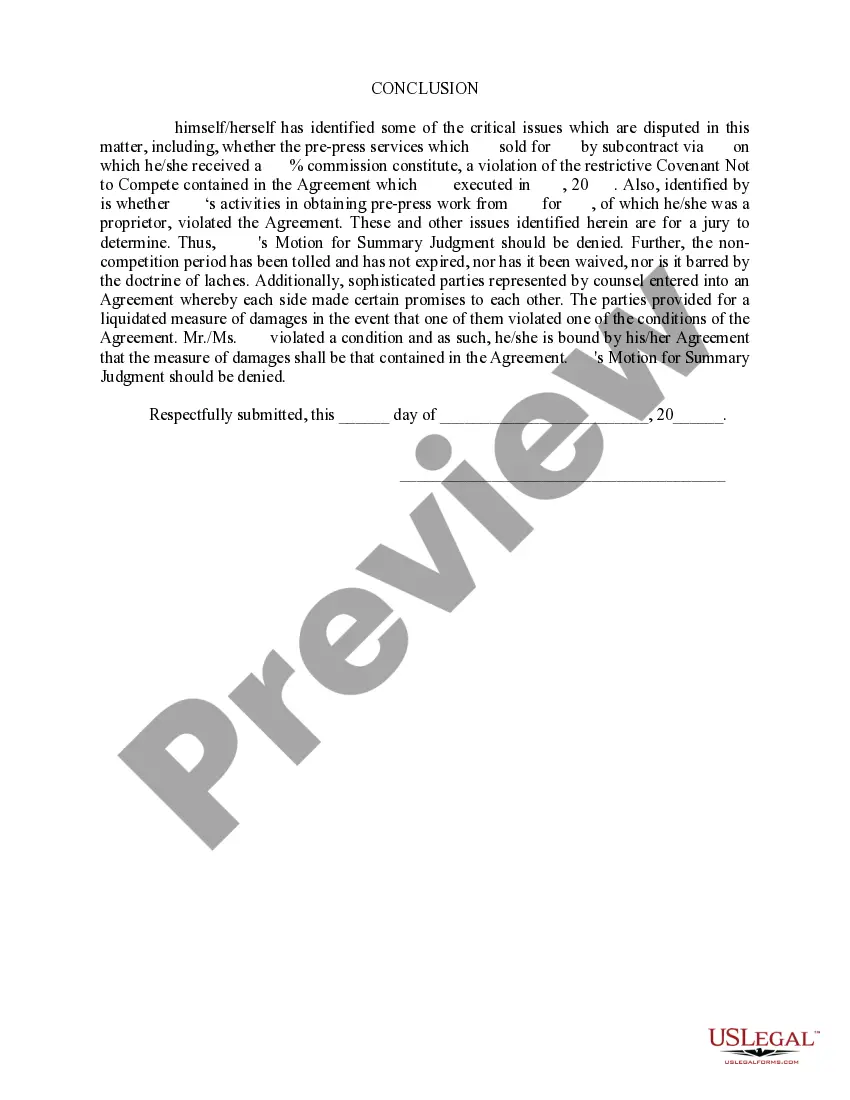
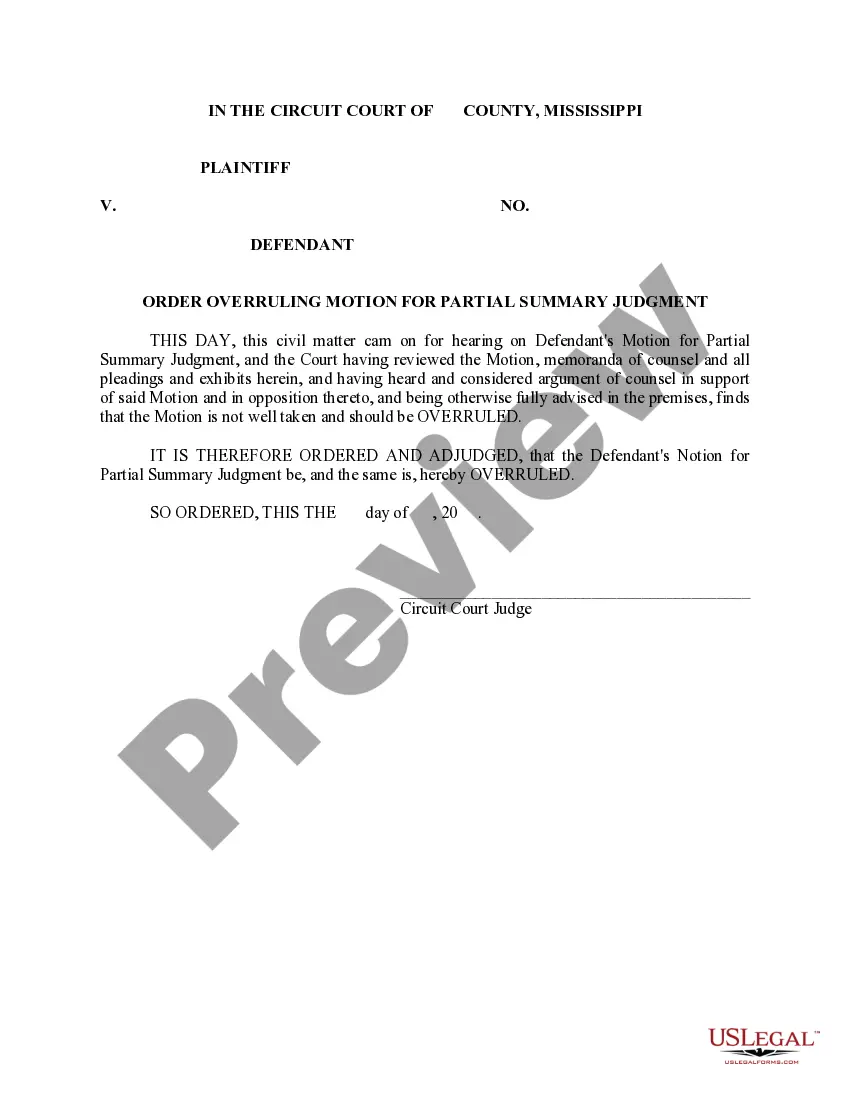
- A conclusion summarizing the request for denial of summary judgment
Situations where this form applies
This form should be used in legal proceedings when a defendant files a motion for summary judgment, claiming that there are no material facts in dispute that warrant a trial. If you have evidence or legal arguments that contradict this claim, filing a Brief in Opposition can help assert your position and ensure that your case is heard in court.
Who can use this document
- Parties involved in a civil lawsuit
- Attorneys representing clients facing a motion for summary judgment
- Individuals who are self-represented and need to oppose a motion in a court of law
- Those seeking to protect their right to a fair trial by challenging claims of undisputed facts
Instructions for completing this form
- Identify and label the parties involved in the case along with the appropriate case number.
- Clearly state your opposition to the motion for summary judgment in the introduction.
- Present the background facts that support your position in a detailed manner.
- Include legal arguments and references to relevant case law to substantiate your claims.
- Conclude with a summary that reinforces your request for denying the motion.
Is notarization required?
In most cases, this form does not require notarization. However, some jurisdictions or signing circumstances might. US Legal Forms offers online notarization powered by Notarize, accessible 24/7 for a quick, remote process.
Get your form ready online
Our built-in tools help you complete, sign, share, and store your documents in one place.
Make edits, fill in missing information, and update formatting in US Legal Forms—just like you would in MS Word.
Download a copy, print it, send it by email, or mail it via USPS—whatever works best for your next step.
Sign and collect signatures with our SignNow integration. Send to multiple recipients, set reminders, and more. Go Premium to unlock E-Sign.
If this form requires notarization, complete it online through a secure video call—no need to meet a notary in person or wait for an appointment.
We protect your documents and personal data by following strict security and privacy standards.

Make edits, fill in missing information, and update formatting in US Legal Forms—just like you would in MS Word.

Download a copy, print it, send it by email, or mail it via USPS—whatever works best for your next step.

Sign and collect signatures with our SignNow integration. Send to multiple recipients, set reminders, and more. Go Premium to unlock E-Sign.

If this form requires notarization, complete it online through a secure video call—no need to meet a notary in person or wait for an appointment.

We protect your documents and personal data by following strict security and privacy standards.
Common mistakes to avoid
- Failing to include all relevant facts and supporting evidence that contradict the motion.
- Omitting proper legal citations or case references, which can weaken your argument.
- Using vague language that does not clearly articulate your opposition to the motion.
- Missing deadlines for filing the opposition, which can result in an automatic grant of the summary judgment.
Advantages of online completion
- Convenient access to a professionally drafted legal document that can save time.
- Editable format allows users to tailor the form to their specific case details.
- Ensures accuracy and compliance with the latest legal standards and formatting requirements.
Looking for another form?

Form popularity
FAQ
A motion for summary judgment filed by an opposing party claims that you cannot prevail in the case because there is no legal dispute or your claim is without merit or a defense. Failure to respond to a motion for summary judgment can result in your case being dismissed or a judgment being rendered against you.
When a motion for summary judgment is denied, the nonmoving party achieves a form of premium that enables a case to settle for an additional amount. Put simply, the settlement value of a case increases when a motion for summary judgment is denied. Thus, denials of summary judgment up the ante in the litigation game.
The key to defeating a motion for summary judgment is to show the court that there are still facts in dispute. Summary judgment is only appropriate if none of the facts are disputed.
If a defendant refuses to produce documents or witnesses for depositions, you can oppose the summary-judgment motion by submitting your declaration and showing that facts essential to justify your opposition may exist but cannot for reasons stated be presented to the court.
You need to set your motion(s) for hearing to get it before the Court. Otherwise, the Court will not address your motion(s), which is why you feel like you are being ignored. Thus, you must file a notice of hearing on your motion and go before the...
Attack the Legal Argument. The first place to look for a weakness in your opponent's motion is at their legal argument. Attack the Evidence. Attack the Separate Statement. Consider Whether Your Opponent's Motion Meets its Burden. Consider Seeking a Continuance to Conduct More Discovery. Conclusion.
Ordinarily, a party cannot appeal a denial of summary judgment after trial has taken place, unless the arguments were renewed in a motion for judgment as a matter of law under Federal Rule of Civil Procedure 50.Denials of summary judgment generally cannot be appealed after a full trial on the merits.
What happens if I don't file an opposition to the motion? If a motion is filed against you and you do not file a written opposition with the court, the judge could grant the other side's motion automatically.It also might mean you lose the case, depending on the motion that was filed.