Confidentiality Statement and Agreement for an Employee
What this document covers
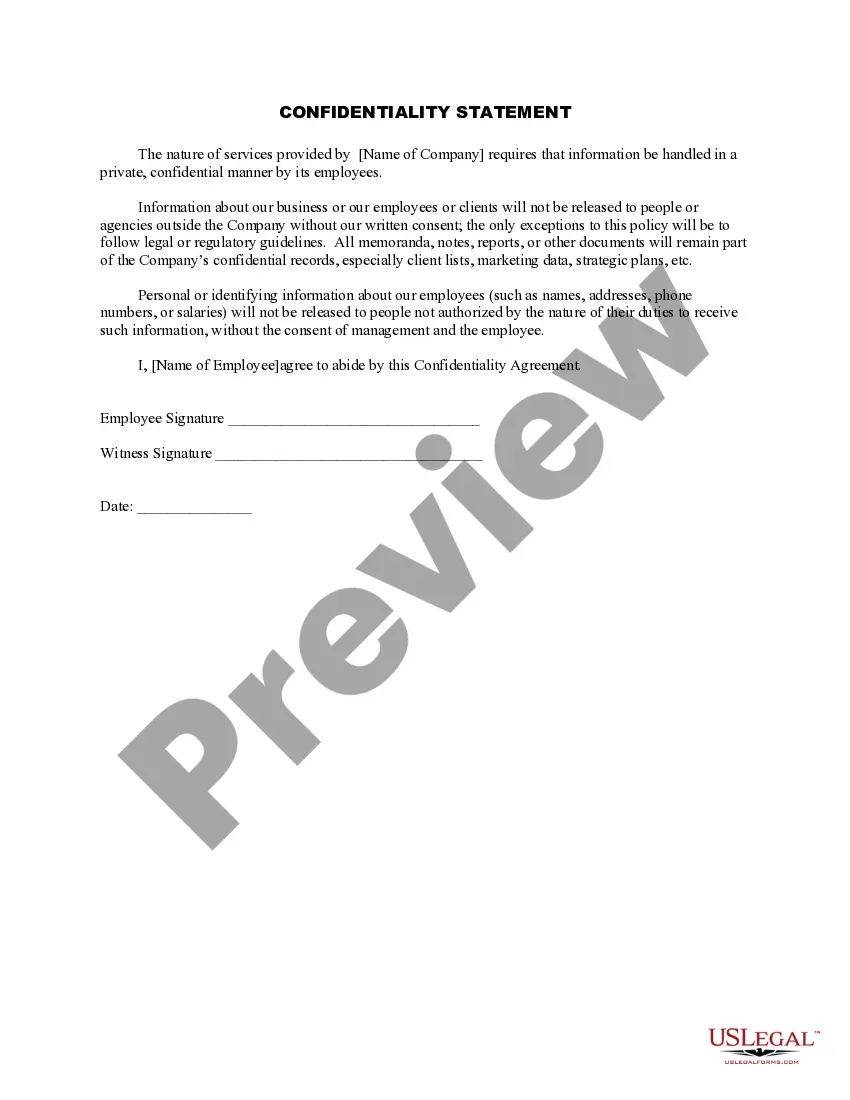
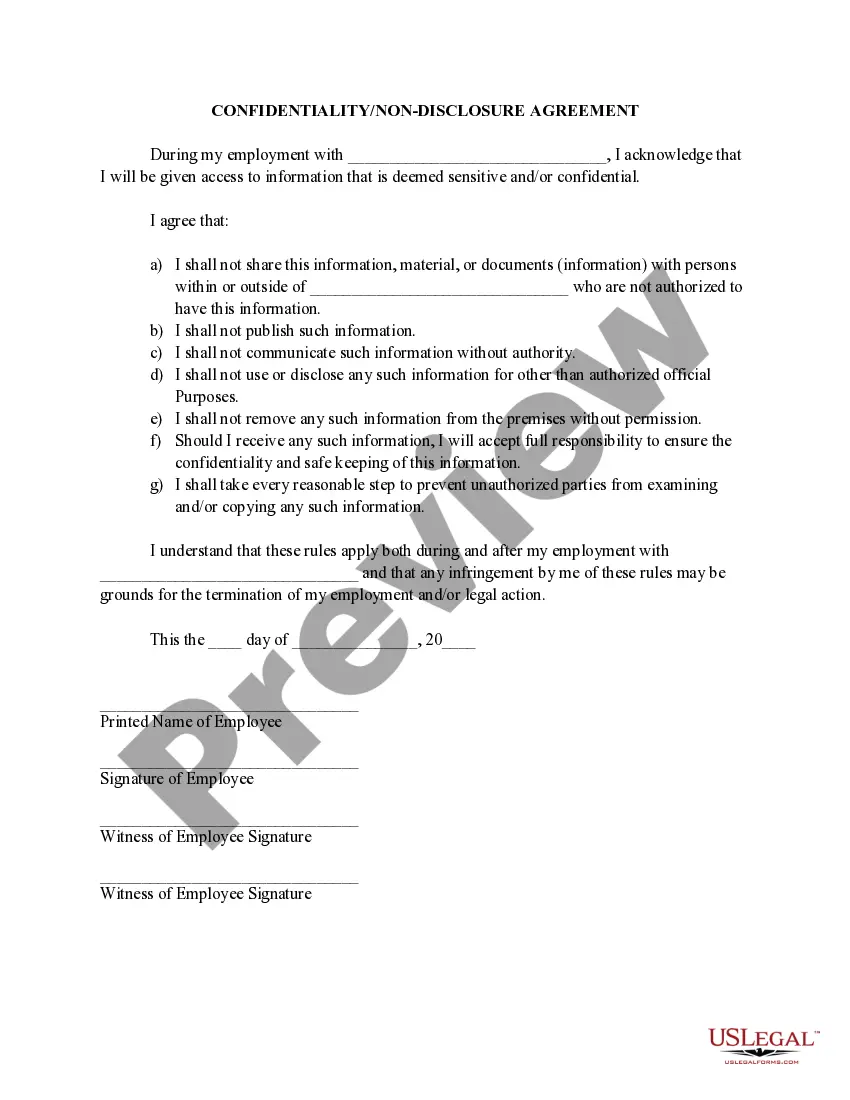
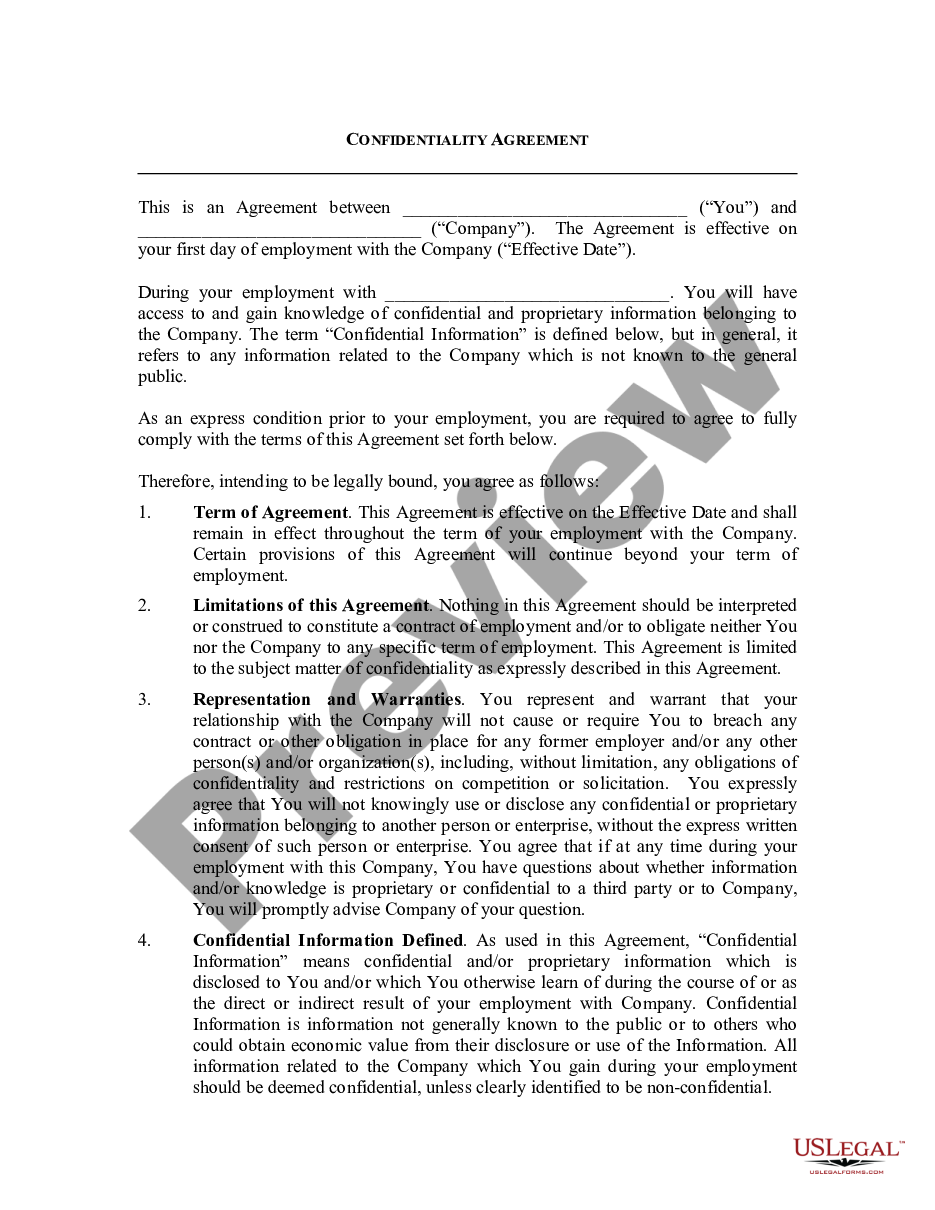
The Confidentiality Statement and Agreement for an Employee is a legal document that establishes a mutual understanding between an employer and employee regarding the handling of sensitive information. This form ensures that confidential information, including client data and company secrets, is protected from unauthorized disclosure. This distinguishes it from other employment agreements, focusing specifically on confidentiality requirements in the workplace.
What’s included in this form
- Identification of the company and employee involved in the agreement.
- Commitment to maintain confidentiality of sensitive business-related information.
- Conditions under which information may be disclosed, such as legal obligations.
- Agreement to keep specific documents, like client lists and strategic plans, confidential.
- Signatures of both the employee and a witness to validate the agreement.
When to use this form
This form should be used when hiring employees who will have access to confidential information about the company, its clients, or its employees. It is particularly crucial for roles that involve handling sensitive documents, client interactions, or strategic planning. Using this form helps protect the company from potential data breaches and ensures employees understand their obligations regarding confidentiality.
Who needs this form
- Employers looking to protect their company's confidential information.
- HR professionals involved in drafting and enforcing employment agreements.
- Employees who will access sensitive or proprietary information as part of their job.
- Legal advisors ensuring compliance in confidentiality practices within the organization.
Completing this form step by step
- Identify the parties involved by filling in the name of the company and the employee.
- Clearly outline the type of confidential information that needs protection.
- Specify the exceptions to confidentiality, particularly regarding legal disclosures.
- Collect signatures from both the employee and a witness to validate the agreement.
- Record the date on which the agreement is signed.
Notarization requirements for this form
This form usually doesn’t need to be notarized. However, local laws or specific transactions may require it. Our online notarization service, powered by Notarize, lets you complete it remotely through a secure video session, available 24/7.
Get your form ready online
Our built-in tools help you complete, sign, share, and store your documents in one place.
Make edits, fill in missing information, and update formatting in US Legal Forms—just like you would in MS Word.
Download a copy, print it, send it by email, or mail it via USPS—whatever works best for your next step.
Sign and collect signatures with our SignNow integration. Send to multiple recipients, set reminders, and more. Go Premium to unlock E-Sign.
If this form requires notarization, complete it online through a secure video call—no need to meet a notary in person or wait for an appointment.
We protect your documents and personal data by following strict security and privacy standards.

Make edits, fill in missing information, and update formatting in US Legal Forms—just like you would in MS Word.

Download a copy, print it, send it by email, or mail it via USPS—whatever works best for your next step.

Sign and collect signatures with our SignNow integration. Send to multiple recipients, set reminders, and more. Go Premium to unlock E-Sign.

If this form requires notarization, complete it online through a secure video call—no need to meet a notary in person or wait for an appointment.

We protect your documents and personal data by following strict security and privacy standards.
Avoid these common issues
- Failing to have the form signed by a witness, which can invalidate the agreement.
- Using vague language that doesn't explicitly define what constitutes confidential information.
- Not updating the agreement when there are changes in the company's policies or employee roles.
- Neglecting to review and ensure compliance with state-specific rules on confidentiality.
Why use this form online
- Convenience of instantly downloading and filling out the form at your own pace.
- Editability allows users to customize the agreement to address specific company needs.
- Reliability of templates drafted by licensed attorneys ensures legal soundness.
- Accessibility from various devices makes it easy to retrieve and complete the form.
Summary of main points
- The Confidentiality Statement and Agreement is essential for protecting confidential information within a company.
- It is vital for employees to understand their duties concerning confidentiality.
- Proper completion and witnessing of this form enhance its legal standing.
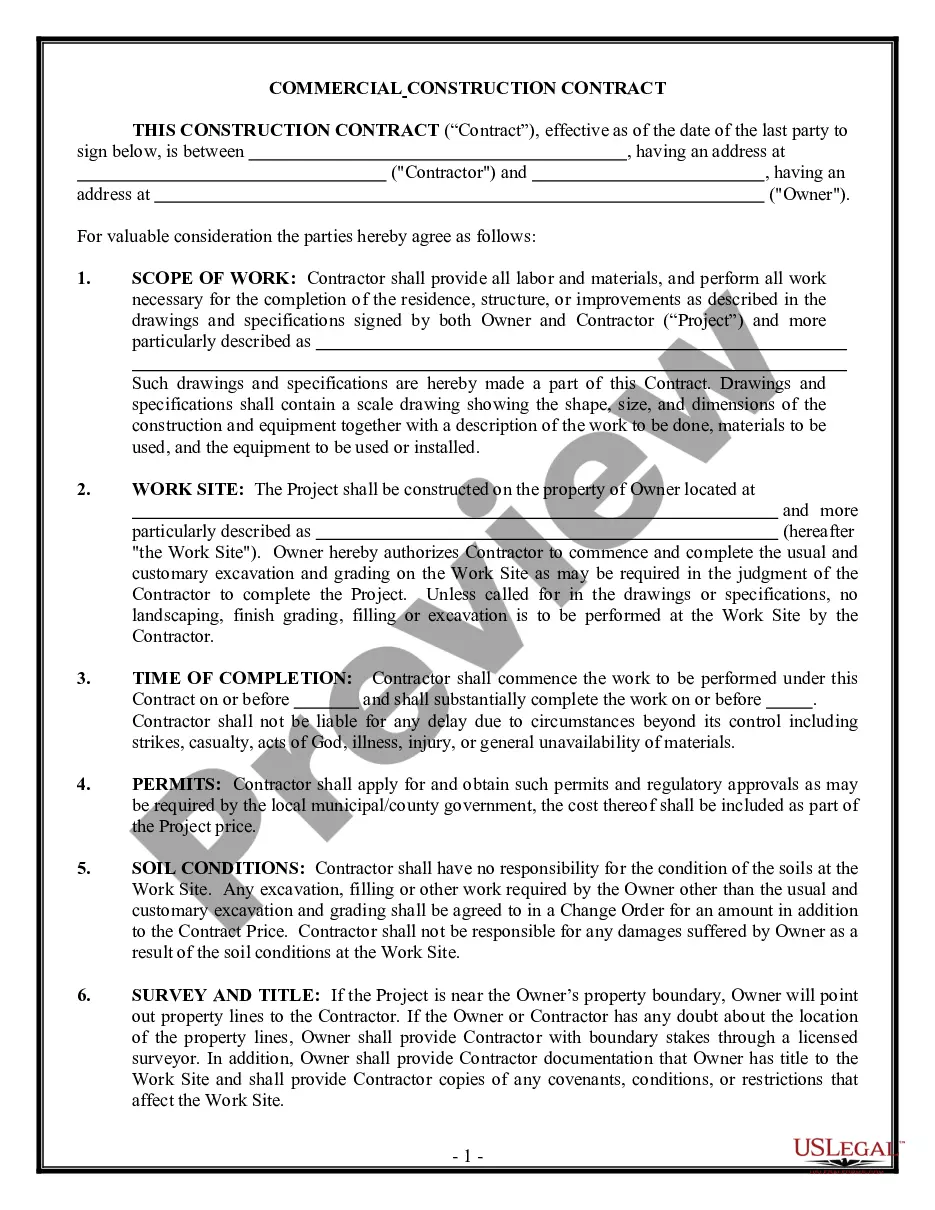
Looking for another form?

Form popularity
FAQ
A definition of confidential information. Who is involved. Why the recipient knows the information. Exclusions or limits on confidential information. Receiving party's obligations. Time frame or term. Discloser to the recipient.
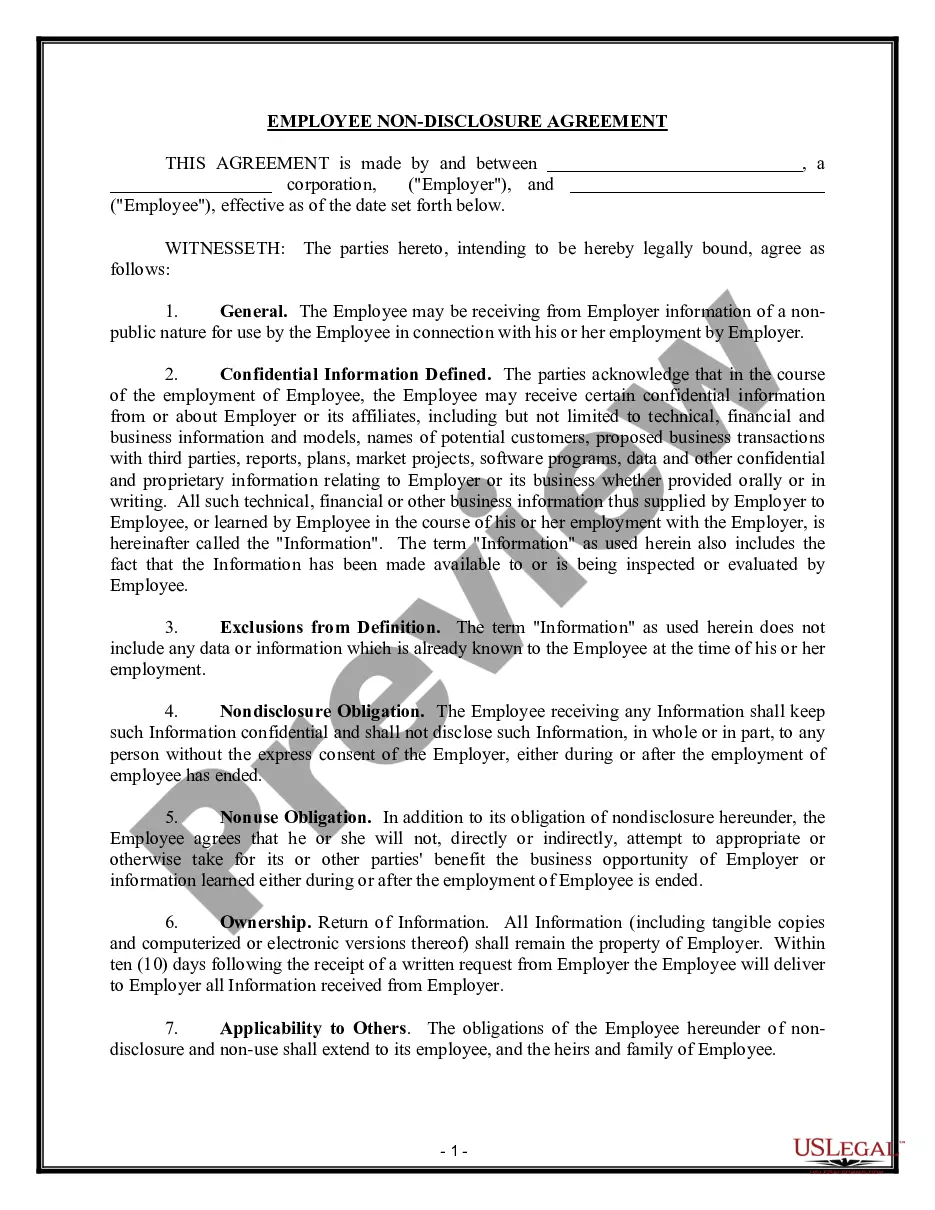
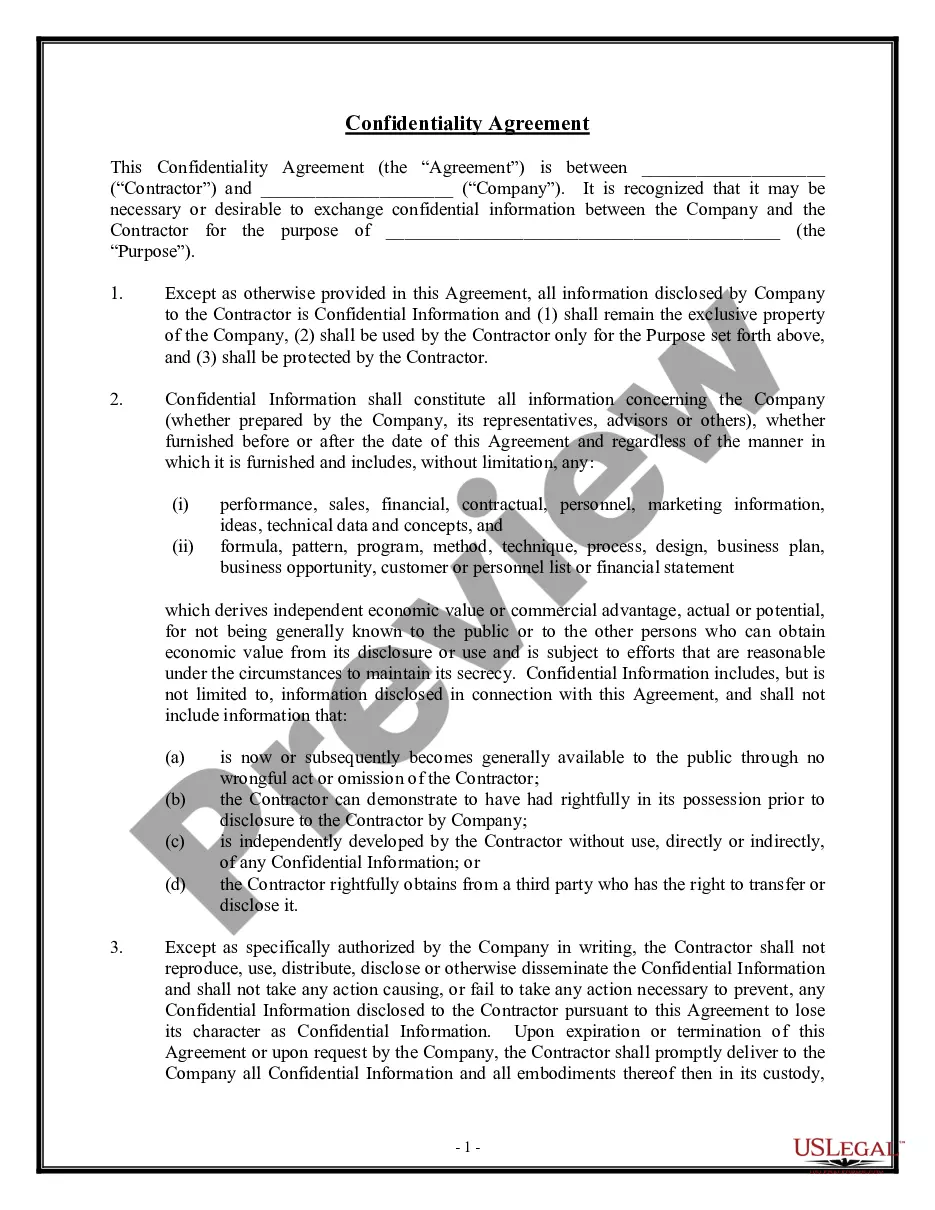
A confidentiality agreement (also called a nondisclosure agreement or NDA) is a legally binding contract in which a person or business promises to treat specific information as a trade secret and promises not to disclose the secret to others without proper authorization.
Depending on the complexity of what you need protected and the number of parties involved, the cost of having an NDA drafted can vary significantly. When you hire a lawyer in the Priori network, drafting an NDA typically costs anywhere from $175-$1,500.
It is a contract through which the parties agree not to disclose information covered by the agreement. An NDA creates a confidential relationship between the parties, typically to protect any type of confidential and proprietary information or trade secrets. As such, an NDA protects non-public business information.
Although California generally prohibits non-competition agreements, employers have commonly understood that they could prevent an employee and his or her new employer from using former employers' confidential information.
2. Clearly label all confidential information as confidential. This means writing confidential on documents or any folder you keep them in. If you are sending an email, make sure the title clearly identifies it as confidential.
Set the date of the agreement. Describe the two parties, sometimes called the Disclosing Party and the Receiving Party.7feff Include names and identification, so there can be no misunderstanding about who signed the agreement.
2. Clearly label all confidential information as confidential. This means writing confidential on documents or any folder you keep them in. If you are sending an email, make sure the title clearly identifies it as confidential.
A confidentiality agreement is a written legal contract between an employer and an employee. The confidentiality agreement lays out binding terms and conditions that prohibit the employee from disclosing company confidential and proprietary information.