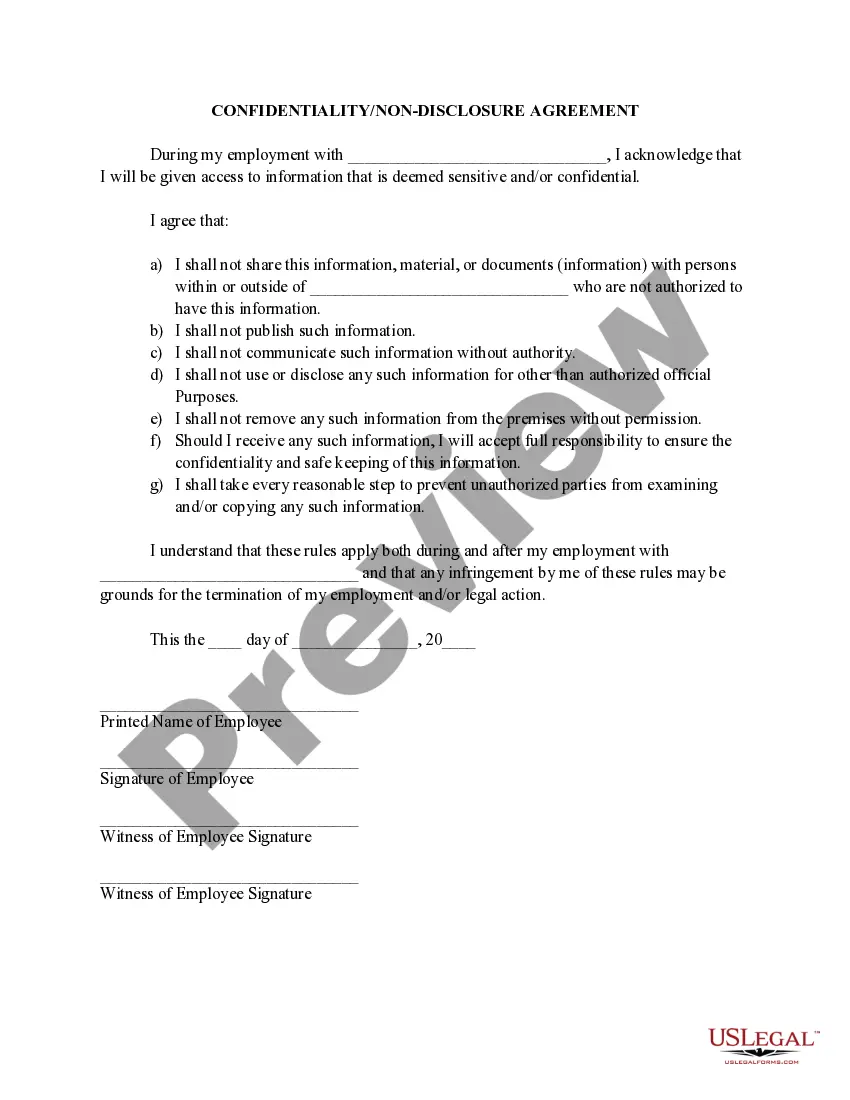
Simple Confidentiality or Non-Disclosure Agreement between Employee and Employer
What is this form?
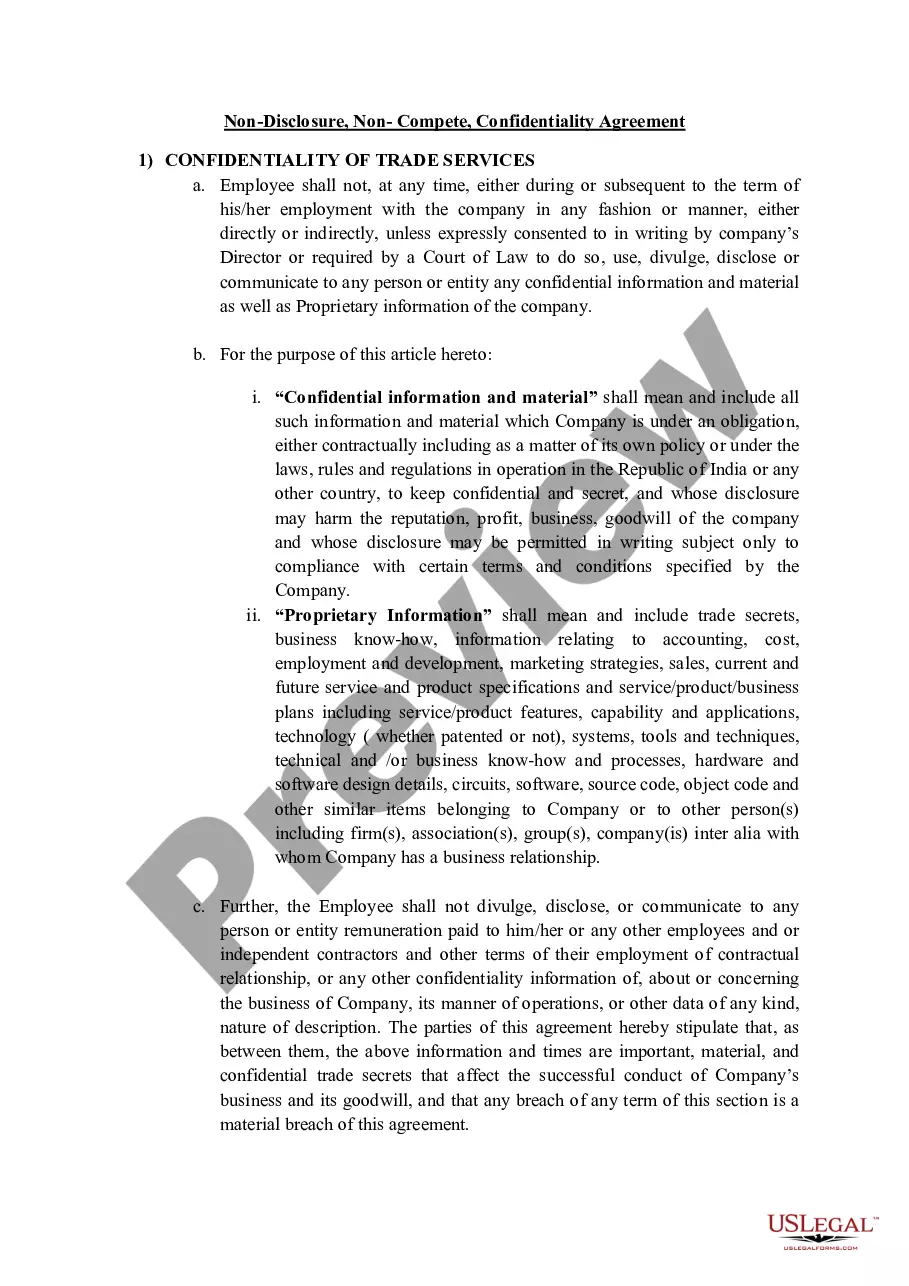
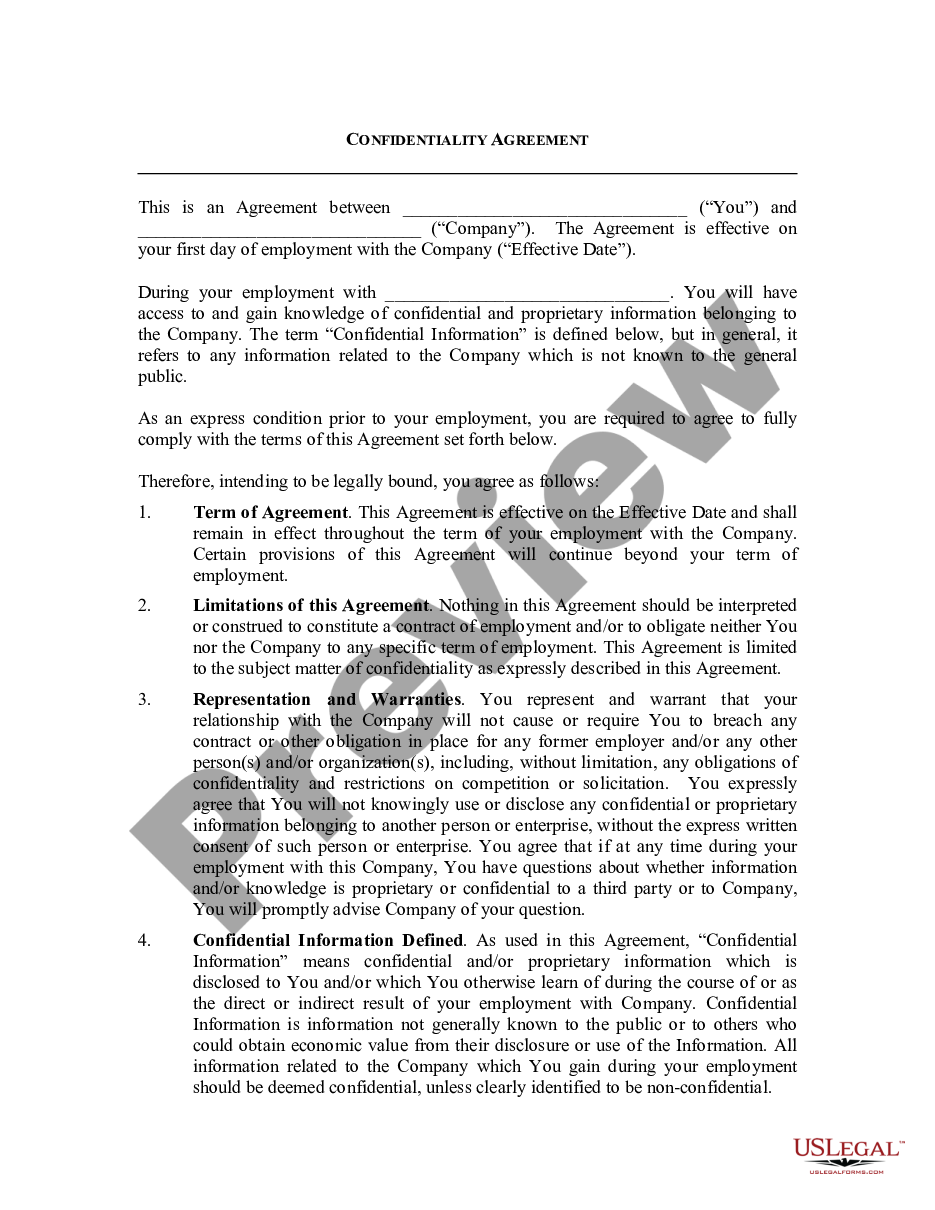
The Simple Confidentiality or Non-Disclosure Agreement between Employee and Employer is a legal document that establishes a mutual understanding of confidentiality between an employee and their employer. This one-page agreement outlines the obligations of the employee regarding the handling of sensitive information obtained during employment. Unlike other confidentiality agreements, this simplified version focuses on the essential elements needed to protect confidential information in a straightforward manner.
Main sections of this form
- Identification of the employer and employee.
- Definition of sensitive and/or confidential information.
- Obligations regarding the sharing, publishing, and use of confidential information.
- Responsibilities during and after employment.
- Consequences for breach of confidentiality.
When to use this form
This form should be used when an employee is granted access to sensitive company information during their employment. It helps to formalize the expectations surrounding confidentiality, ensuring that both parties understand their responsibilities. Common scenarios include new job onboarding, when accessing proprietary data, or when employees work in roles involving trade secrets or client information.
Who this form is for
- Employers who need to protect confidential information from being disclosed by employees.
- Employees who are given access to sensitive company data during their employment.
- Companies in industries where confidentiality is crucial, such as technology, finance, or healthcare.
How to prepare this document
- Identify the parties involved by filling in the names of the employer and employee.
- Clearly define the information considered confidential.
- Ensure the obligations regarding confidentiality are properly listed.
- Include the date of signing and signatures of both employee and witnesses.
- Make copies for all parties involved for their records.
Notarization guidance
This form does not typically require notarization unless specified by local law. It is advisable to confirm local requirements to ensure the agreement is enforceable.
Get your form ready online
Our built-in tools help you complete, sign, share, and store your documents in one place.
Make edits, fill in missing information, and update formatting in US Legal Forms—just like you would in MS Word.
Download a copy, print it, send it by email, or mail it via USPS—whatever works best for your next step.
Sign and collect signatures with our SignNow integration. Send to multiple recipients, set reminders, and more. Go Premium to unlock E-Sign.
If this form requires notarization, complete it online through a secure video call—no need to meet a notary in person or wait for an appointment.
We protect your documents and personal data by following strict security and privacy standards.

Make edits, fill in missing information, and update formatting in US Legal Forms—just like you would in MS Word.

Download a copy, print it, send it by email, or mail it via USPS—whatever works best for your next step.

Sign and collect signatures with our SignNow integration. Send to multiple recipients, set reminders, and more. Go Premium to unlock E-Sign.

If this form requires notarization, complete it online through a secure video call—no need to meet a notary in person or wait for an appointment.

We protect your documents and personal data by following strict security and privacy standards.
Typical mistakes to avoid
- Failing to clearly define what constitutes confidential information.
- Not having enough witnesses or failing to include witness signatures.
- Allowing the form to remain unsigned or undated.
- Using vague language that can lead to varying interpretations of obligations.
Advantages of online completion
- Convenience of accessing and downloading the form anytime.
- Editability to customize the agreement as per specific needs.
- Reliability of having a legally vetted document drafted by licensed attorneys.
Looking for another form?
Form popularity
FAQ
Examples of confidentiality clauses include: Example 1: Preventing employees from talking to the press. Example 2: Limiting the disclosure of on-site business practices. Example 3: Stopping business partners from sharing IP rights.
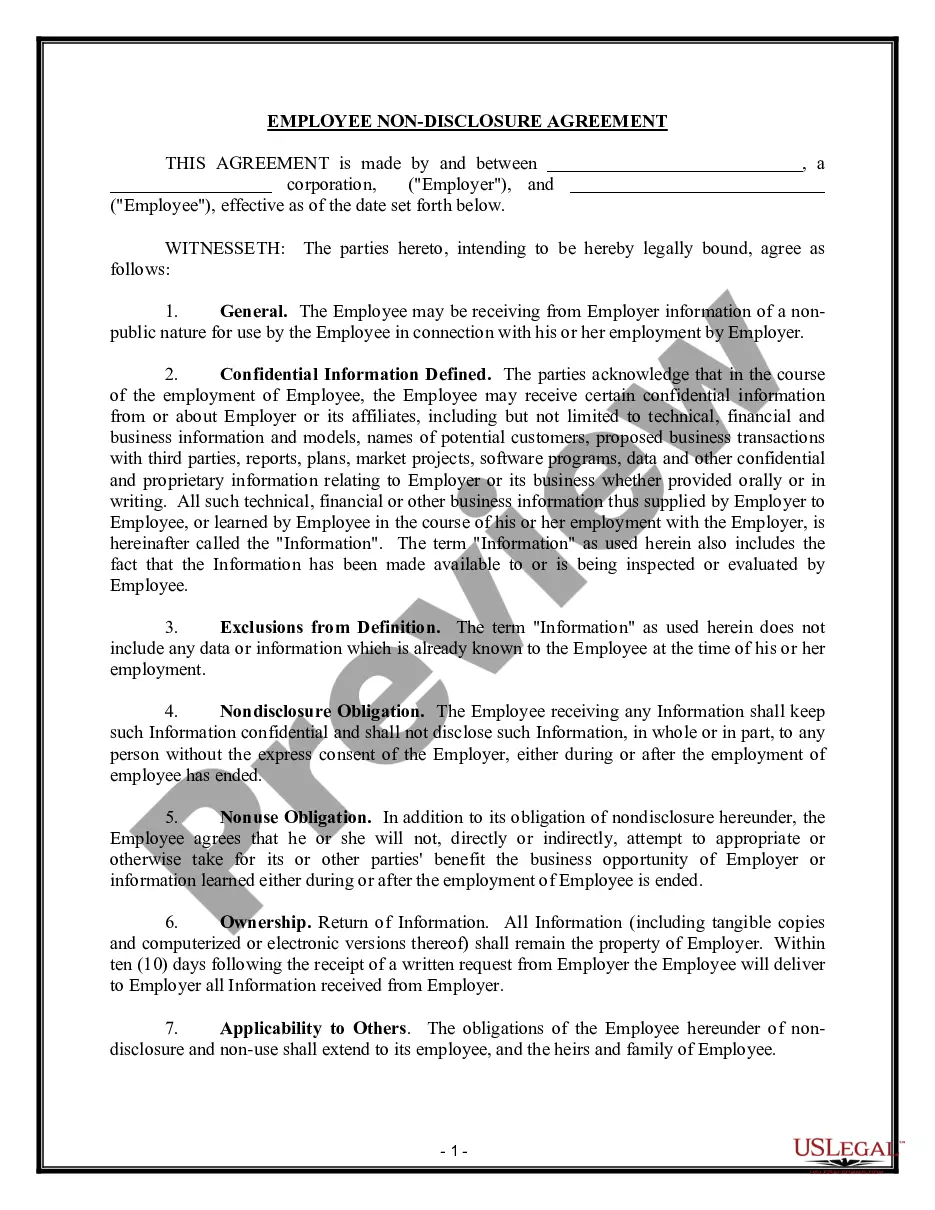
I acknowledge that all Information is strictly confidential and I agree that I shall not reveal to any person or entity, or use any Information at any time, except as expressly directed by firm, or as may be required by law.
This agreement is made between ("Employee") and Company Name on 20. Employee will perform services for Company Name that may require Company Name to disclose confidential and proprietary information ("Confidential Information") to Employee.
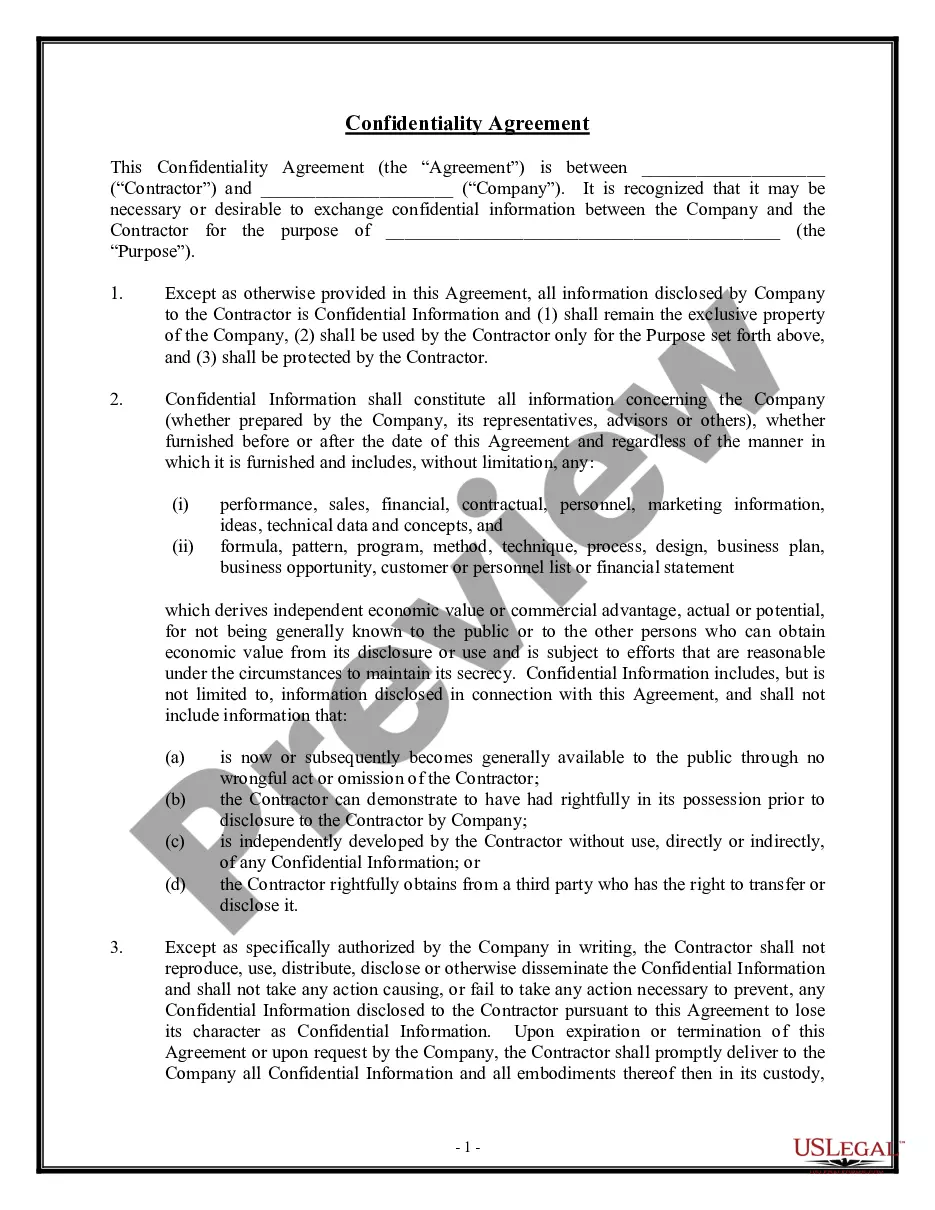
Describe what the other party is agreeing to. Exercising reasonable precautions against disclosure of the information. Not disclosing Confidential Information without the written consent of the Disclosing Party. Using the information only for business purposes, and only on a ?need to know? basis.
I agree that I shall not during, or at any time after the termination of my employment with the Company, use for myself or others, or disclose or divulge to others including future employees, any trade secrets, confidential information, or any other proprietary data of the Company in violation of this agreement.
Employee agrees that he/she will never use any Confidential Information for his/her own benefit or for the benefit of any person or entity other than the Company, and will not permit or allow any Confidential Information to be used in competition with the Company.
A typical confidentiality clause might say, "The phrases and circumstances of this Agreement are completely confidential between the parties and shall not be disclosed to anybody else. Any disclosure in violation shall be deemed a breach of this Agreement."
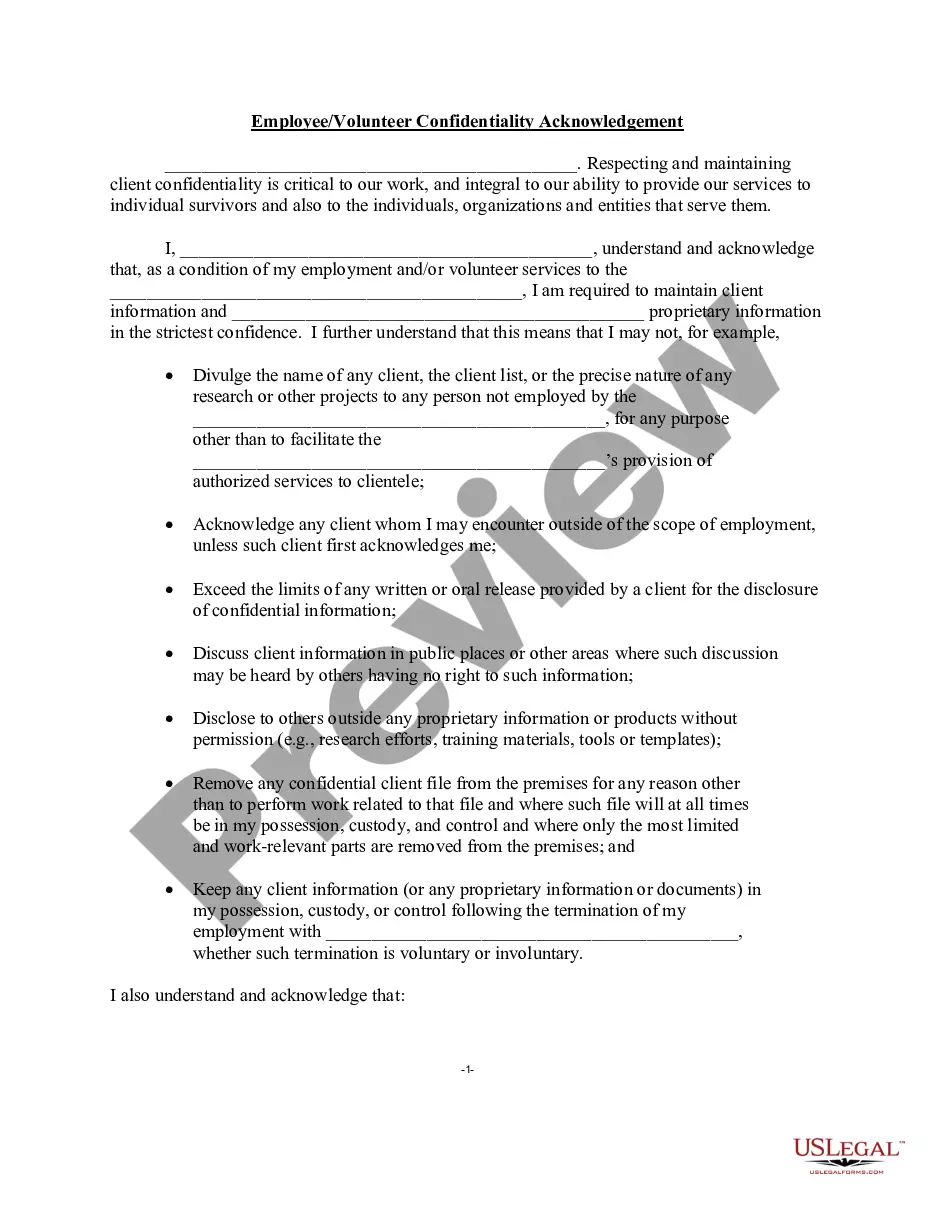
What is an Employee Non-Disclosure Agreement? An NDA is a contractual agreement (also known as a ?restrictive covenant?) to protect sensitive information. An employer can ask that a new employee sign an NDA to protect legitimate, confidential business interests such as trade secrets and business practices.