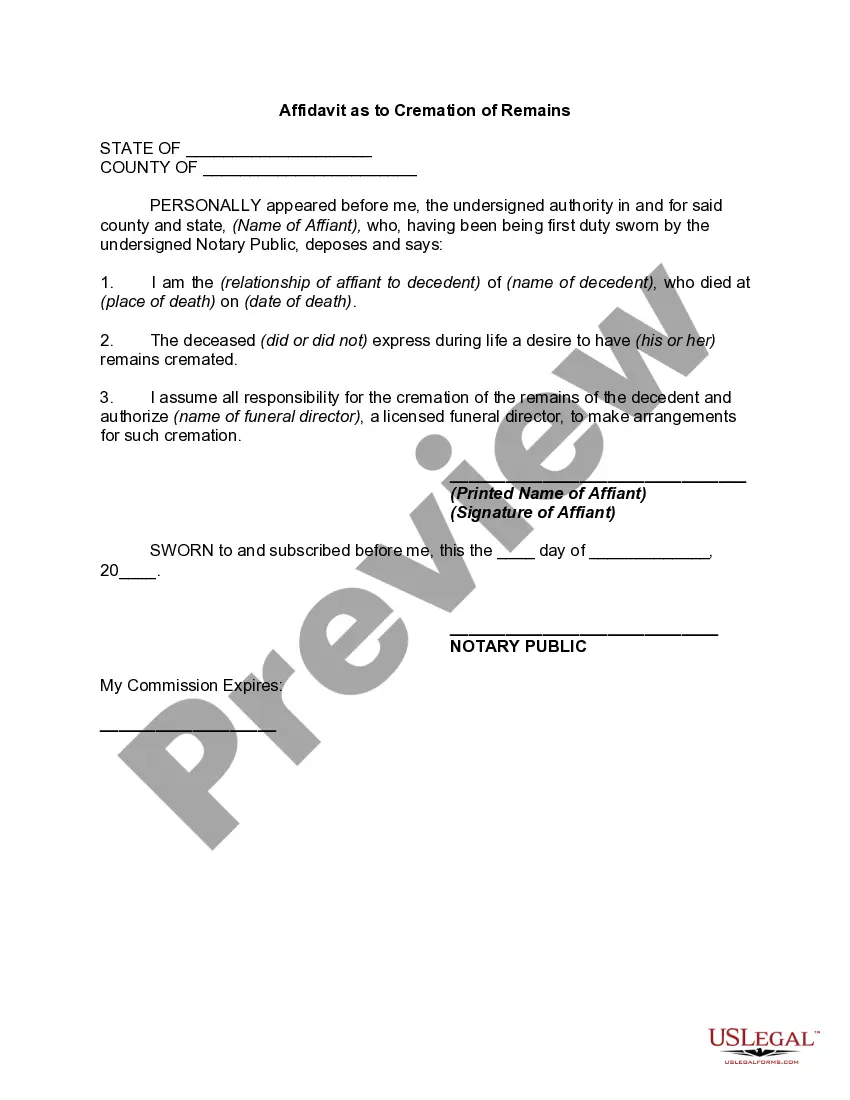
Affidavit as to Cremation of Remains
What is this form?
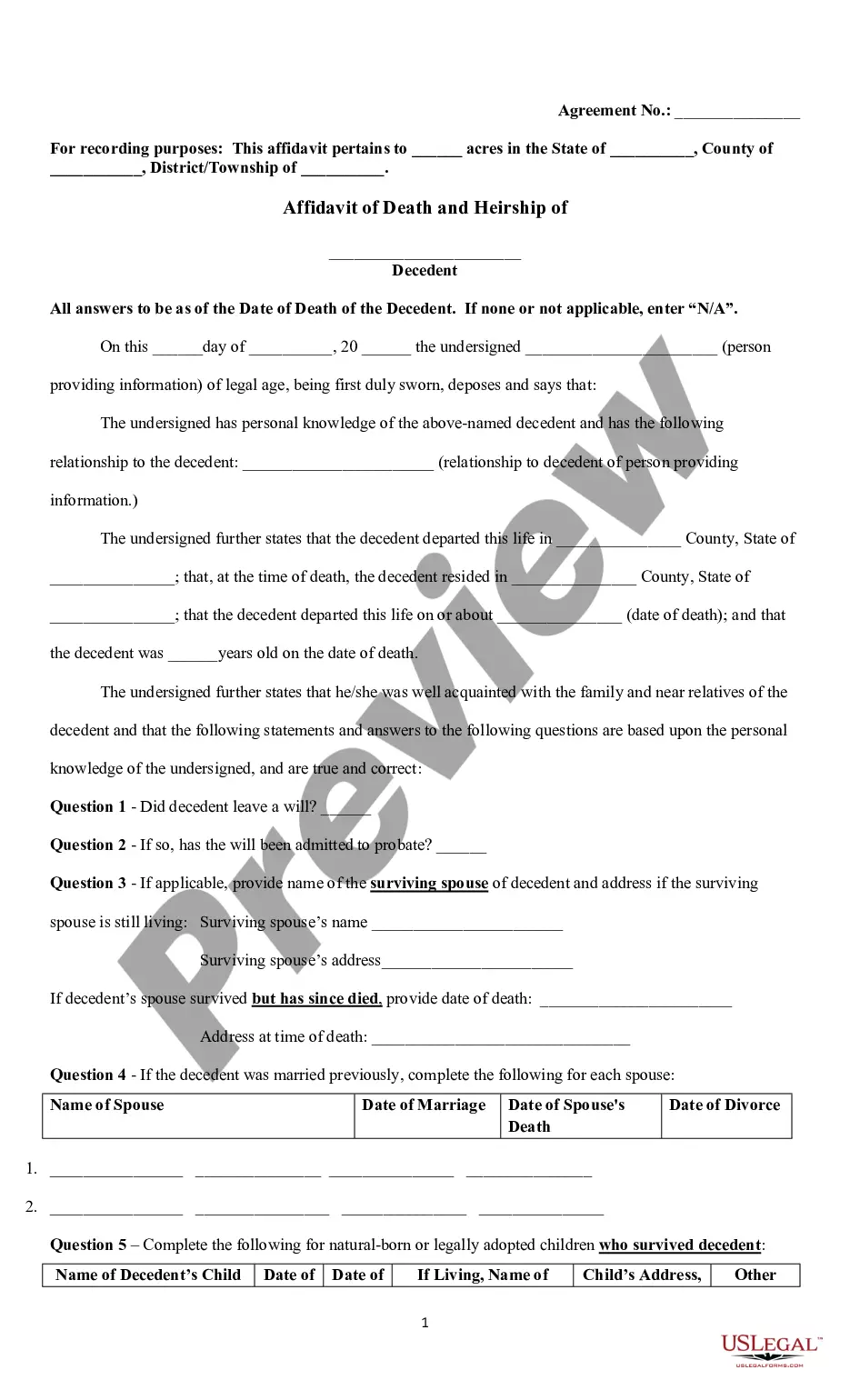
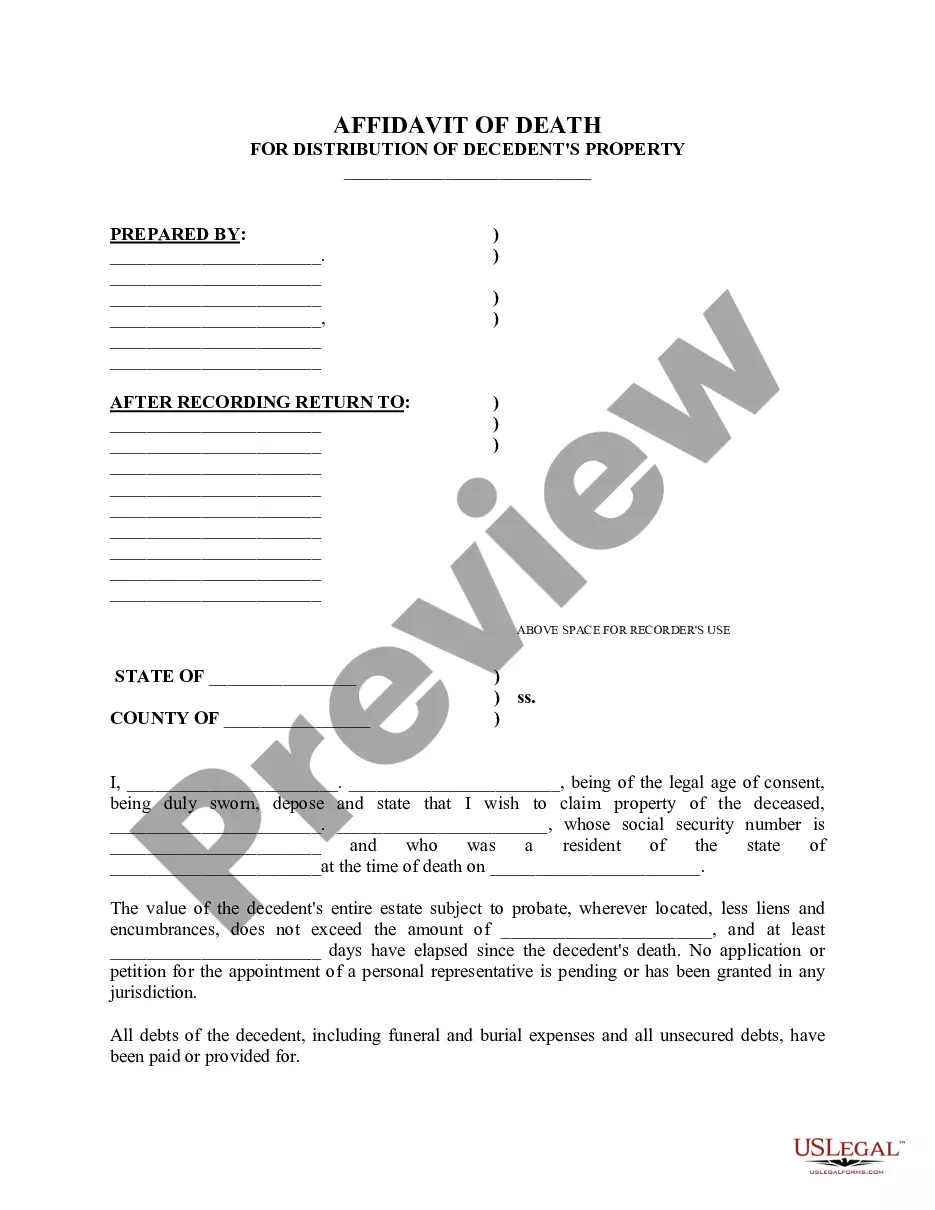
The Affidavit as to Cremation of Remains is a legal document where an individual, known as the affiant, swears to the facts surrounding the cremation of a deceased person. This form serves as proof of authorization for the cremation process, enabling the funeral director to carry out the necessary arrangements. Unlike a death certificate or burial permit, this affidavit specifically pertains to the cremation aspect of handling remains and clarifies the affiant's relationship with the deceased and their consent for cremation.
Key components of this form
- Name and relationship of the affiant to the deceased.
- Name of the deceased and details about their death.
When to use this document
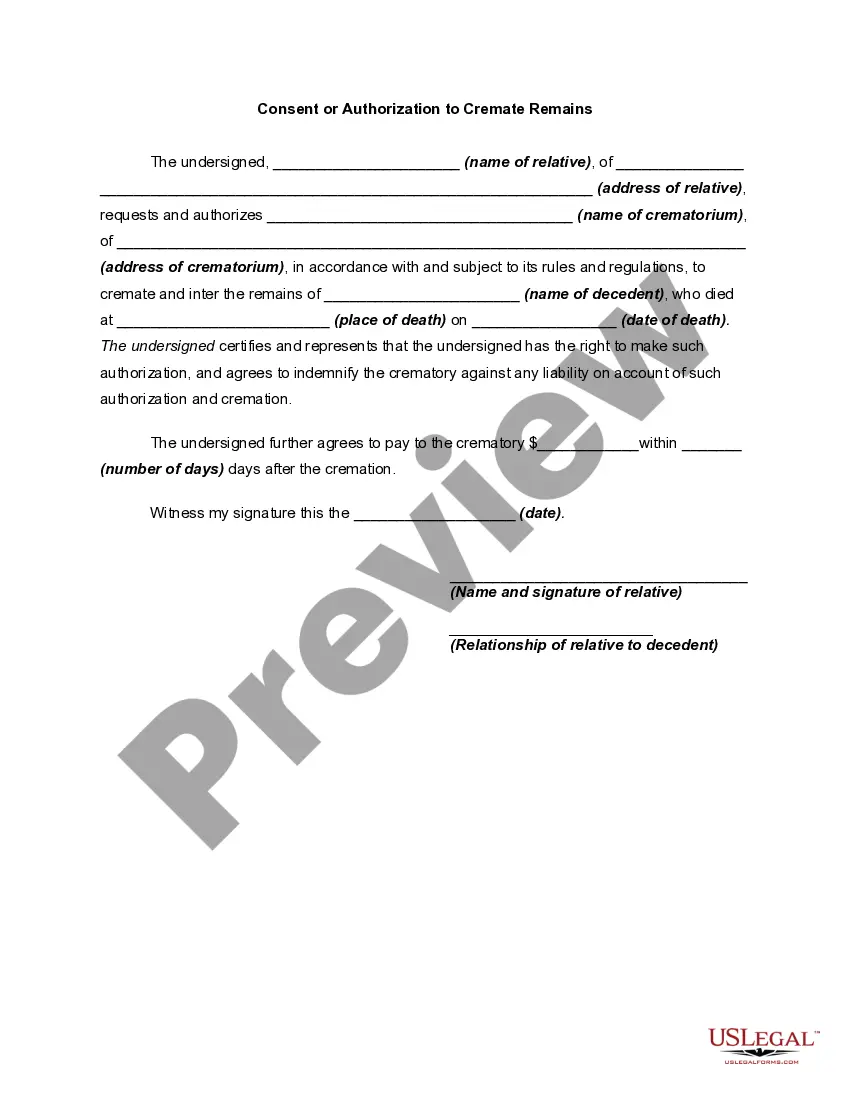
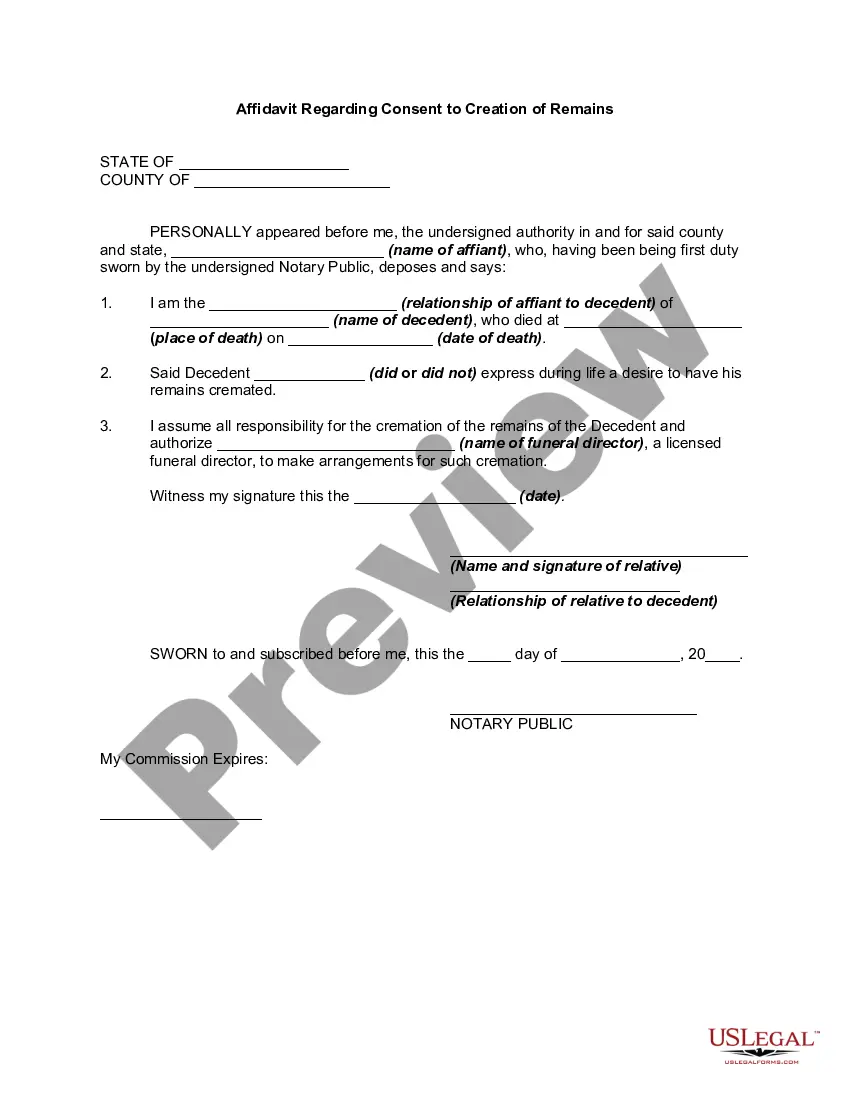
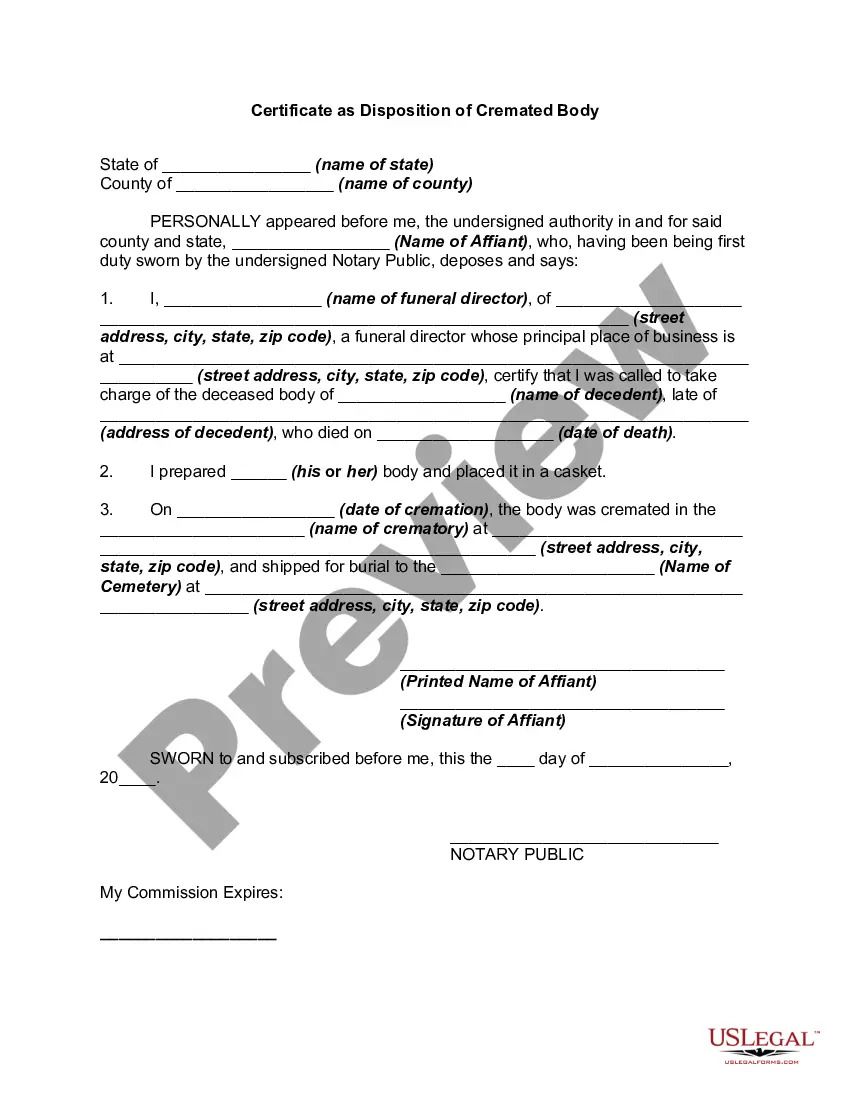
This affidavit is typically used when a family member or other close relation needs to authorize the cremation of a deceased individual. It is required when the funeral director needs clear proof that the appropriate person has consented to the cremation, particularly if the deceased did not leave any written instructions. This form may also be used in cases where local laws require a sworn statement to accompany the cremation request.
Intended users of this form
- Family members, such as children or spouses, of the deceased.
- Legal representatives or appointed agents with authority over the deceased's final wishes.
- Individuals responsible for arranging the funeral and cremation services.
Completing this form step by step
- Identify the affiant's name and their relationship to the deceased.
- Provide the name of the deceased, along with the date, time, and place of death.
- Indicate whether the deceased wanted cremation or not.
- Specify the name of the funeral director authorized to perform the cremation.
- Sign the affidavit in the presence of a notary public, who will verify your signature.
- Ensure the notary completes their section by signing and adding their seal.
Does this form need to be notarized?
This document requires notarization to meet legal standards. US Legal Forms provides secure online notarization powered by Notarize, allowing you to complete the process through a verified video call, available 24/7.
Get your form ready online
Our built-in tools help you complete, sign, share, and store your documents in one place.
Make edits, fill in missing information, and update formatting in US Legal Forms—just like you would in MS Word.
Download a copy, print it, send it by email, or mail it via USPS—whatever works best for your next step.
Sign and collect signatures with our SignNow integration. Send to multiple recipients, set reminders, and more. Go Premium to unlock E-Sign.
If this form requires notarization, complete it online through a secure video call—no need to meet a notary in person or wait for an appointment.
We protect your documents and personal data by following strict security and privacy standards.

Make edits, fill in missing information, and update formatting in US Legal Forms—just like you would in MS Word.

Download a copy, print it, send it by email, or mail it via USPS—whatever works best for your next step.

Sign and collect signatures with our SignNow integration. Send to multiple recipients, set reminders, and more. Go Premium to unlock E-Sign.

If this form requires notarization, complete it online through a secure video call—no need to meet a notary in person or wait for an appointment.

We protect your documents and personal data by following strict security and privacy standards.
Mistakes to watch out for
- Failing to complete all necessary fields, particularly the affiant's relationship to the deceased.
- Omitting to have the form notarized, which can render it legally invalid.
- Not specifying the name of the funeral director, which can cause delays in the cremation process.
Advantages of online completion
- Convenient access to legal documents without the need for in-person meetings.
- Edit and customize the template easily to fit your specific situation.
- Ensures reliability by using professionally drafted forms vetted by licensed attorneys.
Key takeaways
- The Affidavit as to Cremation of Remains is essential for affirming cremation wishes.
- Proper completion includes notarization and clear statements regarding the deceased's desires.
- Consult local laws to ensure compliance with state-specific requirements for cremation documentation.
Looking for another form?
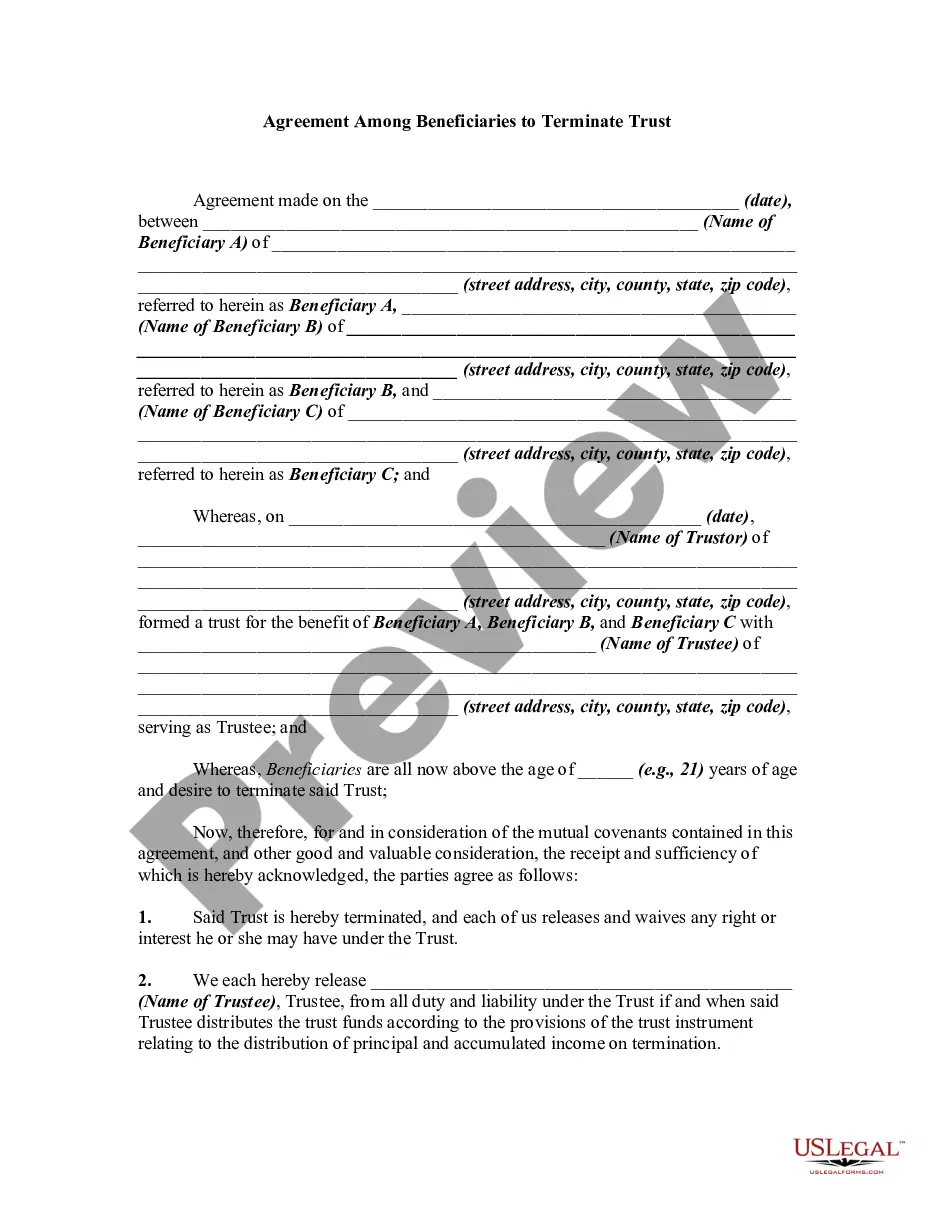
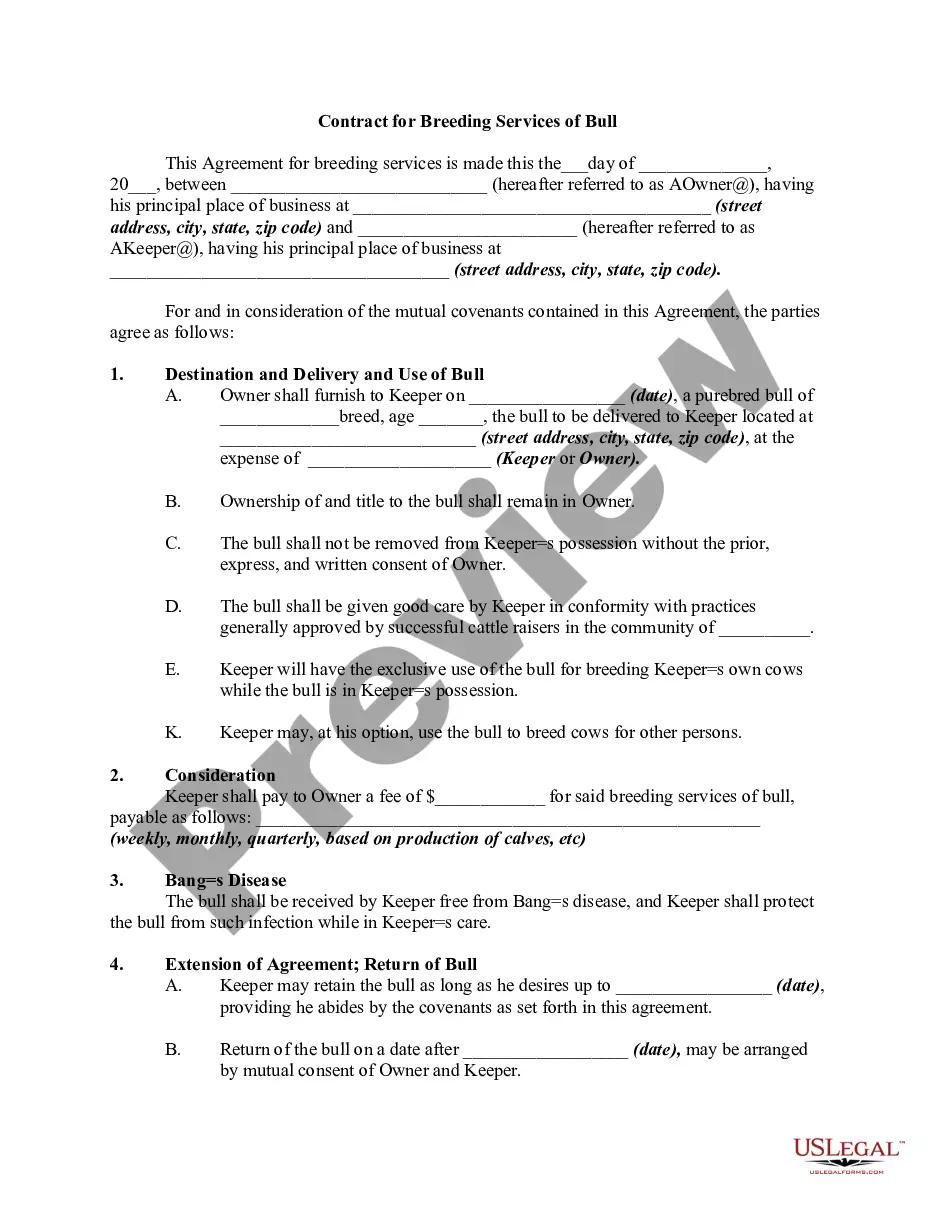
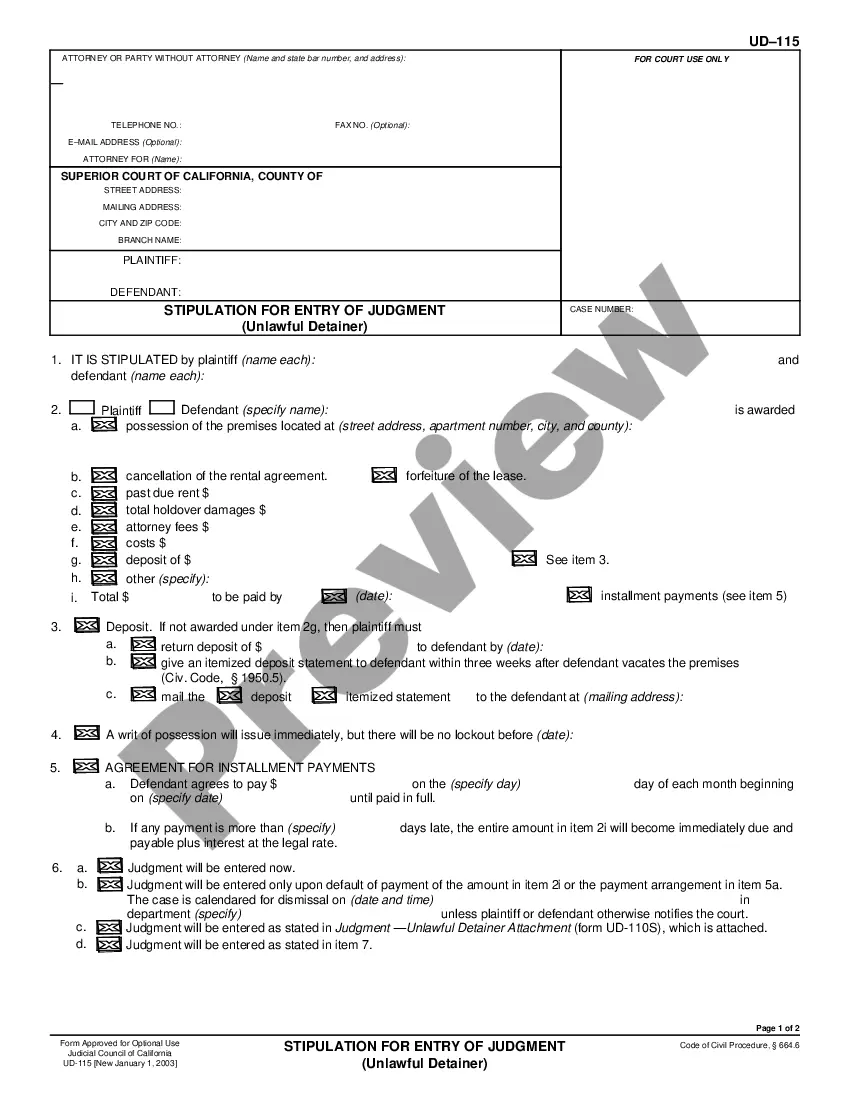
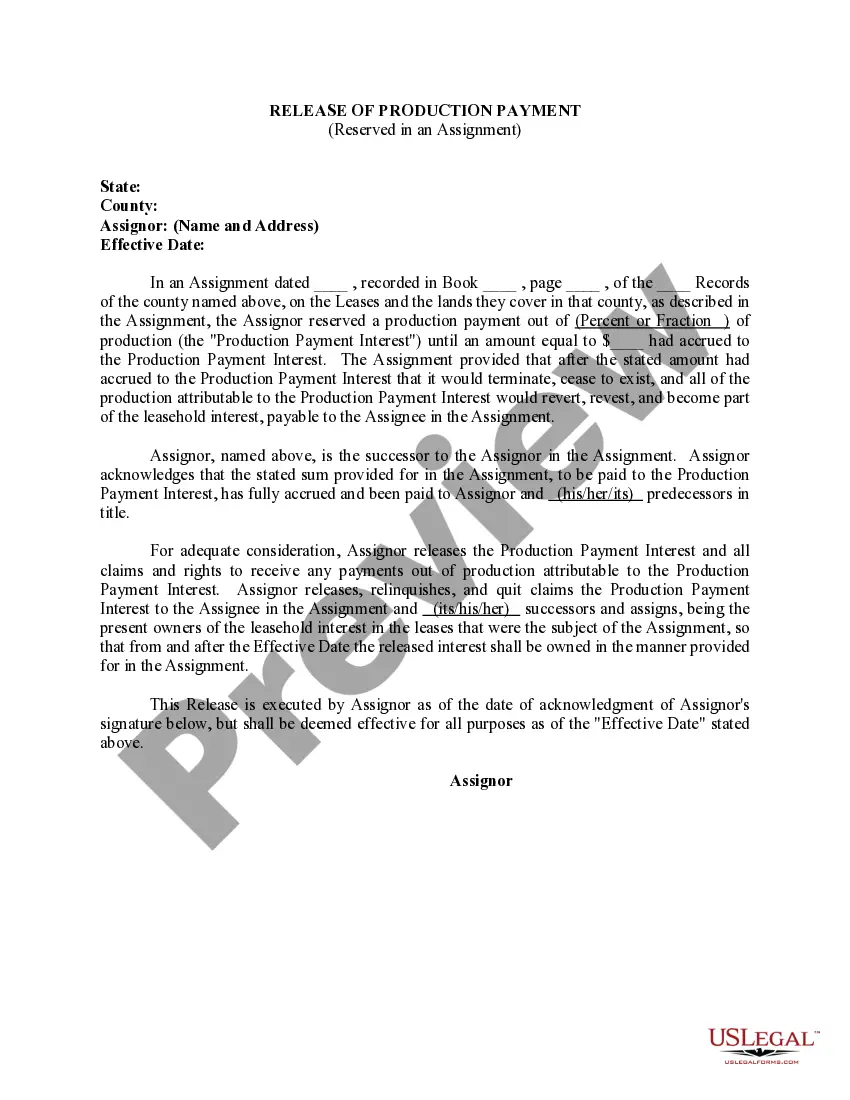
Form popularity
FAQ
How is the body prepared for cremation? Usually, the body is bathed, cleaned, and dressed before identification. There is no embalming unless you have a public viewing or you request it. Next, the technician removes jewelry or other items that you would like to keep.
When someone dies, they don't feel things anymore, so they don't feel any pain at all. If they ask what cremation means, you can explain that they are put in a very warm room where their body is turned into soft ashesand again, emphasize that it is a peaceful, painless process.
Before a cremation takes place, law-abiding funeral homes require positive identification of a deceased body. This means you or a trusted family member or friend must give the funeral home consent that the body shown is, in fact, your loved one.
There are no state laws in West Virginia prohibiting home burial, but local governments may have rules governing private burials. Before burying a body on private property or establishing a family cemetery, you should check with the county or town clerk for any zoning laws you must follow.
You don't get ash back. Once you burn off all the water, soft tissue, organs, skin, hair, cremation container/casket, etc., what you're left with is bone.
"Would you please stand for the committal". To everything there is a season and a time to every purpose on earth, a time to be born and a time to die. Here in this last act, in sorrow but without fear, in love and appreciation, we commit (deceased's name) to it's natural end.
The truth is that you cannot be present during a Direct Cremation.Once the Cremation is completed, your loved one's ashes will be returned to you. While some traditional funeral homes allow families to be present in the room during a loved one's cremation, it is not possible to attend a Direct Cremation.
It is possible to conduct a basic cremation (a cremation without any services) for just $1,125. However, you will find that the average cost of a direct cremation in West Virginia is nearer to $2,400. A direct cremation is the cheapest means to conduct a funeral disposition.
Laws governing cremation in West Virginia A body can only be cremated if the legal next of kin has signed a 'Cremation Authorization Form'. This form can be signed and self-authorized if you are preplanning a cremation.