Affidavit of Death
What is this form?
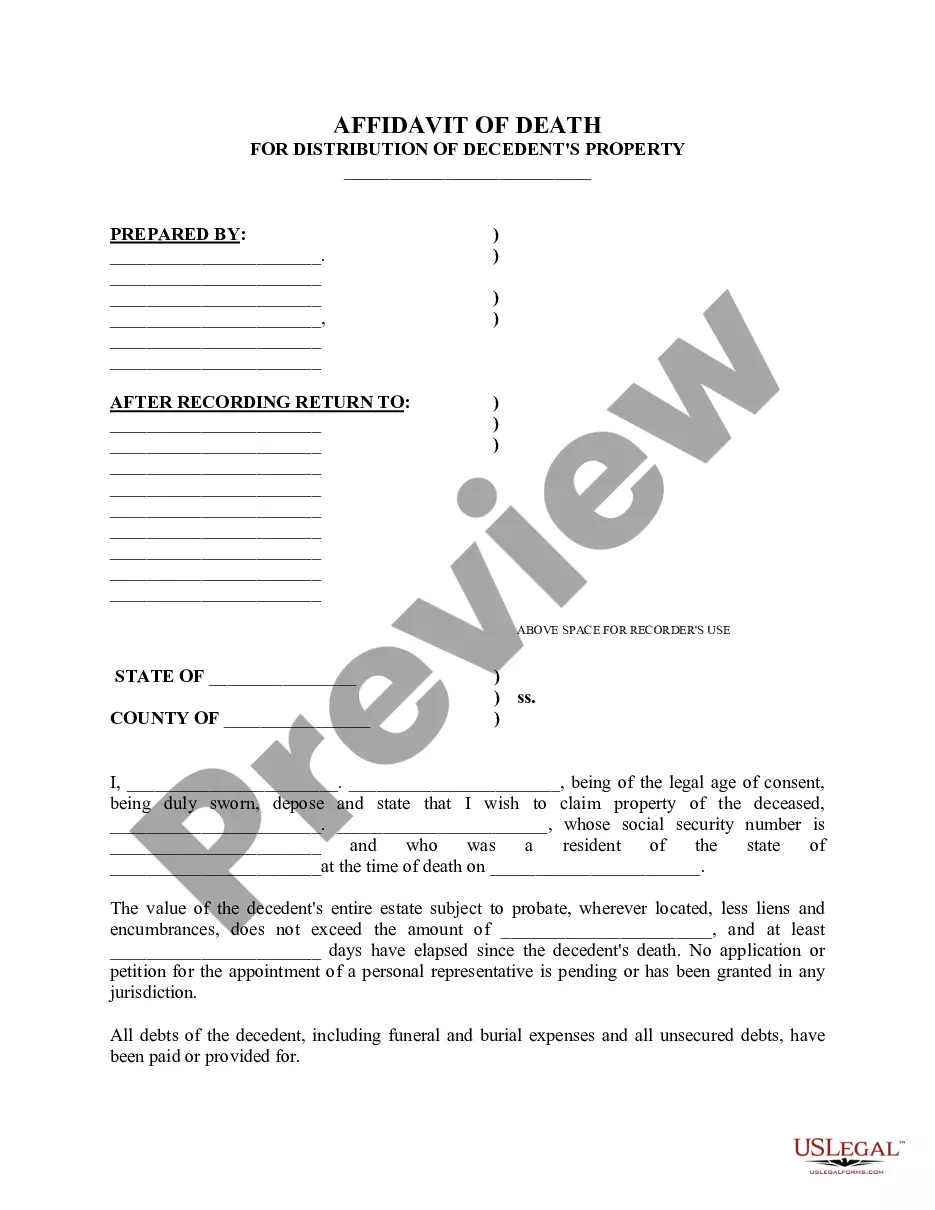
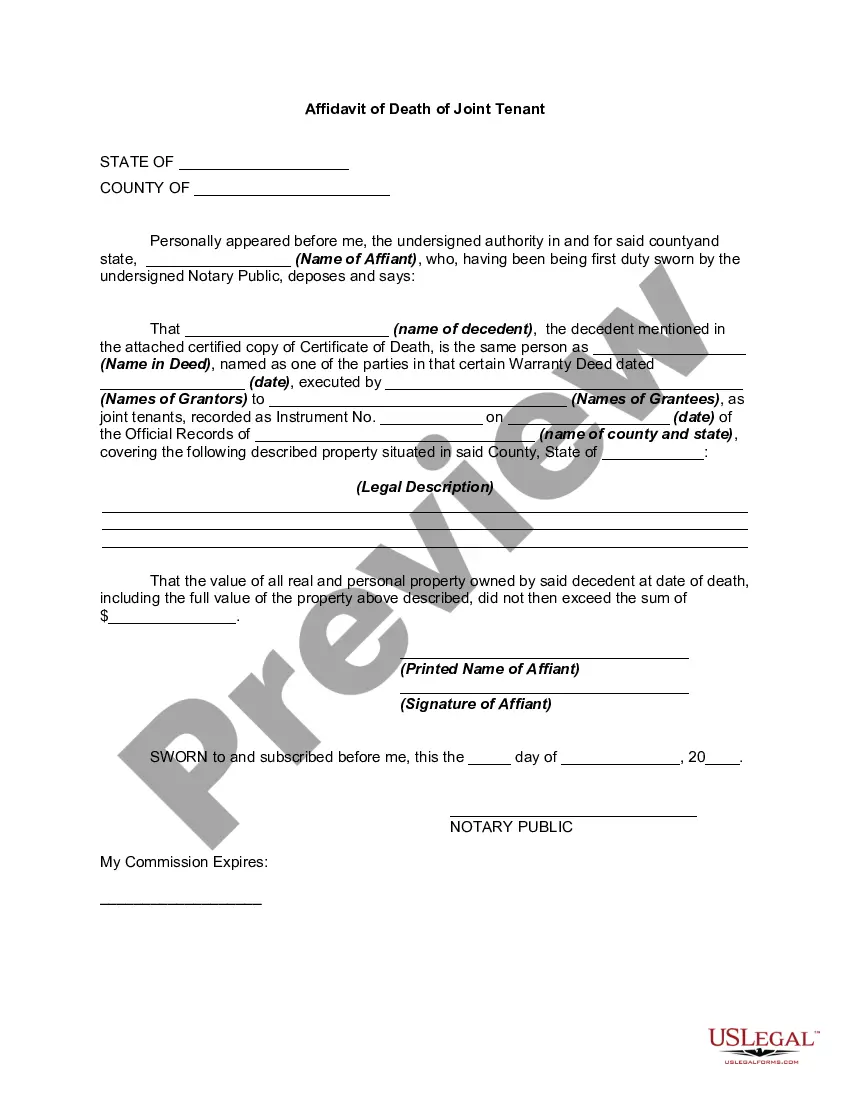
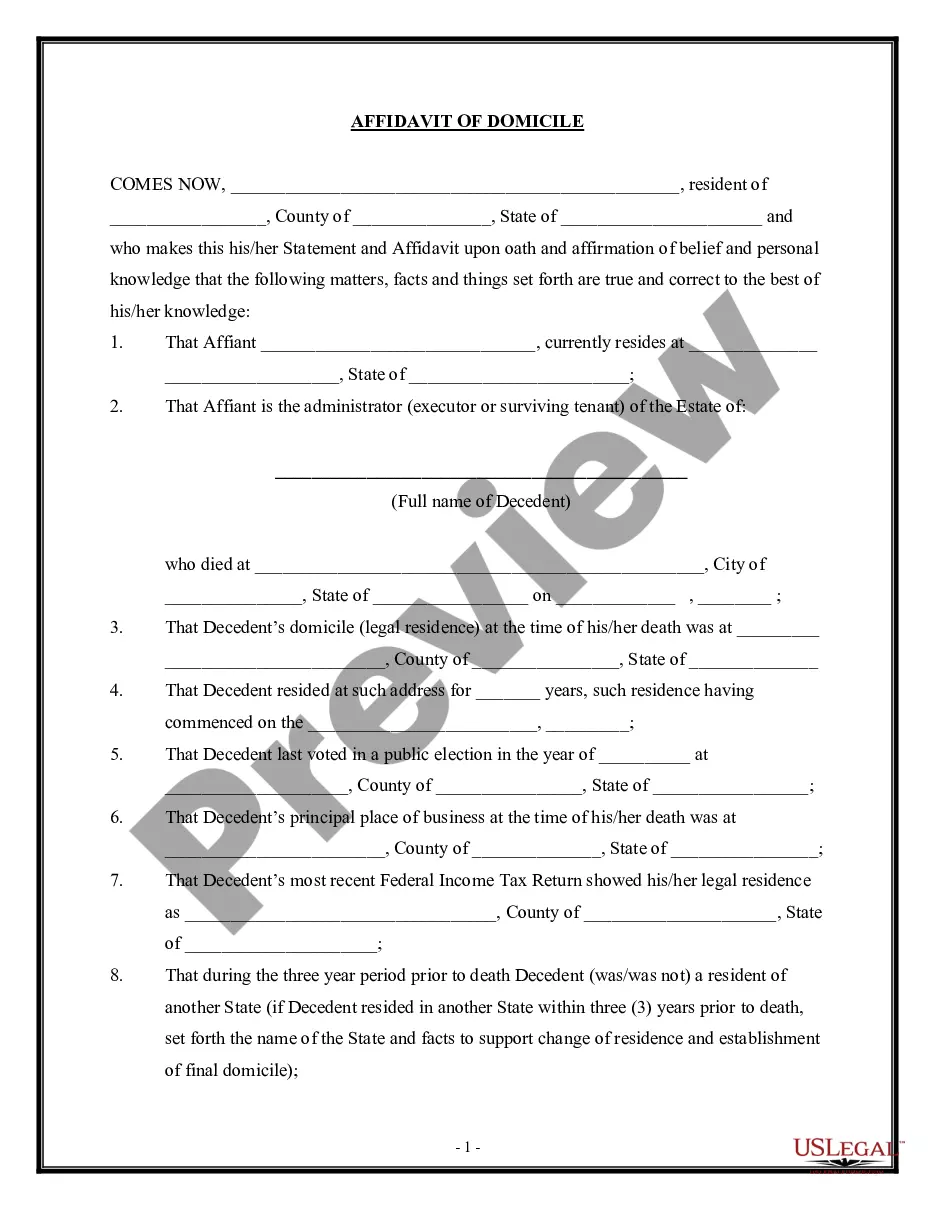
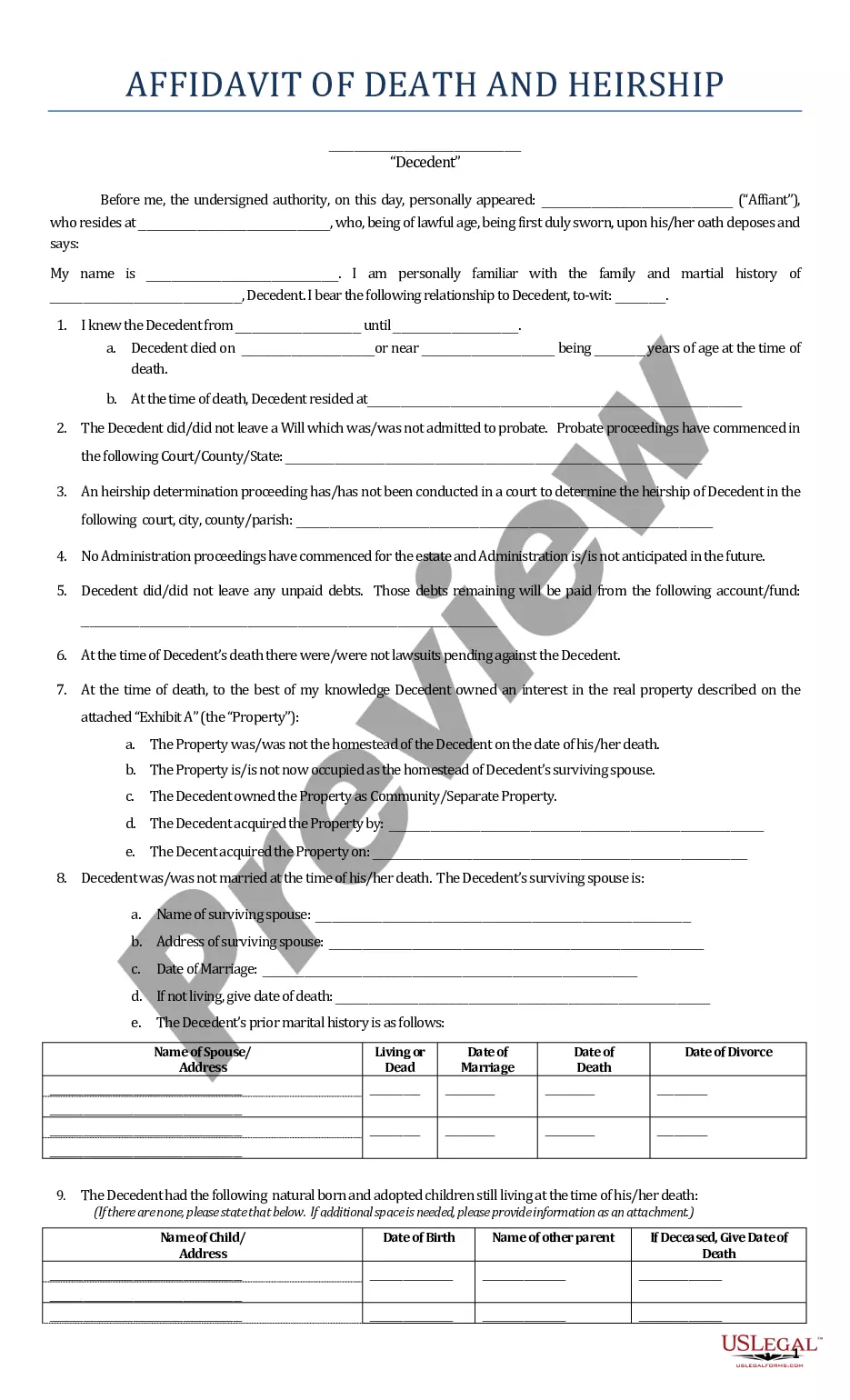
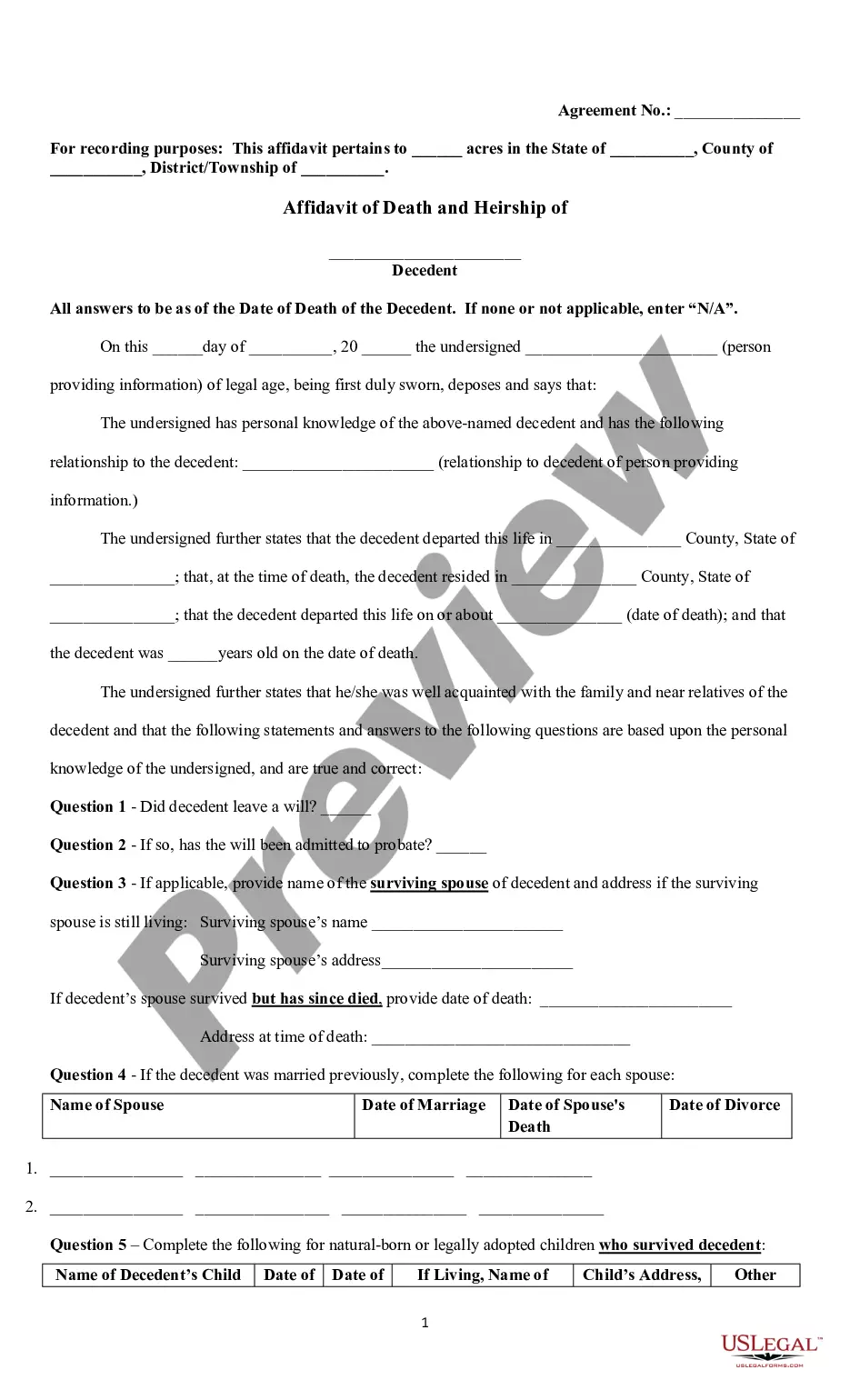
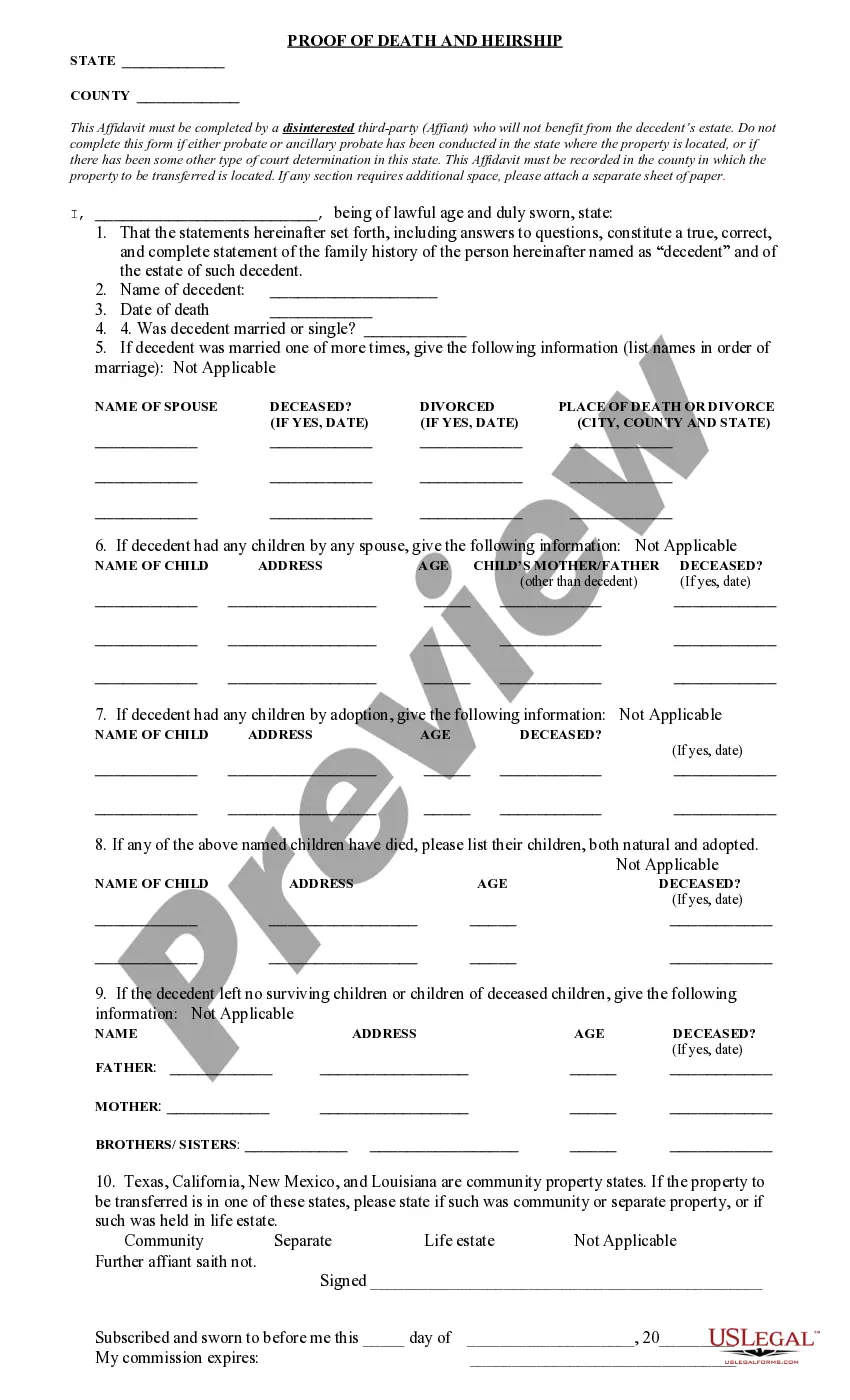
The Affidavit of Death is a legal document that confirms the death of an individual. This sworn statement is typically prepared by someone who has direct knowledge of the individual's passing and serves to facilitate the distribution of the deceasedâs property. Unlike other estate planning documents, an Affidavit of Death specifically attests to the fact of death and is generally filed alongside a certified copy of the death certificate.
Form components explained
- Identifying information of the decedent, including their name and social security number.
- Date of death and state of residence at the time of death.
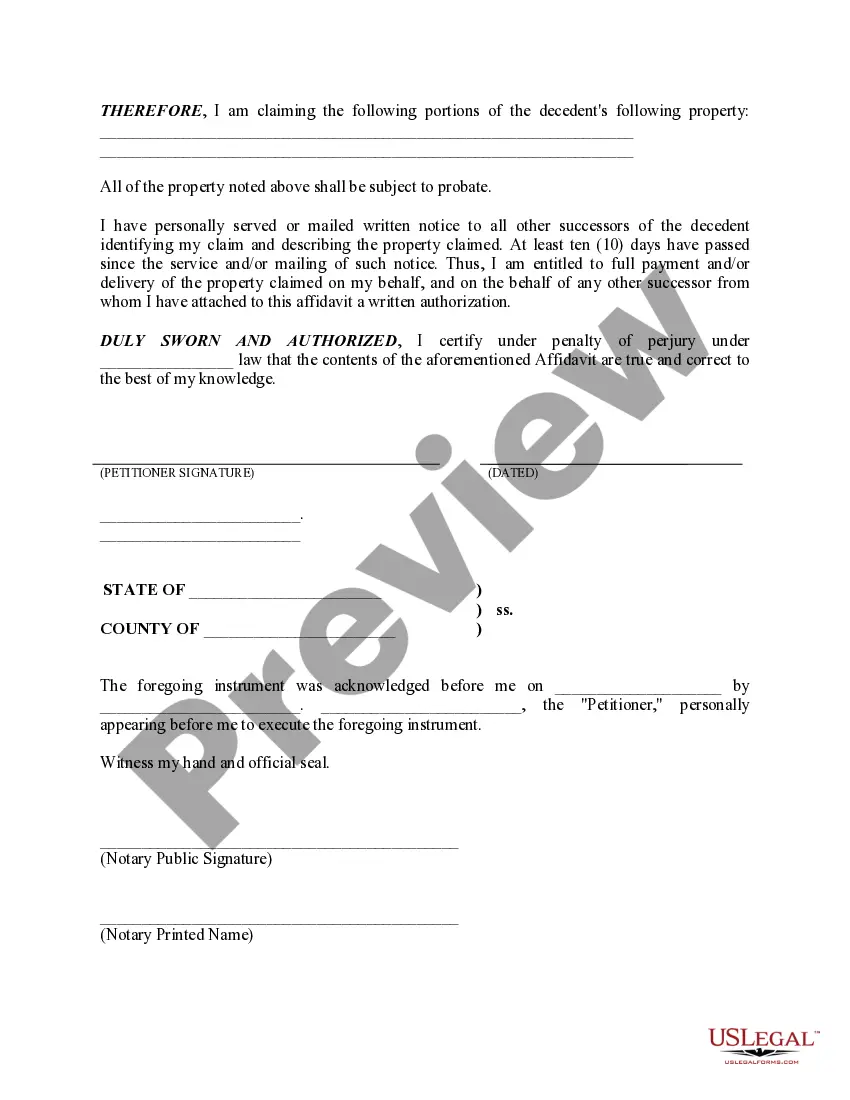
- Declaration of the sworn statement by the affiant regarding the decedent's estate.
- Details of the property being claimed from the decedent's estate.
- Notary acknowledgment to validate the affidavit.
Common use cases
This form is necessary when someone needs to claim property from the estate of a deceased individual without a personal representative appointed. It is used in situations where the total value of the estate does not exceed the state-mandated limits and when all debts of the decedent have been settled. The affidavit can help expedite the distribution of assets to rightful heirs in a timely manner.
Intended users of this form
- Any individual claiming property from the estate of a decedent.
- Family members or legal heirs who have knowledge of the decedent's death.
- Administrators or representatives designated by other heirs to handle estate claims.
How to prepare this document
- Identify the decedentâs full name and enter their social security number.
- Provide the date of death and ensure you include the state of residence where the individual passed away.
- State the total value of the decedentâs estate and confirm that it meets the state requirements.
- Detail the property you are claiming, specifying each item clearly.
- Sign the affidavit in the presence of a notary public to validate the document.
Is notarization required?
Yes, this form must be notarized to be legally valid. This ensures that the affidavit is executed in accordance with legal standards, making it an official record. US Legal Forms offers integrated online notarization services, allowing you to complete this process securely and conveniently from home.
Get your form ready online
Our built-in tools help you complete, sign, share, and store your documents in one place.
Make edits, fill in missing information, and update formatting in US Legal Forms—just like you would in MS Word.
Download a copy, print it, send it by email, or mail it via USPS—whatever works best for your next step.
Sign and collect signatures with our SignNow integration. Send to multiple recipients, set reminders, and more. Go Premium to unlock E-Sign.
If this form requires notarization, complete it online through a secure video call—no need to meet a notary in person or wait for an appointment.
We protect your documents and personal data by following strict security and privacy standards.

Make edits, fill in missing information, and update formatting in US Legal Forms—just like you would in MS Word.

Download a copy, print it, send it by email, or mail it via USPS—whatever works best for your next step.

Sign and collect signatures with our SignNow integration. Send to multiple recipients, set reminders, and more. Go Premium to unlock E-Sign.

If this form requires notarization, complete it online through a secure video call—no need to meet a notary in person or wait for an appointment.

We protect your documents and personal data by following strict security and privacy standards.
Common mistakes
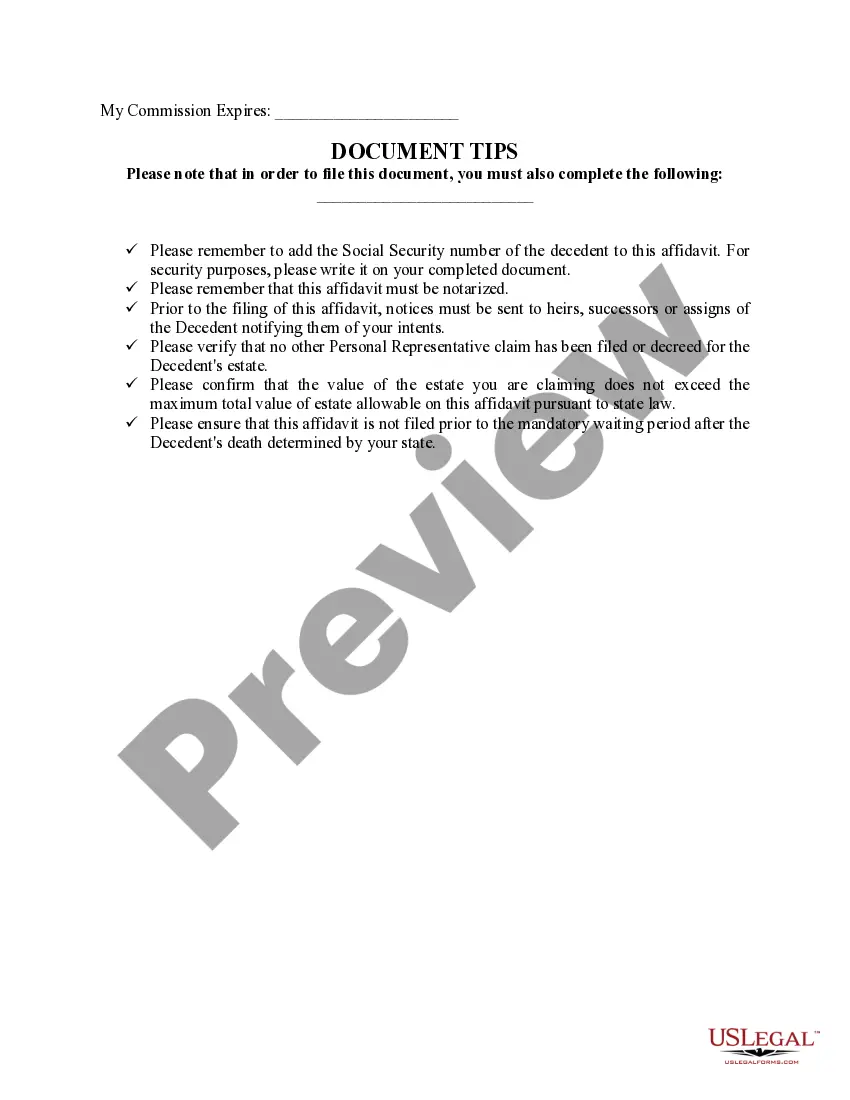
- Failing to include the decedentâs social security number.
- Not waiting the specified number of days after the decedent's death before filing.
- Neglecting to notify all other potential heirs of the claim.
- Forgetting to notarize the affidavit before filing.
Quick recap
- The Affidavit of Death confirms the death of an individual and is crucial for the distribution of their estate.
- It must be filed along with the death certificate and notarized for legitimacy.
- Awareness of state-specific laws is essential to avoid complications during the claims process.
Looking for another form?


Form popularity
FAQ
Transfer on death deeds allow individual landowners to transfer their real estate when they die, without a will or the need for probate distribution. The transferor simply executes a TODD form, then records it during the course of his/her natural life, and within 60 days of the signing date (5626(a)).
Use the Court Locator and find the probate court where the decedent was a resident. The State filing fee is $435. Request further instructions from the court clerk on the process in the county.
What is an Affidavit of Death? An Affidavit of Death is a sworn statement that someone has passed away. This legal document can help you take care of the some of the administrative tasks after someone's passing, like notifying businesses, courts, and agencies of the death.
What is an Affidavit of Death? An Affidavit of Death is a sworn legal document that attests that a person is dead. Affidavit of Death forms can only be written and signed by someone who has first-hand knowledge of the person's death and is typically accompanied by a certified copy of a death certificate.
That we are executing this affidavit to attest to the truthfulness of the fact of death of the person of and for whatever legal purposes that this statement may serve. IN WITNESS WHEREOF, we have hereunto set our hands this , in the City of , Philippines.
Affidavit-death forms are used to change the title on rea?l property after the death of a joint tenant, trustee or trustor. Information and forms are available from the Sacramento County Public Law Library. Blank forms may also be available at office supply stores.
California Affidavit of Surviving Spouse Information Section 100(a) of the California Probate Code states that when a married person dies, one-half of the couple's community property belongs to the surviving spouse and the other half stays in the decedent's name, ostensibly for probate distribution.
An Affidavit of Death should include the following basic information: The Location where the affidavit was signed. The name and address of the person who signed the affidavit (the Affiant) An acknowledgment the Affiant is of legal age. The name of the decedent. The date of the decedent's birth and death.