Job Acceptance Letter for Lecturer
What this document covers
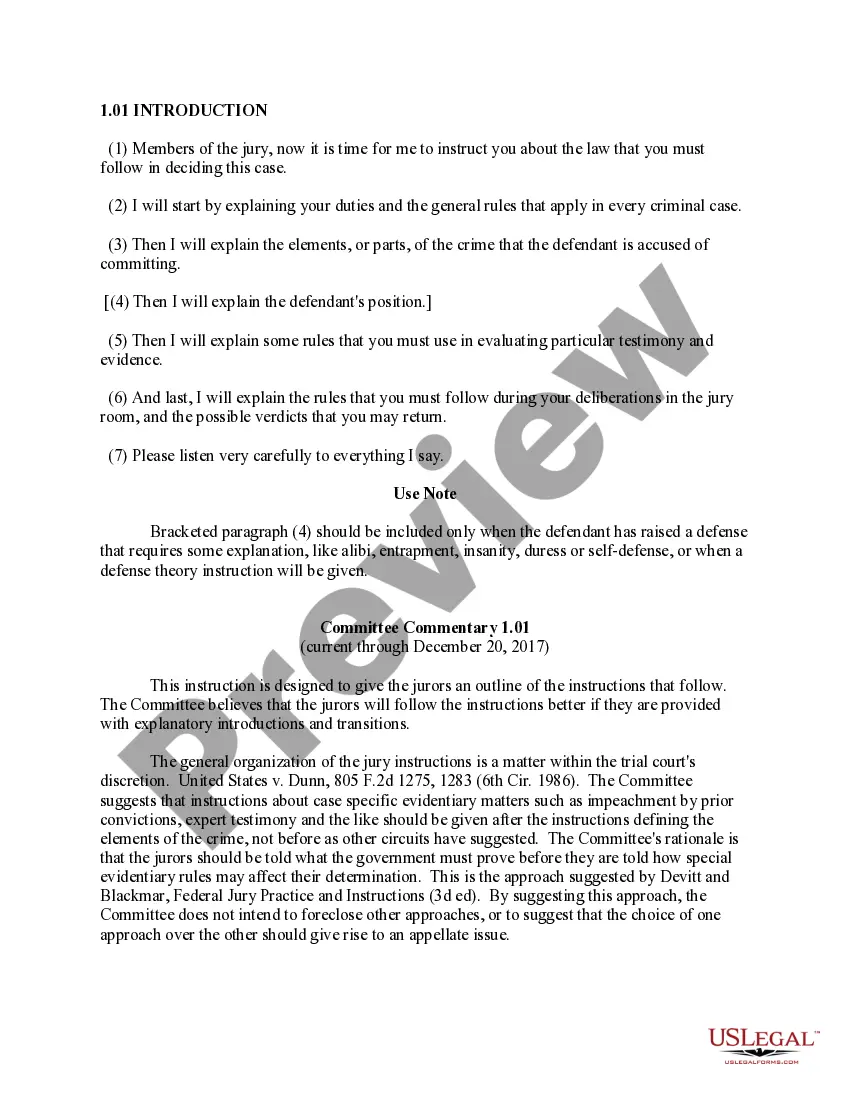
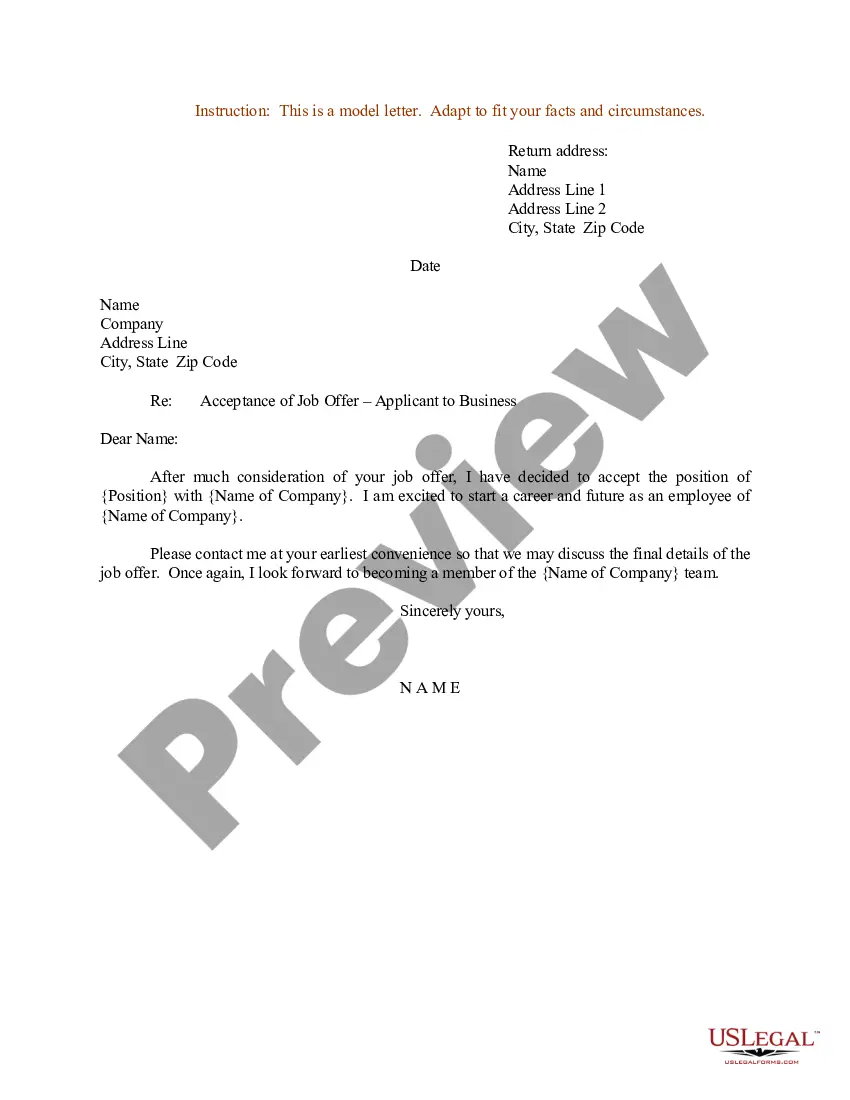
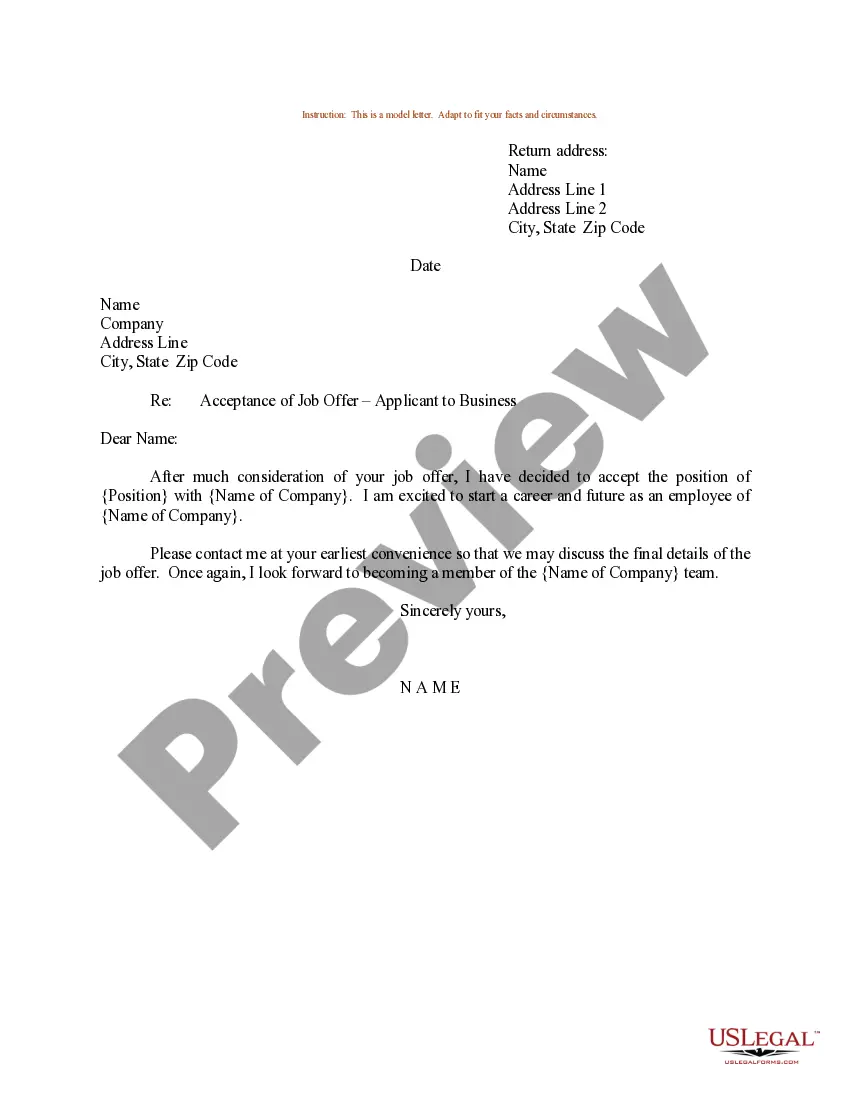
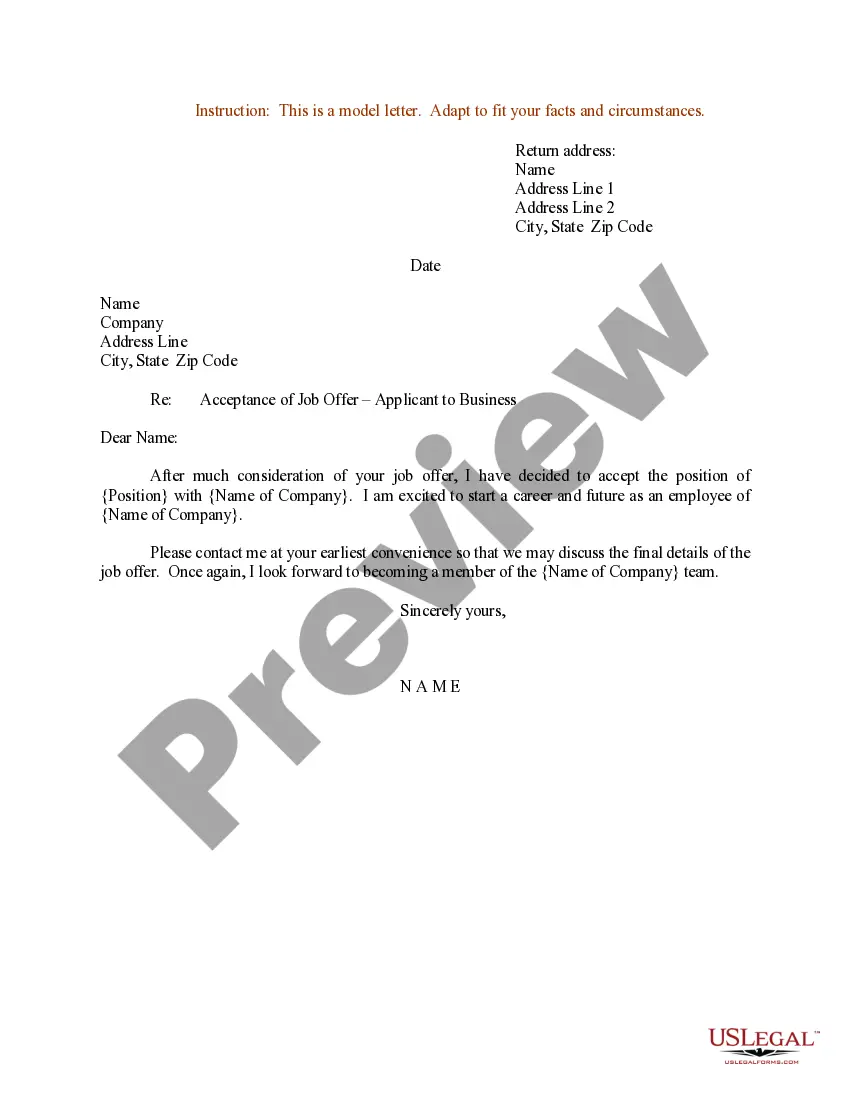
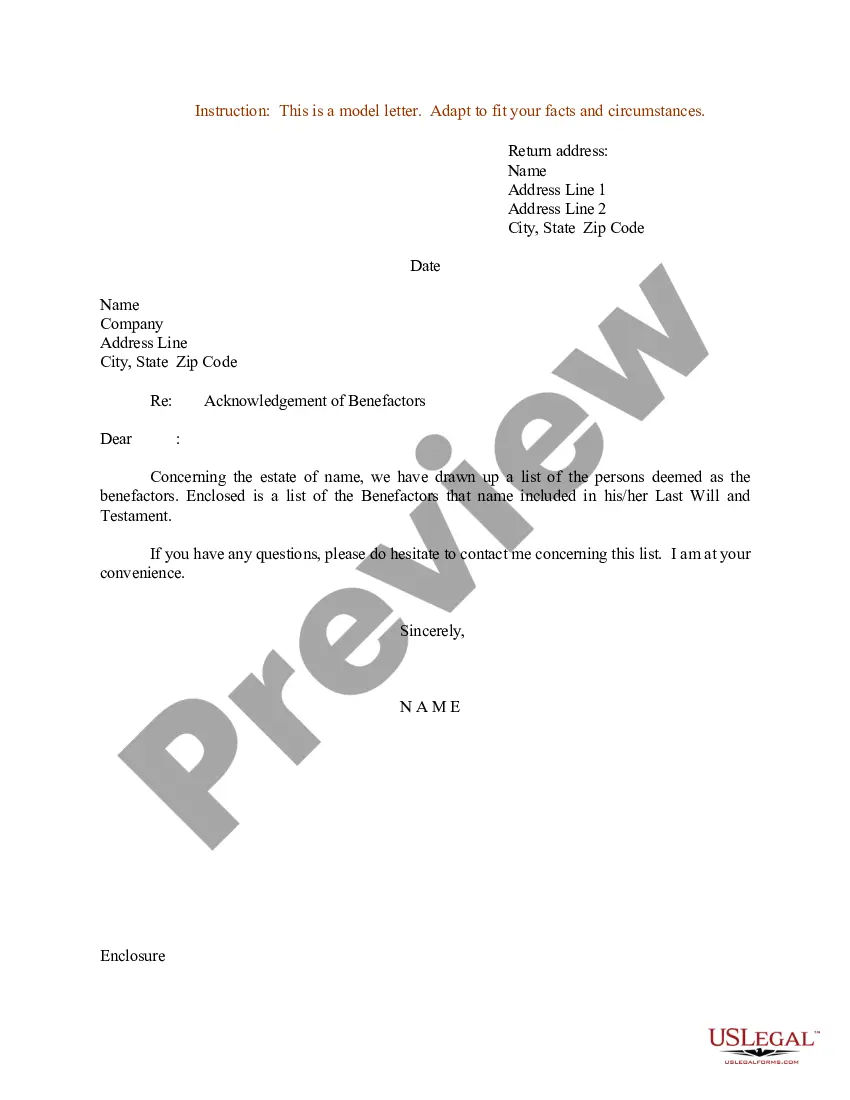
The Job Acceptance Letter for Lecturer is a formal document used to confirm your acceptance of a job offer as a lecturer. This letter serves to communicate your excitement and intention to start your new role while also requesting clarification on the next steps. Unlike a verbal acceptance or informal email, this letter provides a written record that can enhance professionalism and clarity in your new employment arrangement.
Key components of this form
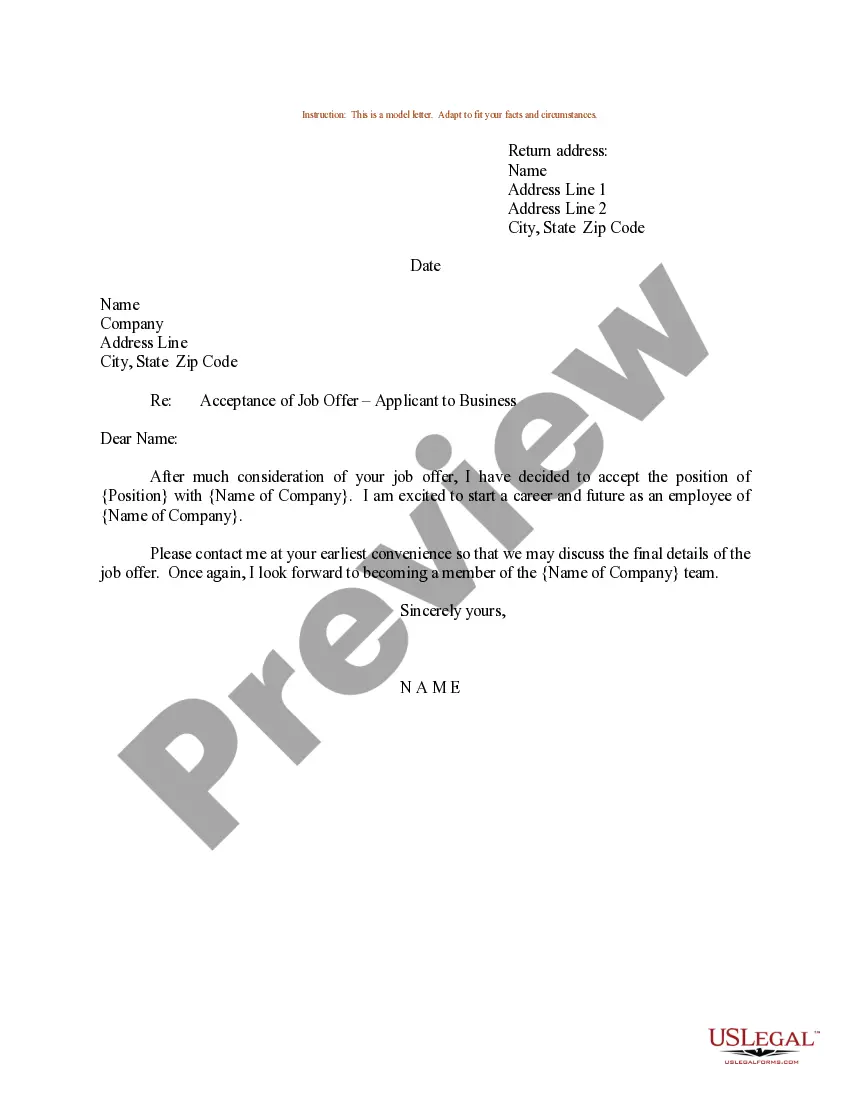
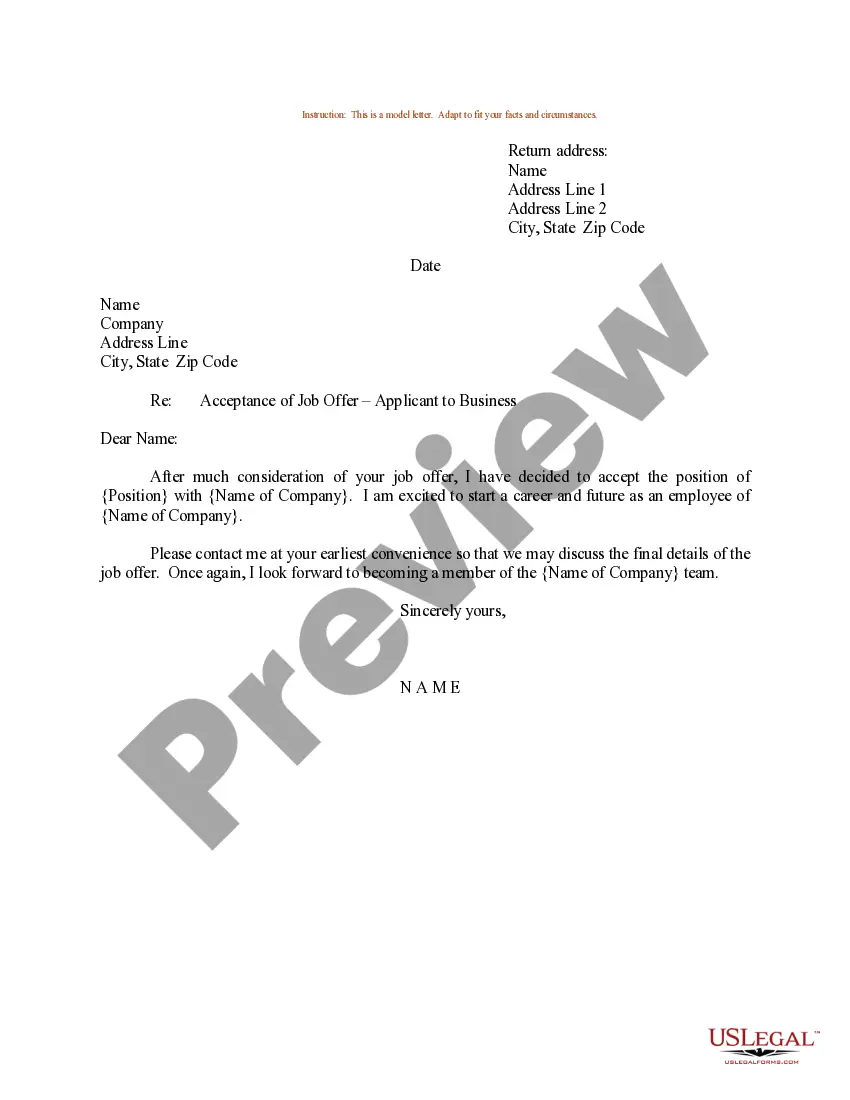
- Return address: Your contact information, including name and address.
- Date: The date when the letter is written.
- Recipient's address: The contact information of the employer or hiring manager.
- Subject Line: Clearly states the purposeâAcceptance of Job Offer.
- Salutation: A professional greeting to the recipient.
- Body: Confirmation of job acceptance, excitement for the role, and request for further details.
- Closing: A polite sign-off to conclude the letter.
When this form is needed
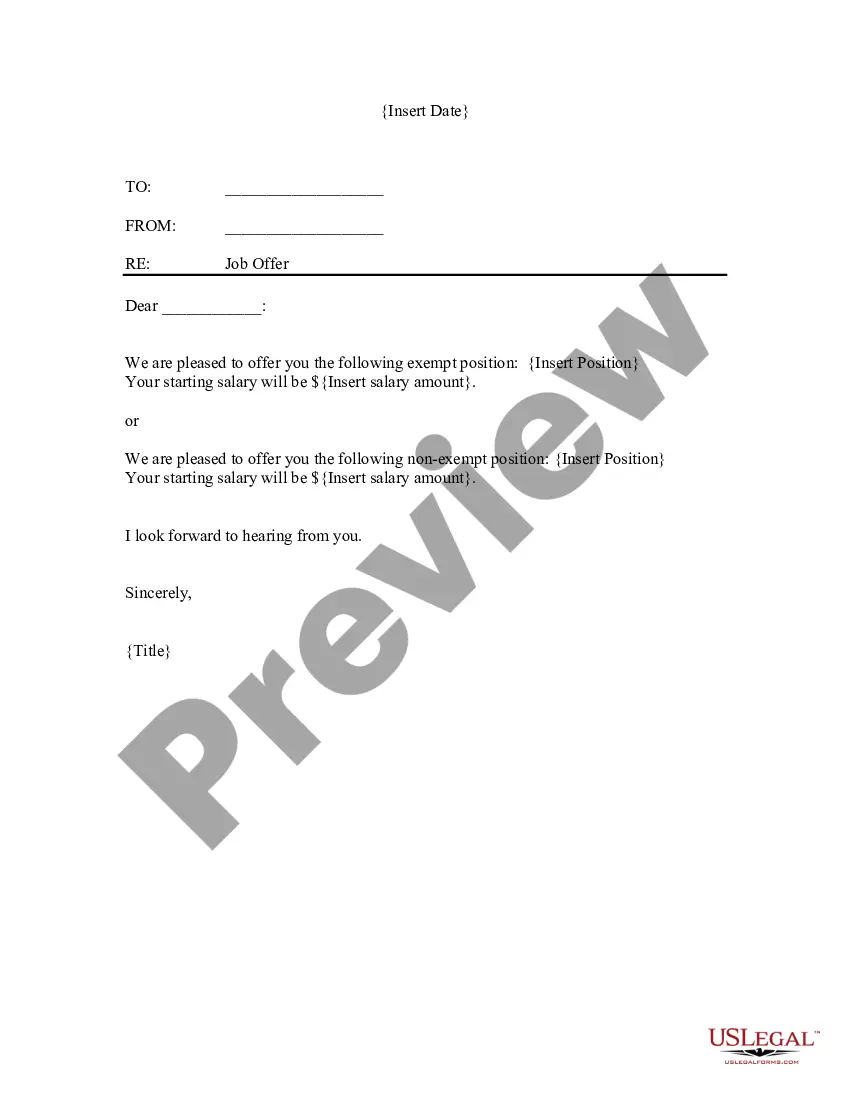
This form should be used after you have received a formal job offer for a lecturer position and decided to accept it. It is appropriate to send this letter immediately following your acceptance to formally communicate your intent, demonstrate professionalism, and initiate any further discussions about the onboarding process or starting date.
Who needs this form
- Newly hired lecturers who have received a job offer.
- Individuals transitioning into a teaching role at a college or university.
- Those wishing to maintain professionalism in their communication with potential employers.
Completing this form step by step
- Identify and enter your return address at the top of the document.
- Add the date when you are completing the letter.
- Provide the recipient's address to whom you are sending the letter.
- Craft a clear subject line indicating the purpose of your letter.
- Write the body, stating your acceptance of the position and expressing eagerness to join the team.
- Conclude with a professional sign-off and your full name.
Notarization requirements for this form
This form does not typically require notarization unless specified by local law. It serves as a formal written record of your job acceptance without the need for notarization.
Get your form ready online
Our built-in tools help you complete, sign, share, and store your documents in one place.
Make edits, fill in missing information, and update formatting in US Legal Forms—just like you would in MS Word.
Download a copy, print it, send it by email, or mail it via USPS—whatever works best for your next step.
Sign and collect signatures with our SignNow integration. Send to multiple recipients, set reminders, and more. Go Premium to unlock E-Sign.
If this form requires notarization, complete it online through a secure video call—no need to meet a notary in person or wait for an appointment.
We protect your documents and personal data by following strict security and privacy standards.

Make edits, fill in missing information, and update formatting in US Legal Forms—just like you would in MS Word.

Download a copy, print it, send it by email, or mail it via USPS—whatever works best for your next step.

Sign and collect signatures with our SignNow integration. Send to multiple recipients, set reminders, and more. Go Premium to unlock E-Sign.

If this form requires notarization, complete it online through a secure video call—no need to meet a notary in person or wait for an appointment.

We protect your documents and personal data by following strict security and privacy standards.
Common mistakes
- Failing to address the letter to the correct person.
- Leaving out important details, such as the job title or company name.
- Not proofreading for grammatical errors or typos.
- Using an informal tone instead of a professional one.
Why complete this form online
- Convenience: Easily downloadable and ready to personalize.
- Editability: Simple to modify to meet your specific situation.
- Reliability: Templates are drafted by licensed attorneys for accuracy.
- Time-saving: Streamlines the process of formally accepting a job offer.
Looking for another form?

Form popularity
FAQ
Choose your contact method. Address the recipient professionally. Start with what you need. Explain why you need it. Tell them why they should care. Show your enthusiasm for their response. Conclude your message.
Use a Professional Format. If you are sending a paper copy, use the same letter format that you would for a business letter. Identify the Correct Recipient. Clearly Accept the Position. Confirm Position Details. Close Your Letter. Watch Your Tone. Don't Forget to Proofread. Final Thoughts on How to Write an Acceptance Letter.
Write a clear and concise subject line that indicates what this email is about. Express gratitude for having received the offer for the job and assure them of your best. State and agree to the terms of the employment that you're getting into.
A typical college acceptance letter usually says exactly what you'd expect it to say: that you've been admitted to the school and offered a place in the incoming class.
Thank you for your offer of Job title at Company name. I am delighted to formally accept the offer, and I am very much looking forward to joining the team. As discussed, my starting salary will be Agreed starting salary, rising to Increased salary following a successful probationary period of 3 months.
Begin your acceptance letter by identifying the position and by thanking whoever sent you the job offer, and then make it clear that you have decided to accept it. Express sincere appreciation for the offer, and indicate your enthusiasm for the position (but don't be mushy and over-enthusiastic). 2.
Thank the employer for the job offer stating the full job title. formally accept the job offer. discuss the terms and conditions of employment - salary, benefits, work schedule, starting date. highlight your appreciation and enthusiasm for this opportunity.
Take your time2026 2026But not too much time. Be enthusiastic. Discuss important or upcoming issues. List all the attachments. End politely. Don't forget to write your declined offer letters, too.