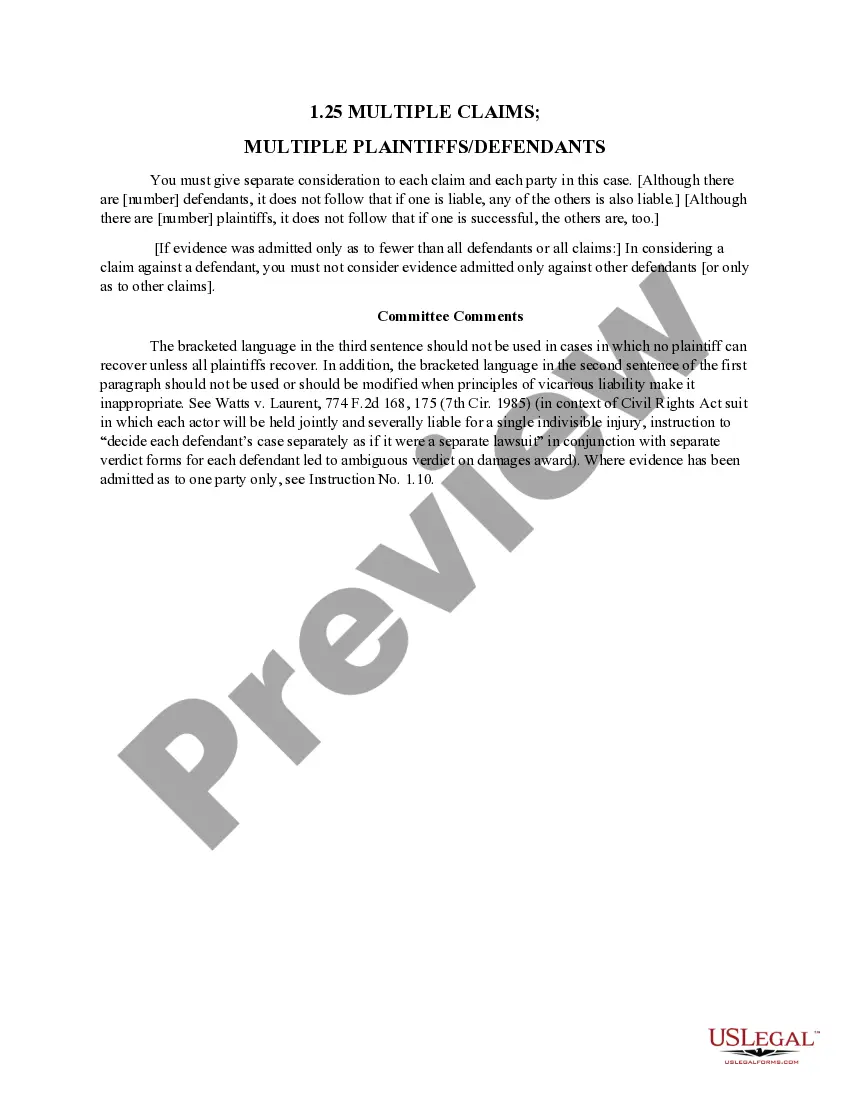
1.25 Multiple Claims; Multiple Plaintiffs/Defendants
Overview of this form
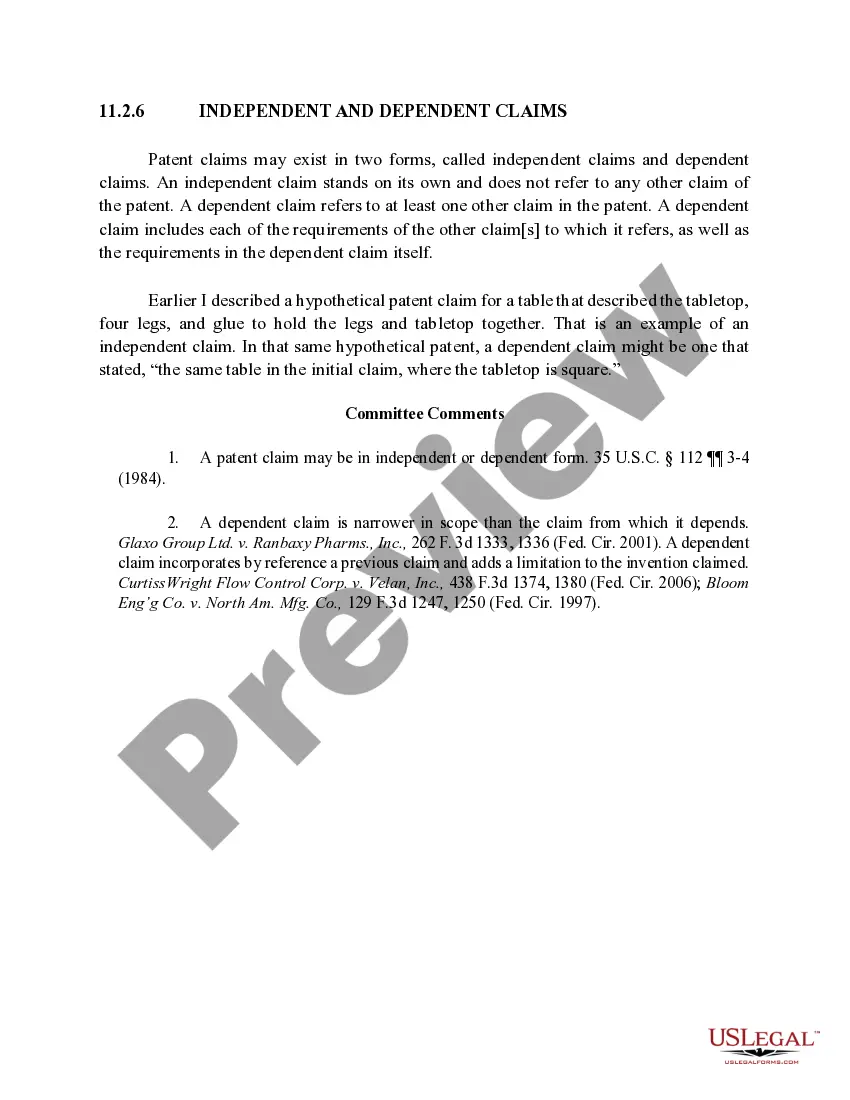
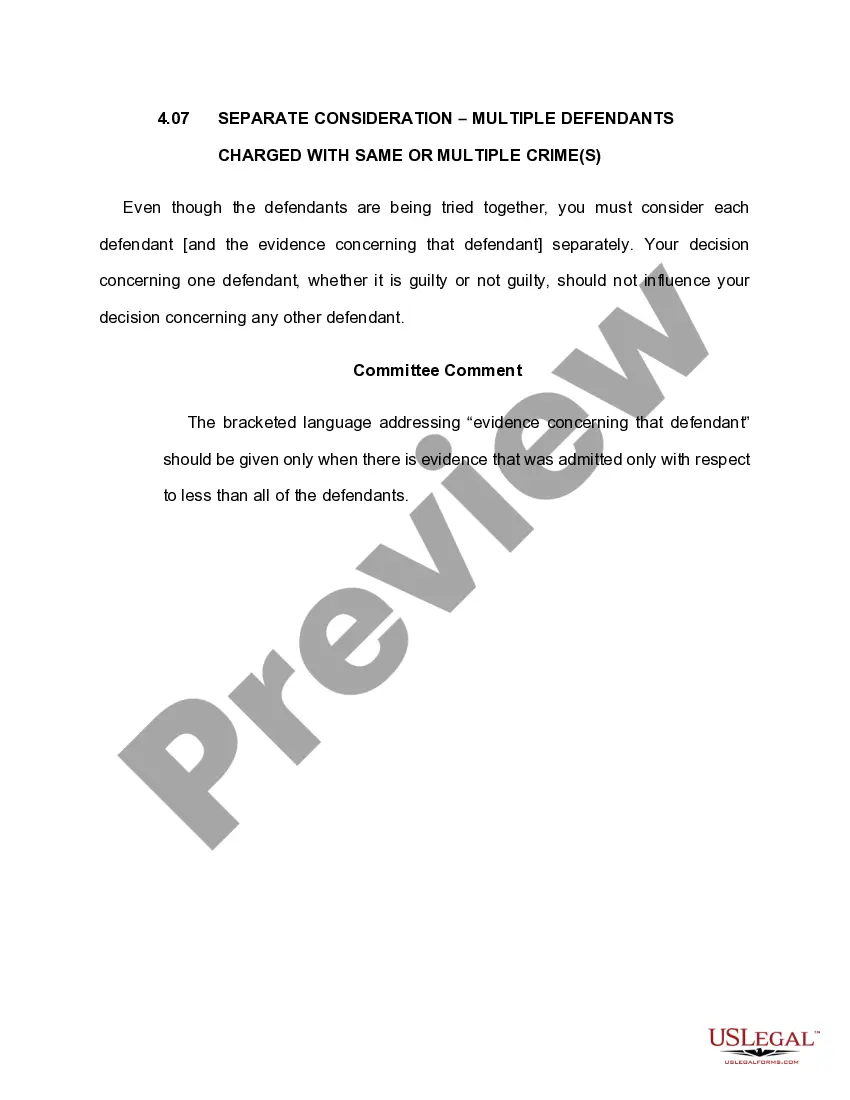
The 1.25 Multiple Claims; Multiple Plaintiffs/Defendants form provides instructions for jury deliberations in cases involving multiple claims and parties. This form ensures that each claim and each plaintiff or defendant is considered separately, which is crucial in preventing confusion during the trial process. Unlike single-claim jury instructions, this form addresses the complexities of cases with multiple parties, streamlining the legal process for judges and jurors alike.
Key parts of this document
- Separate consideration of each claim and each party involved in the case.
- Clarification that the liability of one defendant does not imply liability for others.
- Instructions on how to handle evidence that applies to fewer defendants or claims.
- Instructions regarding vicarious liability and how it may alter consideration.
- Committee comments highlighting specific legal principles related to the form's usage.
When to use this form
This form is used during jury instructions when a case involves multiple claims or multiple plaintiffs/defendants. You may need this form if you are dealing with civil rights lawsuits, personal injury claims, or any legal matter where different parties may have differing degrees of liability or are impacted by the evidence presented in unique ways. It clarifies the jury's duty to make independent determinations for each party and claim involved.
Who this form is for
- Judges who are presiding over cases with multiple parties.
- Attorneys representing clients in complex litigation with multiple claims.
- Jury consultants and legal educators focusing on trial jury processes.
- Legal professionals seeking guidance on jury instruction formats.
How to prepare this document
- Identify and list all claims associated with the case.
- Enumerate all plaintiffs and defendants involved in the litigation.
- Clarify the relevance of evidence pertaining to specific parties and claims.
- Provide specific jury instructions regarding separate deliberations for each claim.
- Include committee comments if applicable to the case's circumstances.
Does this form need to be notarized?
Notarization is not commonly needed for this form. However, certain documents or local rules may make it necessary. Our notarization service, powered by Notarize, allows you to finalize it securely online anytime, day or night.
Get your form ready online
Our built-in tools help you complete, sign, share, and store your documents in one place.
Make edits, fill in missing information, and update formatting in US Legal Forms—just like you would in MS Word.
Download a copy, print it, send it by email, or mail it via USPS—whatever works best for your next step.
Sign and collect signatures with our SignNow integration. Send to multiple recipients, set reminders, and more. Go Premium to unlock E-Sign.
If this form requires notarization, complete it online through a secure video call—no need to meet a notary in person or wait for an appointment.
We protect your documents and personal data by following strict security and privacy standards.

Make edits, fill in missing information, and update formatting in US Legal Forms—just like you would in MS Word.

Download a copy, print it, send it by email, or mail it via USPS—whatever works best for your next step.

Sign and collect signatures with our SignNow integration. Send to multiple recipients, set reminders, and more. Go Premium to unlock E-Sign.

If this form requires notarization, complete it online through a secure video call—no need to meet a notary in person or wait for an appointment.

We protect your documents and personal data by following strict security and privacy standards.
Mistakes to watch out for
- Failing to emphasize separate consideration for each party and claim.
- Incorrectly applying blanket liability principles without considering individual evidence.
- Neglecting to modify instructions related to vicarious liability when necessary.
Why complete this form online
- Instant access to legal instructions designed by licensed attorneys.
- Convenient download options that allow for easy customization.
- Clarity in legal language that aids in better understanding of jury processes.
- Safe storage and easy retrieval for future case references.
Legal use & context
- This form aligns with federal guidelines on jury instructions in multi-party cases.
- It ensures that jurors are adequately informed to avoid misconceptions about liability.
- The specific structure of this form is backed by judicial precedents to enhance clarity during deliberation.
Looking for another form?
Form popularity
FAQ
Only when claims would ?enforce a single title or right, in which they have a common and undivided interest,? may multiple plaintiffs aggregate claims.
Aggregation of claims In cases involving more than one defendant, a plaintiff may aggregate the amount claimed against multiple defendants ?only if the defendants are jointly liable.? Middle Tennessee News Co., Inc. v. Charnel of Cincinnati, Inc., 250 F.
In addition, if a plaintiff's claim exceeds the required amount in controversy, a compulsory counterclaim need not independently satisfy that amount, but a permissive counterclaim must satisfy the amount in controversy. A counterclaim is compulsory if it arises from the same transaction or occurrence.
The monetary value of a non-monetary remedy such as an injunction can also be included in the amount in controversy. For a case to be heard in district court on grounds of diversity jurisdiction, the amount in controversy a plaintiff pleads must exceed $75,000. As established in St. Paul Mercury v.
Aggregation. 1) Plaintiff may aggregate any claims against defendant to meet total. 2) Multiple plaintiffs cannot aggregate; each must meet minimum. 3) Plaintiff can aggregate claims against mulitple defendants if the claim is "joint."
Aggregation of claims Where a single plaintiff has multiple unrelated claims against a single defendant, that plaintiff can aggregate those claims ? that is, add the amounts together ? to satisfy the amount in controversy requirement.
Distinct from a per-claim limit, which states the amount an insurer will pay for each individual claim made during the policy period, the aggregate limit is the maximum amount an insurer will pay for all such claims made against the insured during the policy period, no matter how many separate claims might be made.