1.22 Translated Language
What is this form?
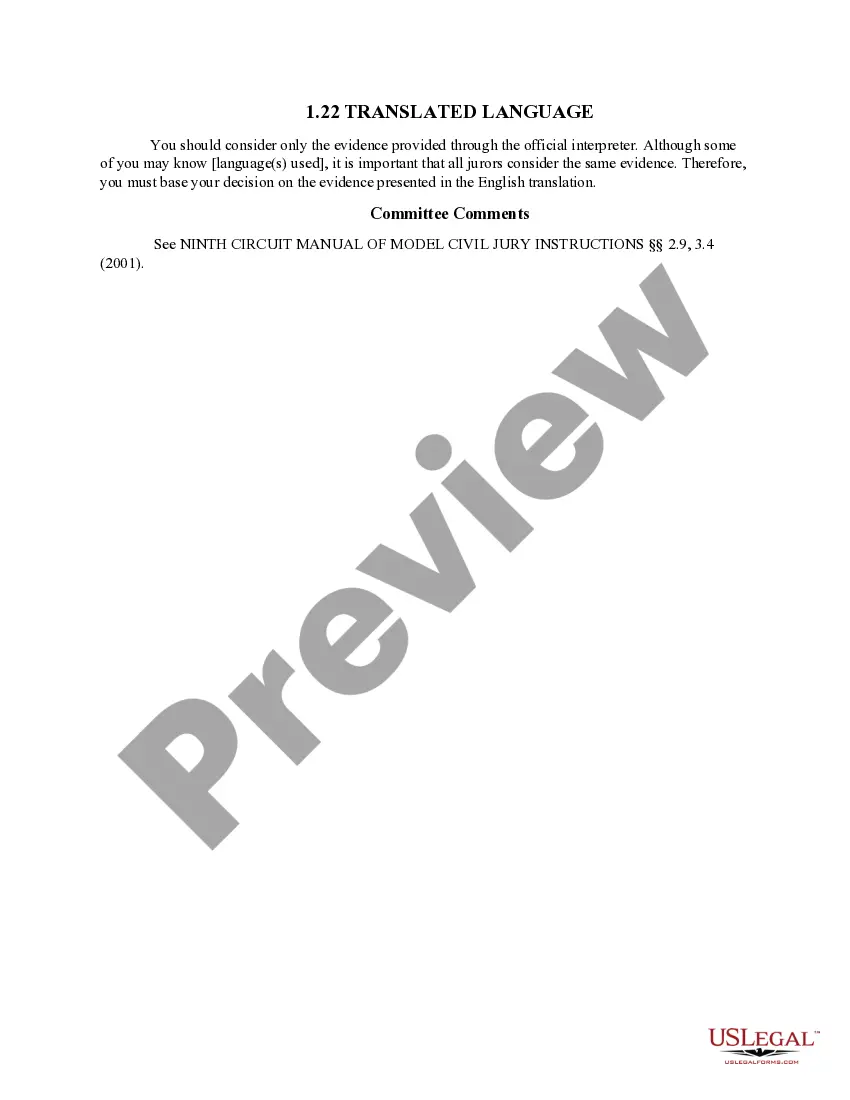
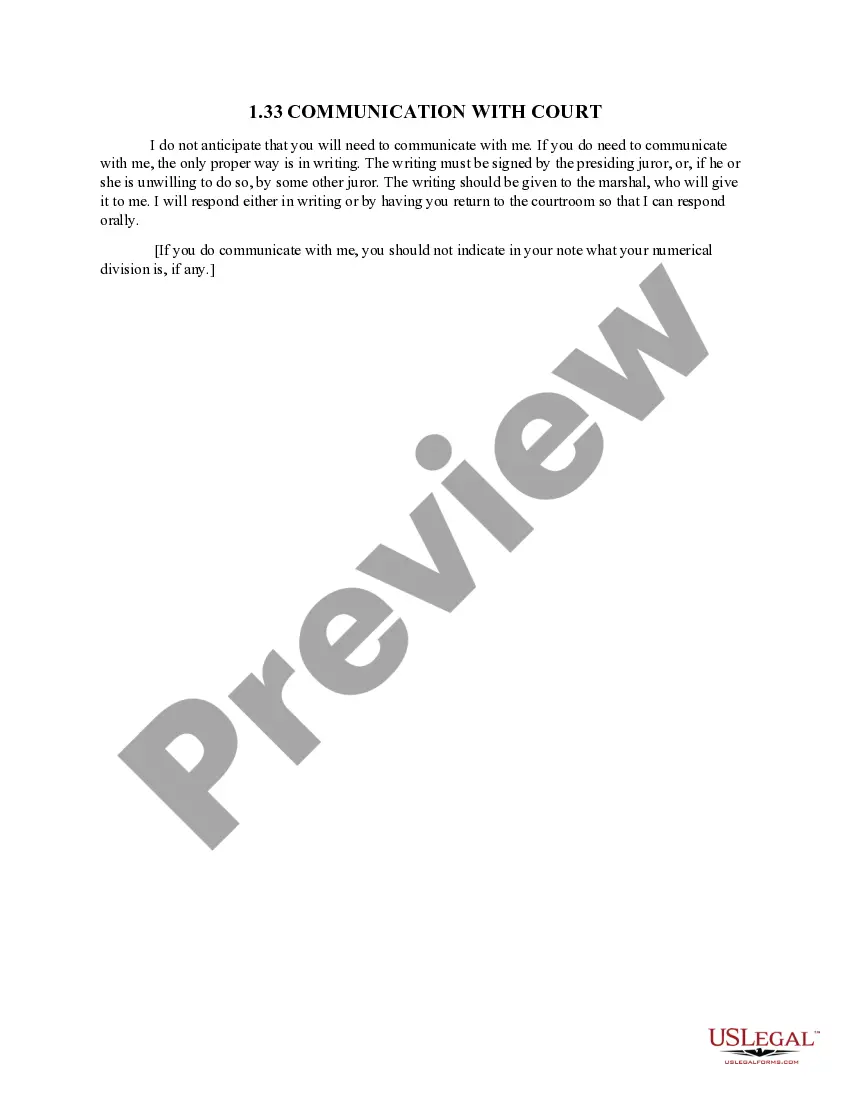
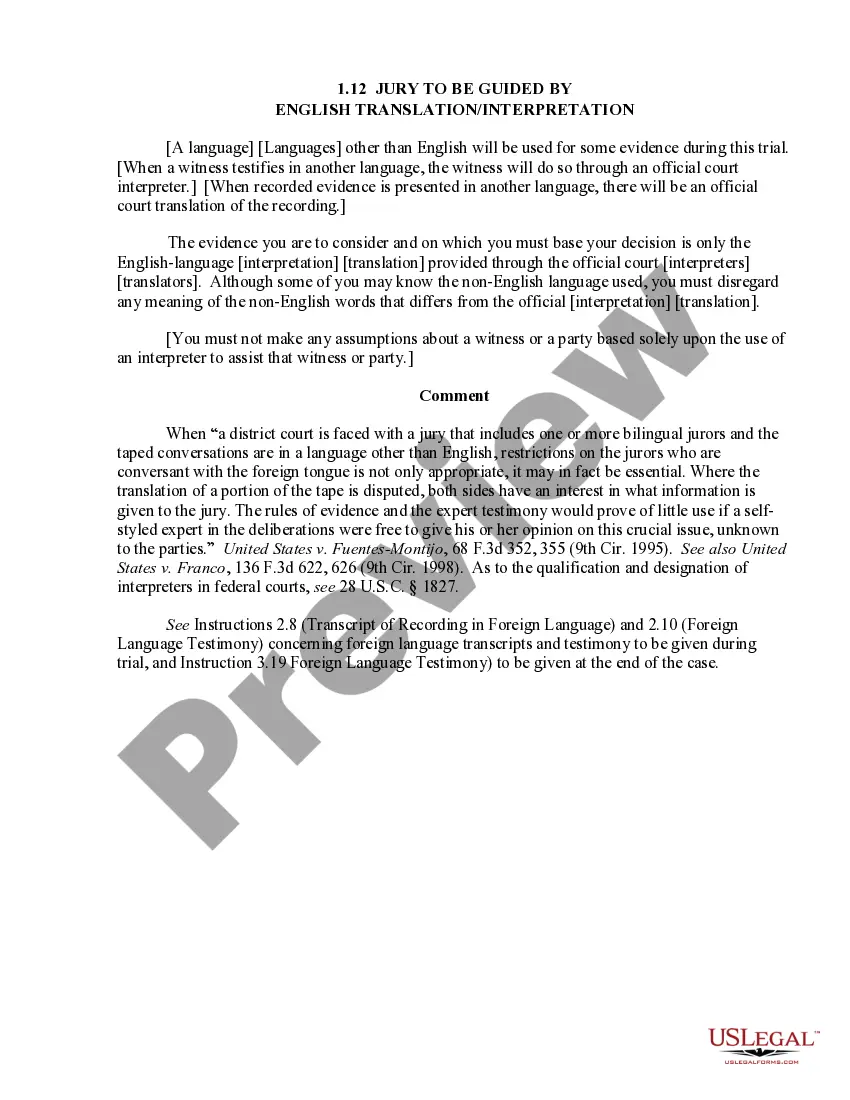
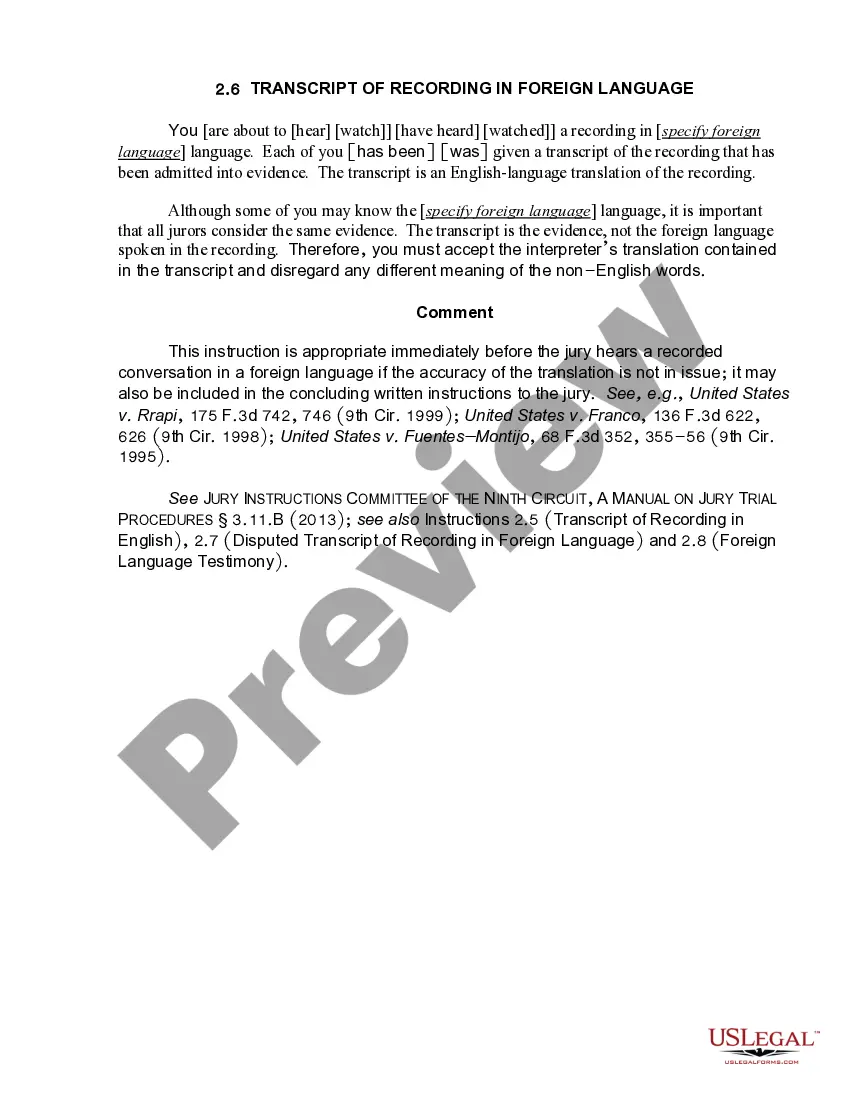
The 1.22 Translated Language form is an official instruction adopted by the Federal 7th Circuit Court. It provides clarity on how jurors should evaluate evidence presented through interpreters, ensuring all jurors base their decisions on the same English translations. This form serves a unique role in the jury trial process, focusing on the interpretation of evidence in various languages, rather than general jury instructions.
Main sections of this form
- Evidence consideration: Jurors must consider only the evidence provided by the official interpreter.
- Language specifics: The form acknowledges that some jurors may know the language used but emphasizes collective understanding through English translations.
- Clarification of basis for decisions: Jurors are directed to base their decisions on the English translation presented during the trial.
- Reference to committee comments: Including guidance from the Ninth Circuit Manual of Model Civil Jury Instructions.
Common use cases
This form is essential in jury trials where evidence is presented in a language other than English. It is used during cases that involve non-English speaking witnesses or documents, ensuring that jurors properly understand and evaluate the evidence presented through official interpreters.
Who can use this document
- Jurors involved in trials with evidence translated from another language.
- Attorneys seeking to ensure that jurors follow proper procedures when dealing with translated evidence.
- Court officials and judges overseeing cases with multilingual components.
Steps to complete this form
- Review the evidence presented in court with the assistance of the official interpreter.
- Ensure all jurors understand and utilize the English translations provided.
- Discuss the interpretations thoroughly among jurors to reach consensus based on the translated evidence.
Notarization requirements for this form
In most cases, this form does not require notarization. However, some jurisdictions or signing circumstances might. US Legal Forms offers online notarization powered by Notarize, accessible 24/7 for a quick, remote process.
Get your form ready online
Our built-in tools help you complete, sign, share, and store your documents in one place.
Make edits, fill in missing information, and update formatting in US Legal Forms—just like you would in MS Word.
Download a copy, print it, send it by email, or mail it via USPS—whatever works best for your next step.
Sign and collect signatures with our SignNow integration. Send to multiple recipients, set reminders, and more. Go Premium to unlock E-Sign.
If this form requires notarization, complete it online through a secure video call—no need to meet a notary in person or wait for an appointment.
We protect your documents and personal data by following strict security and privacy standards.

Make edits, fill in missing information, and update formatting in US Legal Forms—just like you would in MS Word.

Download a copy, print it, send it by email, or mail it via USPS—whatever works best for your next step.

Sign and collect signatures with our SignNow integration. Send to multiple recipients, set reminders, and more. Go Premium to unlock E-Sign.

If this form requires notarization, complete it online through a secure video call—no need to meet a notary in person or wait for an appointment.

We protect your documents and personal data by following strict security and privacy standards.
Mistakes to watch out for
- Ignoring the official interpreter's evidence in favor of personal knowledge of the language.
- Failing to discuss translations collectively during jury deliberations.
- Misunderstanding the significance of English translations when making decisions.
Why complete this form online
- Convenient access to up-to-date jury instructions that can be downloaded at any time.
- Editability allows flexibility in adapting the form to specific trial circumstances.
- Reliable source, drafted by licensed attorneys, ensuring legal compliance and accuracy.
Legal use & context
- This form is critical for maintaining fairness in jury trials involving non-English speakers.
- Jurors must follow these instructions to ensure a consistent understanding of the provided evidence.
What to keep in mind
- The 1.22 Translated Language form ensures that all jurors interpret evidence consistently through English translations.
- This form is applicable in multilingual jury trials and is designed to maintain fair legal standards.
Looking for another form?
Form popularity
FAQ
To improve your language, you can assess or suggest changes to translations in Google Translate. Click to assess the translation, or choose Suggest an edit. Enter a new translation in the text box. Click Submit.
Important: In your browser, go to Google Translate. At the top, click Documents. Choose the languages to translate to and from.Click Browse your computer. Select the file you want to translate. Click Translate and wait for the document to finish translating.
Because it supports so many different languages, there's no single accuracy rate. Instead, the accuracy of Google Translate will depend on the specific language pairs that you've chosen.
Change your default language On your computer, open Chrome. At the top right, click More Settings. On the left, click Languages. Under ?Google Translate,? click Translate into this language. Select the language that you want from the language list.
Go to to sign in to a portal. Click Recent to view recent translations. From the list of translations, find the document to edit and then click article View document. In the translated document, click edit Edit.
Code translation is the process of converting code written in one programming language to another programming language while maintaining the same functionality. This process is also known as code conversion, source-to-source translation, or transpilation.
A 2021 study conducted by the UCLA Medical Center found that Google Translate preserved the overall meaning for 82.5% of the translations. But the accuracy between languages spanned 55% to 94%. Sometimes, Google Translate's precision is shockingly good.
Per-Word Rate In most cases, the costs of translating content are calculated based on the word count. It's a clear and simple indicator. However, the number of words may be different depending on the language. Some have a lot of articles and prepositions, others are more concise.