Hippa Release Form for Parents
Understanding this form
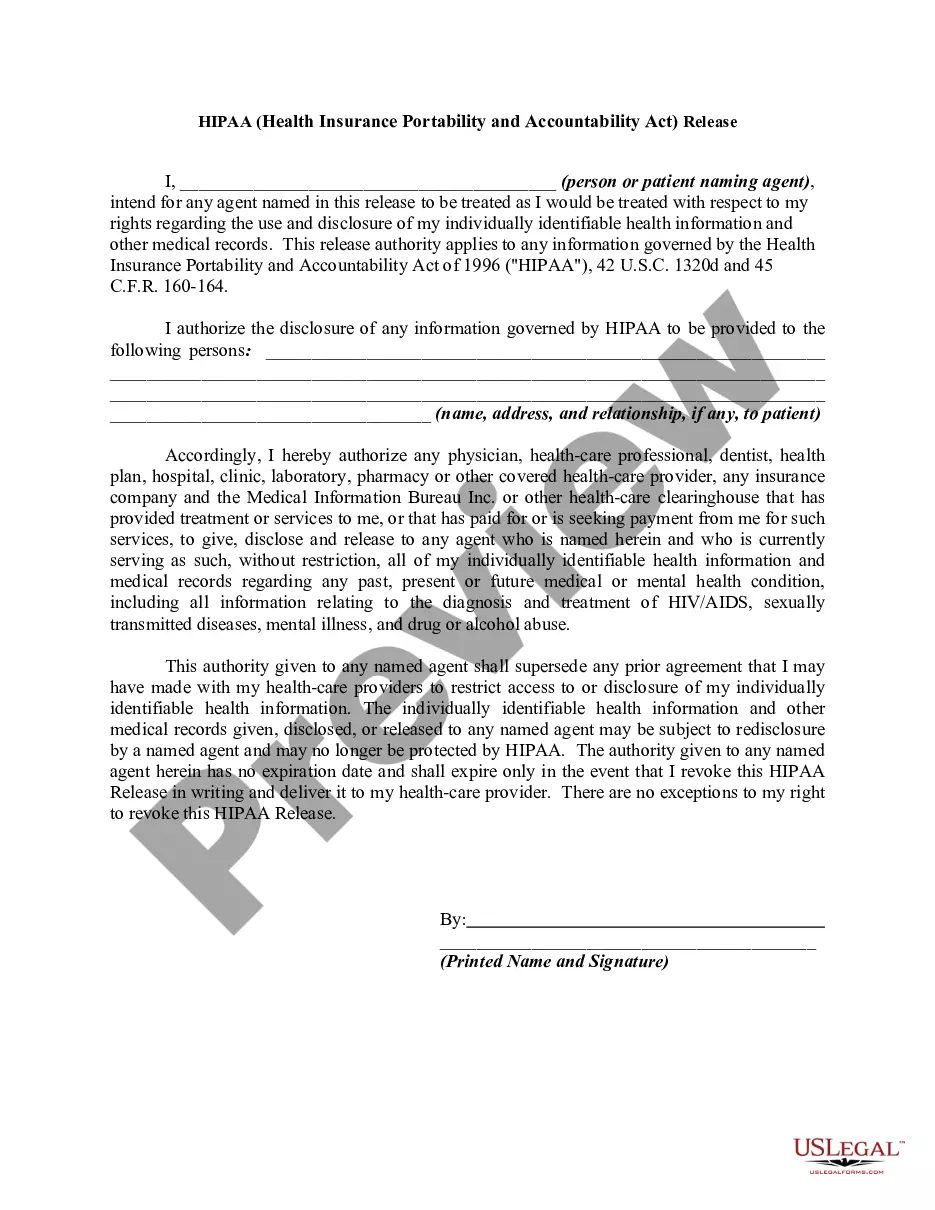
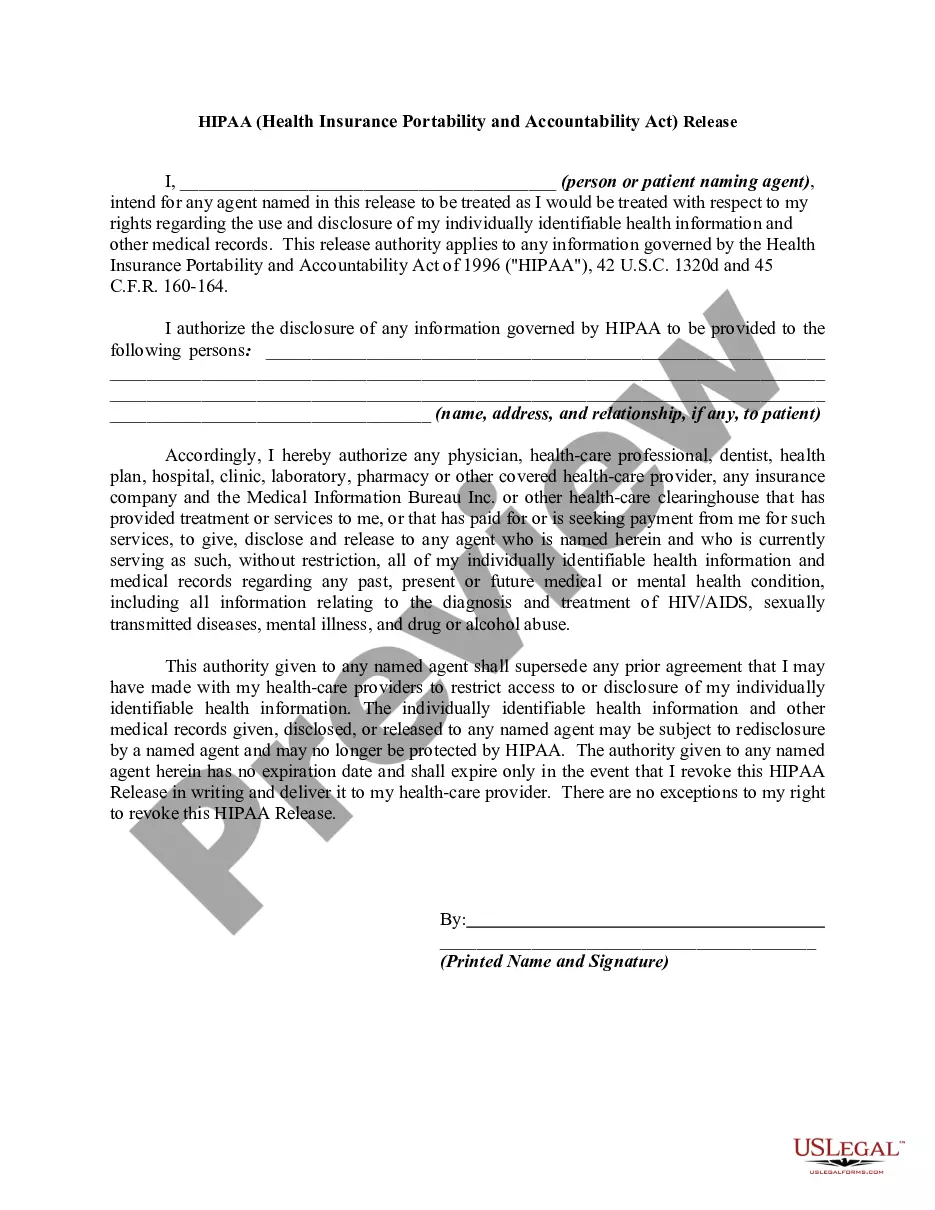
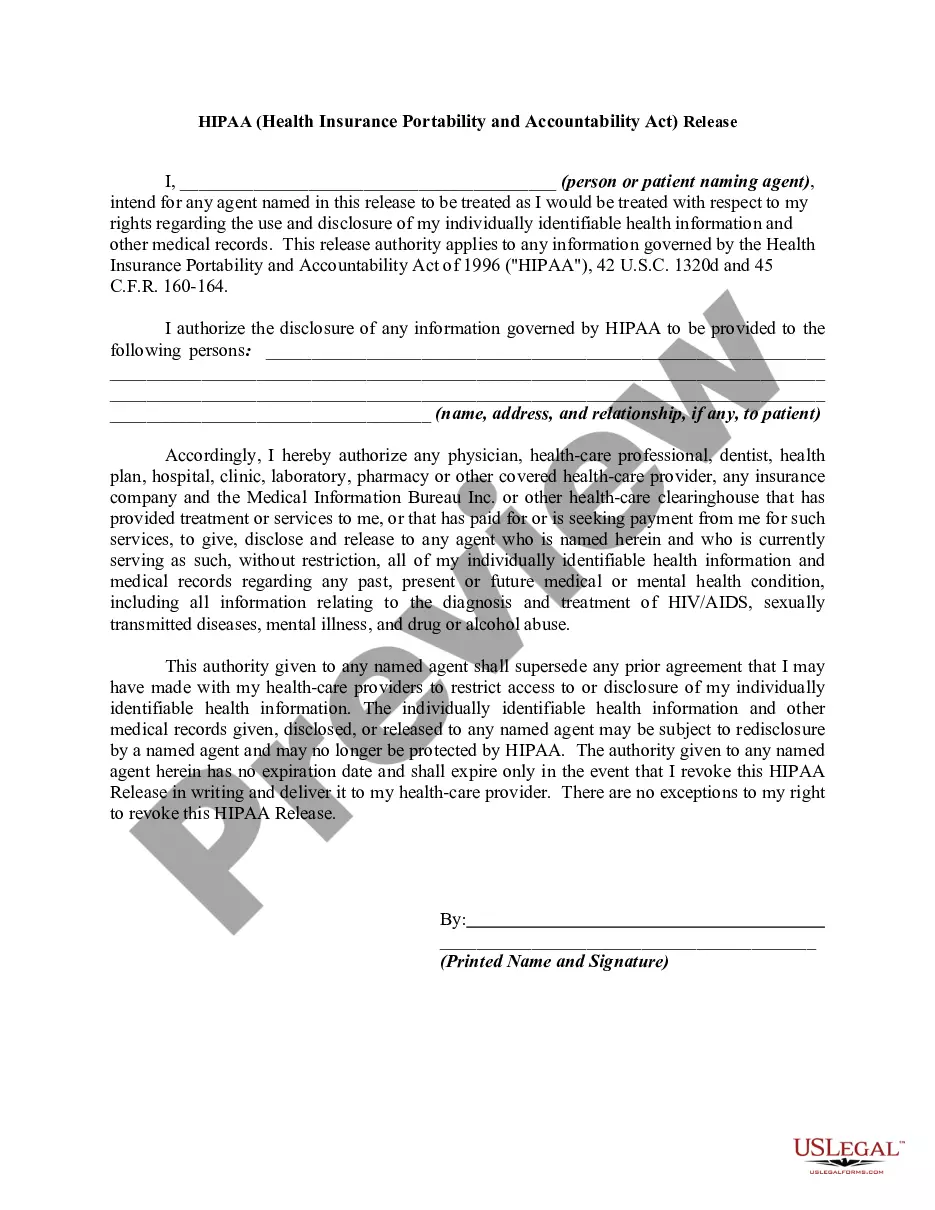
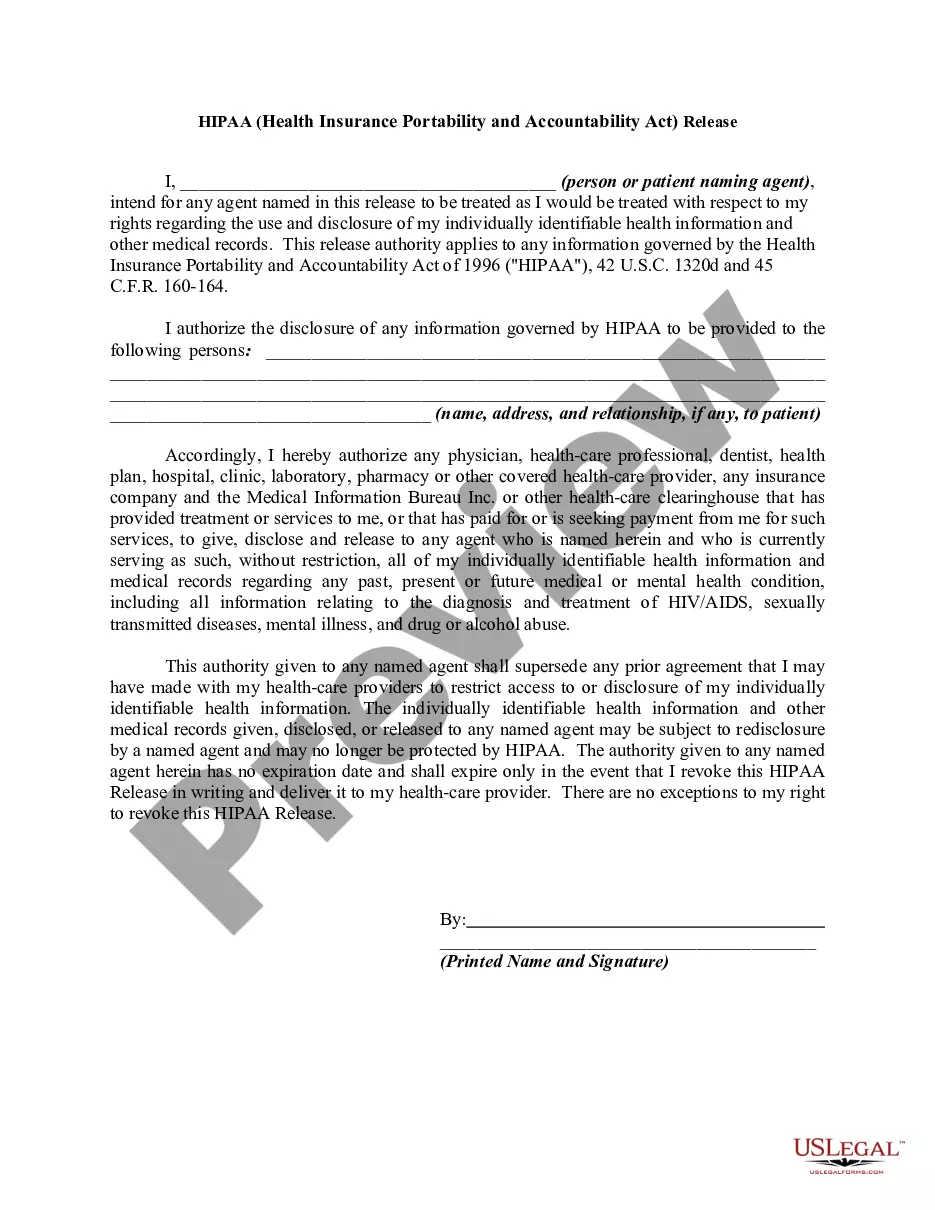
The HIPAA Release Form for Parents is a legal document that allows parents or guardians to authorize the disclosure of their childâs personal health information to designated individuals. This form ensures that healthcare providers can share necessary medical information with selected agents, aligning with the regulations set by the Health Insurance Portability and Accountability Act (HIPAA). It differs from other consent forms by explicitly allowing parents to specify who can access their child's medical records and under what circumstances.
Key parts of this document
- Identification of the patient and agents authorized to access information.
- Scope of health information being released under HIPAA guidelines.
- Authorization for healthcare providers to disclose relevant medical records.
- Supersession of any prior agreements restricting access to health information.
- Details on the authority's expiration, emphasizing the right to revoke.
When to use this form
This form should be used when a parent or legal guardian needs to grant permission for specific individuals to access their childâs health records. It is particularly useful when dealing with healthcare providers, schools, or any other entities that require confirmation of the child's medical history, especially in situations involving emergencies or when making health-related decisions on behalf of the minor.
Who can use this document
- Parents or legal guardians of a minor child.
- Caregivers seeking to manage healthcare decisions on behalf of a child.
- Healthcare providers needing consent to share a childâs medical information.
- Schools or organizations that require access to a childâs health records.
Completing this form step by step
- Enter the child's name and relevant identifying information.
- List the names and relationships of individuals authorized to receive health information.
- Detail the types of health information to be disclosed.
- Sign and date the form in the presence of a notary, if necessary.
- Provide copies to relevant healthcare providers and authorized individuals.
Is notarization required?
This form does not typically require notarization unless specified by local law. It is advisable to check the local regulations to confirm whether notarization is necessary for your jurisdiction.
Get your form ready online
Our built-in tools help you complete, sign, share, and store your documents in one place.
Make edits, fill in missing information, and update formatting in US Legal Forms—just like you would in MS Word.
Download a copy, print it, send it by email, or mail it via USPS—whatever works best for your next step.
Sign and collect signatures with our SignNow integration. Send to multiple recipients, set reminders, and more. Go Premium to unlock E-Sign.
If this form requires notarization, complete it online through a secure video call—no need to meet a notary in person or wait for an appointment.
We protect your documents and personal data by following strict security and privacy standards.

Make edits, fill in missing information, and update formatting in US Legal Forms—just like you would in MS Word.

Download a copy, print it, send it by email, or mail it via USPS—whatever works best for your next step.

Sign and collect signatures with our SignNow integration. Send to multiple recipients, set reminders, and more. Go Premium to unlock E-Sign.

If this form requires notarization, complete it online through a secure video call—no need to meet a notary in person or wait for an appointment.

We protect your documents and personal data by following strict security and privacy standards.
Common mistakes to avoid
- Failure to clearly identify all individuals authorized to receive information.
- Not specifying the types of medical information to be released.
- Neglecting to sign and date the form correctly.
- Inadequate understanding of the implications of revoking the authorization.
Advantages of online completion
- Convenience of downloading and completing the form from home.
- Editability allows for easy updates and personal customization.
- Access to attorney-drafted templates ensures legal reliability.
Looking for another form?
Form popularity
FAQ
A HIPAA-compliant HIPAA release form must, at the very least, contain the following information: A description of the information that will be used/disclosed. The purpose for which the information will be disclosed. The name of the person or entity to whom the information will be disclosed.
Outside of the HIPAA right of access, other provisions in the Privacy Rule address disclosures to family members. Specifically, a covered entity is permitted to share information with a family member or other person involved in an individual's care or payment for care as long as the individual does not object.
FERPA gives parents certain rights with respect to their children's education records.Once a student turns 18 or enrolls in an institution of higher education, the rights belong to the student.
The HIPAA privacy form is a document that outlines the manner in which a patient's PHI (protected health information) may be disclosed to third parties (e.g. health clearinghouses).HIPAA release forms allow patients to authorize their health provider to disclose information to a civilian third party of their choosing.
No, you should not sign the HIPAA authorization for the release of your medical records. Often, the insurance company will act as though they cannot begin to decide how much money to offer you until they have all of your medical records.
No, a HIPAA Authorization does not need to be notarized. In fact, you don't even need a witness to see you sign the form.
Q: Do I need to notarize the signed form? A: No. The HIPAA Privacy Rule does not require you to notarize authorization forms or have a witness.
In general, HIPAA does not give family members the right to access patient records, even if that family member is paying for healthcare premiums, unless the patient is a minor, a spouse, or has designated them as a personal representative.
Covered entities that are health plans face an additional requirement every three years to notify individuals covered by the plan of the availability of the notice and how to obtain it.