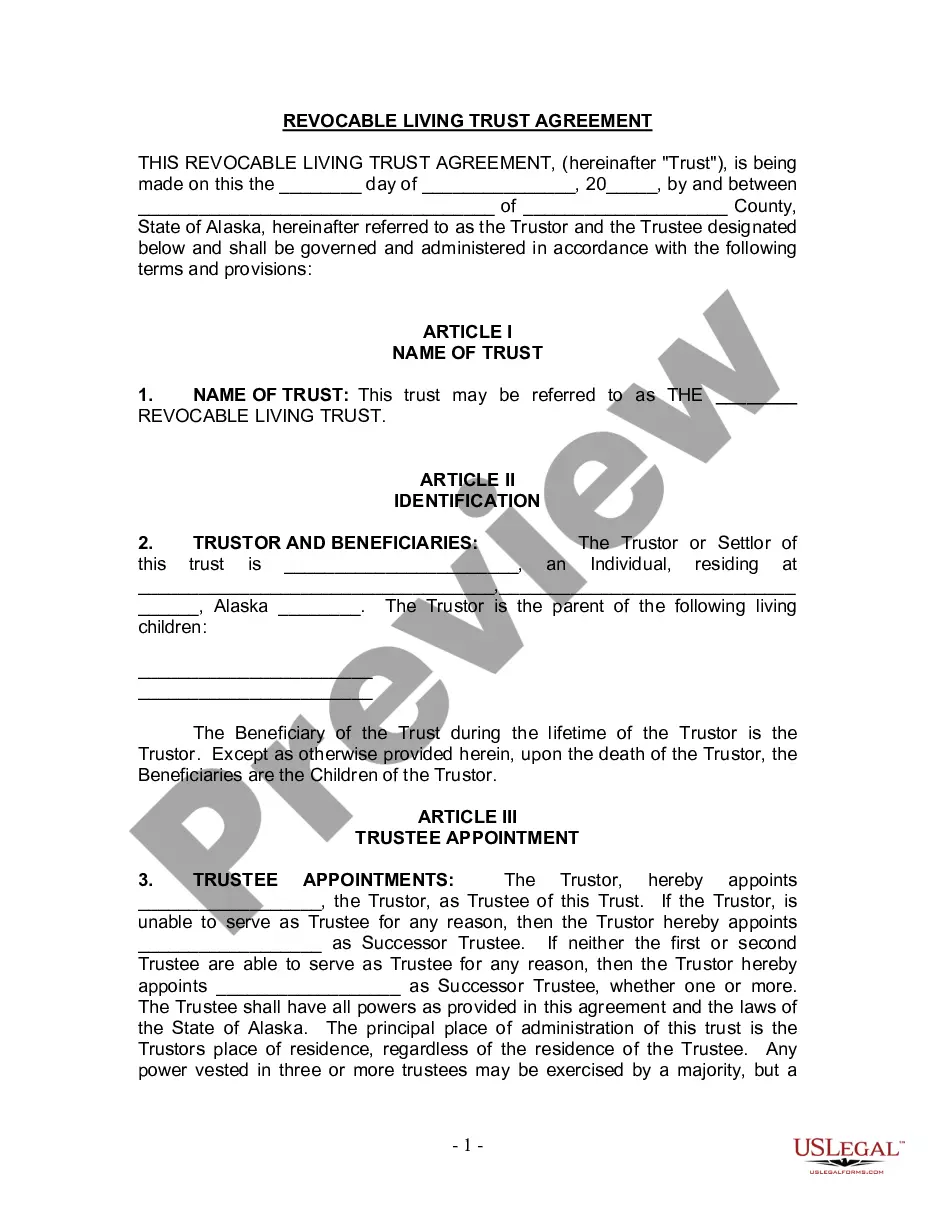
Hippa Release Form for Family Members
What this document covers
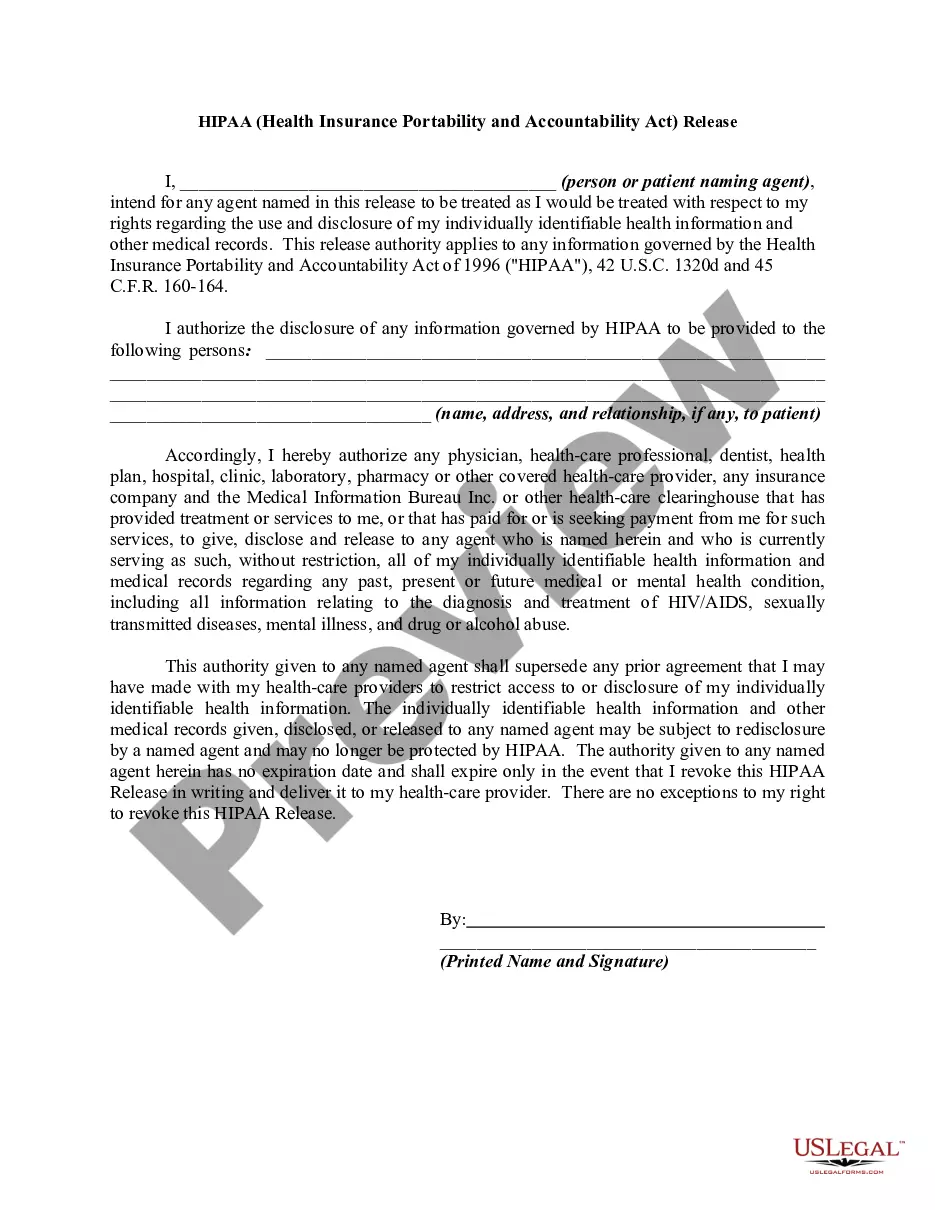
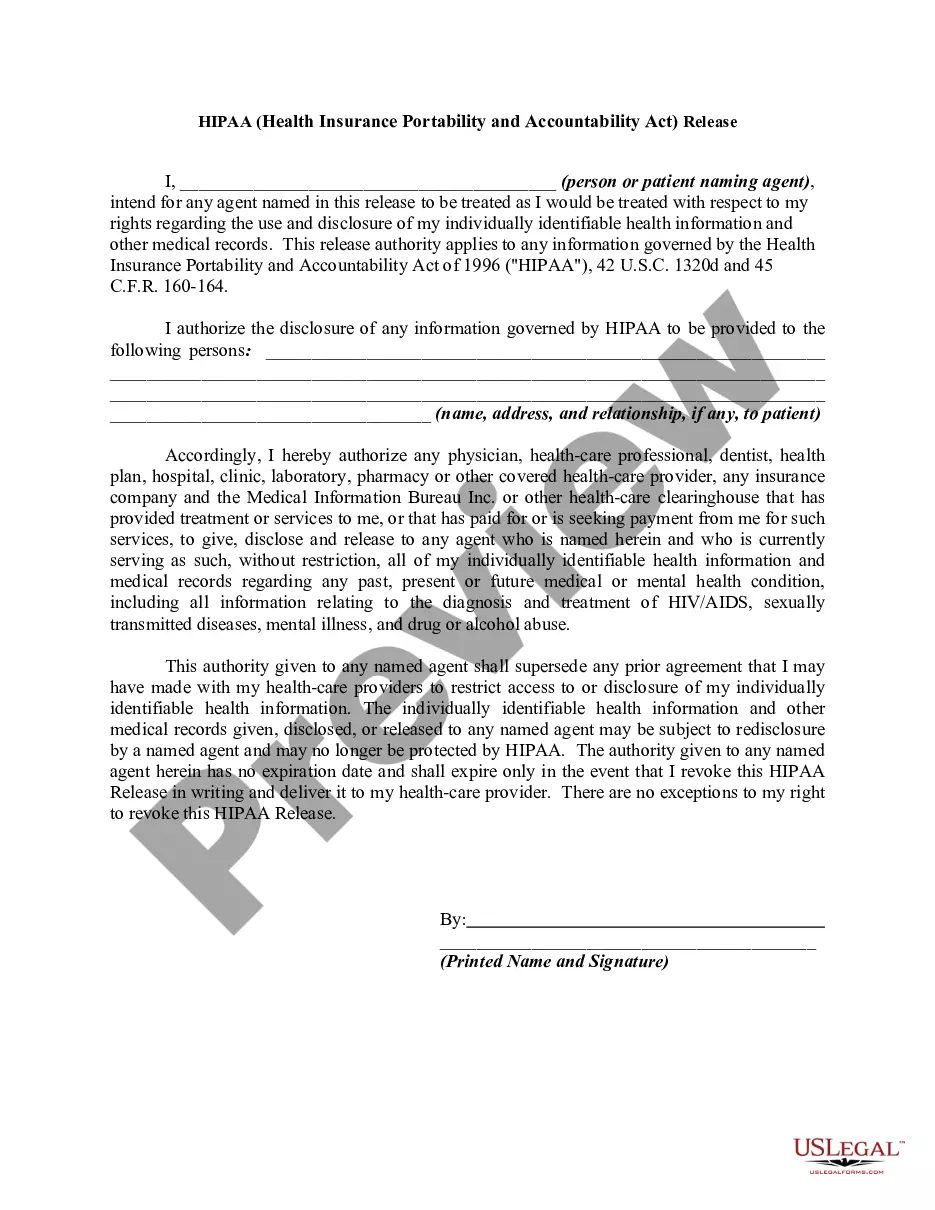
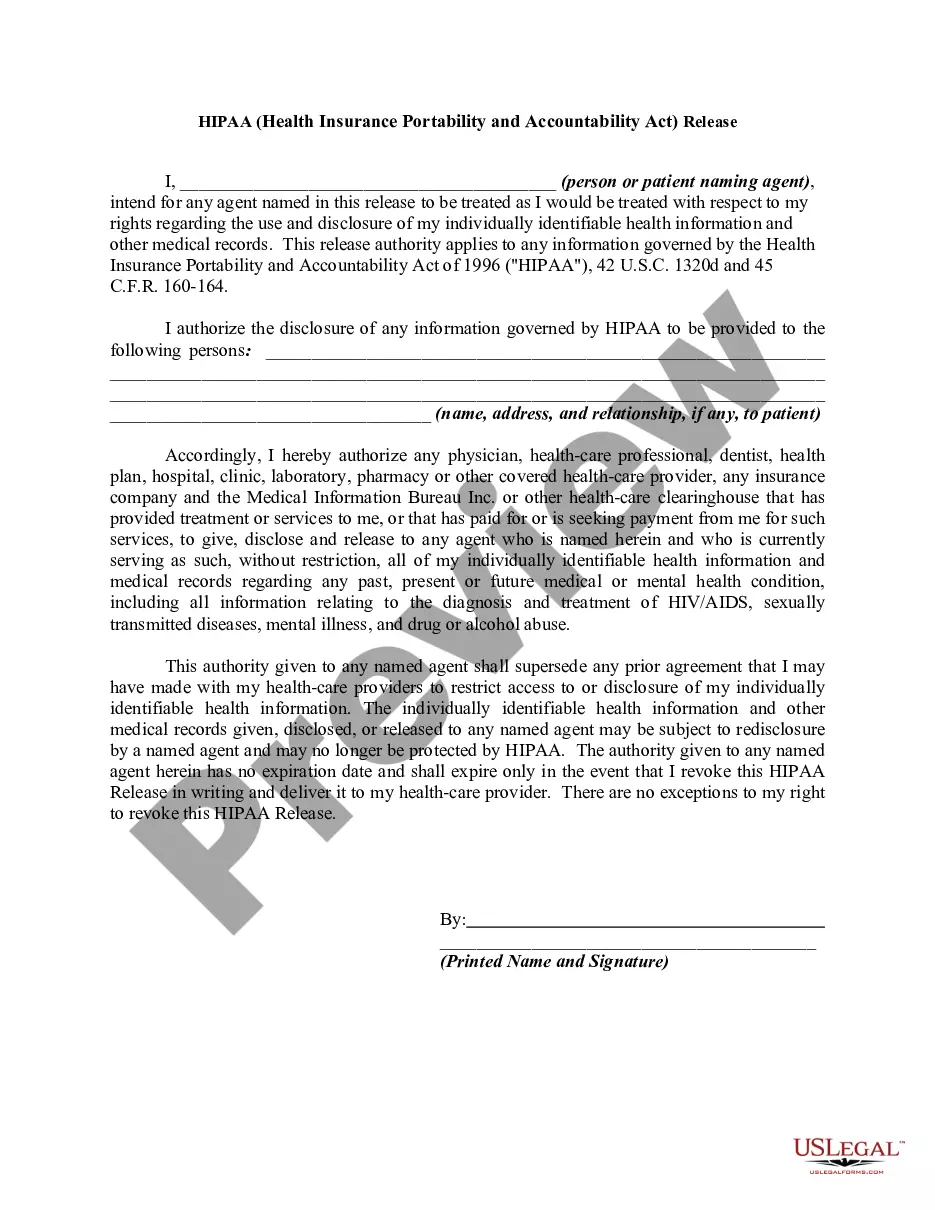
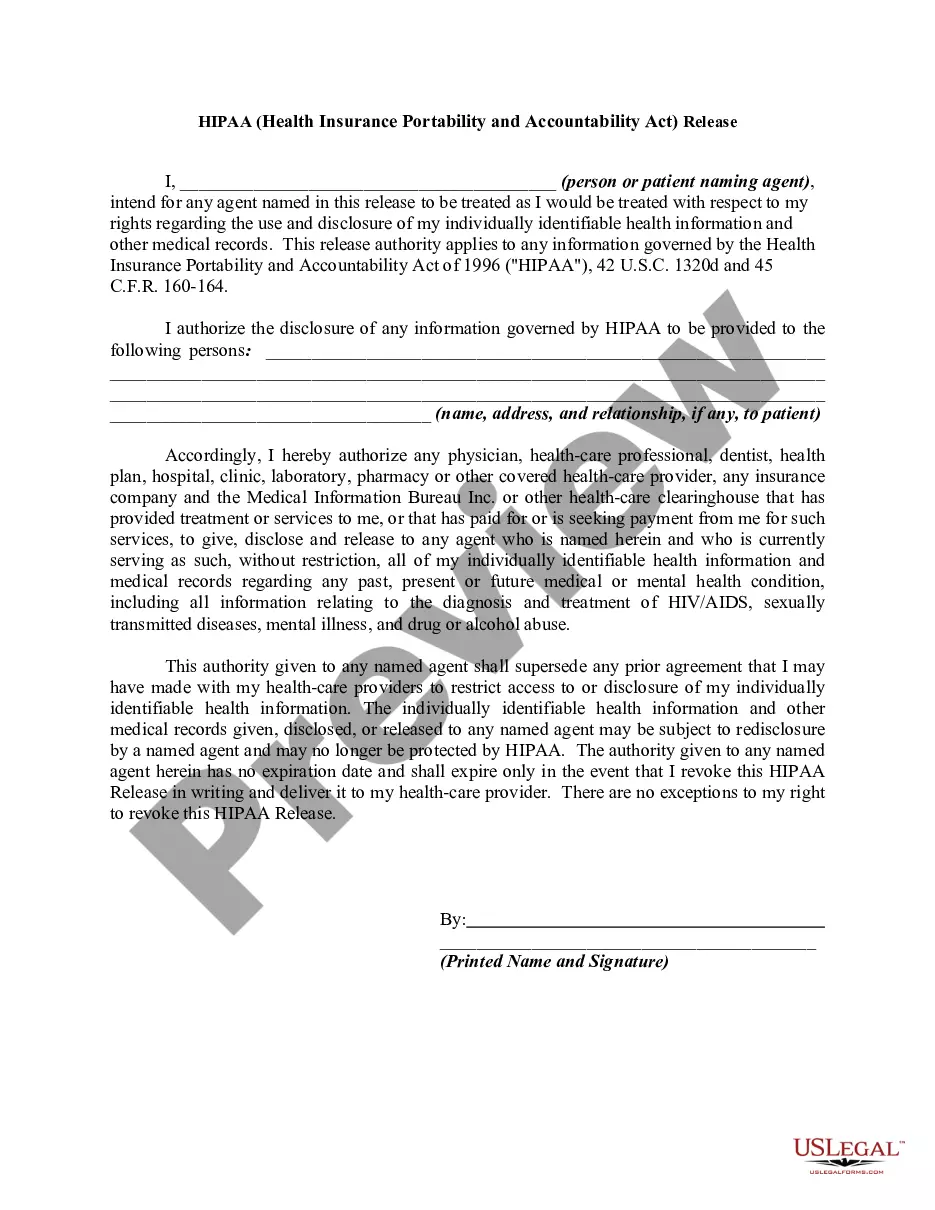
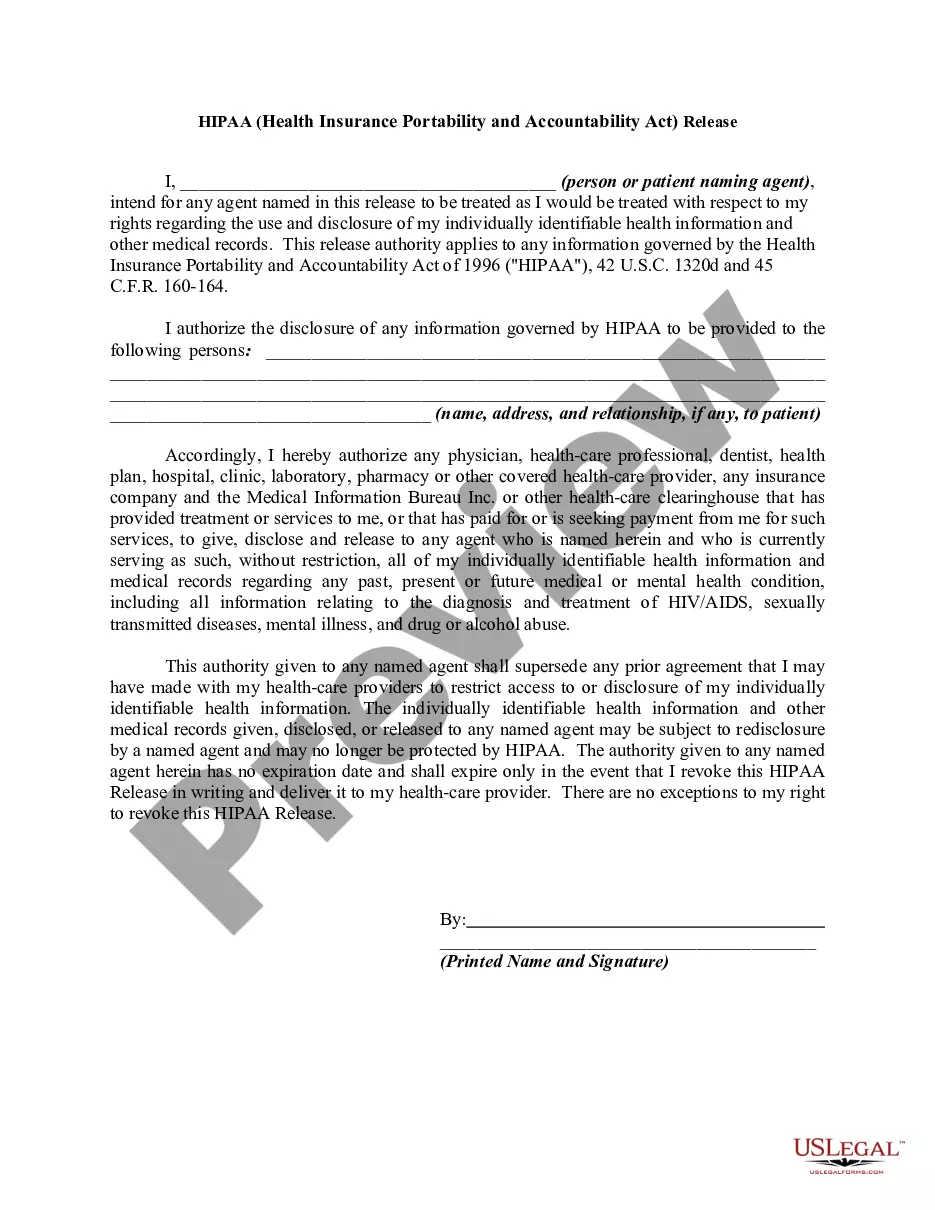
The HIPAA Release Form for Family Members is a legal document that allows individuals to authorize specific family members to access and manage their medical information. It is essential for individuals who want to provide their relatives with the ability to make decisions concerning their healthcare or to receive medical information when necessary. This form ensures compliance with the Health Insurance Portability and Accountability Act (HIPAA), distinguishing it from other consent forms by its specific focus on health information privacy and disclosure.
Main sections of this form
- Name and signature of the person granting authorization.
- Identification of the designated family members authorized to access health information.
- Details concerning the scope of health information to be disclosed.
- Provisions regarding the revocation of this release.
- Notary acknowledgment, if necessary, for validation.

When to use this document
This form is useful in scenarios where a patient needs to allow family members to have access to their health records, particularly in emergencies or for ongoing medical treatment. It can be applied when individuals wish their family to be involved in healthcare decisions or when managing healthcare plans and insurance claims.
Who should use this form
- Patients who want to designate family members to manage their medical information.
- Individuals undergoing treatment who may need assistance from relatives.
- Caregivers acting on behalf of patients seeking access to medical records.
- Families involved in healthcare decisions regarding a loved one.
Completing this form step by step
- Write your full name as the individual granting authorization.
- List the names and addresses of family members you wish to authorize.
- Specify the type of health information that can be disclosed to these family members.
- Sign and date the form to indicate your consent.
- If required, have the form notarized to ensure validity.
Does this form need to be notarized?
This form does not typically require notarization unless specified by local law. However, having it notarized can provide an additional layer of legitimacy in certain jurisdictions.
Get your form ready online
Our built-in tools help you complete, sign, share, and store your documents in one place.
Make edits, fill in missing information, and update formatting in US Legal Forms—just like you would in MS Word.
Download a copy, print it, send it by email, or mail it via USPS—whatever works best for your next step.
Sign and collect signatures with our SignNow integration. Send to multiple recipients, set reminders, and more. Go Premium to unlock E-Sign.
If this form requires notarization, complete it online through a secure video call—no need to meet a notary in person or wait for an appointment.
We protect your documents and personal data by following strict security and privacy standards.

Make edits, fill in missing information, and update formatting in US Legal Forms—just like you would in MS Word.

Download a copy, print it, send it by email, or mail it via USPS—whatever works best for your next step.

Sign and collect signatures with our SignNow integration. Send to multiple recipients, set reminders, and more. Go Premium to unlock E-Sign.

If this form requires notarization, complete it online through a secure video call—no need to meet a notary in person or wait for an appointment.

We protect your documents and personal data by following strict security and privacy standards.
Typical mistakes to avoid
- Leaving out the name of authorized family members.
- Not specifying the types of health information to be disclosed.
- Failing to sign and date the form.
- Overlooking the need for notarization if required by state law.
Why complete this form online
- Convenient download and access from anywhere at any time.
- Editability allows for customization based on individual needs.
- Access to attorney-drafted templates for reliable legal compliance.
- Time-saving, as it eliminates the need for in-person appointments.
Looking for another form?

Form popularity
FAQ
Outside of the HIPAA right of access, other provisions in the Privacy Rule address disclosures to family members. Specifically, a covered entity is permitted to share information with a family member or other person involved in an individual's care or payment for care as long as the individual does not object.
Q: Do I need to notarize the signed form? A: No. The HIPAA Privacy Rule does not require you to notarize authorization forms or have a witness.
No, a HIPAA Authorization does not need to be notarized. In fact, you don't even need a witness to see you sign the form.
Organizations that do not have to follow the government's privacy rule known as the Health Insurance Portability and Accountability Act (HIPAA) include the following, according to the US Department of Health and Human Services: Life insurers. Employers. Workers' compensation carriers.
Outside of the HIPAA right of access, other provisions in the Privacy Rule address disclosures to family members. Specifically, a covered entity is permitted to share information with a family member or other person involved in an individual's care or payment for care as long as the individual does not object.
In general, HIPAA does not give family members the right to access patient records, even if that family member is paying for healthcare premiums, unless the patient is a minor, a spouse, or has designated them as a personal representative.
Demographic information is also considered PHI under HIPAA Rules, as are many common identifiers such as patient names, Social Security numbers, Driver's license numbers, insurance details, and birth dates, when they are linked with health information. The 18 identifiers that make health information PHI are: Names.
HIPAA does permit doctors to disclose information to family when a patient is incapacitated or otherwise unable to consent to the disclosure.
Under HIPAA, your health care provider may share your information face-to-face, over the phone, or in writing. A health care provider or health plan may share relevant information if: You give your provider or plan permission to share the information. You are present and do not object to sharing the information.