Hippa Release Form for Child
About this form
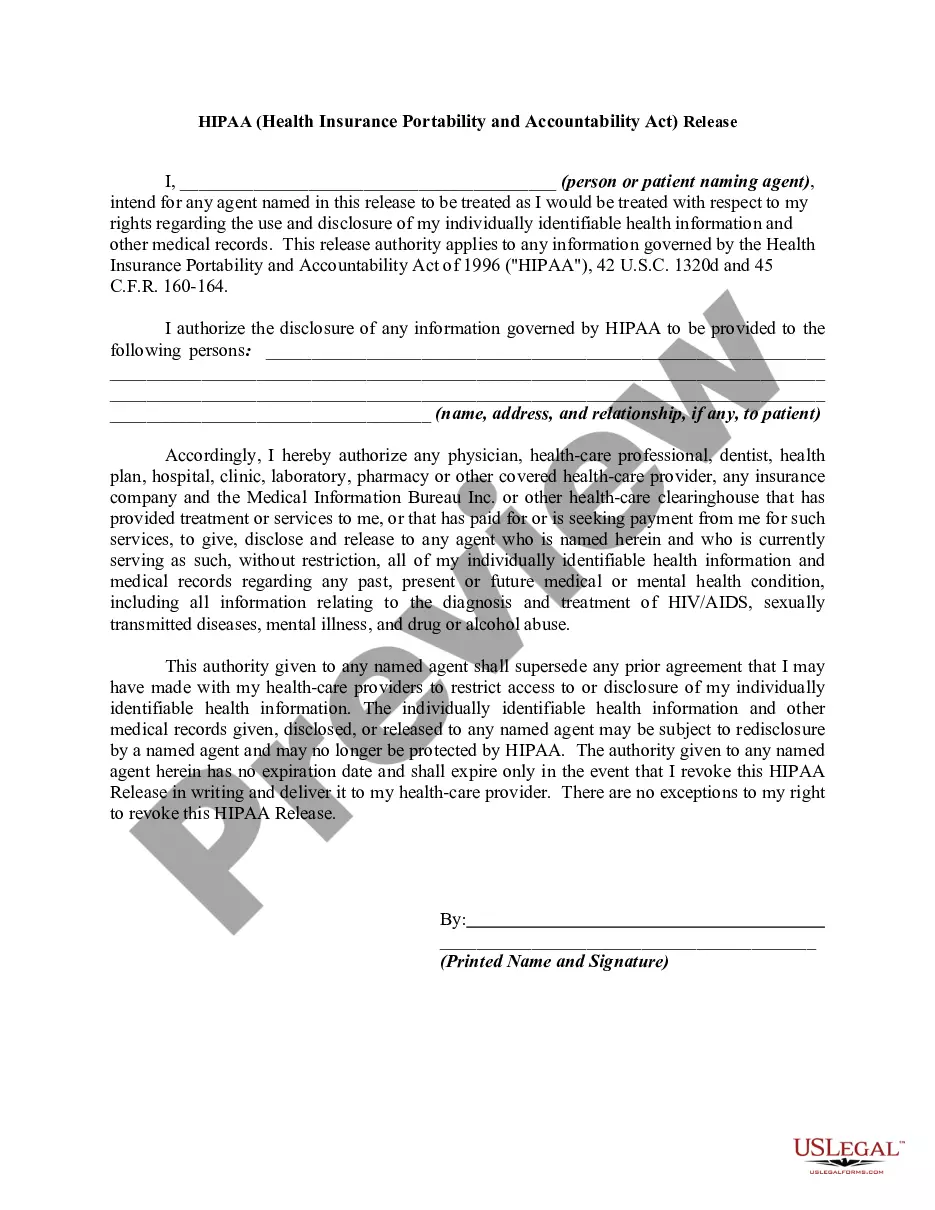
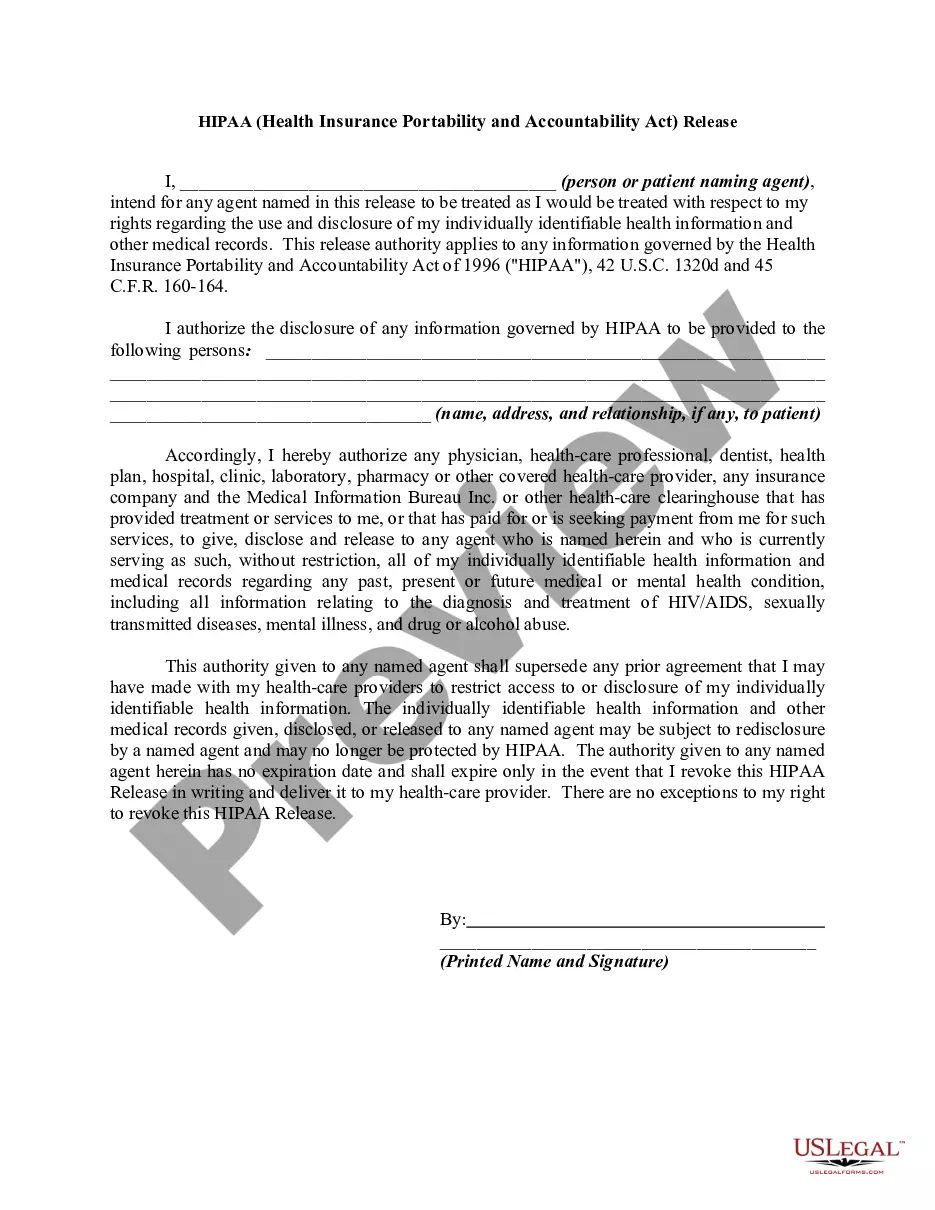
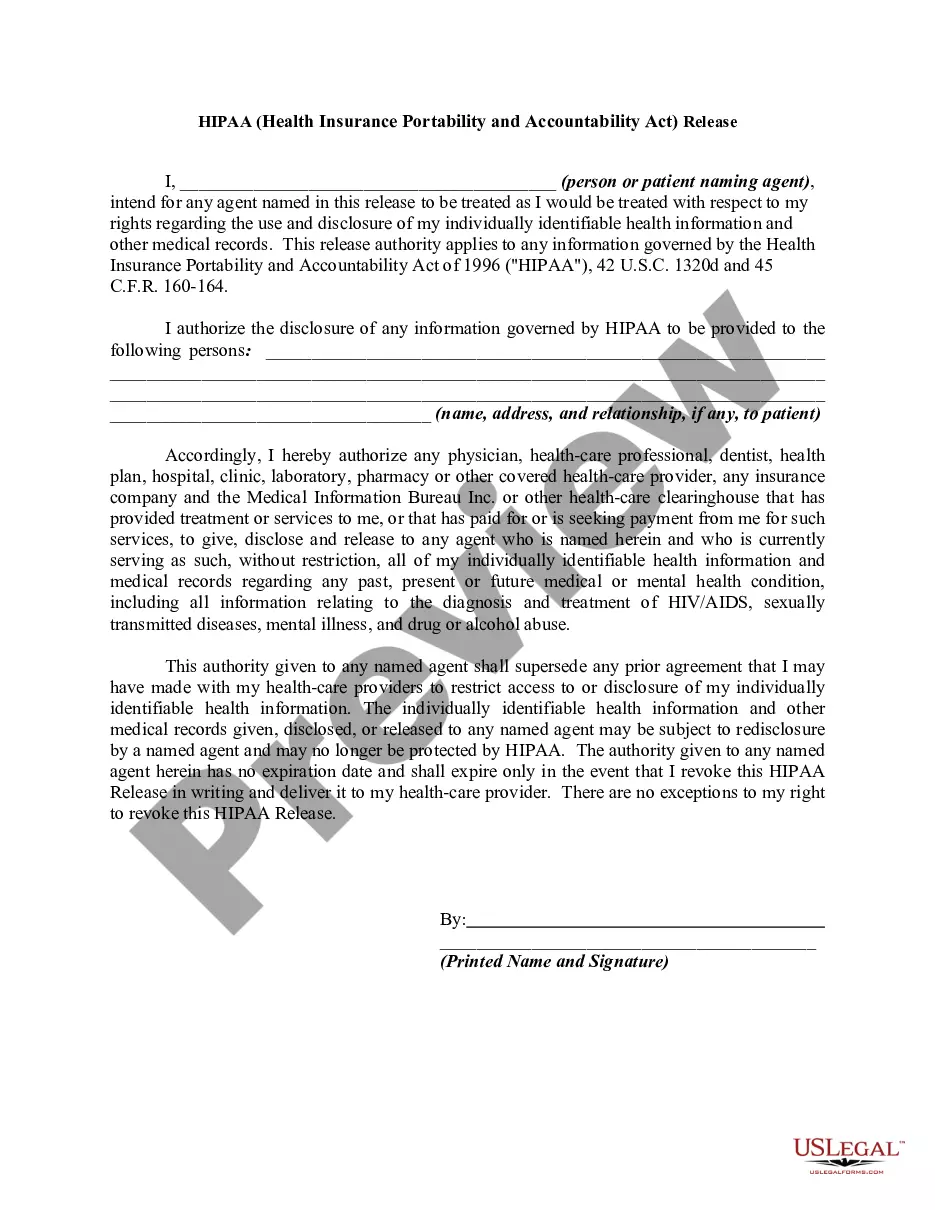
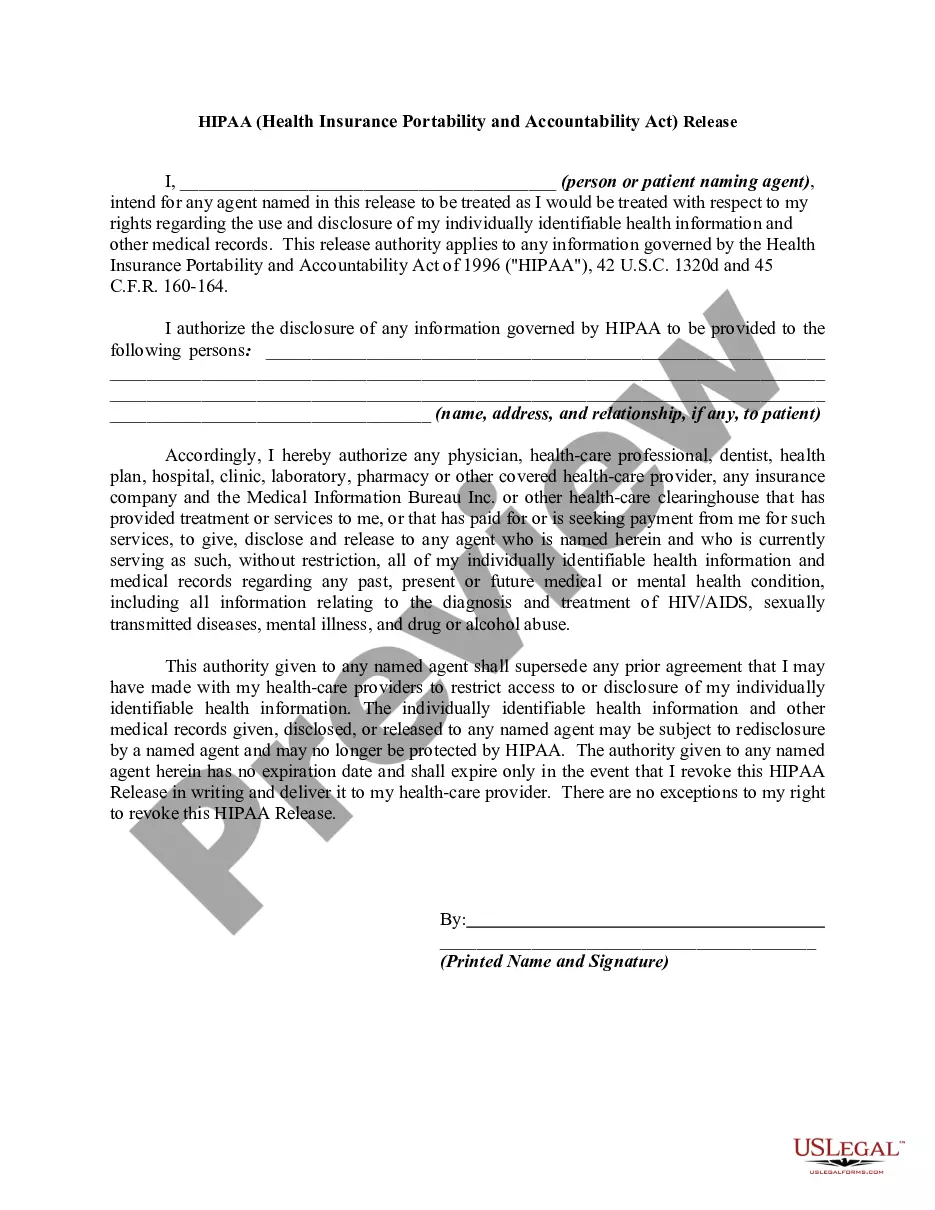
The HIPAA Release Form for Child is a legal document that allows parents or guardians to authorize the release of a child's health information to designated individuals. This form is essential for ensuring that healthcare providers can share important medical and personal health data with specified agents, thereby facilitating better care and communication. Unlike general medical release forms, this specific document is tailored to address the privacy needs of children under the Health Insurance Portability and Accountability Act (HIPAA).
What’s included in this form
- Identification of the person granting the release (parent or guardian).
- List of authorized individuals who can access the child's health information.
- Authorization for the disclosure of medical records governed by HIPAA.
- Statement indicating that this authorization overrides previous agreements regarding health information disclosure.
- Indication that the authority granted has no expiration unless revoked in writing.
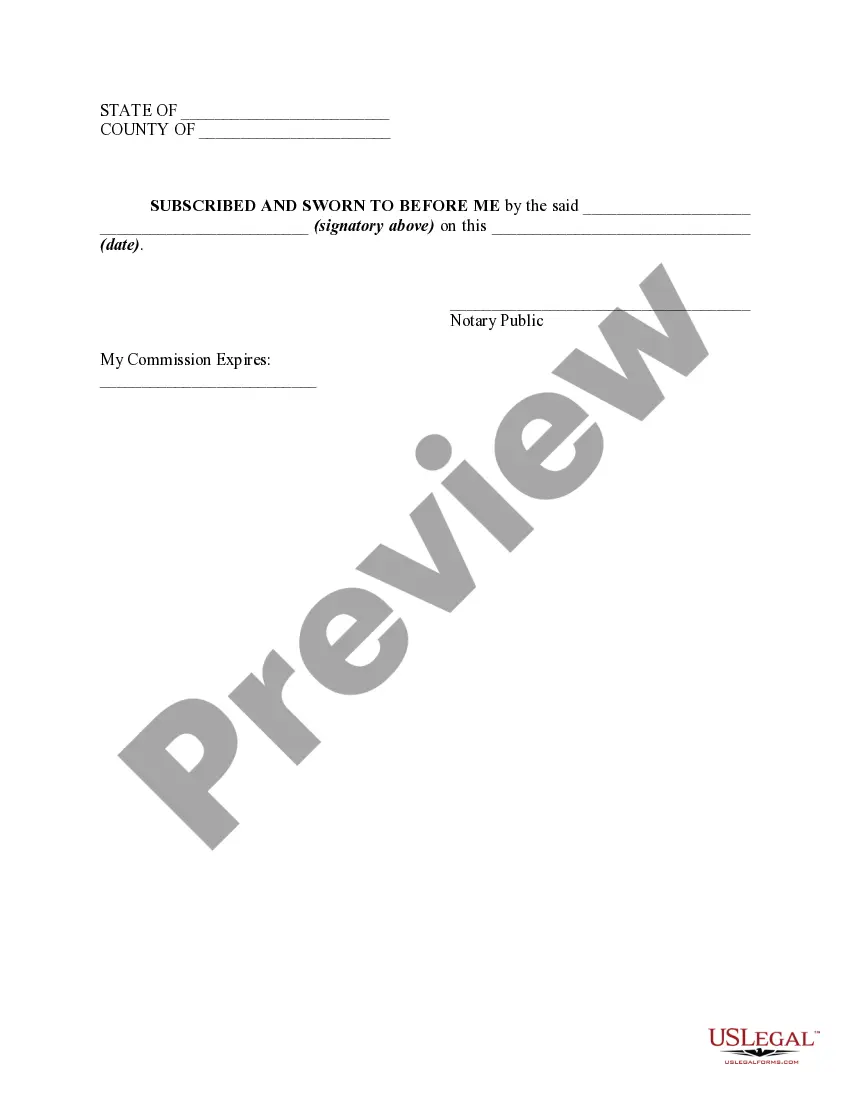
- Signature of the person granting the release and confirmation by a notary public.
When this form is needed
This form should be used when a parent or guardian needs to grant permission for specific individuals to access their child's medical records. This may include situations where the child is receiving care from multiple providers, or when a parent needs to ensure that trusted family members can receive medical updates regarding the childâs health, such as during emergencies or when coordinating care for chronic conditions.
Intended users of this form
- Parents or legal guardians of minors requiring medical care.
- Individuals responsible for managing a child's medical treatments.
- Parents who need to share health information with caregivers or family members.
Completing this form step by step
- Identify the parent or guardian granting the release by filling in their name and details.
- List the individuals authorized to receive the child's health information, including their names, addresses, and relationship to the child.
- Review the authorization clauses to ensure understanding of the breadth of information being released.
- Sign and date the form to validate the authorization.
- Have the signature notarized if required to finalize the release.
Does this form need to be notarized?
Yes, this form must be notarized to be legally valid. This ensures the authenticity of the signature and the identity of the person granting authority. US Legal Forms provides integrated online notarization services that are accessible 24/7, allowing you to complete this process securely and conveniently from home.
Get your form ready online
Our built-in tools help you complete, sign, share, and store your documents in one place.
Make edits, fill in missing information, and update formatting in US Legal Forms—just like you would in MS Word.
Download a copy, print it, send it by email, or mail it via USPS—whatever works best for your next step.
Sign and collect signatures with our SignNow integration. Send to multiple recipients, set reminders, and more. Go Premium to unlock E-Sign.
If this form requires notarization, complete it online through a secure video call—no need to meet a notary in person or wait for an appointment.
We protect your documents and personal data by following strict security and privacy standards.

Make edits, fill in missing information, and update formatting in US Legal Forms—just like you would in MS Word.

Download a copy, print it, send it by email, or mail it via USPS—whatever works best for your next step.

Sign and collect signatures with our SignNow integration. Send to multiple recipients, set reminders, and more. Go Premium to unlock E-Sign.

If this form requires notarization, complete it online through a secure video call—no need to meet a notary in person or wait for an appointment.

We protect your documents and personal data by following strict security and privacy standards.
Common mistakes to avoid
- Failing to list all individuals who need access to the child's health information.
- Not signing and dating the form, rendering it invalid.
- Overlooking the need for notarization when mandated by state law.
- Not revoking the authorization in writing if necessary in the future.
Benefits of using this form online
- Convenience of downloading the form instantly without any travel or wait times.
- Edit and fill in the form as needed, ensuring all information is accurate before submission.
- Access forms drafted by licensed attorneys, ensuring legal compliance and reliability.
Looking for another form?




Form popularity
FAQ
HIPAA does not protect all health information. Nor does it apply to every person who may see or use health information. HIPAA only applies to covered entities and their business associates.
Outside of the HIPAA right of access, other provisions in the Privacy Rule address disclosures to family members. Specifically, a covered entity is permitted to share information with a family member or other person involved in an individual's care or payment for care as long as the individual does not object.
Organizations that do not have to follow the government's privacy rule known as the Health Insurance Portability and Accountability Act (HIPAA) include the following, according to the US Department of Health and Human Services: Life insurers. Employers. Workers' compensation carriers.
Yes, the Privacy Rule generally allows a parent to have access to the medical records about his or her child, as his or her minor child's personal representative when such access is not inconsistent with State or other law.When the minor obtains care at the direction of a court or a person appointed by the court; and.
For example, California gives minors the right to control their own health care information when they otherwise have the right to consent to care.When a parent has signed an agreement to respect the confidentiality between the health care provider and the minor.
Adults and emancipated minors sign their own authorization form as long as they have authority to make health decisions for themselves. HIPAA defers to state law to define who signs an authorization on behalf of an unemancipated minor.
In general, HIPAA does not give family members the right to access patient records, even if that family member is paying for healthcare premiums, unless the patient is a minor, a spouse, or has designated them as a personal representative.
HIPAA does permit doctors to disclose information to family when a patient is incapacitated or otherwise unable to consent to the disclosure.
The HIPAA privacy form is a document that outlines the manner in which a patient's PHI (protected health information) may be disclosed to third parties (e.g. health clearinghouses).HIPAA release forms allow patients to authorize their health provider to disclose information to a civilian third party of their choosing.