Hippa Release Form for Minor Child
What is this form?
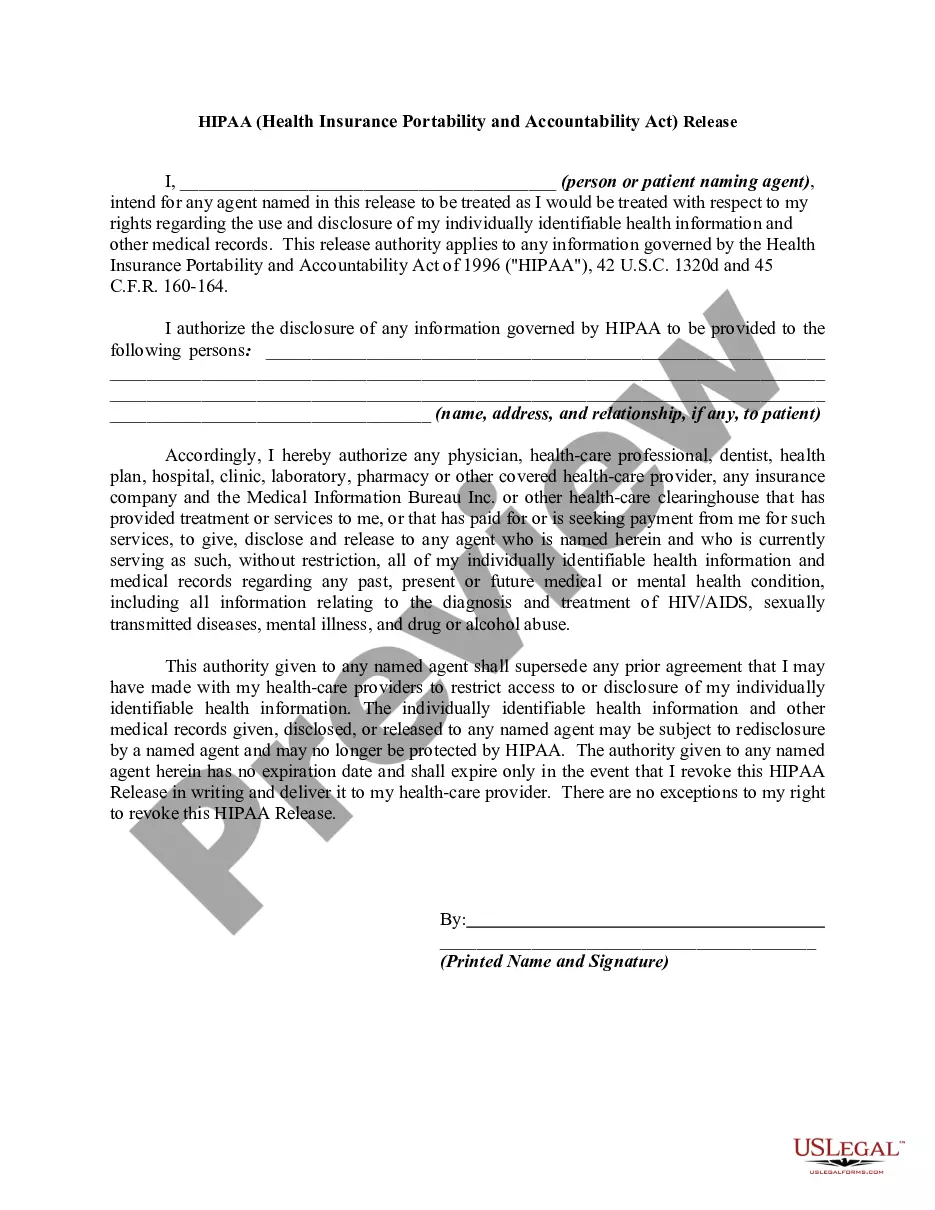
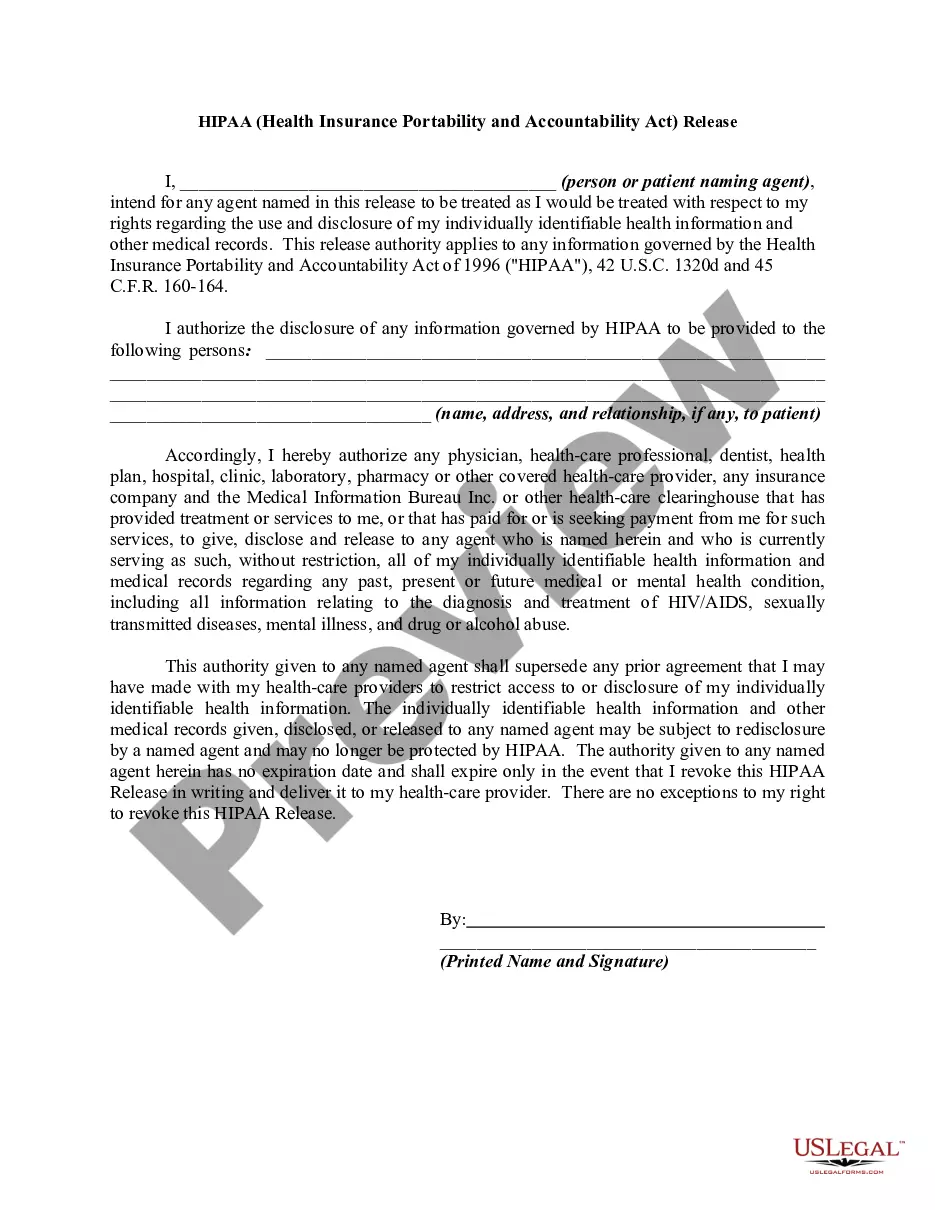
The HIPAA Release Form for Minor Child is a legal document that allows a parent or guardian to authorize the disclosure of a minor child's health information to specified individuals. This form ensures compliance with the Health Insurance Portability and Accountability Act (HIPAA), which sets national standards for protecting personal health information. Unlike similar forms, this release specifically addresses the unique needs of minors, allowing caregivers to manage health-related communications effectively.
What’s included in this form
- Releasing authority: Name of the person or patient naming the agent is required.
- Authorized recipients: Specific persons allowed to access health information must be listed.
- Scope of information: The form covers all individually identifiable health information as defined by HIPAA.
- Revocation terms: Details on how to revoke the release in writing to healthcare providers.
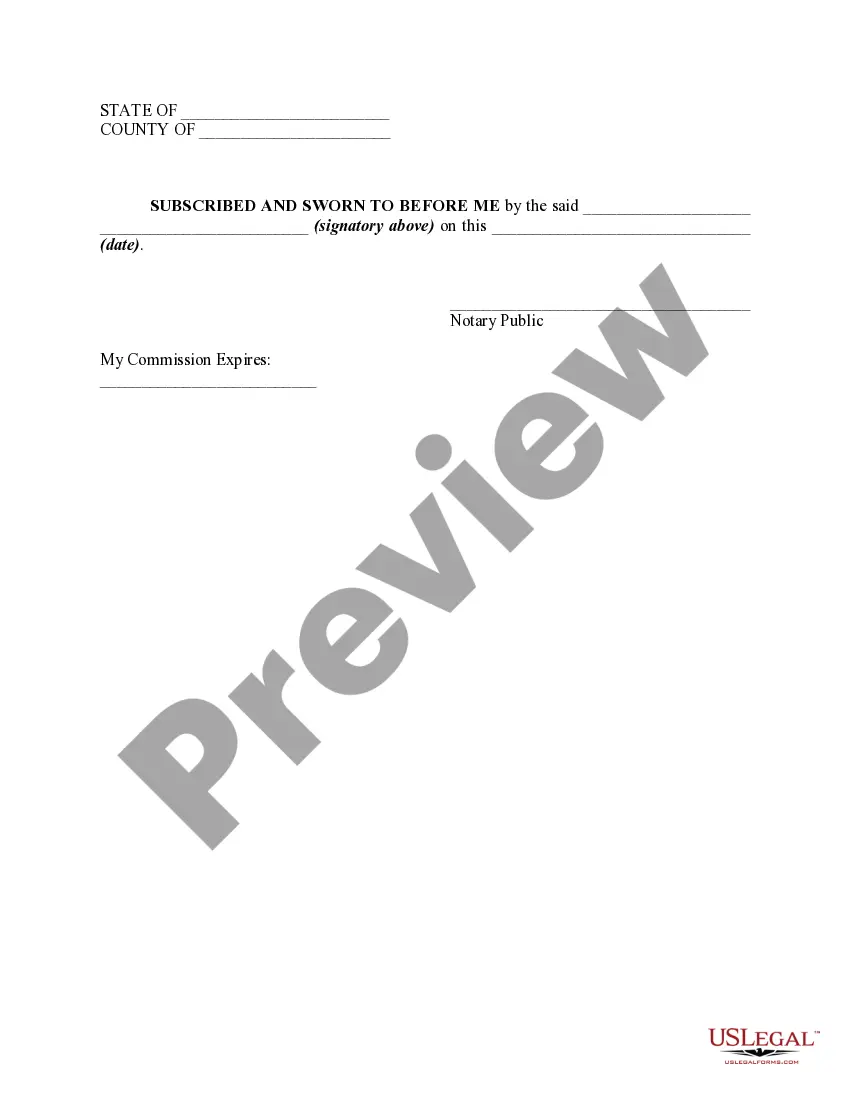
- Notary acknowledgment: Requires a notary public to validate the form.
When to use this form
This form should be used when a parent or guardian wants to allow specified individuals, such as family members, caregivers, or medical personnel, access to a minor child's health information. It is particularly useful in situations where the child requires medical treatment, and the caregiver needs to communicate with health care providers regarding the child's care or ongoing medical conditions.
Who needs this form
- Parents or legal guardians of a minor child.
- Anyone responsible for the healthcare decisions of a minor.
- Caregivers or healthcare providers needing access to a minor's health records.
How to prepare this document
- Identify the parent or guardian who will be signing the form.
- List the names and relationships of individuals authorized to receive the child's health information.
- Specify the scope of information that can be disclosed.
- Sign and date the form as the parent or guardian.
- Have the form notarized if required.
Is notarization required?
Yes, this form must be notarized to be legally valid. This ensures that the identity of the signer is verified, providing additional legal credibility to the release of the minor's health information.
Get your form ready online
Our built-in tools help you complete, sign, share, and store your documents in one place.
Make edits, fill in missing information, and update formatting in US Legal Forms—just like you would in MS Word.
Download a copy, print it, send it by email, or mail it via USPS—whatever works best for your next step.
Sign and collect signatures with our SignNow integration. Send to multiple recipients, set reminders, and more. Go Premium to unlock E-Sign.
If this form requires notarization, complete it online through a secure video call—no need to meet a notary in person or wait for an appointment.
We protect your documents and personal data by following strict security and privacy standards.

Make edits, fill in missing information, and update formatting in US Legal Forms—just like you would in MS Word.

Download a copy, print it, send it by email, or mail it via USPS—whatever works best for your next step.

Sign and collect signatures with our SignNow integration. Send to multiple recipients, set reminders, and more. Go Premium to unlock E-Sign.

If this form requires notarization, complete it online through a secure video call—no need to meet a notary in person or wait for an appointment.

We protect your documents and personal data by following strict security and privacy standards.
Common mistakes to avoid
- Failing to include all authorized individuals in the list.
- Not specifying the type of health information to be disclosed.
- Neglecting to sign and date the form properly.
- Forgetting to have the form notarized where required.
Benefits of using this form online
- Convenient access and immediate availability for downloading.
- Editable format allows users to fill in details as needed.
- Reliable templates drafted by licensed attorneys ensuring compliance with legal standards.
Legal use & context:
- The HIPAA Release Form for Minor Child is enforceable in accordance with HIPAA regulations.
- It allows named agents access to the child's medical information while ensuring privacy standards are met.
- Caregivers should understand that releasing information could lead to redisclosure by those who receive it.
Key takeaways
- The form allows parents to manage health information disclosures for their minor children.
- It must be completed accurately to ensure legal effectiveness.
- Notarization may be required, adding a layer of verification to the document.
Looking for another form?
Form popularity
FAQ
Adults and emancipated minors sign their own authorization form as long as they have authority to make health decisions for themselves. HIPAA defers to state law to define who signs an authorization on behalf of an unemancipated minor.
For example, California gives minors the right to control their own health care information when they otherwise have the right to consent to care.When a parent has signed an agreement to respect the confidentiality between the health care provider and the minor.
Yes, the Privacy Rule generally allows a parent to have access to the medical records about his or her child, as his or her minor child's personal representative when such access is not inconsistent with State or other law.When the minor obtains care at the direction of a court or a person appointed by the court; and.
For example, California gives minors the right to control their own health care information when they otherwise have the right to consent to care.When a parent has signed an agreement to respect the confidentiality between the health care provider and the minor.
California law authorizes the parent(s) or guardian of a minor to give informed consent for most medical decisions, including mental health treatment, on behalf of the minor.
In fact, HIPAA offers no protection to minors and requires healthcare providers to release a minor patient's medical records to the child's parent or guardian when requested.
Under the HIPAA privacy rule, adolescents who legally are adults (aged 18 or older) and emancipated minors can exercise the rights of individuals; specific provisions address the protected health information of adolescents who are younger than 18 and not emancipated.
In fact, HIPAA offers no protection to minors and requires healthcare providers to release a minor patient's medical records to the child's parent or guardian when requested.
A parental consent form is used to gather permission from parents and guardians to let their child participate in certain activities. Whether you manage a summer camp or run after school programs, this free Parental Consent and Release Form makes it easy to gather electronic signatures from parents and guardians.