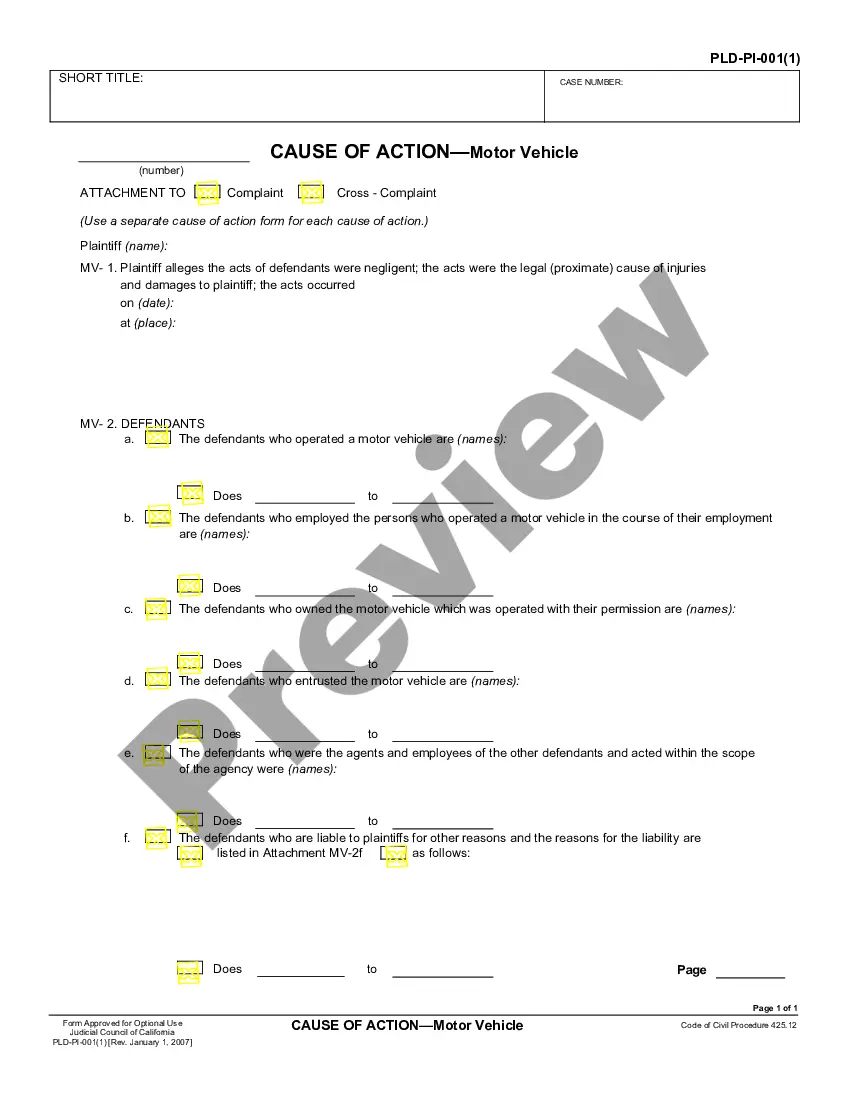
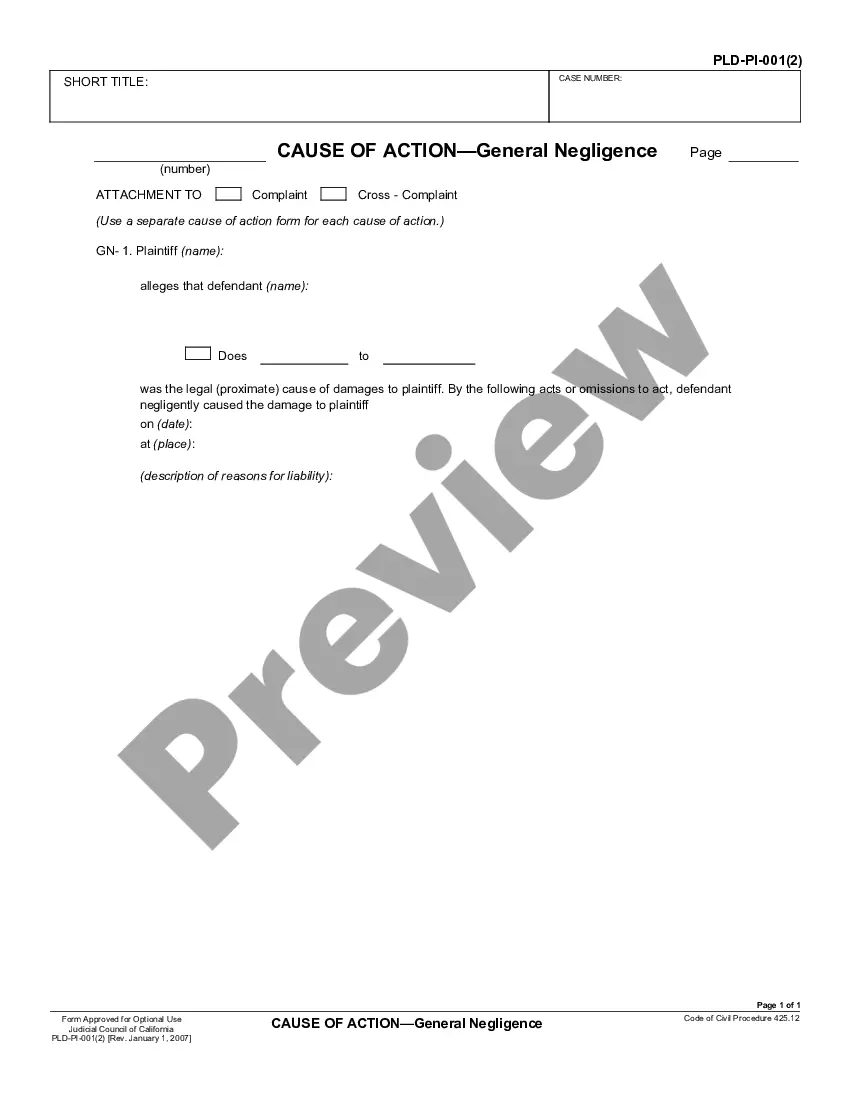
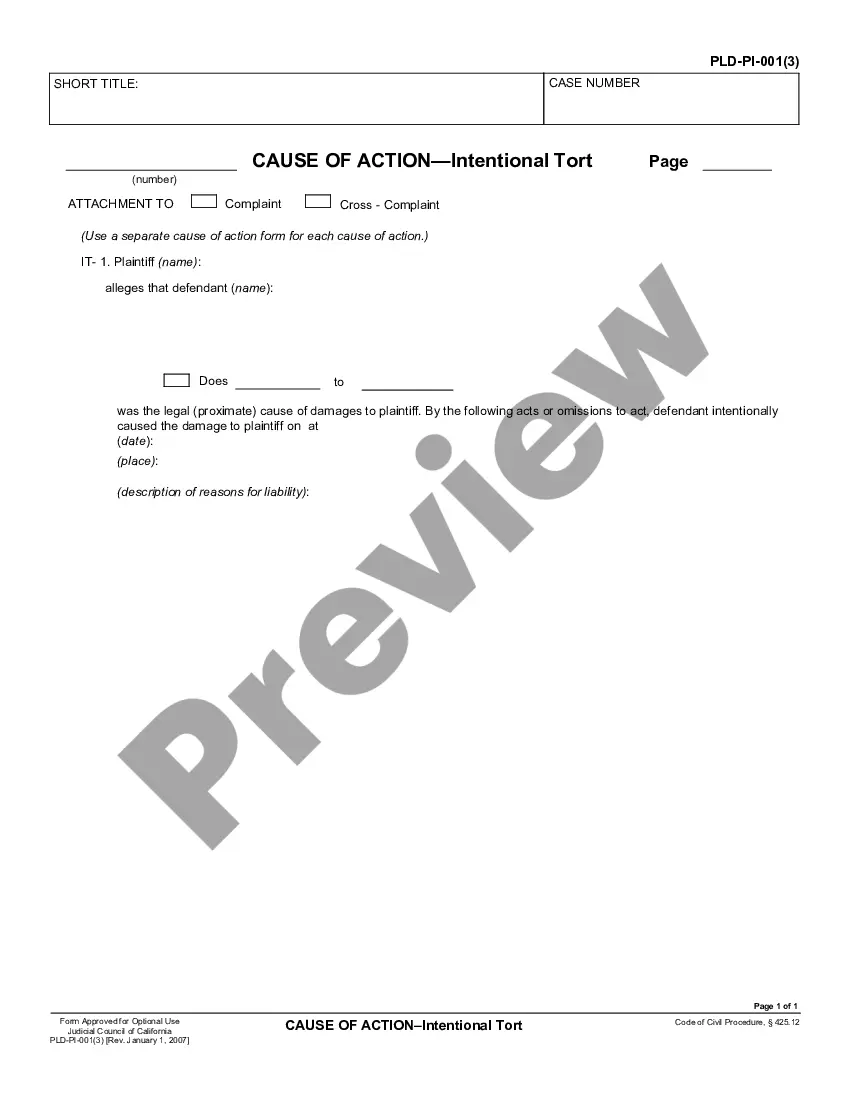
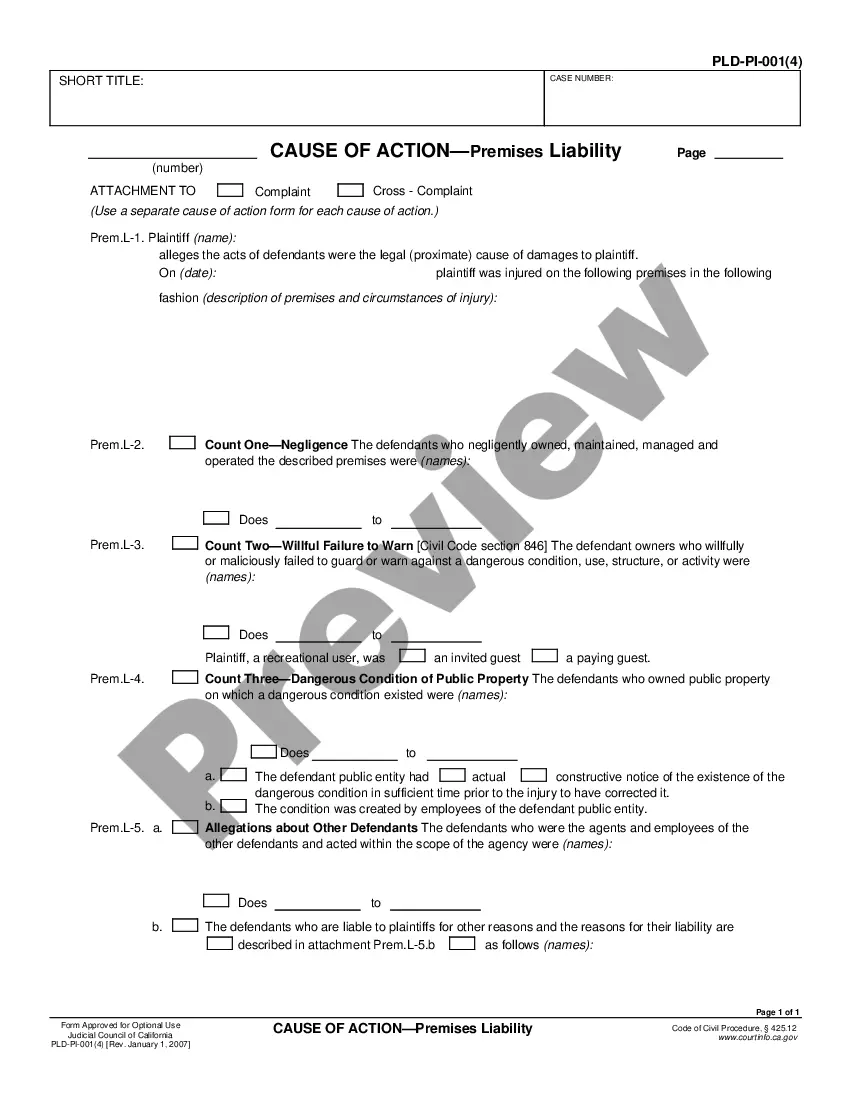
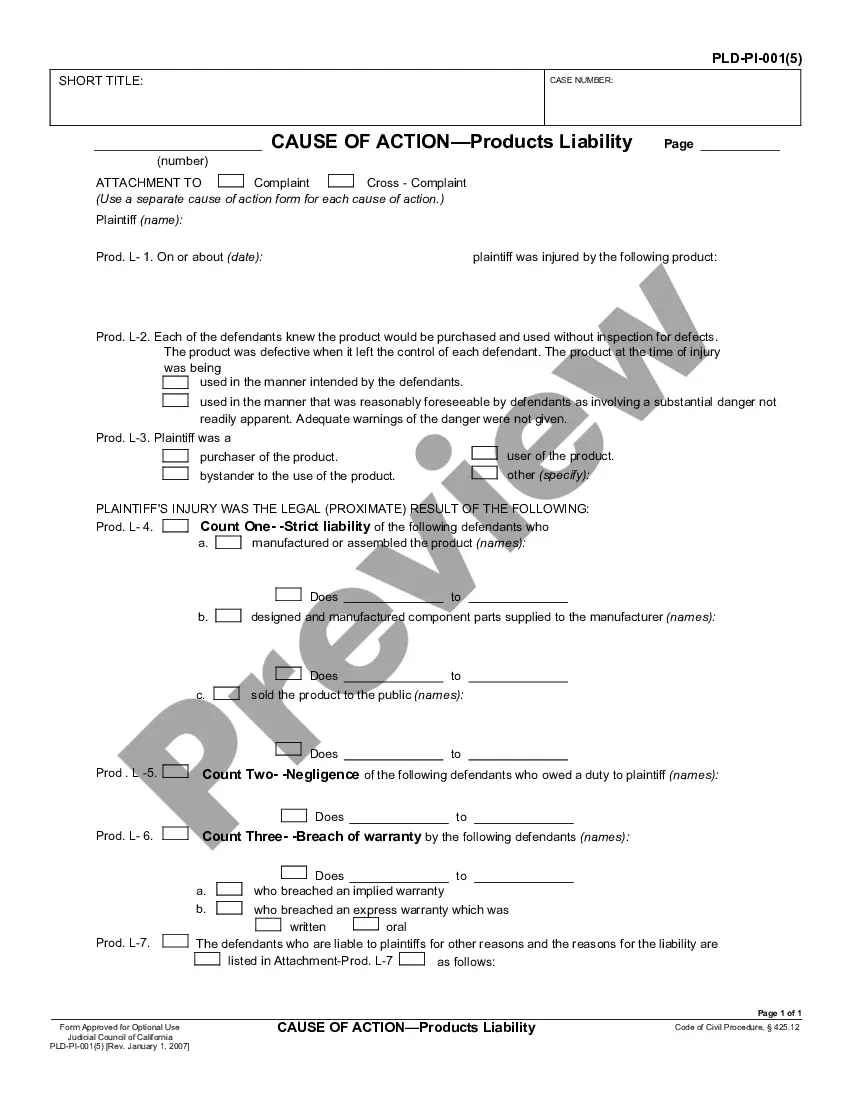
Marital Settlement Agreement Dealing with Domiciliary Custody and Moving Away
What is this form?
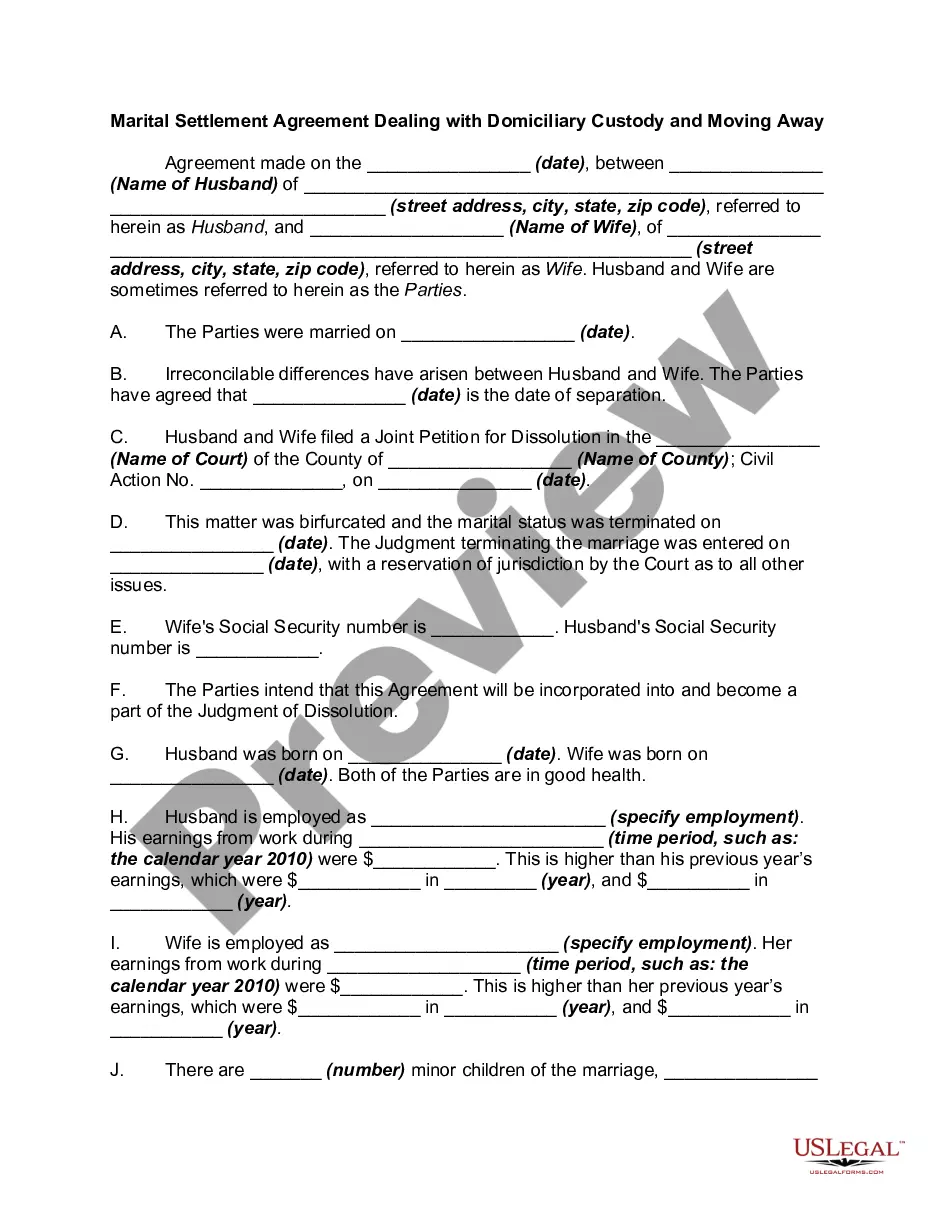
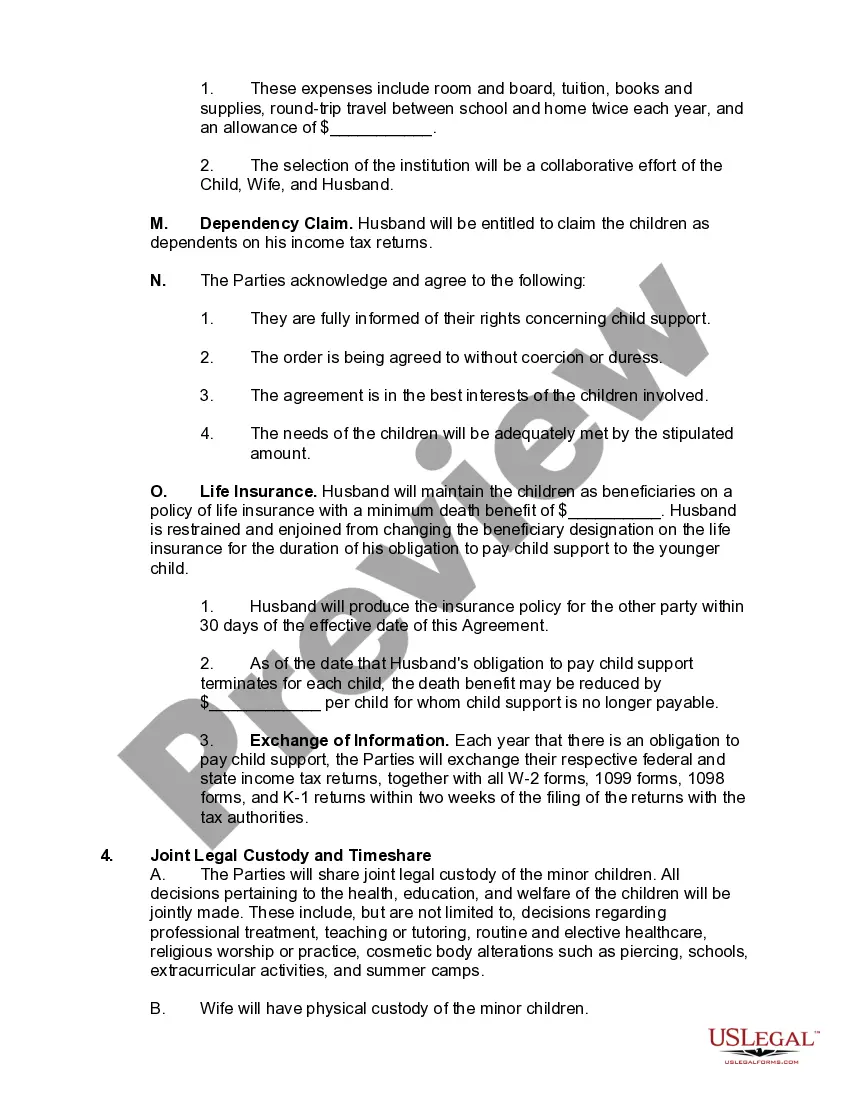
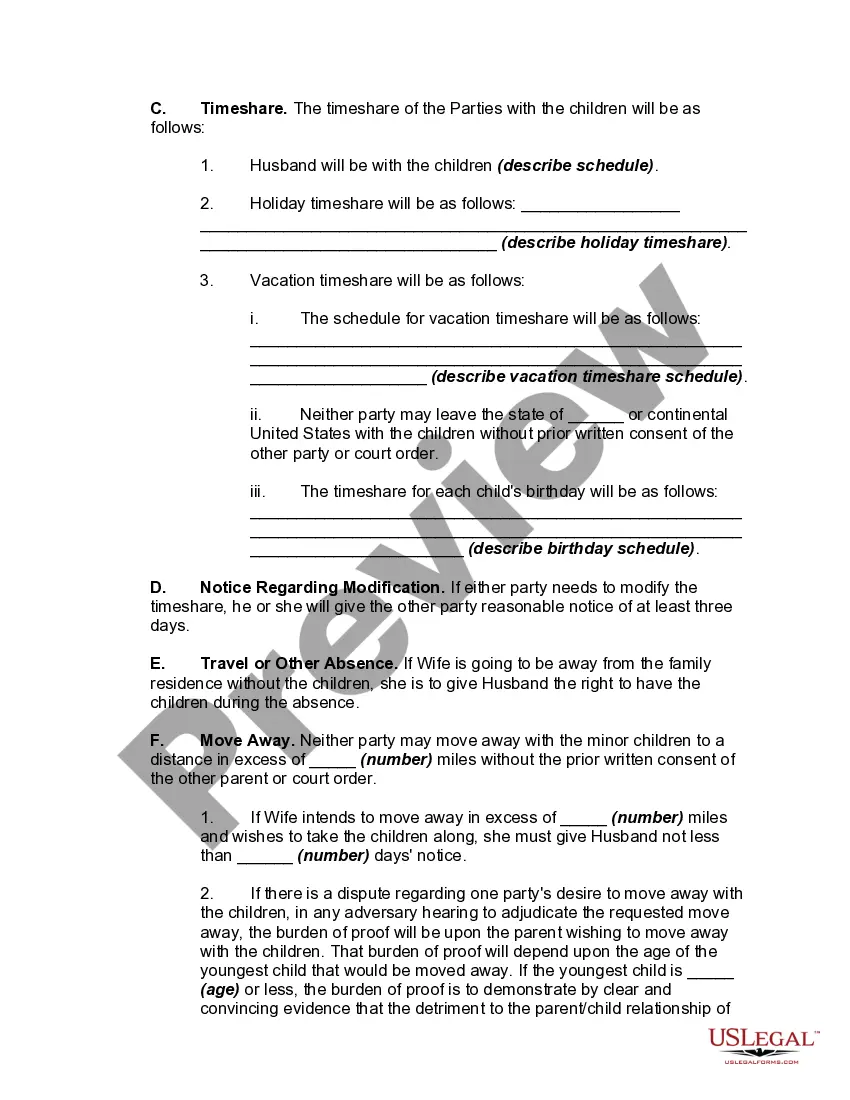
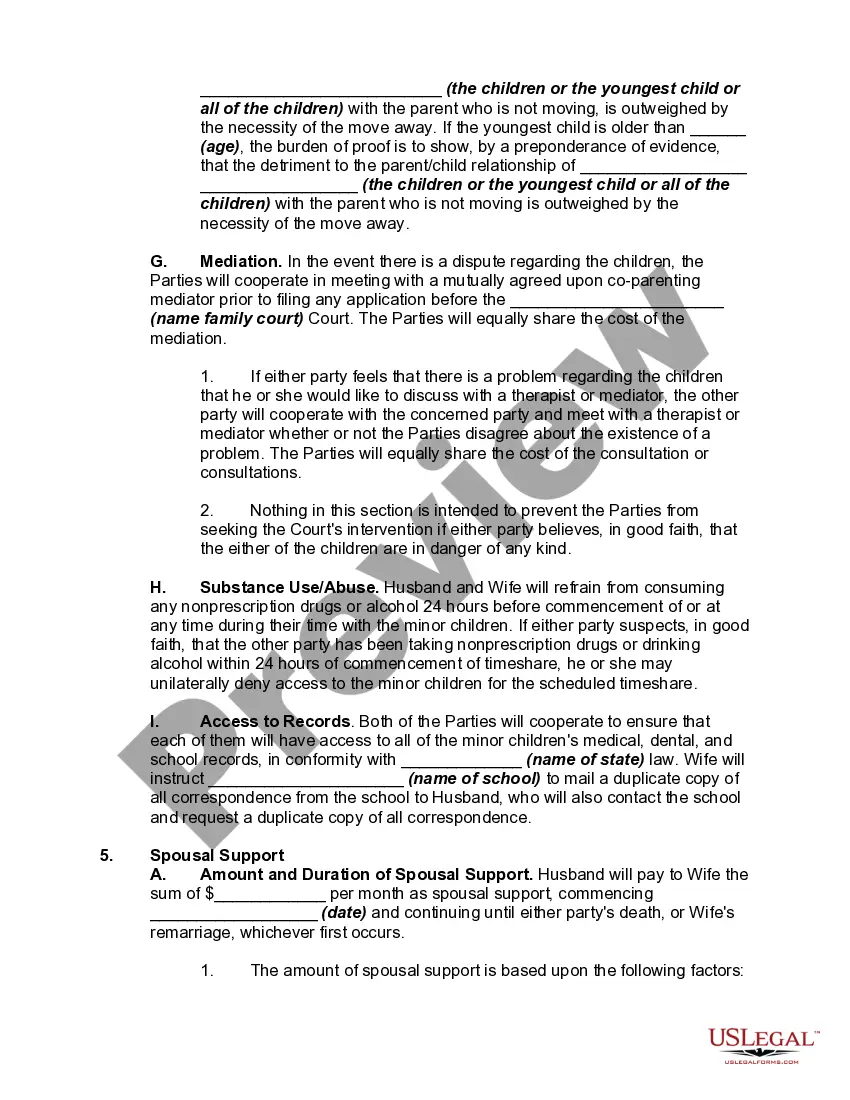
The Marital Settlement Agreement Dealing with Domiciliary Custody and Moving Away is a legal document that outlines the terms of custody and support arrangements for children following a separation or divorce. This form specifically addresses domiciliary custody, which designates one parent as the primary caregiver while allowing the non-domiciliary parent to have access to important records and decision-making processes. This form is crucial to ensure both parents understand their rights and responsibilities, particularly when one parent wishes to relocate with the children.
Main sections of this form
- Identification of parties and their marriage date.
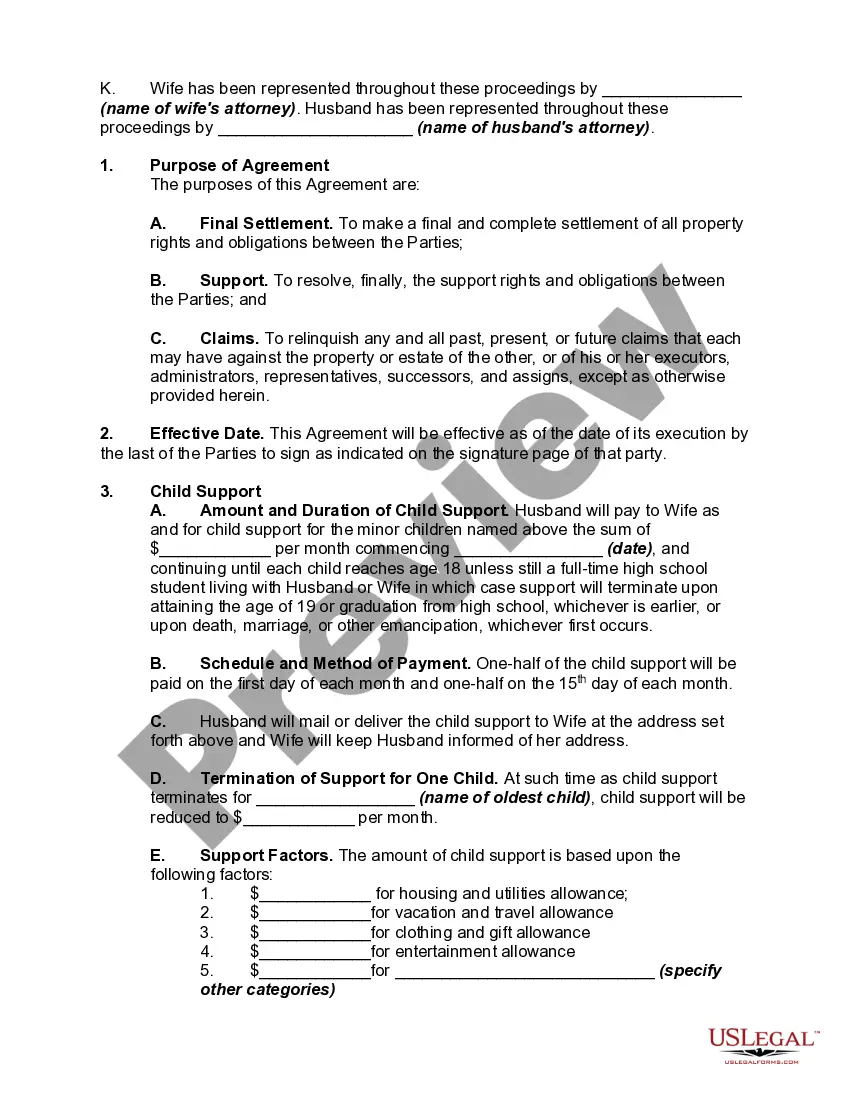
- Definitions of custodial arrangements and child support obligations.
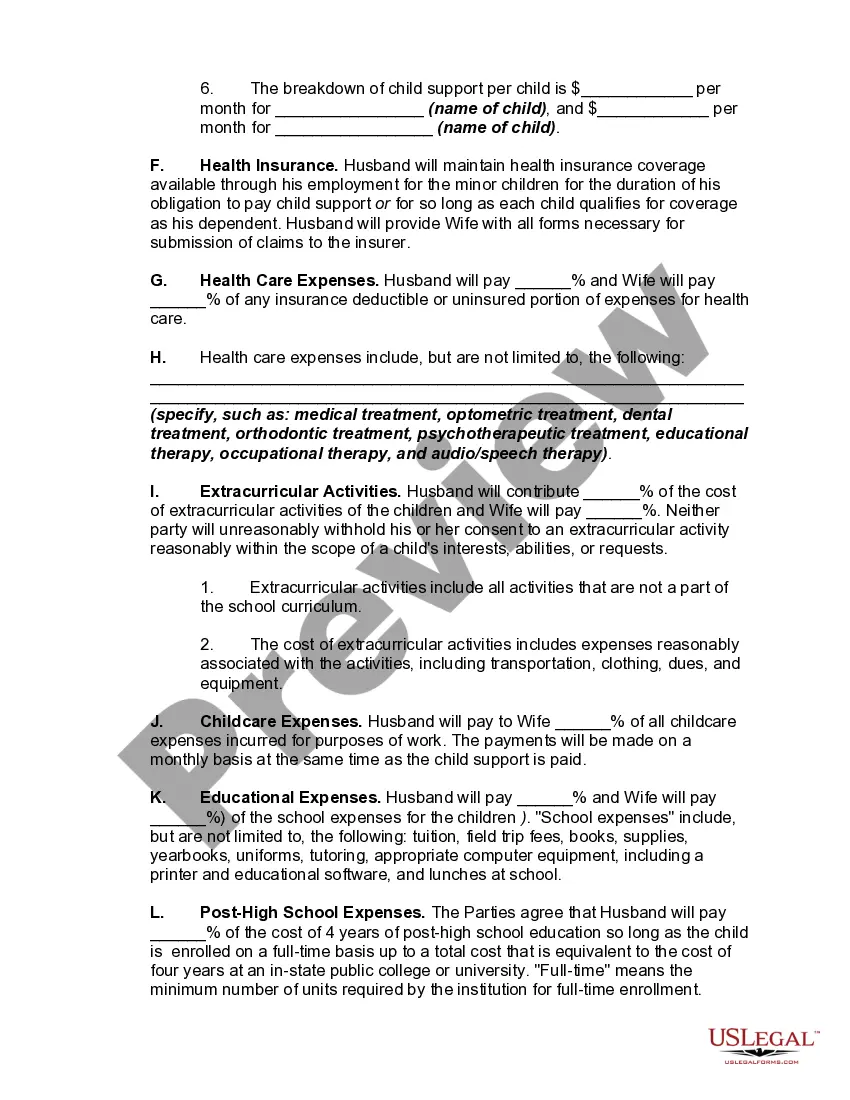
- Provisions for handling health care and educational expenses for children.
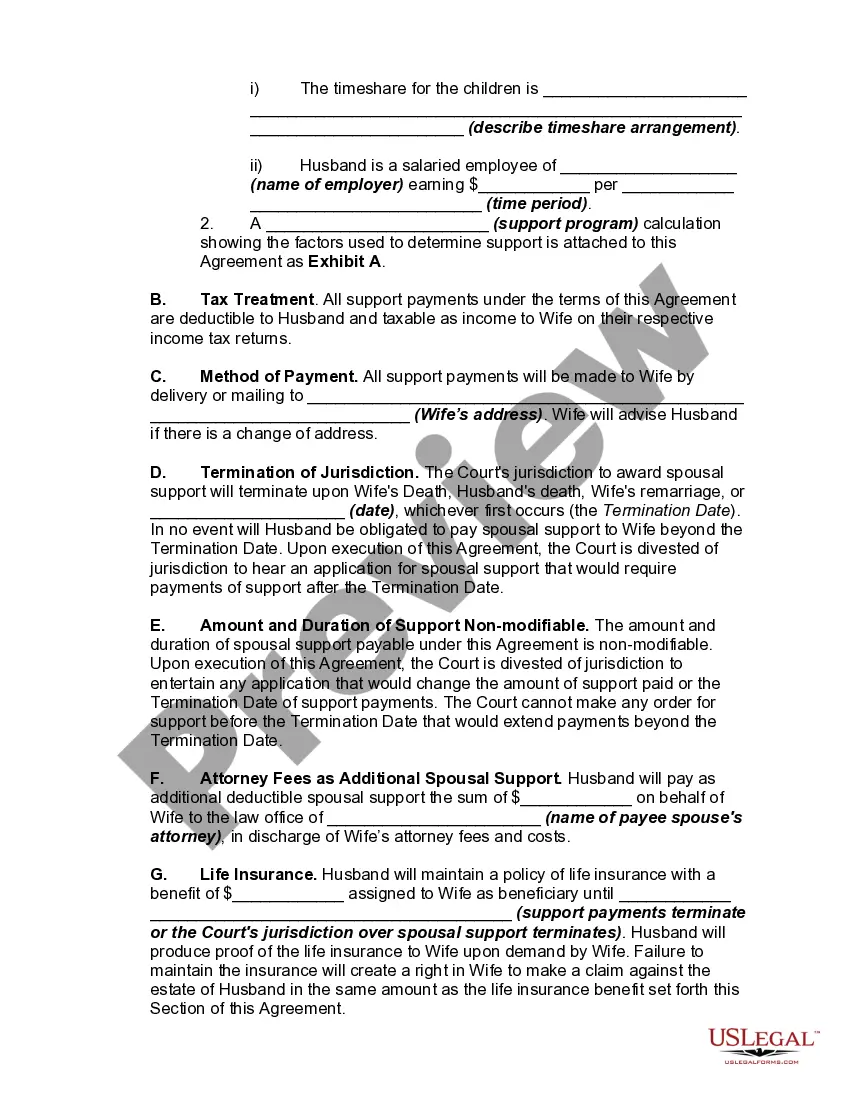
- Terms regarding spousal support, including payment amounts and duration.
- Instructions for modifying travel and relocation decisions involving minor children.
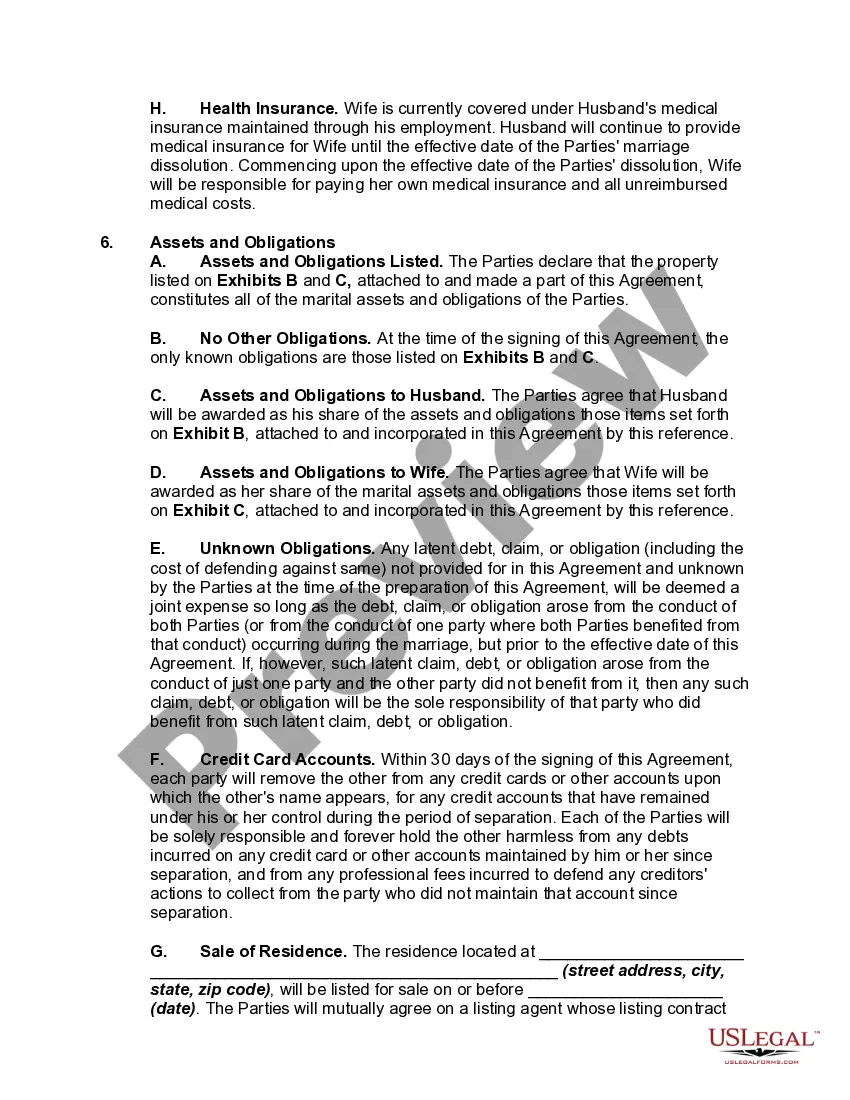
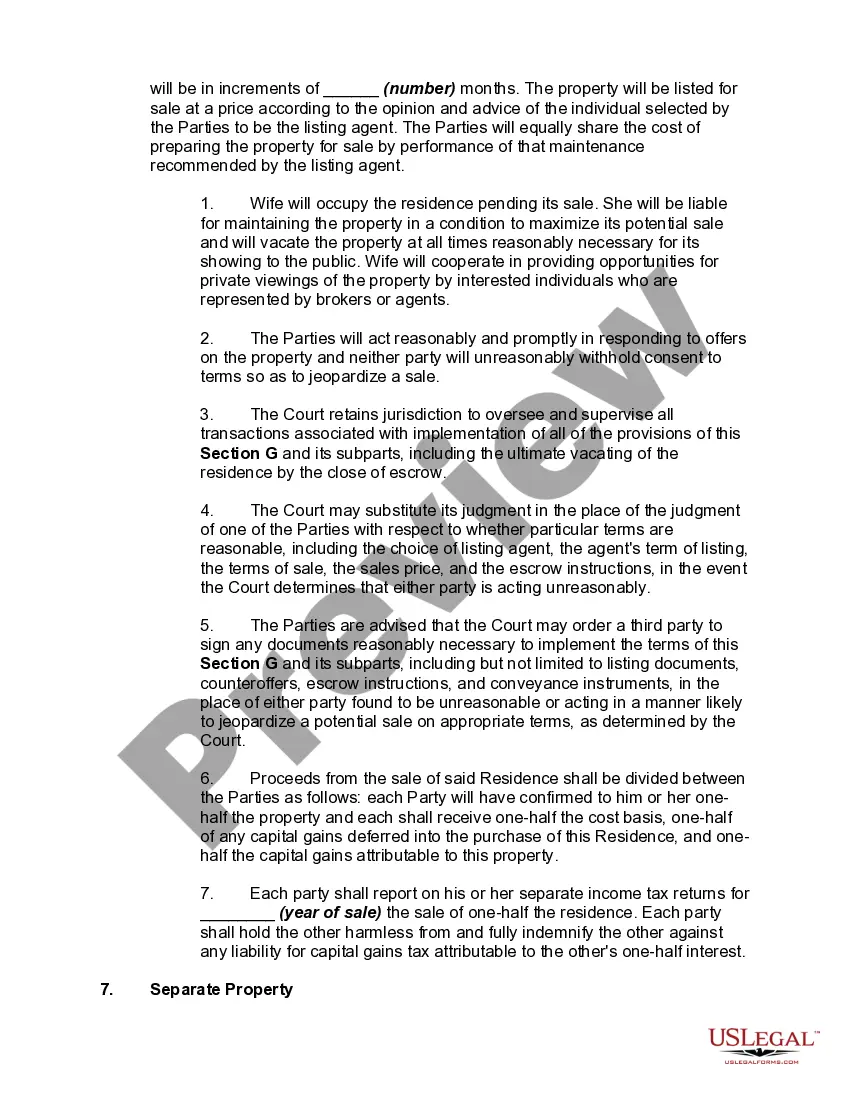
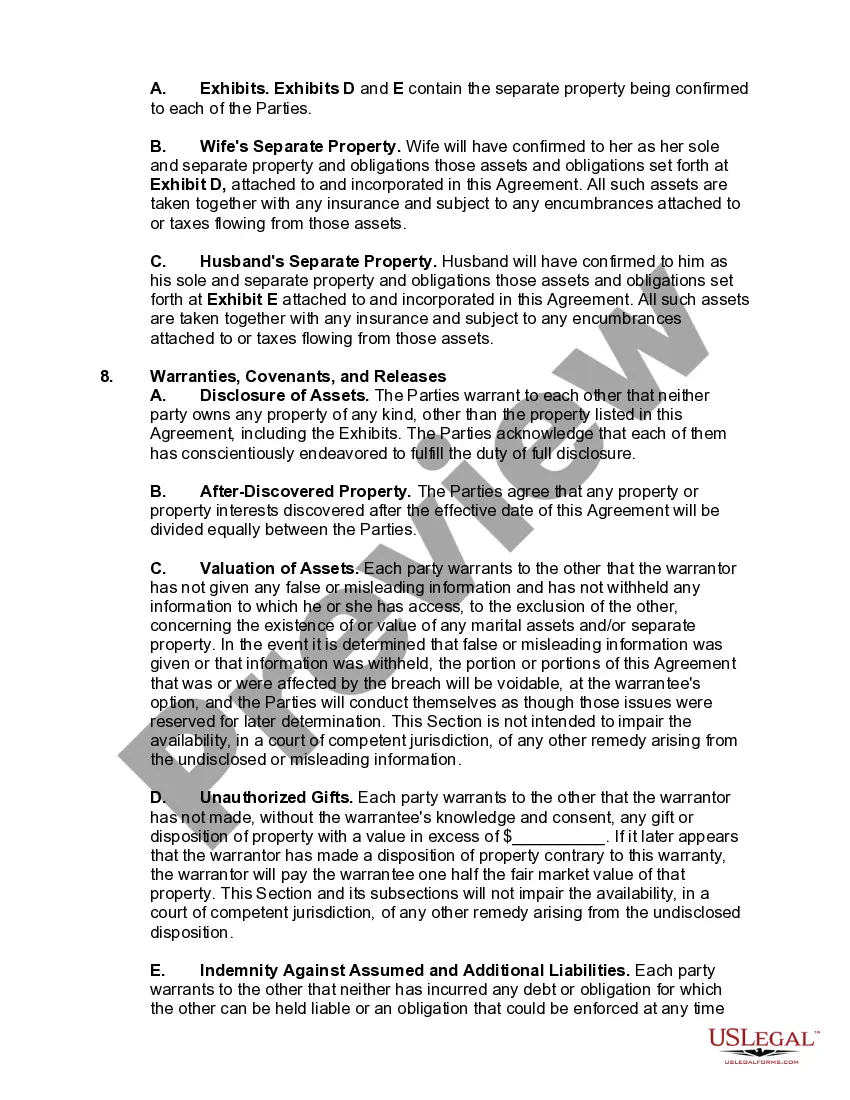
- Sections addressing the division of marital assets and liabilities.

Common use cases
This form is typically used when parents are undergoing a separation or divorce and need to clearly define custody arrangements for their minor children. It is particularly important in cases where one parent plans to move away and wants to take the children with them. By using this agreement, parents can establish clear expectations regarding child custody, visitation, and support, minimizing potential conflicts in the future.
Who needs this form
- Parents who are separating or divorcing.
- Parents who have children and wish to formalize custody arrangements.
- Parents considering relocating more than a specified distance with their children.
- Attorneys assisting clients in drafting custody and support agreements.
How to prepare this document
- Identify and enter the names and addresses of both parties involved.
- Specify the date of marriage and date of separation.
- Document any children involved, including their names and birth dates.
- Detail the agreed-upon child support regimen, including amounts and payment schedules.
- Include terms regarding spousal support, specifying any legal obligations.
- Have both parties sign the agreement, ideally in the presence of their attorneys.
Does this document require notarization?
This form does not typically require notarization unless specified by local law. However, having the signatures notarized can add an extra layer of authenticity and may be beneficial in disputes regarding its validity.
Get your form ready online
Our built-in tools help you complete, sign, share, and store your documents in one place.
Make edits, fill in missing information, and update formatting in US Legal Forms—just like you would in MS Word.
Download a copy, print it, send it by email, or mail it via USPS—whatever works best for your next step.
Sign and collect signatures with our SignNow integration. Send to multiple recipients, set reminders, and more. Go Premium to unlock E-Sign.
If this form requires notarization, complete it online through a secure video call—no need to meet a notary in person or wait for an appointment.
We protect your documents and personal data by following strict security and privacy standards.

Make edits, fill in missing information, and update formatting in US Legal Forms—just like you would in MS Word.

Download a copy, print it, send it by email, or mail it via USPS—whatever works best for your next step.

Sign and collect signatures with our SignNow integration. Send to multiple recipients, set reminders, and more. Go Premium to unlock E-Sign.

If this form requires notarization, complete it online through a secure video call—no need to meet a notary in person or wait for an appointment.

We protect your documents and personal data by following strict security and privacy standards.
Common mistakes to avoid
- Not fully disclosing financial information, which can lead to disputes later.
- Failing to specify terms for travel and relocation, resulting in conflicts.
- Using vague language that does not clearly outline responsibilities.
- Not involving legal counsel, which could affect the enforceability of the agreement.
Advantages of online completion
- Immediate access to a legally vetted document tailored for marital settlements.
- Ease of editing and customization to meet specific needs.
- Secure and convenient online storage for record-keeping.
- Guidance through each section to ensure clarity and completeness.
Legal use & context
- This form serves as a binding agreement outlining the terms of child custody and support.
- It is enforceable in court if incorporated into a divorce decree.
- Parties must comply with local laws and regulations specific to custody agreements.
Summary of main points
- The form helps establish clear custody and support terms after separation.
- It is essential to consult legal counsel to tailor the agreement to your state laws.
- Proper completion of this form can prevent future disputes regarding custody and financial responsibilities.
Looking for another form?

Form popularity
FAQ
If there has been no determination of who has custody of the Children and one parent wants to make a move away with the child, or prevent such a move from occurring, that person will usually file a Motion with the Court to start or stop the move. In California, this is done with a Request For Order.
Here are some common examples for proving your address: Mortgage deed, if it states that the owner uses the property as the primary residence. Mortgage or rental payment receipt. Driver's license, state ID, or change of address card. Mail from motor vehicle or other government agencies with your address(s) listed.
1 attorney answer It means no more than 60 miles further distant - so, if you're currently 40 miles apart, it means up to 100 miles away.
A statement of the parent's intent to move. The actual place where the parent proposes to relocate. The reason or reasons why the parent intends to relocate.
No law in California prevents a noncustodial parent or parent who has joint custody from moving out of state.The court will consider four distinct, important factors before granting a custody relocation petition in California.
The distance of the move. Which parent is more likely to facilitate the other parent's relationship with the child. The ability of the parents to communicate with each other. The reasons for the move. Whether the move is solely intended to spite the non-moving parent.
In the absence of any court orders regarding custody, technically you can move without his permission. He has the right however, to file for custody orders which may result in your having to bring the children back to CA.
Courts should usually allow a move if the other parent has moved, although it might be within reason (if the non-custodial parent moved 50 miles away, the Court might not allow the custodial parent to move 1,000 miles away).Normally when the non-custodial parent moves away, the custodial parent is allowed to move.
Specify Your Reasons for Relocating. Prove You've Done Your Research. Give the Company a Timeframe. State Ties You Have to the New Area. Appropriately Present Your Contact Details.