Agreement to Move House
Understanding this form
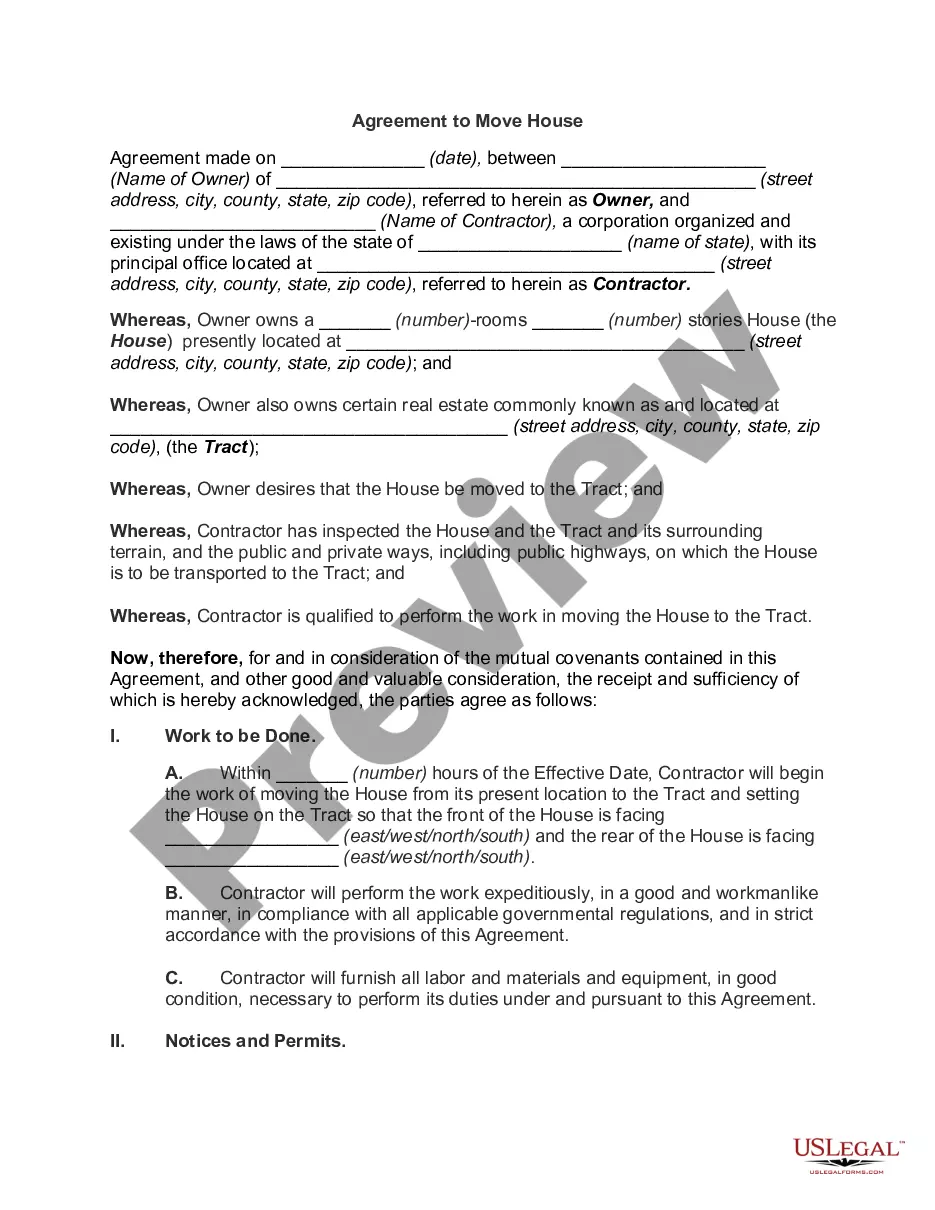
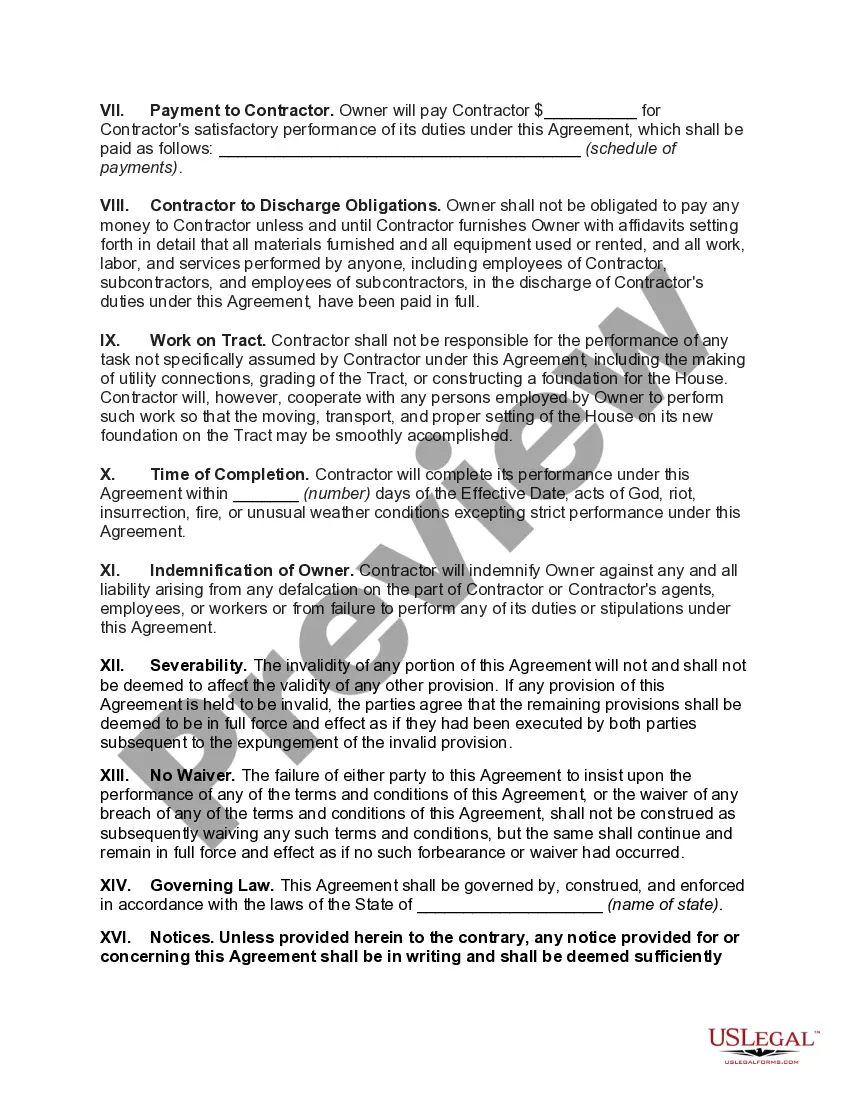
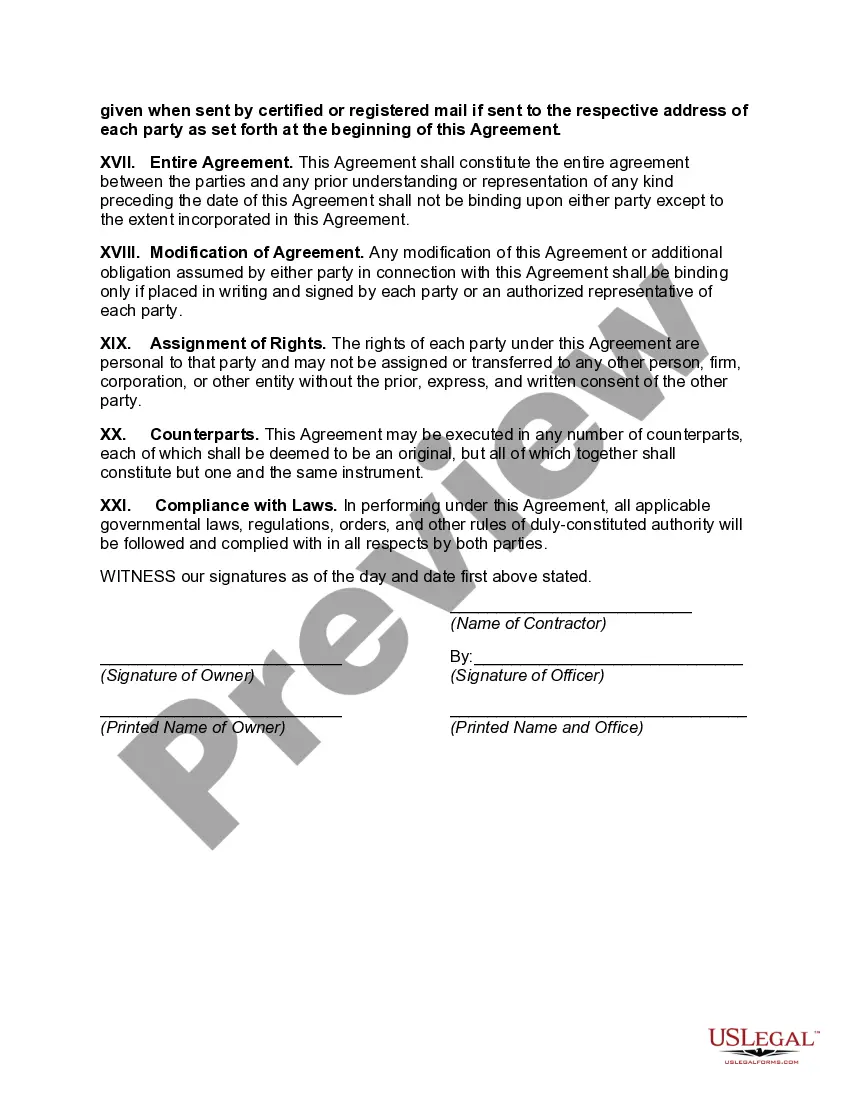
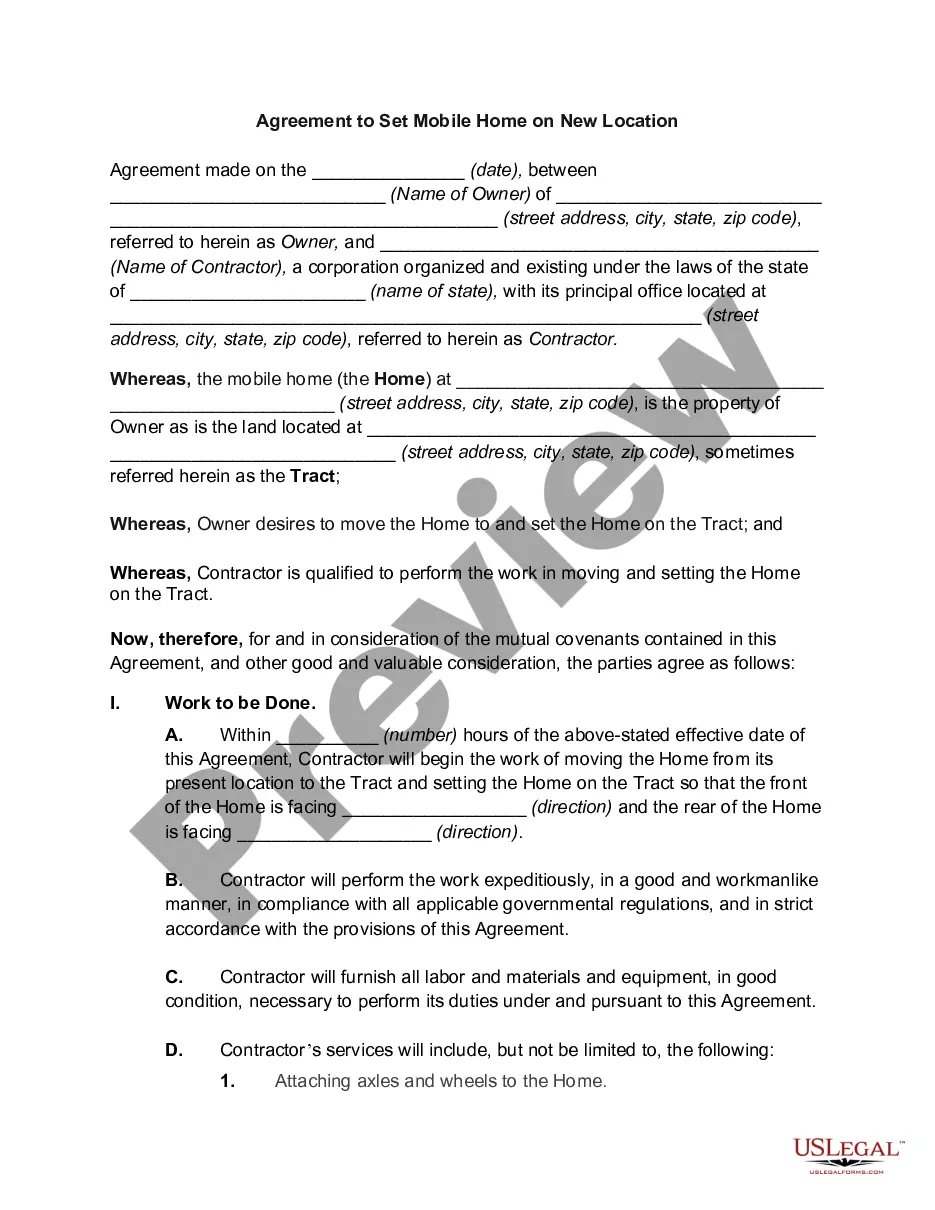
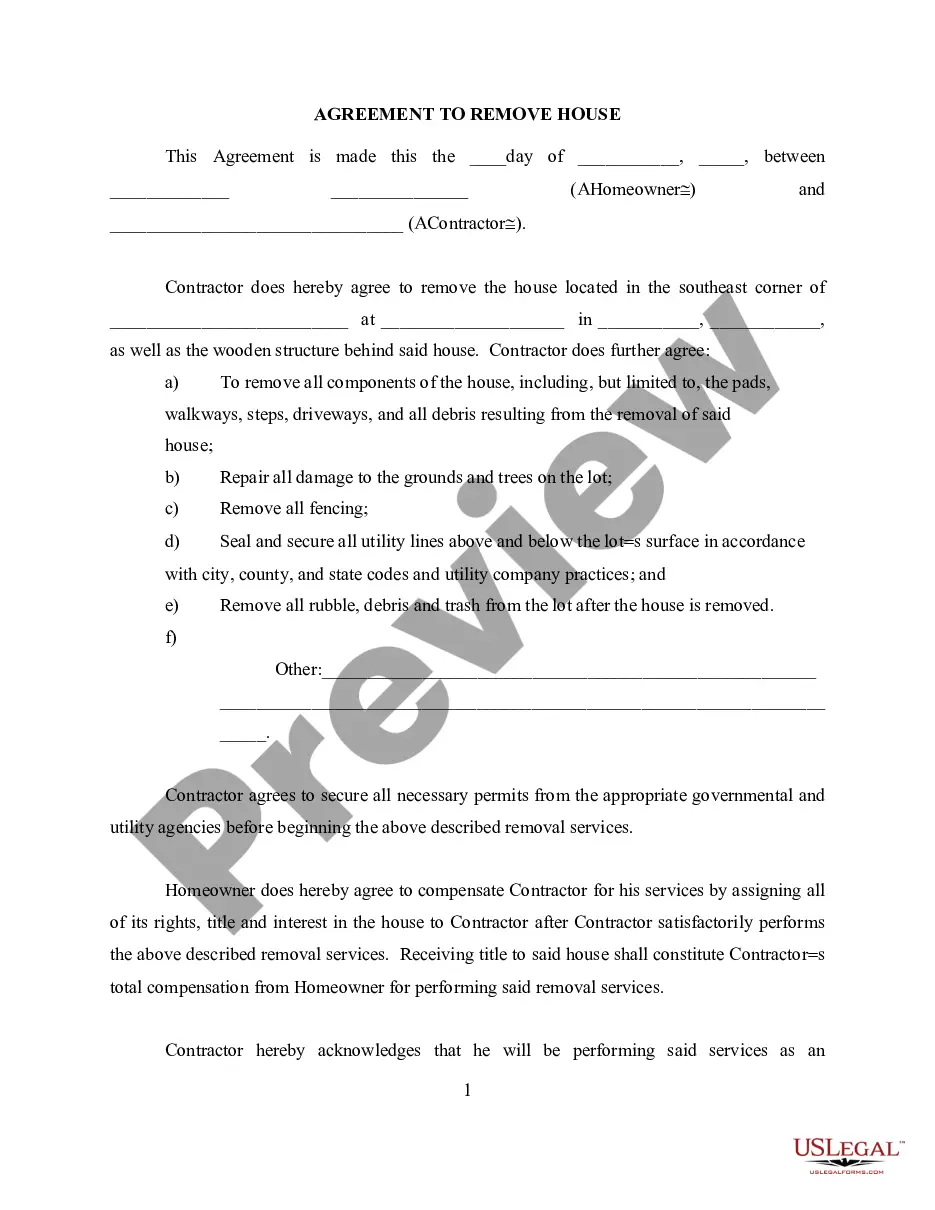
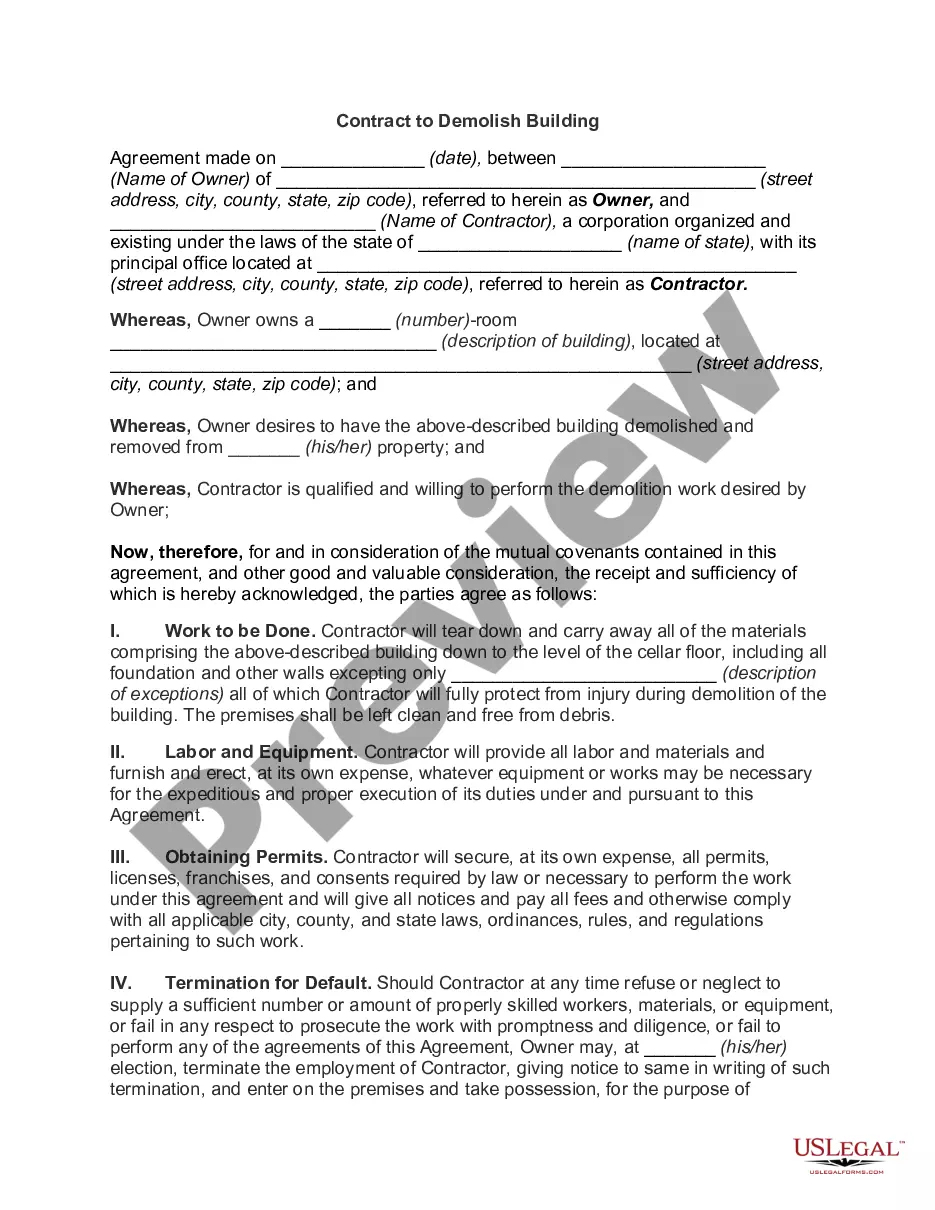
The Agreement to Move House is a legal document that outlines the terms and conditions for relocating a house from one location to another. This agreement is essential in formalizing the responsibilities of both the homeowner and the contractor hired to perform the move. It is distinct from other real estate documents as it specifically addresses the logistics and legal requirements needed for physically transferring a structure, ensuring compliance with local regulations and protection for both parties involved.
Main sections of this form
- Identification of parties: Names and addresses of the homeowner (Owner) and the contractor.
- Work to be done: Details on the location of the current house and the destination, including orientation upon placement.
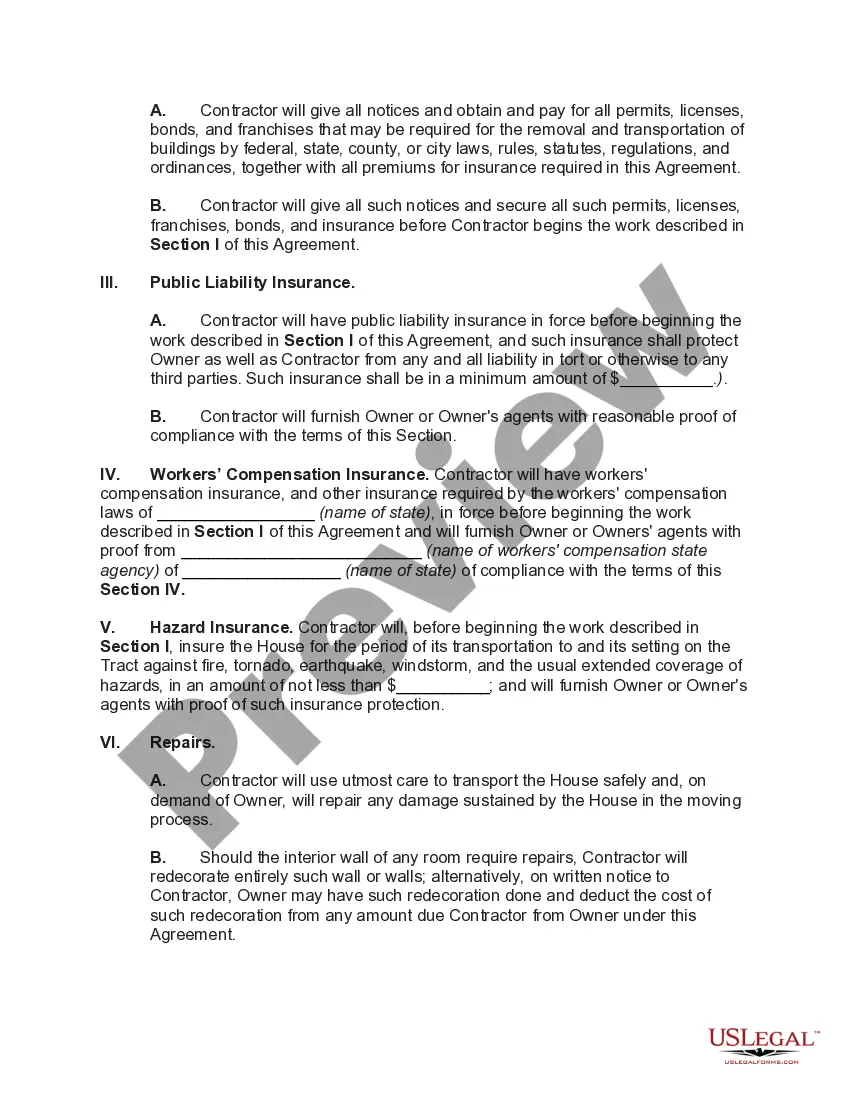
- Permits and insurance: Contractorâs obligations to secure necessary permits and maintain liability insurance.
- Responsibilities and warranties: Clauses covering contractor duties, repairs, and completion timelines.
- Indemnification and severability: Legal protection for the homeowner and validity of the agreement's provisions.
Common use cases
This form should be used when a homeowner plans to relocate an existing house for reasons such as avoiding hazards like flooding, making way for new developments, or repositioning for aesthetic or practical reasons. It formalizes the moving process and clarifies expectations for both parties, minimizing potential conflicts.
Who needs this form
- Homeowners seeking to relocate their house.
- Contractors hired for the job of transporting and re-establishing the house.
- Real estate professionals involved in property management or development where house relocation is applicable.
Completing this form step by step
- Identify the parties: Clearly write the names and addresses of both the owner and contractor.
- Specify the property: Include details about the house and its current and new locations.
- Enter dates and timelines: Fill in the effective date and expected completion timeframe for the move.
- Detail financial agreements: Outline the payment structure and any necessary conditions for payment.
- Obtain necessary permits: Ensure that the contractor is responsible for securing all required permits and licenses.
Notarization requirements for this form
This form does not typically require notarization unless specified by local law. However, it is advisable to check local legal requirements to ensure its enforceability.
Get your form ready online
Our built-in tools help you complete, sign, share, and store your documents in one place.
Make edits, fill in missing information, and update formatting in US Legal Forms—just like you would in MS Word.
Download a copy, print it, send it by email, or mail it via USPS—whatever works best for your next step.
Sign and collect signatures with our SignNow integration. Send to multiple recipients, set reminders, and more. Go Premium to unlock E-Sign.
If this form requires notarization, complete it online through a secure video call—no need to meet a notary in person or wait for an appointment.
We protect your documents and personal data by following strict security and privacy standards.

Make edits, fill in missing information, and update formatting in US Legal Forms—just like you would in MS Word.

Download a copy, print it, send it by email, or mail it via USPS—whatever works best for your next step.

Sign and collect signatures with our SignNow integration. Send to multiple recipients, set reminders, and more. Go Premium to unlock E-Sign.

If this form requires notarization, complete it online through a secure video call—no need to meet a notary in person or wait for an appointment.

We protect your documents and personal data by following strict security and privacy standards.
Common mistakes
- Failing to provide complete information about the house or its current location.
- Not clearly defining responsibilities for obtaining permits and insurance.
- Including vague timelines or payment schedules that could lead to disputes.
Benefits of using this form online
- Convenience of immediate access to the form at any time.
- Editability allows users to customize the agreement to fit their specific needs.
- Reliability of using professionally drafted templates ensures legal compliance and accuracy.
Main things to remember
- The Agreement to Move House is crucial for legally relocating a residential home.
- It protects the interests of both the homeowner and the contractor involved in the move.
- Proper completion and adherence to local regulations will ensure a smooth moving process.
Looking for another form?


Form popularity
FAQ
Aviara Real Estate, a California brokerage, says the sale might fail to go through if the buyer can't qualify for financing or is otherwise unable to meet the terms of the sale.Allowing a buyer to move in early can prolong or even sabotage the sales process.
It's usually put in place if the buyer needs to move into the property before ownership can be transferred. One important thing to understand is that this agreement is not the same as a lease.The agreement solely allows them the right to use the property.
Aviara Real Estate, a California brokerage, says the sale might fail to go through if the buyer can't qualify for financing or is otherwise unable to meet the terms of the sale.Allowing a buyer to move in early can prolong or even sabotage the sales process.
What is an early occupancy agreement? An early occupancy agreement is basically an agreement to rent the home you are going to buy before you actually close on the purchase. You agree to pay an extra amount of money per day to the sellers for the right to live in your new home before you legally own it.
The contract terms will determine when you can move in after closing. In some cases, it will be immediately after the closing appointment. You will receive the keys and head straight to your new home. In other situations, the seller may request 30, 45 or even 60 days of occupancy after the closing of the home.
You wouldn't sign the rental contract without documenting the pre-existing damage. An apartment is no different: Don't sign the lease until you're satisfied the property is in good shape inside and out. Most home buyers hire a professional to do a home inspection before closing, but this never occurs to many renters.
Moving in before the closing date is also known as taking early possession of the property. It's generally not feasible to move in early unless the seller has already vacated the property.You'll want to let the seller know about your desire to move in early to see if they are amenable to the request.
It is always wise to be flexible when purchasing a new home. You may have to let the sellers have up to a week to 10 days before you can move in. Note also that your occupancy cannot be modified once it has been written into the contract it is, therefore, crucial that a reasonable date is specified.