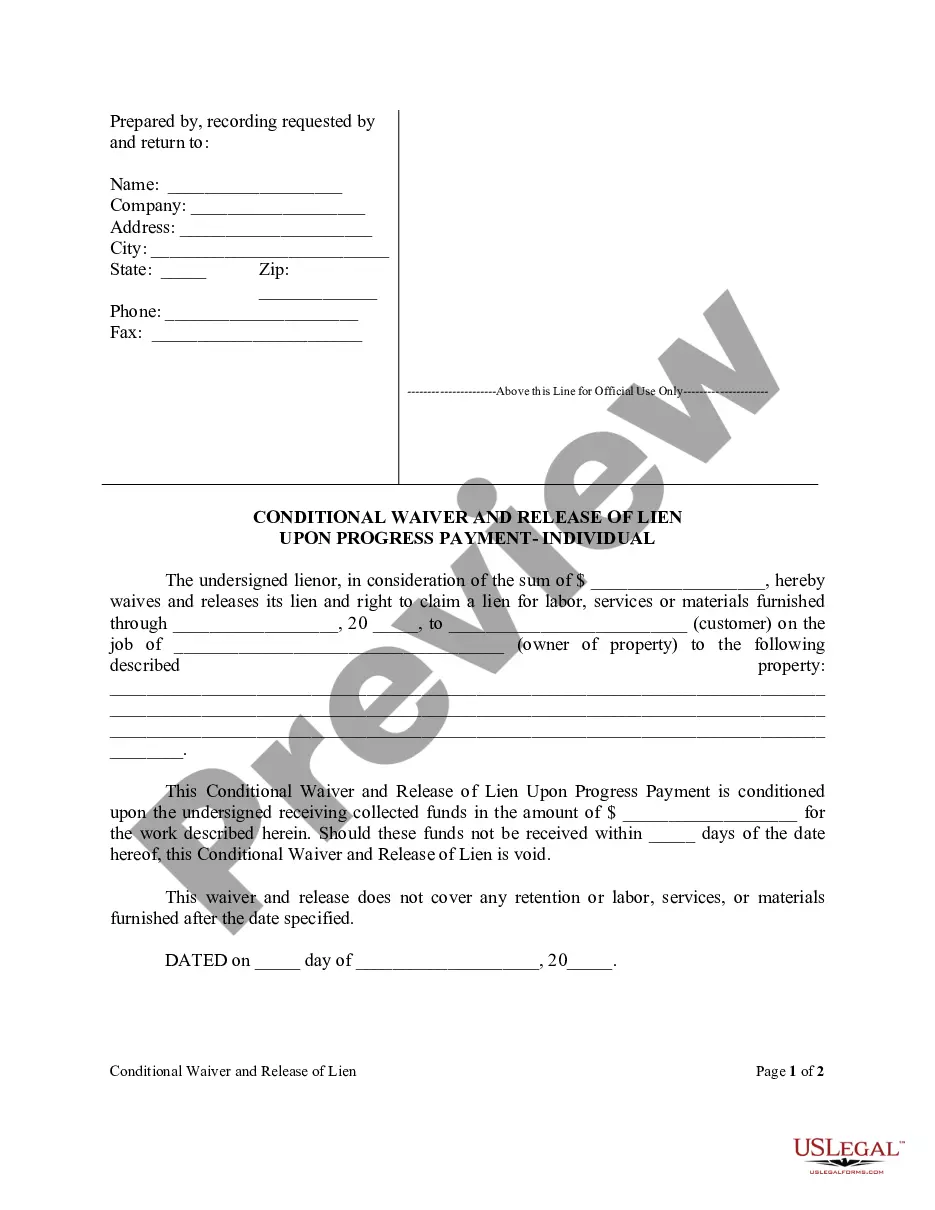
Agreement to Set Mobile Home to New Location
Overview of this form
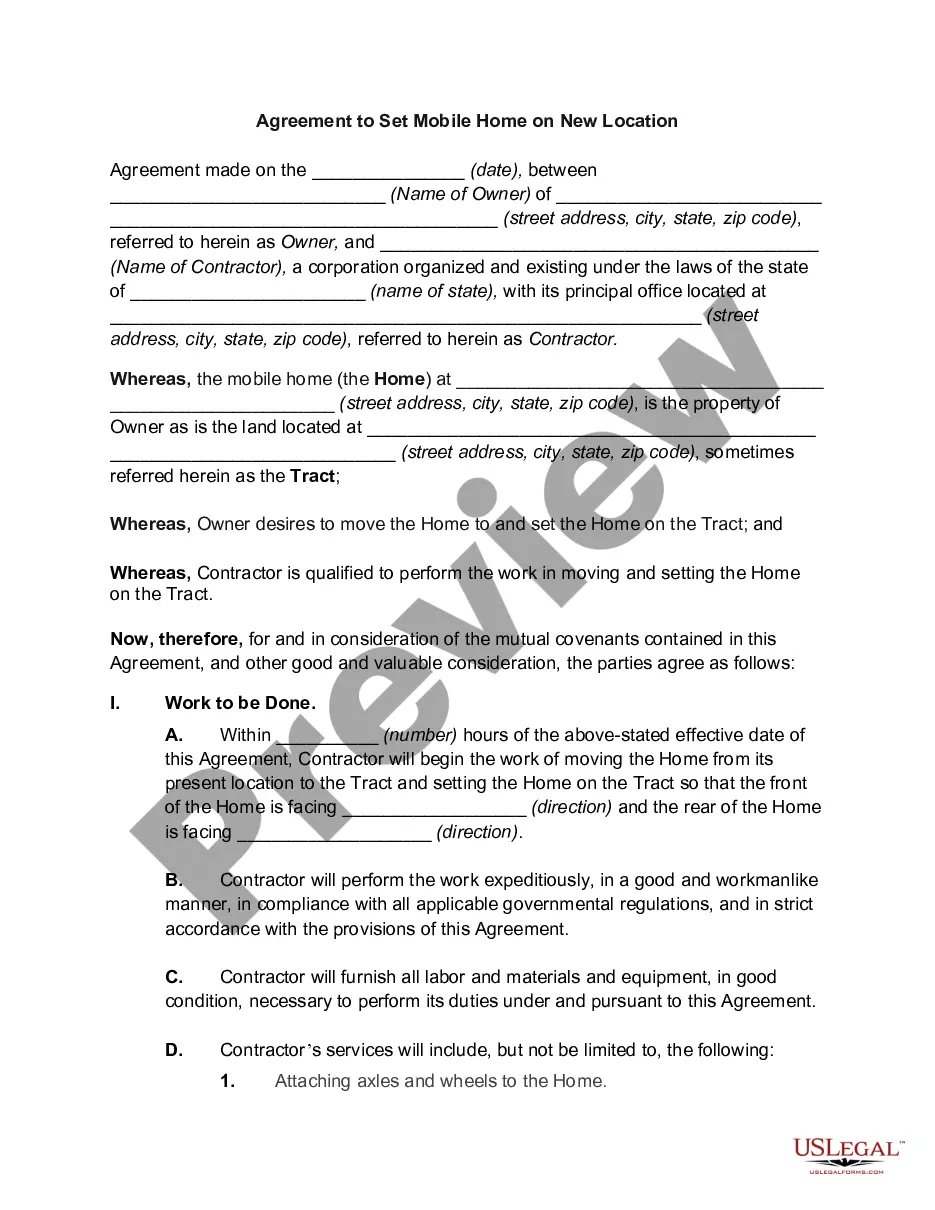
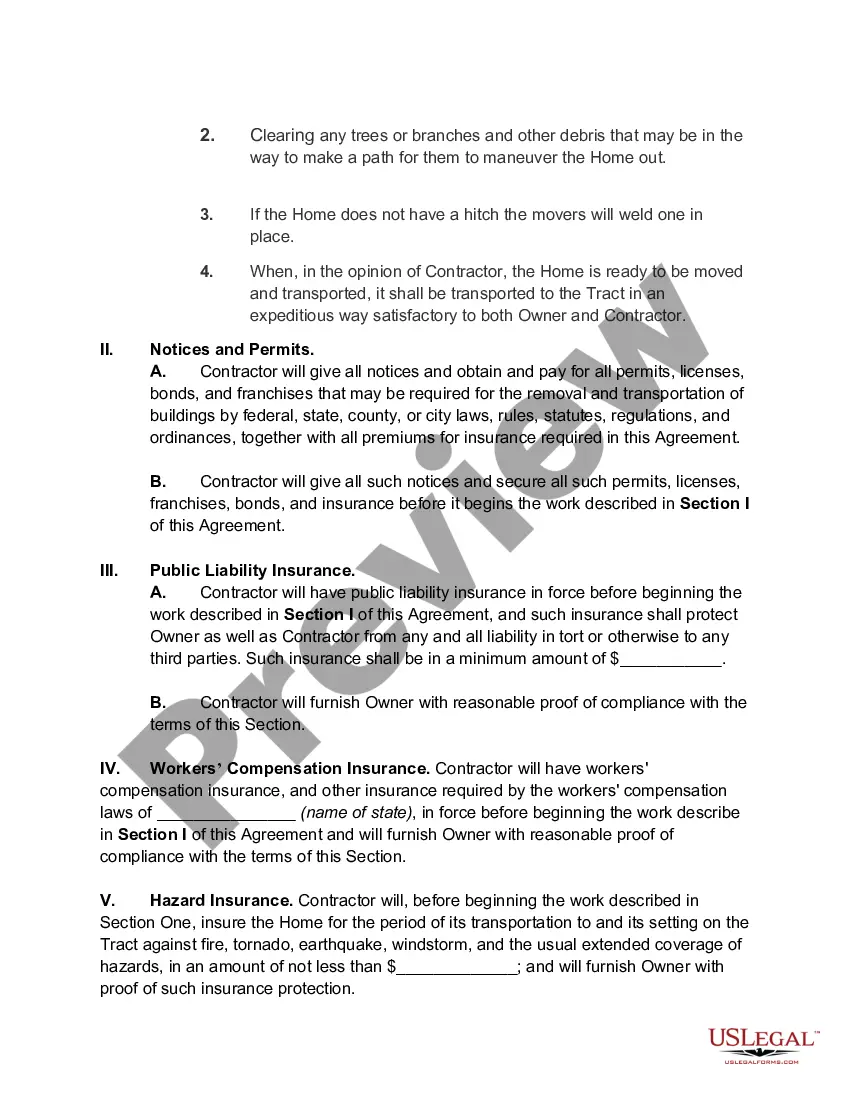
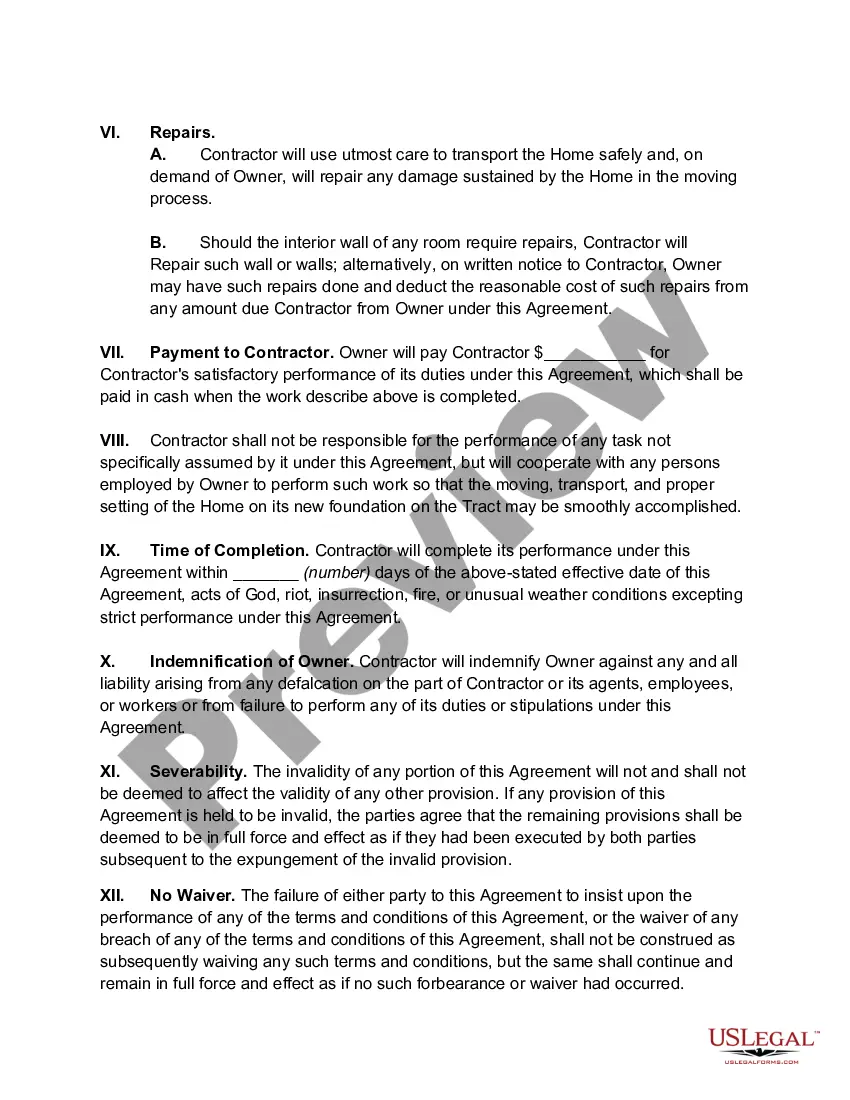
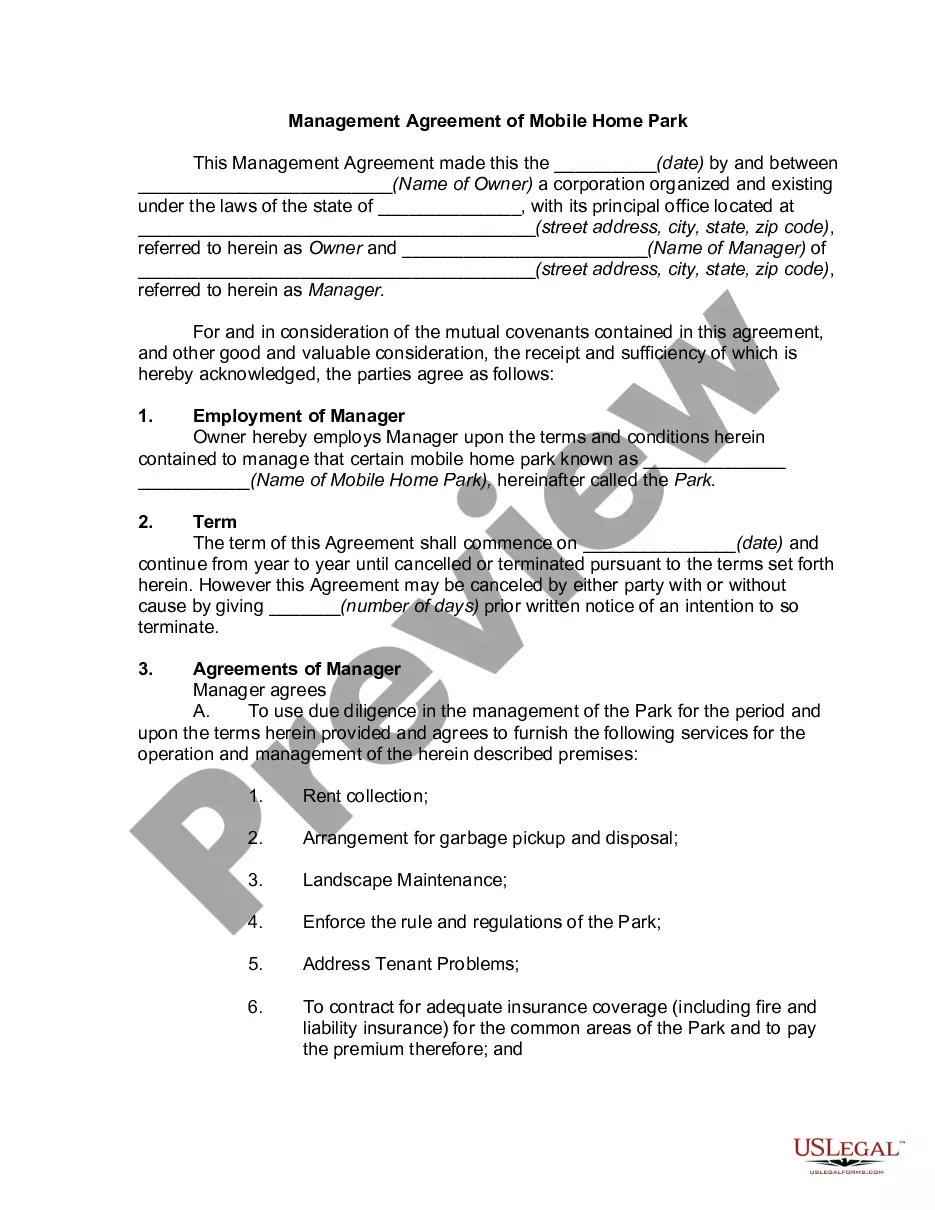
The Agreement to Set Mobile Home to New Location is a legal document that outlines the terms between a mobile home owner and a contractor responsible for relocating the mobile home. This form specifies the work to be done, payment terms, and the liabilities of each party. It is crucial for ensuring that the relocation complies with local regulations and protects the interests of both parties involved. Unlike other property agreements, this document is specifically tailored for moving mobile homes and includes provisions for permits, insurance, and damages incurred during the move.
Key components of this form
Identification of parties: The form includes spaces to fill in the names and addresses of the owner and contractor.
Details of the relocation: Specifies the current and new location of the mobile home.
Scope of work: Describes the detailed responsibilities of the contractor during the move.
Insurance requirements: Outlines the need for public liability and hazard insurance during the relocation process.
Payment terms: Includes the agreed amount to be paid to the contractor upon completion of the work.
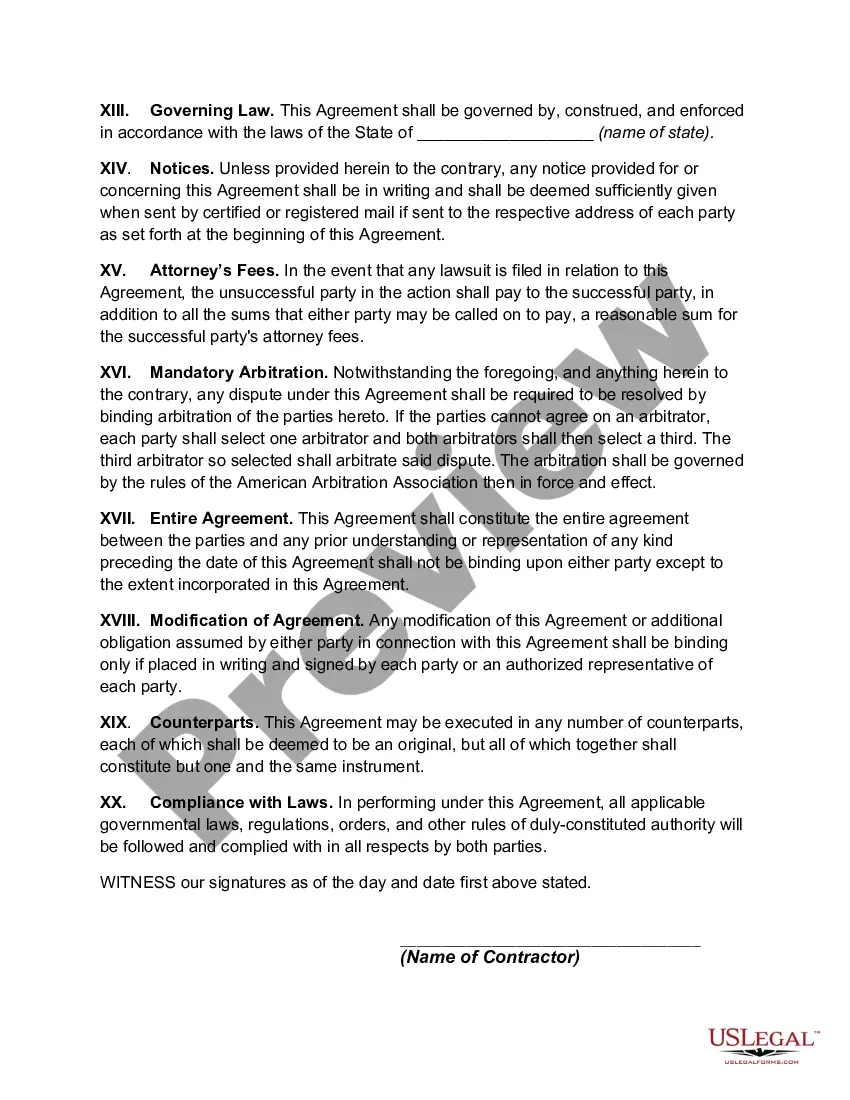
Legal provisions: Contains clauses on liability, arbitration, indemnification, and compliance with governing laws.
When this form is needed
This form is necessary when a mobile home owner wishes to relocate their mobile home to a new location and engages a contractor for the move. It should be used when there is a need for clear documentation of the responsibilities, timelines, and legal implications associated with moving the mobile home. Typical scenarios include relocating to a different plot within a mobile home park or moving to a private lot due to personal or financial reasons.
Who needs this form
This form is intended for:
Mobile home owners seeking to relocate their homes.
Contractors who specialize in mobile home relocations.
Legal representatives assisting clients with mobile home transactions.
Individuals needing an organized way to formalize the terms of mobile home relocation.
Completing this form step by step
To complete the Agreement to Set Mobile Home to New Location, follow these steps:
Identify the parties by entering the names and addresses of the mobile home owner and contractor.
Provide the dates for the agreement and the anticipated start and completion of the relocation work.
Specify the current address of the mobile home and its new location.
Detail the scope of work the contractor will perform, including any necessary preparations for the move.
Fill in the amounts for payment and set terms regarding insurance and liability.
Sign and date the agreement in the designated areas by both parties to finalize the contract.
Notarization guidance
This form does not typically require notarization unless specified by local law. Always check the specific requirements in your state or municipality to ensure compliance.
Get your form ready online
Our built-in tools help you complete, sign, share, and store your documents in one place.
Make edits, fill in missing information, and update formatting in US Legal Forms—just like you would in MS Word.
Download a copy, print it, send it by email, or mail it via USPS—whatever works best for your next step.
Sign and collect signatures with our SignNow integration. Send to multiple recipients, set reminders, and more. Go Premium to unlock E-Sign.
If this form requires notarization, complete it online through a secure video call—no need to meet a notary in person or wait for an appointment.
We protect your documents and personal data by following strict security and privacy standards.

Make edits, fill in missing information, and update formatting in US Legal Forms—just like you would in MS Word.

Download a copy, print it, send it by email, or mail it via USPS—whatever works best for your next step.

Sign and collect signatures with our SignNow integration. Send to multiple recipients, set reminders, and more. Go Premium to unlock E-Sign.

If this form requires notarization, complete it online through a secure video call—no need to meet a notary in person or wait for an appointment.

We protect your documents and personal data by following strict security and privacy standards.
Mistakes to watch out for
Failing to specify the new location accurately may lead to issues during the move.
Not including sufficient insurance coverage can expose both parties to financial risk.
Leaving out the start and completion dates can create ambiguity regarding timelines.
Why use this form online
Convenience of using a downloadable form that can be tailored as needed.
Editable fields allow for quick customization to fit specific scenarios.
Reliable and professionally drafted by licensed attorneys to meet legal standards.
This agreement is enforceable in court, ensuring that both parties adhere to the outlined terms.
Liability clauses protect owners from damages during transportation as long as the contractor is compliant.
Consulting legal counsel for local regulations is advisable to confirm this document's effectiveness.
Quick recap
The Agreement to Set Mobile Home to New Location formalizes the relocation process.
Accurate completion and legal compliance are crucial to avoid disputes later.
Using this form offers a structured approach to documenting responsibilities and protections for both parties.
Looking for another form?
Form popularity
FAQ
Construct a Permanent Foundation. Connect all Utilities. Attach Mobile Home Permanently to Foundation. Order a Land Survey and Obtain a Certificate of Location. Ensure Deed to Land and Title of Mobile Home are Identical. Don't Forget to Change the Insurance Policy.
Remove all exterior attachments. Make sure that all utilities are turned off. Remove everything from the interior of the house that is valuable or can be easily damaged during the move. Prepare for your moving day by checking the weather. Secure the exterior of the home.
The Uniform Manufactured Housing Act requires you to do two things to legally convert a mobile home into a real house Relocate the mobile home onto a particular piece of land and file for a certificate of location with the land records office of where your new home will be located.
A site preparation cost of $25,000 is about average for a property like oursa fairly level lot with nearby utility connections. However, if we had needed a well, that would carry an additional cost of $8,000 to $12,000 or more.
Using timer-equipped lights, radios, and TV to give the illusion of someone being home. Getting acquainted and involved with your neighbors to help increase the security of your mobile home and community. Plant prickly and thorny plants around your windows.
An Affixed Manufactured Home will receive a notice of value and is taxed as real property. To affix a manufactured/mobile home, you must surrender your title to ADOT and record an Affidavit of Affixture. The same person must own the land and the manufactured/mobile home.
Finding reputable professionals in the area who provide excellent service and can move your manufactured home correctly and safely is important. You should never move a manufactured home yourself, because it's a complex project that requires professionals.
Order a land survey. Before commencing any site preparation work, it's important to have a site inspection done. Apply for the permits necessary. Choose the location for your home. Build the foundation well in advance. Bring in the utilities you need.
Order a land survey. Before commencing any site preparation work, it's important to have a site inspection done. Apply for the permits necessary. Choose the location for your home. Build the foundation well in advance. Bring in the utilities you need.