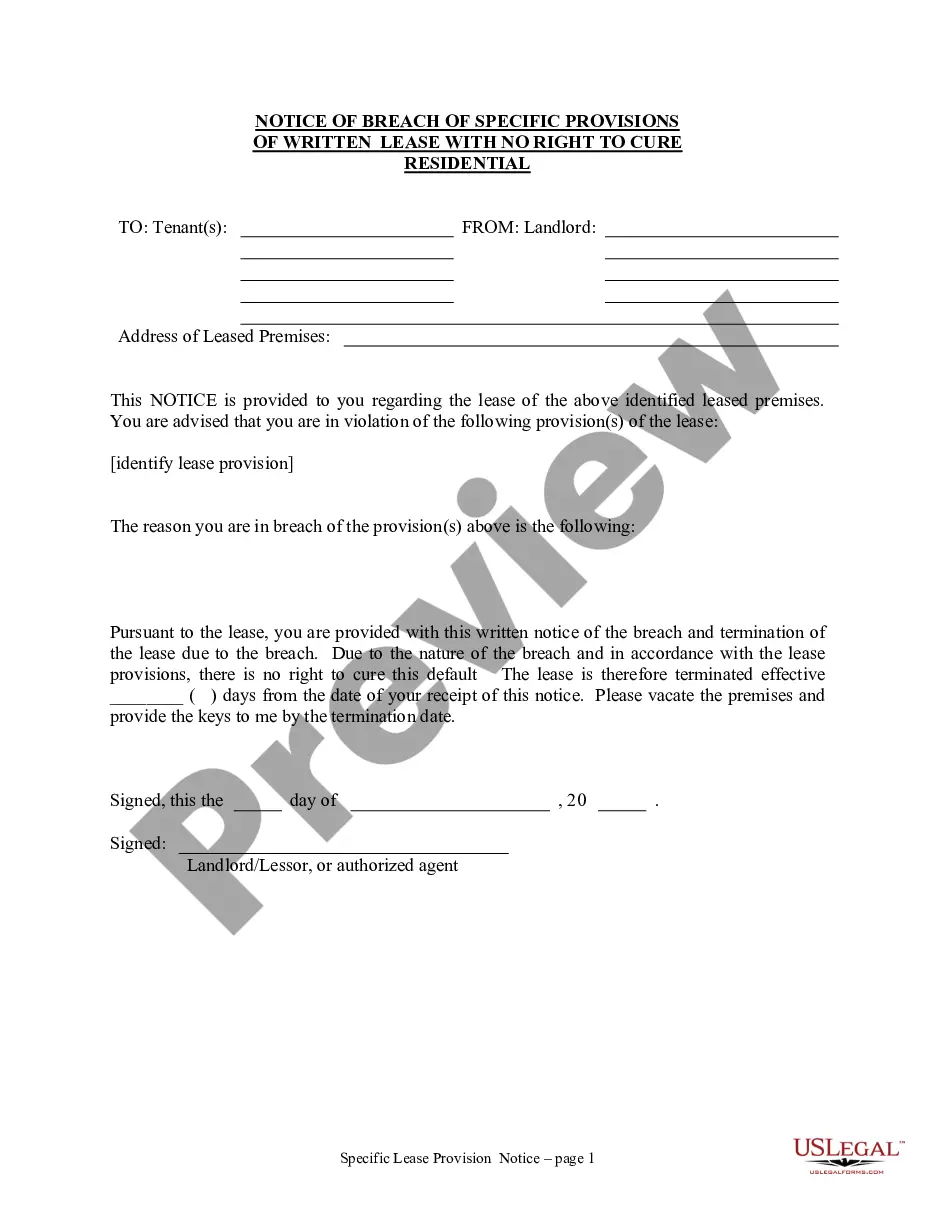
Shared Well Water Agreement

Understanding this form
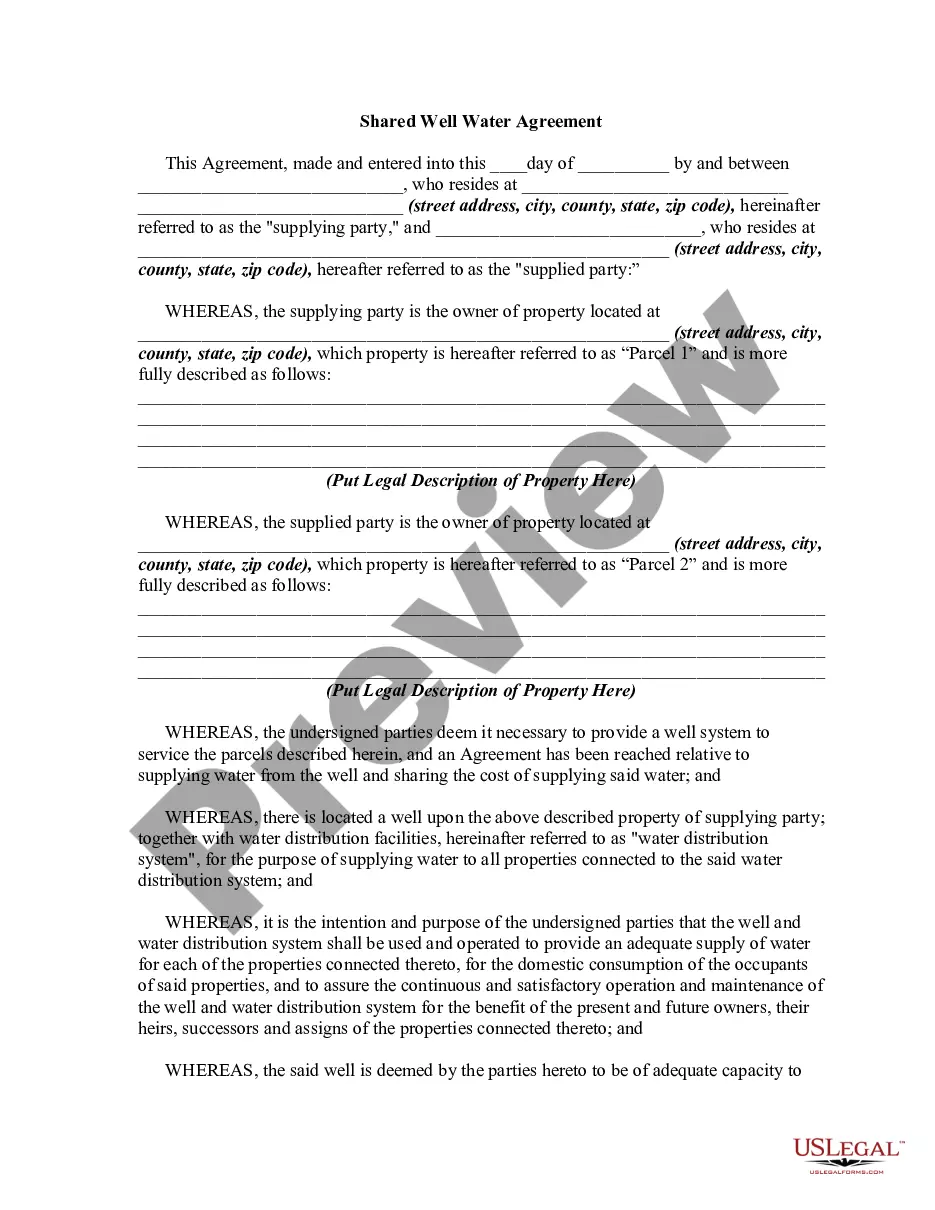
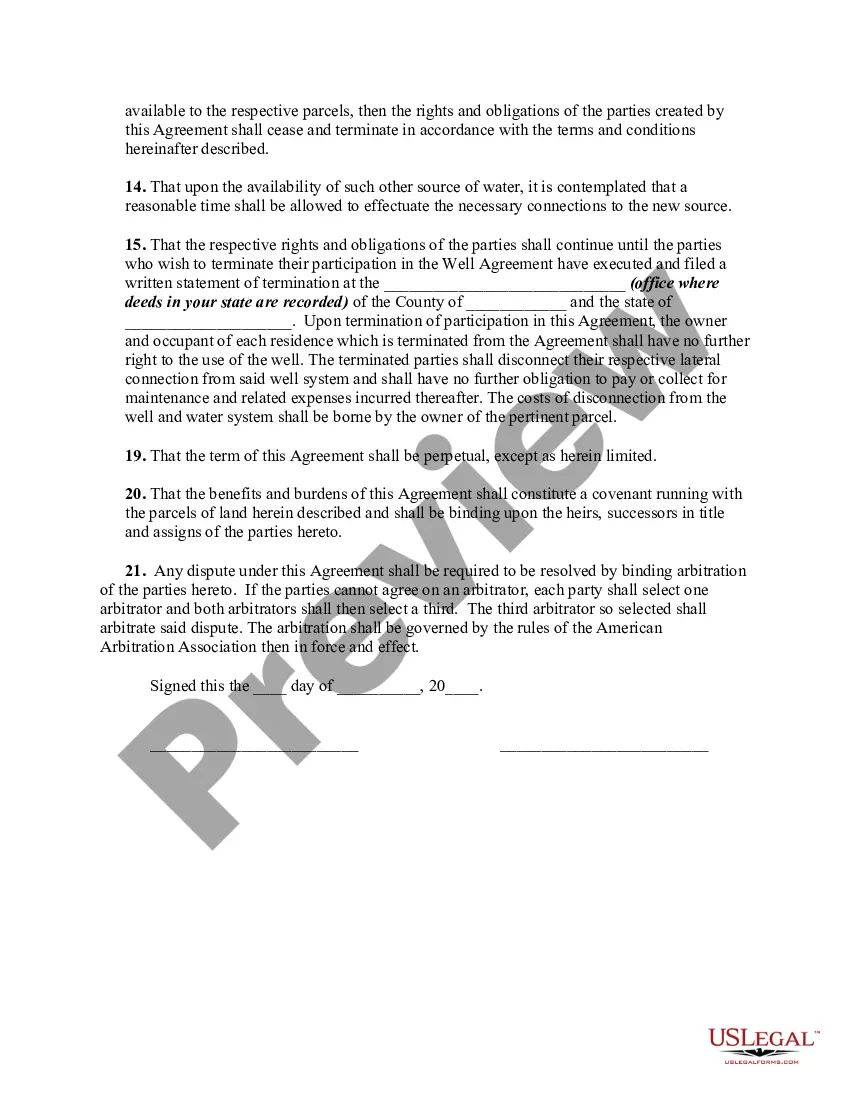
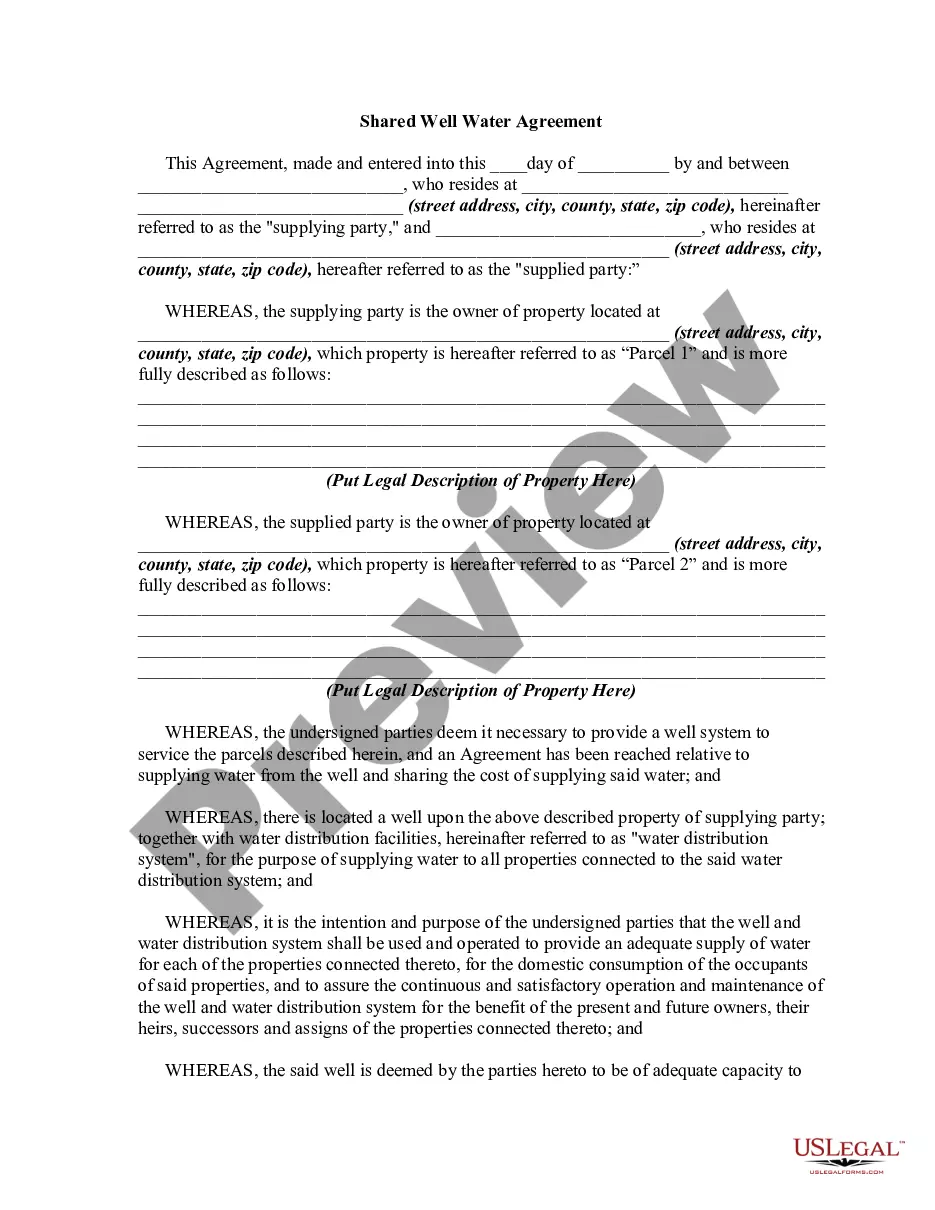
The Shared Well Water Agreement is a legal document designed for two landowners who wish to share the use of a well located on one of their properties. This form outlines each party's rights and responsibilities regarding the well and the water distribution system it supports. It differs from similar agreements by specifically addressing water sharing between parcels that may not have independent water sources, ensuring both parties have access to adequate water for domestic use while defining cost-sharing for maintenance and operation.
What’s included in this form
- Identification of the supplying party and supplied party, along with their property addresses.
- Legal description of parcels involved in the agreement.
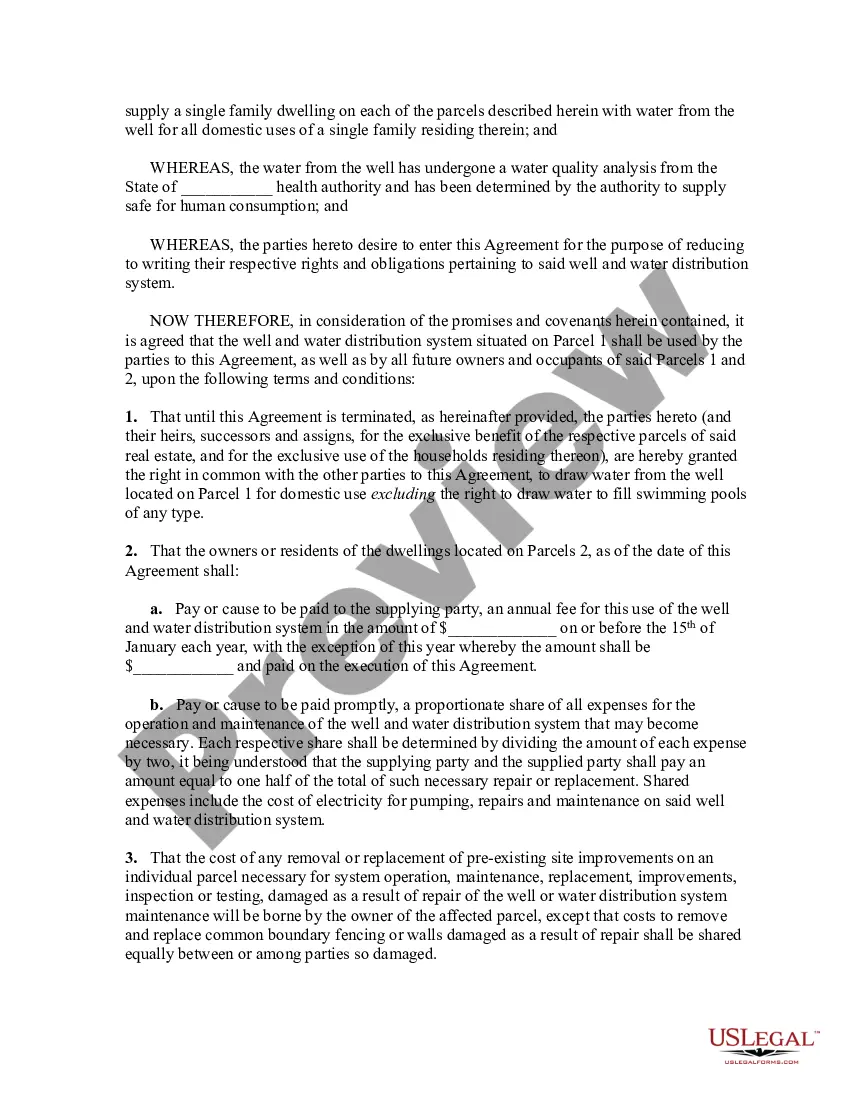
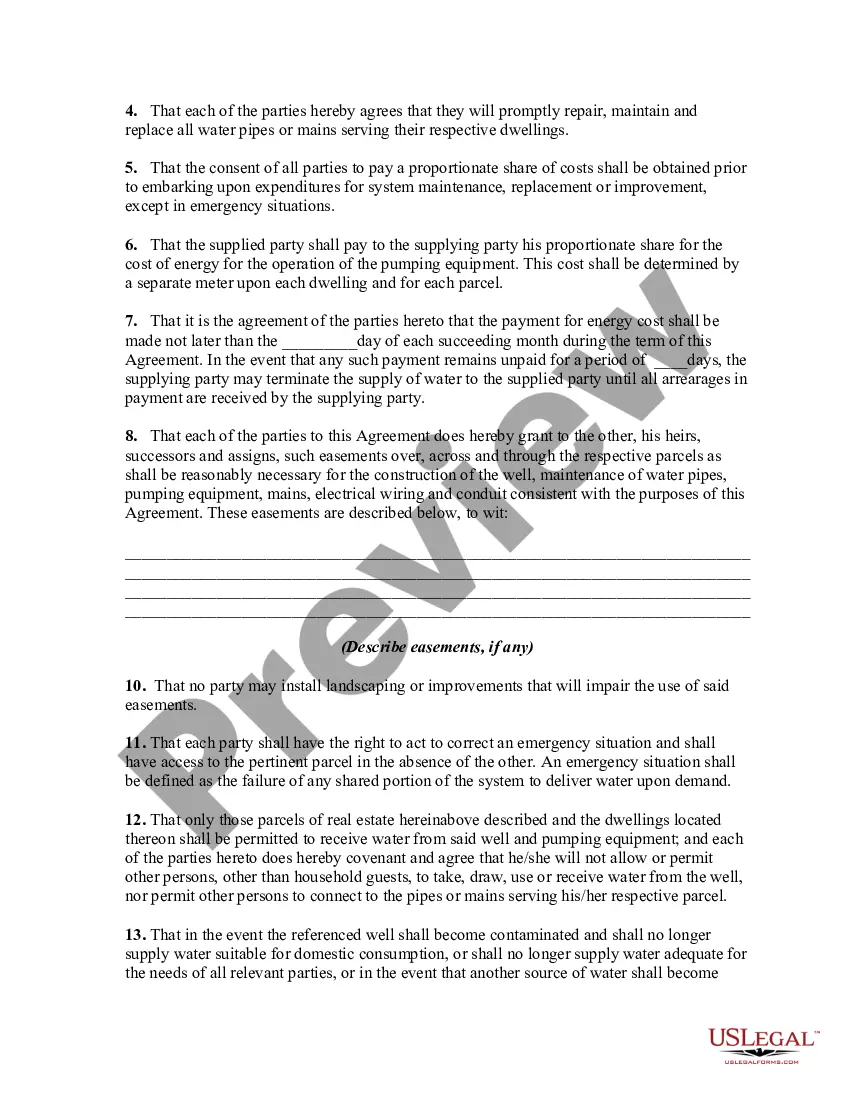
- Terms and conditions regarding water usage and cost-sharing for operations and maintenance.
- Provisions for easements needed for equipment access and maintenance.
- Emergency access rights for maintenance purposes.
- Details on dispute resolution through binding arbitration.
When to use this form
This form should be used when two or more landowners jointly use a well and need a formal agreement to define their respective rights and responsibilities. It is particularly useful in rural areas where water access is limited and can help avoid disputes related to well usage, maintenance, and costs associated with water supply.
Who can use this document
- Landowners who own adjacent properties and wish to share access to a well.
- Homeowners seeking to define the terms of water usage with neighbors.
- Individuals entering into new agreements for water sharing to ensure compliance with legal standards.
- Property developers or investors needing to set up agreements for shared utilities between multiple lots.
Steps to complete this form
- Identify all parties involved and provide their full names and addresses.
- Enter the legal descriptions for both parcels involved in the agreement.
- Specify the annual fee and conditions for shared expenses related to the well and water distribution system.
- Detail any easements required for maintenance and access to the well.
- Ensure all parties sign and date the agreement, acknowledging their understanding and acceptance of the terms.
Does this form need to be notarized?
Notarization is required for this form to take effect. Our online notarization service, powered by Notarize, lets you verify and sign documents remotely through an encrypted video session, available 24/7.
Get your form ready online
Our built-in tools help you complete, sign, share, and store your documents in one place.
Make edits, fill in missing information, and update formatting in US Legal Forms—just like you would in MS Word.
Download a copy, print it, send it by email, or mail it via USPS—whatever works best for your next step.
Sign and collect signatures with our SignNow integration. Send to multiple recipients, set reminders, and more. Go Premium to unlock E-Sign.
If this form requires notarization, complete it online through a secure video call—no need to meet a notary in person or wait for an appointment.
We protect your documents and personal data by following strict security and privacy standards.

Make edits, fill in missing information, and update formatting in US Legal Forms—just like you would in MS Word.

Download a copy, print it, send it by email, or mail it via USPS—whatever works best for your next step.

Sign and collect signatures with our SignNow integration. Send to multiple recipients, set reminders, and more. Go Premium to unlock E-Sign.

If this form requires notarization, complete it online through a secure video call—no need to meet a notary in person or wait for an appointment.

We protect your documents and personal data by following strict security and privacy standards.
Typical mistakes to avoid
- Failing to accurately describe the properties involved.
- Not clearly defining the terms for cost-sharing and responsibilities.
- Overlooking the need for signatures from all parties involved.
- Neglecting to review local regulations affecting shared water agreements.
Advantages of online completion
- Convenience of accessing and downloading the form at any time.
- Editability to customize the agreement to meet specific needs.
- Reliable templates drafted by licensed attorneys to ensure legal validity.
- Time-saving compared to drafting a legal agreement from scratch.
Looking for another form?

Form popularity
FAQ
It doesn't affect value. I ask for a copy of the water sharing agreement.
By definition, a shared well is a well that services more than one home whether its for residential or irrigation purposes. They can service up to two or more homes, and if there were more than four, then it would be classified as a community well.
A shared well agreement will list the percentage of water to be used as per alloted portion of land for the agreement. Water wells are registered in Arizona to document their existence and ownership.Each owner is to install their own water lines to the well when constructing their homes.
Homeowners that share a groundwater well system usually have a shared well agreement. If no legal agreement is in place, get one. A shared well agreement should specify cost sharing for powering, maintaining and repairing the groundwater system. In addition, the document should limit water use to domestic purposes.
The most common is each member pays $15-20 per month (or $180-240 per year) for the use of the water/basic maintenance.It's a great system because many wells produce more water than one home can possibly use. When a well is shared, it lowers the cost of use dramatically for everyone involved.
By definition, a shared well is a well that services more than one home whether its for residential or irrigation purposes. They can service up to two or more homes, and if there were more than four, then it would be classified as a community well.
Shared water system means a water system that serves, or is intended to serve, two living units or commercial structures units or a combination of both.Shared water system means a water system that serves, or is intended to serve, two living units or commercial structures units or a combination.
Shared wells are a bad, bad idea. The only way a multiparty well works long term is for the parties to pay a monthly fee, based on usage. Funds are expended by the operator, preferably who is a third party.