Illinois Subordination, Non-DisturbanceAnd Attornment Agreement
What is this form?
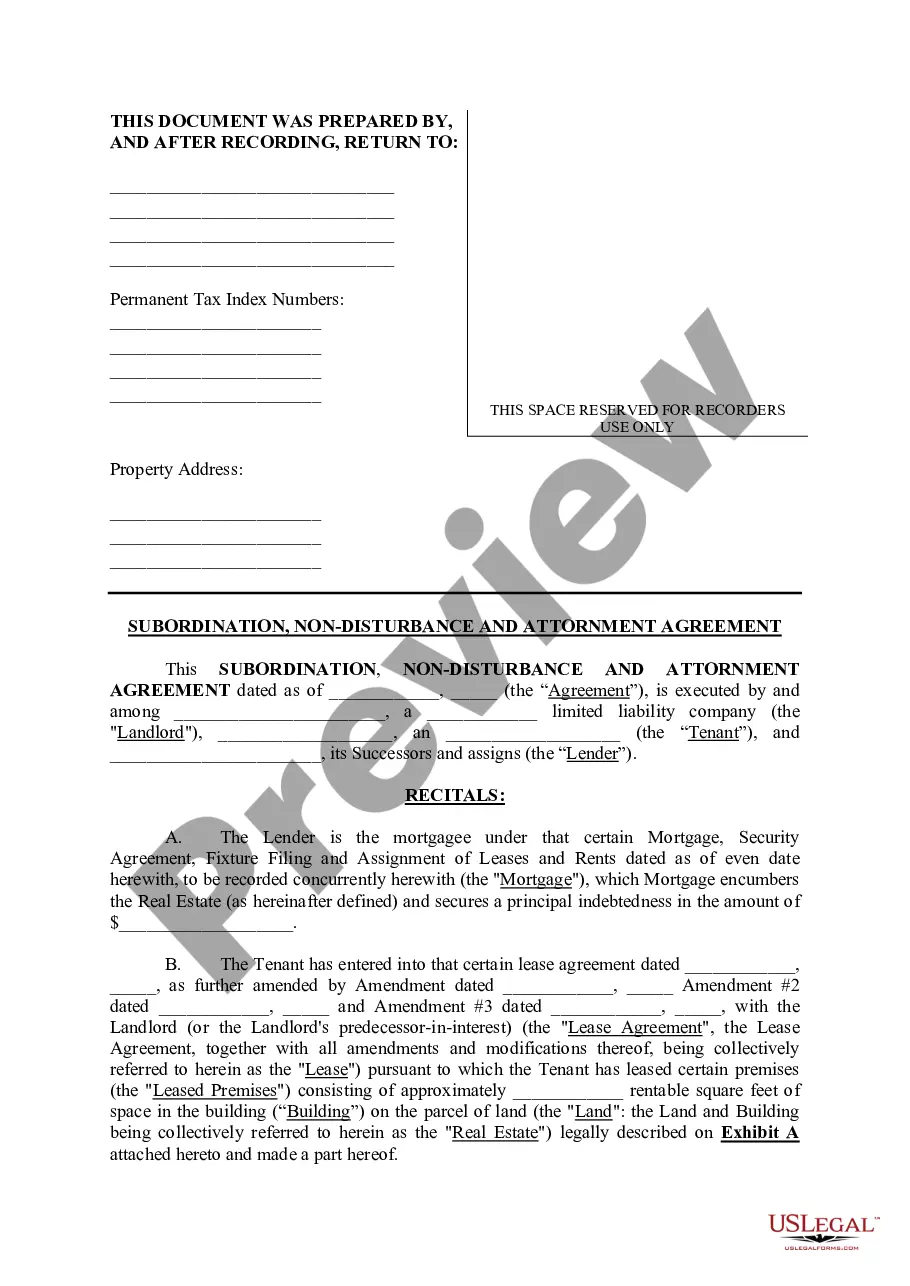
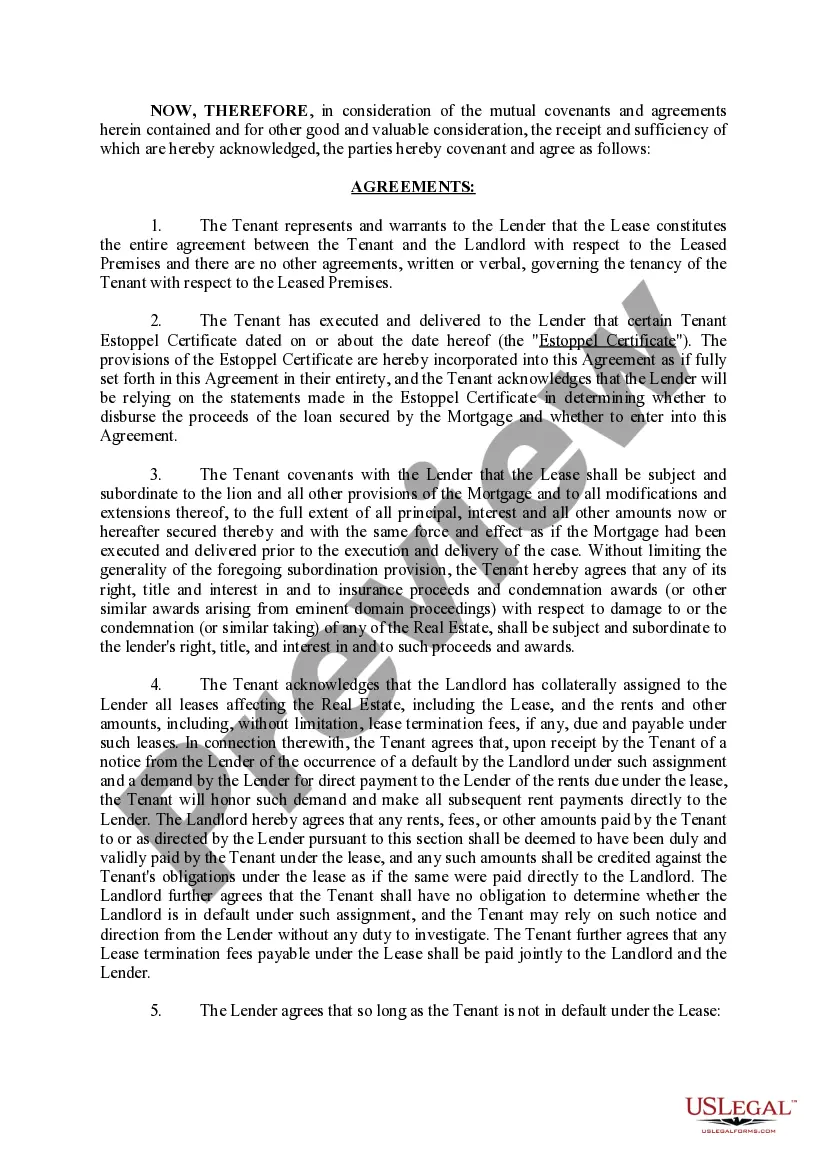
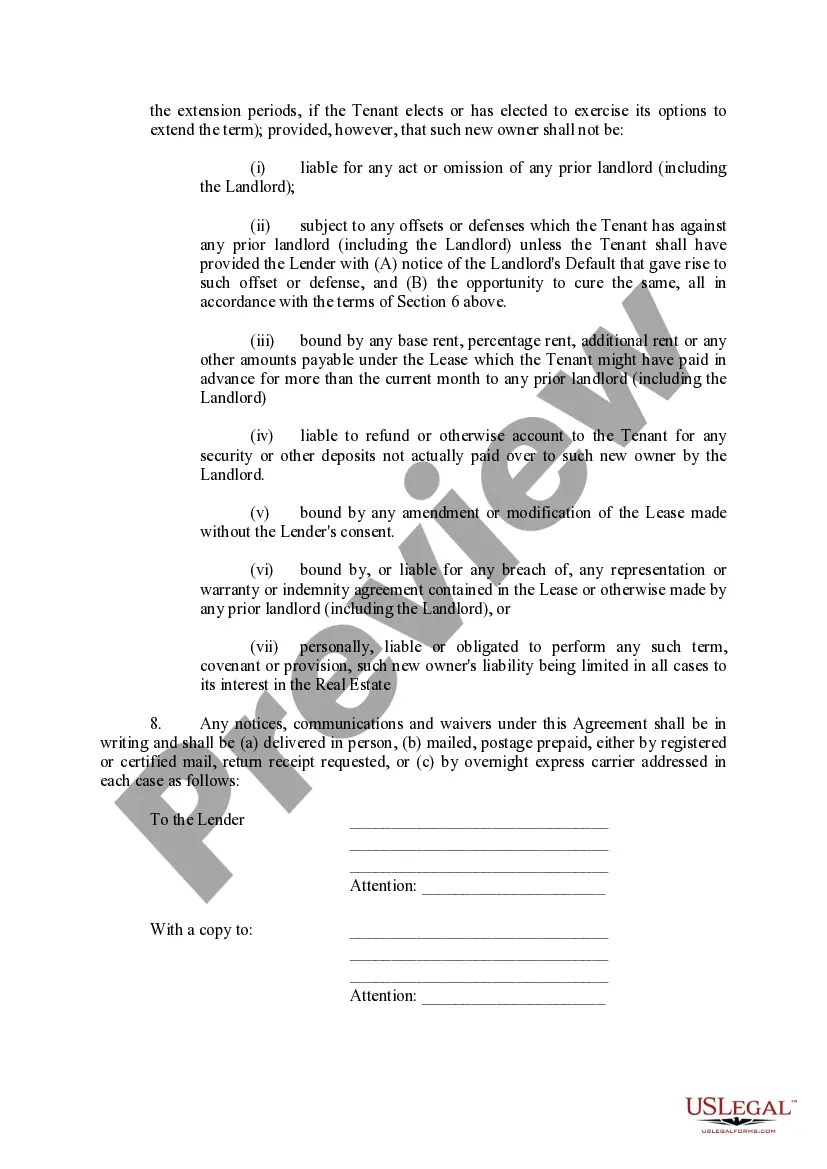
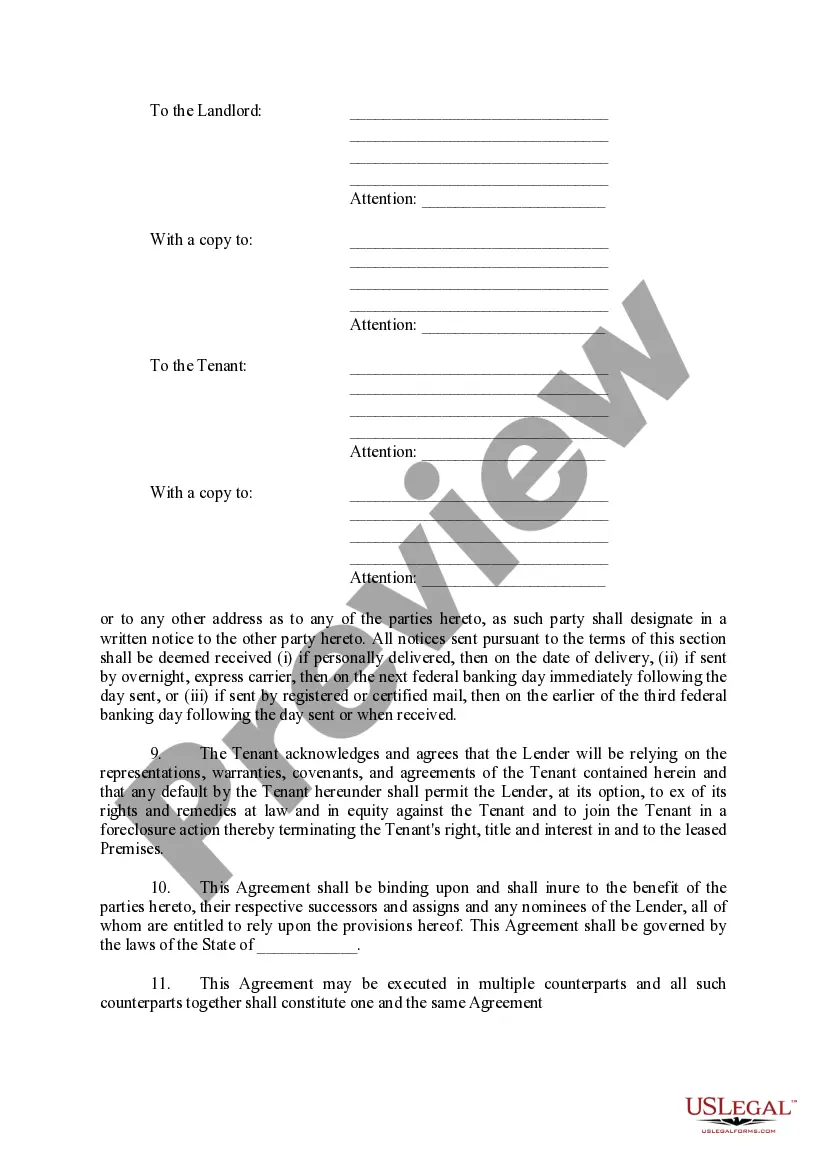
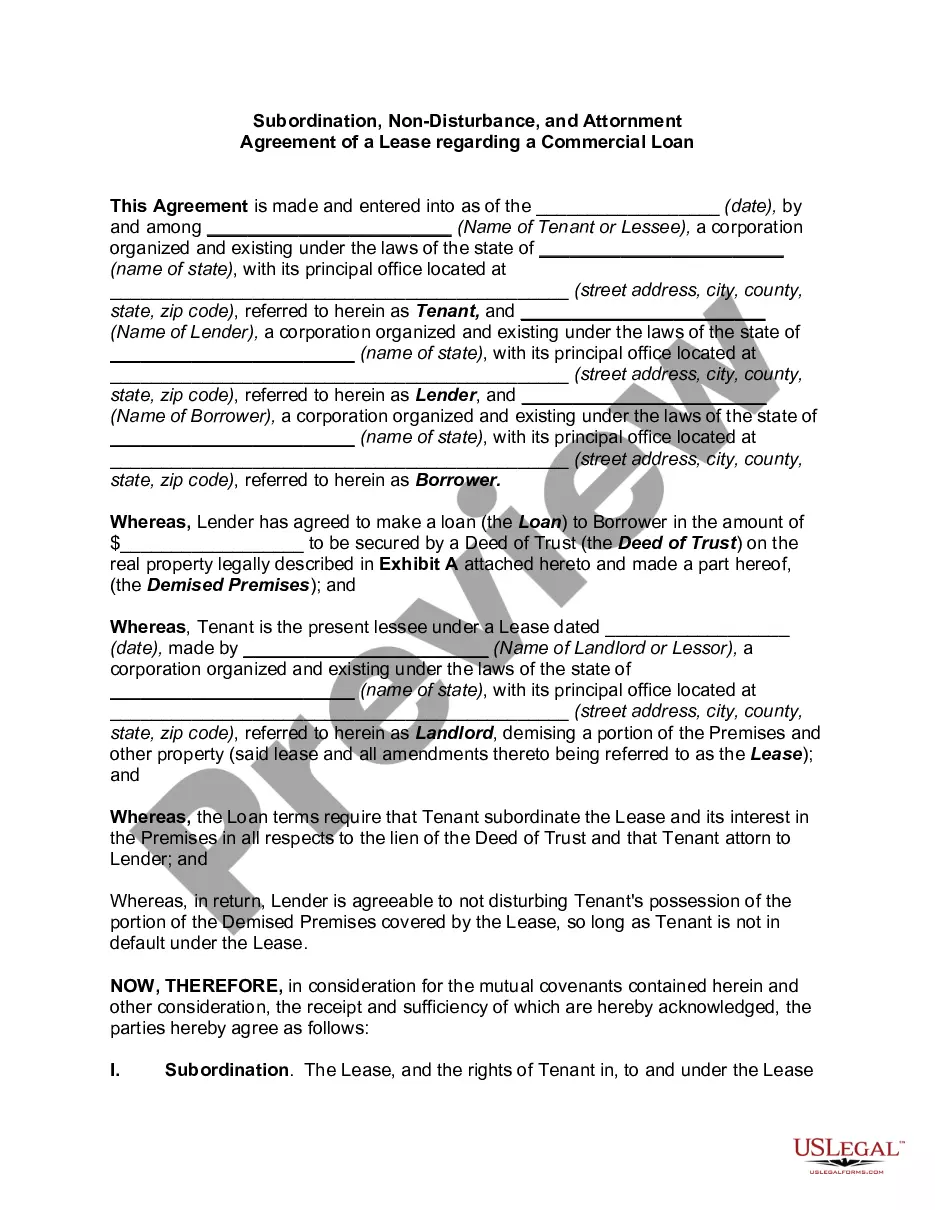
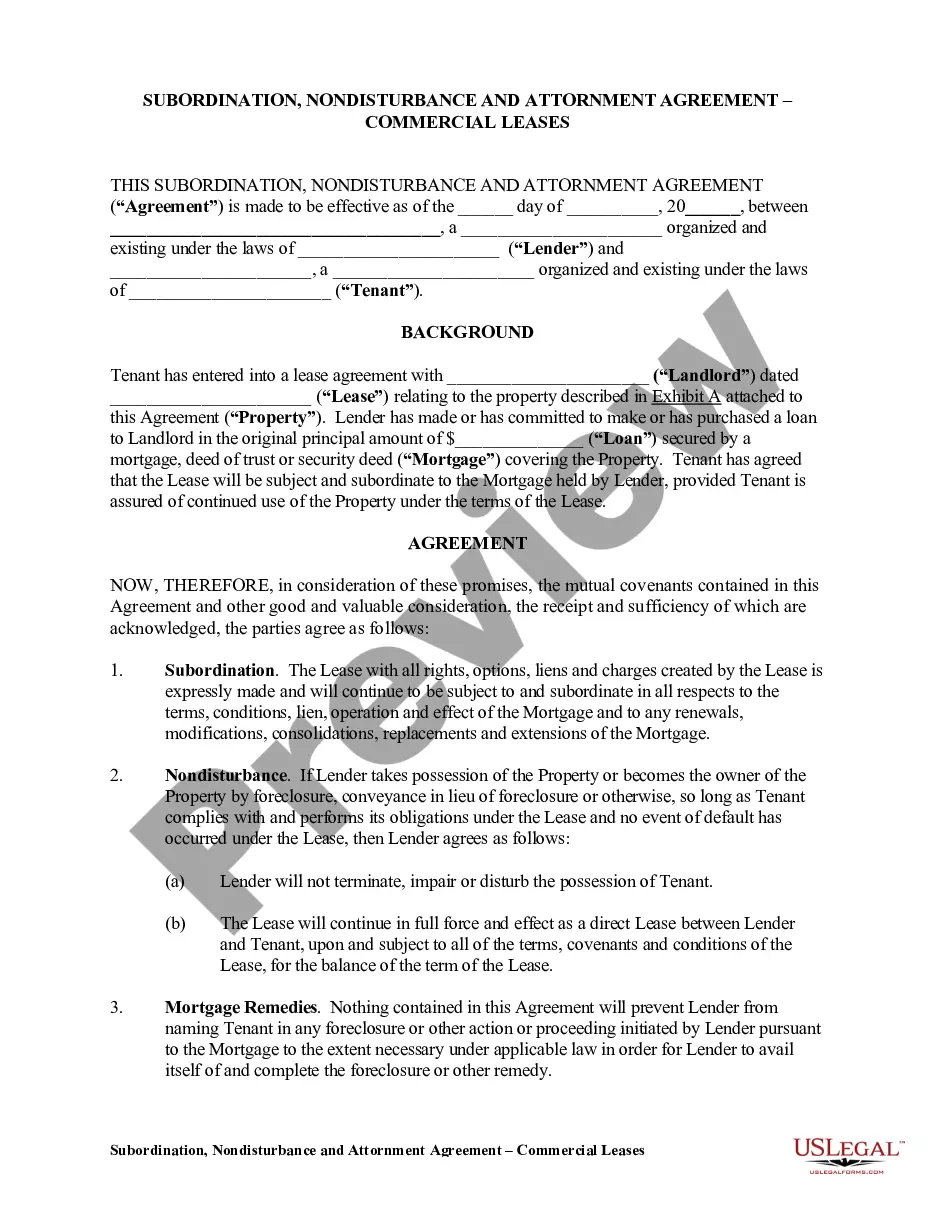
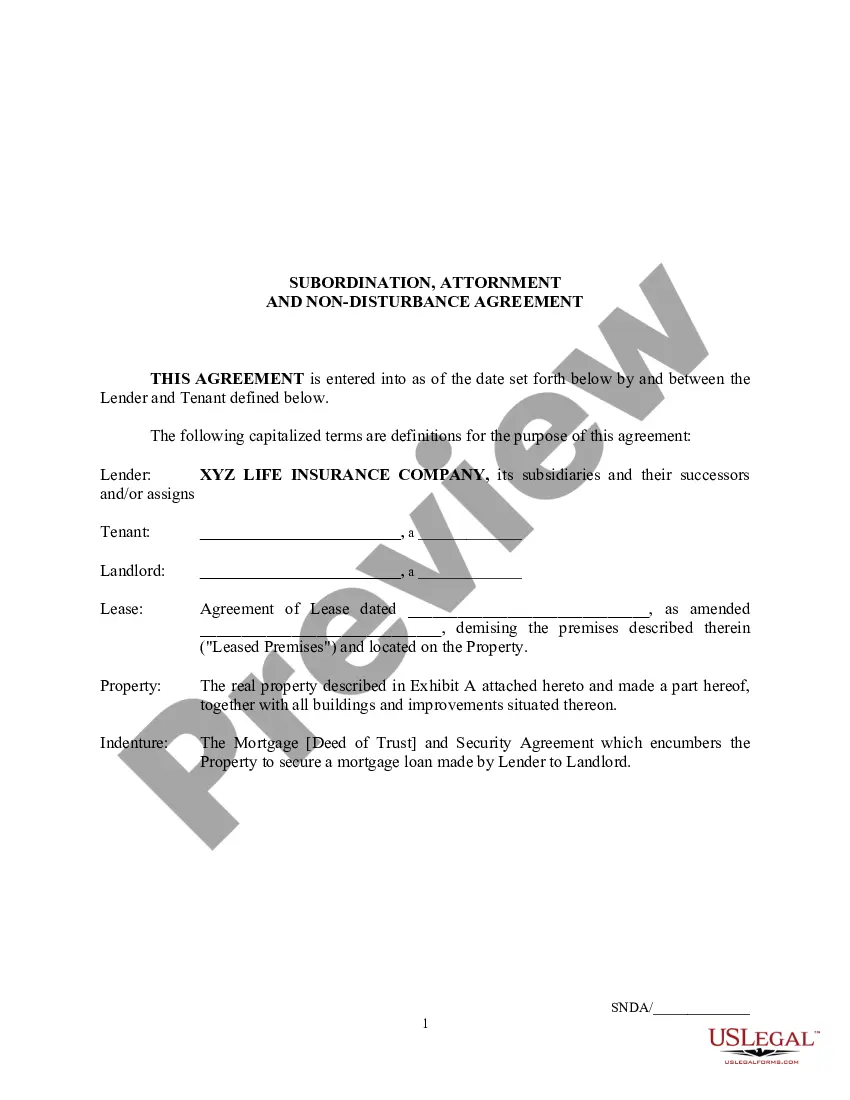
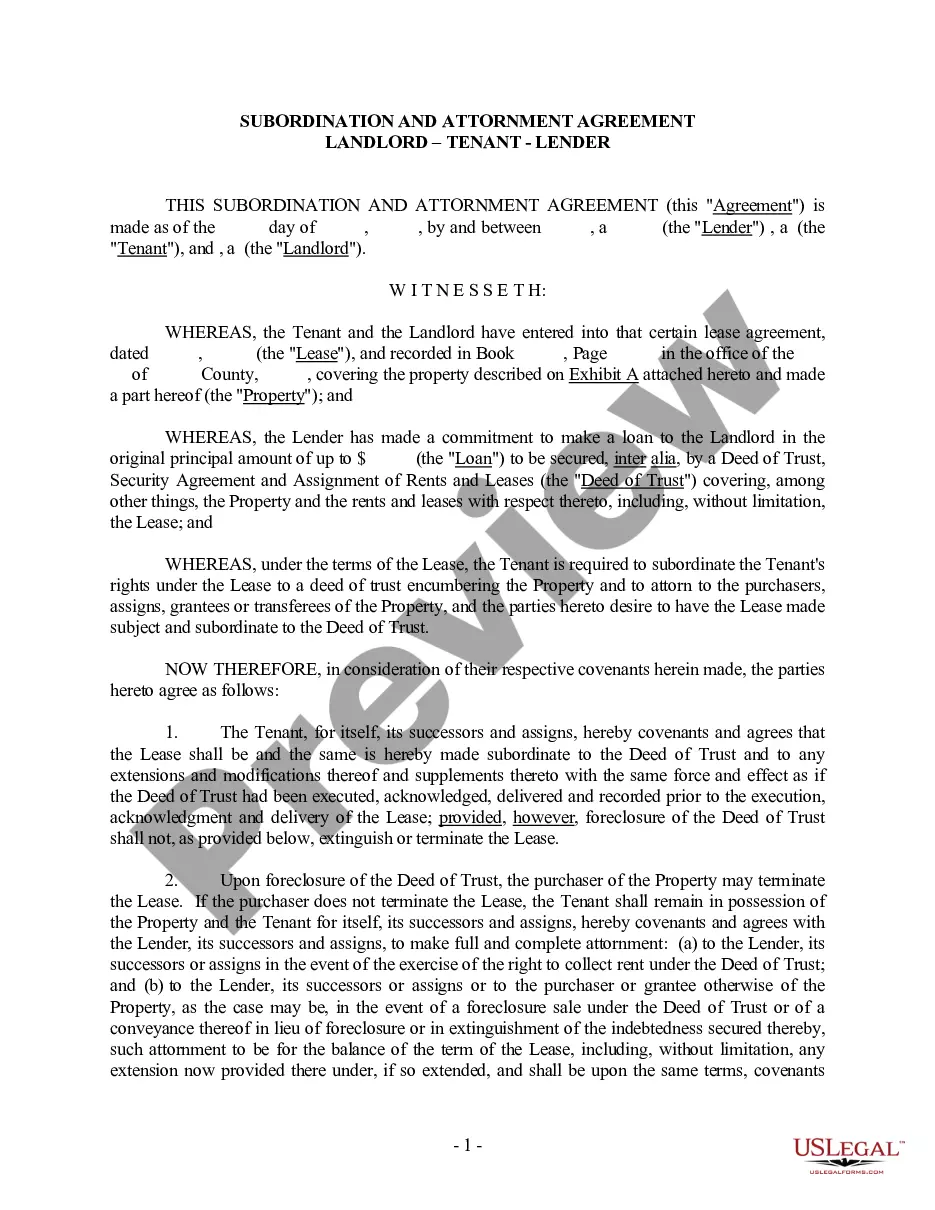
The Subordination, Non-Disturbance and Attornment Agreement (SNDA) is a legal document that outlines the relationship between a landlord, tenant, and lender in a lease agreement. This form protects the tenant's rights, ensuring that their lease remains in effect even if the property is sold or foreclosed upon. Unlike standard lease agreements, the SNDA specifically addresses the tenant's acknowledgment of a new owner as their landlord, providing clarity and security in landlord-tenant relationships during financial transitions.
Form components explained
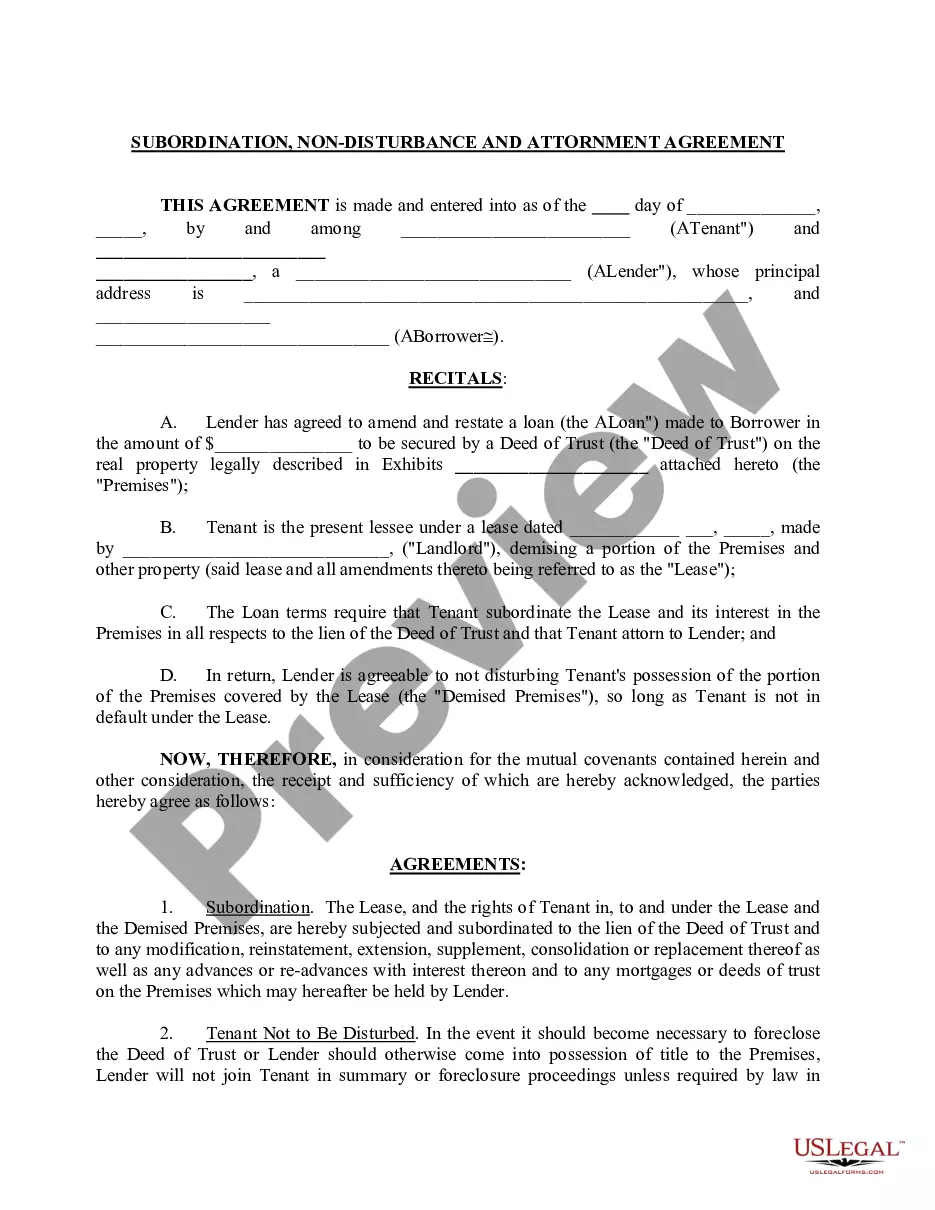
- Identification of parties involved: landlord, tenant, and lender.
- Recitals that provide the context of the agreement, including existing mortgage details.
- Tenant's acknowledgment of subordination to the lender's interests.
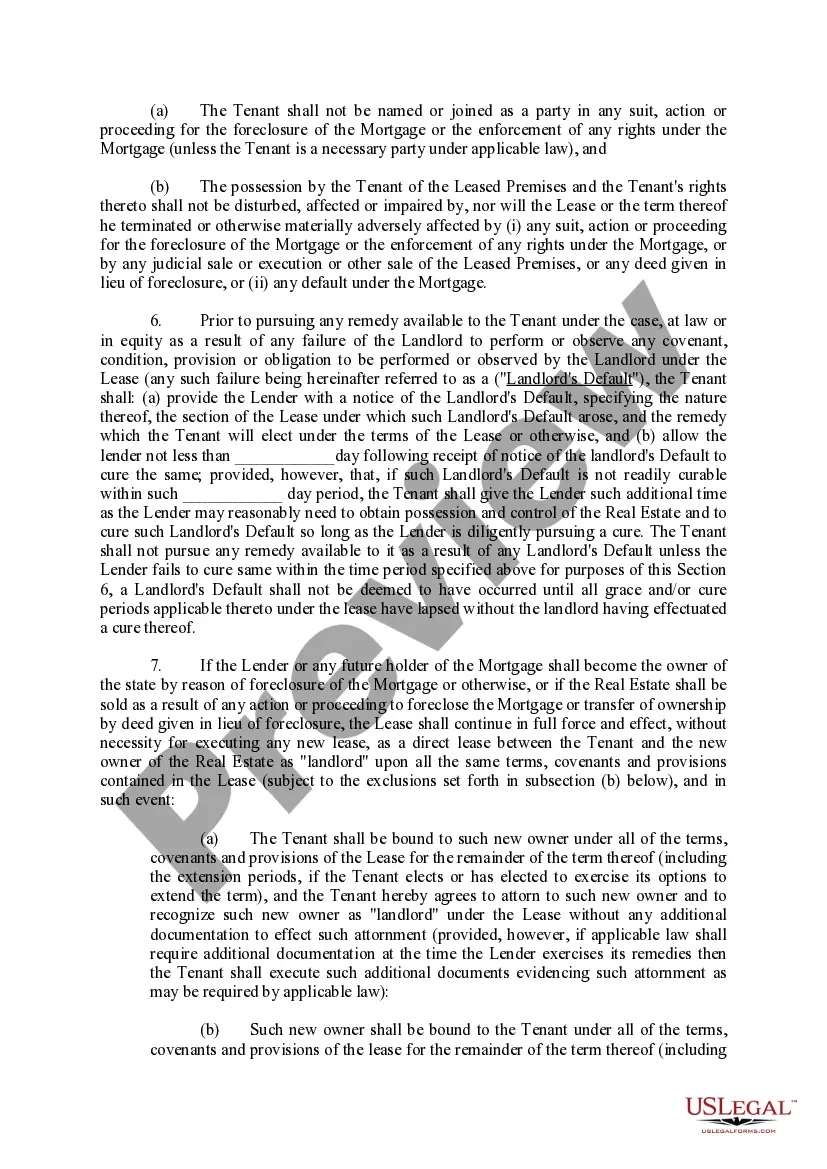
- Provisions ensuring that tenant rights are maintained during foreclosure proceedings.
- Mechanism for the tenant to notify the lender of landlord defaults.
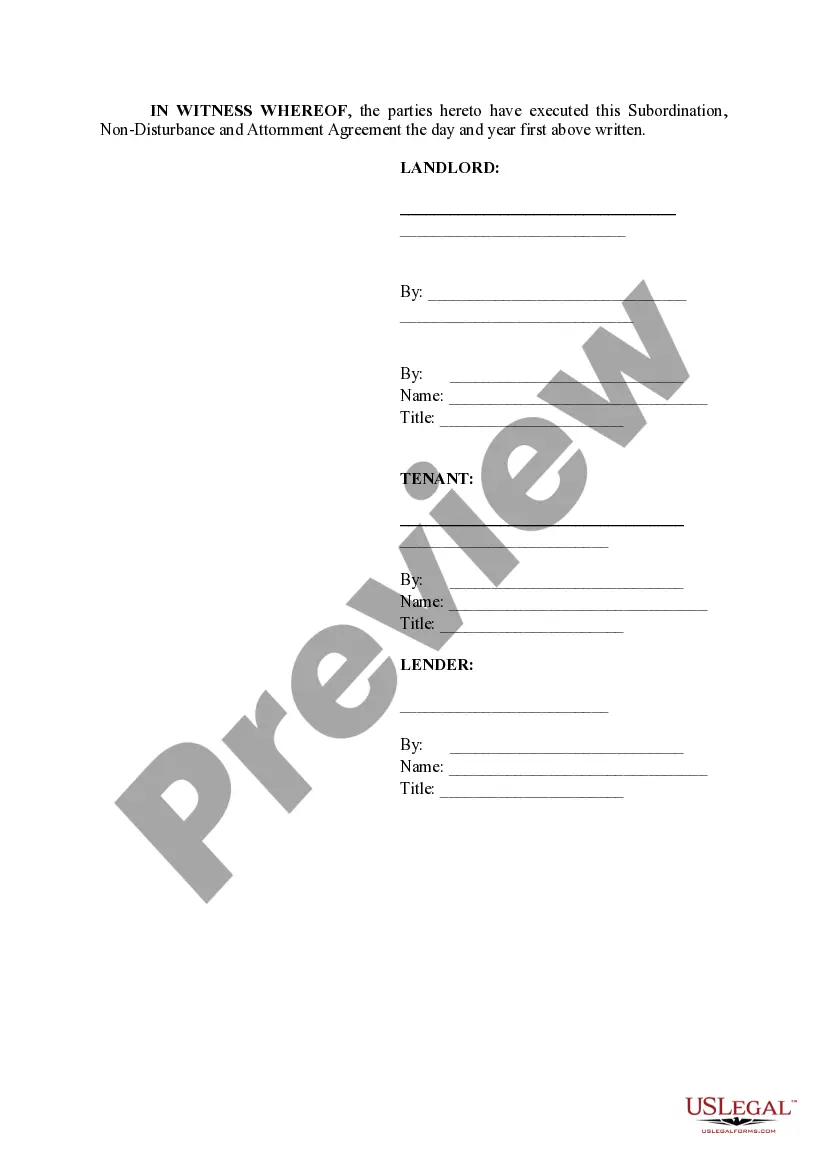
- Signature section for all parties involved, along with notary acknowledgment.
When to use this document
This form is essential when a tenant leases property that has a mortgage involved. It is particularly useful during transactions that may lead to changes in property ownership, such as foreclosures or sales. Implementing an SNDA helps tenants secure their rental rights, especially when facing the risk of new ownership or default by the current landlord.
Who needs this form
This form is intended for:
- Commercial and residential tenants leasing property with existing mortgages.
- Landlords seeking to clarify the rights of tenants in relation to lenders.
- Lenders who need assurances regarding tenant agreements during foreclosure processes.
Instructions for completing this form
- Identify the parties involved: enter the names and addresses of the landlord, tenant, and lender at the beginning of the document.
- Specify the property: accurately fill in the property address and permanent tax index numbers.
- Enter relevant dates: fill in the effective date of the agreement and the commencement dates from the lease agreement.
- Complete the agreements: verify all clauses regarding tenant rights, landlord obligations, and lender conditions are addressed and updated.
- Sign and notarize: ensure all parties sign the document in front of a notary public for it to be legally valid.
Is notarization required?
Yes, this form must be notarized to be legally valid. US Legal Forms offers integrated online notarization, providing secure video calls at any time, ensuring the legality of the document without the need for travel.
Get your form ready online
Our built-in tools help you complete, sign, share, and store your documents in one place.
Make edits, fill in missing information, and update formatting in US Legal Forms—just like you would in MS Word.
Download a copy, print it, send it by email, or mail it via USPS—whatever works best for your next step.
Sign and collect signatures with our SignNow integration. Send to multiple recipients, set reminders, and more. Go Premium to unlock E-Sign.
If this form requires notarization, complete it online through a secure video call—no need to meet a notary in person or wait for an appointment.
We protect your documents and personal data by following strict security and privacy standards.

Make edits, fill in missing information, and update formatting in US Legal Forms—just like you would in MS Word.

Download a copy, print it, send it by email, or mail it via USPS—whatever works best for your next step.

Sign and collect signatures with our SignNow integration. Send to multiple recipients, set reminders, and more. Go Premium to unlock E-Sign.

If this form requires notarization, complete it online through a secure video call—no need to meet a notary in person or wait for an appointment.

We protect your documents and personal data by following strict security and privacy standards.
Avoid these common issues
- Failing to accurately identify all parties involved in the agreement.
- Not specifying the property address and tax index numbers clearly.
- Omitting signatures or dates, which can invalidate the agreement.
- Not keeping a copy of the completed and signed form for personal records.
Why complete this form online
- Convenient access to templates anytime, allowing for seamless completion.
- Editable format enables customization as needed for specific transactions.
- Reliable and secure storage options for completed forms to ensure compliance.
- Guidance through the process with user-friendly instructions to avoid common errors.
Looking for another form?
Form popularity
FAQ
interference agreement aims to establish a clear understanding that landlords or property owners will not disrupt a tenant's use of the property. This agreement often aligns with Illinois Subordination, NonDisturbance and Attornment Agreements to ensure everyone knows their rights. Tenants benefit from this protection, as it limits unlawful eviction or disruption. By addressing potential conflicts, this agreement enhances tenant security and satisfaction.
In a lease subordination clause, the tenant is agreeing to allow his/her interest to be subordinated to the lender's. A sample subordination agreement is commonly requested of new tenants.The attornment agreement has the tenant agree to continue lease obligations to a new landlord in the event of a foreclosure.
In the case of commercial property changing hands, an attornment clause in a subordination, non-disturbance, and attornment (SNDA) agreement requires the tenant to acknowledge a new owner as their landlord and to continue paying rent regardless of whether the property changes hands through a normal sale or a
Subordination of lease refers to the tenant's consent to subordinate his or her rights over a property to the rights of the bank holding the mortgage on the property. A subordination of lease agreement is created for this purpose.
A nondisturbance clause is a provision in a mortgage contract that ensures that a rental agreement between the tenant and the landlord will continue under any circumstances.A nondisturbance clause ensures that a tenant will not be evicted in the event that the landlord goes bankrupt.
SNDA stands for Subordination, Non-disturbance and Attornment Agreement. You need an SNDA if you are a commercial tenant, a commercial landlord, or a lender taking a mortgage against commercial property. If you're a tenant, the SNDA protects you from being evicted if your landlord stops paying its mortgage loan.
A Subordination and Non-Disturbance Agreement (SNDA) commonly called a non-disturb is an agreement that your landlord asks its lender to provide. The agreement basically says that if the building goes bankrupt and the lender takes control of the building from the landlord, the lender will honor your lease.
Subordination clauses in mortgages refer to the portion of your agreement with the mortgage company that says their lien takes precedence over any other liens you may have on your property.However, it's also possible to have other liens. You might have some placed by contractors until work is paid off.
A nondisturbance clause is a provision in a mortgage contract that ensures that a rental agreement between the tenant and the landlord will continue under any circumstances.A nondisturbance clause ensures that a tenant will not be evicted in the event that the landlord goes bankrupt.