Subordination, Attornment And Non-Disturbance Agreement
Overview of this form
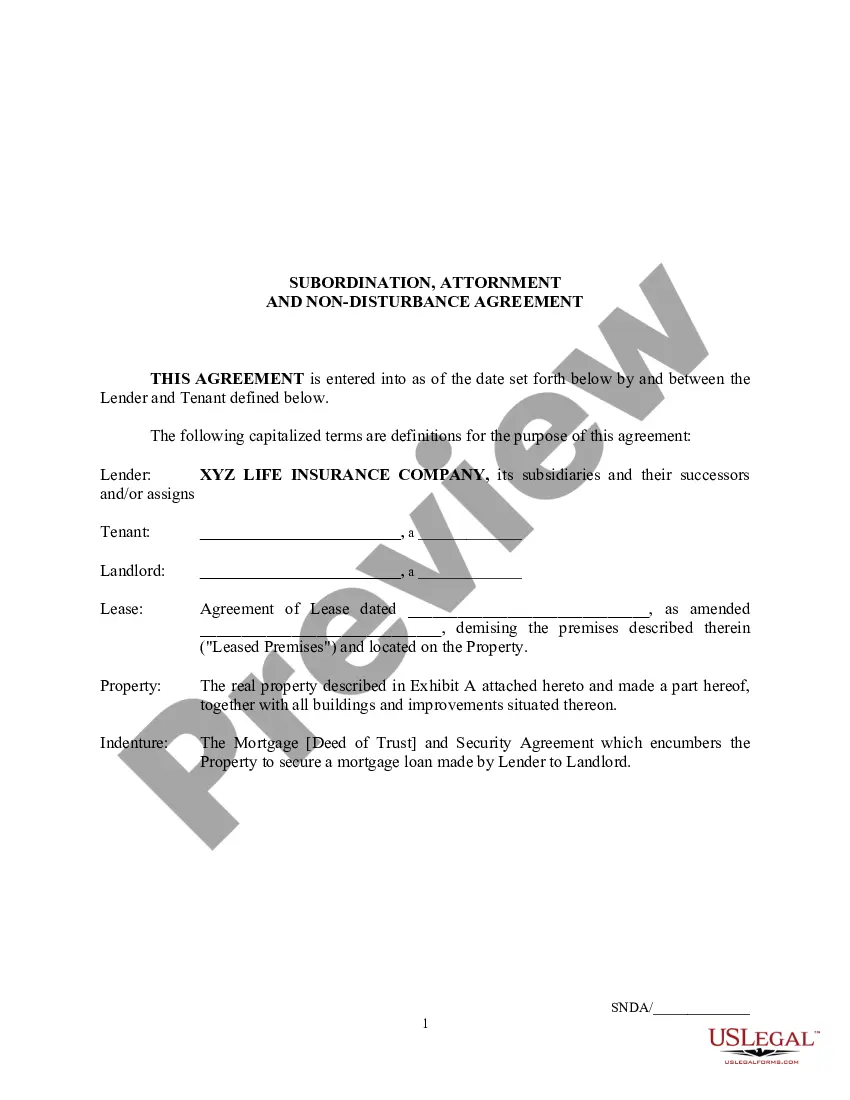
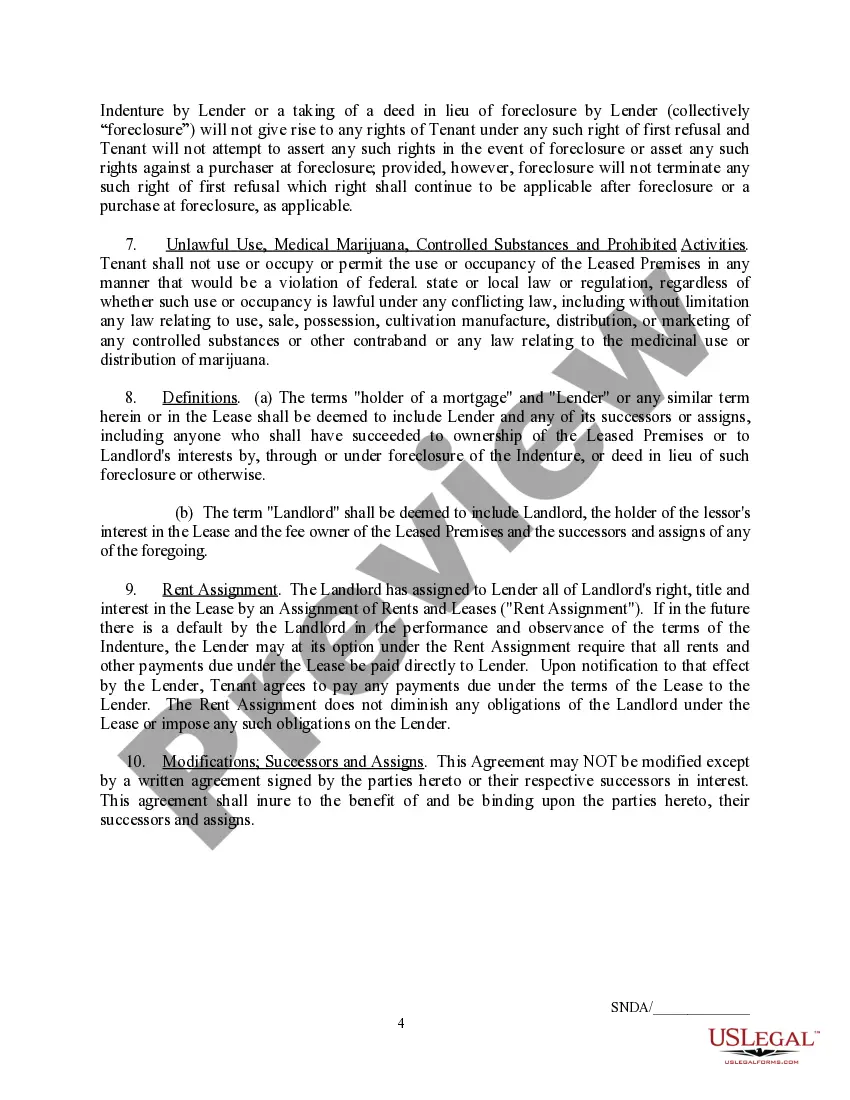
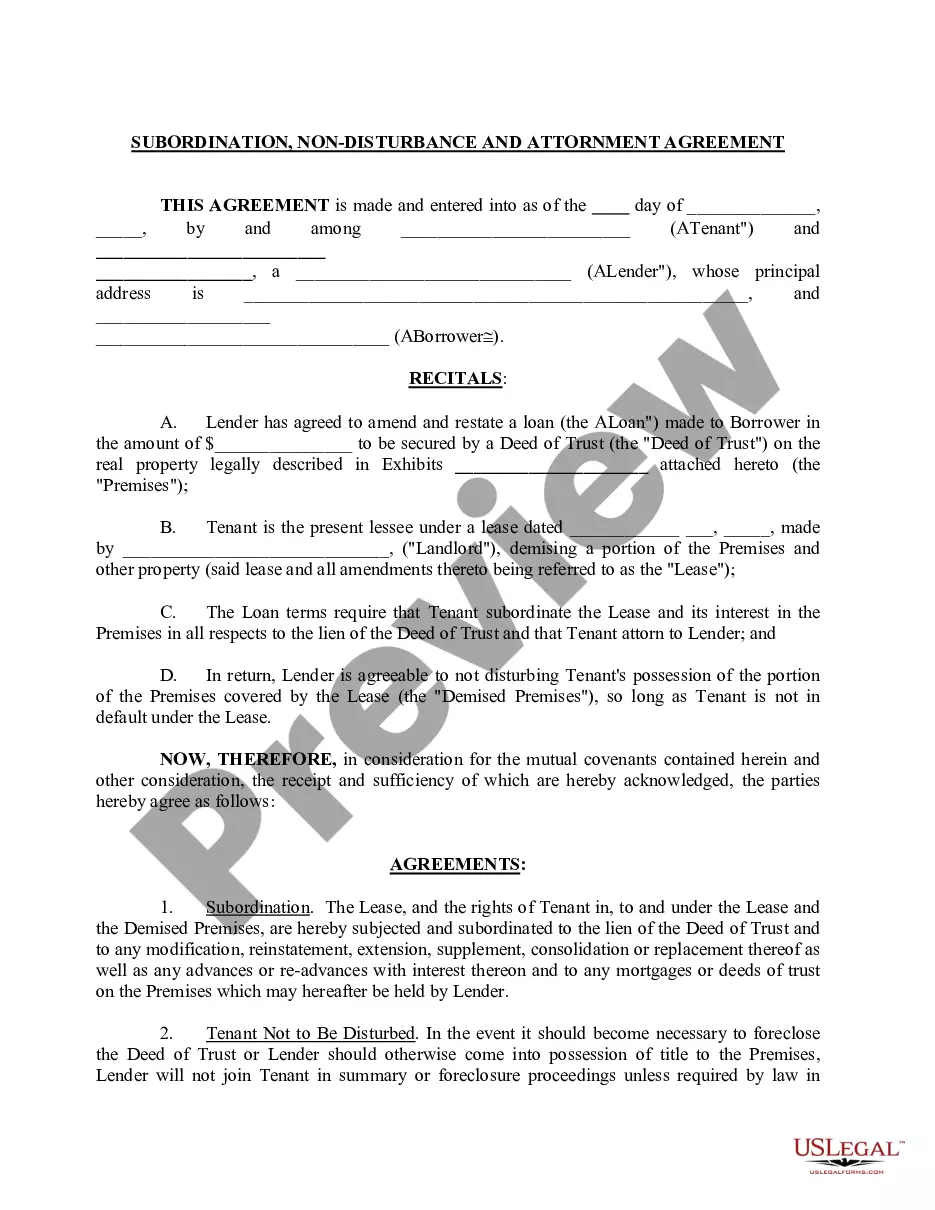
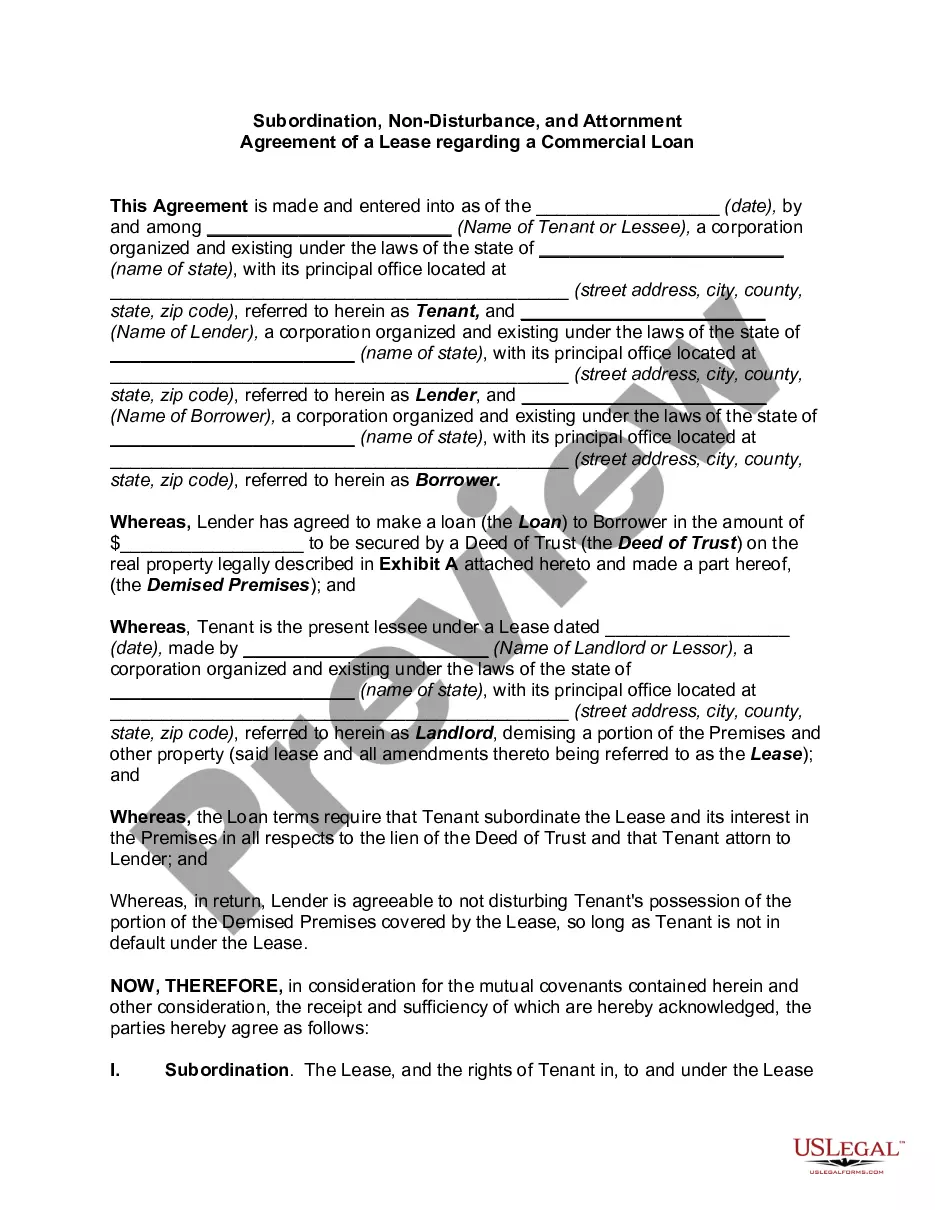
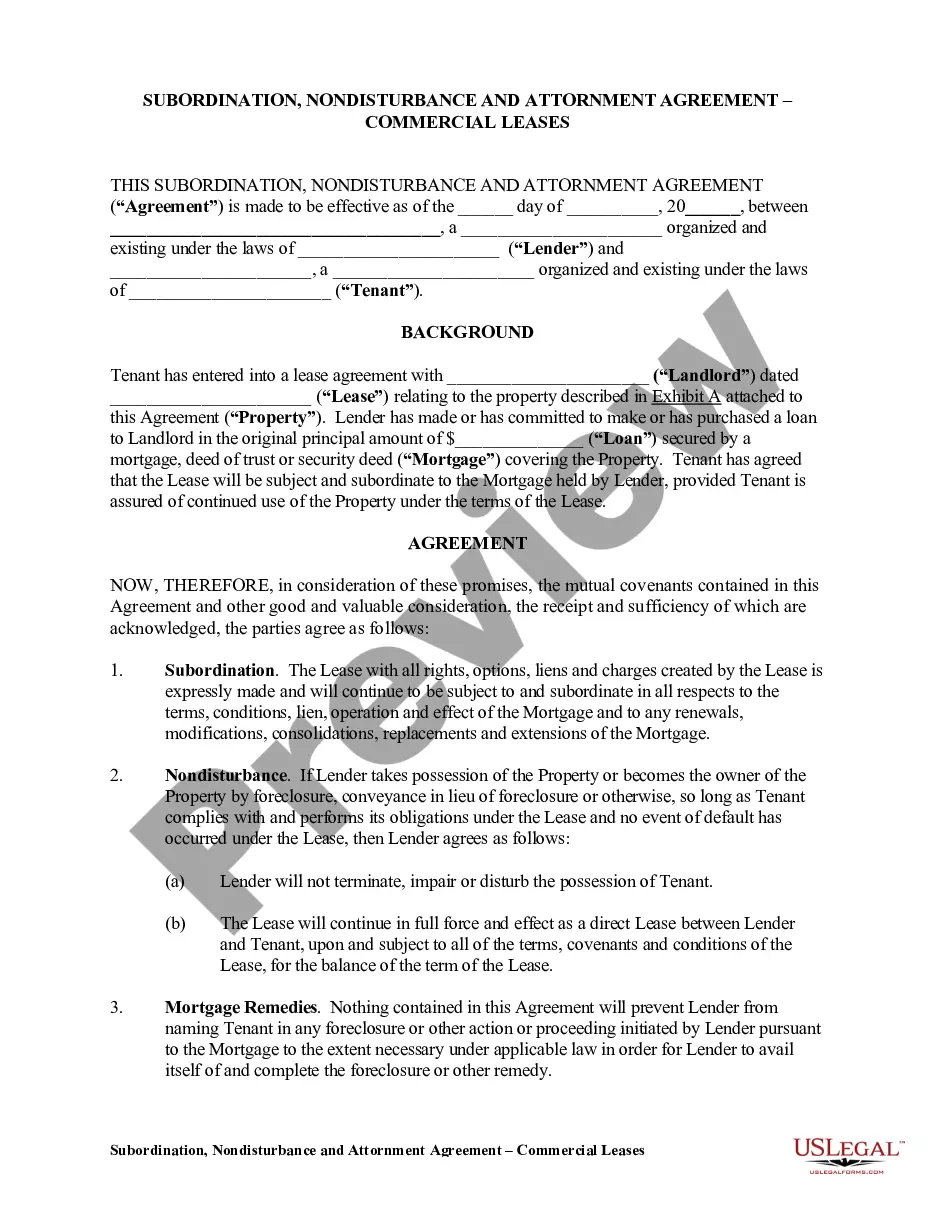
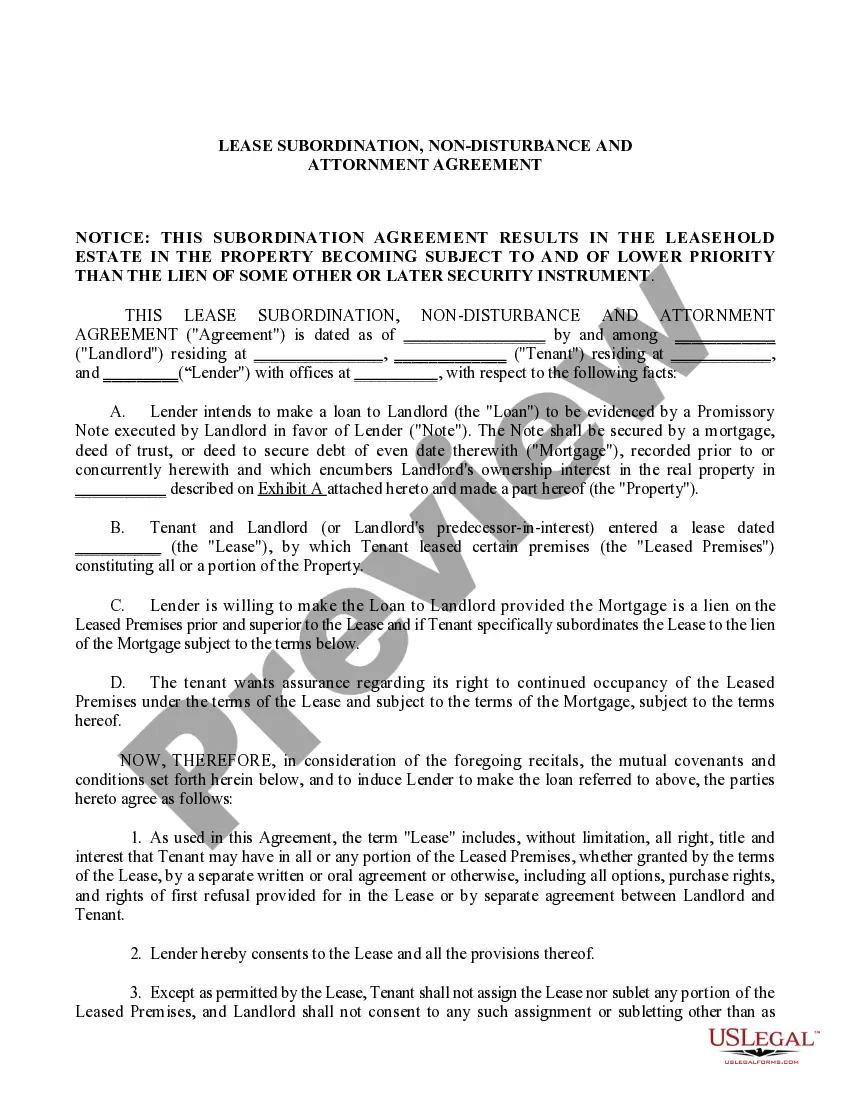
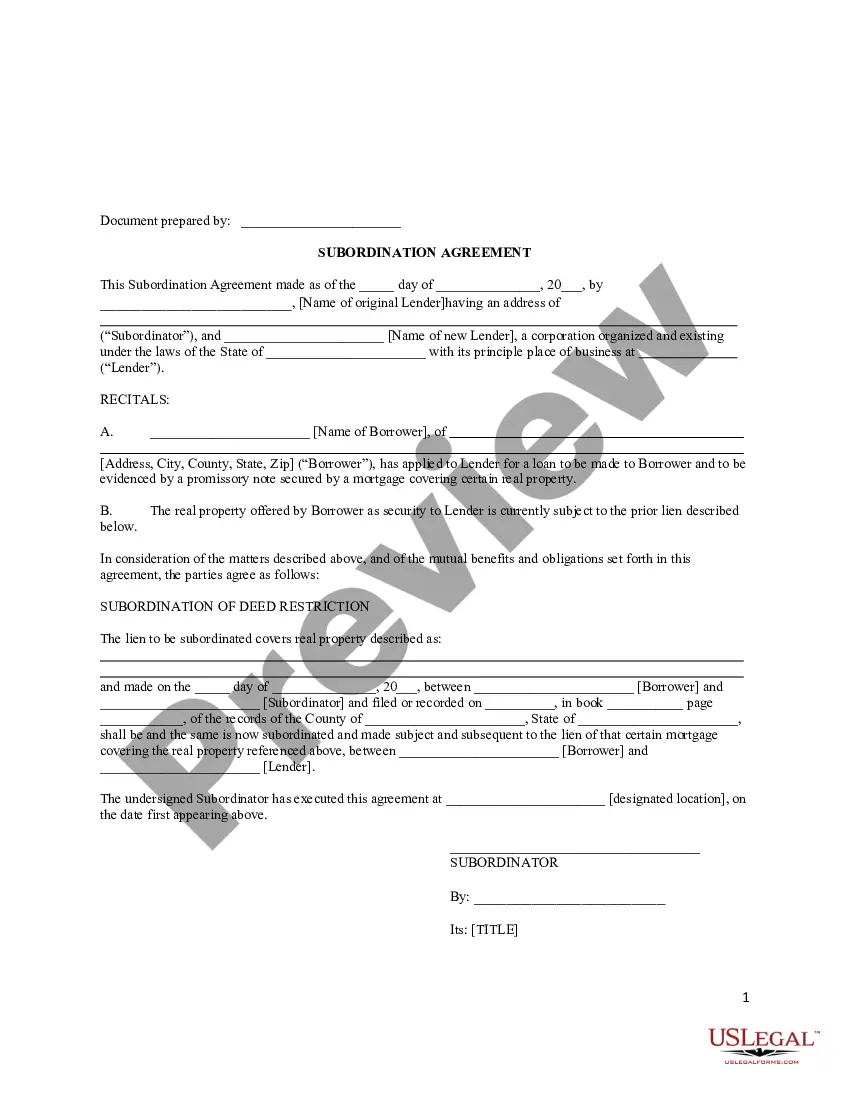
The Subordination, Attornment, and Non-Disturbance Agreement (SNDA) is a crucial legal document involving three parties: a lender, a tenant, and a landlord. This form outlines the rights and responsibilities of each party, ensures that the tenant's lease remains intact even if the property is foreclosed, and establishes that the tenant will recognize the new lender as the landlord if foreclosure occurs. It is essential for protecting tenant rights in commercial leasing arrangements when a property is encumbered by a mortgage or other security interest.
Main sections of this form
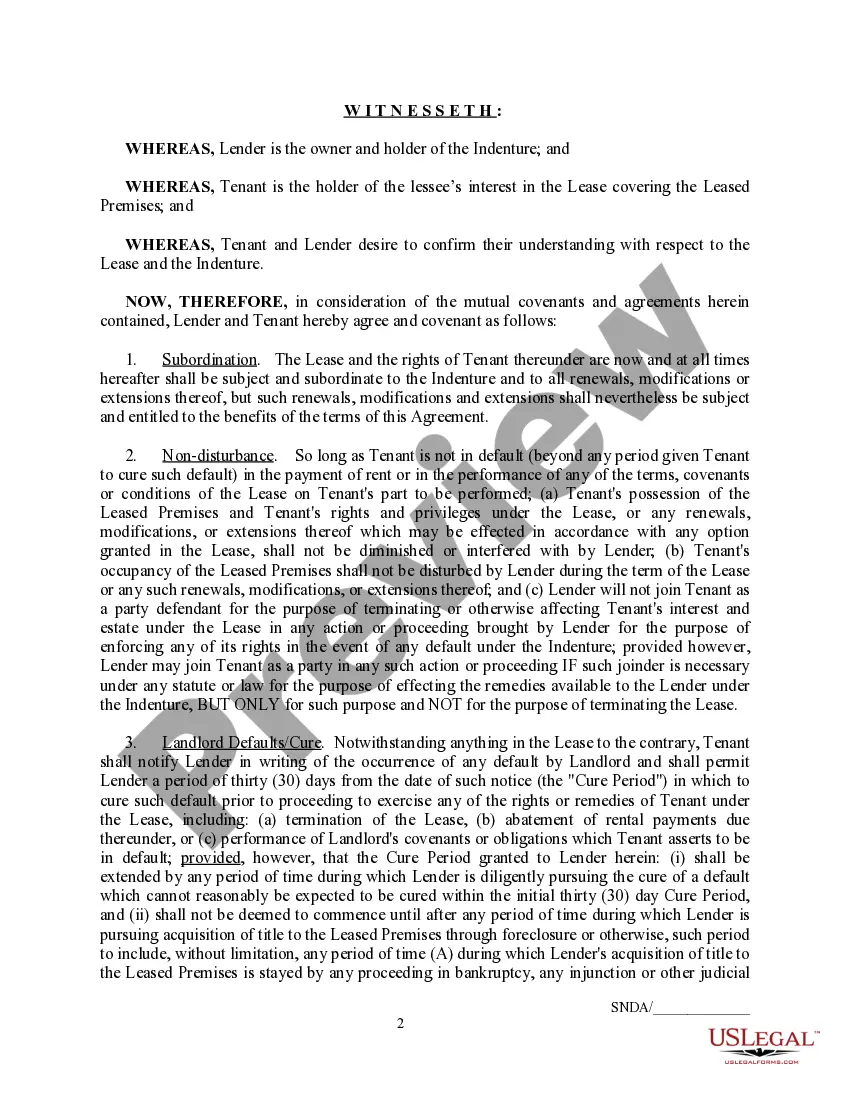
- Subordination clause: Establishes that the lease is subordinate to the lender's mortgage.
- Non-disturbance agreement: Protects the tenant's right to occupy the leased premises, provided they are not in default.
- Default and cure clause: Outlines the procedure if the landlord defaults on the lease.
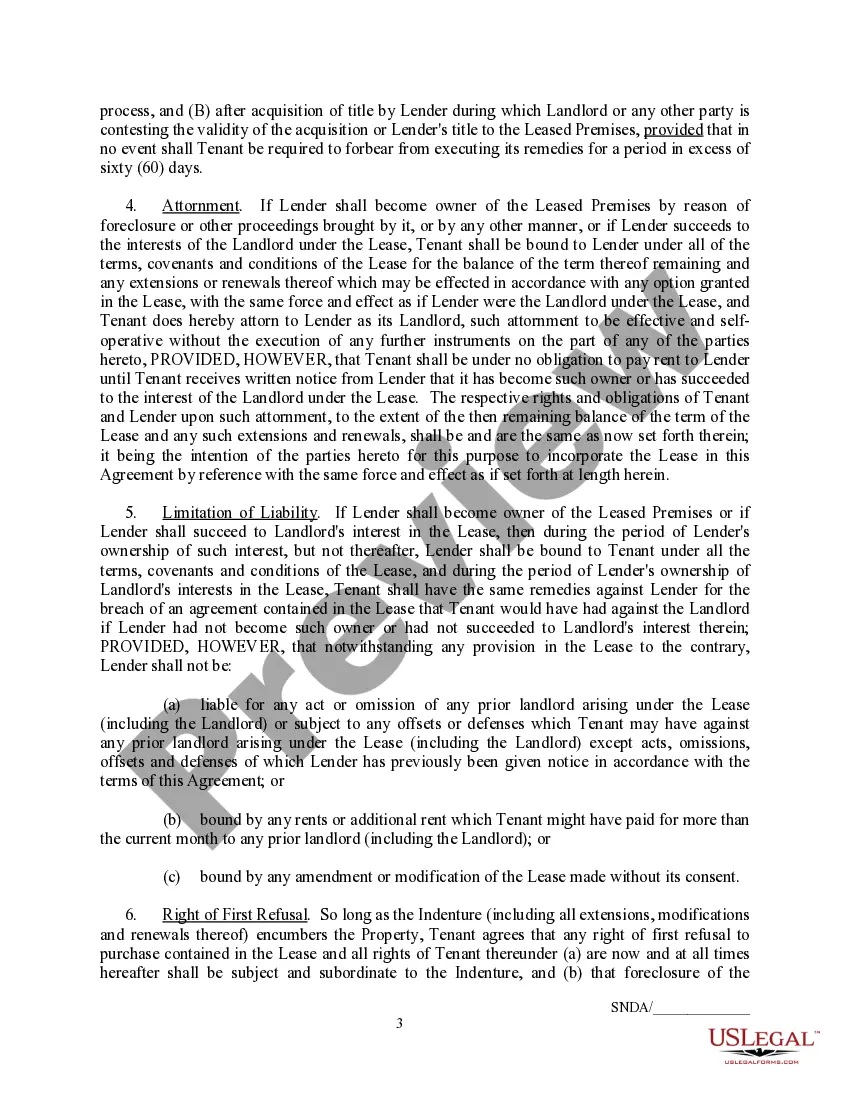
- Attornment provision: Requires the tenant to recognize the lender as the new landlord after foreclosure.
- Limitations on liability: Clarifies the lender's liabilities/interactions with prior tenants.
Situations where this form applies
This form is used in situations where a tenant occupies a property that has a mortgage, and the lender wants to ensure that their interests are protected. It is especially necessary during property sales, refinancing, or foreclosure scenarios, where the tenantâs lease rights need clarification and assurance that they will not be disturbed if the property ownership changes.
Who can use this document
- Property landlords seeking to establish an agreement that protects their lender's interests.
- Commercial tenants wanting assurance that their lease will remain intact during changes in property ownership.
- Lenders looking to formalize their relationship with tenants in relation to a mortgage or real estate investment.
Steps to complete this form
- Identify the parties: Fill in the names and addresses of the lender, tenant, and landlord.
- Specify the lease details: Provide information about the lease agreement, including its date and any amendments.
- Define the property: Include a legal description of the property in Exhibit A.
- Enter default notice procedures: Ensure the timeline for notifying the lender of any landlord defaults is clearly stated.
- Gather signatures: Ensure all parties sign the agreement for it to be legally binding.
Notarization requirements for this form
This form does not typically require notarization unless specified by local law. However, verifying local regulations is advisable to ensure compliance.
Get your form ready online
Our built-in tools help you complete, sign, share, and store your documents in one place.
Make edits, fill in missing information, and update formatting in US Legal Forms—just like you would in MS Word.
Download a copy, print it, send it by email, or mail it via USPS—whatever works best for your next step.
Sign and collect signatures with our SignNow integration. Send to multiple recipients, set reminders, and more. Go Premium to unlock E-Sign.
If this form requires notarization, complete it online through a secure video call—no need to meet a notary in person or wait for an appointment.
We protect your documents and personal data by following strict security and privacy standards.

Make edits, fill in missing information, and update formatting in US Legal Forms—just like you would in MS Word.

Download a copy, print it, send it by email, or mail it via USPS—whatever works best for your next step.

Sign and collect signatures with our SignNow integration. Send to multiple recipients, set reminders, and more. Go Premium to unlock E-Sign.

If this form requires notarization, complete it online through a secure video call—no need to meet a notary in person or wait for an appointment.

We protect your documents and personal data by following strict security and privacy standards.
Common mistakes
- Failing to include all relevant parties in the agreement.
- Not clearly defining the property address or lease specifics.
- Overlooking the need for signatures from all involved parties.
- Ignoring local regulations that may affect the enforceability of the SNDA.
Benefits of completing this form online
- Convenience: Easy access to the form from anywhere, at any time.
- Editability: Modify the document to fit specific needs and circumstances quickly.
- Reliability: Drafted by licensed attorneys, ensuring legal compliance and protection.
Looking for another form?
Form popularity
FAQ
One of the closing documents in a real estate financing transaction involving leased property is a subordination, non-disturbance and attornment agreement (SNDA). SNDAs have a number of purposes. They serve to connect the lender with the tenant and they provide other uses as well.
An estoppel certificate establishes the current status of the lease terms for a third party. Generally, the certificate requests that the Tenant verify that the rent is current or whether the Tenant has any potential claims against the Landlord.
What is an SNDA? A subordination, non-disturbance, and attornment clause outlines the rights of the tenant, landlord, and third parties with an interested in the property. Potential third parties included in an SNDA include a lender funding the building or a party buying the property.
For example, someone selling a piece of real estate at a high price may know nonpublic facts that will decrease the value of the property. By intentionally failing to disclose that information to a prospective buyer, the seller can earn a larger amount from the sale.
An estoppel agreement (also known as an estoppel certificate) is a legal document that's used to verify certain representations made by the landlord.
A tenant estoppel confirms in writing that a lease exists and outlines the conditions and terms of that lease. SNDA stands for Subordination, Non-Disturbance and Attornment Agreement. This is an agreement between a tenant and a lender that spells out important rights for each party.
Subordination is putting something in a lower position or rank. Therefore, a subordination agreement puts the lease below the mortgage loan in priority. Mortgage lenders want the leases to be subordinate to the mortgage. That way, the mortgage loan is paid first if there is a foreclosure.
A nondisturbance clause is a provision in a mortgage contract that ensures that a rental agreement between the tenant and the landlord will continue under any circumstances. This is done primarily to protect the renter from eviction by the mortgagor if the property is foreclosed upon by the lender.