Subordination Agreement
What is this form?
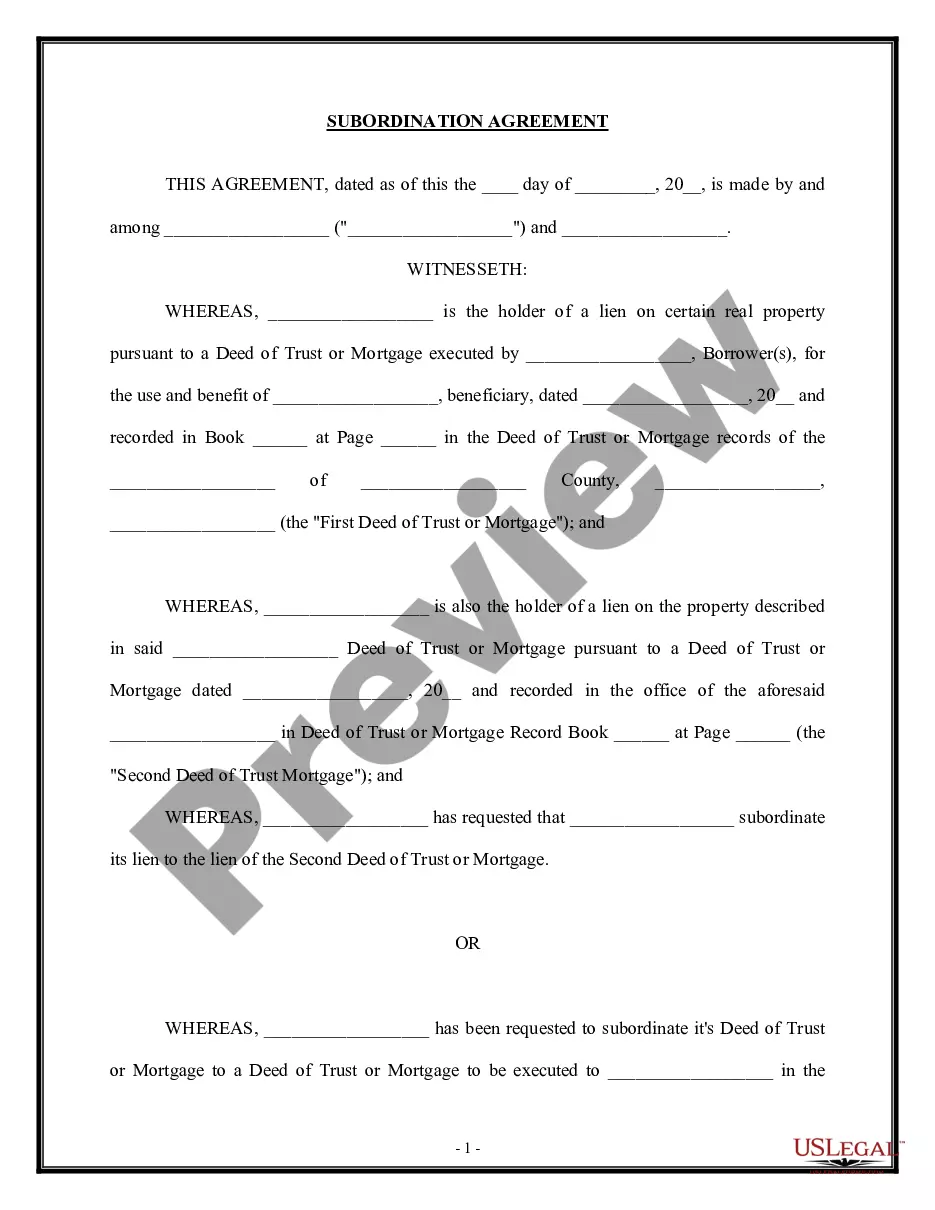
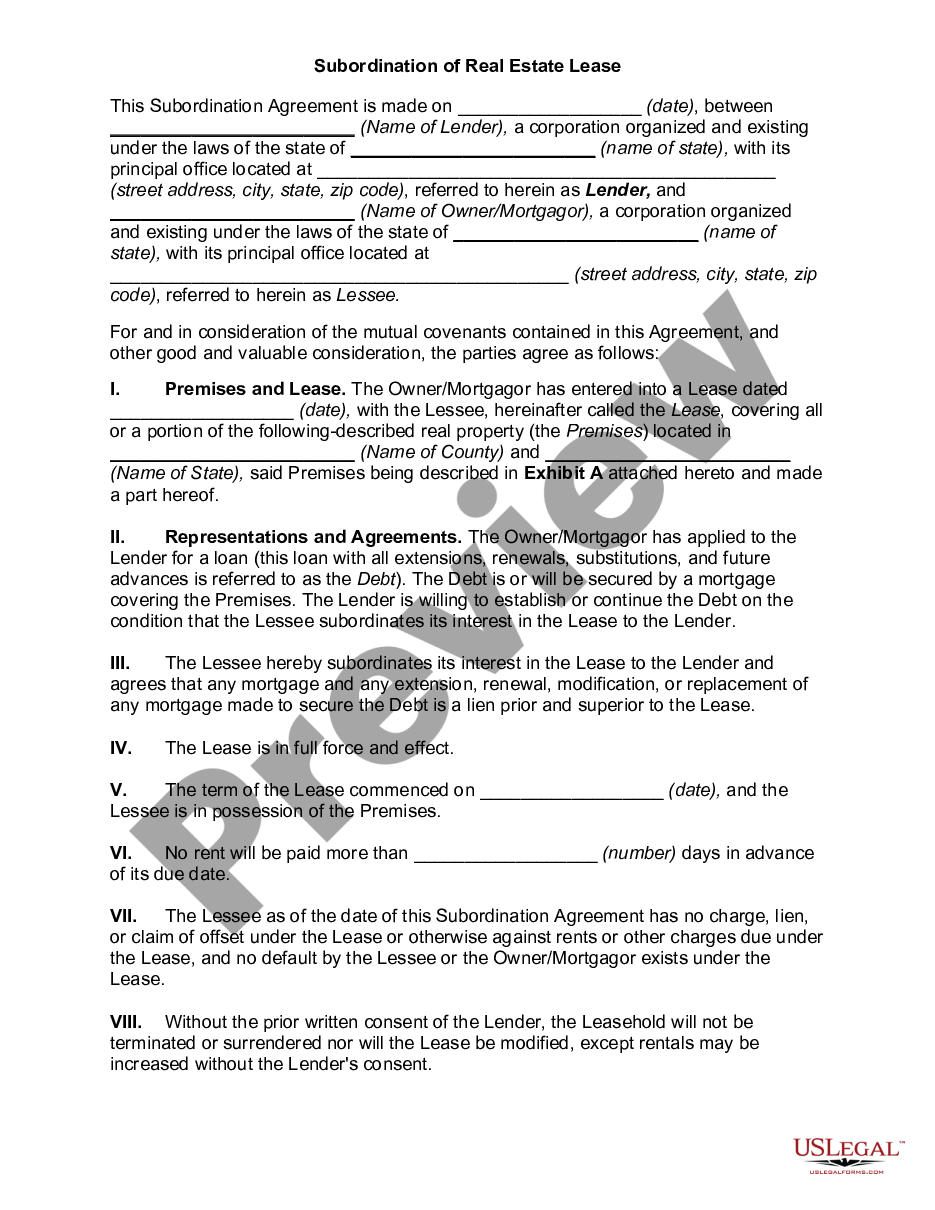
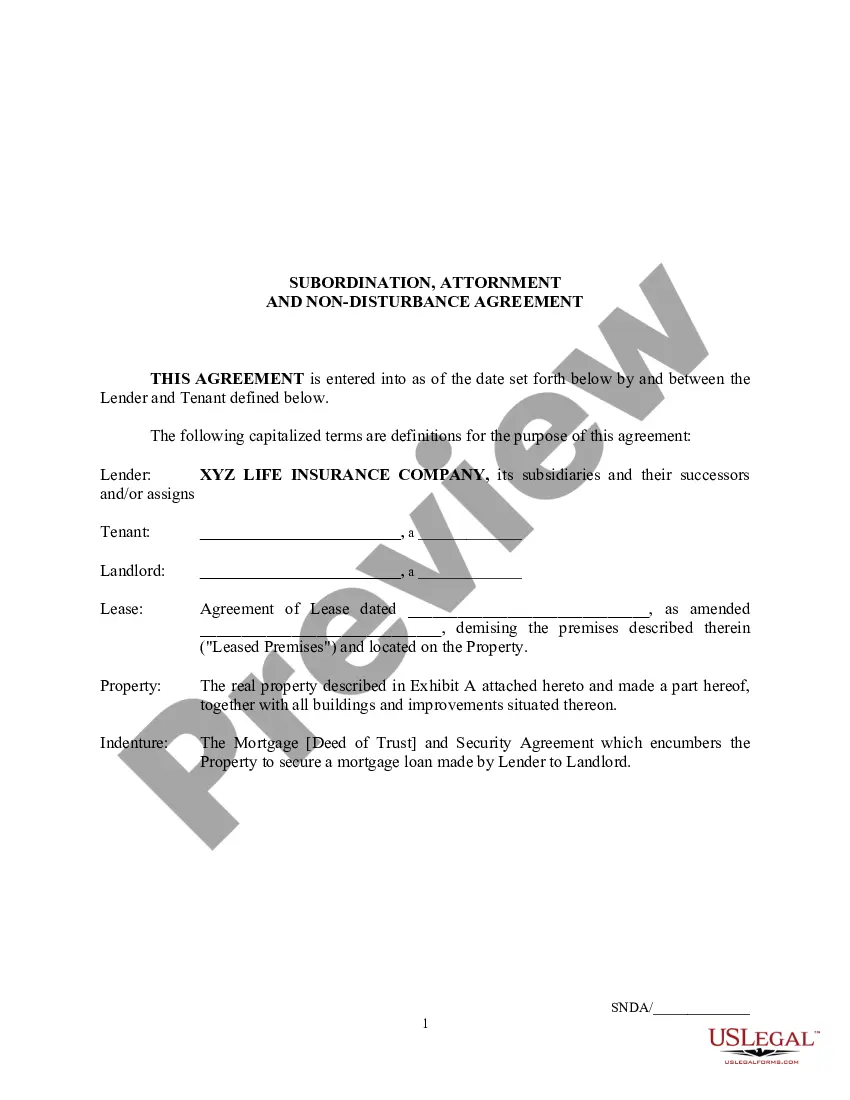
A subordination agreement prioritizes collateralized debts, ensuring that one creditor's claim is ranked behind another's for purposes of repayment. This agreement allows a lien holder to subordinate their rights to the lien of another creditor, which is vital in situations such as foreclosure or bankruptcy. It clarifies the order of payment among creditors, providing legal assurance regarding repayment hierarchies.
What’s included in this form
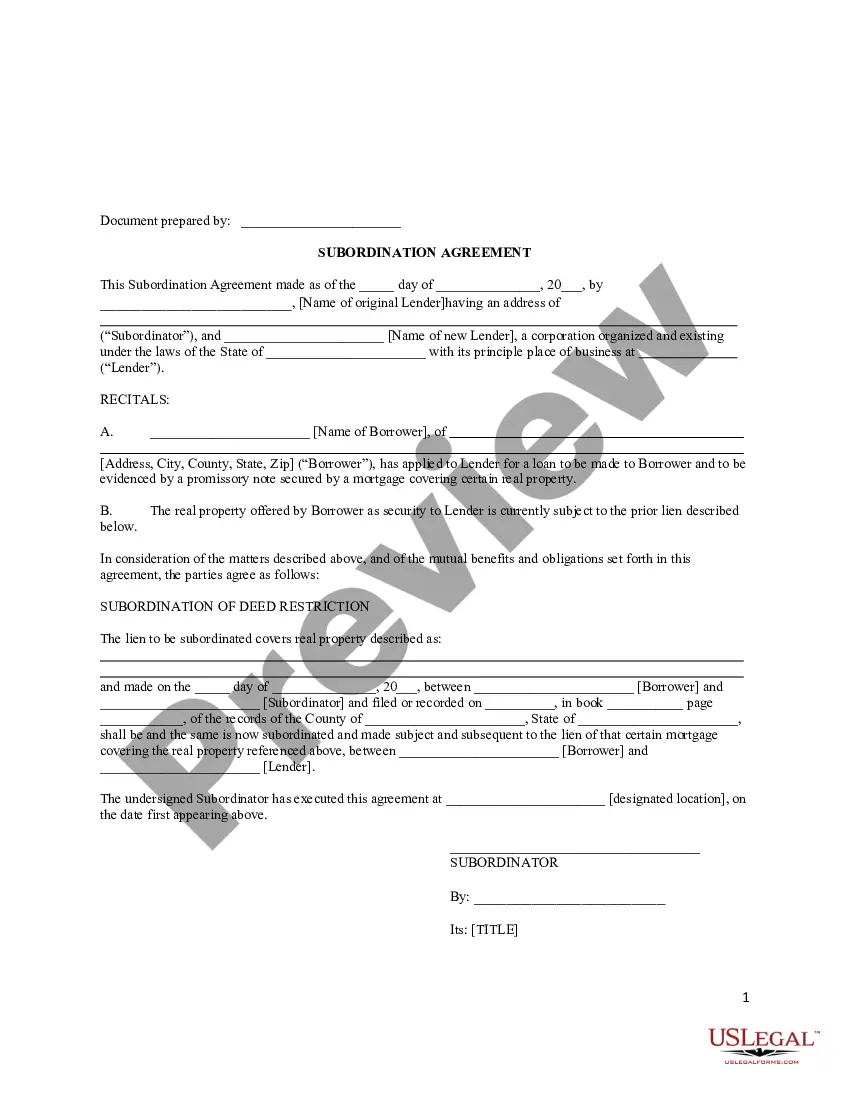
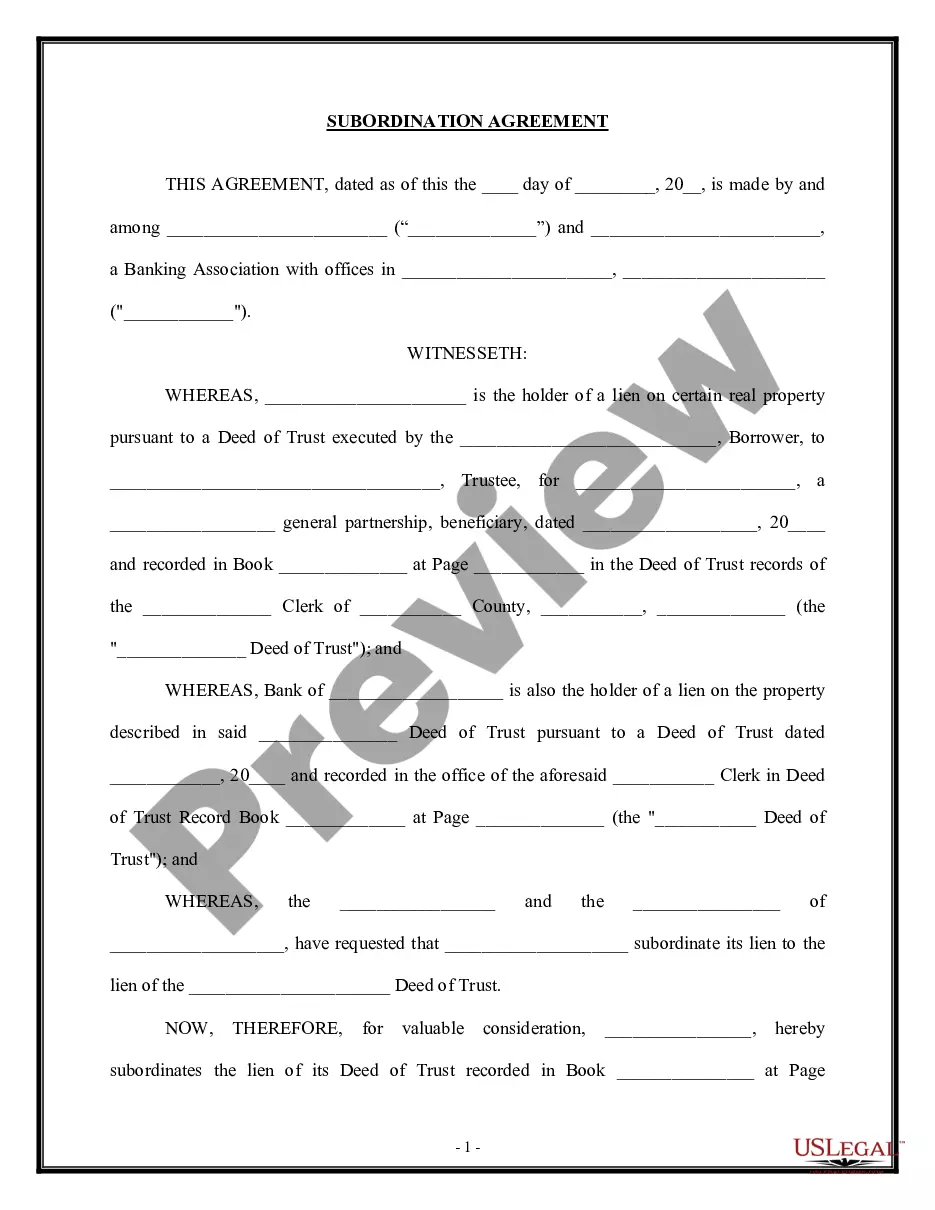
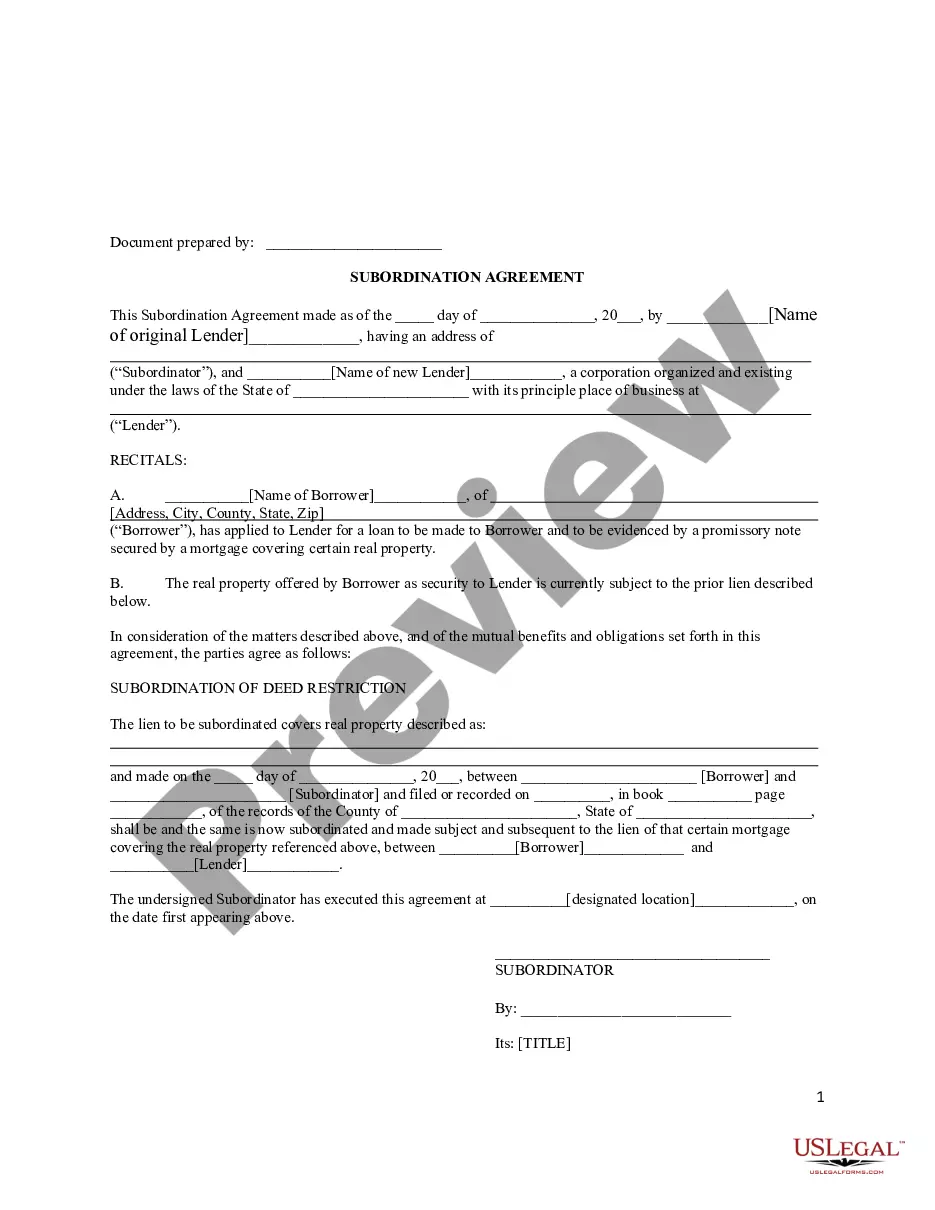
- Parties involved: Identification of the original lender (Subordinator) and the new lender.
- Consideration clause: Details the agreement in exchange for valuable consideration.
- Description of the lien and property: Specifies the real property being subordinated.
- Execution details: Outlines where and how the agreement must be signed and acknowledged.
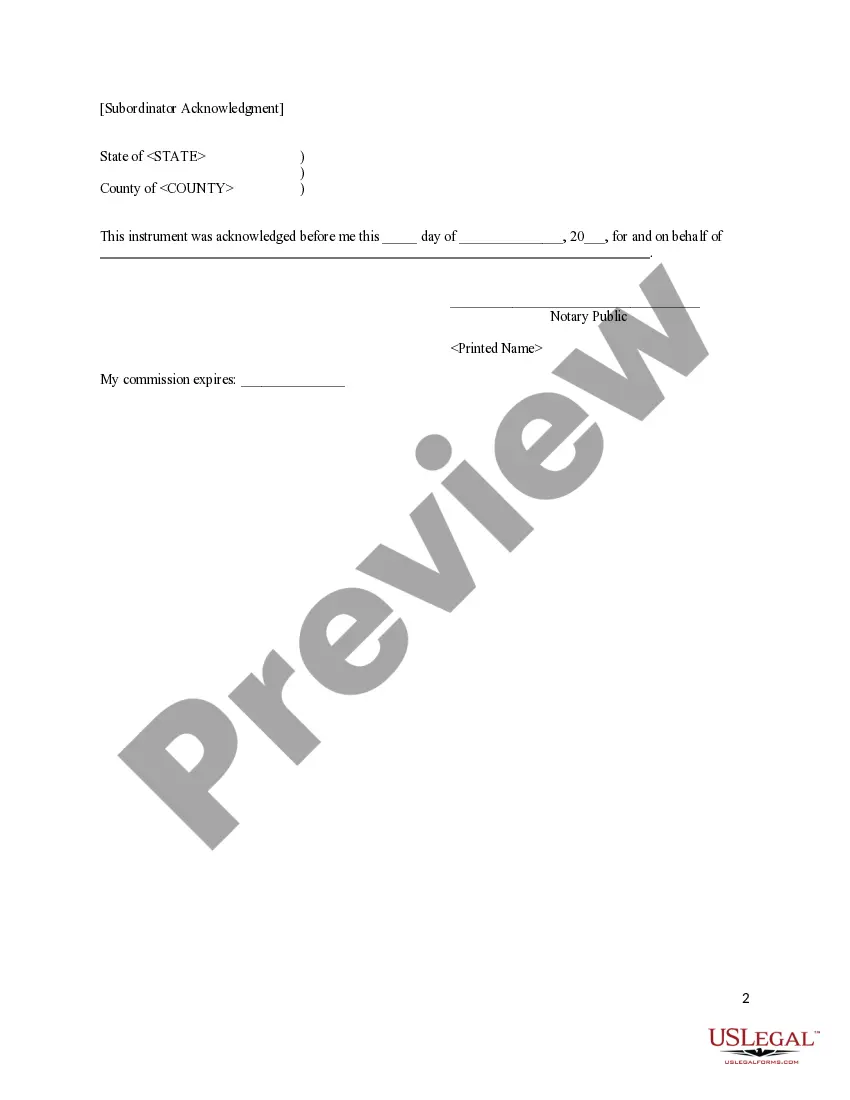
- Notary acknowledgment: Provides a space for notarization if required.
When to use this form
This form is typically used when a borrower seeks additional financing secured by real property already subject to liens. It's also essential when reordering the priority of payments among creditors, especially during circumstances like refinancing or addressing potential foreclosure issues. Using this form ensures that all parties understand the repayment hierarchy clearly.
Who should use this form
- Borrowers seeking to refinance or obtain additional loans with existing secured property.
- Creditors or lien holders wishing to clarify the repayment order for collateralized debts.
- Real estate professionals assisting clients in restructuring loans or securities.
- Legal representatives involved in transactions requiring clarity on lien priorities.
How to complete this form
- Identify the parties: Enter the names and addresses of the Subordinator and new Lender, and the Borrower.
- Specify the property: Provide details about the real estate serving as collateral.
- Enter dates: Fill in the relevant dates for the agreement, including the signing date.
- Review consideration: Ensure mutual benefits and obligations are clearly stated.
- Sign and notarize: Both parties should sign the agreement and ensure it is notarized if required.
Does this document require notarization?
Yes, this form must be notarized to be legally valid. Notarization provides an essential safeguard by verifying the identity of the signers and ensuring their awareness of the agreement's contents. US Legal Forms offers integrated online notarization, allowing you to complete this step securely via a video call without the need for travel.
Get your form ready online
Our built-in tools help you complete, sign, share, and store your documents in one place.
Make edits, fill in missing information, and update formatting in US Legal Forms—just like you would in MS Word.
Download a copy, print it, send it by email, or mail it via USPS—whatever works best for your next step.
Sign and collect signatures with our SignNow integration. Send to multiple recipients, set reminders, and more. Go Premium to unlock E-Sign.
If this form requires notarization, complete it online through a secure video call—no need to meet a notary in person or wait for an appointment.
We protect your documents and personal data by following strict security and privacy standards.

Make edits, fill in missing information, and update formatting in US Legal Forms—just like you would in MS Word.

Download a copy, print it, send it by email, or mail it via USPS—whatever works best for your next step.

Sign and collect signatures with our SignNow integration. Send to multiple recipients, set reminders, and more. Go Premium to unlock E-Sign.

If this form requires notarization, complete it online through a secure video call—no need to meet a notary in person or wait for an appointment.

We protect your documents and personal data by following strict security and privacy standards.
Typical mistakes to avoid
- Failing to accurately identify all parties involved in the agreement.
- Omitting necessary property descriptions which could lead to enforceability issues.
- Not obtaining required notarization where applicable.
- Leaving out the consideration clause or not clearly defining its terms.
- Not completing the form in compliance with state-specific requirements.
Why use this form online
- Instant access to professionally drafted templates that save time.
- Easy customization options to fit specific transaction needs.
- Reliable legal forms that ensure compliance with current laws.
- Downloadable formats that allow for immediate use and distribution.
- Convenient online support and resources to assist in the completion process.
Looking for another form?
Form popularity
FAQ
A mortgage subordination refers to the order the outstanding liens on your property get repaid if you stop making your mortgage payments. For example, your first home loan (primary mortgage) is repaid first, with any remaining funds paying off additional liens, including second mortgages, HELOCs and home equity loans.
A subordination agreement is a legal document that establishes one debt as ranking behind another in priority for collecting repayment from a debtor. The priority of debts can become extremely important when a debtor defaults on payments or declares bankruptcy.
Example of a Subordination Agreement A standard subordination agreement covers property owners that take a second mortgage against a property. One loan becomes the subordinated debt, and the other becomes (or remains) the senior debt. Senior debt has higher claim priority than junior debt.
Example of a Subordination Agreement A standard subordination agreement covers property owners that take a second mortgage against a property. One loan becomes the subordinated debt, and the other becomes (or remains) the senior debt. Senior debt has higher claim priority than junior debt.
A subordination agreement is a legal document that establishes one debt or claim as ranking behind another in priority for repayment. The priority of debt repayment can become very important if a company or individual defaults on their debt repayment obligations and declares bankruptcy.
Despite its technical-sounding name, the subordination agreement has one simple purpose. It assigns your new mortgage to first lien position, making it possible to refinance with a home equity loan or line of credit. Signing your agreement is a positive step forward in your refinancing journey.
What Is a Subordination Agreement? A subordination agreement is a legal document that establishes one debt as ranking behind another in priority for collecting repayment from a debtor. The priority of debts can become extremely important when a debtor defaults on their payments or declares bankruptcy.