Subordination Agreement - Real Estate
What this document covers
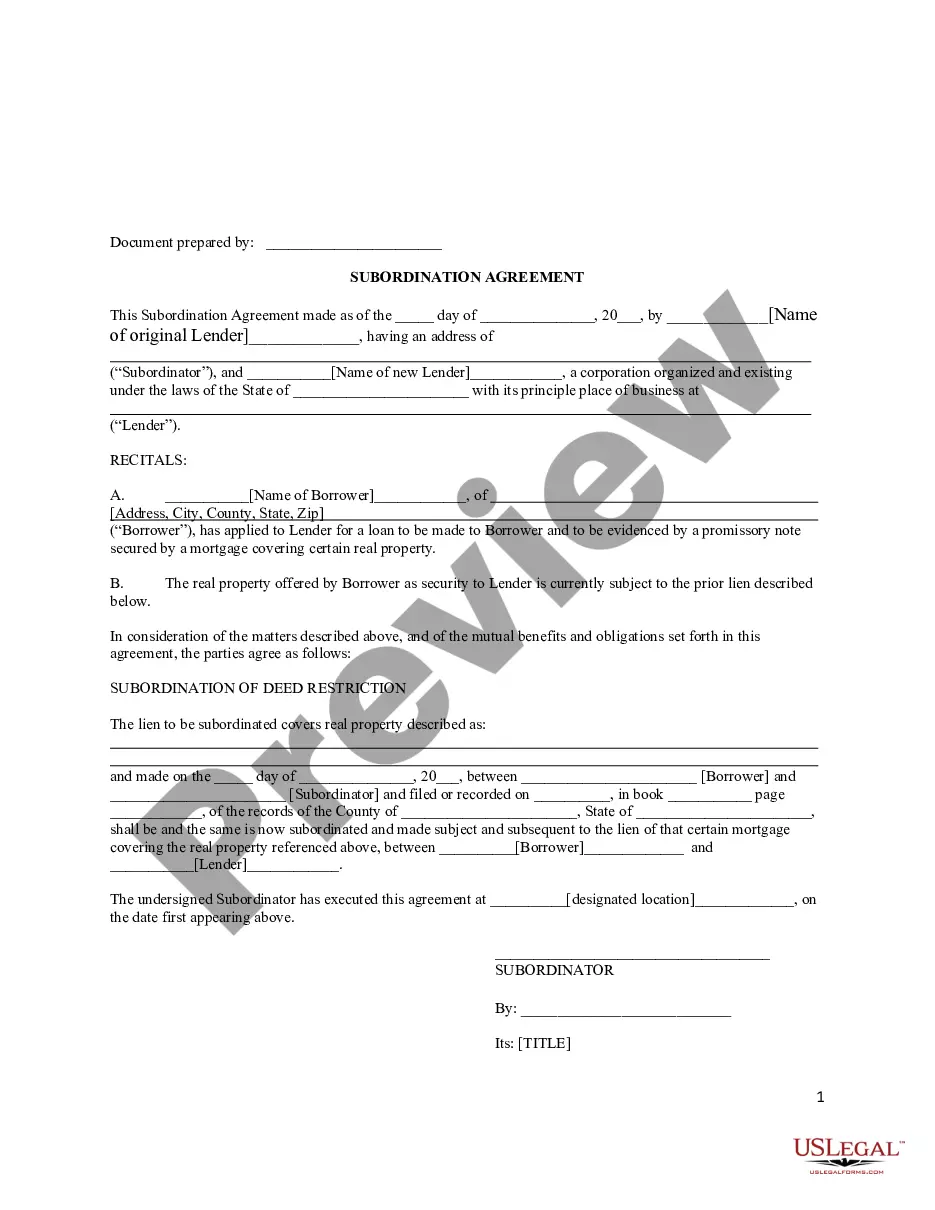
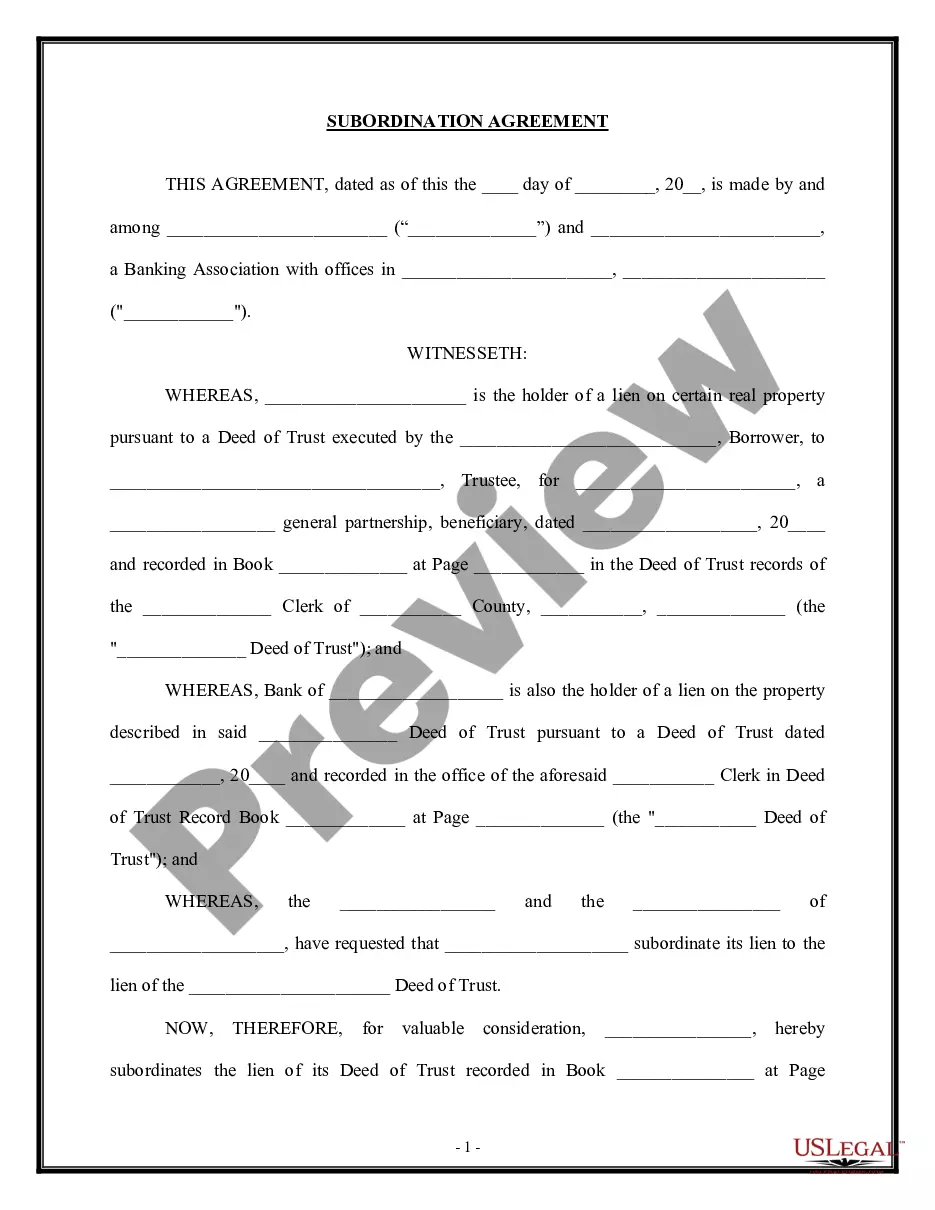
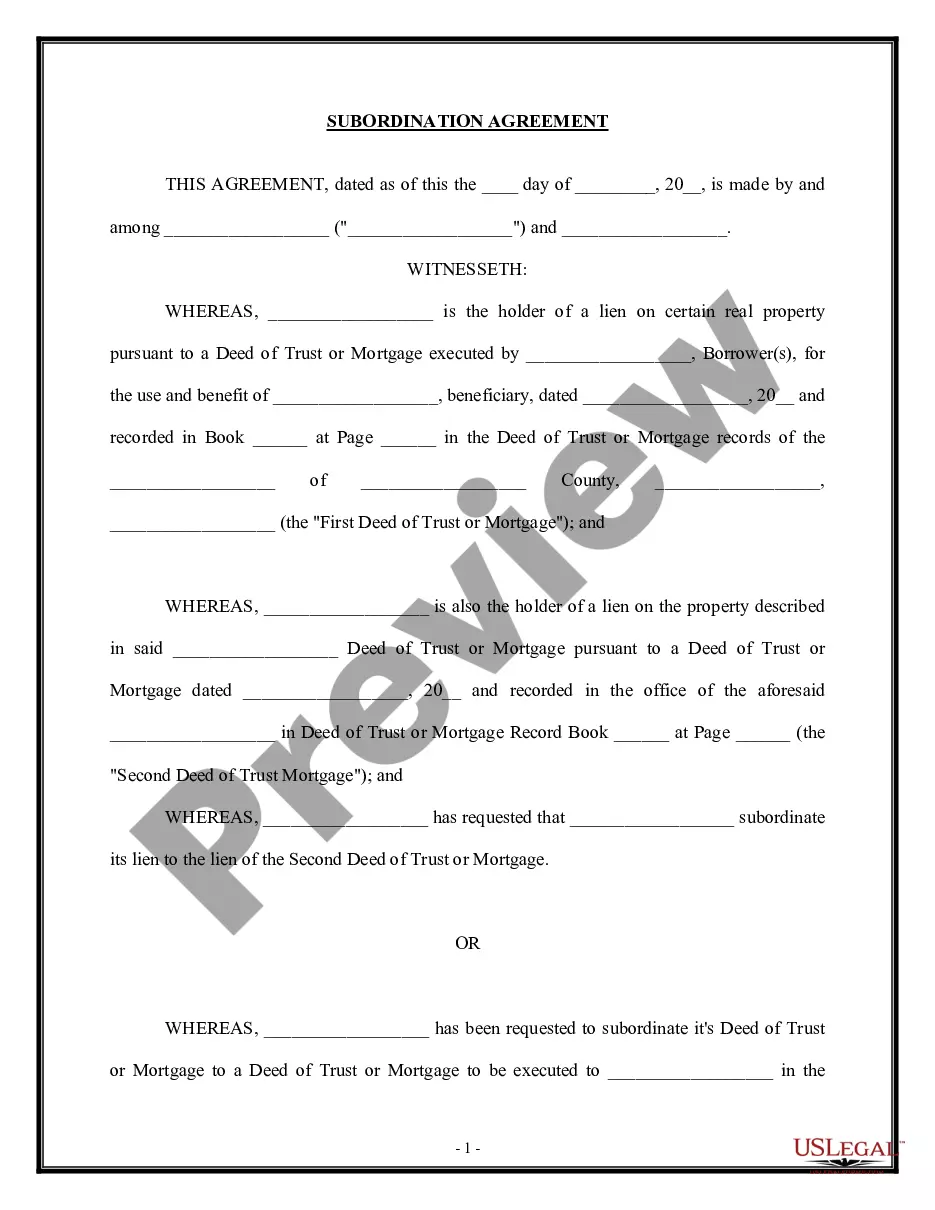
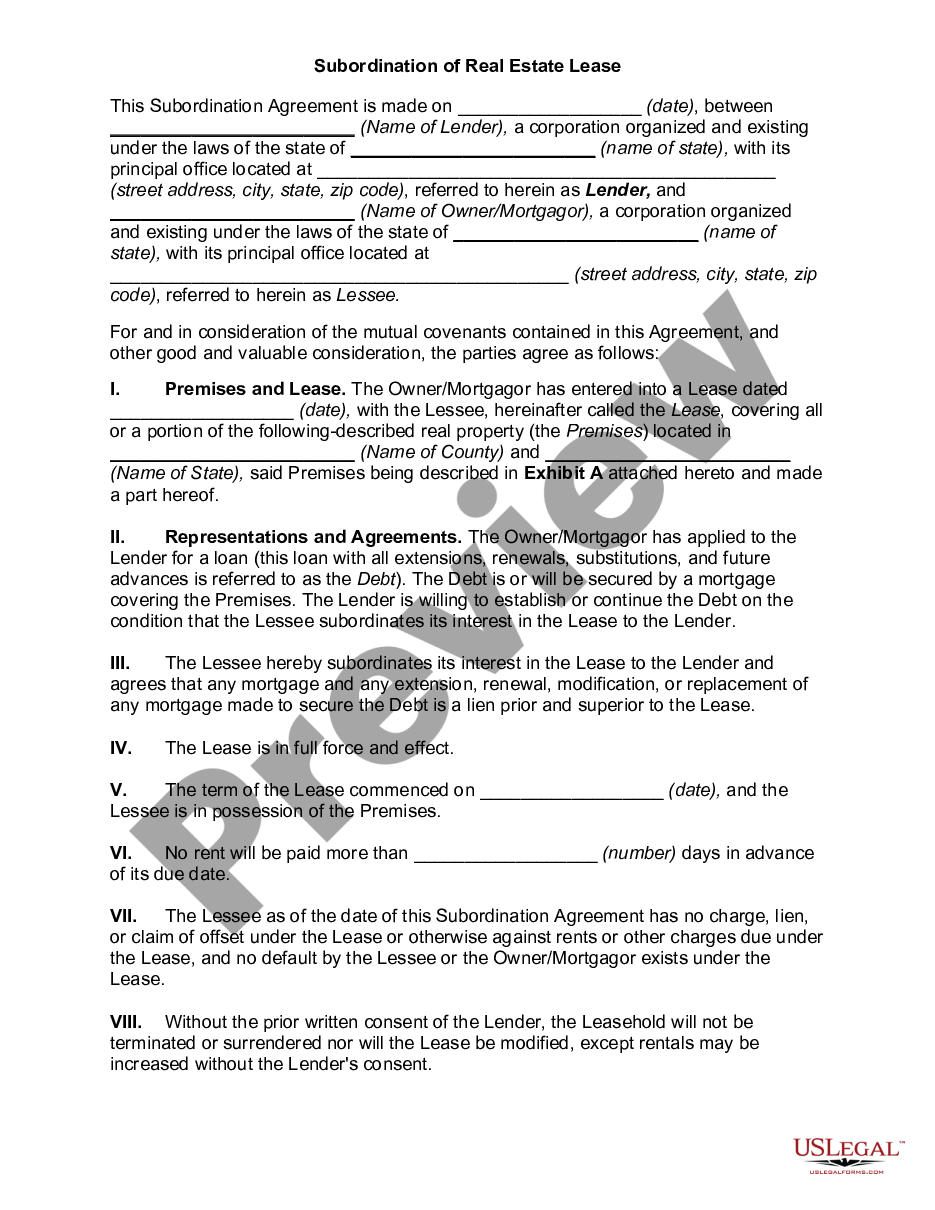
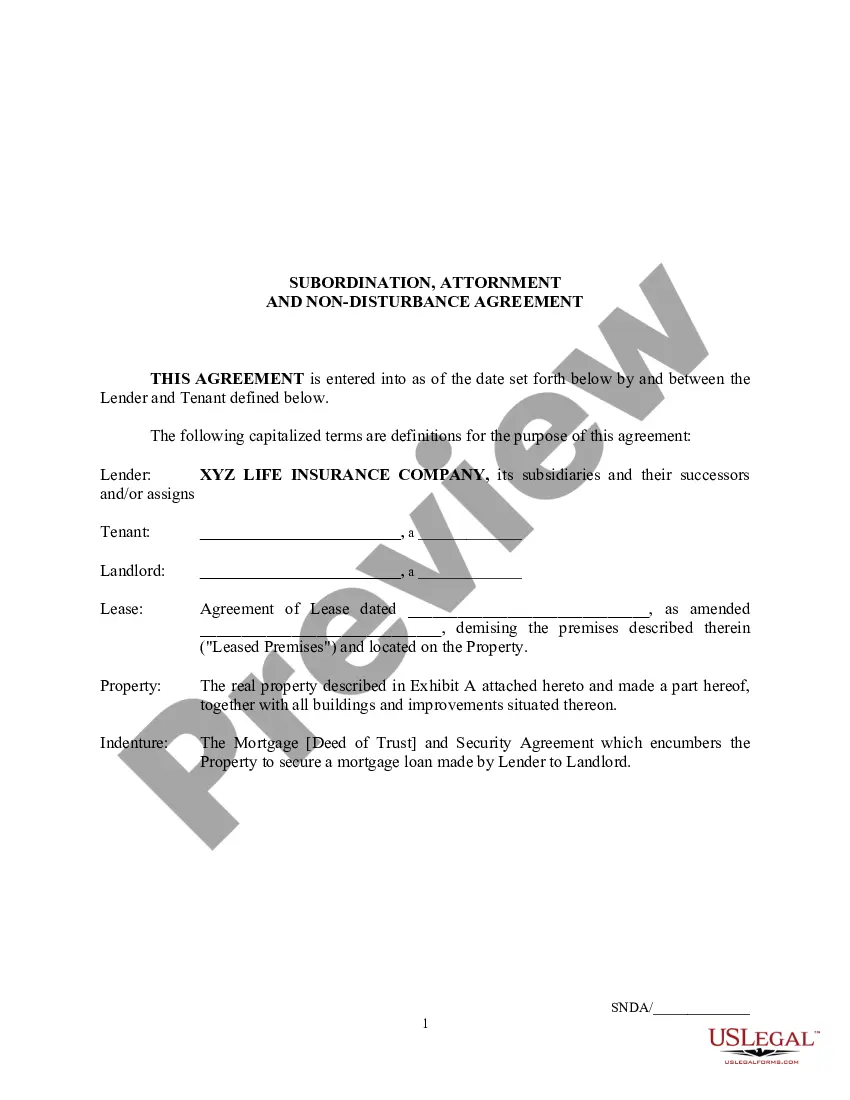
A subordination agreement is a legal document that establishes the order of priority among multiple lien holders regarding property security. Specifically, this agreement allows one creditor to subordinate their lien to another, meaning they agree to wait for payment until the primary creditor has been fully compensated in the event of foreclosure or bankruptcy. This form is essential for managing collateralized debts in real estate, ensuring that creditors understand their rights and order of repayment. Unlike standard loan agreements or mortgages, a subordination agreement specifically addresses the ranking of liens on the same property.
Key parts of this document
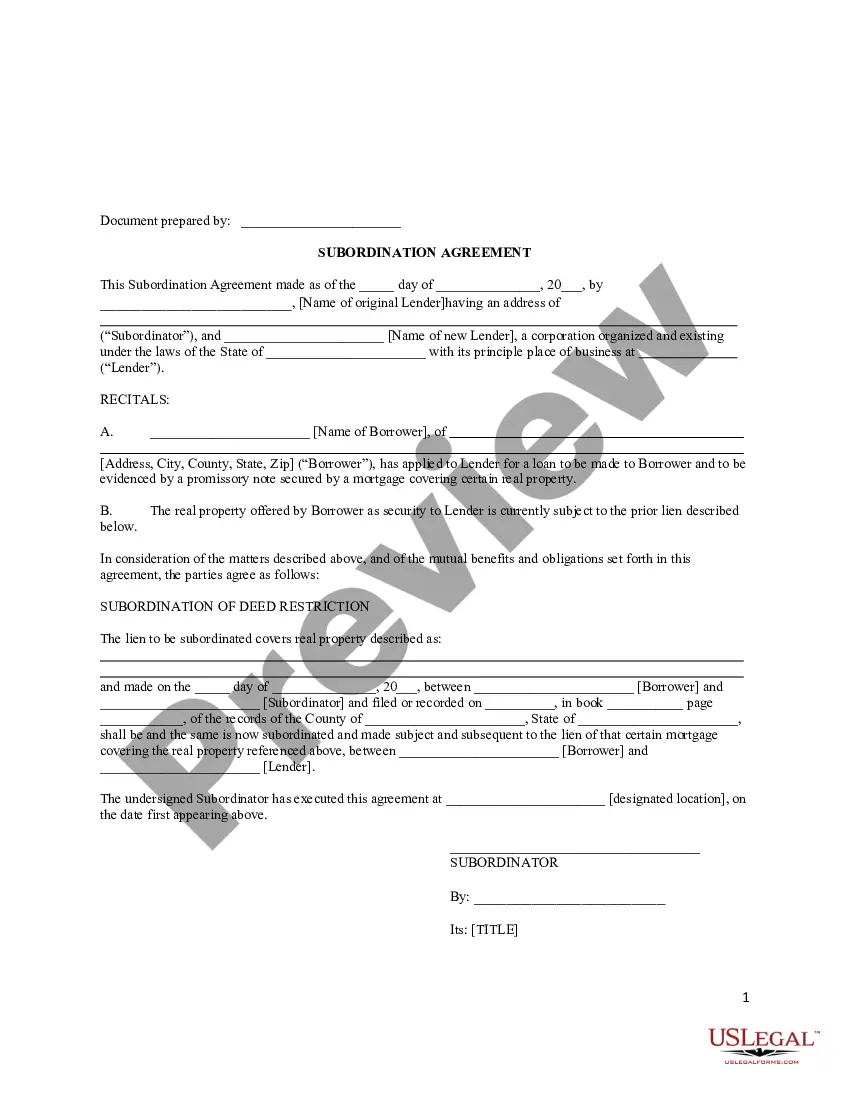
- Date of the agreement
- Identification of parties involved (Subordinator and Lender)
- Description of collateral property
- Details of the liens being subordinated
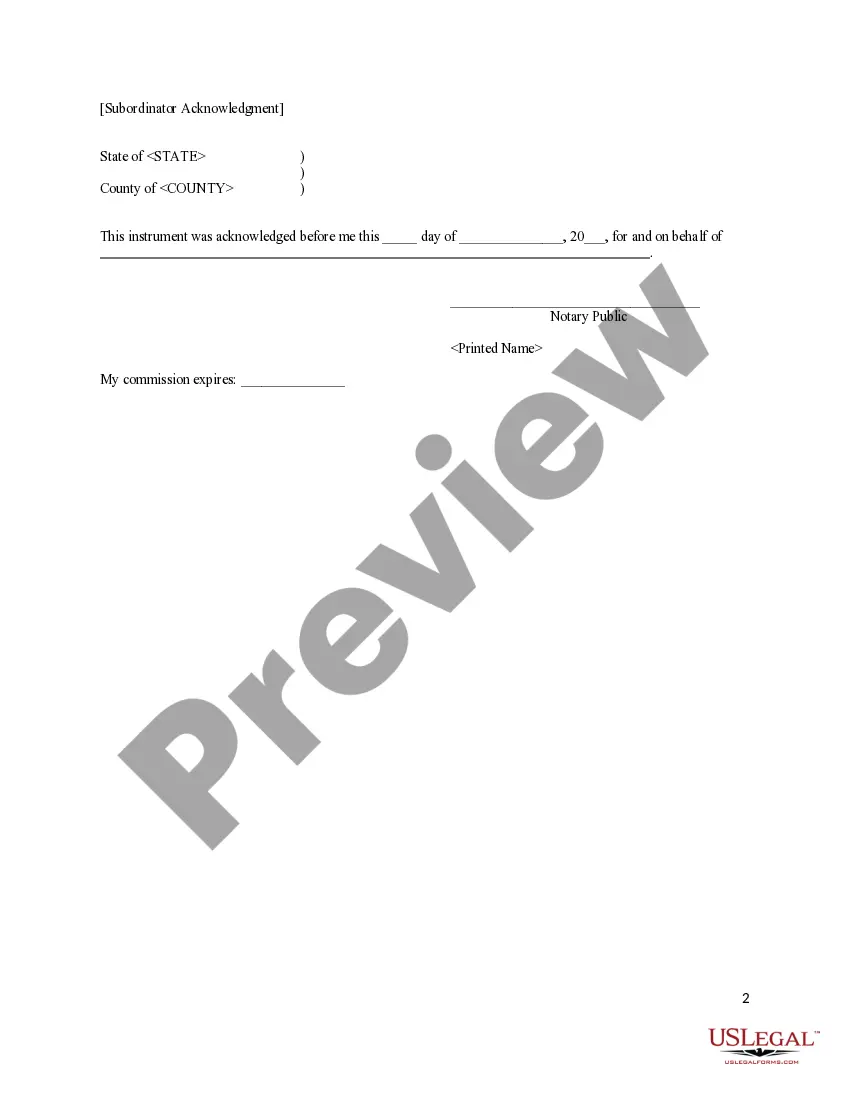
- Signatures and notary acknowledgment
When to use this document
This form should be used when a borrower wishes to refinance or obtain a new loan secured by a property that is already subject to an existing lien. It is particularly useful in situations where multiple loans are taken against the same property, and the lenders need to agree on the priority of repayments in case of default. For instance, if a property owner wants to take a second mortgage while an existing first mortgage is already in place, a subordination agreement clarifies the repayment order between the two lenders.
Who needs this form
- Homeowners looking to refinance or consolidate debts
- Lenders providing new loans secured by real estate
- Creditors needing to establish lien priority
- Real estate investors managing multiple properties with different financing arrangements
How to prepare this document
- Identify all parties involved: Subordinator, Lender, and Borrower.
- Specify the date of the agreement.
- Describe the real property that is being used as collateral.
- Detail the existing lien that is being subordinated.
- Obtain necessary signatures from all parties and ensure proper notarization.
Is notarization required?
Yes, this form must be notarized to be legally valid. Notarization adds an additional layer of authenticity to the agreement, confirming the identities of the signatories and the voluntary nature of their signatures. US Legal Forms offers integrated online notarization services that allow users to complete this process conveniently through secure video calls, 24/7 availability, and legal equivalenceâeliminating the need for physical travel.
Get your form ready online
Our built-in tools help you complete, sign, share, and store your documents in one place.
Make edits, fill in missing information, and update formatting in US Legal Forms—just like you would in MS Word.
Download a copy, print it, send it by email, or mail it via USPS—whatever works best for your next step.
Sign and collect signatures with our SignNow integration. Send to multiple recipients, set reminders, and more. Go Premium to unlock E-Sign.
If this form requires notarization, complete it online through a secure video call—no need to meet a notary in person or wait for an appointment.
We protect your documents and personal data by following strict security and privacy standards.

Make edits, fill in missing information, and update formatting in US Legal Forms—just like you would in MS Word.

Download a copy, print it, send it by email, or mail it via USPS—whatever works best for your next step.

Sign and collect signatures with our SignNow integration. Send to multiple recipients, set reminders, and more. Go Premium to unlock E-Sign.

If this form requires notarization, complete it online through a secure video call—no need to meet a notary in person or wait for an appointment.

We protect your documents and personal data by following strict security and privacy standards.
Typical mistakes to avoid
- Failing to correctly identify all parties involved.
- Omitting critical property details or lien descriptions.
- Not obtaining signatures from all necessary parties.
- Neglecting to seek proper notarization when required.
- Using outdated or incorrect versions of the form.
Advantages of online completion
- Convenient access to legally vetted forms that are easy to download.
- Editability to customize the form according to specific needs.
- Time-saving, as users can fill out and complete forms from home.
- Reliability of templates prepared by licensed attorneys.
Looking for another form?
Form popularity
FAQ
A mortgage subordination refers to the order the outstanding liens on your property get repaid if you stop making your mortgage payments. For example, your first home loan (primary mortgage) is repaid first, with any remaining funds paying off additional liens, including second mortgages, HELOCs and home equity loans.
Given these complications of refinancing, subordination agreements are relatively common practice in the lending industry. It benefits the homeowner by providing a lower interest on their property and also provides assurance to the primary lender that all debts will be repaid.
Subordination agreements are used to legally establish the order in which debts are to be repaid in the event of a foreclosure or bankruptcy. In return for the agreement, the lender with the subordinated debt will be compensated in some manner for the additional risk.
A mortgage subordination refers to the order the outstanding liens on your property get repaid if you stop making your mortgage payments. For example, your first home loan (primary mortgage) is repaid first, with any remaining funds paying off additional liens, including second mortgages, HELOCs and home equity loans.
Subordination agreement is a contract which guarantees senior debt will be paid before other ?subordinated? debt if the debtor becomes bankrupt.
Subordination agreements are used to legally establish the order in which debts are to be repaid in the event of a foreclosure or bankruptcy. In return for the agreement, the lender with the subordinated debt will be compensated in some manner for the additional risk.
Example of a Subordination Agreement A standard subordination agreement covers property owners that take a second mortgage against a property. One loan becomes the subordinated debt, and the other becomes (or remains) the senior debt. Senior debt has higher claim priority than junior debt.
The primary lender stands to benefit from a subordination clause more than other parties. If the borrower can't repay the debt, then the primary lender is guaranteed first rights to repayment.