Agreement with Home Inspector
Understanding this form
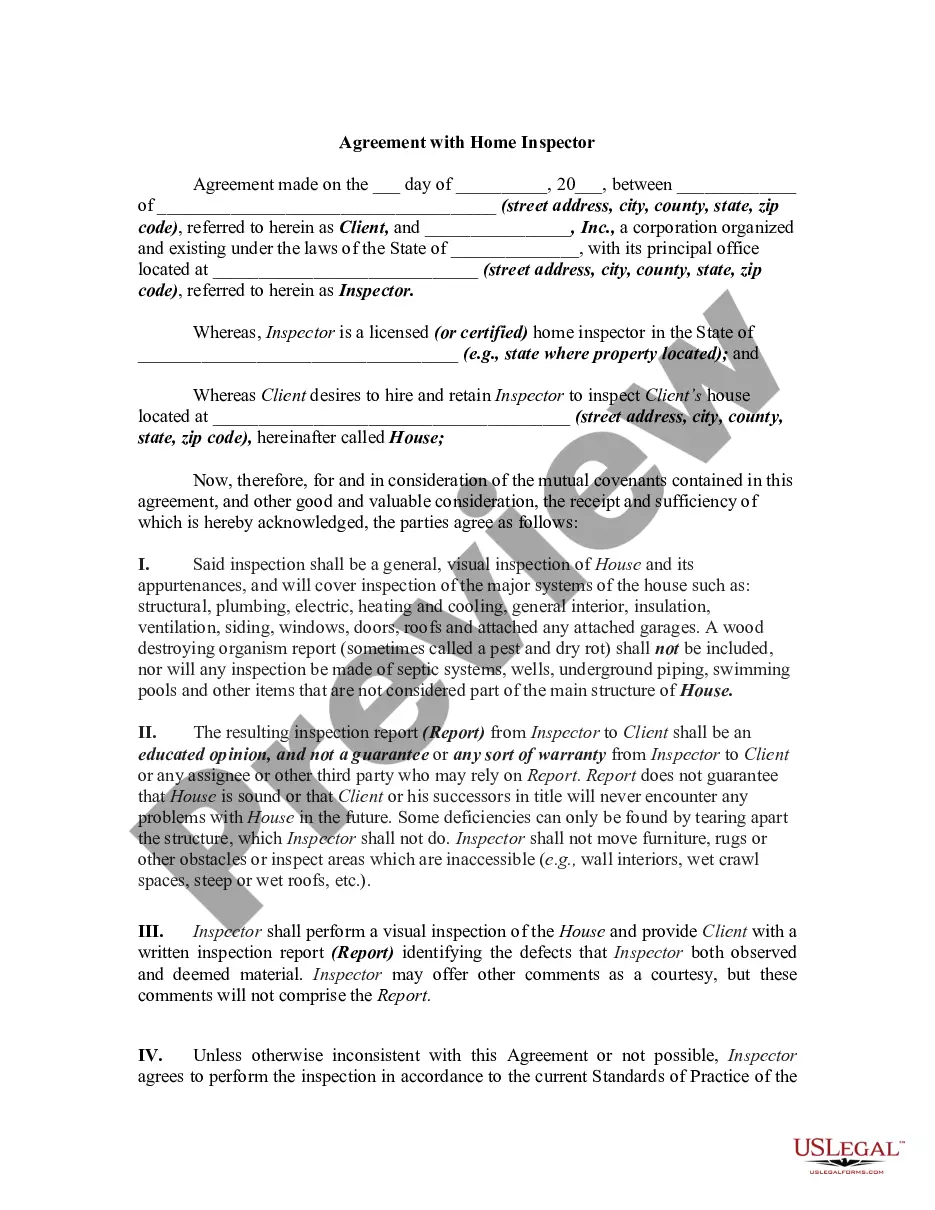
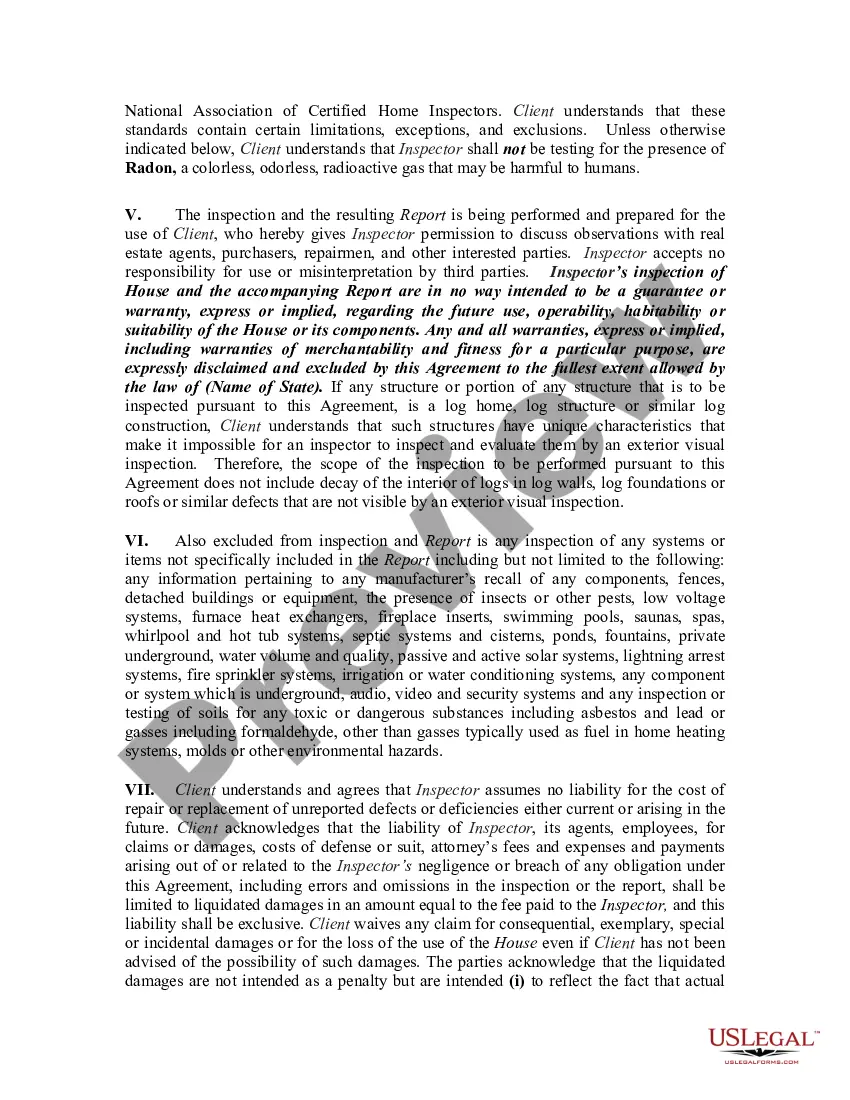
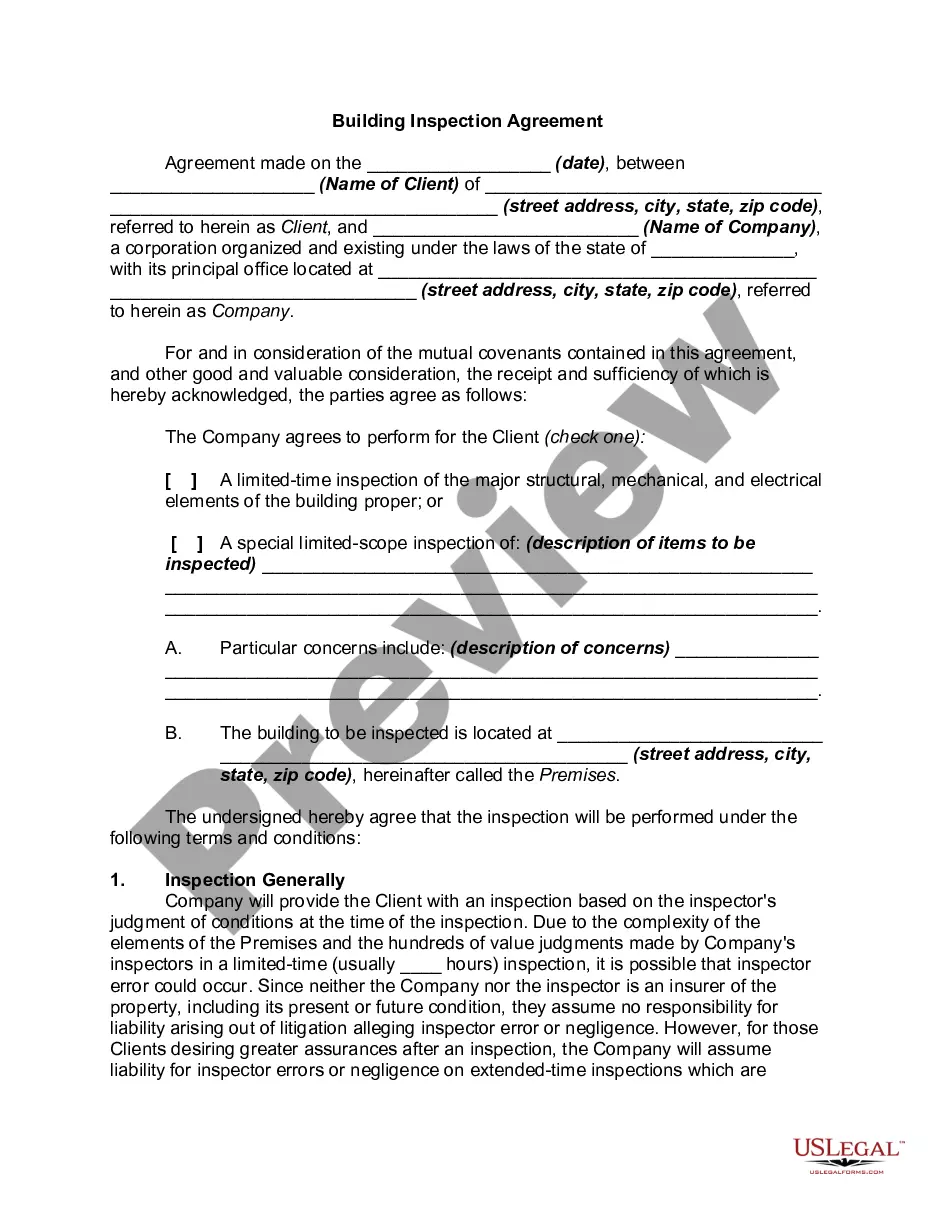
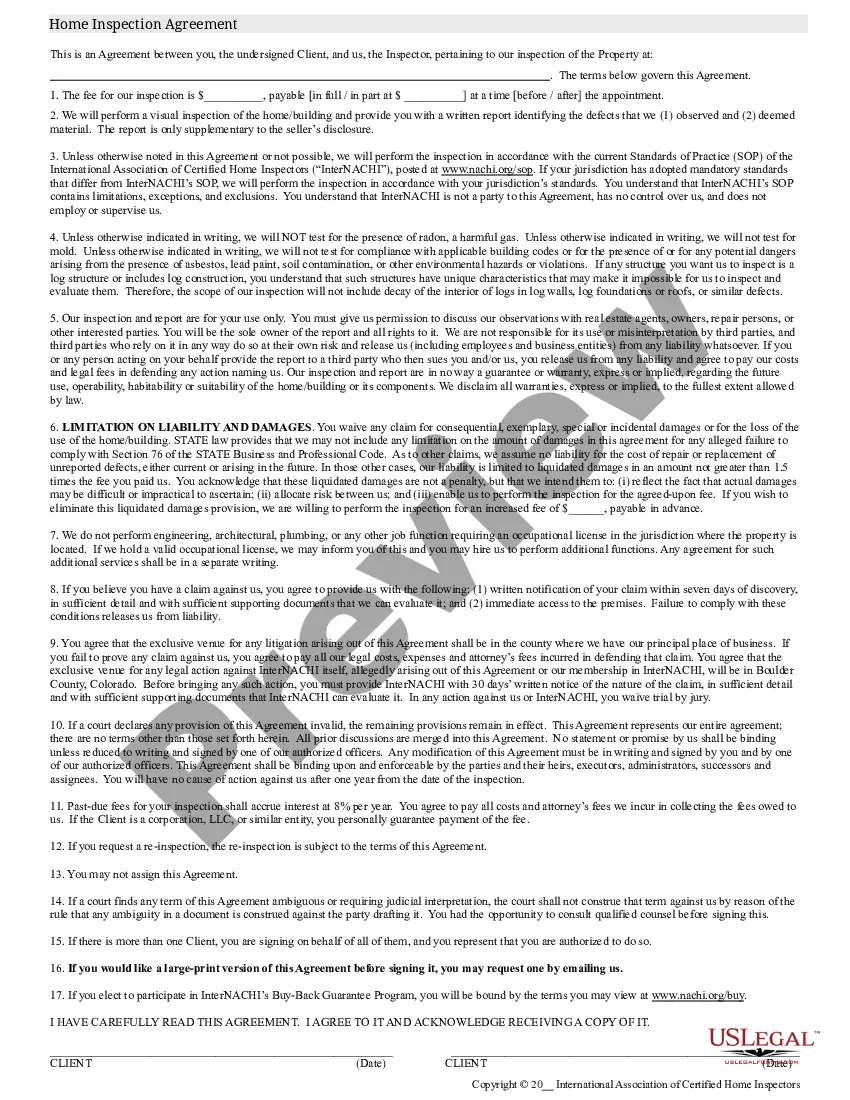
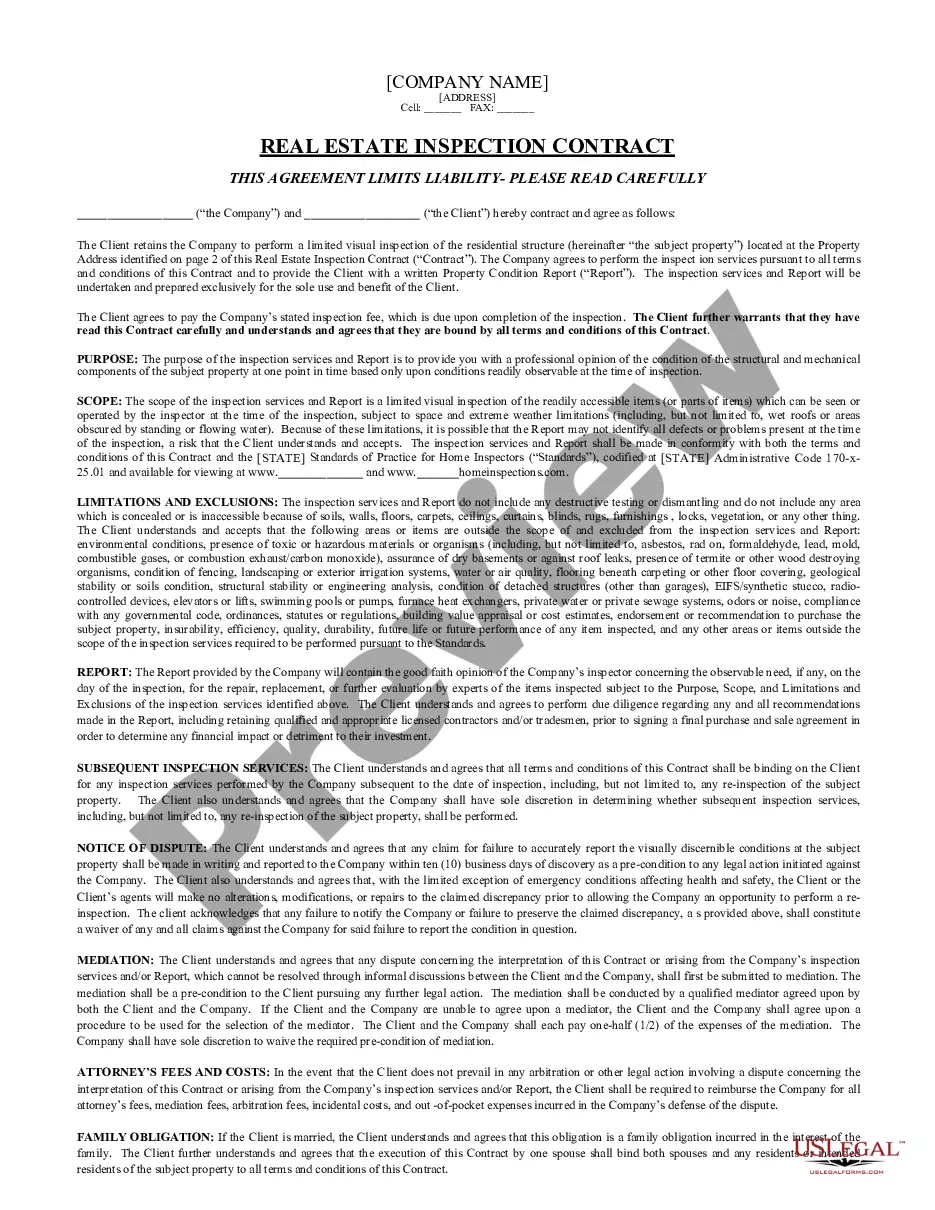
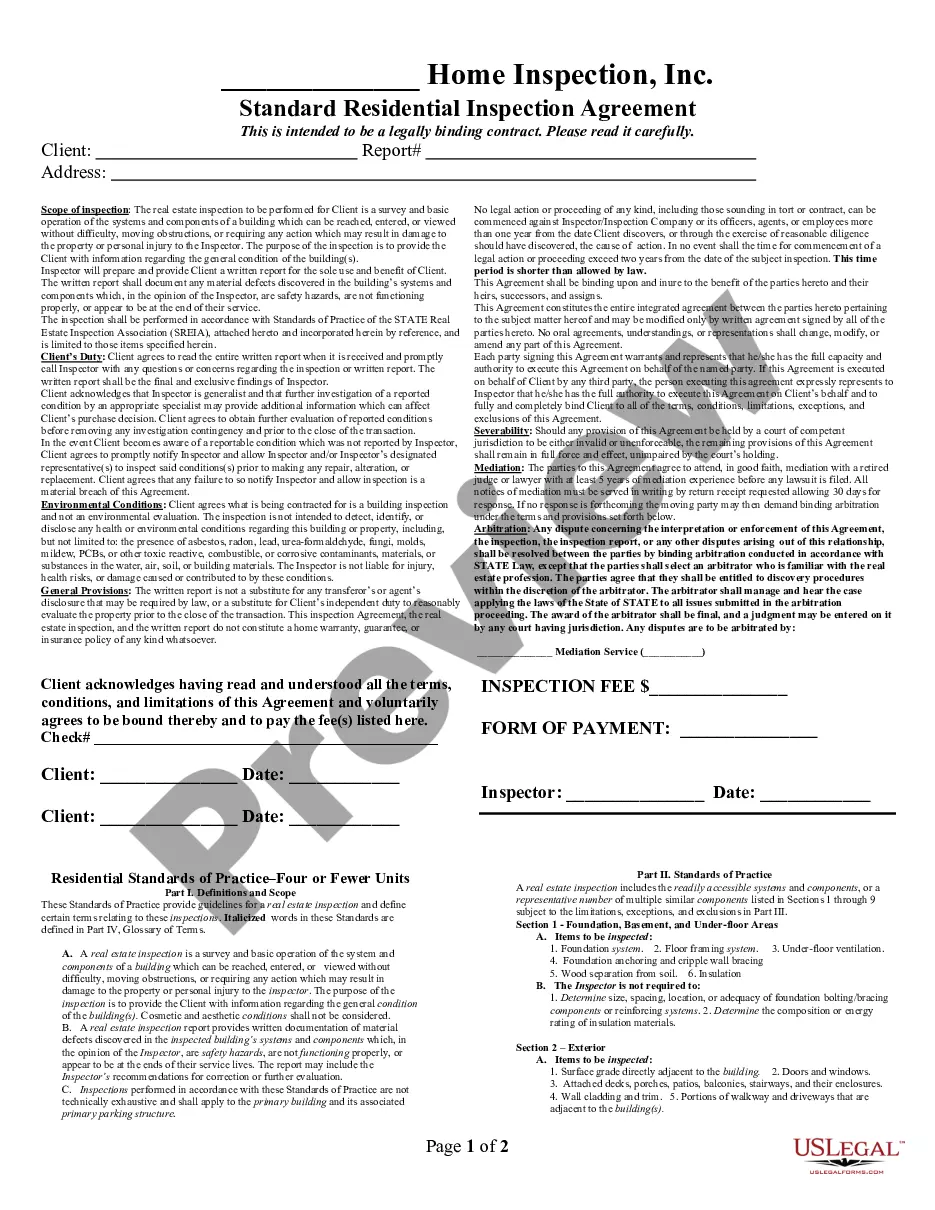
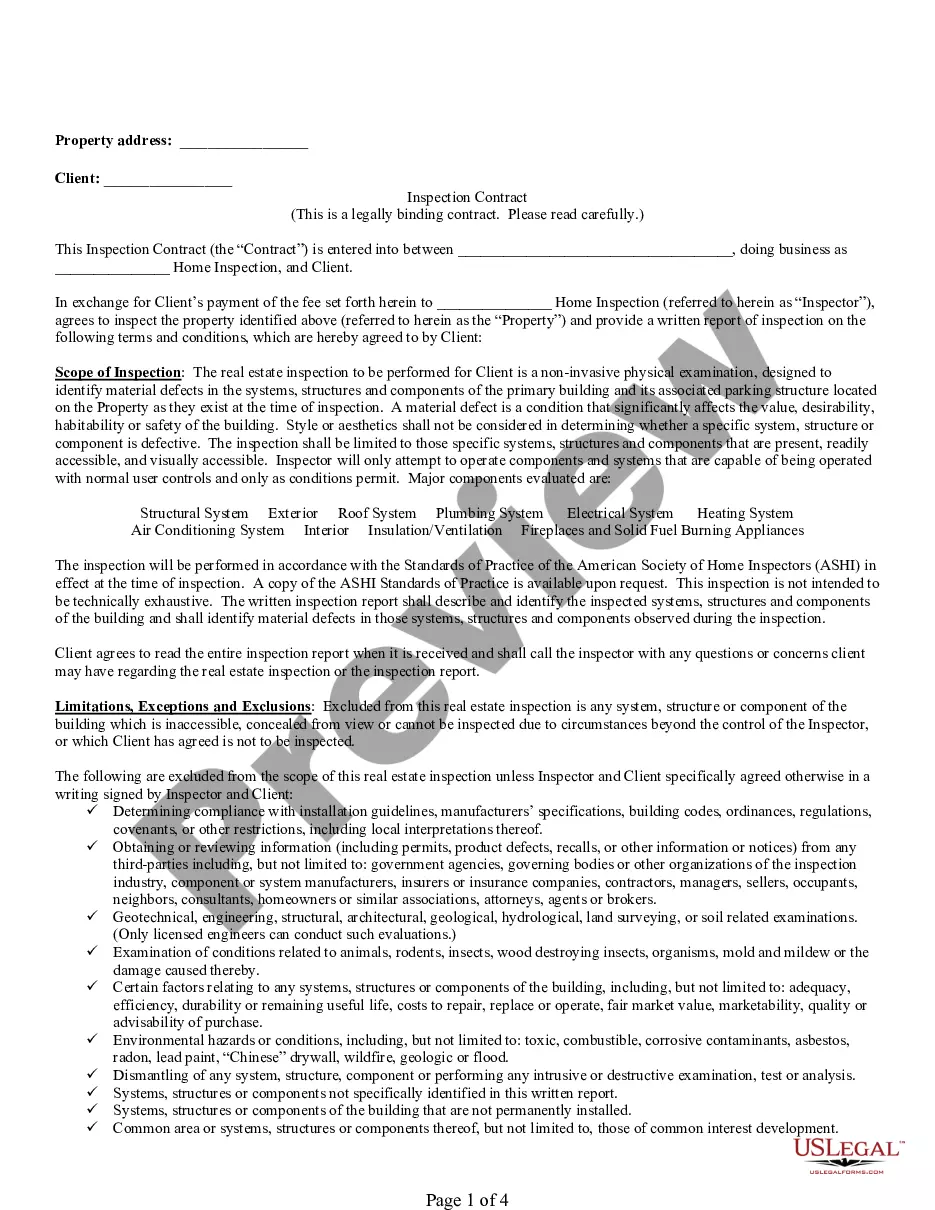
The Agreement with Home Inspector is a legal document used to formalize the relationship between a client and a home inspector. This agreement outlines the specifics of the home inspection process, detailing what will be inspected, limitations of the inspection, and the responsibilities of both parties. Unlike informal agreements or verbal understandings, this written document serves as a clear reference for what to expect from the inspection, ensuring transparency and mutual understanding.
Key parts of this document
- Identification of the parties involved, namely the Client and the Inspector.
- Detailed description of the home inspection process and what it covers.
- Clarification that the inspection report represents an educated opinion, not a guarantee.
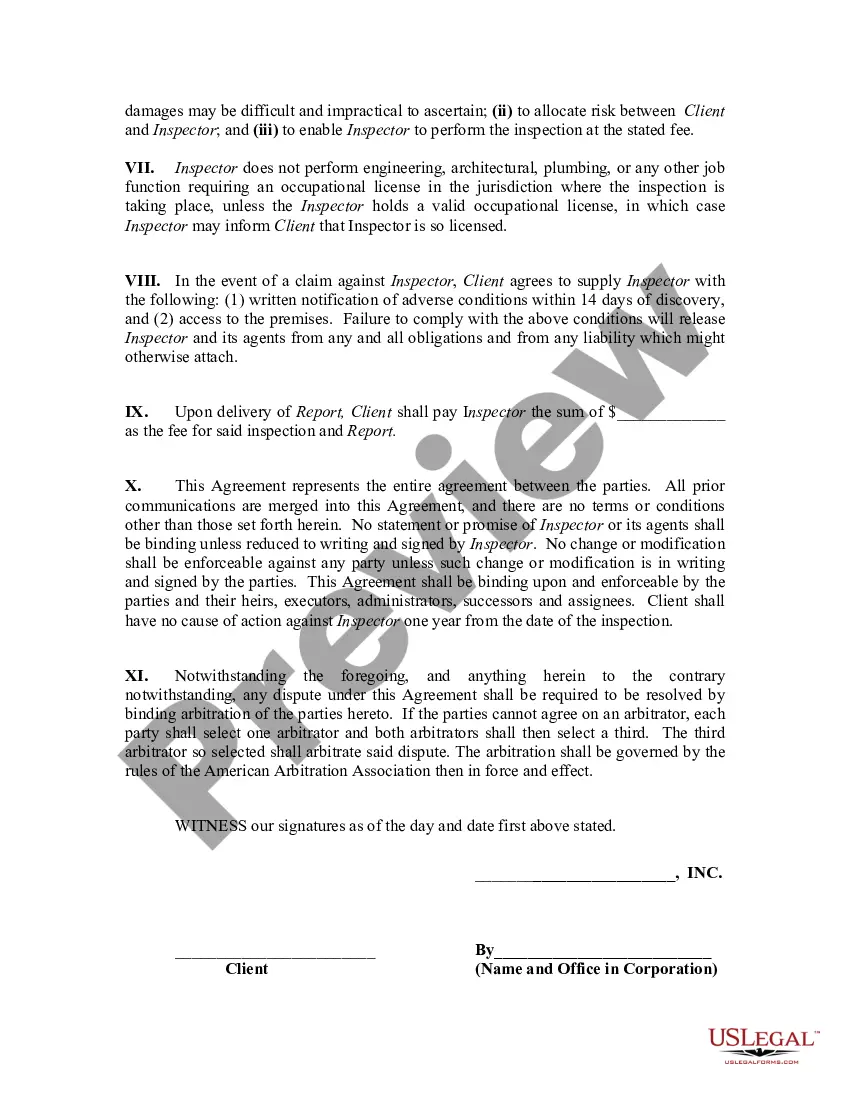
- Limitations of liability for the Inspector, including exclusions from the scope of the report.
- Terms regarding the payment for the inspection and report delivery.
- Provisions for dispute resolution through binding arbitration.
When to use this form
This form should be used whenever a client wishes to hire a licensed home inspector to evaluate a property. It is particularly useful in real estate transactions, where a thorough inspection is essential for understanding the condition of a house prior to purchase. Additionally, clients may seek to have this agreement in place when they want a professional opinion on home maintenance or potential repairs.
Intended users of this form
- Home buyers seeking a comprehensive understanding of a property before purchase.
- Homeowners wanting to assess the condition of their home.
- Real estate agents facilitating property inspections for clients.
- Any individual or business hiring a licensed home inspector.
How to prepare this document
- Identify the parties: Fill in the names and addresses of both the Client and the Inspector.
- Specify the property: Enter the address of the property to be inspected.
- Outline the scope: Describe the areas and systems of the house that will be inspected as per the agreement.
- Enter fees and payment terms for the inspection and report.
- Sign and date the agreement to finalize it.
Is notarization required?
This form does not typically require notarization to be legally valid. However, some jurisdictions or document types may still require it. US Legal Forms provides secure online notarization powered by Notarize, available 24/7 for added convenience.
Get your form ready online
Our built-in tools help you complete, sign, share, and store your documents in one place.
Make edits, fill in missing information, and update formatting in US Legal Forms—just like you would in MS Word.
Download a copy, print it, send it by email, or mail it via USPS—whatever works best for your next step.
Sign and collect signatures with our SignNow integration. Send to multiple recipients, set reminders, and more. Go Premium to unlock E-Sign.
If this form requires notarization, complete it online through a secure video call—no need to meet a notary in person or wait for an appointment.
We protect your documents and personal data by following strict security and privacy standards.

Make edits, fill in missing information, and update formatting in US Legal Forms—just like you would in MS Word.

Download a copy, print it, send it by email, or mail it via USPS—whatever works best for your next step.

Sign and collect signatures with our SignNow integration. Send to multiple recipients, set reminders, and more. Go Premium to unlock E-Sign.

If this form requires notarization, complete it online through a secure video call—no need to meet a notary in person or wait for an appointment.

We protect your documents and personal data by following strict security and privacy standards.
Common mistakes
- Not clearly identifying the property to be inspected, leading to confusion.
- Failing to discuss exclusions in the report that could lead to misunderstandings.
- Not understanding the limitations of the inspection process before signing.
Benefits of completing this form online
- Convenience of completing the agreement from home, at any time.
- Editable templates that allow customization to fit specific needs.
- Access to reliable legal language drafted by professionals ensures clarity and compliance.
Legal use & context
- The agreement establishes clear expectations to protect both the client and the inspector.
- The limitations of liability help prevent future disputes related to unreported issues.
- The arbitration clause provides an alternative to litigation, making dispute resolution more efficient.
Summary of main points
- Use this agreement to manage your relationship with a home inspector effectively.
- Clearly understand what is included and excluded in the inspection.
- Ensure both parties sign the document for it to be legally binding.
Looking for another form?
Form popularity
FAQ
Problem #1: Rundown roofing. Asphalt shingle roofs last 15 to 20 years. Problem #2: Drainage issues. Problem #3: Faulty foundation. Problem #4: Plumbing problems. Problem #5: Pest infestations. Problem #6: Hidden mold. Problem #7: Failing heating systems. Problem#8: Electrical wiring.
A home inspector will look at things like a home's foundation, structural components, roof, HVAC, plumbing, and electrical systems, then provide a written home inspection report with results. A home inspection generally takes two to four hours, but may take more time depending on the size of the house.
The post-home inspection negotiation process can be a fraught time for both buyers and sellers.As a general rule of thumb, don't go into negotiations assuming that you're going to get everything you want. While you certainly might, it's always possible the seller won't be willing to comply with requests.
The standard home inspector's report will cover the condition of the home's heating system; central air conditioning system (temperature permitting); interior plumbing system; electrical system; the roof, attic and visible insulation; walls, ceilings, floors, windows and doors; and the foundation, basement and
It's a good idea for the buyer to attend the home inspection because it'll be the perfect chance to ask the inspector how the home's various systems work and hear about maintenance.There are states where Realtors do not attend the inspection the only person who goes is the inspector, by him or herself.
Determine What You'd Like the Seller to Repair. Discuss What Repairs Are Most Important. Get a Quote for Repairs from a General Contractor. Would you Prefer Money or Repairs? Understand the Seller is Not Obligated to Make Repairs. Approach the Request for Repairs with Gratitude vs.
Determine What You'd Like the Seller to Repair. Discuss What Repairs Are Most Important. Get a Quote for Repairs from a General Contractor. Would you Prefer Money or Repairs? Understand the Seller is Not Obligated to Make Repairs. Approach the Request for Repairs with Gratitude vs.
Potential red flags that can arise during a property home inspection include evidence of water damage, structural defects, problems with the plumbing or electrical systems, as well as mold and pest infestations. The presence of one or more of these issues could be a dealbreaker for some buyers.
A pre-inspection agreement should be signed by clients before a home inspector performs an inspection. A pre-inspection agreement sets clear expectations and protects the home inspector against future claims and disputes. Key elements for pre-inspection agreements are included in the contract.