Building Inspection Agreement
What this document covers
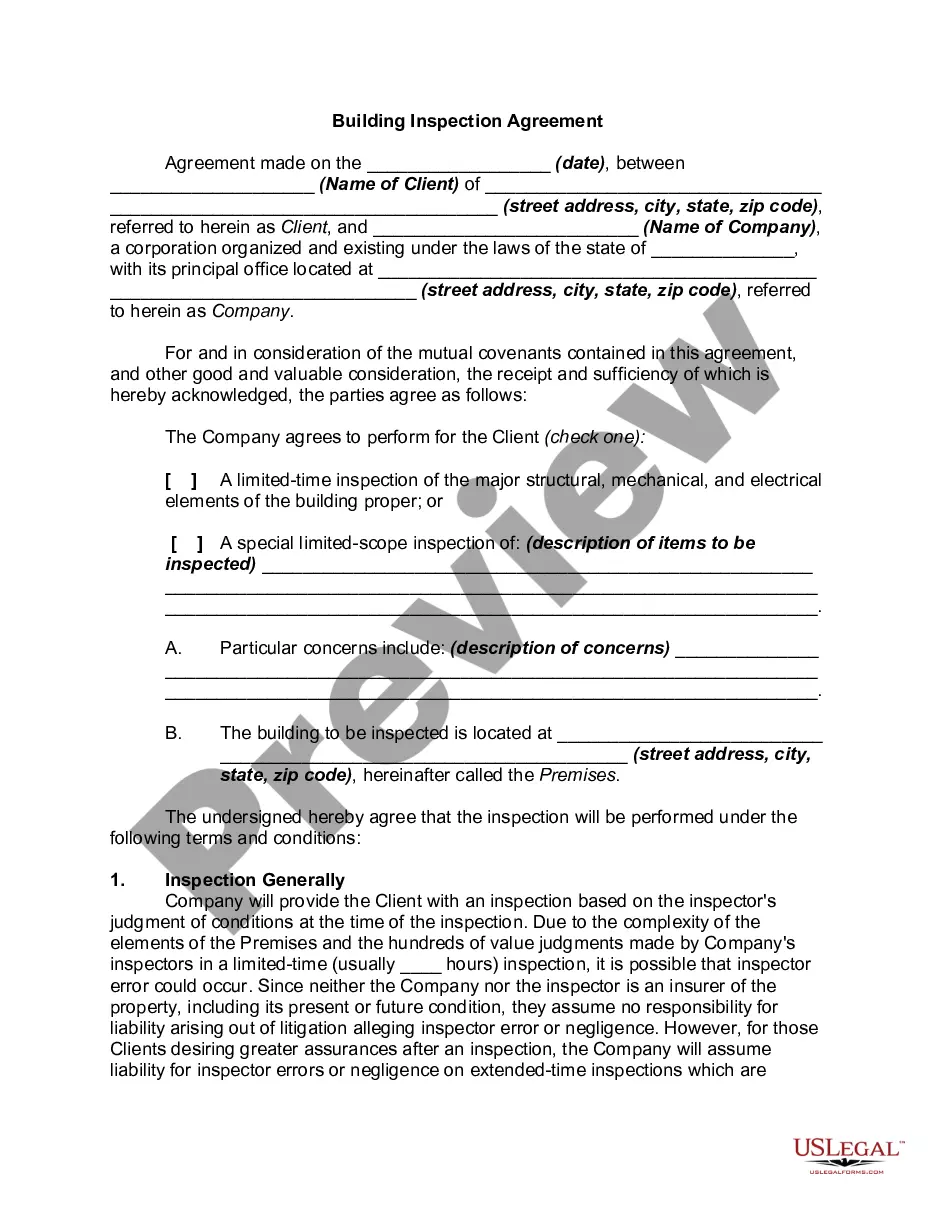
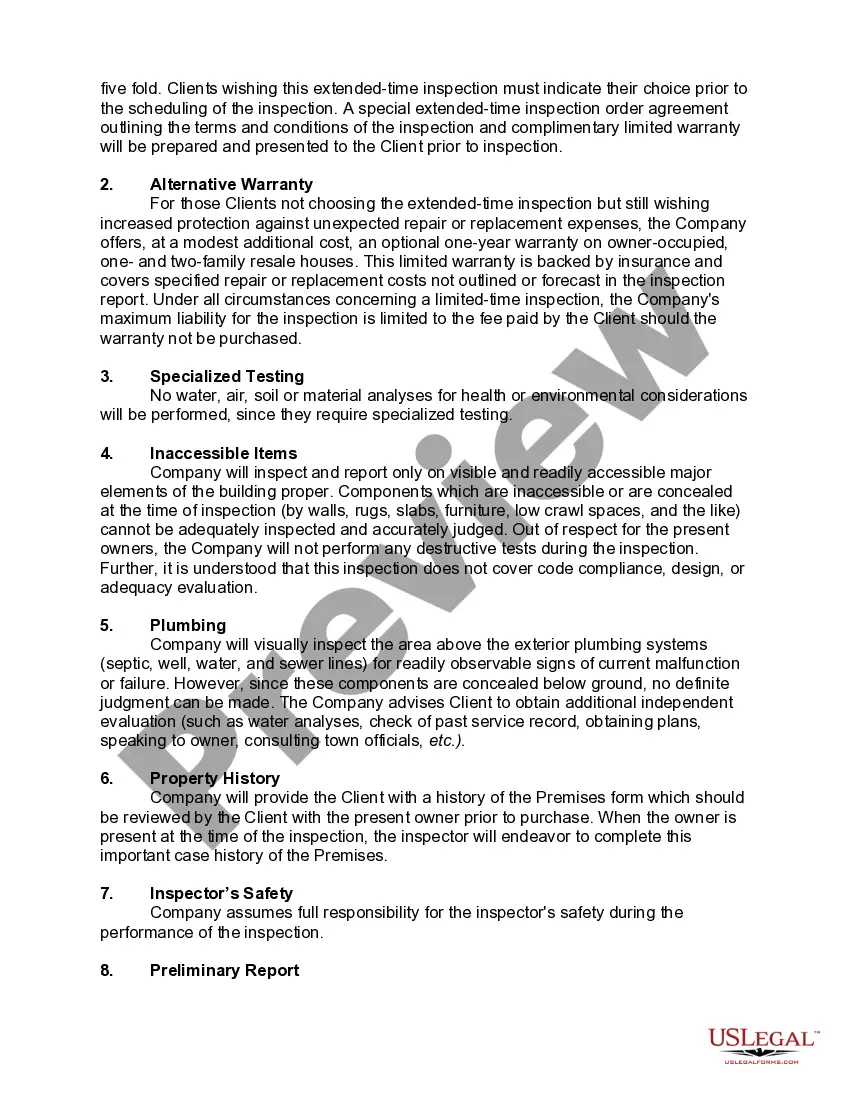
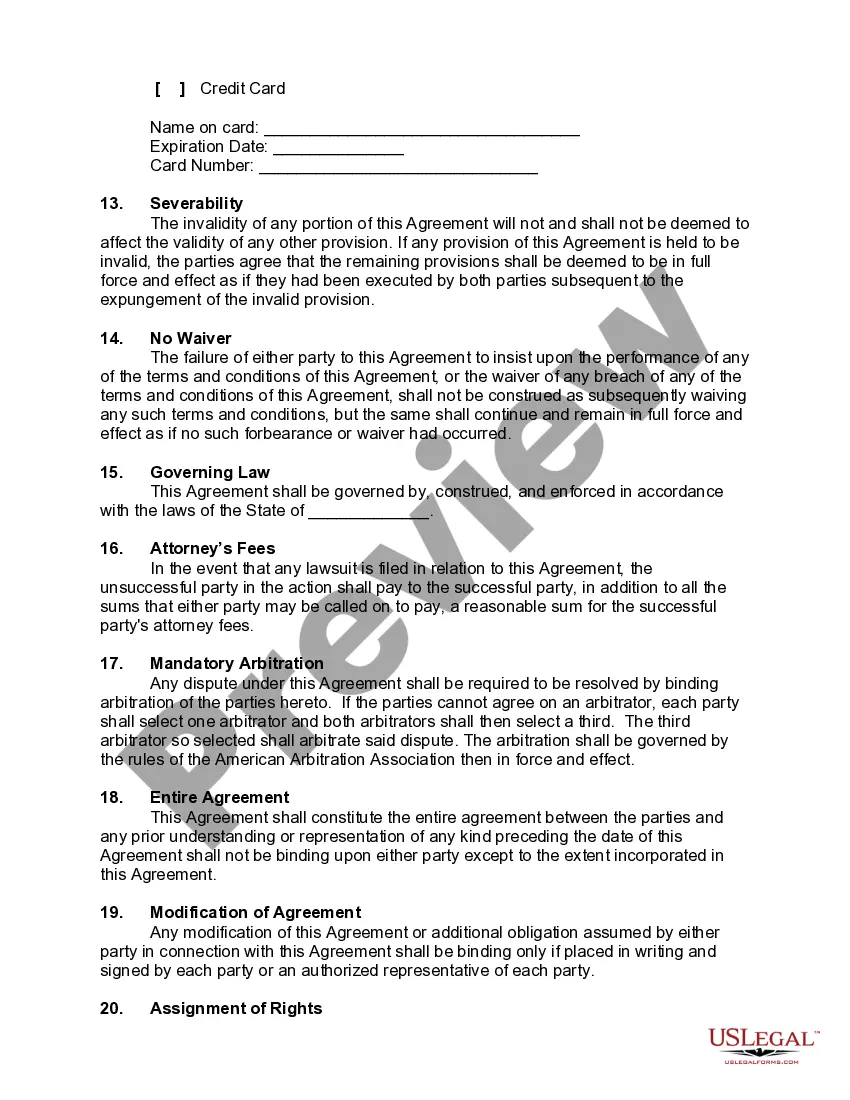
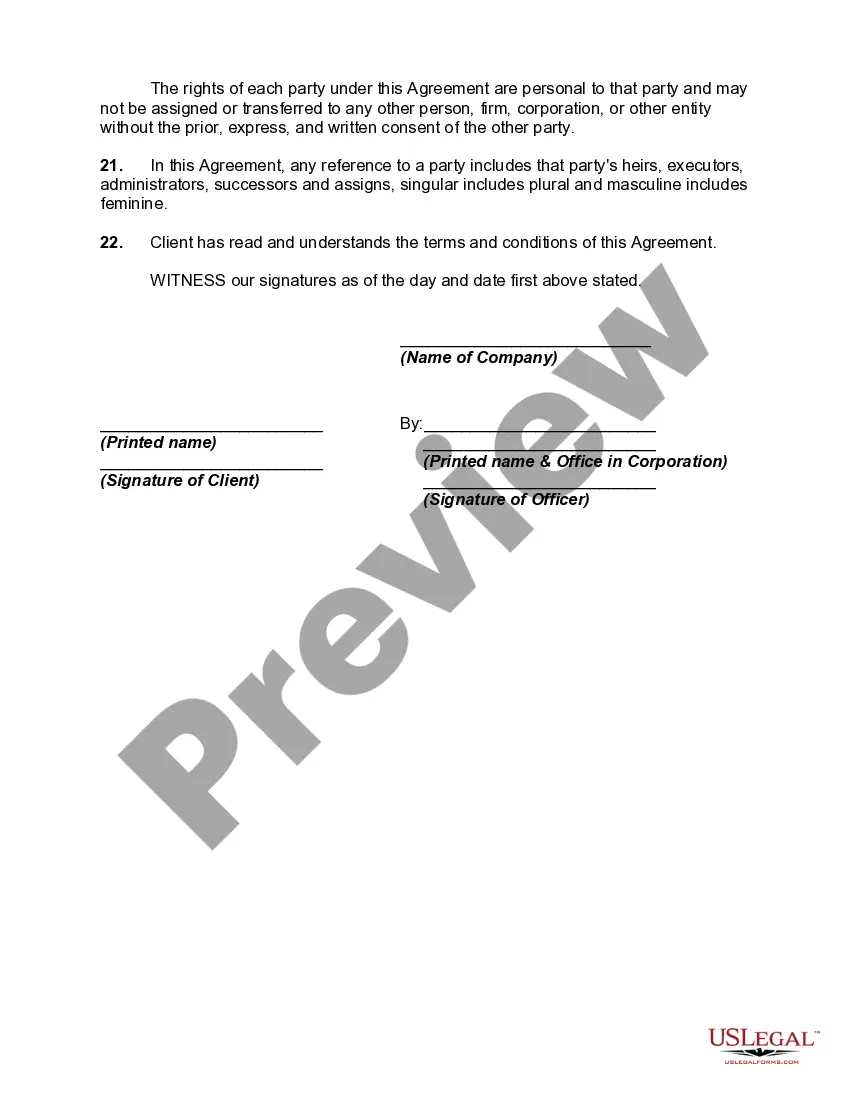
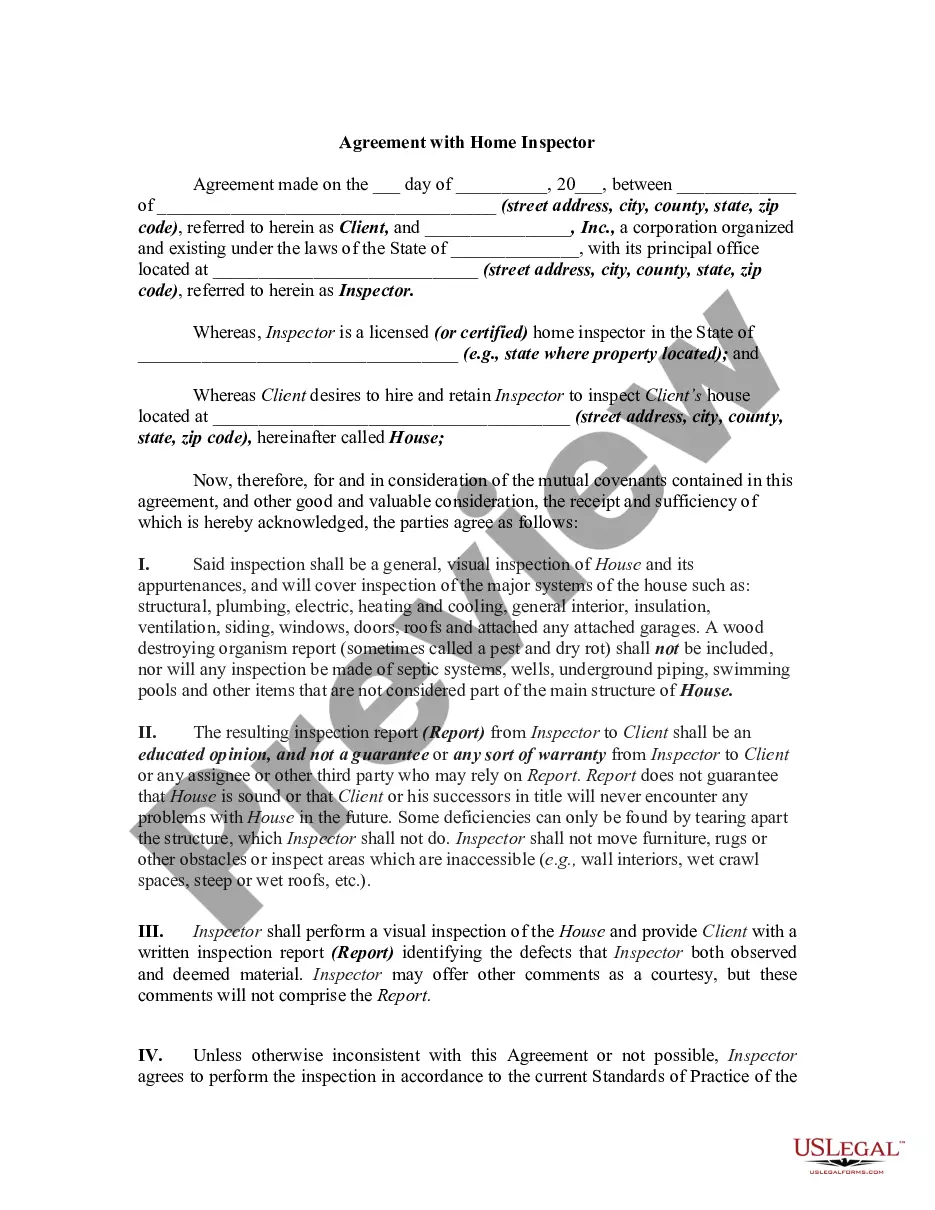
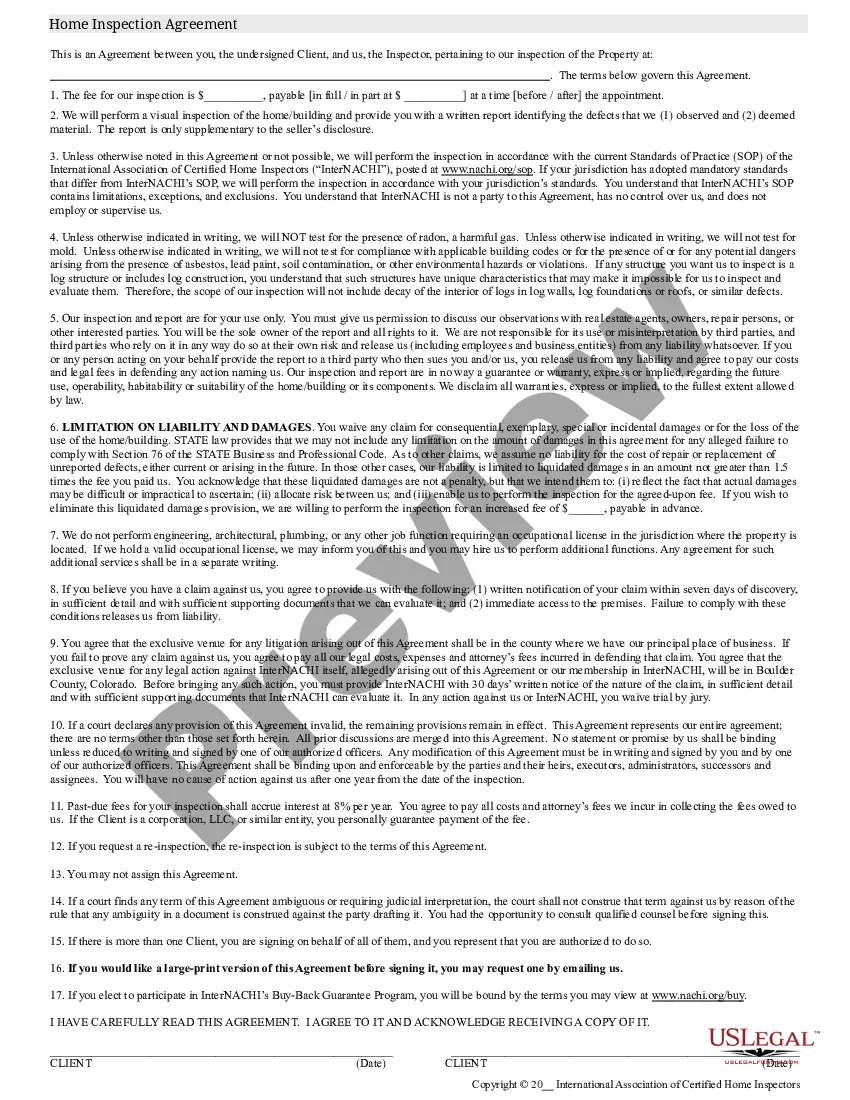
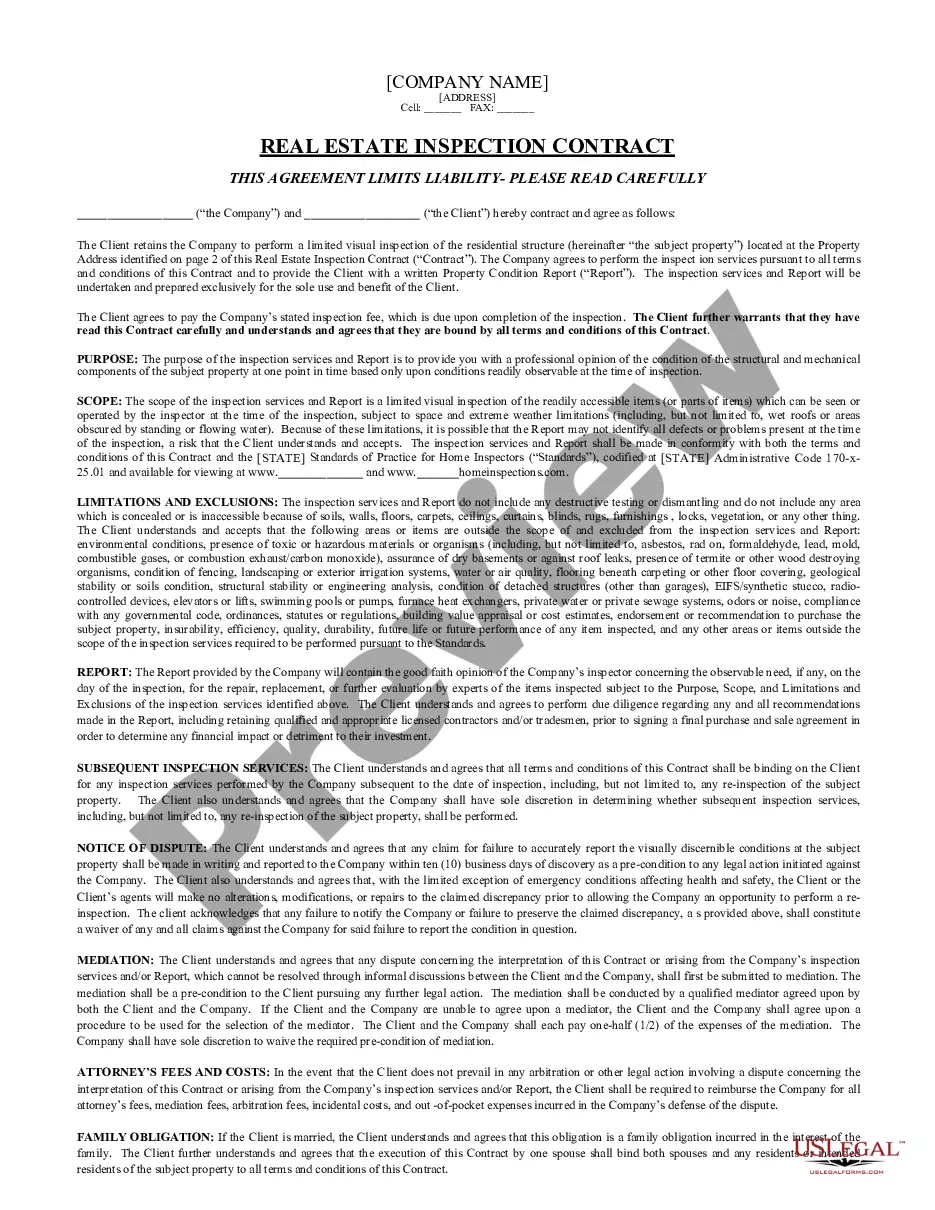
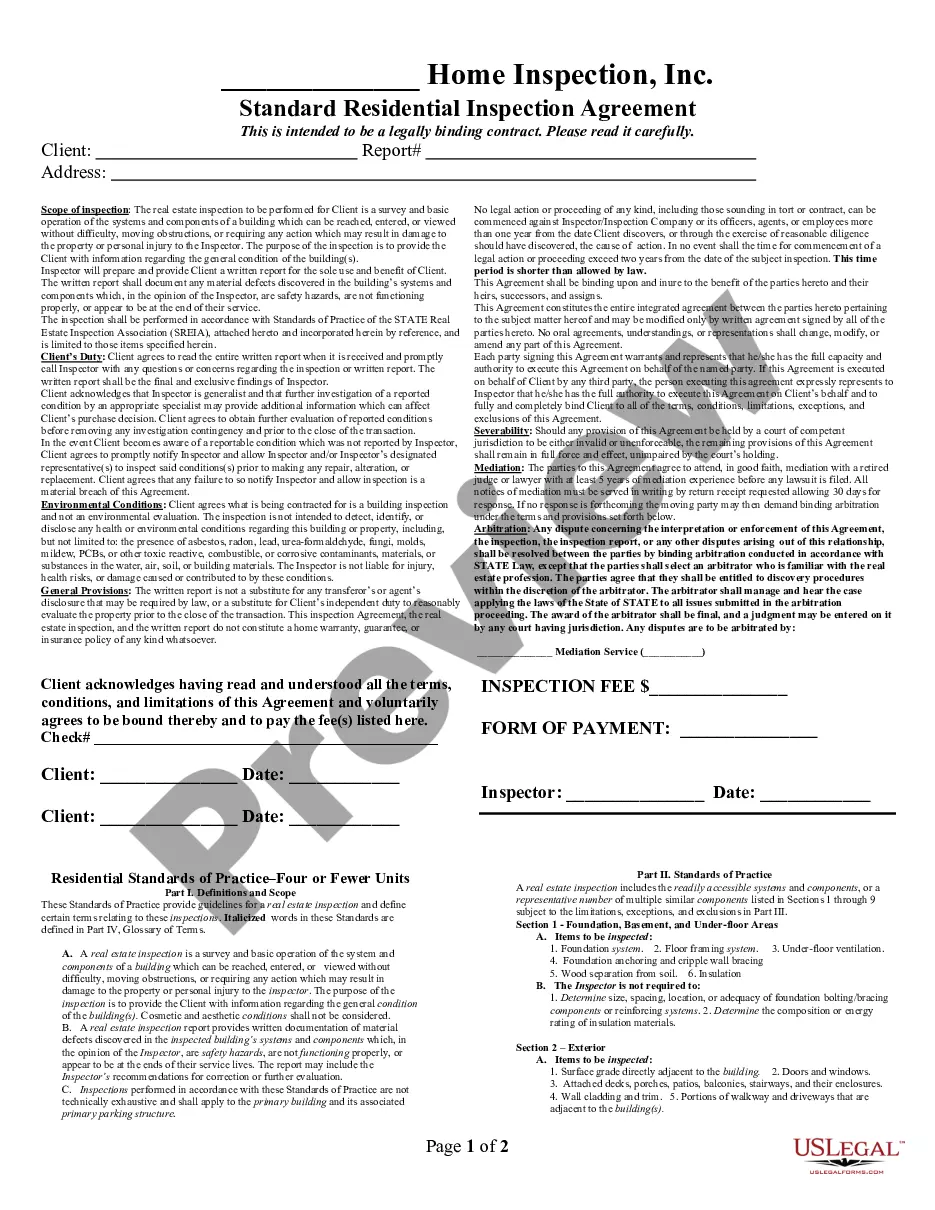
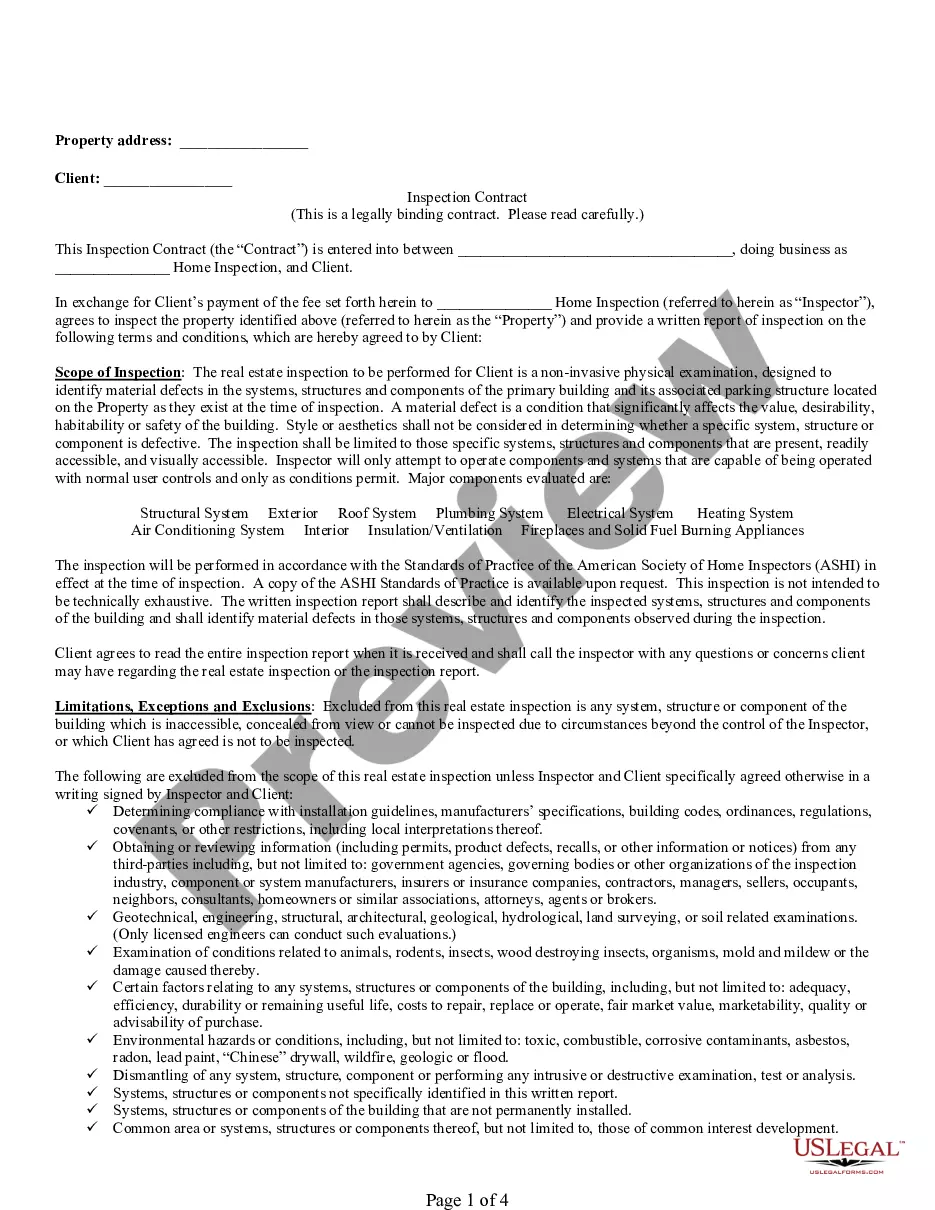
The Building Inspection Agreement is a contract between a client and an inspection company for a comprehensive assessment of a property's structural, mechanical, and electrical systems. This form outlines the terms of the inspection, including the responsibilities of both parties, limitations on liability, and any additional services available. It serves to clarify expectations and provide a clear understanding of the inspection process to ensure that clients are well-informed about the condition of the property they are considering.
Main sections of this form
- Identification of the parties involved: client and inspection company.
- Description of the property to be inspected, including the address.
- Scope of inspection, detailing major systems and components to be assessed.
- Terms regarding limitations of liability for inspector errors.
- Information about optional extended-time inspections and warranties.
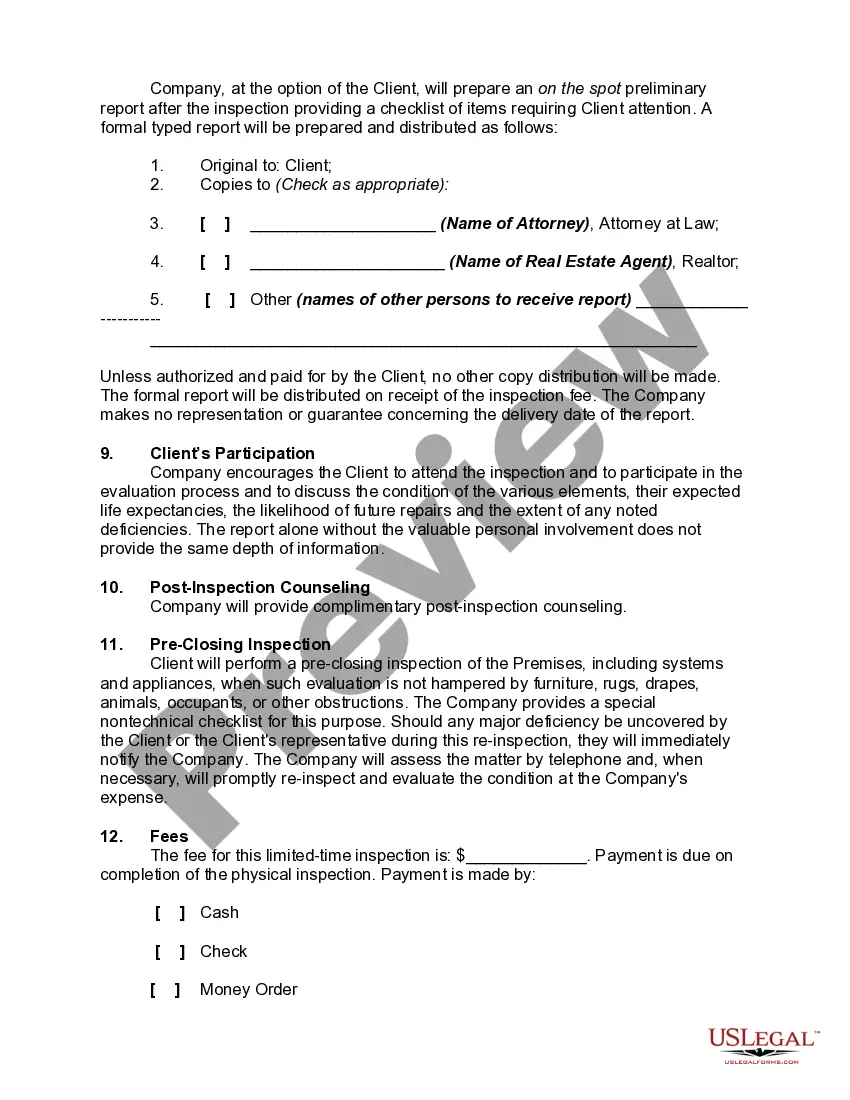
- Client's obligations and rights during and after the inspection.
When to use this document
This form should be used when a property buyer or owner needs to engage a professional inspection company to evaluate the condition of a residential property. It is particularly important when purchasing a new home, evaluating the safety or performance of existing facilities, or prior to any significant renovations. The agreement helps in establishing the scope of the inspection and protecting the interests of both the client and the inspector.
Who can use this document
- Homebuyers seeking assurance about the condition of a property before finalizing a sale.
- Current homeowners who want to assess their property for maintenance or repair needs.
- Real estate agents who require a formal agreement for client inspections.
- Inspection companies that need a standard contract for their services.
How to prepare this document
- Identify and enter the names and contact details of both the client and the inspection company.
- Specify the address of the property to be inspected, referred to as the Premises.
- Select the scope of the inspection by checking the appropriate option provided in the agreement.
- Detail any particular concerns the client may have regarding the property.
- Enter the agreed-upon inspection fee and payment method.
- Ensure all parties sign and date the agreement to finalize it.
Notarization guidance
This form does not typically require notarization to be legally valid. However, some jurisdictions or document types may still require it. US Legal Forms provides secure online notarization powered by Notarize, available 24/7 for added convenience.
Get your form ready online
Our built-in tools help you complete, sign, share, and store your documents in one place.
Make edits, fill in missing information, and update formatting in US Legal Forms—just like you would in MS Word.
Download a copy, print it, send it by email, or mail it via USPS—whatever works best for your next step.
Sign and collect signatures with our SignNow integration. Send to multiple recipients, set reminders, and more. Go Premium to unlock E-Sign.
If this form requires notarization, complete it online through a secure video call—no need to meet a notary in person or wait for an appointment.
We protect your documents and personal data by following strict security and privacy standards.

Make edits, fill in missing information, and update formatting in US Legal Forms—just like you would in MS Word.

Download a copy, print it, send it by email, or mail it via USPS—whatever works best for your next step.

Sign and collect signatures with our SignNow integration. Send to multiple recipients, set reminders, and more. Go Premium to unlock E-Sign.

If this form requires notarization, complete it online through a secure video call—no need to meet a notary in person or wait for an appointment.

We protect your documents and personal data by following strict security and privacy standards.
Common mistakes to avoid
- Failing to specify the exact scope of the inspection, leading to misunderstandings.
- Not including any particular concerns, which may be critical for the inspector's evaluation.
- Overlooking the need for signatures, which renders the agreement invalid.
- Neglecting to review and understand the terms and conditions before signing.
Why use this form online
- Convenience: Access and fill out the form from anywhere at any time.
- Editability: Modify sections easily to suit specific needs and circumstances.
- Reliability: Use attorney-drafted templates designed to meet legal requirements.
Legal use & context
- This form serves as a legally binding agreement, establishing responsibilities for both parties.
- It provides a framework for liability and help protect the interests of clients when issues arise.
- Clients are encouraged to consult local laws to understand their rights regarding inspection agreements.
Summary of main points
- The Building Inspection Agreement formalizes the relationship between a client and an inspection company.
- It is essential for identifying key issues in a property before purchase.
- Proper completion and understanding of the form can prevent future legal disputes.
Looking for another form?



Form popularity
FAQ
Create a list of potential defects and divide them into different categories: major, minor, and critical problems. Get a basic checklist to each meeting. You can pick up one you have used before or a template from a library of inspection checklists.
274f Oil tank. 274f HVAC system. 274f Roof. 274f Structural integrity of the chimney. 274f Water drainage and disbursement. 274f Electricity system. 274f Foundation. 274f Quality of the flooring.
In case the inspection report isn't comprehensive, here are a few conditions your contract can stipulate: If minor defects are detected, the vendor will have to repair them before closing the deal. The contract will be cancelled if the defects are considered major/structural or both together.
Environment. dust, gases, fumes, sprays, lighting, noise, ventilation. Buildings. windows, doors, floors, stairs, roofs, walls, elevators. Containers. Electrical. Fire protection equipment. Hand tools. Hazardous products. Materials handling.
Provide the client with advice on the building regulations; Give advice regarding the information that needs to be submitted; Check proposals for compliance with the building regulations; Issue a plans certificate if that has been requested; Inspect work as it progresses, and. Issue a final certificate.
Common repairs needed after a home inspection Plumbing issues like poor water pressure or leaks. Broken appliances. Roofing (if not categorized as a structural hazard) Drainage issues.
Building and pest inspections can help safeguard property buyers against investing in fault-ridden properties, as the reports reveal any hidden problems a property may have. The results can give investors peace of mind, with the knowledge that what they're buying isn't going to collapse around them.
Problem #1: Rundown roofing. Problem #2: Drainage issues. Problem #3: Faulty foundation. Problem #4: Plumbing problems. Problem #5: Pest infestations. Problem #6: Hidden mold. Problem #7: Failing heating systems. Problem#8: Electrical wiring.