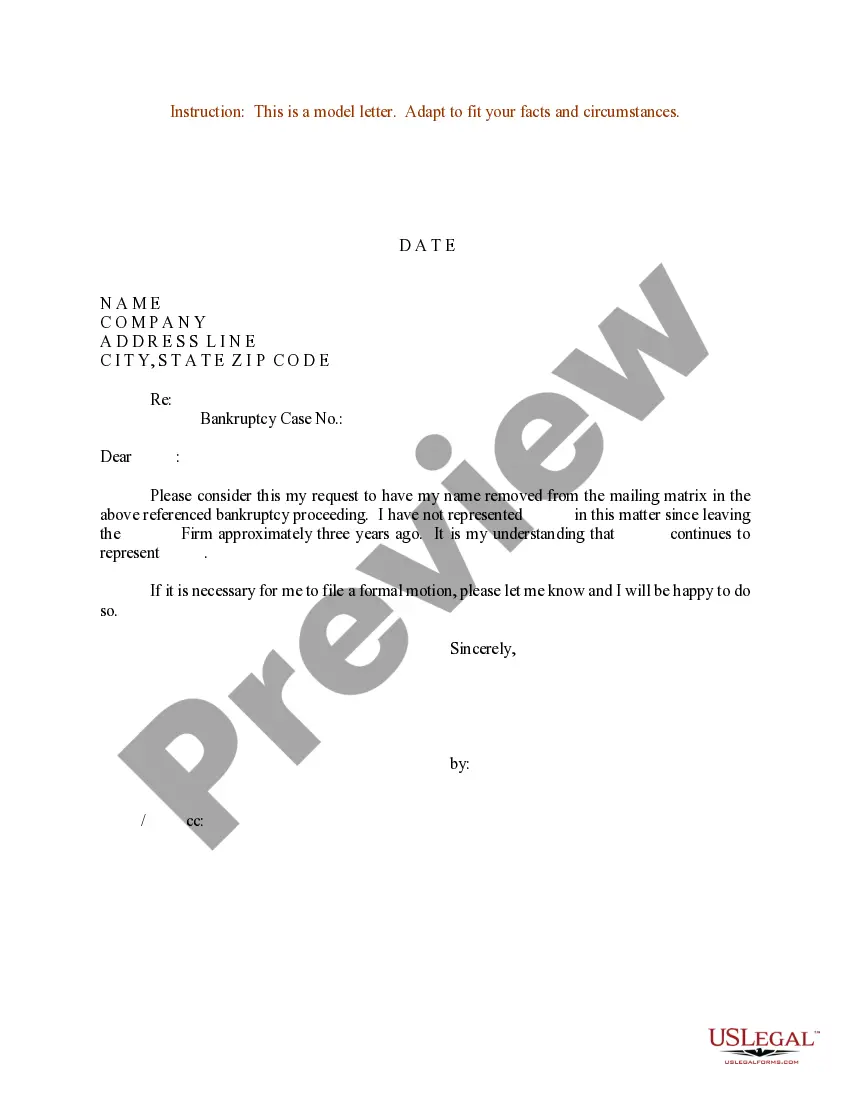
Sample Letter for Bankruptcy Mailing Matrix
Overview of this form
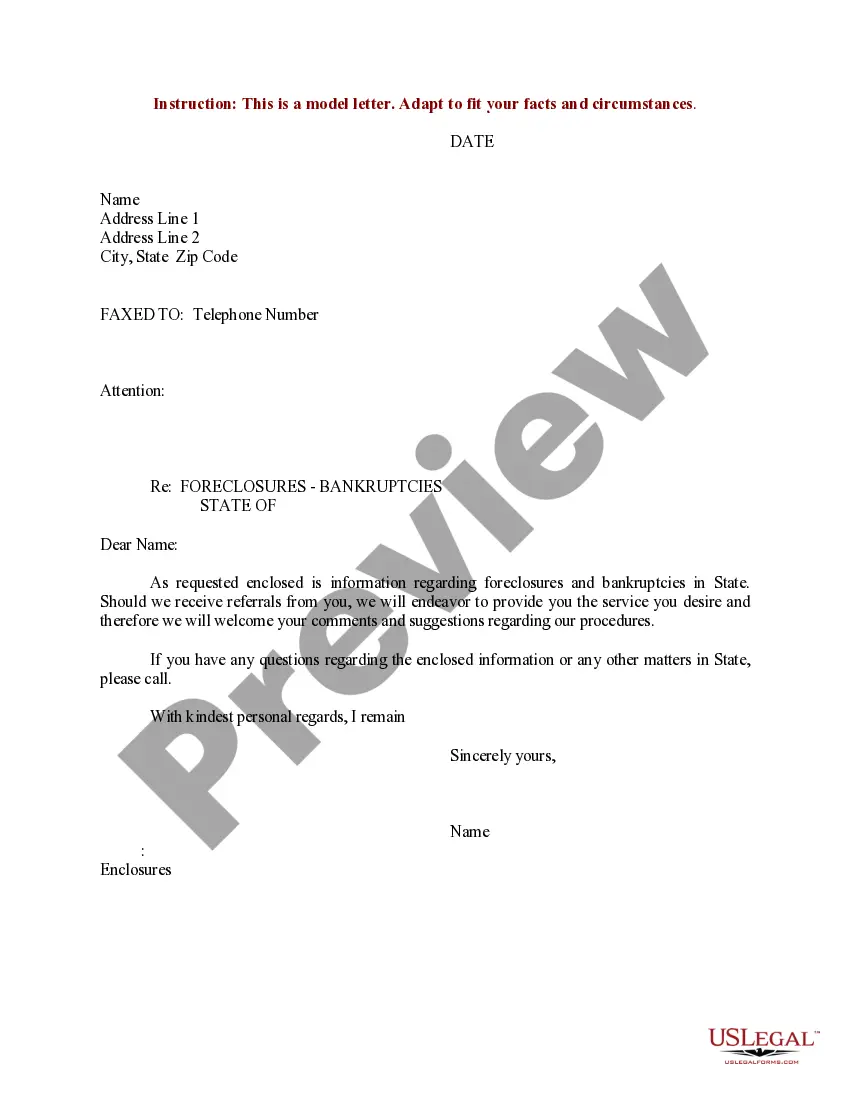
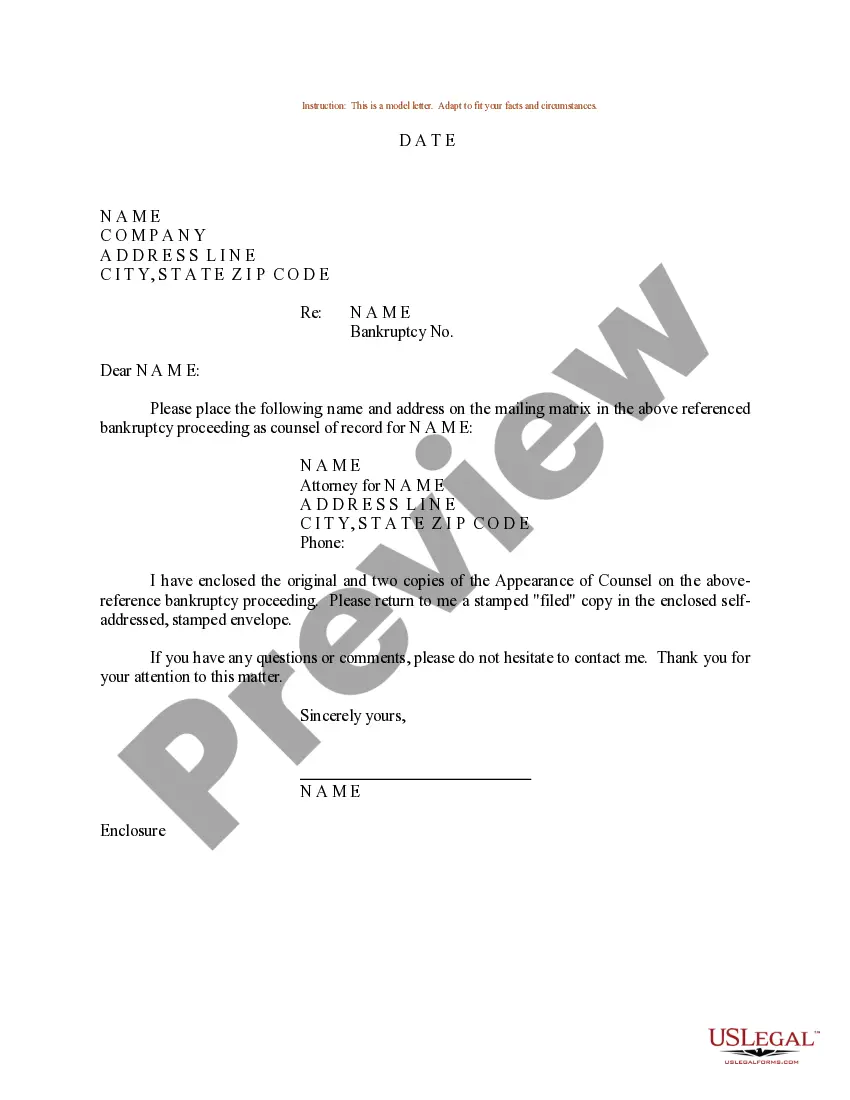
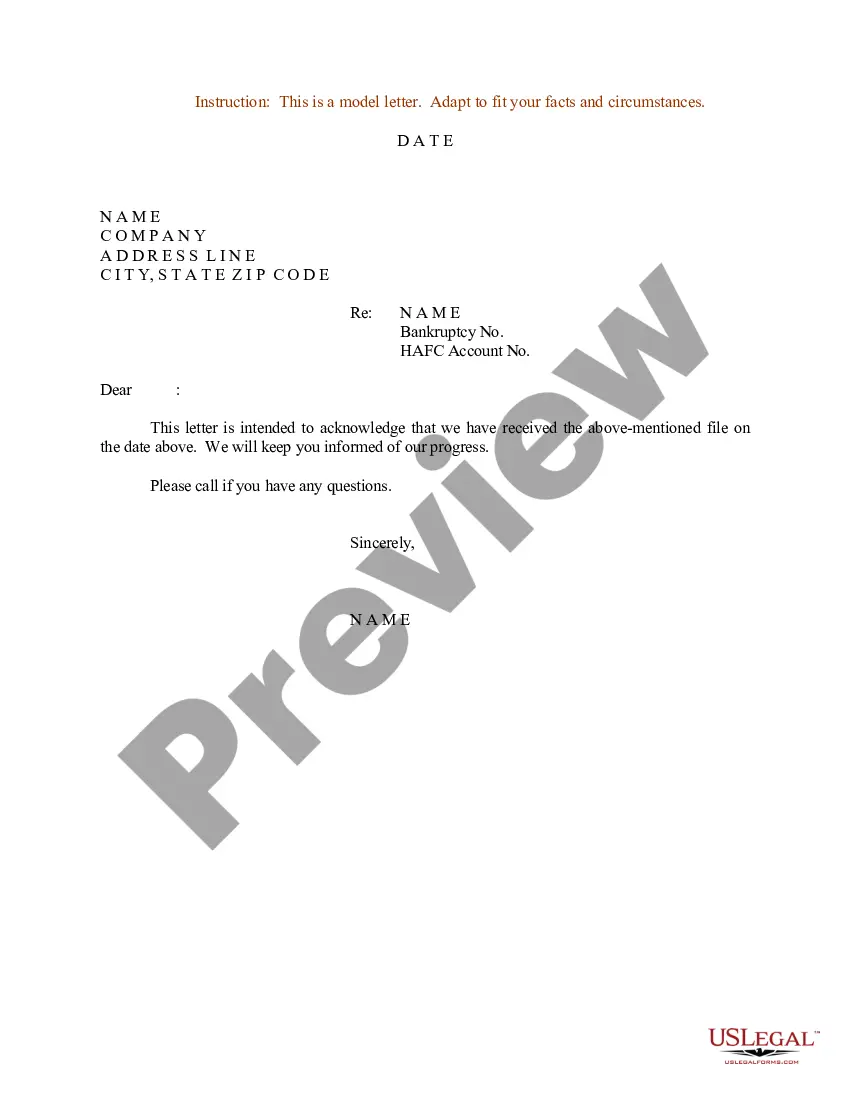
The Sample Letter for Bankruptcy Mailing Matrix is a specific type of legal document designed to assist individuals in preparing a mailing matrix for their bankruptcy filings. This form serves as a template that helps ensure all necessary information is included and organized correctly. Unlike other legal forms, this letter focuses specifically on the organization of creditor information, which is critical for bankruptcy procedures.
Key parts of this document
- Date: The date the letter is prepared.
- Recipient Name: The name of the individual or company receiving the notice.
- Company Address: The full address of the recipient, essential for ensuring proper delivery.
- City, State, and Zip Code: Information needed for accurate addressing.
When to use this form
This form is used when an individual is filing for bankruptcy and needs to submit a mailing matrix. It is particularly necessary for listing all creditors to whom the debtor owes money as part of the bankruptcy process. Utilizing this sample letter helps streamline the communication to creditors and complies with court requirements.
Who needs this form
- Individuals planning to file for bankruptcy.
- Debtors seeking to list creditors accurately in their bankruptcy filings.
- Attorneys assisting clients in bankruptcy cases.
Steps to complete this form
- Enter the date at the top of the letter.
- Input the name of the creditor or company in the recipient name section.
- Fill in the complete mailing address, including street address, city, state, and zip code.
- Review all entries for accuracy to ensure proper delivery of documents.
- Save the document in a secure format for your records and submission.
Is notarization required?
This form does not typically require notarization to be legally valid. However, some jurisdictions or document types may still require it. US Legal Forms provides secure online notarization powered by Notarize, available 24/7 for added convenience.
Get your form ready online
Our built-in tools help you complete, sign, share, and store your documents in one place.
Make edits, fill in missing information, and update formatting in US Legal Forms—just like you would in MS Word.
Download a copy, print it, send it by email, or mail it via USPS—whatever works best for your next step.
Sign and collect signatures with our SignNow integration. Send to multiple recipients, set reminders, and more. Go Premium to unlock E-Sign.
If this form requires notarization, complete it online through a secure video call—no need to meet a notary in person or wait for an appointment.
We protect your documents and personal data by following strict security and privacy standards.

Make edits, fill in missing information, and update formatting in US Legal Forms—just like you would in MS Word.

Download a copy, print it, send it by email, or mail it via USPS—whatever works best for your next step.

Sign and collect signatures with our SignNow integration. Send to multiple recipients, set reminders, and more. Go Premium to unlock E-Sign.

If this form requires notarization, complete it online through a secure video call—no need to meet a notary in person or wait for an appointment.

We protect your documents and personal data by following strict security and privacy standards.
Avoid these common issues
- Leaving out important creditor information like address or name.
- Errors in the address details, which may lead to miscommunication.
- Not keeping a copy of the mailing matrix for personal records.
Why use this form online
- Convenient access to a professionally drafted template.
- Edit and customize easily to fit specific needs.
- Quick download options to streamline the process.
Legal use & context
- Serves as a formal notification to creditors about bankruptcy filings.
- Helps protect the debtor's rights under bankruptcy laws.
- Facilitates clear communication during the bankruptcy process.
Looking for another form?
Form popularity
FAQ
If the derogatory mark is in error, you can file a dispute with the credit bureaus to get negative information removed from your credit reports.They stay on your credit report for about two years but stop affecting your score sooner than that.) The good news is you can start working to restore your credit right away.
Take responsibility for your actions. Be clear about what you did or didn't do that caused the mistake. Avoid focusing on anyone else's role in the mistake. Provide a little backstory. Outline a plan. Clearly apologize.
It can be beneficial to pay off derogatory credit items that remain on your credit report. Your credit score may not go up right away after paying off a negative item; however, most lenders won't approve a mortgage application if you have unpaid derogatory items on your credit report.
Say you're sorry. Not, I'm sorry, but . . . Just plain ol' I'm sorry. Own the mistake. It's important to show the wronged person that you're willing to take responsibility for your actions. Describe what happened. Have a plan. Admit you were wrong. Ask for forgiveness.
An acknowledgement of what happened. This demonstrates honesty and understanding of the necessity to repay the debt. A reason why it happened. Don't leave this to the underwriter's assumption. A statement of what is different now. Finally, if supporting documentation is available, include it.
Facts. Include all the details with correct dates and dollar amounts. Resolution. Explain how and when the situation was resolved. Acknowledge. It's important that the letter outline why the problem won't arise again. Recognize if and how you could have avoided this mistake.
The key to writing a great letter of explanation is to keep it short, simple and informative. Be clear and write with as much detail as you can since someone else will need to understand your situation. Avoid including irrelevant information or answers to questions the underwriter didn't ask.
Allow yourself to feel bad. Assess what happened. Fix your mistake (if possible) and apologize. Have a private meeting with your boss. Offer a solution. Change how you work. Be kind to yourself.
Apologize as soon as possible. By issuing an apology quickly, you are acknowledging that you made a mistake and truly regret it. Give no excuses. Take responsibility. Explain how you will fix the mistake. Keep your word. Consider the method.