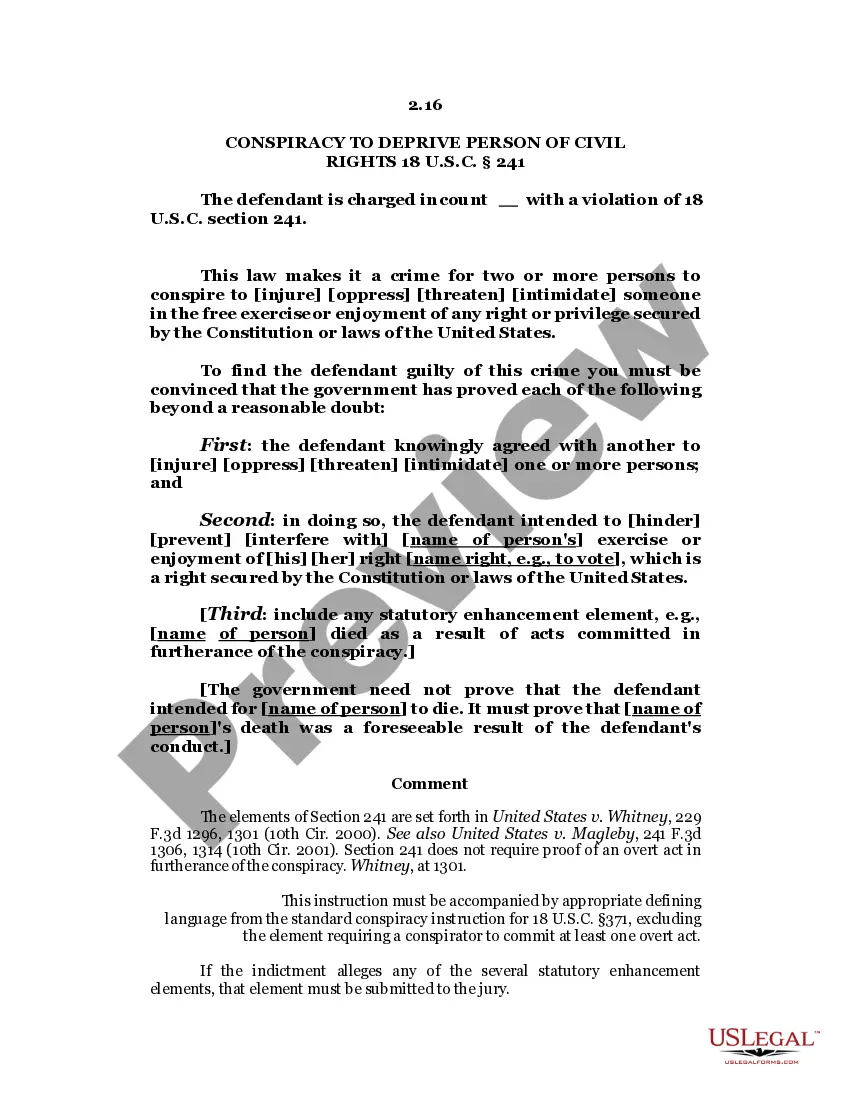
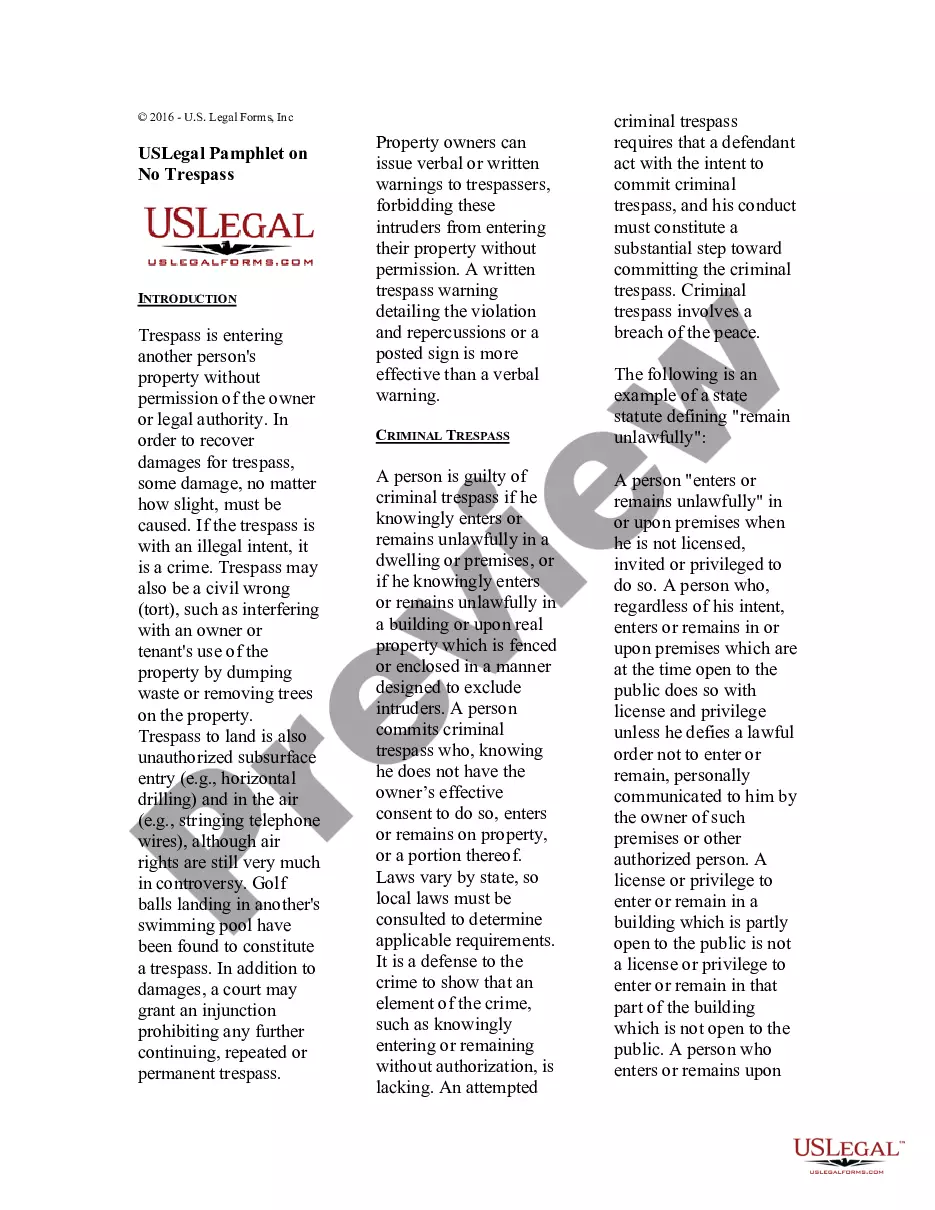
USLegal Law Pamphlet on Torts
What is this form?
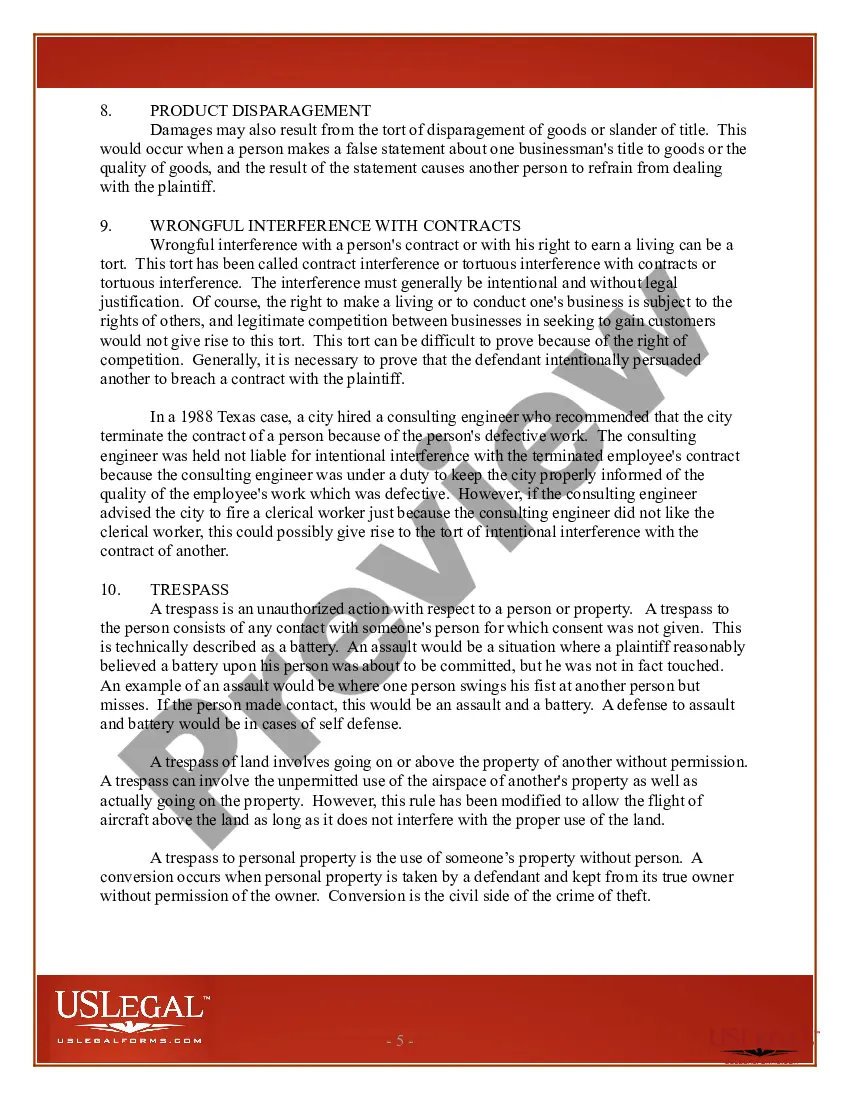
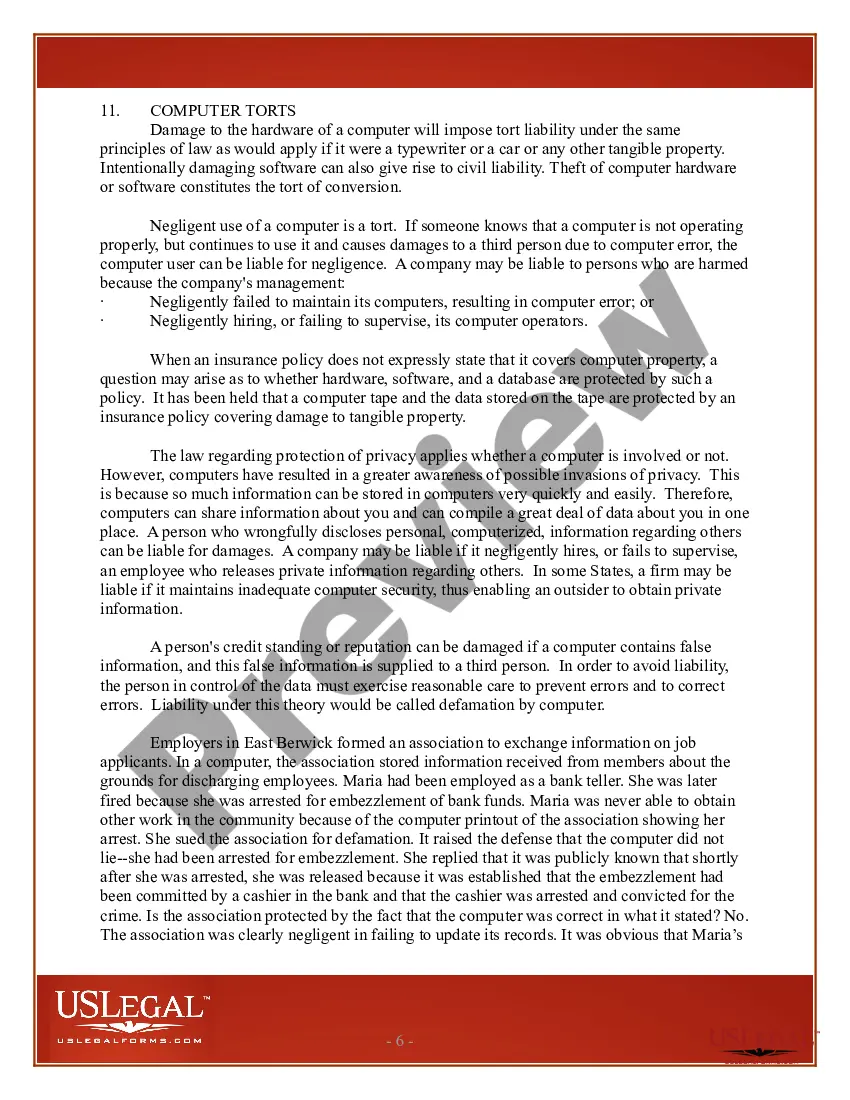
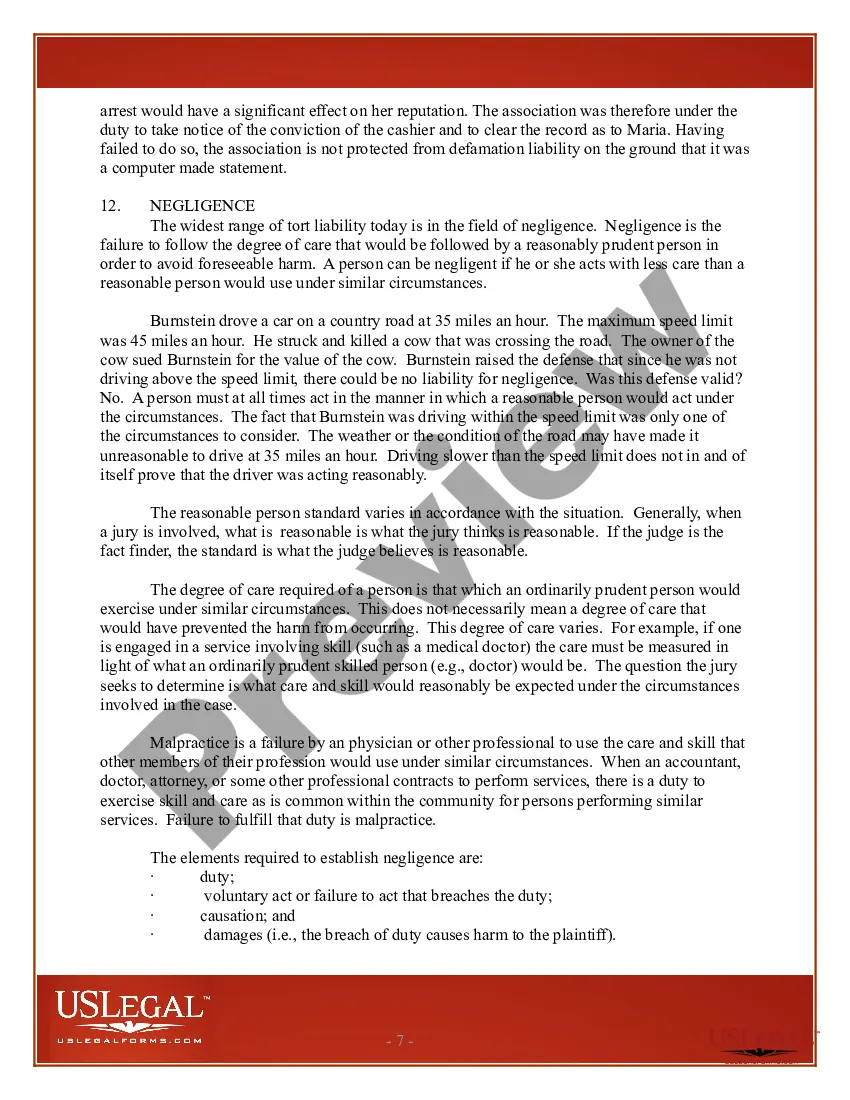
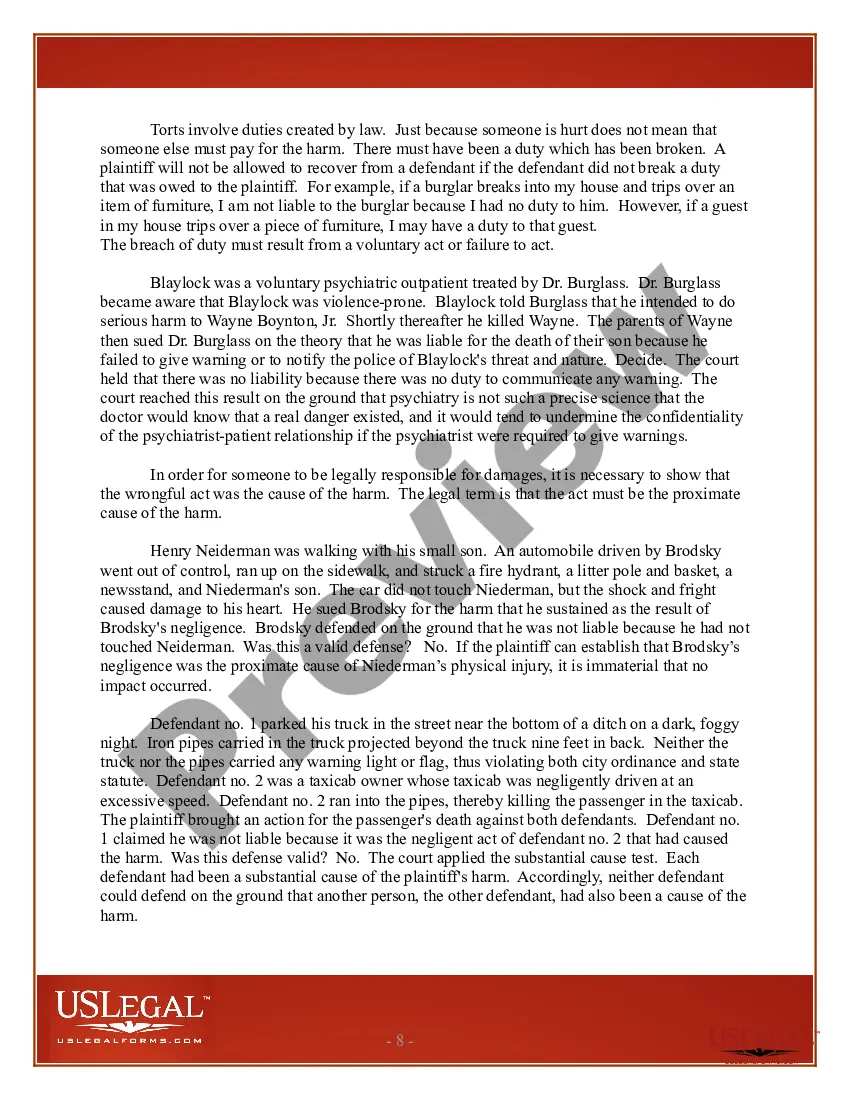
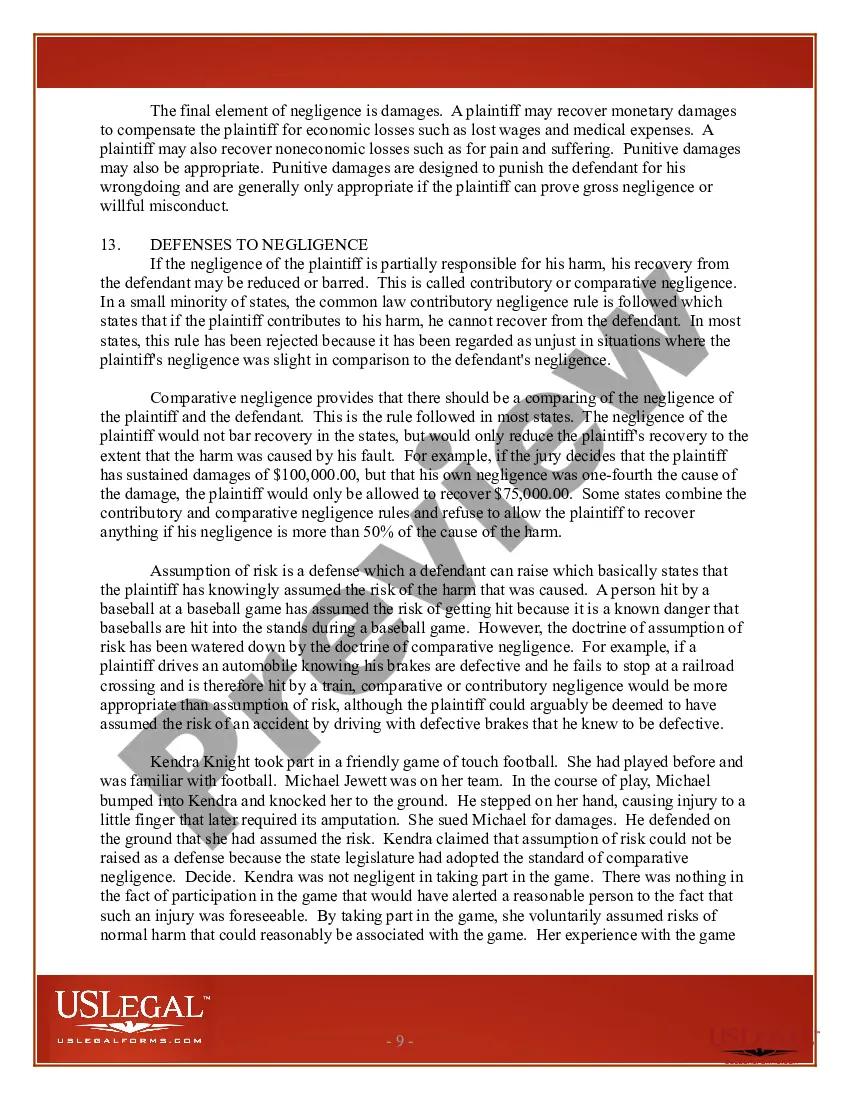
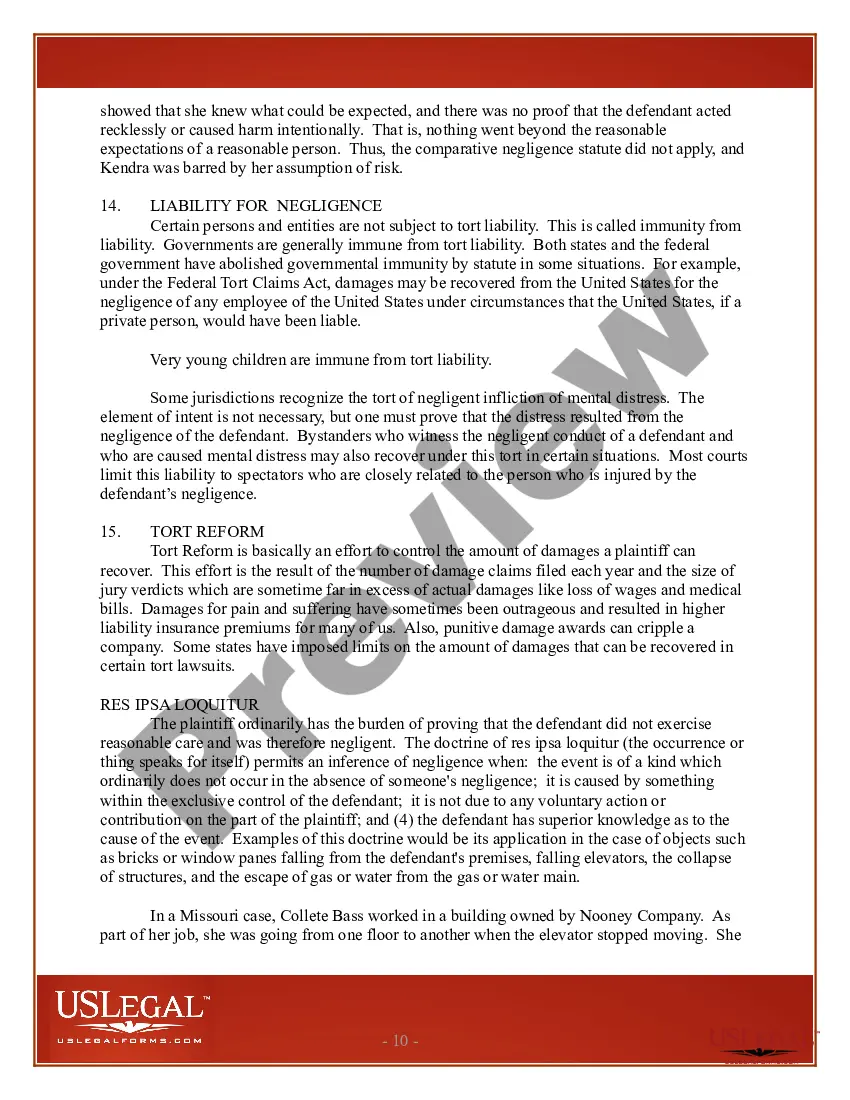
The USLegal Law Pamphlet on Torts is an informative document that outlines the various types of torts, legal concepts surrounding them, and the implications of tort law. Unlike standard legal forms, this pamphlet serves an educational purpose, helping individuals understand private wrongs and their legal consequences, making it a key resource for those seeking clarity on tortious conduct.
Key components of this form
- Definition of tort and its implications for personal injury and property damage.
- Explanation of the difference between torts and crimes.
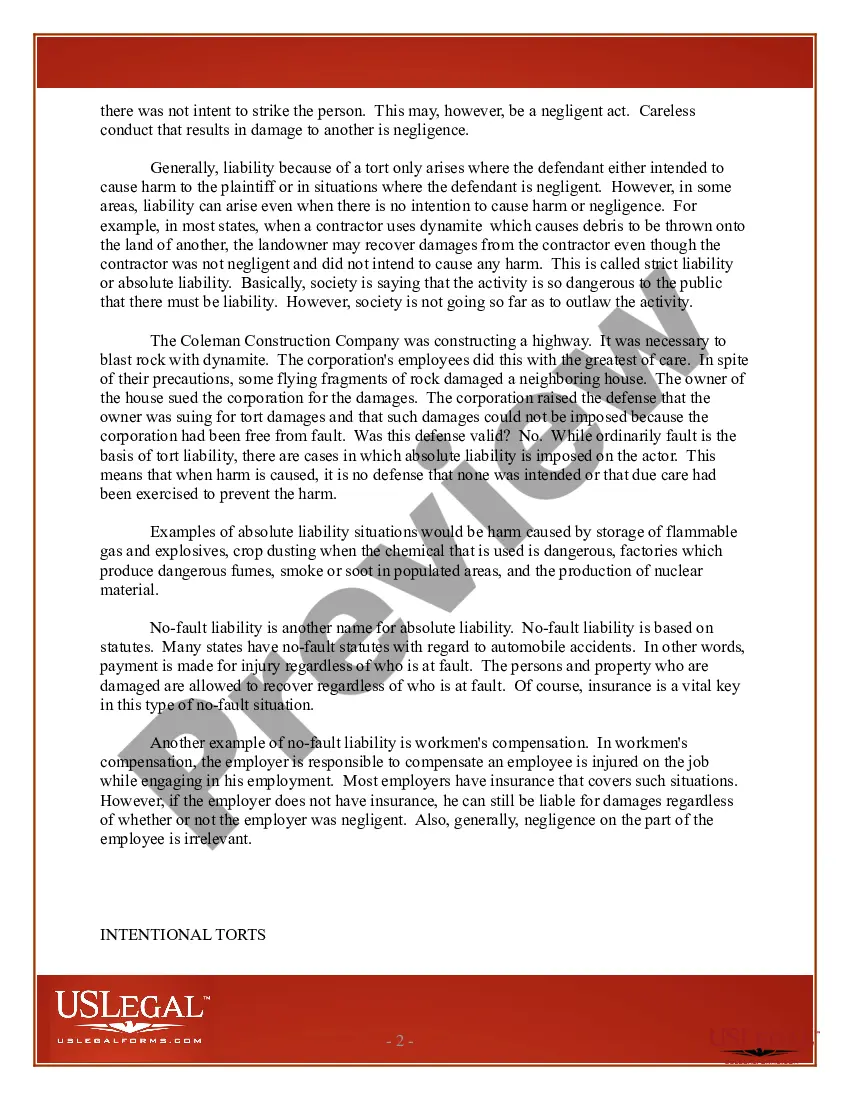
- Description of intentional torts, negligence, and strict liability.
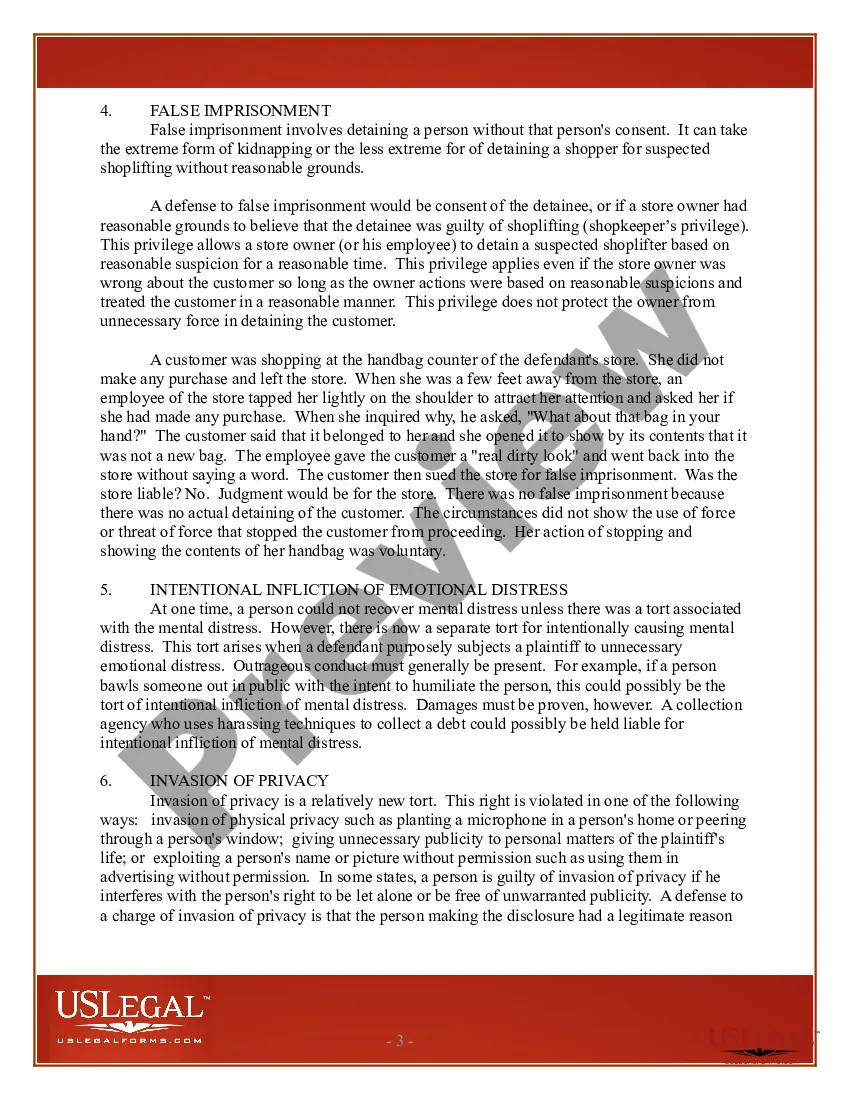
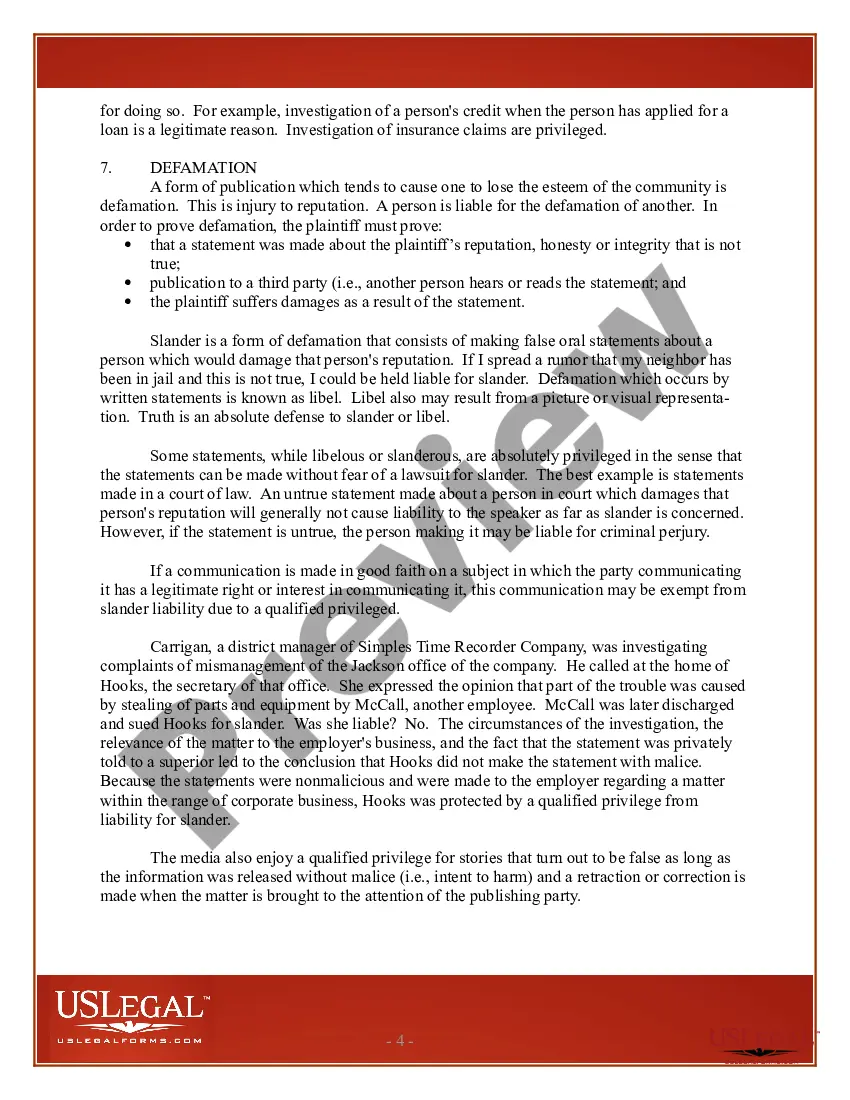
- Discussion on specific torts such as defamation, false imprisonment, and invasion of privacy.
- Overview of defenses available in tort cases.




Situations where this form applies
This pamphlet is useful for individuals who are facing tort claims, considering lawsuits for personal injuries, or seeking to understand their rights and liabilities in cases of negligence or intentional harm. It can also be beneficial for students or professionals in legal fields who require a clearer understanding of tort law.
Who this form is for
- Individuals involved in personal injury claims seeking to understand their rights.
- Students and educators in legal studies.
- Lawyers and legal practitioners needing a quick reference.
- Anyone interested in understanding tort law and its applications.
How to prepare this document
- Read each section thoroughly to comprehend the legal definitions and principles discussed.
- Identify which type of tort may apply to your specific situation.
- Consider the potential legal defenses and implications based on the information provided.
- Utilize this knowledge to assess your legal rights or consult with a legal professional.
Does this document require notarization?
Notarization is not commonly needed for this form. However, certain documents or local rules may make it necessary. Our notarization service, powered by Notarize, allows you to finalize it securely online anytime, day or night.
Get your form ready online
Our built-in tools help you complete, sign, share, and store your documents in one place.
Make edits, fill in missing information, and update formatting in US Legal Forms—just like you would in MS Word.
Download a copy, print it, send it by email, or mail it via USPS—whatever works best for your next step.
Sign and collect signatures with our SignNow integration. Send to multiple recipients, set reminders, and more. Go Premium to unlock E-Sign.
If this form requires notarization, complete it online through a secure video call—no need to meet a notary in person or wait for an appointment.
We protect your documents and personal data by following strict security and privacy standards.

Make edits, fill in missing information, and update formatting in US Legal Forms—just like you would in MS Word.

Download a copy, print it, send it by email, or mail it via USPS—whatever works best for your next step.

Sign and collect signatures with our SignNow integration. Send to multiple recipients, set reminders, and more. Go Premium to unlock E-Sign.

If this form requires notarization, complete it online through a secure video call—no need to meet a notary in person or wait for an appointment.

We protect your documents and personal data by following strict security and privacy standards.
Common mistakes
- Misunderstanding the difference between torts and crimes, leading to incorrect legal action.
- Failing to recognize the importance of intent in certain tort cases.
- Overlooking defenses that could alleviate liability in tort claims.
Benefits of completing this form online
- Access to comprehensive information that can be downloaded and reviewed at your convenience.
- Ease of retrieval for quick legal references or educational purposes.
- Flexibility to highlight or print relevant sections for personal use or discussion with legal counsel.
Legal use & context
- Understanding tort law is essential for asserting rights and seeking compensation in cases of harm.
- Knowledge of tort principles can help mitigate liability in case of disputes or claims.
- This pamphlet serves as an introductory guide and does not replace professional legal advice.
Summary of main points
- Torts serve as private wrongs that can lead to legal action and damages.
- There are significant distinctions between torts and criminal acts.
- Understanding different tort types is crucial for determining legal recourse.
Looking for another form?
Form popularity
FAQ
A tort, in common law jurisdiction, is a civil wrong (other than breach of contract) that causes a claimant to suffer loss or harm, resulting in legal liability for the person who commits the tortious act.Tort law involves claims in an action seeking to obtain a private civil remedy, typically money damages.
Tort lawsuits are the biggest category of civil litigation, and can encompass a wide range of personal injury cases - however, there are three main types: intentional torts, negligence, and strict liability.
For example, a car accident where one driver hurts another driver because he or she was not paying attention might be a tort.If a person is hurt by someone else, he or she can sue in court. Many torts are accidents, like car accidents or slippery floors that make people fall down and get hurt.
NEGLIGENCE: Negligence is the most common of tort cases. At its core negligence occurs when a tortfeasor, the person responsible for committing a wrong, is careless and therefore responsible for the harm this carelessness caused to another.
Under tort law, seven intentional torts exist. Four of them are personal: assault, battery, intentional infliction of emotional distress, and false imprisonment. The other three are trespass to chattels, trespass to property, and conversion.
A tort is a civil claim where a claimant has suffered damages due to the actions of the person who committed the act. In this type of claim, the person who committed the act can be held legally liable.Basically, a tort claim is an act committed by one person that causes harm to another.
Standard Form 95 is used to present claims against the United States under the Federal Tort Claims Act (FTCA) for property damage, personal injury, or death allegedly caused by a federal employee's negligence or wrongful act or omission occurring within the scope of the employee's federal employment.
Battery: Making unwanted, offensive, or harmful contact with another person. Assault: An attempt to cause harm or an action of a threatening nature. Fraud: The act of lying or making misrepresentations to another person. Trespass: The use of another person's property without their permission.