Judicial Notice
What is this form?
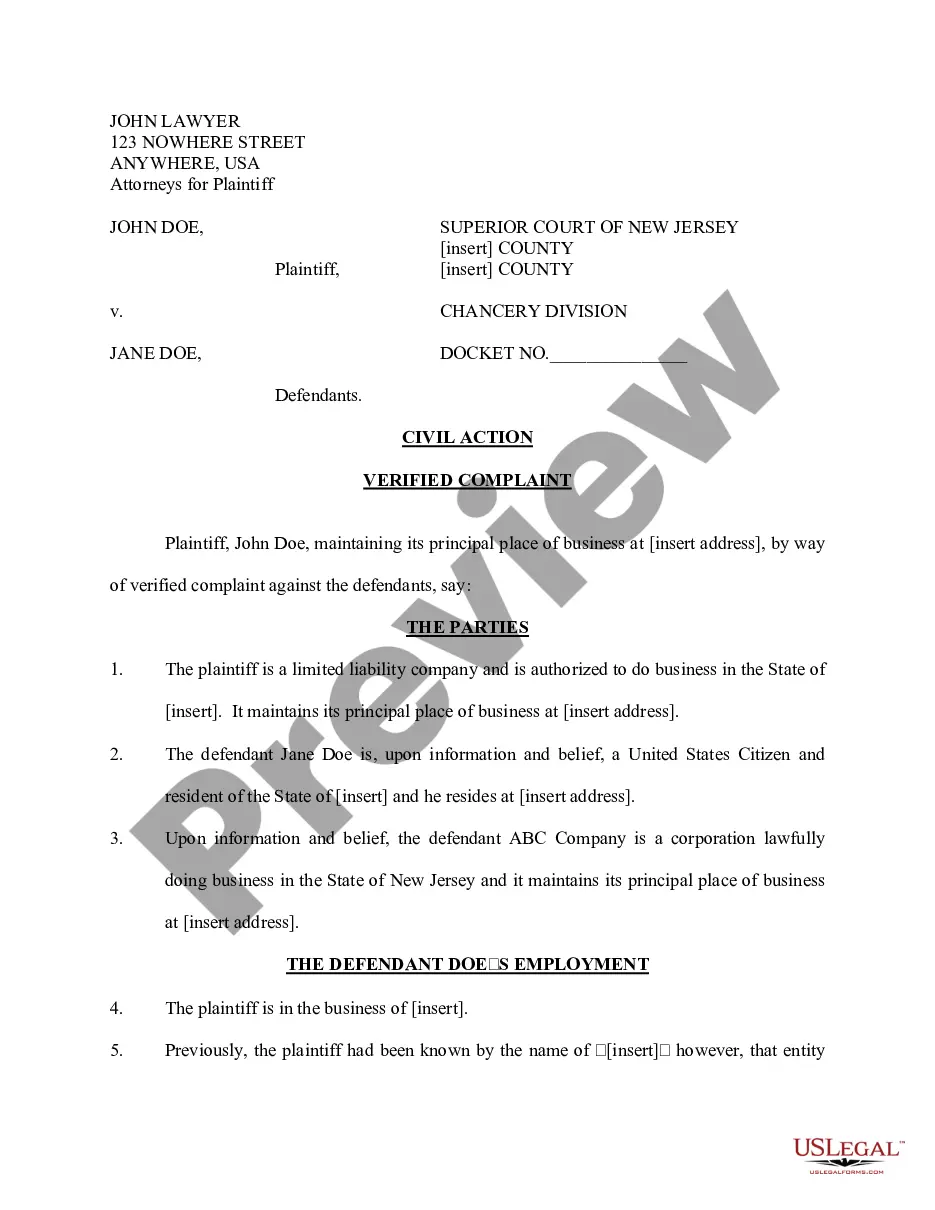
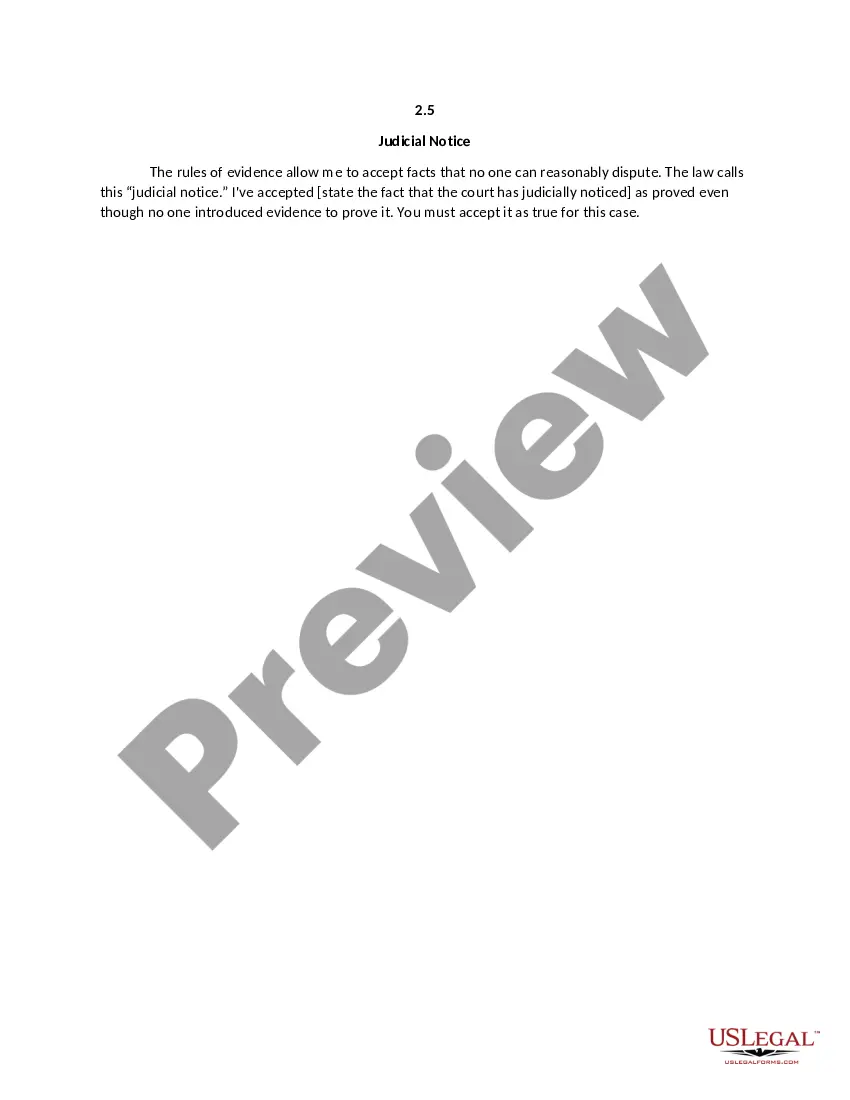
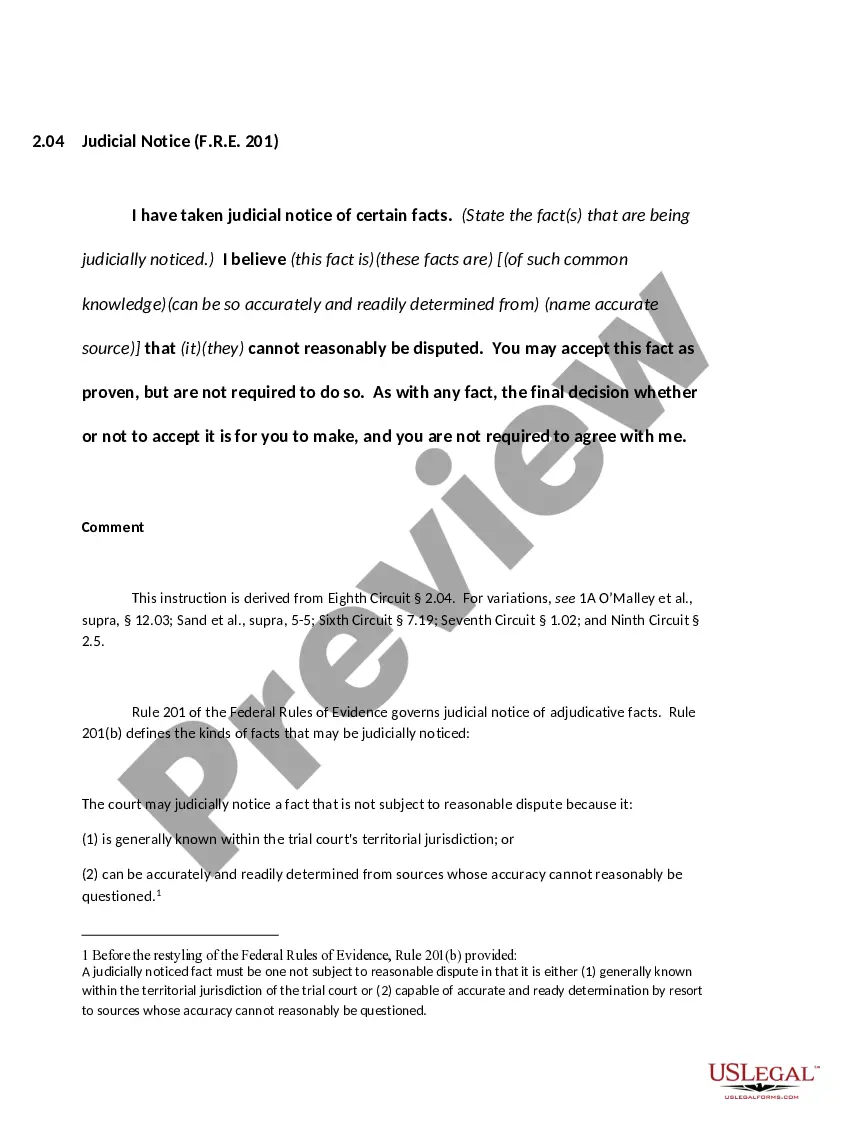
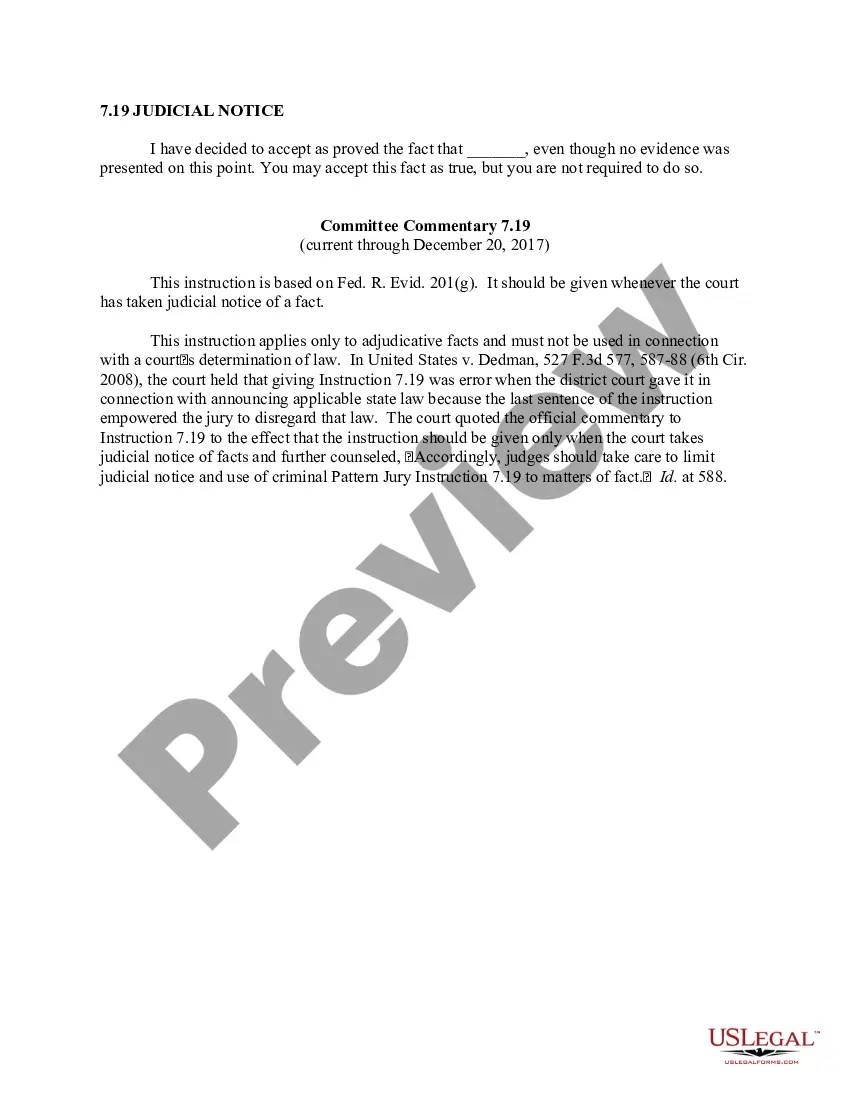
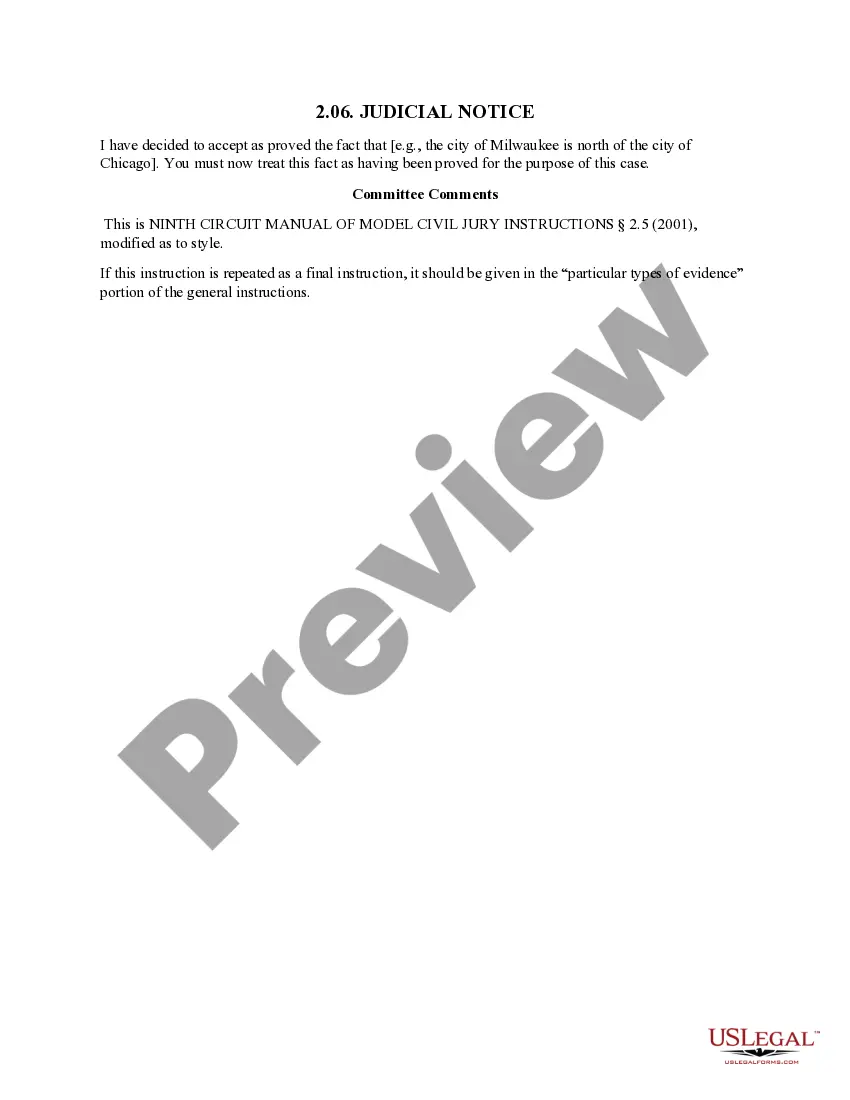
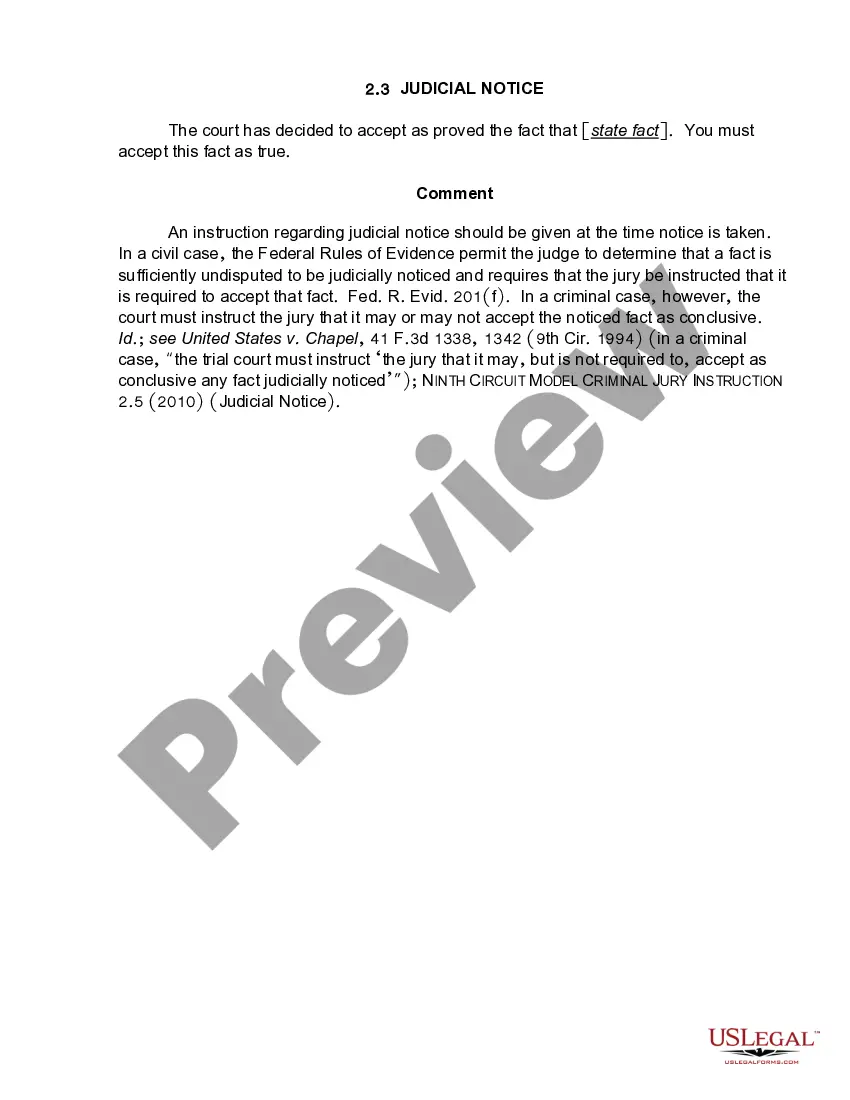
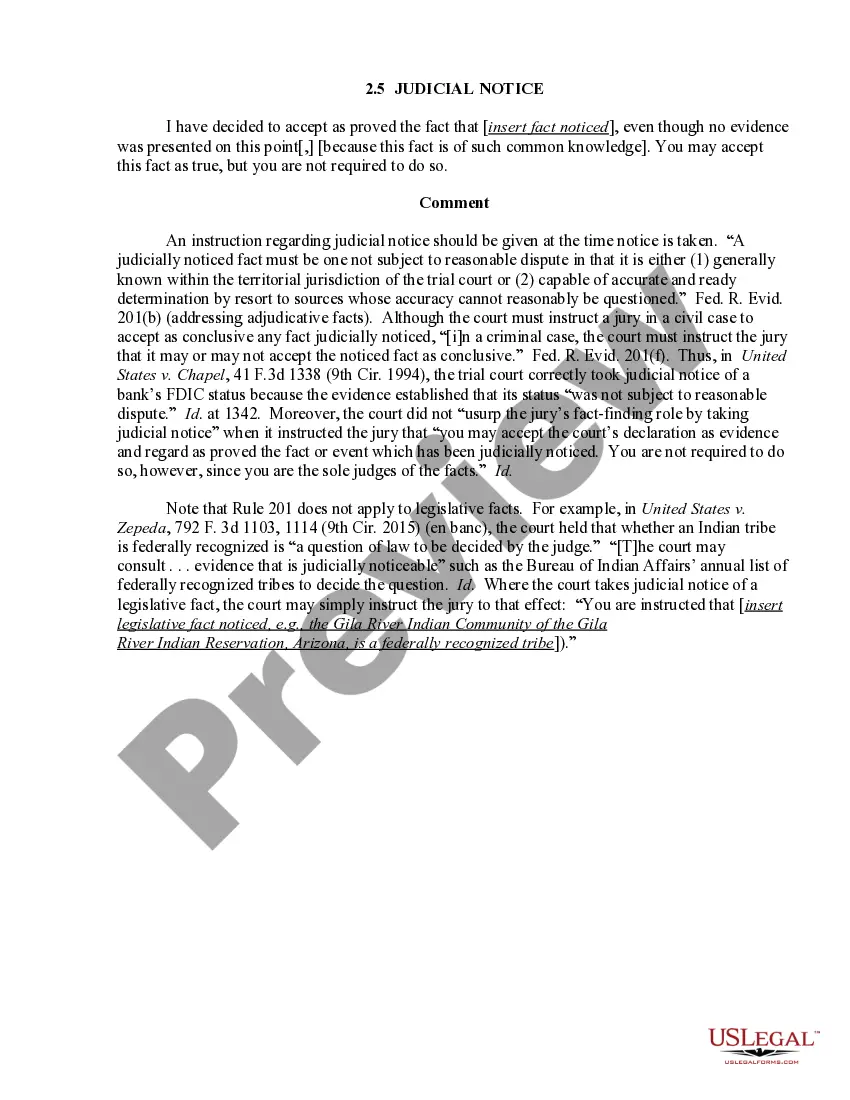
The Judicial Notice form serves to formally recognize facts that cannot be reasonably disputed in a court of law. This legal form is based on established rules of evidence, allowing certain facts to be accepted by the court without requiring evidence for their validation. Judicial notice differs from other forms as it does not necessitate proof for accepted facts and is crucial for ensuring efficiency in legal proceedings.
Key components of this form
- Judicial notice statement: A declaration of which facts the court is acknowledging as true.
- Evidence acknowledgment: Indication that these recognized facts do not require presenting evidence in court.
- Application context: Description of how this form applies to the current case before the court.
When to use this form
This form is useful in scenarios where certain facts relevant to a case are universally accepted and do not require additional proof. For instance, in a civil case, if a party wishes to reference weather conditions during a specific time that are widely known, they can use this form to have the court recognize that fact and proceed without further evidentiary support.
Who needs this form
- Legal practitioners who need to expedite court proceedings by acknowledging indisputable facts.
- Parties involved in a case who wish to ensure certain facts are accepted without further evidence.
- Anyone preparing for trial who needs to clarify elements of the case that rely on established knowledge.
Completing this form step by step
- Identify the facts to be acknowledged: Determine which widely accepted facts will be included in the notice.
- Draft the judicial notice statement: Clearly articulate the facts being recognized by the court.
- Provide context for the application: Explain how the acknowledged facts relate to the case.
Does this document require notarization?
Notarization is generally not required for this form. However, certain states or situations might demand it. You can complete notarization online through US Legal Forms, powered by Notarize, using a verified video call available anytime.
Get your form ready online
Our built-in tools help you complete, sign, share, and store your documents in one place.
Make edits, fill in missing information, and update formatting in US Legal Forms—just like you would in MS Word.
Download a copy, print it, send it by email, or mail it via USPS—whatever works best for your next step.
Sign and collect signatures with our SignNow integration. Send to multiple recipients, set reminders, and more. Go Premium to unlock E-Sign.
If this form requires notarization, complete it online through a secure video call—no need to meet a notary in person or wait for an appointment.
We protect your documents and personal data by following strict security and privacy standards.

Make edits, fill in missing information, and update formatting in US Legal Forms—just like you would in MS Word.

Download a copy, print it, send it by email, or mail it via USPS—whatever works best for your next step.

Sign and collect signatures with our SignNow integration. Send to multiple recipients, set reminders, and more. Go Premium to unlock E-Sign.

If this form requires notarization, complete it online through a secure video call—no need to meet a notary in person or wait for an appointment.

We protect your documents and personal data by following strict security and privacy standards.
Common mistakes to avoid
- Failing to specify the facts clearly, which can lead to ambiguity.
- Including contested facts that require evidence instead of acknowledging only undisputed facts.
- Not providing proper context or relevance to the recognized facts.
Benefits of completing this form online
- Convenience of downloading and filling the form at your own pace.
- Editability allows you to tailor the content specifically to your case needs.
- Reliability ensures that you use a form compliant with current legal standards.
Looking for another form?
Form popularity
FAQ
For the purpose of attacking the credibility of a witness, evidence that he has been convicted of a crime is admissible but only if the crime, (1) was punishable by death or imprisonment in excess of one year under the law under which he was convicted, or (2) involved dishonesty or false statement regardless of the
For example, a court may take judicial notice that it is nighttime at 7 PM in February in New York. If one party's theory of a car accident case assumes that a motorist's headlights should have been on because it was 7 PM, the party need not necessarily bring evidence to establish that 7 PM was after sunset.
Judicial notice is used by a court when it declares a fact presented as evidence as true without a formal presentation of evidence. A court can take judicial notice of indisputable facts. If a court takes judicial notice of an indisputable fact in a civil case, the fact is considered conclusive. evidence.
The facts or data in the particular case upon which an expert bases an opinion or inference may be those perceived by or made known to the expert at or before the hearing.
The prevailing rule permits courts to take judicial notice of court records, including of prior judgments, orders, and decisions, but generally forbids courts from taking judicial notice of the facts contained in those records or of the factual findings on which those decisions are based.
Judicial notice is used by a court when it declares a fact presented as evidence as true without a formal presentation of evidence. A court can take judicial notice of indisputable facts. If a court takes judicial notice of an indisputable fact in a civil case, the fact is considered conclusive.
Judicial notice is governed by federal and state rules of evidence. Under these rules a judge may, on his own initiative or at the request of a party, instruct the finder of fact to accept information as conclusively true.
Judicial notice is a means of bringing before a trial or appellate court "matters that are assumed to be indisputably true, so that the introduction of evidence to prove them will not be required." Kilroy v. State of California, 119 Cal.